A Report from the UN Conference on the Social and Political Dimensions of the Global Crisis: Implications for Developing Countries (12-13 November 2009)
Organised by the United Nations Research Institute for Social Development (UNRISD), Geneva, Switzerland. Held at the Palais des Nations.
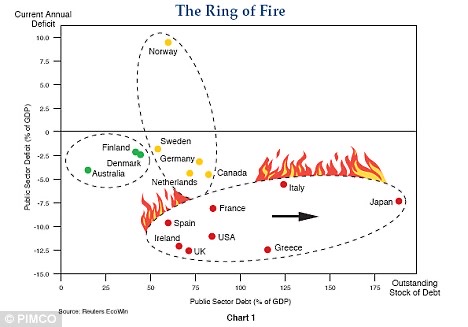
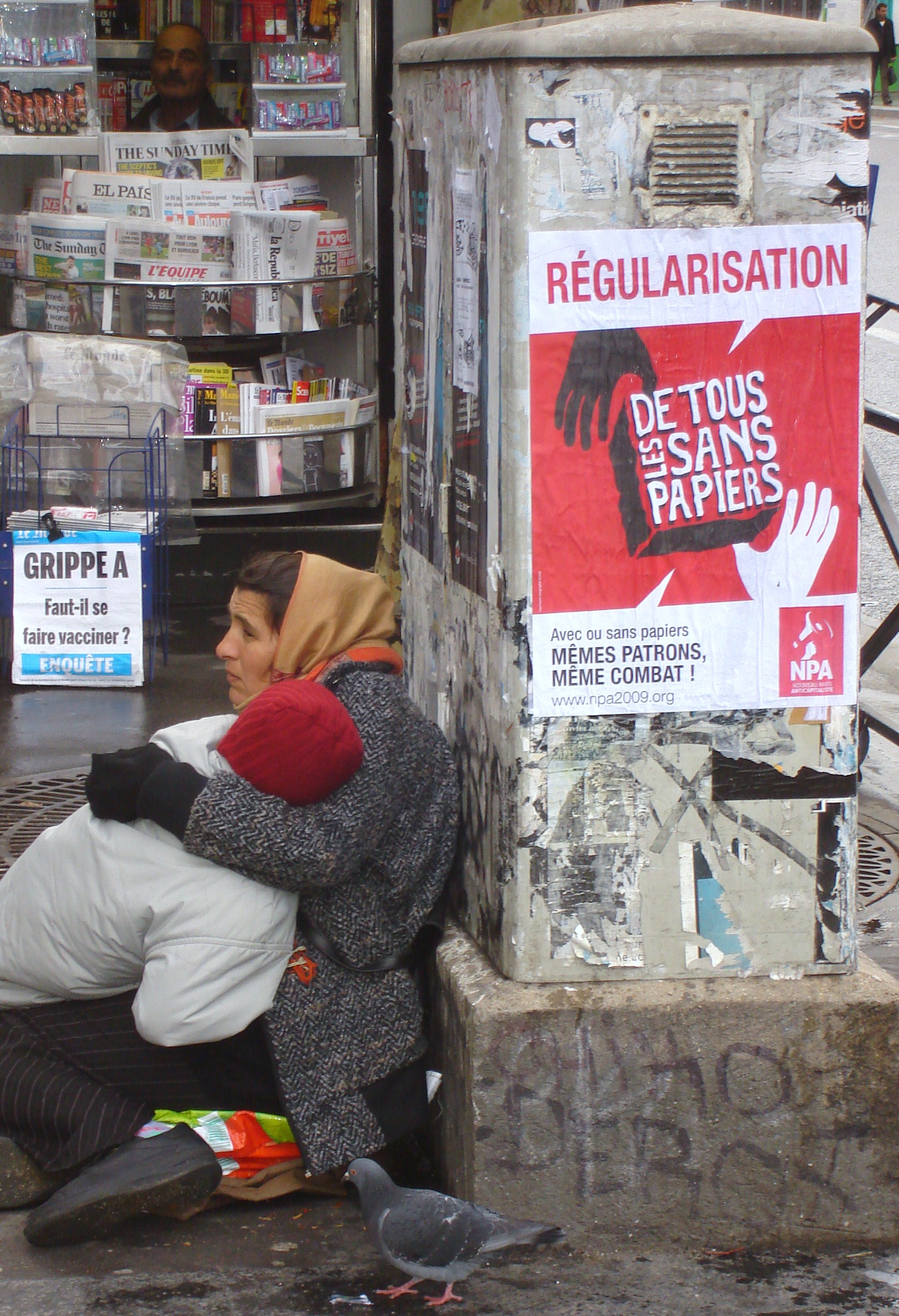
Just as this chart showed at the time of the Global Financial Crisis, the countries in “The Ring of Fire” have experienced exceptional turbulence and turmoil in the years after the crisis. For example, the UK has had austerity budgets, a no-growth economy, Brexit and the ‘shock therapy’ of the COVID-19 pandemic. The US, on the other hand, has clashed with its allies, seen a new cold war emerge with rivals China and Russia, and experienced significant domestic unrest, culminating in the storming of its seat of Government, the Capitol. Just as now (2021) 2009 was a year in which the questions revolved around receiving a vaccine (for H1N1) and how best to affirm a person’s identity and citizenship. Photo: David South Iceland saw its banking system collapse during the Global Financial Crisis, sparking demonstrations (October 2008-2011) and the “Pots and Pans Revolution”. Photo: David South
A conference in Geneva struck a pessimistic note on the current global financial crisis and any hope for a new social and economic order. The conference asked “whether current policy reforms are conducive to a transformative social change or if they only reproduce the status quo.”
A March 2009 IMF report on the downturn’s affect on the Global South and developing countries found that “fluctuating commodity prices, high fuel costs, the rise in food prices in addition to a decrease in remittances, foreign direct investment and aid flow could mean an increase in the financing needs of low-income countries by at least US $25 billion.”
The presenters at the conference painted a picture of a robust neo-liberal economic order that is already in the process of dusting itself off from the crisis and restoring its dominance.
Bob Jessop, from the University of Lancaster, captured the paralysis of opposition to the neo-liberal order by saying “They are busy doing it and we are busy talking about it.”
To paraphrase philosopher Friedrich Nietzsche, that which does not kill us makes us stronger. Neo-liberalism may in fact be strengthened by the crisis, according to presenters. It will evolve and take on new forms, they argued.
The world’s business elites have an enormous capacity to re-shape the rules of the economic game back in their favour. While the massive state support to the banking sector had led some to believe governments were restoring faith in public investments, in fact state support is seen as “timely, targeted and temporary.”
When asked about the future as the crisis passes and countries come out of recession, the presenters believed this was a short-term recovery, and that far worse economic crises would be coming in the next five to 10 years.
Andrew Martin Fischer, from the Institute for Social Studies at Erasmus University, believes the harmful effects of the bailouts will be pushed to the periphery over the next five to 10 years, harming the poor. He also believes a major financial crisis is brewing in China. He called ‘China the fault line in the future.’
The powerful, he pointed out, displaced the costs of their mistakes onto other people. Proponents of different approaches had missed the moment because they were not able to present off-the-shelf strategies that could be deployed in a crisis on short notice. Thus, they had left the field open to neo-liberal solutions.
The global crisis in the short-term has not been worse because of unprecedented global cooperation. Keynsian measures have been used to solve the crisis, but are also used to preserve Wall Street. Also, the enormous contribution of growth in China and India means there are other sources of wealth in the world than just the North.
Getting back to normal should not be what we are doing, the panellists concluded at the conference’s final session. Governments should look at new opportunities for social policy. The panellists were disturbed that the International Monetary Fund (IMF) is seen as part of the solution. This means deep cuts in public expenditure are coming. There will not be a trickle down of wealth and the imbalances from before the crisis will remain. In short, the system was not working before the crisis.
Some policy suggestions put forward included: rural income guarantees, managed migration to support development goals, making a gender perspective critical to development. Governments should take a preventive approach to tackle future crises. Unfortunately, it now seems no money is left to address these problems. Yet business as usual is not an option with so many inequalities and imbalances.
“This conference on the social and political consequences of crisis is a critical subject for debate at this juncture,” said UNRISD’s director, Dr. Sarah Cook. “We are now at a point where many countries, particularly in the North, are emerging out of the severe shock of immediate crisis. Discussions of alternative policies and institutional arrangements at national and global levels may become less urgent; the status quo is reasserting itself and the space for ideas and policies that offer the possibilities of more stable, sustainable and equitable development will quickly shrink.”
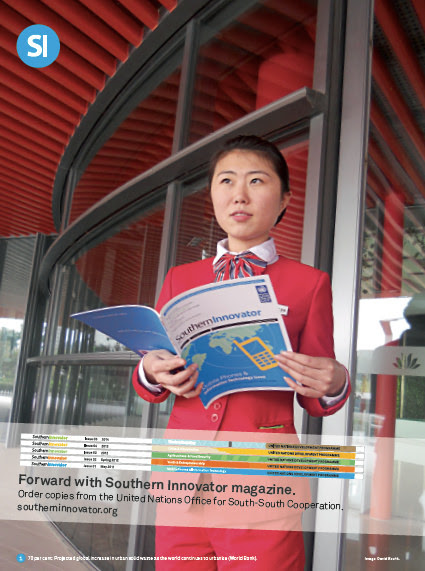
Southern Innovator Magazine was developed from 2008-2010 in London, New York and Iceland by the United Nations in response to the Global Financial Crisis and was launched in 2011.
From 1997 to 1999, I worked as the head of communications for the United Nations mission in Mongolia. The country was already experiencing a severe economic crisis as a result of its transition to free markets and democracy from the Soviet economic system. The scale of the economic collapse following the fall of communism was described at the time as the worst peacetime, post-WWII economic collapse. On top of this challenge, the Asian economic crisis erupted.
You can read the Mongolia Update 1998 book I wrote here: http://www.scribd.com/doc/20864541/Mongolia-Update-1998-Book. It shows how chaotic events are in the middle of a major crisis. Some of the key lessons we learned during this time include: 1) transparency: trust was critical and all our work was done under the full glare of public and media scrutiny, 2) action: with our existing budgets we made sure to keep doing and spending to hire people, 3) strategy: to encourage the growth of businesses and innovation, in particular the take-up of new information technologies.
African youth need to play more according to a new landmark study published in the UK’s leading medical journal, The Lancet. The study tackles the high rates of illiteracy and educational under-achievement in Africa and finds that malnourishment and lack of stimulation are leaving millions unable to benefit from schooling. It found projects that encouraged learning through play led to children boosting their IQs and getting better reading skills. And it comes up with a very simple and low-cost solution – but excellent opportunity for entrepreneurs – toys and play.
“These are not high tech interventions,” said team leader for the study, Professor Sally McGregor of the Institute of Child Health of University College London. “Research over decades in Jamaica (and other countries) has shown that women with only primary school-level education and a few home made toys can be trained to make a significant difference in the education, intelligence and mental health of disadvantaged children. The Millennium Goal of universal primary education for all cannot be met unless these children’s poor development is tackled.”
The paper – Strategies to Avoid the Loss of Developmental Potential among Over 200 Million Children in the Developing World – is published in three parts in the journal.
Twenty projects around the world were evaluated for the benefits they produce for children under five who use toys. McGregor, who has set up several projects in Kenya, Tanzania and Uganda designing and constructing toys using whatever materials are available, was appalled by the widespread neglect of play throughout these countries. With play, the study found children read better, have better mental health and better self-esteem. In Africa it is ‘desperate, really desperate’ she says.
African primary school enrolments and literacy rates are among the lowest in the world, with over 42 million school children in sub-Saharan Africa not enrolled in school, and many children not able to afford to go or stay in primary school. Today a little more than half of African adults are literate and some 60 per cent of children go to school, according to UNESCO. The agency has forecasted the need for an additional 1.6 million teachers in Sub-Saharan African classrooms by 2015 – an increase of 68 percent.
The materials used to construct the toys do not need to be expensive or sophisticated. Toys can be constructed from banana trees, mud, corn on the cob, old plastic bottles, or cloth and straw dolls. It is key that the toys are safe for children under five and that anyone building such toys for sale must follow existing manuals.
McGregor continues: ‘One mother in a village was doing marvellous things with tiny scraps of material to make a doll. She received no recognition in the village for the work she was doing yet it was so important. It doesn’t take much – dolls or simple wooden blocks – they are so versatile. You see schools with nothing – it is unforgivable. The problem is how poor these people are – food just takes priority over toys – it is that stark.”
Locally produced toys are key to resolving this crisis for several reasons. Cost is the most important, with those most adversely affected also the least able to pay for toys and who are already living a precarious existence where basic survival takes precedence over play. Another factor is Africa being home to the countries who import the least number of toys: Somalia, Liberia, Togo, Rwanda and Chad. But the situation for African toymakers is often desperate as well, with many craft workers living at the economic margins. Several initiatives have emerged in the last couple of years to address this problem and ensure African toys are local and toymakers earn a living.
Initiatives like the African Toyshop based in Johannesburg, South Africa – a fair trade business – work to ensure African toymakers can make a living and get their wares to as wide a market as possible. The toymakers featured all use natural resources or recycled materials. Most work at the village level and produce toys that are culturally relevant to Africa. The organization COFTA – Cooperation For Fair Trade in Africa – is a network of Fair Trade producer Organizations in Africa involved and working with disadvantaged grassroots producers to eliminate poverty through fair trade. It is an excellent resource for grassroots organizations wanting to work with African toymakers.
Published: January 2007
Resources
The UK charity TALC – Teaching-aids At Low Cost – is planning to make available toy making manuals on a CD. Tel: (0) 1727 853869
Book: Africa on the Move: Toys from West Africa Stefan Eisenhofer, Karin Guggeis, Jacques Froidevaux Stuttgart, Germany: Arnoldsche, 2004. 216 pp., 195 color, 28 b/w illustrations. $75.00, cloth.
Development Challenges, South-South Solutions was launched as an e-newsletter in 2006 by UNDP’s South-South Cooperation Unit (now the United Nations Office for South-South Cooperation) based in New York, USA. It led on profiling the rise of the global South as an economic powerhouse and was one of the first regular publications to champion the global South’s innovators, entrepreneurs, and pioneers. It tracked the key trends that are now so profoundly reshaping how development is seen and done. This includes the rapid take-up of mobile phones and information technology in the global South (as profiled in the first issue of magazine Southern Innovator), the move to becoming a majority urban world, a growing global innovator culture, and the plethora of solutions being developed in the global South to tackle its problems and improve living conditions and boost human development. The success of the e-newsletter led to the launch of the magazine Southern Innovator.
“A political anthropologist, she uses complex-systems tools to analyze three different databases: Mongolians’ changing ideas on democracy and capitalism, the emergence of early states all over the world, and 19-20th century Cozumel.”
The Santa Fe Institute “is the world’s leading research center for complex systems science.”
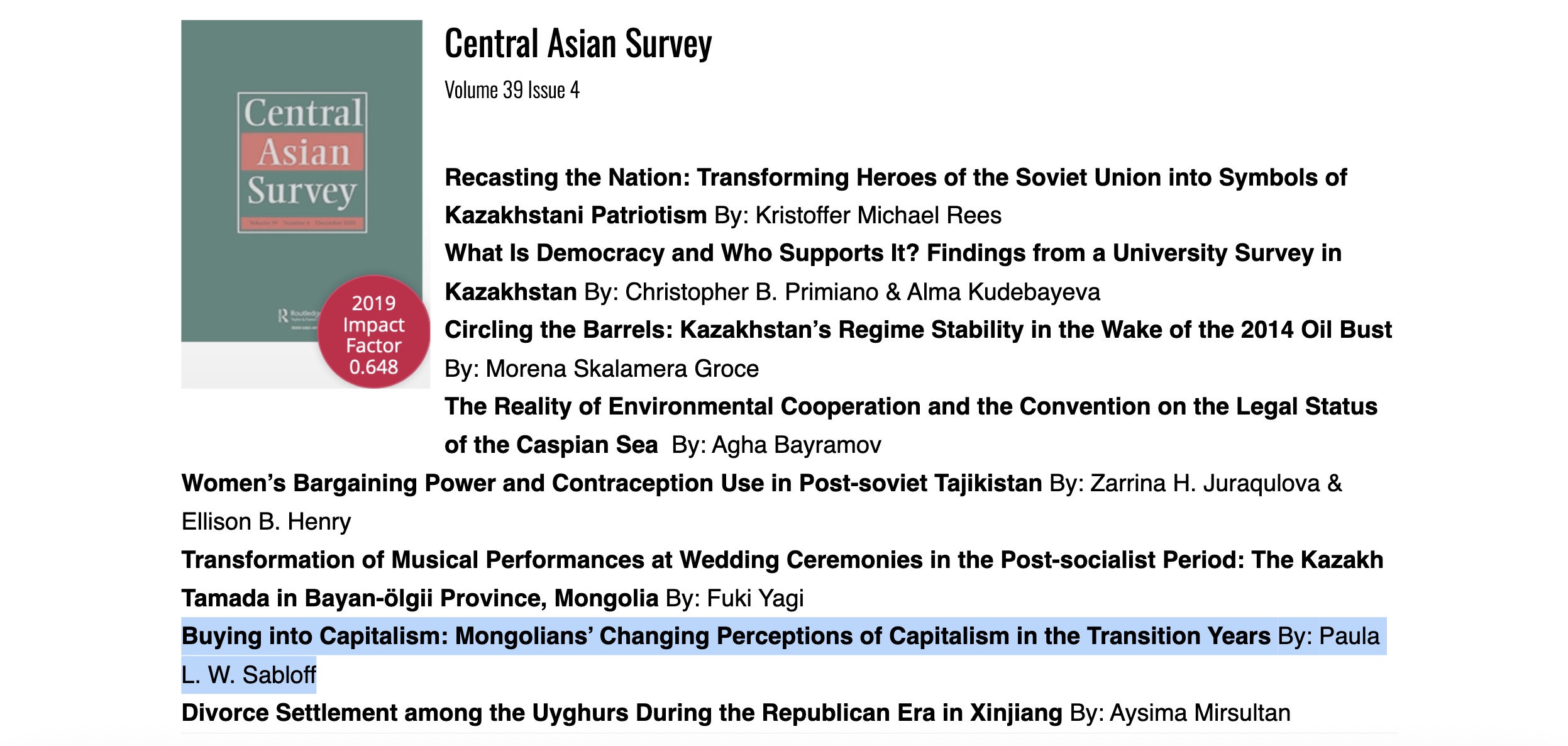
Paula L. W. Sabloff (2020) Buying into capitalism: Mongolians’ changing perceptions of capitalism in the transition years, Central Asian Survey, 39:4, 556-577, DOI: 10.1080/02634937.2020.1823819.
Cutting-edge medical research in China is promising to boost human health and development. Futuristic science is being conducted on a large scale and it is hoped this will increase the pace of discovery.
Around the world, rapid progress is being made in understanding the role played by genes and how they affect our overall health and susceptibility to diseases. Other developments are leading to the possibility of creating replacements for organs and other body parts that have been damaged through accidents, disease or genetic faults – without the need for organ donors.
Medical advances straight out of science fiction could be closer than many believe. By using machines and gene therapy, radical new methods will emerge to deal with damage done to human bodies as a result of accidents or disease. These solutions will become, in time, quicker, smaller and cheaper and will be available to more and more countries. They will spread outwards around the global South just as mobile phones and computing electronics have done.
In China, the government is investing heavily in this cutting-edge research and attracting investment and projects from around the world to increase the pace of progress in these areas.
In September 2013, Reuters reported that a 22-year-old man named Xiaolian in Fuzhou, China had a new nose grown on his forehead to replace his original nose that had been damaged in a car accident. Conventional reconstructive surgery was not possible, so this radical new approach was taken.
The advantages of growing a nose on the patient include a reduced chance of rejection by the body when the new organ is attached. Transplants of body parts from other people come with a high risk of rejection and require many drugs to prevent it. Using skin near where the transplant is to take place, on the face, improves the chances of success and the blood vessels in the forehead offer nourishment to grow the new nose.
The procedure works like this: tissue expanders are placed on the patient’s forehead. As it grows, the doctors cut the mass of tissue into the shape of a nose and cartilage from the patient’s ribs is placed inside to give the nose shape. The new proboscis (http://en.wikipedia.org/wiki/Proboscis) grows under the skin until it is the right size and then transplanted onto the patient’s face where their old nose was.
Many believe this is just the beginning and that in the future replacement organs will be also grown in a lab. And this is where the new medical technology of 3D bioprinting comes into play.
3D printing machines (http://www.k8200.eu/), or fabricators, can create 3D objects based on a design sent from a computer. This concept is now also being applied to biological materials with 3D bioprinters.
Hangzhou Dianzi University of Electronic Science and Technology (hdu.edu.cn) in China launched the Regenovo 3D Bio-printer in August 2013. It prints living tissue and looks like a silver metal frame with various nozzles situated above a platform for printing the tissue. Its makers claim it can print a liver in 40 minutes to an hour or an ear in 50 minutes.
A sheet of hydrogel is placed on the platform and then the bioprinter deposits cells into the hydrogel. As the process is repeated over and over again, layer after layer, a 3D biological structure emerges.
Unique Technology (sinounic.com) in Qingdao, Shandong province has also launched a 3D printer called “Re-human”. It is capable of printing at 15 microns and can operate in temperatures of between 0 and 300 degrees Celsius. Scientists there are working on clinical trials of 3D-printed tissue scaffolds and bones.
China is very advanced in the development of 3D manufacturing technology, and is home to the world’s largest 3D printers, developed by Dalian University of Technology (http://www.dlut.edu.cn/en/). Another Chinese company pioneering this technology is Shaanxi Hengtong Intelligent Machines (http://www.china-rpm.com/english/), which sells various laser-using rapid prototyping machines and 3D machines.
Around the world, bioprinting is currently being pioneered for printing heart valves, ears, artificial bones, joints, vascular tubes, and skin for grafts.
The number of scientific papers mentioning bioprinting tripled between 2008 and 2011 according to Popular Science. But why is this happening? Three things are occurring at once: sophisticated 3D printers are now available, there are significant advances in regenerative medicine, and CAD (computer-aided design) (http://en.wikipedia.org/wiki/Computer-aided_design) software continues to become more advanced.
San Diego, California’s Organovo (organovo.com), a company that designs and creates functional human tissues using 3D bioprinting, has big ambitions for the technology.
“Getting to a whole organ-in-a-box that’s plug-and-play and ready to go, I believe that could happen in my lifetime,” its chief technology officer, Sharon Presnell, told Popular Science.
In the field of gene science, China is also investing significant resources to make rapid progress. China is working to make its genetic research industry into one of the country’s pillar industries.
Beijing Genomics Institute (BGI) (http://www.genomics.cn/en/index) is the world’s largest genome-mapping institute, with more than 1,000 biological analysis devices working with top-of-the-line genome-sequencing machines. What makes BGI different is scale: it can handle data in vast quantities and industrialize its research, according to China Daily.
But what will they do with this information? By doing embryo screening, it will be possible to pick the brightest zygote (http://en.wikipedia.org/wiki/Zygote) and ensure an entire generation’s intelligence is increased by five to 15 IQ (intelligence quotient) points. This could have a significant impact on the country’s economic performance, the researchers believe, and help in the country making more rapid economic and development gains. This line of research is also seen globally as being fraught with ethical dilemmas and is controversial.
But the Chinese researchers believe the country’s economic productivity, business success, international competitiveness and the amount of innovation in the economy could all increase with an IQ boost.
The eggs are fertilized in the lab with the father’s sperm and the embryos are tested until they find the smartest one.
Embryo analysis could take place on a large scale in a few years. But it is not just better brains that are possible with this technique: choices can be made about hair and eye colors, and physical attributes such as body shape.
This level of research is benefiting from vast investments in higher education in China.
And it isn’t just human beings receiving the vast investment in gene research.
To help agriculture and agribusiness, the National Center for Gene Research (NCGR) (ncgr.ac.cn) is mapping and sequencing the rice genome, and genomes of other organisms. Since 2007, it has been using the latest generation sequencing technology to map the rice genome to identify common genetic factors. It has 50 million base pairs of rice genomic DNA sequences in its public database. It is hoped this will lead to more robust rice varieties that can withstand disease and climate fluctuations and help meet the food needs of a growing global population.
Published: November 2013
Resources
1) Wake Forest Institute for Regenerative Medicine: Wake Forest Innovations was created in 2012 as a new operating division of Wake Forest Baptist Medical Center. As the Medical Center’s technology commercialization arm, Wake Forest Innovations supports scholarship, investing in the innovative potential of academic and clinical communities and helping translate ideas and discoveries into valuable commercial products and services. Website: http://www.wakehealth.edu/WFIRM/
2) DEKA Research & Development: DEKA Research and Development Corporation is an established company focused on the development of radical new healthcare technologies that span a diverse set of applications. Website: http://www.dekaresearch.com/index.shtml
3) Organovo: Organovo design and create functional human tissues using proprietary three-dimensional bioprinting technology. The goal is to build living human tissues that are proven to function like native tissues. Website: http://www.organovo.com/
6) Autodesk is working on CAD software for bioprinting. Website: autodesk.co.uk
7) BGI Cognitive Genetics Project: BGI Cognitive Genomics is an interdisciplinary research group at BGI, one of the largest genomics institutes in the world. The focus is human cognition, with emphasis on the use of tools made available by rapid advances in DNA sequencing technology. Website: https://www.cog-genomics.org/
8) Institute of Genetics and Developmental Biology Chinese Academy of Sciences: The mission of the institute is to address fundamental questions in genetics and developmental biology and to develop new technologies for the uses in health care and agriculture sciences as well as to meet the nation’s strategic needs in science and technology. Scientists in the institute use both plant and animal models to address fundamental questions in life sciences, such as genetic control of growth and development, gene expression, signal transduction, structural and functional genomics, biotech and molecular breeding, bioinformatics and systems biology. As China owns the biggest agricultural market in the world, researchers in the Institute have also made significant efforts on water saving agriculture and agronomic studies, focusing on the improvement of crop productivity and quality as well as bio-safety. Website: http://english.genetics.cas.cn/au/
Development Challenges, South-South Solutions was launched as an e-newsletter in 2006 by UNDP’s South-South Cooperation Unit (now the United Nations Office for South-South Cooperation) based in New York, USA. It led on profiling the rise of the global South as an economic powerhouse and was one of the first regular publications to champion the global South’s innovators, entrepreneurs, and pioneers. It tracked the key trends that are now so profoundly reshaping how development is seen and done. This includes the rapid take-up of mobile phones and information technology in the global South (as profiled in the first issue of magazine Southern Innovator), the move to becoming a majority urban world, a growing global innovator culture, and the plethora of solutions being developed in the global South to tackle its problems and improve living conditions and boost human development. The success of the e-newsletter led to the launch of the magazine Southern Innovator.








 David South Consulting

You must be logged in to post a comment.