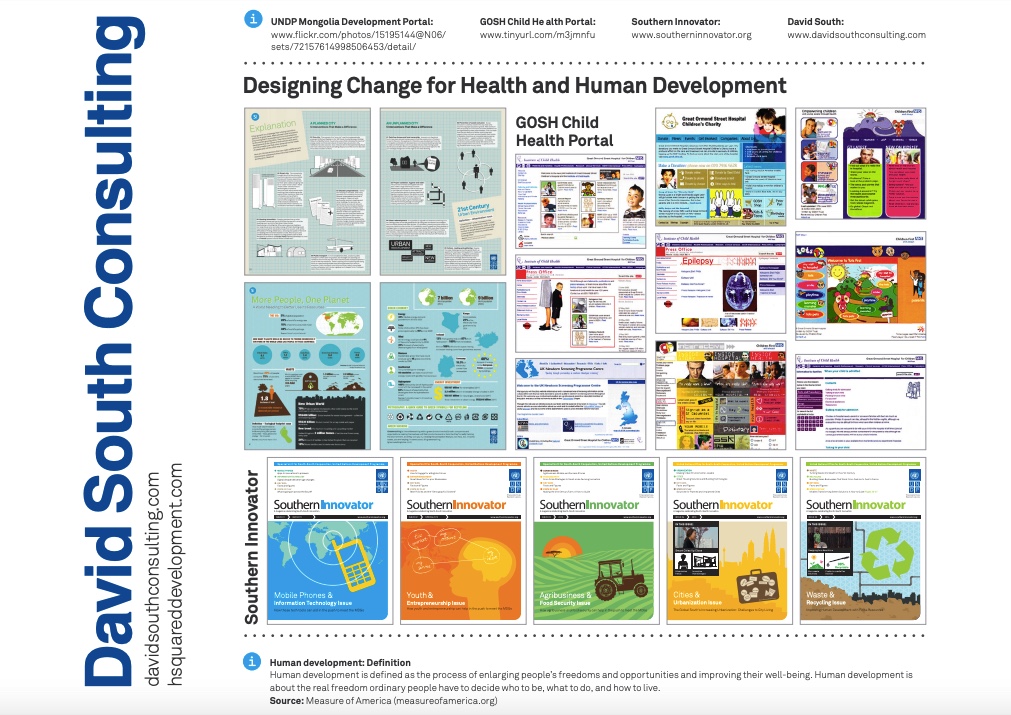
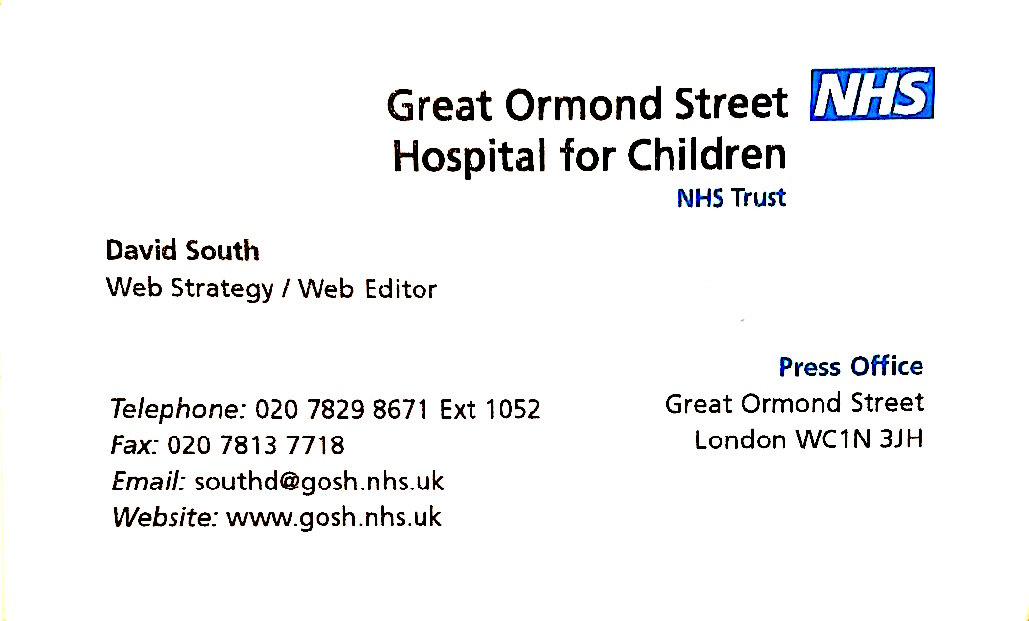
The first business card for David South Consulting. Inspired by the Dutch post office’s (PTT Post) corporate identity developed by Studio Dumbar, the card was designed by Brian Cartwright of Toronto’s Rocket Design. Work at this time included investigative journalism for Canada’s top magazines and newspapers, magazine and newsletter editing, and communications for a prestigious medical history funder. From the very beginning, we were inspired by Dutch design for the public sector and the importance placed on this in The Netherlands. The work of Hein van Haaren, former head of the PTT’s Aesthetics Department, and graphic design pioneers Wim Crouwel and Gert Dumbar, still remain key influences to this day.As a reporter for two Financial Times newsletters, New Media Markets and Screen Finance, I covered the rapidly growing UK (and Scandinavian) television and new media markets and the expanding film-financing sector in Europe.This Canadian alternative bi-weekly magazine broke new ground with its investigative journalism and online journalism. It gathered together highly talented, young contributors, many of whom are leading figures in journalism, the arts and technology today.As the UN’s head of communications in Mongolia (1997-1999), I founded the UNDP Mongolia Communications Office and oversaw a two-year communications programme to respond to the biggest post-WWII peacetime economic collapse. Award-winning and influential, the Office pioneered the use of the Internet in international development crisis response and was called a “role model” for the rest of the United Nations.Following on from the success of the UNDP Mongolia Communications Office, I worked with the head of the UN Ukraine mission to strategically relaunch the mission web portal, incorporating the newly launched UN Millennium Development Goals (MDGs).Drawing on my extensive experience strategically using the Internet to achieve communications goals, I was hired to head a two-year project to launch the GOSH Child Health Web Portal. Award-winning, it was called a “role model” for the wider National Health Service (NHS) and one of the most admired websites in the UK public and charity sectors. The website was cited as contributing to the hospital’s high rating and attracted additional funding for its research.As part of an assessment of Mongolia’s media capabilities to communicate the Millennium Development Goals (MDGs), infographics were introduced for the first time to the mission.With the Global Financial Crisis erupting, I was retained by the United Nations Office for South-South Cooperation (UNOSSC) to research and write a monthly e-newsletter and develop a new magazine to offer solutions and raise the profile of South-South cooperation as a development response to the crisis. Both publications proved highly influential, leading to the wider adoption of South-South cooperation and to national governments picking up the innovation agenda being brought about by the rapid take-up of mobile phones and information technology. The magazine Southern Innovator was called “a terrific tour de force of what is interesting, cutting edge and relevant in the global mobile/ICT space…”.In 2010, David South Consulting was relaunched with a new logo and branding for the 21st century. It represented a new phase, as work became global and very high-profile and influential. The foundations have been laid for future growth and expansion.
Watch Magazine
Watch Magazine was launched in 1994 and quickly became the authentic 1990s voice of Toronto’s youth. As one of Toronto’s first youth start-ups, Youth Culture became a successful youth communications brand and expanded to national distribution by the late 1990s. Launched during the economic austerity years in Canada, it was one of the contributors to Toronto’s economic resurgence and renewed business vitality.
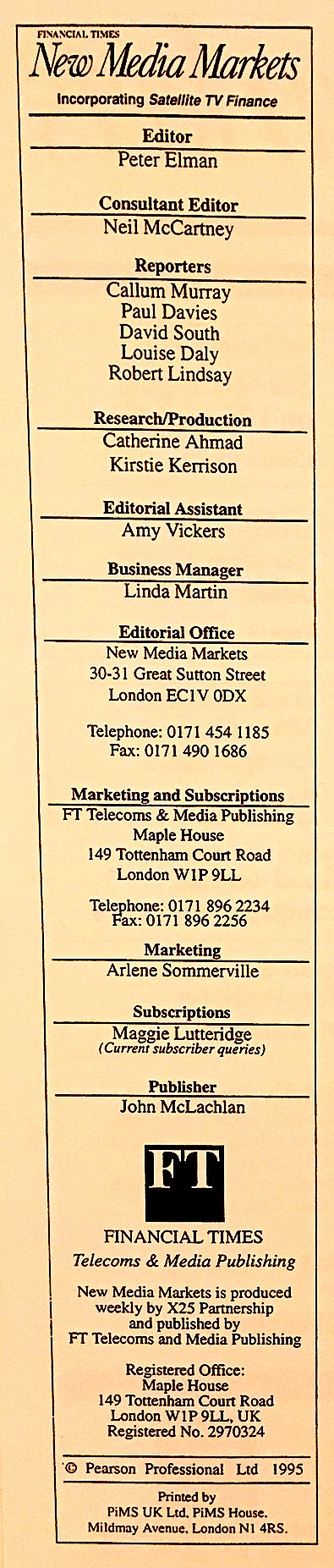
New Media Markets
As a reporter for two Financial Times newsletters, New Media Markets and Screen Finance, I covered the rapidly growing UK (and Scandinavian) television and new media markets and the expanding film-financing sector in Europe.
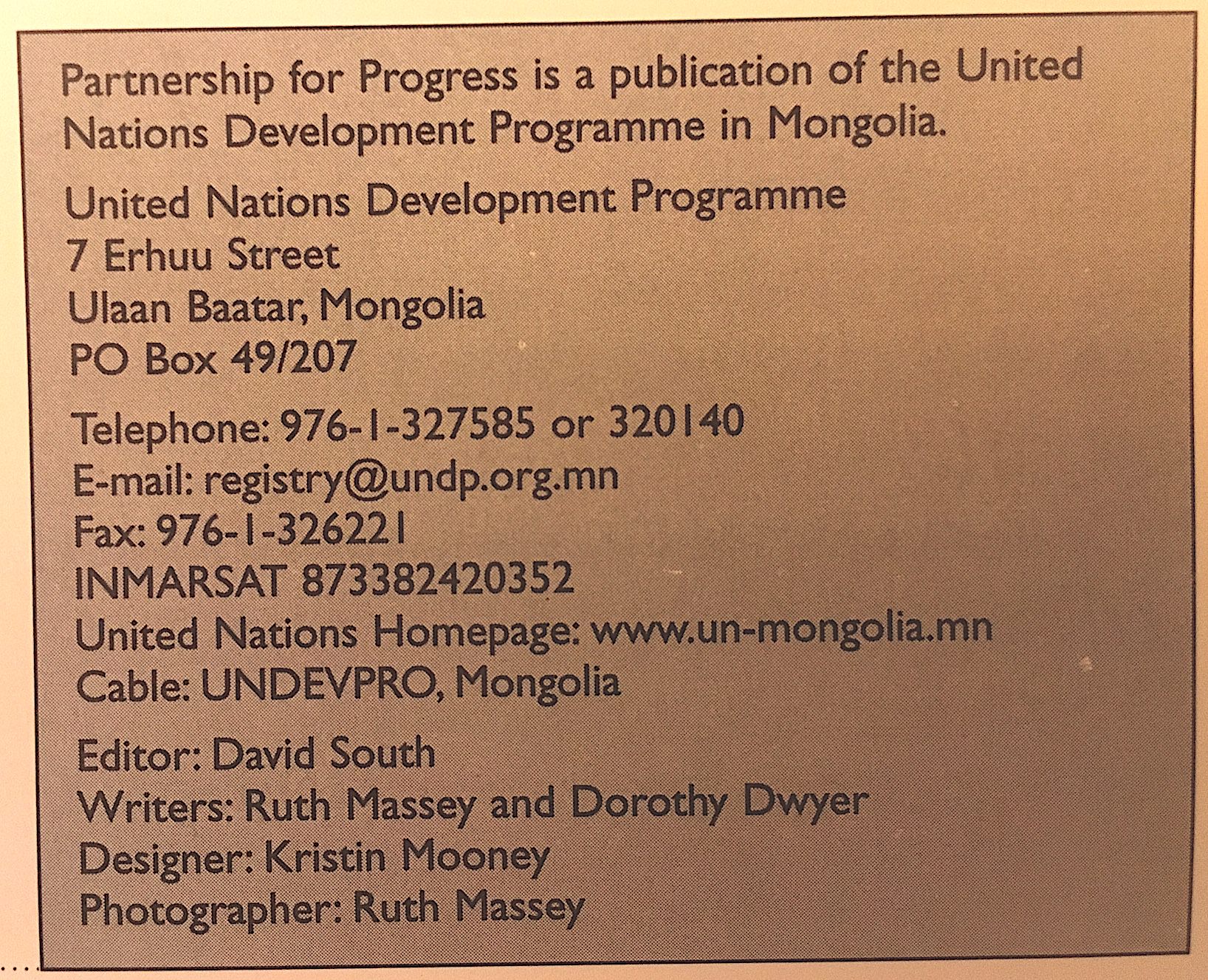
A Partnership for Progress: The United Nations Development Programme in Mongolia
The Partnership for Progress brochure raised the curtain on the UN’s response to Mongolia’s economic and social crisis in the late 1990s. It celebrated Mongolia’s independence and its flourishing media scene and free expression after the long years of Communism and state repression.
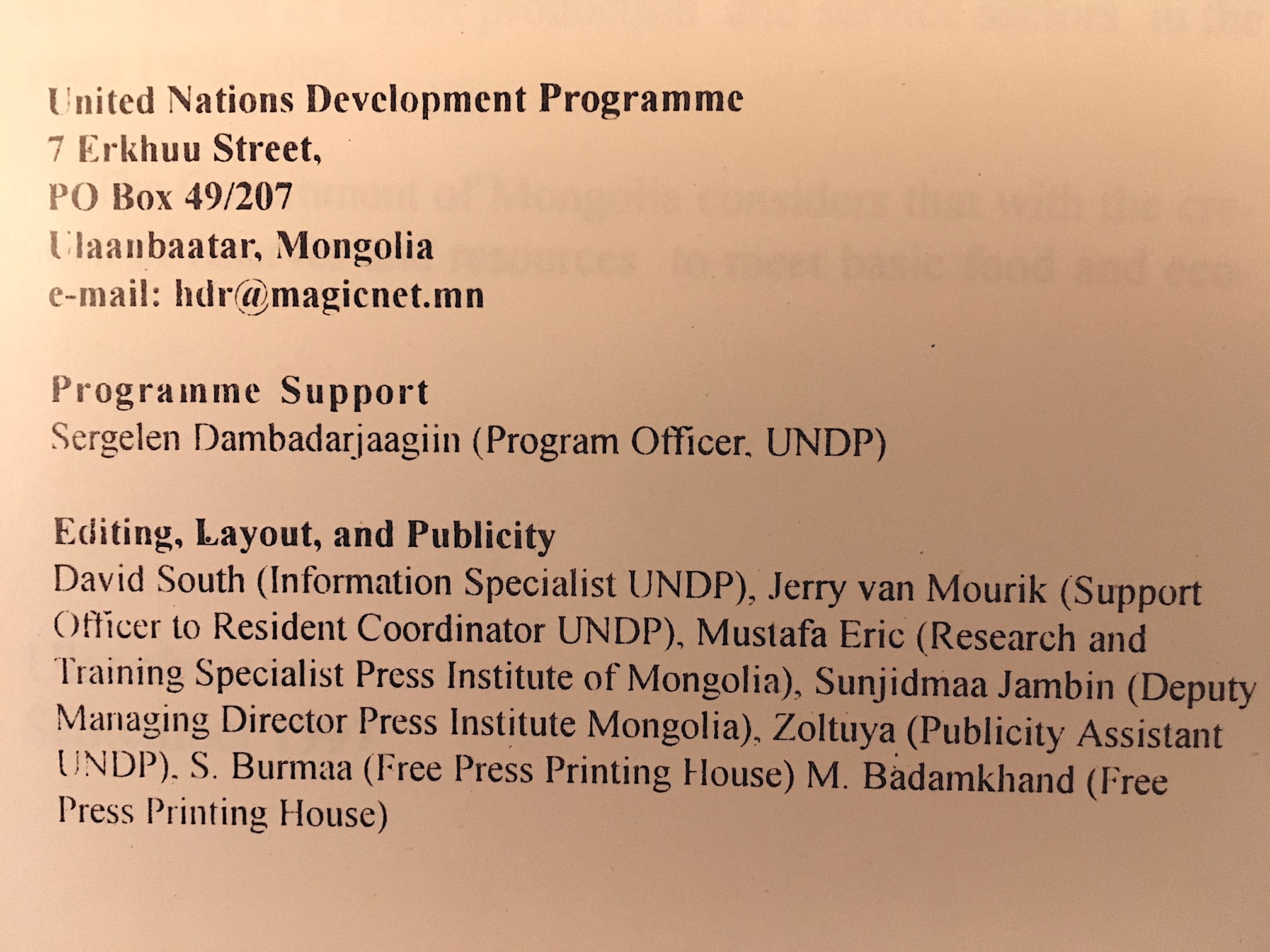
Human Development Report Mongolia 1997
The first human development report for Mongolia captured in data and stories the damage done by the harsh transition from Communism and the imposition of austerity during the 1990s. It found high levels of poverty in the country and a heavy toll taken on people’s health, communities and families. The report was received with great enthusiasm and had two print runs.
Blue Sky Bulletin
The Blue Sky Bulletin newsletter broke with the usual approach taken by UN newsletters of offering up ‘grip n’ grin’ pictures of men in suits and instead offered actual stories and data on how Mongolia’s transition crisis was faring. It was distributed within Mongolia and by post and email outside the country to help raise awareness of the country and its development challenges.
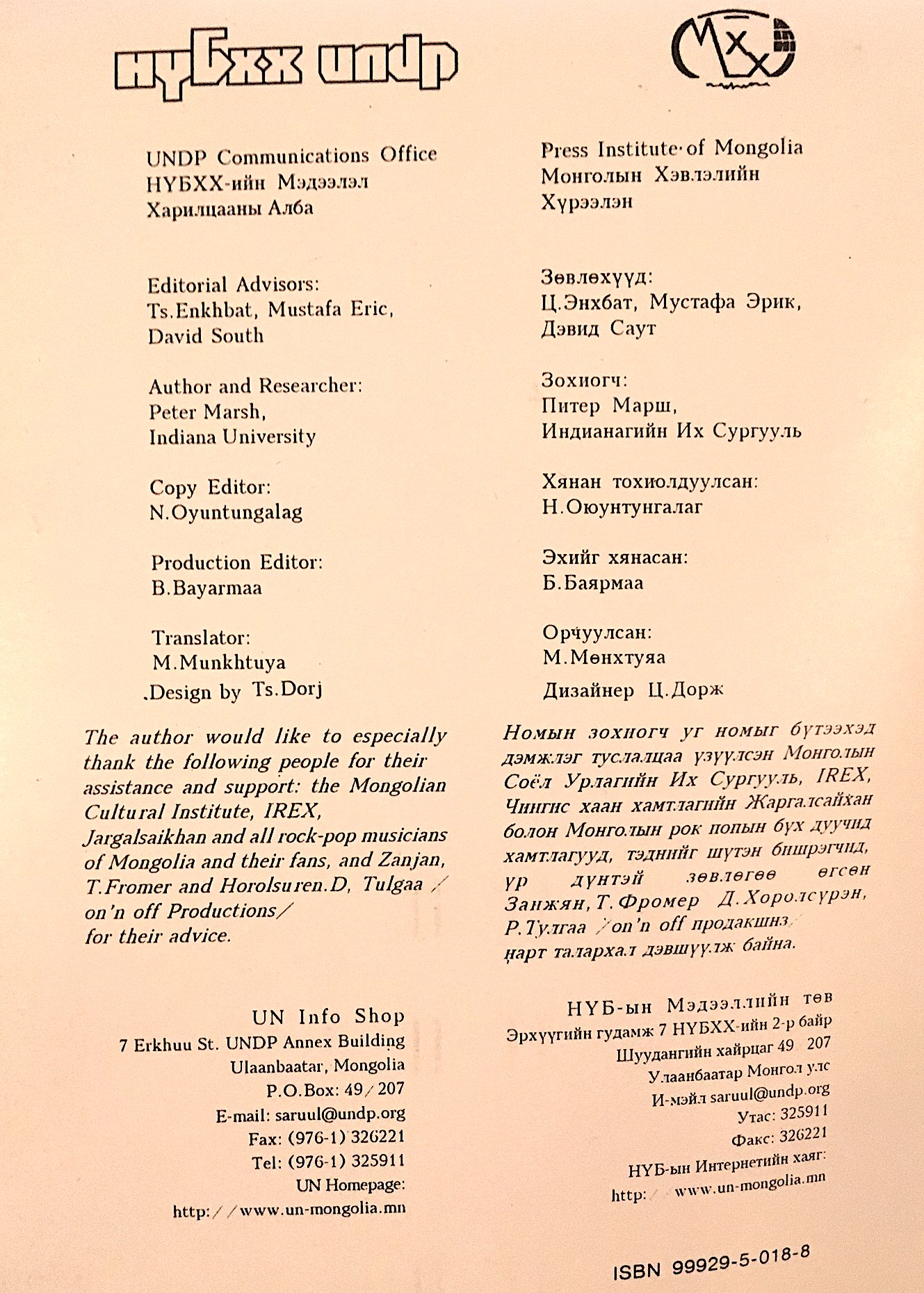
Mongolian Rock-Pop Book
Researched and written by ethnomusicologist Dr. Peter Marsh, this book on the impact of Mongolian rock and pop on the country’s business and entrepreneurship culture, shone a spotlight on a lively modern music scene.
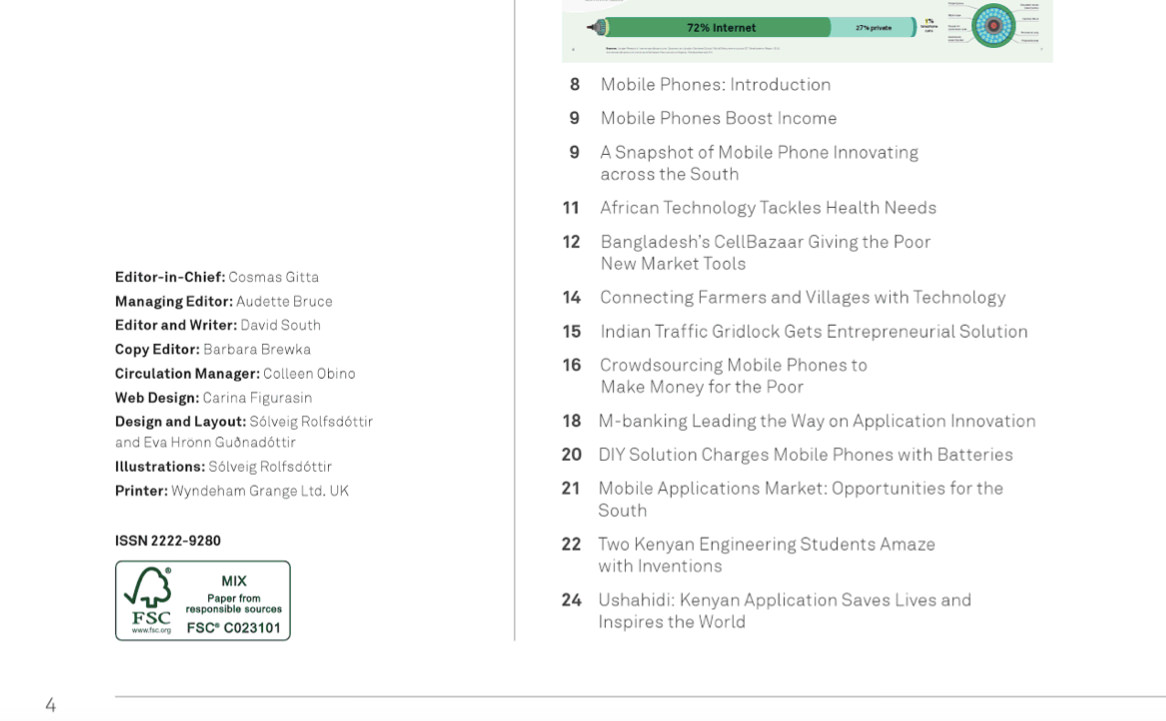
Southern Innovator Magazine Issue 1: Mobile Phones and Information Technology
The first issue of Southern Innovator was called “a terrific tour de force of what is interesting, cutting edge and relevant in the global mobile/ICT space… ” and a “Beautiful, inspiring magazine from UNDP on South-South innovation.”
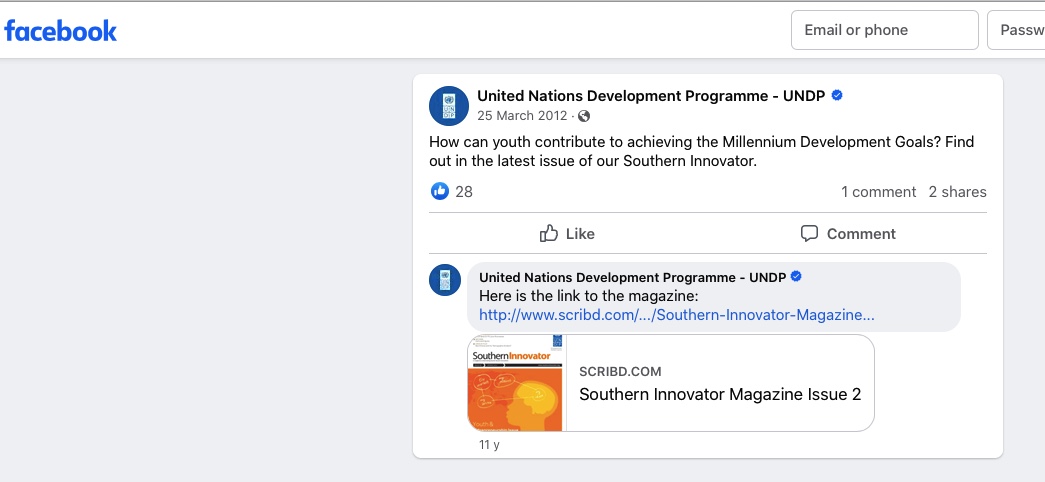
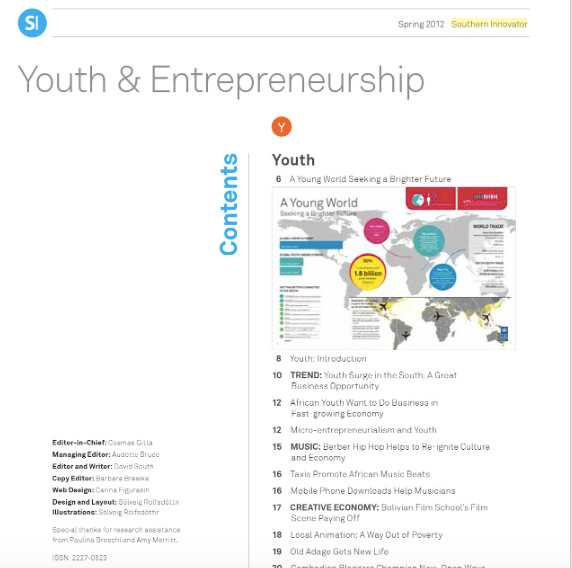
Southern Innovator Magazine Issue 2: Youth and Entrepreneurship
Issue 2 of Southern Innovator drew praise for painting a positive picture of how the world’s development challenges could be taken on: “Thank you David – Your insight into the issues facing us a[s] [a] ‘global Village’ is made real in the detail of your article – 10 out of 10 from the moladi team.”
Southern Innovator Magazine Issue 3: Agribusiness and Food Security
Issue 3 was on the theme of agribusiness and food security.
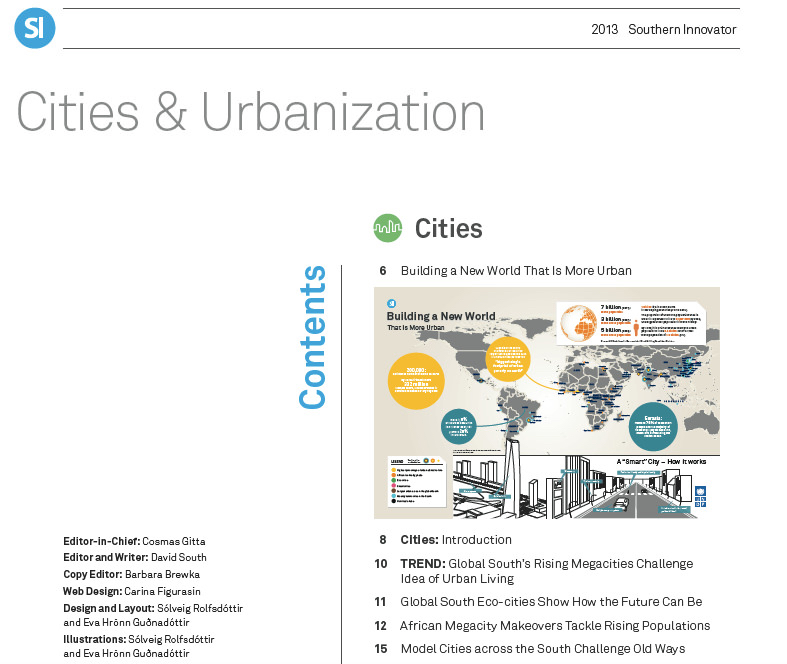
Southern Innovator Magazine Issue 4: Cities and Urbanization
Issue 4 on cities and urbanization saw Southern Innovator visit innovative new cities across Asia. Readers said “The magazine looks fantastic, great content and a beautiful design!” It is designed by Icelandic graphic designer and illustrator Solveig Rolfsdottir.
Southern Innovator Magazine Issue 5: Waste and Recycling
By this point, the Southern Innovator brand was drawing praise for being “one of the best sources out there for news and info on #solutions to #SouthSouth challenges.” Readers also said they “really enjoyed reading them [Southern Innovator], impressive work & a great resource. Looking forward to Issue 6. My best wishes to you & your team at SI.”
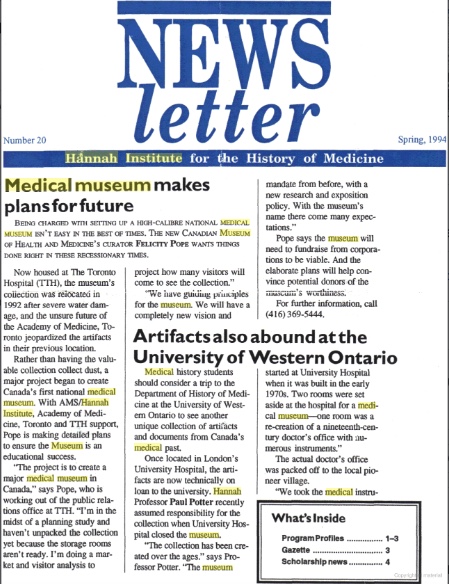
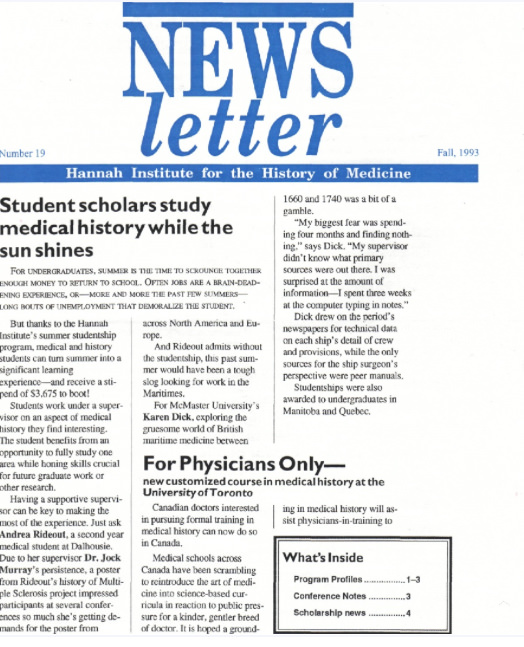
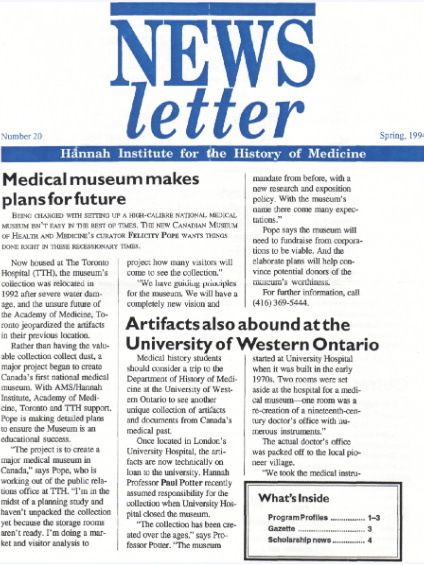
Being charged with setting up a high-calibre national medical museum isn’t easy in the best of times. The new Canadian Museum of Health and Medicine’s curator Felicity Pope wants things done right in these recessionary times.
Now housed at The Toronto Hospital (TTH), the museum’s collection was relocated in 1992 after severe water damage, and the unsure future of the Academy of Medicine, Toronto jeopardized the artifacts in their previous location.
Rather than having the valuable collection collect dust, a major project began to create Canada’s first national medical museum. With AMS/Hannah Institute, Academy of Medicine, Toronto and TTH support, Pope is making detailed plans to ensure the museum is an educational success.
“The project is to create a major medical museum in Canada,” says Pope, who is working out of the public relations office at TTH. “I’m in the midst of a planning study and haven’t unpacked the collection yet because the storage rooms aren’t ready. I’m doing a market and visitor analysis to project how many visitors will come to see the collection.”
“We have guiding principles for the museum. We will have a completely new vision and mandate from before, with a new research and exposition policy. With the museum’s name there come many expectations.”
Pope says the museum will need to fundraise from corporations to be viable. And the elaborate plans will help convince potential donors of the museum’s worthiness.
Artifacts also abound at the University of Western Ontario
Medical history students should consider a trip to the Department of History of Medicine at the University of Western Ontario to see another unique collection of artifacts and documents from Canada’s medical past.
Once located in London’s University Hospital, the artifacts are now technically on loan to the university. Hannah Professor Paul Potter recently assumed responsibility for the collection when University Hospital closed the museum.
“The collection has been created over the ages,” says Professor Potter. “The museum started at University Hospital when it was built in the early 1970s. Two rooms were set aside at the hospital for a medical museum – one room was a re-creation of a nineteenth-century doctor’s office with numerous instruments.”
The actual doctor’s office was packed off to the local pioneer village.
“We took the medical instruments and doctors’ ledgers. I took the things that were more interesting from a medical history perspective.”
And what’s there to see? For shock value there are the gruesome instruments of Victorian medicine – bloodletting knives and cups and surgical saws. Also on display is London’s first electro-cardiogram machine and microscopes dating back to the mid-1800s.
For Professor Potter, the collection livens up medical school lectures and provides a valuable research resource at the university.
Though many feel a golly-gee-whiz response when medical science leaps another hurdle towards genetic manipulation, research by two recent Royal Society Hannah Medal winners into the history of eugenics sends a chill up the spine.
Both University of Toronto’s professor Pauline Mazumdar, author of Eugenics, Human Genetics and Human Failings: The Eugenics Society, its Sources and its Critics in Britain (Routledge, 1992), and Angus McLaren, University of Victoria professor of history and author of Our Own Master Race: Eugenics in Canada, 1885-1945 (McClelland and Stewart, 1990), disclose how mainstream genetic selection once was – and possibly still remains.
“Ever since the test tube baby breakthrough a decade ago, there’s been a new concern for the spin-offs of this research,” says McLaren. “In Canada there’s a woman who was sterilized in Alberta who is now suing the Alberta government, so that is bringing it back into the consciousness that these things actually did happen.”
“Many quite respectable individuals took it as given that there must be something in eugenics. That was the difficulty in writing the book, determining who was a eugenist and who wasn’t. It was so widely believed that it was very hard to make a serious demarcation.”
Professor McLaren found winning the medal helped raise his profile. And the resulting media interest allowed him to put the issue in historical perspective.
“The problem as ever is people looking for some sort of a quick fix to social problems – hoping that some sort of genetic tampering will allow very complex problems to be surgically dealt with.”
The idiosyncracies of Canada’s medical schools can be both a strength and a drawback. An exchange program sponsored by the Hannah Institute hopes to bring the schools a little closer by opening up the communication lines from coast to coast.
The first exchange took place this April between the University of Western Ontario and the University of Calgary. Medical students met at Western for three days of talks and socializing.
“One of the objectives is to have each student work up a talk of ten minutes to stimulate further research,” says UWO Hannah Professor Paul Potter, who helped coordinate the exchange along with Calgary’s Dr. Peter Cruse.
Topics ranged from diseases among the Cree of Alberta to the old medical art of uroscopy.
Professor Potter says he hopes the exchange will become a regular annual affair, possibly with next year’s exchange matching Calgary with Halifax’s Dalhousie University.
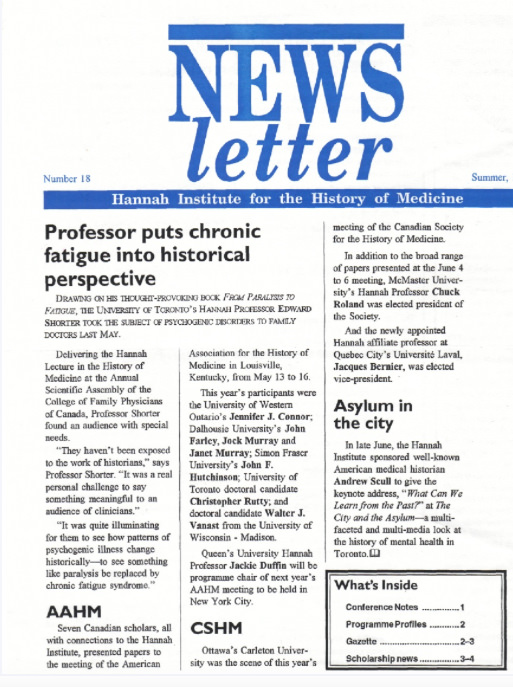
I worked as Editor and Writer for the newsletter of the Hannah Institute for the History of Medicine (under the direction of the Editor-in-Chief and Hannah Executive Director Dr. J.T. H. Connor) in the early 1990s. Located close to the University of Toronto and within a neighbourhood claiming a long association with medical and scientific discovery (Sir Frederick Banting, co-developer of insulin for the treatment of diabetes, lived at 46 Bedford Road,), the goal was to better connect Canada’s medical history community of scholars and raise the profile of the funding resources available to further the study of medical history in Canada.
“… in recent years it has become a pursuit for a growing number of researchers. … Behind much of this growth has been the Hannah Institute for the History of Medicine which has encouraged writing …”.





















 David South Consulting
You must be logged in to post a comment.