Beginning in 2011 and ending in 2014, each issue of Southern Innovator was launched at the annual Global South-South Development Expo (GSSD Expo) run by the United Nations Office for South-South Cooperation (UNOSSC). The issues (there were five) would connect with that year’s Expo theme and were intended to reinforce the solutions presented at the Expo, as well as those solutions discovered through research for the influential United Nations e-newsletter Development Challenges, South-South Solutions. An Expo was not run in 2015 for the following reason: U.S. Finds Macau Billionaire Guilty in U.N. Bribery Case.
Studies have shown the importance of reading to real change. Not just online, but in paper form. The retention of information and knowledge is greater when a person reads something in a book or a magazine. Another factor is quality design (which makes the published material both attractive and effective). Trashy, gaudy or slap-dash design, while it has its place and context, is not suitable for well-funded, transparent, public organizations seeking to communicate across borders in a professional manner. Southern Innovator was designed following the UN and UNDP design guidelines at the time, while also adhering to the UN Global Compact and the UN Consultants Remuneration Guidelines. The content was also written to follow those guidelines as well as the Plain English Campaign, which seeks to reduce the presence of “gobbledygook, jargon and misleading public information”. On top of this, the magazine benefited from experience: the experience of one of Iceland’s top graphic designers and illustrators, the team based at the UNOSSC in New York who oversaw the editing and proof reading, and the researcher, editor and writer who has led many successful and award-winning publishing ventures, including during “one of the biggest peacetime economic collapses ever”.
“What a tremendous magazine your team has produced! It’s a terrific tour de force of what is interesting, cutting edge and relevant in the global mobile/ICT space… This is great, engaging, relevant and topical stuff.” Rose Shuman, Founder & CEO, Open Mind and Question Box, Santa Monica, CA, U.S.A.
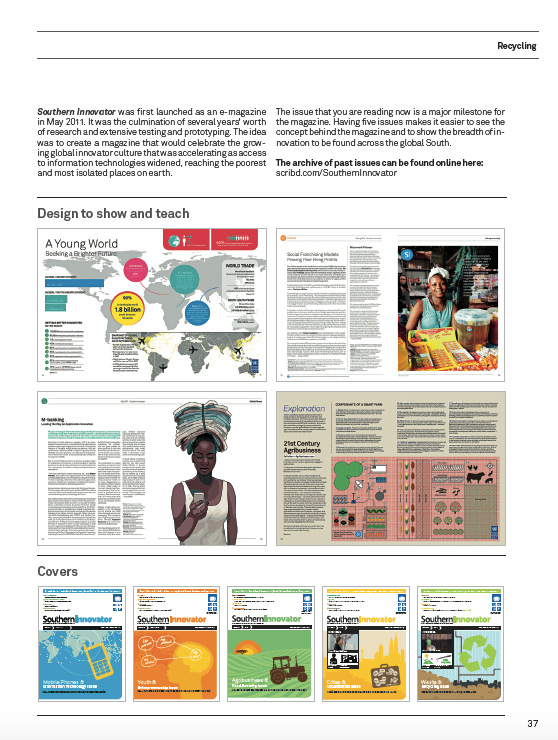
Southern Innovator Issue 1: Mobile Phones and Information Technology was published in 2011 and launched at the Expo in Rome, Italy.
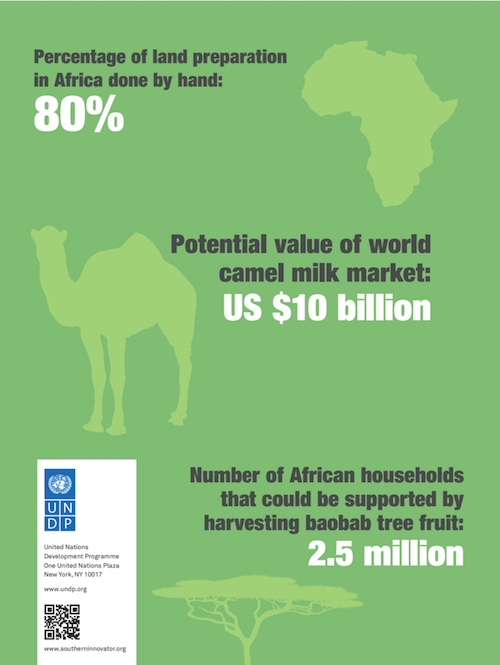
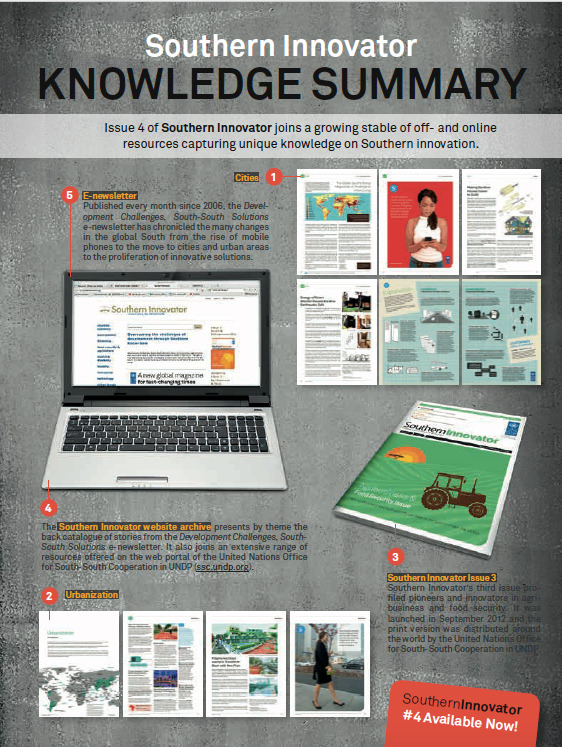
Southern Innovator Issue 2: Youth and Entrepreneurship was published in 2012 and launched at the Expo in Vienna, Austria.Southern Innovator Issue 3: Agribusiness and Food Security was published in 2012 and launched at the Expo in Vienna, Austria.Southern Innovator Issue 4: Cities and Urbanization was published in 2013 and launched at the Expo in Nairobi, Kenya (the first time in Africa).
Issue 6 of Southern Innovator was to be on the theme of science, technology and innovation. Southern Innovator Issue 5: Waste and Recycling was published in 2014 and launched at the Expo in Washington, D.C.
Why even bother printing (on paper) Southern Innovator as a magazine? “What about the trees and we live in the digital age!”, some might say.
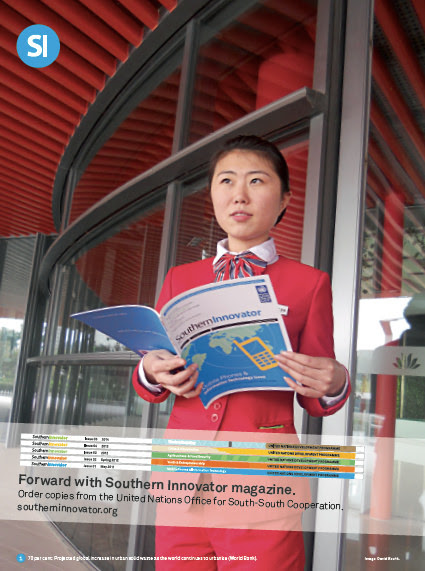
There is evidence and science supporting the need to always publish Southern Innovator in print as well as online. First, a study of the World Bank’s online publications came to a shocking conclusion: A survey in 2014 found a third of World Bank publications are never downloaded, 40 per cent were downloaded just 100 times, and only 13 per cent were downloaded more than 250 times in their lifetime (The Washington Post). As The Washington Post pointed out, these are publicly funded publications with the intention of contributing to policy debates and providing solutions to the world’s problems. So, if nobody is reading them, or just a handful are, that actually does matter if you care about positive change in the world.
Secondly, a Norwegian study in 2014 from the Stavanger University (part of Europe-wide research into the impact of digitisation on the reading experience), found “… that paper readers did report higher on measures having to do with empathy and transportation and immersion, and narrative coherence, than iPad readers,” according to lead researcher Anne Mangen (The Guardian).
An earlier study the researchers did also found “students who read texts in print scored significantly better on the reading comprehension test than students who read the texts digitally” and that “Studies with students, for instance, have shown that they often prefer to read on paper”, continued Mangen in The Guardian.
Another issue is Internet shutdowns, outages and censorship. All of these have been on the increase, especially in Africa (africanews.com). To put it simply, you cannot electronically shutdown a piece of paper.
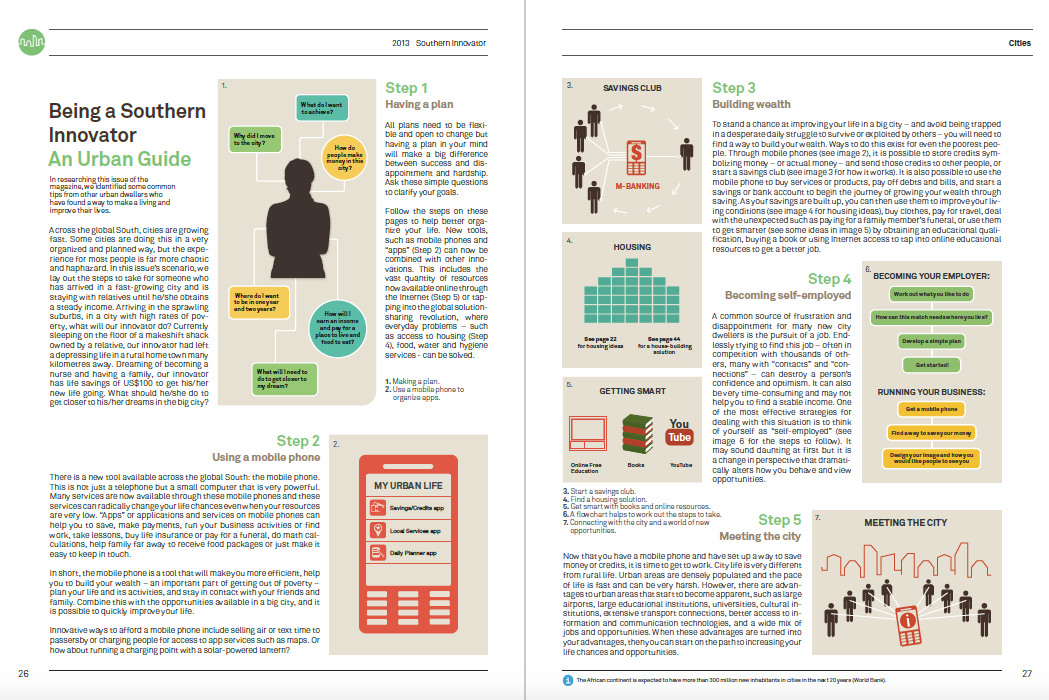
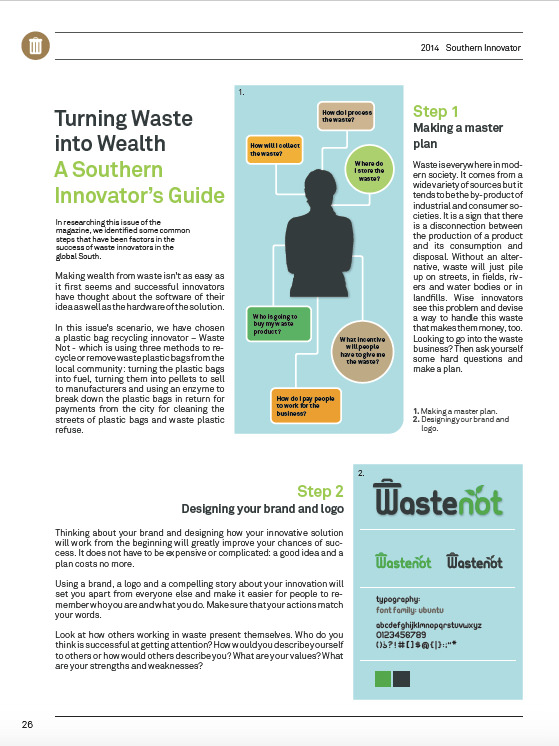
Design to show and teach.Innovations Summary.Innovations Summary.A fast-changing world.Knowledge Summary.Knowledge Summary.Being a Southern Innovator: An Urban Guide.Turning Waste into Wealth: A Southern Innovator’s Guide.Managing the workflow: Getting things done.
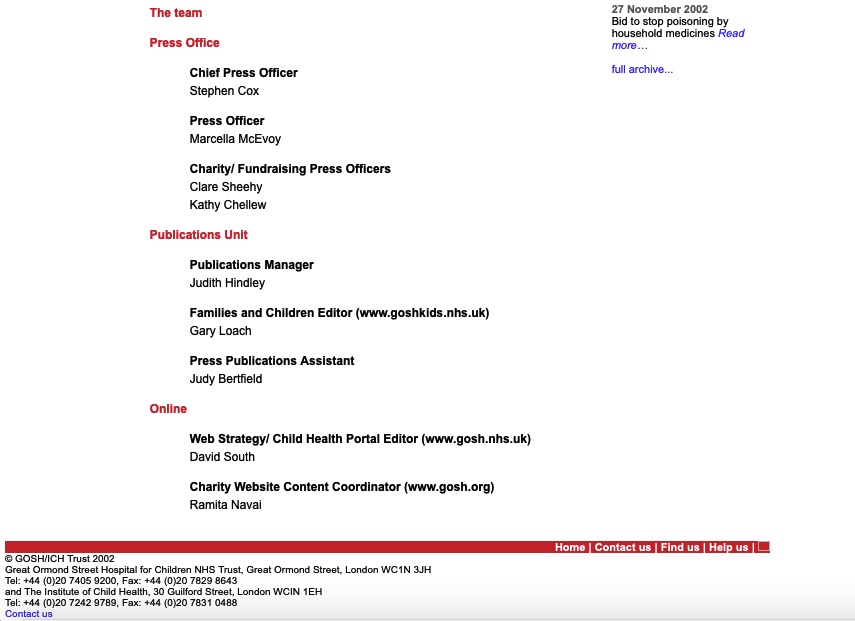
Britain’s best-loved children’s hospital and charity, Great Ormond Street Hospital for Children NHS Trust (GOSH), contracted me to lead a two-year project to modernise the hospital’s web presence and take its brand into the 21st century. GOSH is both Britain’s first children’s hospital and a pioneering child health institution (along with its partner the Institute for Child Health). The hospital’s outstanding reputation meant the project was carried out under intense public, media and professional scrutiny, and required a keen awareness of new media developments and the needs of the hospital’s patients, their families and the public.
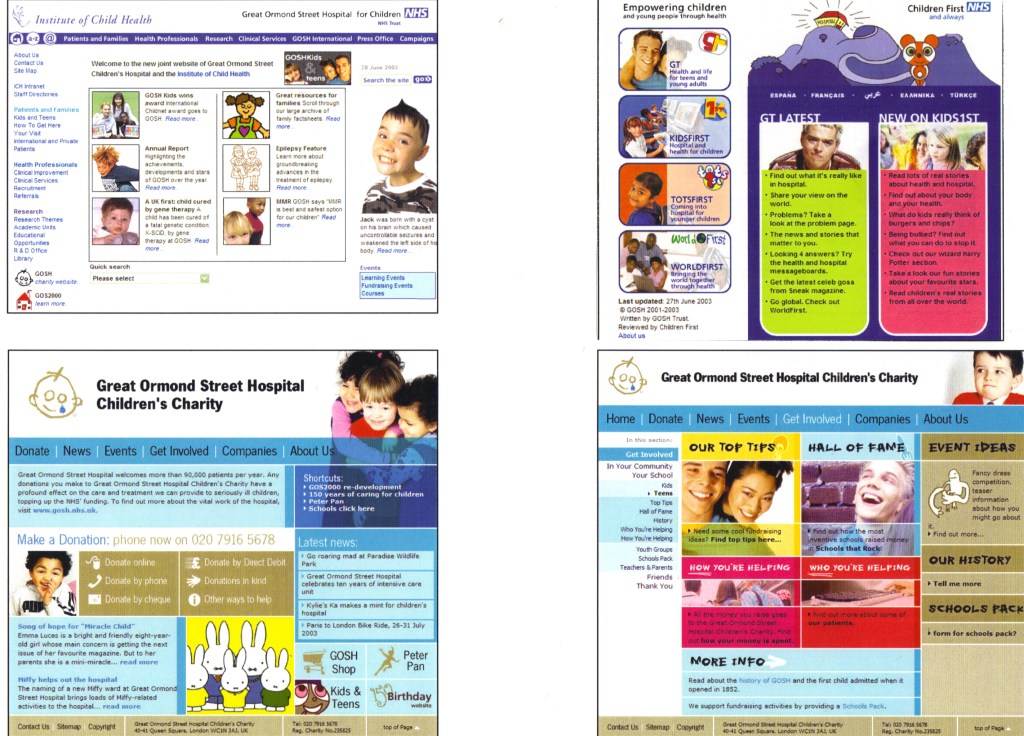
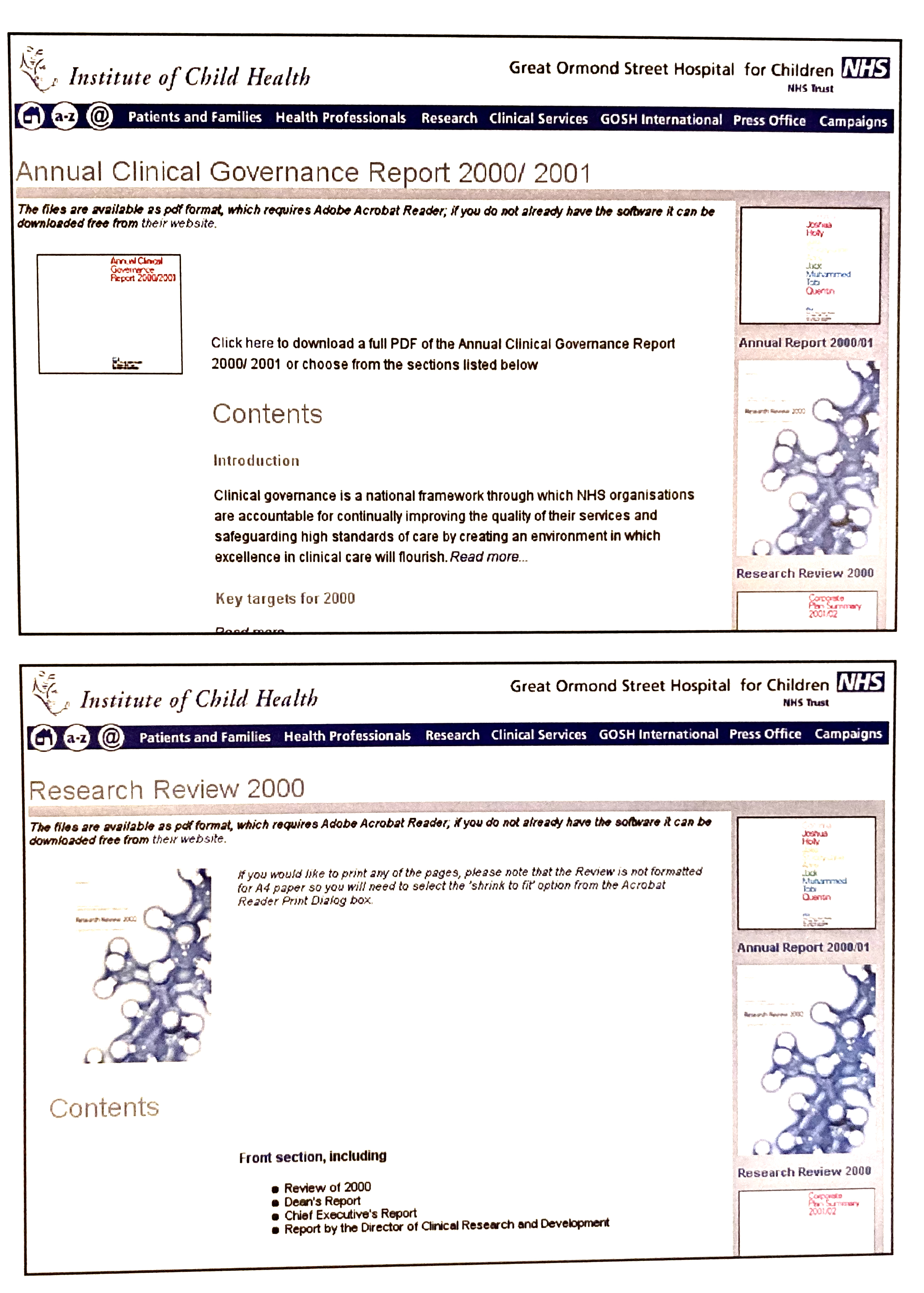
The project was developed in three, distinct phases. Screen grabs from these phases are now available for download and evaluation. They also include web traffic statistics. This unique snapshot of a complex project as it unfolded, should prove useful for other e-health practitioners.
A great way to track the historical development of a web project is to use the Wayback Machine’s internet archive here. By typing in the web address (for example, www.gosh.nhs.uk, and www.gosh.org), you can see a chronological history of the website by month.
Content produced for the GOSH Child Health Portal (now MyGOSH) in 2003 on the ketogenic diet and how it can help with the treatment of epilepsy.
Annual Clinical Governance Report 2000/2001.
Read here about the child health portal project’s vision and strategy, its launch and overall impact. Or download a brief Powerpoint presentation here: GOSH Powerpoint.
In 2003, the UK’s Guardian newspaper called the Children First website one of the “three most admired websites in the UK public and voluntary sectors,” and a UK government assessment called the overall GOSH child health web portal a role model for the NHS.
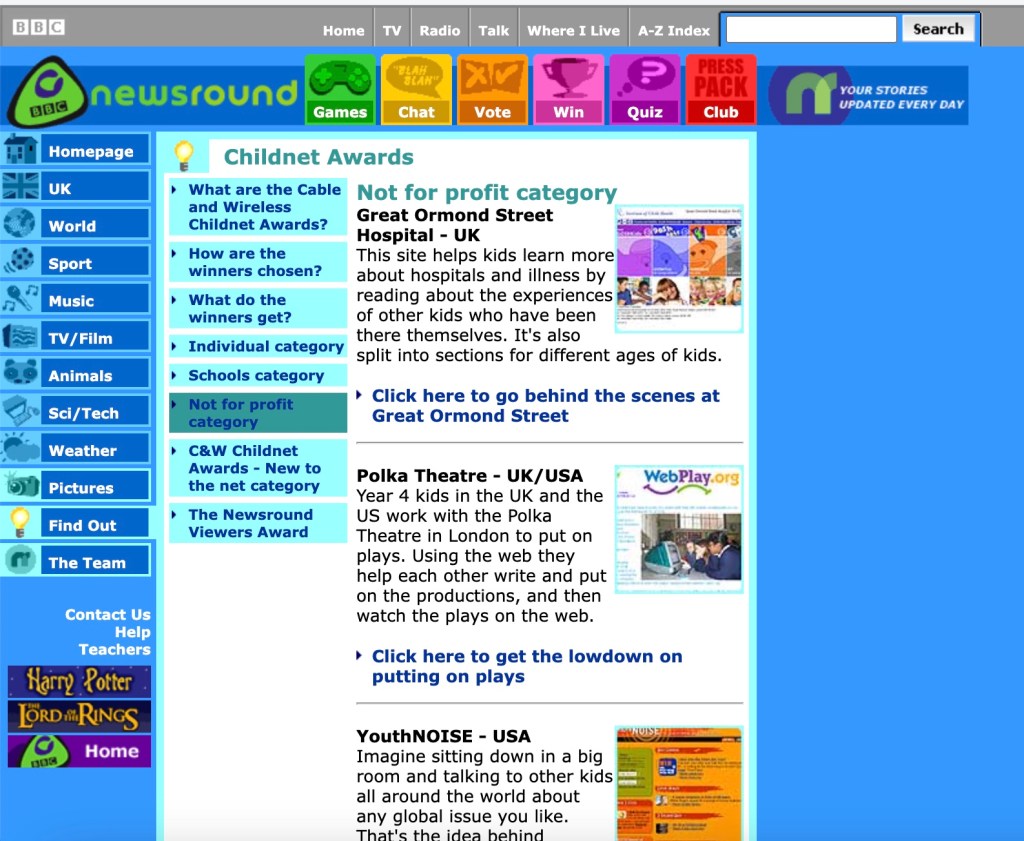
The GOSH Child Health Portal team receive the Childnet Award in 2003 at London’s Science Museum (Photo: CBBC Newsround).
In 2006, The Times of London called Children First the Top Child Health Website in its Wellbeing on the Web: The Best Portals survey (November 11, 2006).
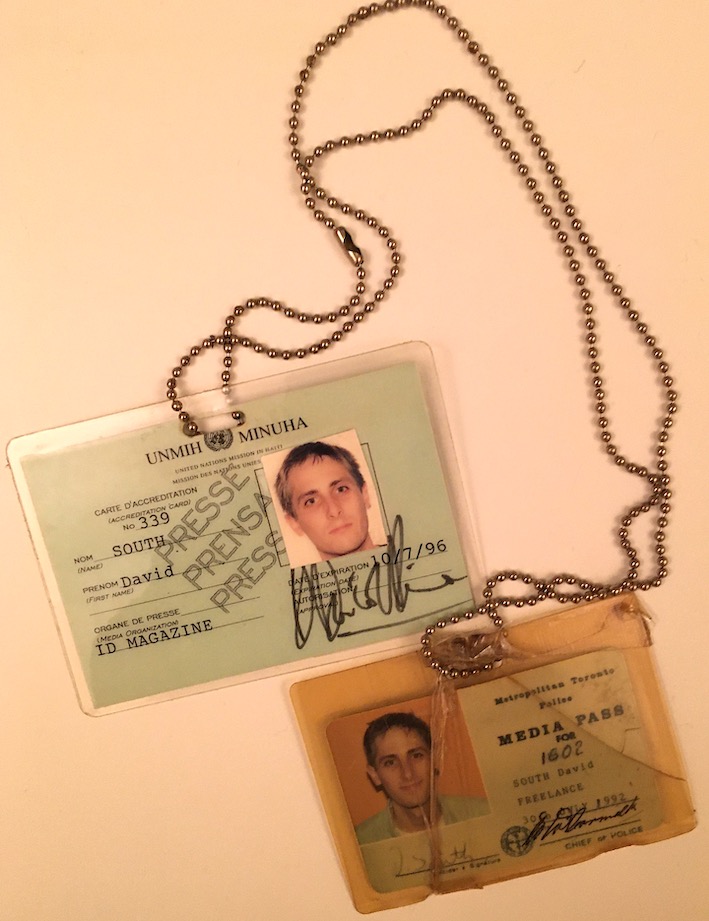
In 1996 I was hired as Features Editor for Id Magazine, a bi-weekly alternative magazine in Guelph, Ontario, Canada.
About
In 1996 Id Magazine, an Ontario, Canada alternative biweekly, was expanding and needed to improve the quality of its journalism, while also making the difficult shift to being a more consistently professional offering. I was hired as Features Editor and set about swiftly assembling a team of investigative journalists. My strategy involved targeting stories overlooked by Canadian newspapers and TV news. In the 1990s, it was often the case the best journalism and the best investigative journalism in Canada could be found in the country’s alternative media. This led to a number of firsts, including an extensive investigation into Canada’s flourishing sex industry, the government’s addiction to casinos to boost revenues, unearthing a plot by neo-nazis to infiltrate Ontario high schools with hate rock, university students’ catastrophic debt culture, reporting from the streets of Port-au-Prince, Haiti on Canada’s UN mission, and probing the government’s public services privatisation plans (including being invited to debate this topic on CBC TV’s programme, Face Off). With a keen eye for new media trends, the magazine covered the fast-rising Internet economy, early experiments with digital currencies and smart cards (Mondex) (Canadian Town Tries Out Cash Cards) being carried out in Guelph, Ontario, and concerns about data privacy.
There clearly was a gap in the news marketplace Id could better fill with solid investigative journalism and features writing aimed at a younger demographic.
How large a market gap can be confirmed by various analyses on the state of the Canadian media at the time and since. According to the book The Missing News: Filters and Blind Spots in Canada’s Press (Robert A. Hackett and Richard S. Garneau, Canadian Centre for Policy Alternatives, University of Toronto Press 2000), Canada’s media was in a mess in the 1990s resulting from declining resources, staff layoffs and media closures reducing the breadth and depth of news coverage.
My challenge: Could I bring together a talented, young team and improve the quality and consistency of journalism for a start-up magazine seeking to grow? The proof came in the form of improved audited pick-up of the magazine by readers, the magazine’s confident push to expand on the Internet, and the fact many from that original team have gone on to not only have successful careers in the media and film, but also to be influential in their own right – proof the original belief in their talent was correct.
Pressure on journalists to toe the line and not upset advertisers was also increasing in the context of ongoing high unemployment, a stagnant economy in a recession, and government austerity. Canadian media as whole also has a “great dependence on advertising, which accounts for more than 70% of daily newspaper revenues, about 64% of magazine revenues,” which means there is enormous pressure to only publish stories that do not upset advertisers. And monopolies exert great control over news content in Canada: “In the United States, ten companies control 43.7% of total daily newspaper circulation. By contrast, in Canada since 1996, one single company controls a comparable share of the media pie.”
Quoting Jeffrey Simpson in the book, newspapers are “shrinking in size, personnel, ambition and, as a consequence, in their curiosity,” …. “I believe the result has been a diminution in quality.” (p64)
Fast forward to “Today, we have a crisis in the journalism industry unprecedented in scope. A media implosion. Newspapers being reduced to digital editions, large numbers losing their jobs, circulation falling, ad revenues plunging, near monopoly ownership of big-city dailies, the old business model in a state of collapse.” (Canada’s media: A crisis that cries out for a public inquiry by Lawrence Martin, The Globe and Mail, Feb. 02, 2016).
Brief descriptions of sample issues are below:
Can Harris be Stopped? Cover
My first Id Magazine cover. It was thrown together in a few days after being hired. While a work of resourcefulness under pressure, it did capture the spirit of the times as multiple demonstrations and strikes tried to bring down the much-hated Conservative government in Ontario.
“Can the UN Help Remake a Country?” Cover
This cover photo by Phillip Smith was taken in the market area of Port-au-Prince, Haiti. I had never seen such squalor and desperation in my life. It got worse as we visited the city’s morgue, packed to the rafters with the dead and mutilated bodies of children and adults. It was a tough assignment and one that was captured with professionalism by Phillip’s camera.
Christmas Issue Cover
Back in 1996, the Thatcher thirst for privatisation came to Ontario with a vengeance. In this issue, we asked if it showed a lack of imagination to just sell publicly paid for assets to wealthy investors. We offered other ownership models and I debated this topic on CBC TV’s Face Off.
“Pulling the Plug on Hate Rock” Cover
This excellent cover by Gareth Lind was, as far as I know, the first use of pop art on a biweekly magazine cover in Ontario at that time (I certainly hadn’t seen anyone else do it). It sold the excellent investigation into skinhead rock bands infiltrating Ontario high schools very well. It was timed for release during the North-by-Northeast music festival in Toronto, and had zero returns (as in all issues were picked up).
Sarah Polley Cover
A regular contributor to Id, Canadian actor and director Sarah Polley challenged the stale Canadian left with her spiky views. In this issue we tackled the decline in the quality of TV programmes and asked if it was a moral vacuum being hoovered up by consumerism.
Student Issue Cover
This cover is by great Canadian political cartoonist and illustrator Jack Lefcourt. Always funny, Jack captures well the corporate take-over of the country’s universities and the introduction of the catastrophic debt culture that leaves so many students in a financial pickle. It was also Id’s first student issue.
“The Great Education Swindle: Are Reforms Destroying Your Future?”
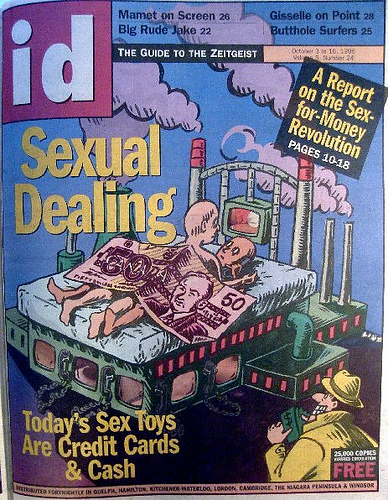
“Today’s Sex Toys are Credit Cards and Cash” Cover
As Ontario’s economy experienced year-after-year of high unemployment and stagnant salaries, its sex economy flourished. In another first, the Id team tackled all aspects of the growth of the sex economy and changing attitudes to sexual behaviour. Beating the big papers to this story, they wrote with honesty and verve and made a refreshing break from the limp journalism of most Canadian newspapers.
Timeline
1996: Hired as Features Editor and assembled editorial and creative team.
1997: Id Magazine begins to simultaneously publish its content online, a pioneering move at the time.
Impact
Micro
reducing returns and boosting audited pick-ups of the free magazine – a key metric for a publication reliant on local advertising
assembled talented investigative team and graphic design and photo team
introduced pop art front covers
increased news coverage, especially impact of austerity in Canada
increased foreign coverage, including on Canada’s United Nations mission in Haiti
introduced high-profile contributors, including actor and director Sarah Polley
debated stories on other media, including CBC TV’s Face Off
Macro
most of the team have gone on to very successful careers in the media
magazine still receives good comments on Facebook many years after its closure
one of the first Canadian magazines to embrace the Internet and publish simultaneously online

























 David South Consulting
You must be logged in to post a comment.