Gowda, Krishna (2023) “Impact of Information Technology (IT) on Society,” ShodhKosh: Journal of Visual and Performing Arts, July-December 2023 4(2), 3513-3517.
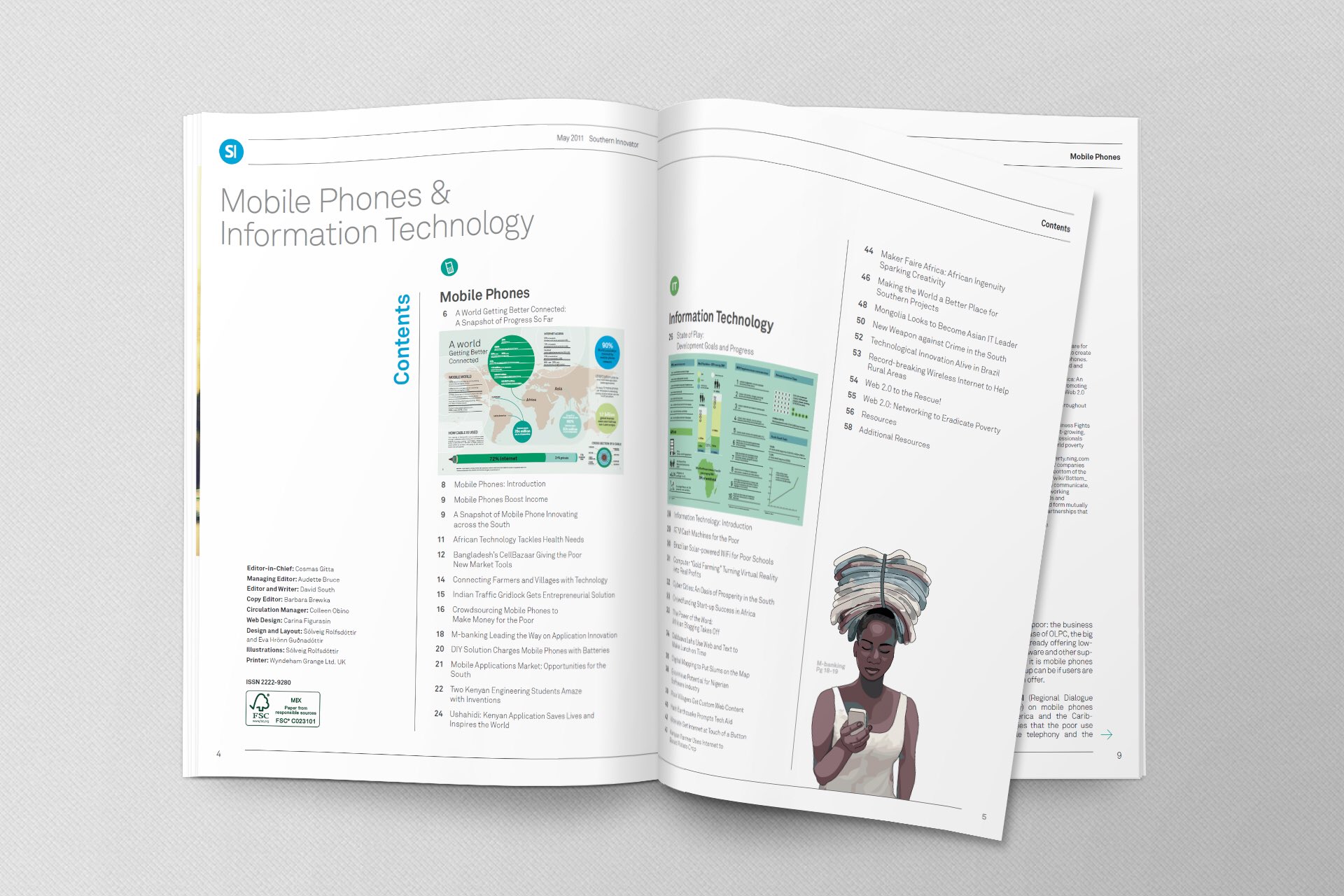
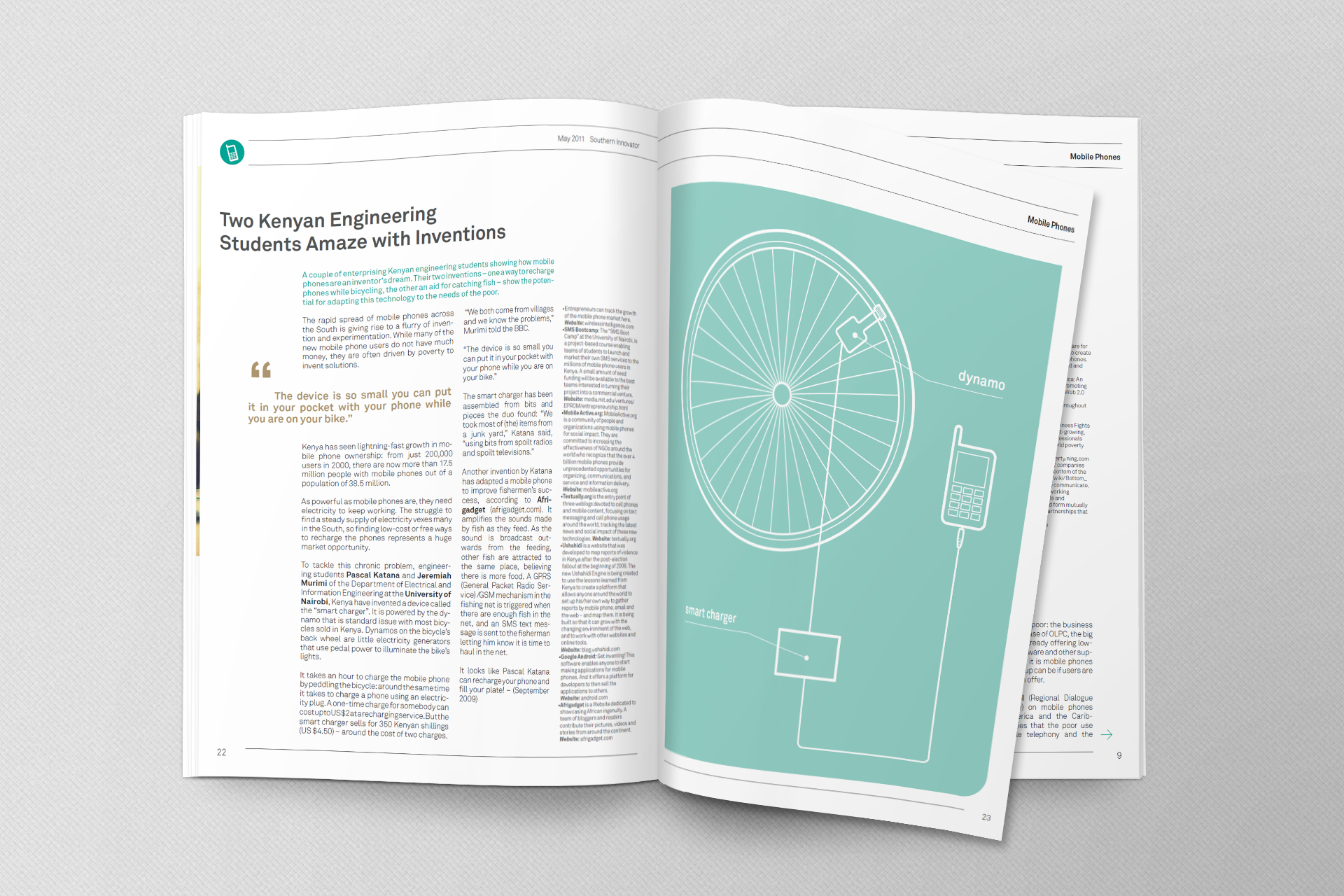
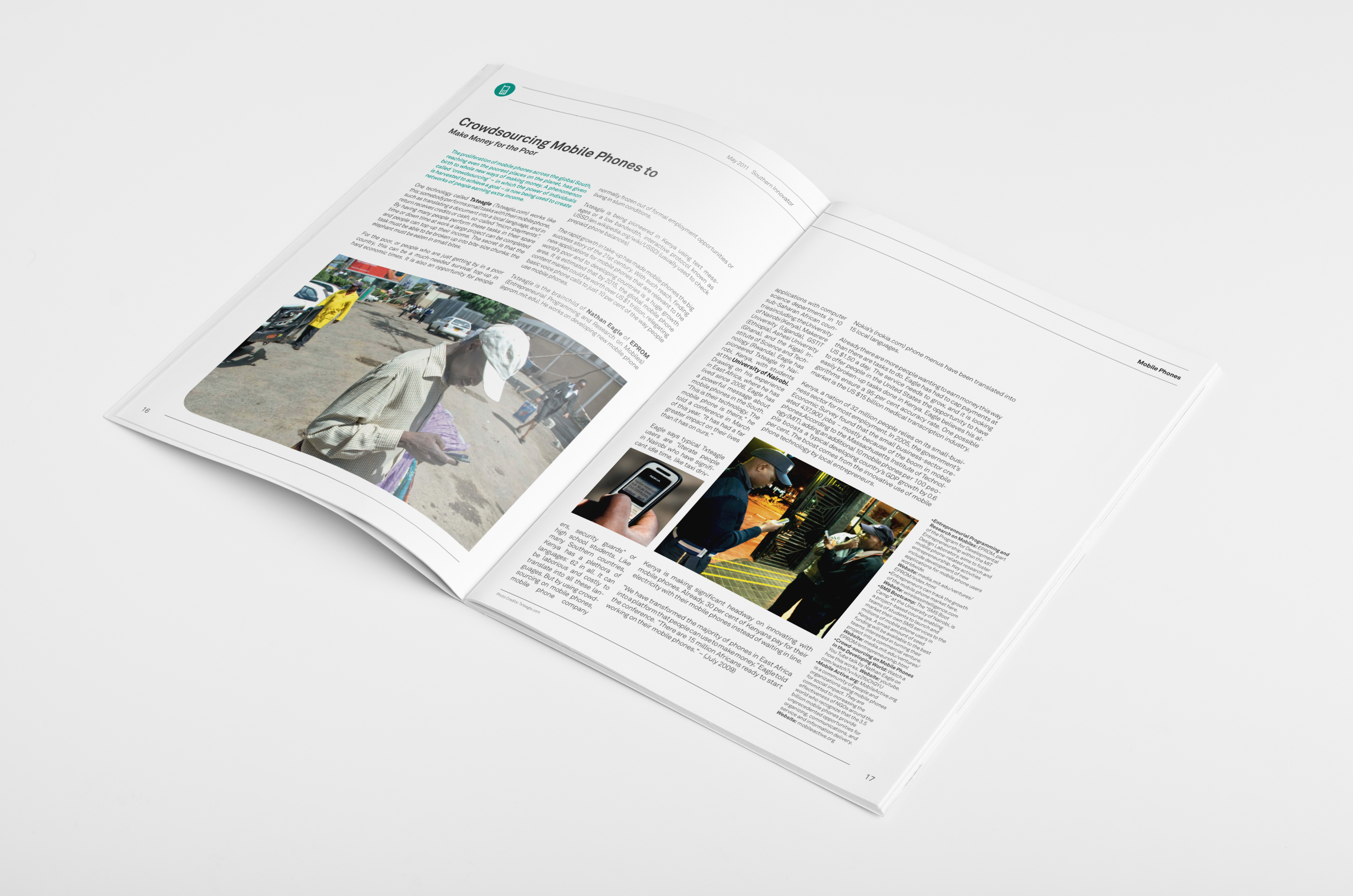
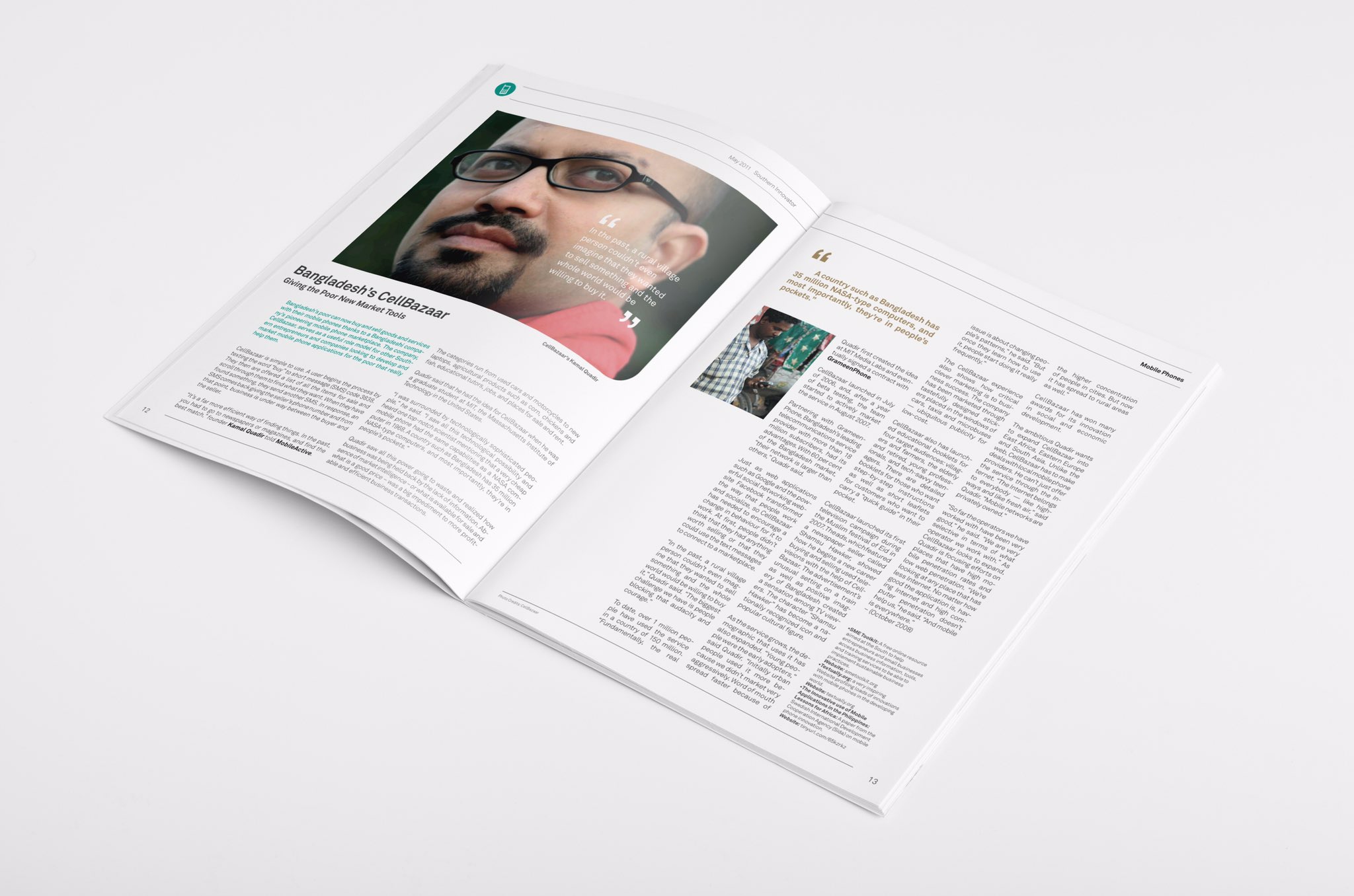
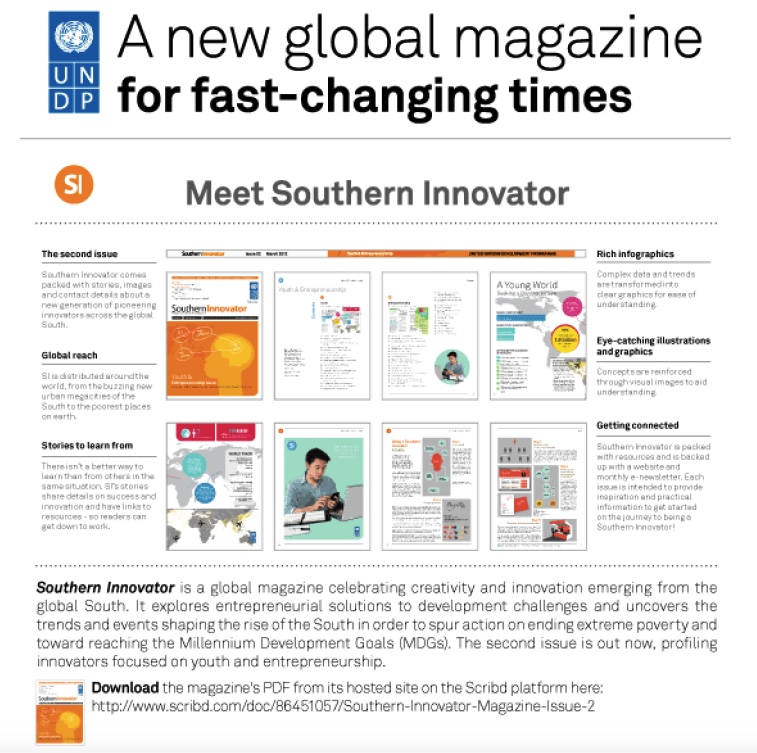
Launched in 2011, Southern Innovator’s first issue on mobile phones and information technology proved highly influential, profiling the work of a new generation of innovators. It has been cited in books, papers and strategic plans.
In Kenya, a teenage Maasai (http://en.wikipedia.org/wiki/Maasai_people) inventor has developed a way to chase lions away from livestock that doesn’t harm the lions. It is a common practice to kill lions when they threaten or kill livestock, and this has led to a precipitous drop in the local lion population at Nairobi National Park (http://www.kws.org/parks/parks_reserves/NANP.html/), near the country’s capital, Nairobi. Lions are a significant tourist attraction for Kenya and the population decline is a threat to the future of the tourist industry.
Trying to find the right balance between livestock and wild animals is a problem across the global South. As populations rise, and the number of animals kept for domestic food markets increases, so does conflict between farmers and predatory wild animals looking for an easy meal. And there is no more tempting easy meal than domesticated animals tamed and kept in herds.
According to Reuters, 13-year-old Richard Turere has developed a system of flashing lights to scare off lions at night. The LED (light-emitting diode) (http://en.wikipedia.org/wiki/Light-emitting_diode) bulbs were gathered from broken flashlights. Turere then wired them to a solar-powered car battery used to power the family’s TV.
Turere has placed the lights on poles surrounding the enclosure where the cattle stay at night.
“Lions were eating our cattle at night, which made me very annoyed,” he told Reuters. “And I thought that I have to come up with an idea of making bulbs. Because I knew that the lions were afraid of something moving.
“When someone wakes up at night and moves with a torch, they are afraid. So I made the bulbs which flash at night and keep away lions.”
Nairobi National Park is wild and unfenced, leaving lions free to wander on to farmland. Tragically for the lions, increasing numbers are being killed by farmers protecting herds. Conservationists say Kenya’s lion population has plummeted from 15,000 to just 2,000 in a decade. Since October 2011, Wildlife Direct (http://wildlifedirect.org/) has documented 169 killings of livestock by lions in the location near Turere’s farm.
Kenya depends heavily on tourism to the national parks where people want to see lions. Kenya has been enjoying significant growth in tourism and has the goal of reaching 2 million international tourists in 2012 (Kenyan Ministry of Tourism). Earnings from international tourism are the second largest source of foreign exchange for the country and the services sector – 63 per cent of GDP (gross domestic product) – is dominated by tourism (Brand Kenya). So-called ‘photo safaris’ to the country’s national parks and game preserves are the main attraction for international tourists.
But farmers need to have their herds protected since livestock are a critical income source for them, as well as a food source for the country. Cattle herding has long been an important income source and livelihood for the Maasai people.
According to conservationist Dr. Paula Kahumbu, executive director of Wildlife Direct, other herding families would like Richard to set up the light system on their farms too.
Since Richard installed the lights, his family has not lost any cattle to lions. This bright idea has also dramatically altered Turere’s life. The attention he has received for the invention has led to him being funded by local environment groups to attend a prestigious private school, Brookhouse International School (http://www.brookhouse.ac.ke/) in Nairobi. Things are truly looking bright for Turere!
Published: August 2012
Resources
1) Experience Kenya: The web portal packed with information on Kenyan tourist attractions and investment opportunities. Website:http://www.experiencekenya.co.ke/index.php
2) Brand Kenya: The official Brand Kenya website shows how the country is weaving together all things Kenyan to create a strong global brand for the country. Website:http://brandkenya.co.ke/
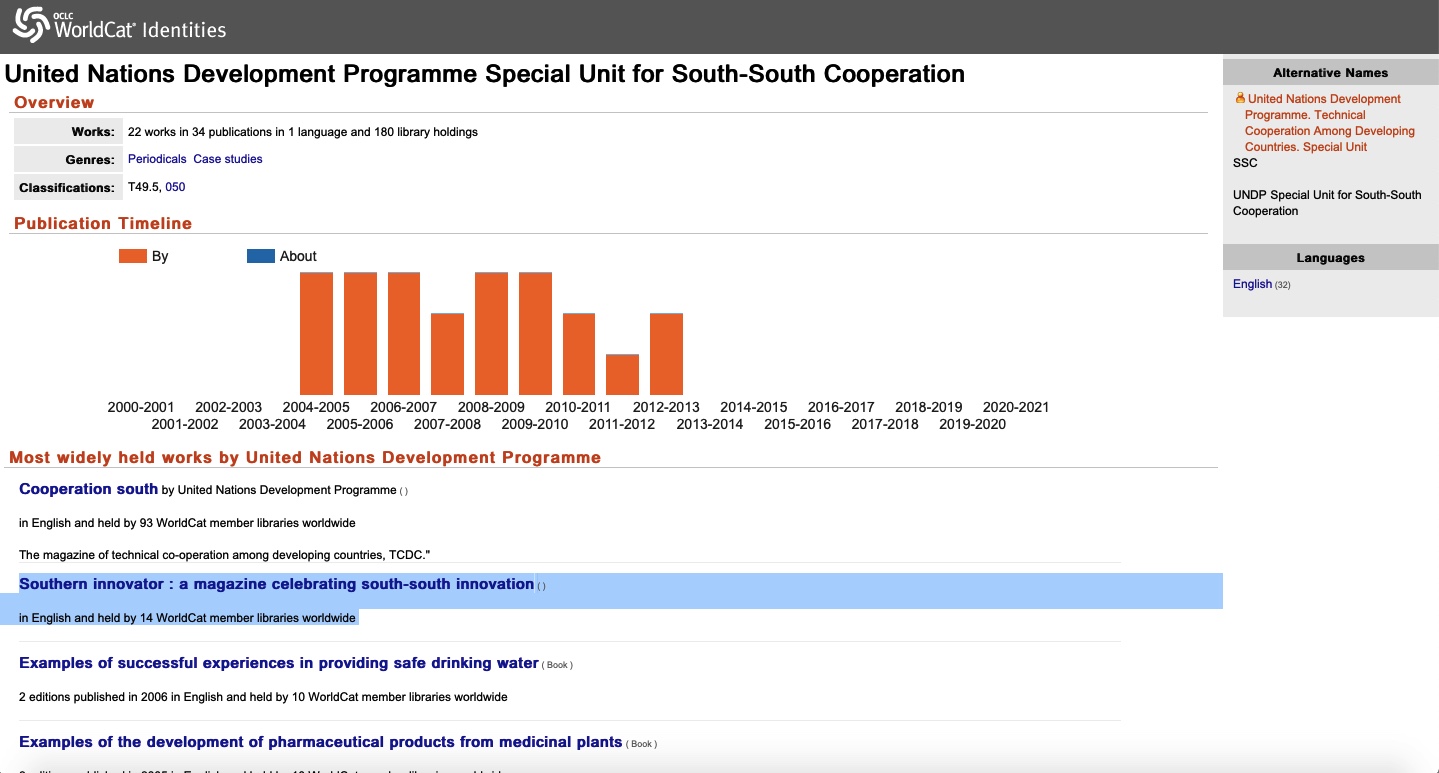
Development Challenges, South-South Solutions was launched as an e-newsletter in 2006 by UNDP’s South-South Cooperation Unit (now the United Nations Office for South-South Cooperation) based in New York, USA. It led on profiling the rise of the global South as an economic powerhouse and was one of the first regular publications to champion the global South’s innovators, entrepreneurs, and pioneers. It tracked the key trends that are now so profoundly reshaping how development is seen and done. This includes the rapid take-up of mobile phones and information technology in the global South (as profiled in the first issue of magazine Southern Innovator), the move to becoming a majority urban world, a growing global innovator culture, and the plethora of solutions being developed in the global South to tackle its problems and improve living conditions and boost human development. The success of the e-newsletter led to the launch of the magazine Southern Innovator.
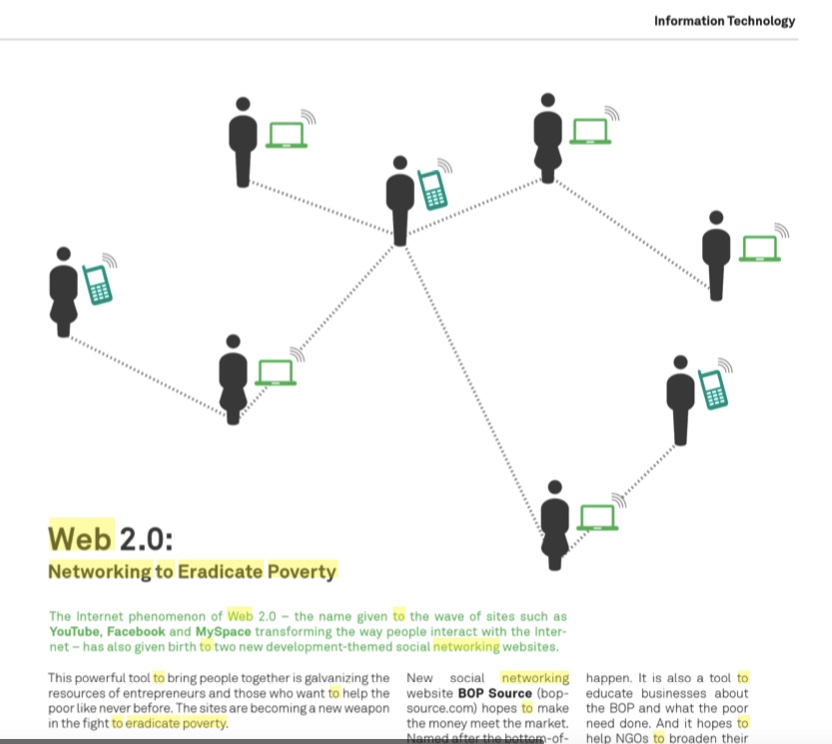
The internet phenomenon of Web 2.0 (http://en.wikipedia.org/wiki/Web_2.0) – the name given to the wave of internet businesses and websites such as YouTube (www.youtube.com), Facebook and MySpace transforming the way people interact with the ‘Net – has also given birth to two new development-themed social networking websites.
This powerful tool to bring people together is galvanizing the resources of entrepreneurs and those who want to help the poor like never before. The sites are becoming a new weapon in the fight to eradicate poverty.
Social networking websites use various tools and applications (or ‘apps’ for short) to enhance the ability of users to connect and get things done. By bringing together a community of like-minded people, they are able to shorten the time it takes to organize and kick-start events. Web 2.0 can be used to build communities and social and business networks. By being able to store vast quantities of information online, it becomes faster to work and reduces the painful delays brought on by slow connections.
All these new tools are making it easier and easier for entrepreneurs to work from home, in internet centres, or anywhere there is a wireless connection – and it is slashing the costs of managing a business. All the applications are online so there is no need to be hidebound by one operating system or hardware capability.
Two newly launched social networking sites are targetting the poverty-eradication community.
One is named after the Bottom of the Pyramid (BOP) concept as conceived by C.K. Prahalad. The BOP is the 4 billion people at the base of the global economic pyramid. As Prahalad sees it, they represent a vast market of unmet needs for entrepreneurs to tackle.
New social networking website BOP Source hopes to make the money meet the market. Started by Jenara Nerenberg, BOP Source wants to put social networking tools into the hands of the world’s poor. It is a place to post business ideas and collaborate with others to make them happen. It is also a tool to educate businesses about the BOP and what the poor need done. And it hopes to help NGOs broaden their relationships with their constituencies and companies.
While marketers can learn about the needs of the BOP, individuals can directly express their needs on the website and seek out the right people to solve problems.
Another social networking website is Business Fights Poverty. Already at 1,000 members, it is a multimedia offering, with podcasts, videos, interviews and discussions about the role of business in addressing development goals.
Published: November 2008
Resources
BOP Source is a platform for companies and individuals at the BOP to directly communicate, ultimately fostering close working relationships, and for NGOs and companies to dialogue and form mutually valuable public-private partnerships that serve the BOP. Website: http://bopsource.ning.com/
Business Fights Poverty: Business Fights Poverty is the free-to-join, fast-growing, international network for professionals passionate about fighting world poverty through good business. Website: http://businessfightspoverty.ning.com/
Afriville is a Web 2.0 service and an African Caribbean social network. Afriville is a community website along the lines of the famous MySpace. Users are free to message and post profiles. The difference is that the user is able to choose how closed or open the networks are. The site features a state of the art music management system which allows African and Caribbean artists to get straight in touch with their fans.
Both Yahoo! And Google offer extensive free online tools for entrepreneurs and businesses that integrate seamlessly with their email services.
Kabissa: Space for Change in Africa: An online African web community promoting and supporting the transition to Web 2.0 services in Africa. Offers lots of opportunities to meet people throughout Africa and learn more.
Global Voices: An initiative from the Reuters news agency to aggregate the global conversation online from countries outside the US and Western Europe.
Information, Knowledge and Communication: Web 2.0 in Development Cooperation Bonn, Germany, 27-28 November 2008, Gustav Heinemann Haus. Website: http://www.eadi.org/index.php?id=994
3rd IEEE/ACM International Conference on Information and Communication Technologies and Development (ICTD2009). Website:http://www.ictd2009.org
Development Challenges, South-South Solutions was launched as an e-newsletter in 2006 by UNDP’s South-South Cooperation Unit (now the United Nations Office for South-South Cooperation) based in New York, USA. It led on profiling the rise of the global South as an economic powerhouse and was one of the first regular publications to champion the global South’s innovators, entrepreneurs, and pioneers. It tracked the key trends that are now so profoundly reshaping how development is seen and done. This includes the rapid take-up of mobile phones and information technology in the global South (as profiled in the first issue of magazine Southern Innovator), the move to becoming a majority urban world, a growing global innovator culture, and the plethora of solutions being developed in the global South to tackle its problems and improve living conditions and boost human development. The success of the e-newsletter led to the launch of the magazine Southern Innovator.
Southern Innovator’s online archive portal was launched in New York City, U.S.A. (home to the UN’s headquarters) in 2011 (southerninnovator.org).
“I think you [David South] and the designer [Solveig Rolfsdottir] do great work and I enjoy Southern Innovator very much!”
Ines Tofalo, Programme Specialist, United Nations Office for South-South Cooperation
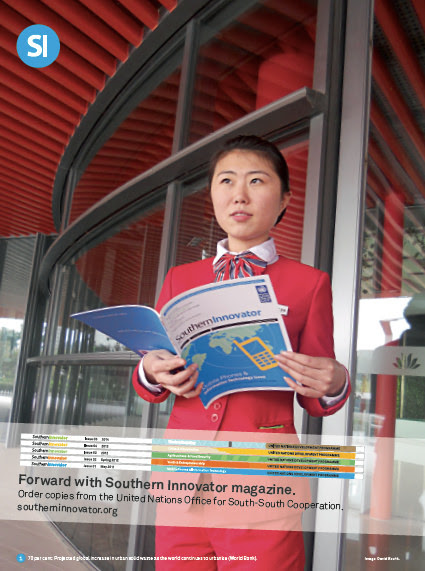
Southern Innovator in Tianjin, China.Issue 5 of Southern Innovator at the Global South-South Development Expo (GSSD Expo) 2014 held in Washington, D.C.Volunteers in Nairobi, Kenya pose with Southern Innovator Issue 4 at the Global South-South Development Expo (GSSD Expo) in 2013.Southern Innovator Editor and Writer David South in Australia.Southern Innovator Graphic Designer and Illustrator Sólveig Rolfsdóttir in Iceland.
Some comments that have come in so far about SI’s first issue:
“What a tremendous magazine your team has produced! It’s a terrific tour de force of what is interesting, cutting edge and relevant in the global mobile/ICT space… Really looking forward to what you produce in issues #2 and #3. This is great, engaging, relevant and topical stuff.”, to “Looks great. Congratulations. It’s Brill’s Content for the 21st century!”
What they are saying about SI on Twitter: From @CapacityPlus Nice job RT @ActevisCGroup: RT @UNDP: Great looking informative@SouthSouth1 mag on South-South Innovation; @UNDP Great looking informative @SouthSouth1 mag on South-South Innovation; @JeannineLemaireGraphically beautiful & informative @UNDP Southern Innovator mag on South-South Innov.
Development Challenges, South-South Solutions was launched as an e-newsletter in 2006 by UNDP’s South-South Cooperation Unit (now the United Nations Office for South-South Cooperation) based in New York, USA. It led on profiling the rise of the global South as an economic powerhouse and was one of the first regular publications to champion the global South’s innovators, entrepreneurs, and pioneers. It tracked the key trends that are now so profoundly reshaping how development is seen and done. This includes the rapid take-up of mobile phones and information technology in the global South (as profiled in the first issue of magazine Southern Innovator), the move to becoming a majority urban world, a growing global innovator culture, and the plethora of solutions being developed in the global South to tackle its problems and improve living conditions and boost human development. The success of the e-newsletter led to the launch of the magazine Southern Innovator.










 David South Consulting


You must be logged in to post a comment.