Categories
Archive Blogroll Southern Innovator magazine Special Unit for South-South Cooperation United Nations Development Programme United Nations Office for South-South Cooperation

Team | Southern Innovator Phase 1 Development (2010 – 2015)

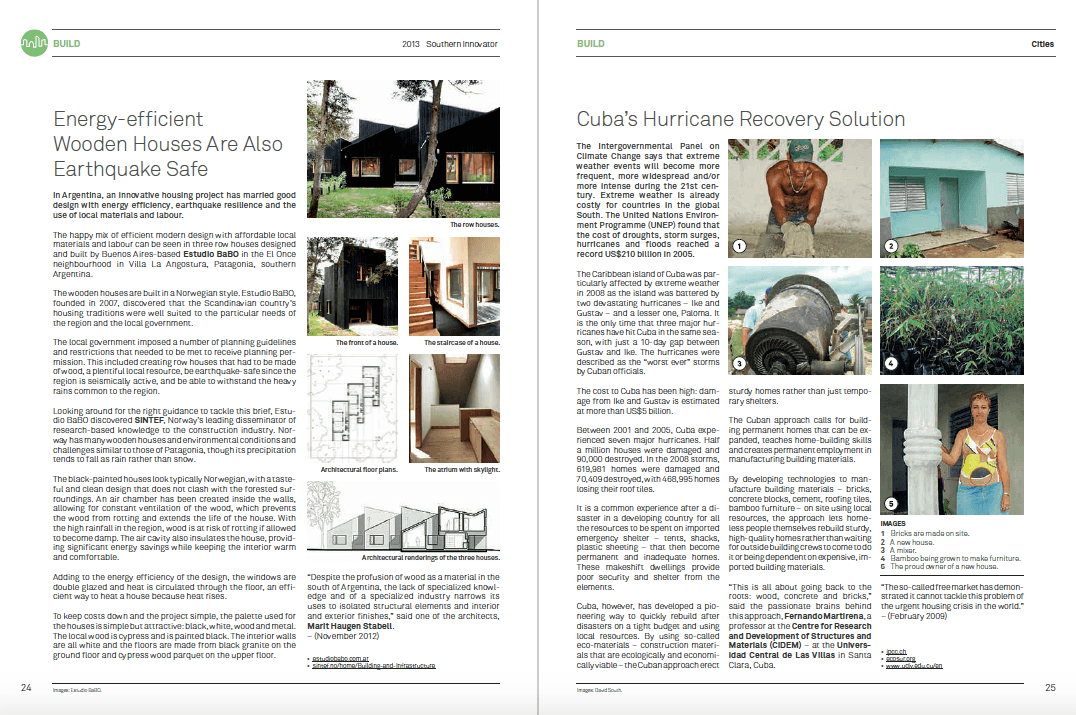
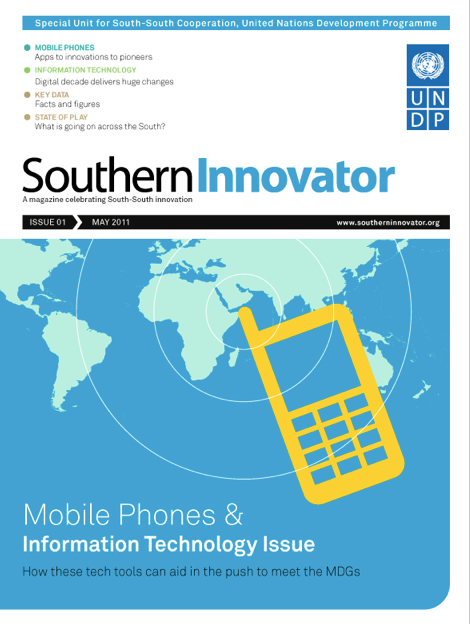
Work began in 2010 to develop what became the United Nations magazine Southern Innovator. A highly talented global team of international development and design professionals based in New York and London collaborated with an Icelandic studio to create an innovation media brand showcasing global South innovators inspired by the mobile and information technology revolutions. It was launched in 2011 at the UN General Assembly in New York.
Cosmas Gitta

Editor-in-Chief

“Dr. Cosmas Gitta is a senior UN consultant and the former Assistant Director for Policy and UN Affairs at the UN Office for South-South Cooperation, where he oversaw the convening of various intergovernmental and interagency forums as well as the preparation of related reports and studies, including the biennial reports of the Secretary-General on the state of South-South cooperation. He was Editor-in-Chief of the magazine Southern Innovator and an e-newsletter, Development Challenges, South-South Solutions, both of which are media to share information on development related innovations with partners around the world. He was for many years Managing Editor of Cooperation South, a print and electronic development journal promoting collaboration among developing countries. Mr. Gitta holds a PhD in international and comparative education from Columbia University and he has lectured on human rights education at his alma mater, and on a range of other subjects at various campuses of the City University of New York.” (From Integral Leadership Review)
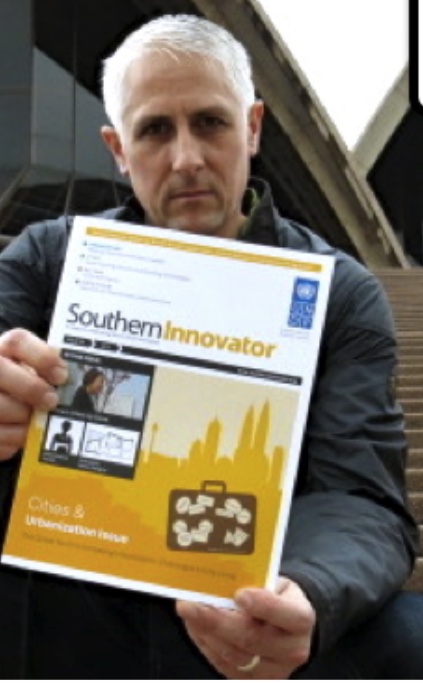
David South

Editor and Writer

David South is the founder and senior partner for David South International and David South Consulting. He has worked around the world for the United Nations and has led a number of groundbreaking projects for major institutions. Clients have included the United Nations Office for South-South Cooperation (UNOSSC), the United Nations Development Programme (UNDP), the Great Ormond Street Hospital for Children (GOSH)/Institute of Child Health (ICH)/National Health Service (NHS), Harvard Institute for International Development, UNICEF, World Bank, USAID, and the Hannah Institute for the History of Medicine, among others.

He has worked for, or side-by-side, with many high-level senior professionals and executives. These experienced professionals had roles under close public scrutiny and needed to show the impact of their work to a tight deadline.

He has been the editor for the United Nations magazine Southern Innovator since 2010. He also researched and wrote the influential United Nations e-newsletter Development Challenges, South-South Solutions (2007-2014). He has over two decades’ experience in media and journalism (developing strong relationships with many top journalists and media professionals), health and human development, and the role innovation plays in transforming major organisations while getting the most from people tackling complex problems in challenging environments.

Email me: davidsouthconsulting@gmail.com

Audette Bruce

Managing Editor
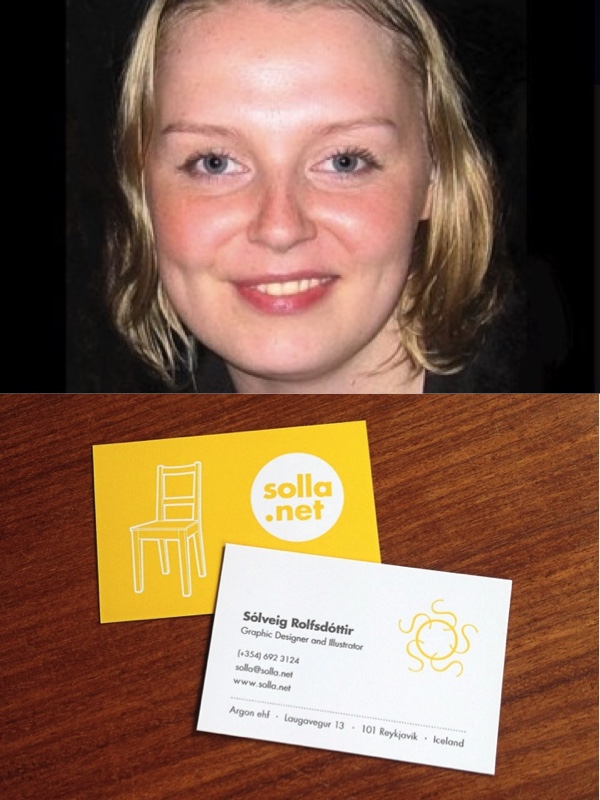
 Sólveig Rolfsdóttir

Graphic Designer and Ilustrator

Eva Hrönn Guðnadóttir

Graphic Designer and Illustrator


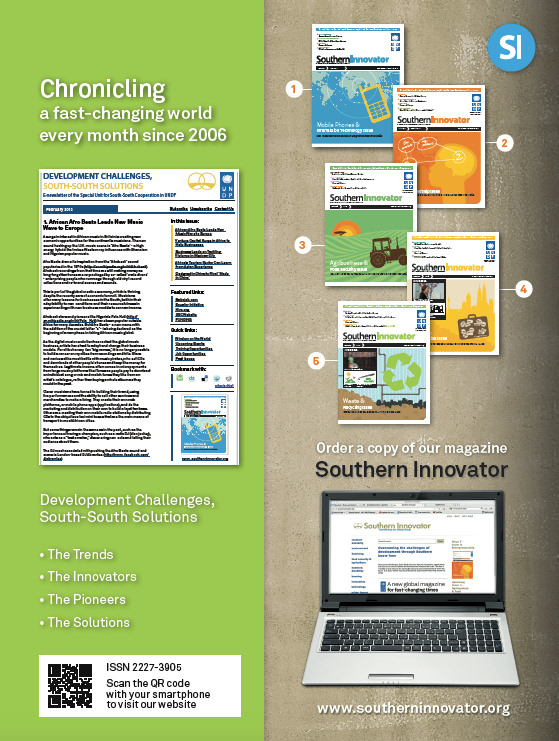
Launched in May 2011, the new global magazine Southern Innovator (ISSN 2222-9280) is about the people across the global South shaping our new world, eradicating poverty and working towards the achievement of the Millennium Development Goals (MDGs).

They are the innovators.

Follow the magazine on Twitter @SouthSouth1.

Southern Innovator Issue 1

Southern Innovator Issue 2

Southern Innovator Issue 3

Southern Innovator Issue 4

Southern Innovator Issue 5

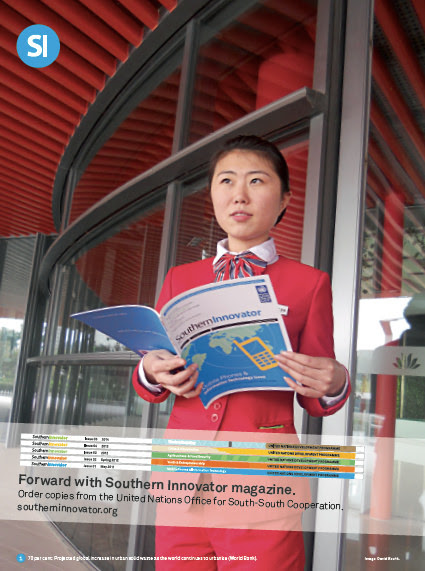
If you would like hard copies of the magazine for distribution, then please contact the United Nations Office for South-South Cooperation (UNOSSC) (https://www.unsouthsouth.org/2014/12/25/southern-innovator-magazine/).

Read more of Dr. Gitta’s work here: Cooperation South, Getting Connected: Information and Communications Technology for Development, Number 1, 2001, United Nations Development Programme, ISSN-0259-3882.
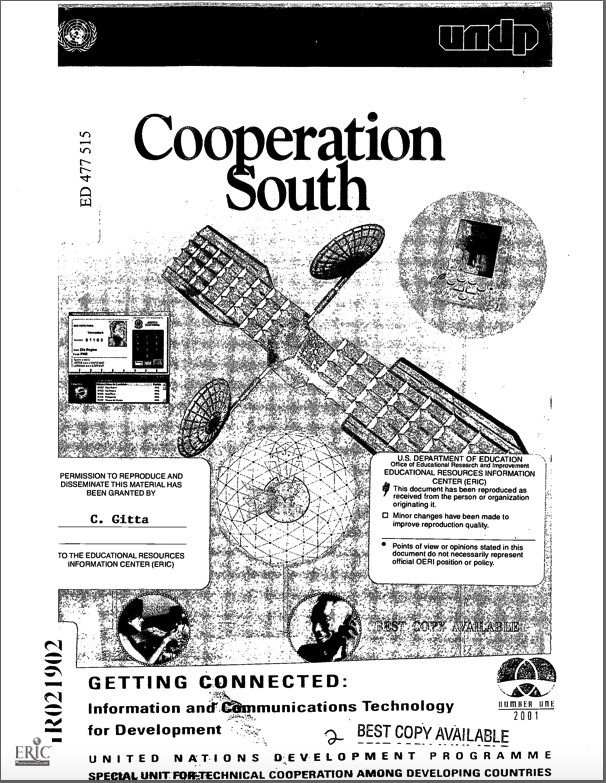
Cooperation South, Getting Connected: Information and Communications Technology for Development, Number 1, 2001, United Nations Development Programme, ISSN-0259-3882. The team behind Cooperation South joined up with a team from Canada/UK/Iceland to create Southern Innovator Magazine (ISSN 2222-9280). Both publications highlighted the innovators behind the global South’s connectivity revolution.

This work is licensed under a Creative Commons Attribution 4.0 International License.

ORCID iD: https://orcid.org/0000-0001-5311-1052.

© David South Consulting 2021

Categories
Archive Blogroll Development Challenges, South-South Solutions Newsletters Southern Innovator magazine Special Unit for South-South Cooperation United Nations Development Programme United Nations Office for South-South Cooperation

Innovator Stories and Profiles

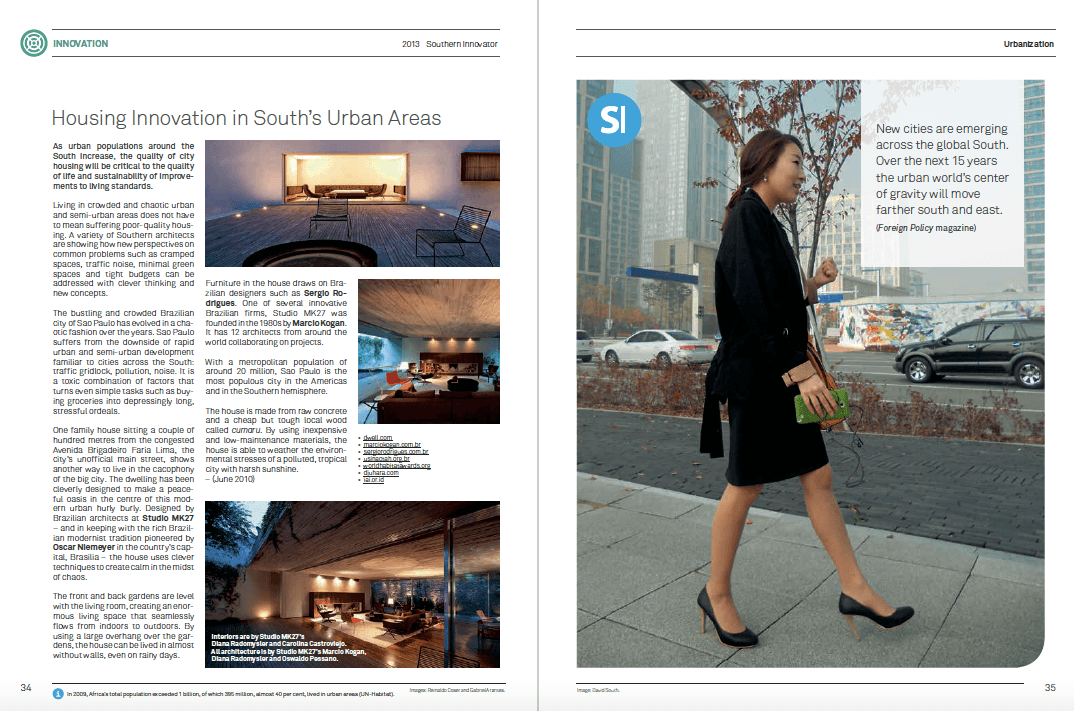
Southern Innovator was initially launched in 2011 with the goal of – hopefully – inspiring others (just as we had been so inspired by the innovators we contacted and met). The magazine seeks to profile stories, trends, ideas, innovations and innovators overlooked by other media. The magazine grew from the monthly e-newsletter Development Challenges, South-South Solutions published by the United Nations Office for South-South Cooperation (UNOSSC) since 2006.

Southern Innovator visited South Korea’s Songdo Smart City in 2012.

Editor and Writer, David South. 
Graphic Designer and Illustrator, Solveig Rolfsdottir. 

This work is licensed under a Creative Commons Attribution 4.0 International License.

ORCID iD: https://orcid.org/0000-0001-5311-1052.

© David South Consulting 2021

Categories
Archive Blogroll Development Challenges, South-South Solutions Newsletters Southern Innovator magazine

All-in-One Solar Kiosk Business Solution for Africa

By David SouthDevelopment Challenges, South-South Solutions

SOUTH-SOUTH CASE STUDY

Kiosks are ubiquitous throughout commercial areas in the global South. These highly efficient little business outlets enable small-scale entrepreneurs to sell necessary products without the expense of renting and running a shop.

While they are a great solution for entrepreneurs and customers alike, they often lack connection to municipal services such as electricity and water. That means kiosk owners need to use batteries or a generator if they need a refrigerator to cool food and drink – an expensive proposition.

A new product launched this year in Addis Ababa, Ethiopia offers a solution.

Created by a team of German architects, the Solarkiosk (solarkiosk.eu) is an autonomous business unit designed for remote, off-grid areas. With solar panels across the top of the kiosk, it generates its own electricity and is basically a mini solar power plant. Inside, it is just like a conventional kiosk, with display shelves for products and a counter in the front with a flap – which can feature advertising and messages – that can be opened up for business and locked shut when the kiosk is closed.

The kiosk captures solar energy and the electricity generated can be used to run a computer, lights or a refrigerator. That makes the Solarkiosk capable of offering a wide range of services needing electricity, from Internet access to car-battery charging and mobile phone recharging – a now essential service as mobile phone use explodes across Africa.

The first kiosk was prototyped in November 2011 and the makers incorporated their first subsidiary, Solarkiosk Solutions PLC, in Addis Ababa, Ethiopia in March 2012.

According to Solarkiosk 1.5 billion people worldwide have no regular supply of electricity – 800 million of them in Africa. The makers of Solarkiosk consider this a huge market and hope to make the most of it.

The kiosk comes in a kit form ready for assembly. The kit is designed to be easy to transport and is light enough and compact enough to be transported on the back of a donkey, its makers claim.

Solarkiosk operators receive training in running and managing a kiosk. They learn about solar technology and how to maintain the kiosks and run a sustainable business. Once the operators are trained and up and running, they typically hire others to help with running the kiosk and offer the services at convenient times for the customers. The Solarkiosk then, potentially, becomes an income and employment generator for the local community.

The kiosk is designed to be durable, secure and difficult to tamper with from the outside. The kiosks have been designed to suit many environments and requirements. There is a basic platform that can be added to or expanded depending on local needs and a series of models depending on the customer’s needs. Cleverly, the largest kiosk model is powerful enough to provide electricity to telecom towers. This has proven attractive to mobile telephone companies who can power a telecom tower and make money from running the kiosk as well.

The Solarkiosk is especially useful for countries near the equator where nights are long (12 hours) and the kiosk can help people get light to read, study and work.

Solarkiosk is targeting off-grid customers who are using up to 40 per cent of their household income on electricity substitutes. According to Solarkiosk, people in off-grid households collectively spend more every year (US $30 billion) lighting their homes – using candles for example – than do all the people living in electricity grid connected countries (US $20 billion).

Solar technology is becoming more affordable at the same time as demand in developing countries for electricity and the products powered by electricity is on the rise. Mobile phones are now essential tools for doing business and staying connected – and all of them need to be kept charged up.

Solarkiosk believes it can save the average off-grid household US $10 per month, while each kiosk could supply solar electricity services to between 200 and 5,000 households.

For now, Solarkiosk is available in Ethiopia. It is based in Berlin, Germany and receives money from the German government. The kiosks themselves were designed and built by Graft Architects (http://www.graftlab.com).

Published: November 2012

Resources

1) How to maintain a solar panel. Website: http://www.ehow.com/how_2005490_maintain-solar-panel.html

2) How to start a kiosk business. Website: http://www.entrepreneur.com/article/63012

3) Kiosk Innova: A Turkish pioneer of hi-tech kiosks for retail services. Website: http://www.kioskinnova.com/english

Southern Innovator was designed and laid out in Iceland using 100% renewable energy, much of which is from geothermal sources. 
Creative Commons License

This work is licensed under a
Creative Commons Attribution-Noncommercial-No Derivative Works 3.0 License.

ORCID iD: https://orcid.org/0000-0001-5311-1052.

© David South Consulting 2023

Categories
Archive Blogroll Development Challenges, South-South Solutions Newsletters Southern Innovator magazine

Geothermal Energy to Boost Global South’s Development

By David SouthDevelopment Challenges, South-South Solutions

SOUTH-SOUTH CASE STUDY

The geothermal heat produced by the earth’s molten core is a resource receiving more and more attention across the global South. Properly harnessed, geothermal energy (http://en.wikipedia.org/wiki/Geothermal_energy) offers a low-cost, non-polluting source of power and hot water that does not harm the environment or contribute to climate change (http://en.wikipedia.org/wiki/Climate_change).

The country that has made the most of this resource is the Scandinavian island nation of Iceland (http://www.visiticeland.com/), one of the world’s most volcanically active places.

The country was once one of the poorest in Europe, dependent on fishing as its main income source. But by 2007-2008, Iceland was ranked as having the highest level of human development in the world.

One of the contributors to this impressive improvement in human development is the tapping of the country’s geothermal energy reserves (http://www.geothermal.is/).

According to the Geothermal Energy Association (GEA), “Iceland is widely considered the success story of the geothermal community. The country of just over 300,000 people is now fully powered by renewable forms of energy, with 17 per cent of electricity and 87 per cent of heating needs provided by geothermal energy.”

Worldwide, geothermal energy supplies power to 24 countries, producing enough electricity to meet the needs of 60 million people (GEA).

The Philippines generates 23 per cent of its electricity from geothermal energy, and is the world’s second biggest producer behind the U.S.  Geothermal energy is also helping provide power in Indonesia, Guatemala, Costa Rica and Mexico.

Energy is critical to advances in human development. Electricity enables the introduction of lighting in homes, the use of washing machines and other modern appliances and of communications tools such as computers and televisions.

Geothermally heated water can be used to heat homes, provide hot water for bathing, heat swimming pools and bathing places and power electricity turbines. Industry can benefit from the low-cost energy, giving a boost to economic development.

And, crucially, it does not harm the natural environment like conventional energy sources such as coal, gas or nuclear power with its legacy of radioactive waste.

While not all countries are as well positioned as volcanically active Iceland or the Philippines, many can find a way to tap this natural resource.

Interest in this power source is increasing in Central and South America, whose energy consumption is forecast to increase by 72 per cent by 2035 (International Energy Outlook 2011).

South America currently relies heavily on hydro-electric power, but this is proving insufficient to meet the growing demand (http://www.esmap.org/esmap/node/1136). A World Bank study says “Latin American and Caribbean countries could boost region-wide electricity supply by 30 percent by 2030 by diversifying the energy mix to include hydropower, natural gas, and renewable energy” (ESMAP).

The report estimates the region has the potential to generate 300 terawatts of geothermal energy per year, roughly equivalent to the output of fifty 1,000-megawatt power plants or the emission of 210 million metric tons of carbon greenhouse gases (ARPA).

The areas best placed to tap this resource are located along the Pacific Rim from Mexico to Chile, and in parts of the Caribbean.

The 2012 Geothermal International Market Overview Report by the Geothermal Energy Association (GEA) (http://www.geo-energy.org/reports.aspx) found Argentina, Chile and Peru are moving ahead with plans.

In Argentina, Earth Heat Resources (http://www.earthheat.com.au/) is developing geothermal energy in the volcanic Copahue region in partnership with Xtrata Pachon SA (http://www.xstratacopper.com/EN/Operations/Pages/ElPachon.aspx).

Because of government support and legislation, there are now 83 geothermal exploration concessions under review in Chile, according to Renewable Energy World.com.

The Renewable Energy Center (http://www.ecpamericas.org/initiatives/?id=23) has been established in Chile and is the fruit of a partnership between the US Department of Energy (DOE) and the Chilean National Energy Commission. It is being used to gather data on global best practices and techniques to be adapted for use in Chile, and hopes to become a knowledge source for the region. A law is also in place to oblige power utilities with a capacity above 200 megawatts (MW) to have 10 per cent of their energy come from renewable sources.

Central America has already enthusiastically embraced geothermal resources, according to the report by the GEA.

Currently, El Salvador and Costa Rica derive 24 per cent (204 MW) and 12 per cent (163 MW) of their electricity production from geothermal energy. Nicaragua and Guatemala are also generating a portion of their electricity from geothermal energy.

And Central America has still more geothermal potential it can tap. Estimates place this between 3,000 megawatts and 13,000 megawatts at 50 identified geothermal sites.

Published: October 2012

Resources

1) Geothermal Basic from the Geothermal Energy Association. Website: http://www.geo-energy.org/currentUse.aspx

2) Geothermal information for children. Website: http://www.eia.gov/kids/energy.cfm?page=geothermal_home-basics

3) Geoexchange: A website connecting contractors, manufacturers , drilling contractors, ground loop installers, engineers, designers, distributors, architects, builders, utilities, training, financing, software and suppliers. Website: http://www.geoexchange.org/

4) Iceland Geothermal: Icelandic geothermal cluster mapping, geothermal energy consumption. Website: http://www.icelandgeothermal.is/index.php/e-samstarfsverkefni/data-collection.html

5) Iceland Geothermal Conference 2013: An international conference on geothermal will be held 5-8 March 2013 at Harpa Conference Centre in Reykjavik, Iceland and is hosted by the Iceland Geothermal initiative. Website:http://geothermalconference.is/

https://davidsouthconsulting.org/2021/02/01/ethiopia-and-djibouti-join-push-to-tap-geothermal-sources-for-green-energy/

https://davidsouthconsulting.org/2022/03/20/global-south-eco-cities-show-how-the-future-can-be/

https://davidsouthconsulting.org/2021/02/01/kenya-turns-to-geothermal-energy-for-electricity-and-growth/

https://davidsouthconsulting.org/2021/03/05/southern-innovator-issue-5/

https://davidsouthconsulting.org/2022/11/01/southern-innovator-magazine-2010-2014/

https://davidsouthconsulting.org/2021/09/07/10-years-ago/

https://davidsouthconsulting.org/2021/10/28/2012-development-challenges-south-south-solutions/

Creative Commons License

This work is licensed under a
Creative Commons Attribution-Noncommercial-No Derivative Works 3.0 License.

ORCID iD: https://orcid.org/0000-0001-5311-1052.

© David South Consulting 2023