Global magazine Southern Innovator profiles innovation culture ending poverty
60-page color magazine gives snapshot of fast-changing world
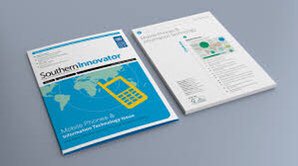
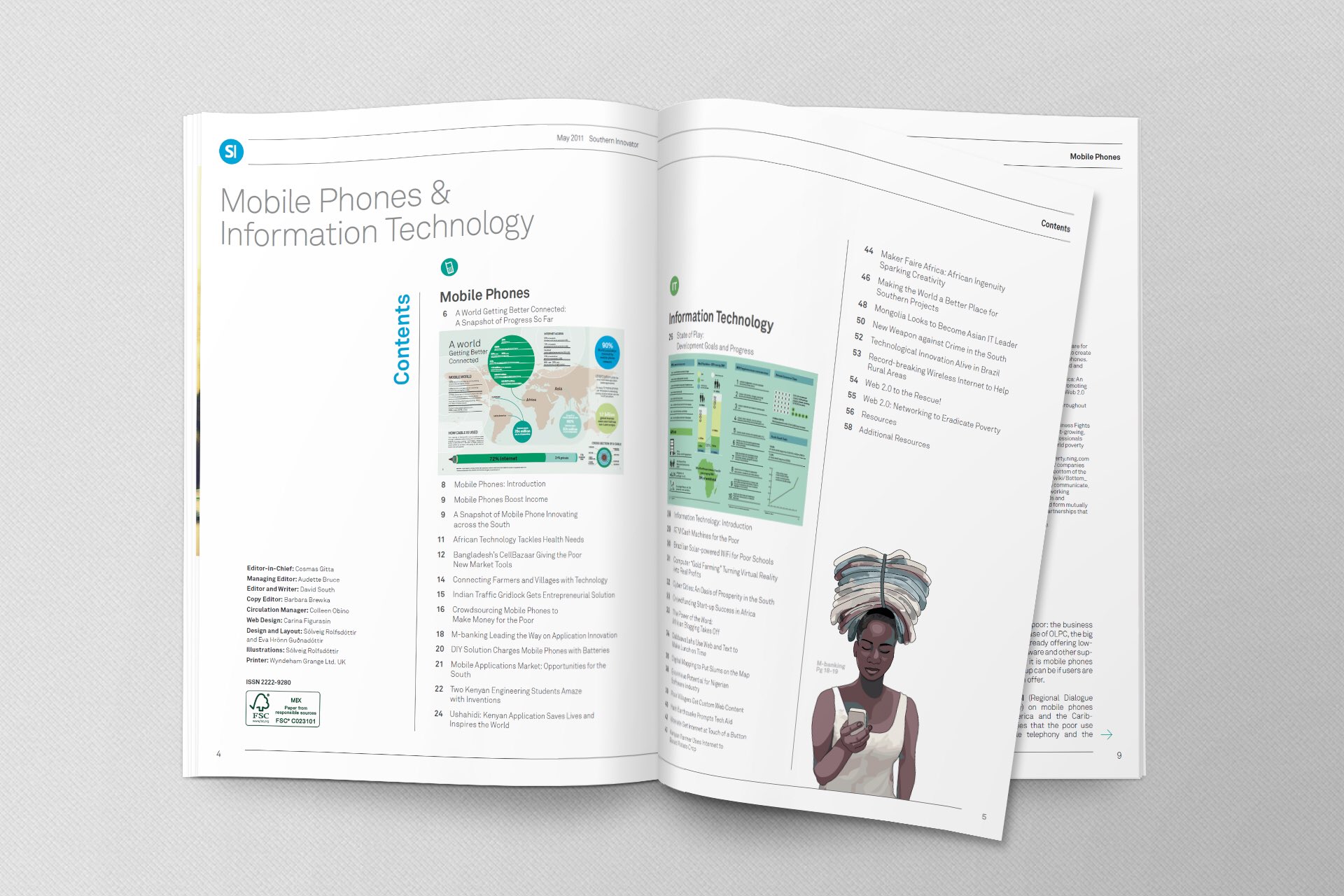
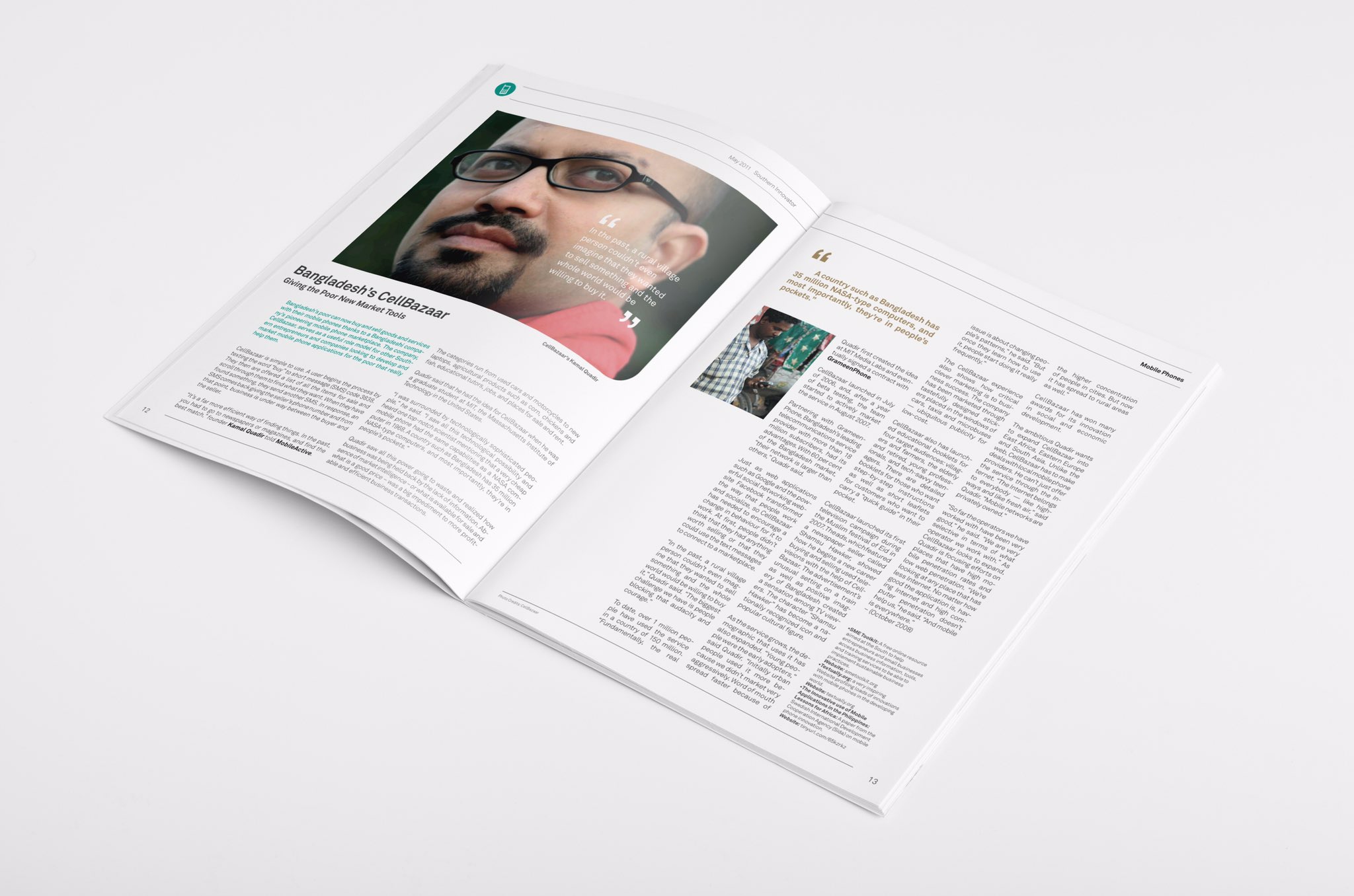
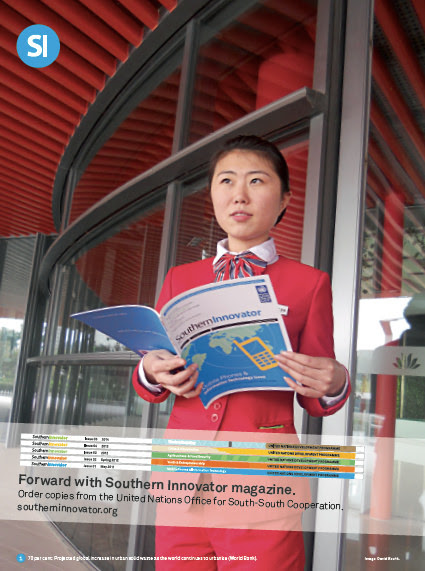
Southern Innovator (SI) is a new magazine for a fast-changing world. It profiles and celebrates the innovators across the global South finding new ways to tackle poverty, create wealth and improve human development and achieve the millennium development goals (MDGs). In its first issue, Southern Innovator features the people who are re-shaping new technologies – from mobile phone ‘apps’ to Internet technologies – to overcome poverty and to improve the quality of life in some of the poorest places on earth.
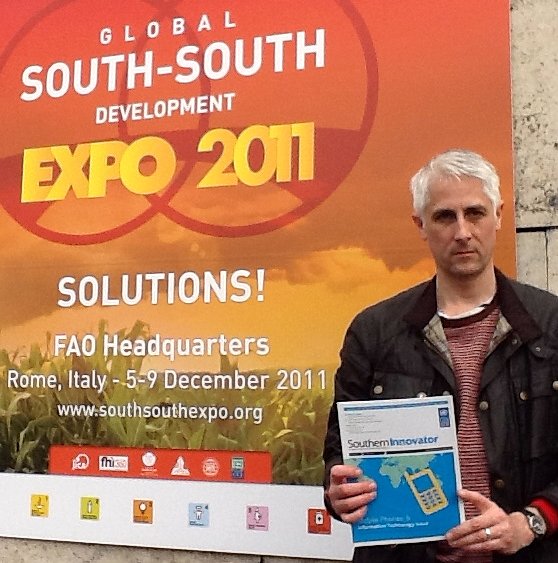
SI is based on intensive research and is produced by UNDP’s Special Unit for South-South Cooperation (www.southerninnovator.org). The Unit is the leading organisation in the world tasked with the goal of sharing knowledge across the global South. It organises events including the yearly South-South Expo (www.southsouthexpo.org), a roaming celebration and gathering of Southern innovators previously held in New York and Geneva, Switzerland. This year’s Expo will be held in Rome, Italy (5 to 9 December 2011).
SI is being distributed around the world through the United Nations network and partners and reaches some of the poorest and remotest places as well as the vibrant but stressed growing global megacities. It is hoped the magazine will inspire budding innovators with its mix of stories, essential information, facts and figures, images and graphics. The magazine will evolve based on reader responses and this first issue is very much the beginning of a journey. As became clear while researching this first issue, many things can change in a short space of time. Few could have imagined the rapid take-up of mobile phones in Africa and how these phones have become integral to development goals across the continent.
SI magazine is a quarterly publication and the next issues will launch in September and December of this year.
A summary for publication is here:
“Southern Innovator (ISSN 2222-9280) is a quarterly magazine published by the United Nations Development Programme’s Special Unit for South-South Cooperation. Launched in May 2011, SI is a new magazine celebrating creativity and innovation emerging from the global South. It explores entrepreneurial solutions to development challenges and uncovers the trends and events shaping the rise of the South in order to spur action on ending extreme poverty and toward reaching the Millennium Development Goals (MDGs).”
We hope you enjoy the magazine and find its content interesting and illuminating: a snapshot of a fast-changing world awash, as we found out, with innovators, creators and do-ers making their world a better place.
For more information on Southern Innovator contact Cosmas Gitta at cosmas.gitta@undp.org or editor David South at southerninnovator@yahoo.co.uk.
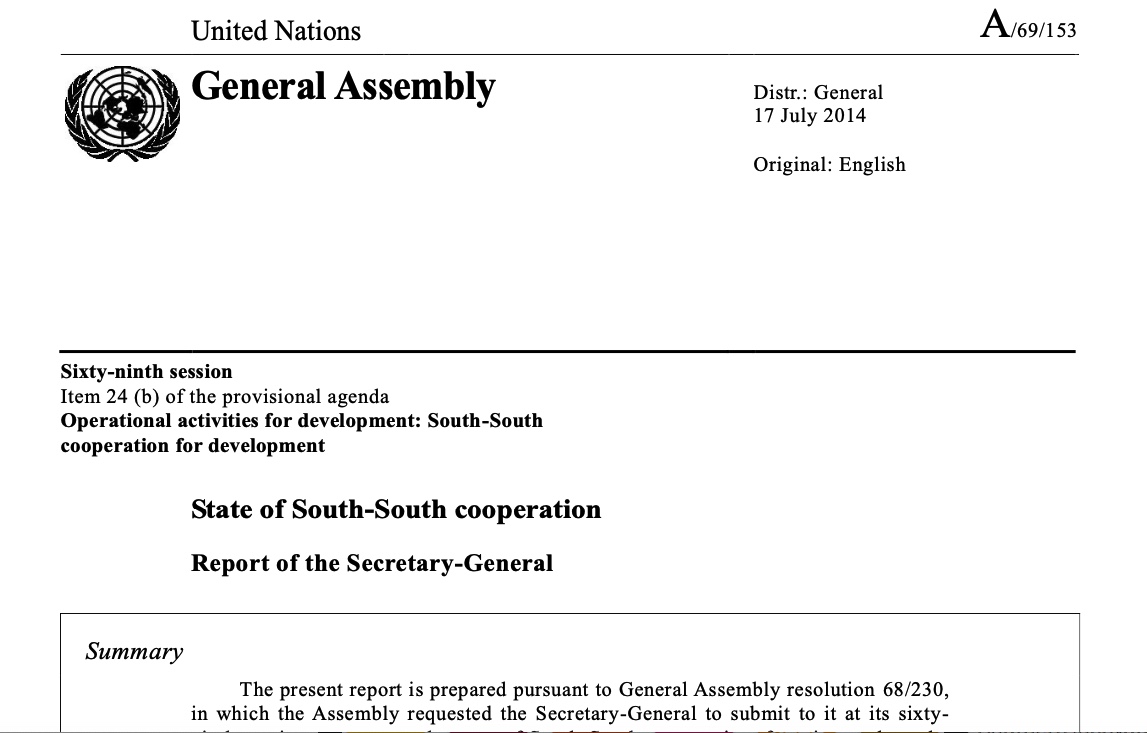
United Nations General Assembly: Sixty-ninth session, Item 24 (b) of the provisional agenda, Operational activities for development: South-South cooperation for development, 17 July 2014. The research informing Southern Innovator Magazine played a part in the formulation of the UN’s post-2015 development agenda, including the Sustainable Development Goals (SDGs).
In recent decades, China has been known more for its inexpensive manufactured goods than as a producer of high quality products. But this is changing as the country seeks to move up the economic chain.
China’s long-established design traditions were largely overlooked as the country made its breakneck push to become the world’s manufacturing powerhouse. But now Chinese manufacturers want to be known for high-quality designs and products rather than just for cheap-and-cheerful merchandise.
China is a critical lesson for the rest of the global South, and offers much inspiration to any country trying to develop, modernize and eradicate poverty.
The country is the main reason for the dramatic reductions in global extreme poverty rates, and it can be proud of using its average yearly economic growth rate of 10 per cent to lift 440 million Chinese out of poverty – the biggest reduction of poverty in history (The Economist). The strategy of exporting manufactured goods into Western markets at competitive prices has dominated the past 20 years.
But China faces a dilemma as other nations in the global South are moving into this niche. It needs to quickly become a high-value nation, with unique products and designs generated in the country.
Luckily, a renaissance in Chinese design in the last five years has been gradually grabbing the attention of the world’s creative community.
Innovative Chinese designers are creating home furnishings and interiors that are being snapped up by European companies.
The Italian kitchen utensil design company Alessi turned to eight Chinese architects – including Ma Yansong and Yung Ho Chang – to design a range of trays called (Un) Forbidden City. The architects’ designs were manufactured in Italy – a reversal of the pattern that has dominated for the past 20 years.
The architects drew on Chinese traditions and 21st century technologies to design the trays. One was made using a 3D scanner which captured images used to make a mould.
The drive to change and transform China’s global economic role was promoted in 2011’s Beijing International Design Week (http://www.bjdw.org/en/), with its theme of transforming “Made in China to Designed in China.”
“When you have so much of a manufacturing base in one place, it’s natural that people start thinking about how to climb the value chain,” Philip Tinari, director of Beijing’s Ullens Centre for Contemporary Art (UCCA) (http://ucca.org.cn/) – a champion of new artists and designers – told howtospendit.com.
“Chinese design has become something to rally around and, unlike art, enjoys great official support because it’s a way of improving China’s long-term economic position, as opposed to expressing thoughts about what’s been going on.”
Other Chinese designers grabbing attention include Chen Xuan, who makes tables; chair-maker Gui Yang; Li Bowen, a maker of wicker chairs; and Ge Wei, a maker of jewellery boxes.
Designer Huo Yijin makes contemporary tea trays, using heat-reactive lacquer coating to create dazzling effects.
“Users can see the wonderful effect of water and temperature reacting on the tea trays when they drink Kungfu tea in the traditional way,” Huo explained.
Jingdezhen, Jiangxi province – a city that has been making ceramics since the Ming Dynasty (1368–1644) – is now attracting craftspeople from around the world looking to tap into its expertise and skill. One attraction is Mr Yu’s Big Ware Factory. Its unparalleled ability to create giant-size pottery is a design niche with much potential.
Many foreign creatives are being drawn to China for its can-do attitude and the ability to break with conventions stifling creativity in the West. The next five years could see the world’s design centre of gravity shift eastwards again.
Published: November 2012
Resources
1) Ullens Centre for Contemporary Art (UCCA): The Ullens Center for Contemporary Art (UCCA) is a comprehensive, not-for-profit art center serving a global Beijing public. Website:http://ucca.org.cn/
2) ChinaShijitanContemporaryArtCenter: A mixed-use art venue with experimental theatre, exhibition space, art gallery and production spaces. Website:http://www.ar-chiasmus.cn/project_6.html
3) Pearl Lam Galleries: Pearl Lam Galleries lead a stable of International and Chinese artists who are multidisciplinary, refuting the hierarchy of art forms. The galleries do not follow the model of Western galleries; rather, they have evolved from the philosophy of Chinese Literati, which does not segregate between the different art disciplines. Website:http://pearllamgalleries.blogspot.co.uk/p/about.html
4) School of Design of the China Central Academy of Fine Arts (CAFA): The Central Academy of Fine Arts, located in Beijing, the capital of China, is an academy where culture, history and art are flourishing, which enjoys the best art resources of the world. Website:http://www.cafa.edu.cn/aboutcafa/lan/?c=1101
5) Beijing’s legendary 798 art district: “798” is located in the Dashanzi area, to the northeast of central Beijing. It is the site of state-owned factories including Factory 798, which originally produced electronics. Beginning in 2002, artists and cultural organizations began to divide, rent out, and re-make the factory spaces, gradually developing them into galleries, art centers, artists’ studios, design companies, restaurants, and bars. Website:http://www.798space.com/subpage_en.asp?classid=17
Beginning in 2011 and ending in 2014, each issue of Southern Innovator was launched at the annual Global South-South Development Expo (GSSD Expo) run by the United Nations Office for South-South Cooperation (UNOSSC). The issues (there were five) would connect with that year’s Expo theme and were intended to reinforce the solutions presented at the Expo, as well as those solutions discovered through research for the influential United Nations e-newsletter Development Challenges, South-South Solutions. An Expo was not run in 2015 for the following reason: U.S. Finds Macau Billionaire Guilty in U.N. Bribery Case.
Studies have shown the importance of reading to real change. Not just online, but in paper form. The retention of information and knowledge is greater when a person reads something in a book or a magazine. Another factor is quality design (which makes the published material both attractive and effective). Trashy, gaudy or slap-dash design, while it has its place and context, is not suitable for well-funded, transparent, public organizations seeking to communicate across borders in a professional manner. Southern Innovator was designed following the UN and UNDP design guidelines at the time, while also adhering to the UN Global Compact and the UN Consultants Remuneration Guidelines. The content was also written to follow those guidelines as well as the Plain English Campaign, which seeks to reduce the presence of “gobbledygook, jargon and misleading public information”. On top of this, the magazine benefited from experience: the experience of one of Iceland’s top graphic designers and illustrators, the team based at the UNOSSC in New York who oversaw the editing and proof reading, and the researcher, editor and writer who has led many successful and award-winning publishing ventures, including during “one of the biggest peacetime economic collapses ever”.
“What a tremendous magazine your team has produced! It’s a terrific tour de force of what is interesting, cutting edge and relevant in the global mobile/ICT space… This is great, engaging, relevant and topical stuff.” Rose Shuman, Founder & CEO, Open Mind and Question Box, Santa Monica, CA, U.S.A.
Southern Innovator Issue 1: Mobile Phones and Information Technology was published in 2011 and launched at the Expo in Rome, Italy.
Southern Innovator Issue 2: Youth and Entrepreneurship was published in 2012 and launched at the Expo in Vienna, Austria.Southern Innovator Issue 3: Agribusiness and Food Security was published in 2012 and launched at the Expo in Vienna, Austria.Southern Innovator Issue 4: Cities and Urbanization was published in 2013 and launched at the Expo in Nairobi, Kenya (the first time in Africa).
Issue 6 of Southern Innovator was to be on the theme of science, technology and innovation. Southern Innovator Issue 5: Waste and Recycling was published in 2014 and launched at the Expo in Washington, D.C.
Expertise: Project evaluation, strategy, project management, project delivery, UN system, MDGs, research papers, media strategies and digital media strategies.
Locations: Ulaanbaatar, Mongolia, Kiev, Ukraine, Pretoria, South Africa, Ashgabat, Turkmenistan 2000 to 2006
From 1999, I worked as a consultant for United Nations (UN) missions in Africa, Asia, Central Asia and Eastern Europe, for USAID Mongolia and for a UK-based international development consultancy.
About
Was the United Nations being effective and reflecting the potential for change in the mobile and information technology age? What needed to change? Who were the policy innovators?
This work included overseeing various digital media projects, including the strategic re-development of the UN Ukraine web portal, aiding in the rolling out of the media campaign for the Millennium Development Goals (MDGs) in Mongolia, including the first use of infographics in the Mongolia UN mission, advising on strategies for youth engagement in development goals in South Africa, and support to the UN mission in Turkmenistan as it finalised its United Nations Development Assistance Framework (UNDAF) with the government and also work with UNICEF there. What I learned during this period proved crucial to the insights and thinking reflected in two highly influential United Nations publications, e-newsletter Development Challenges, South-South Solutions, and Southern Innovator magazine (developed in 2010).
This period was particularly advantageous because I had a front-row seat to the unfolding digital and mobile information technology revolution sweeping across the emerging markets and the global South. I also had insight into what worked and didn’t in international development as well as the UN system. I also learned a great deal about development challenges first-hand in highly varied countries, how the Millennium Development Goals (MDGs) were actually being rolled out, and met amazing people who were challenging existing precepts on how to do development. All of this work proved very useful later on.
I have either travelled to, or worked and lived, in many countries, enhancing my global perspective and affording me a valuable trove of knowledge that has in turn informed my work in international development. I have always paid attention to the level of development in the country, how it has organized itself, the quality of its design, and how it interacts with other countries for trade and relations. The countries visited to date include: Antigua and Barbuda, Australia, Azerbaijan, Belgium, Canada, China, Cuba, Denmark, Domenica, Finland, France, Germany, Greece, Guadalupe, Haiti, Hong Kong, Iceland, Ireland, Israel, Italy, Japan, Kenya, Luxembourg, Malaysia, Mexico, Monaco, Mongolia, Montseratt, Morocco, the Netherlands, Norway, Philippines, Portugal, Russia, Singapore, South Africa, South Korea, Spain, Sweden, Switzerland, Thailand, Tunisia, Turkey, Turkmenistan, Ukraine, the United Kingdom, the United States of America, Vatican City. A fascinating mix of countries – some holders of top place on the UN’s Human Development Index – and others where human development is at its worst. Seeing with your own eyes what works and what does not is highly illuminating, while knowing first-hand how human development can be improved is critical for giving informed advice.
Timeline
1999/2000: USAID Mongolia (design and publicity strategy for business development brochure, US Mongol (Mongolia) Construct and US tour, work with Riverpath Associates in the UK on communications strategies and the drafting of papers for the American Foundation for AIDS Research, the Global Fund to Fight AIDS, Tuberculosis and Malaria, UNCTAD, Harvard Institute for International Development, and the preparation of the report and launch strategy for the World Bank’s Task Force on Higher Education.
2000: UN Ukraine: strategic re-development of the UN Ukraine web portal and incorporation of the Millennium Development Goals (MDGs).
2004: UN Mongolia (media campaign for MDGs) and UN South Africa (evaluation of youth NGO associated with the University of Pretoria and its projects and providing a strategic marketing plan).
2005: UN Mongolia (media campaign for MDGs) and UN Turkmenistan (finalising its United Nations Development Assistance Framework – UNDAF).
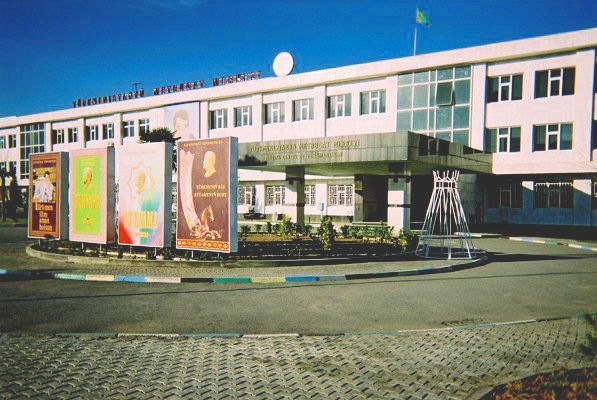
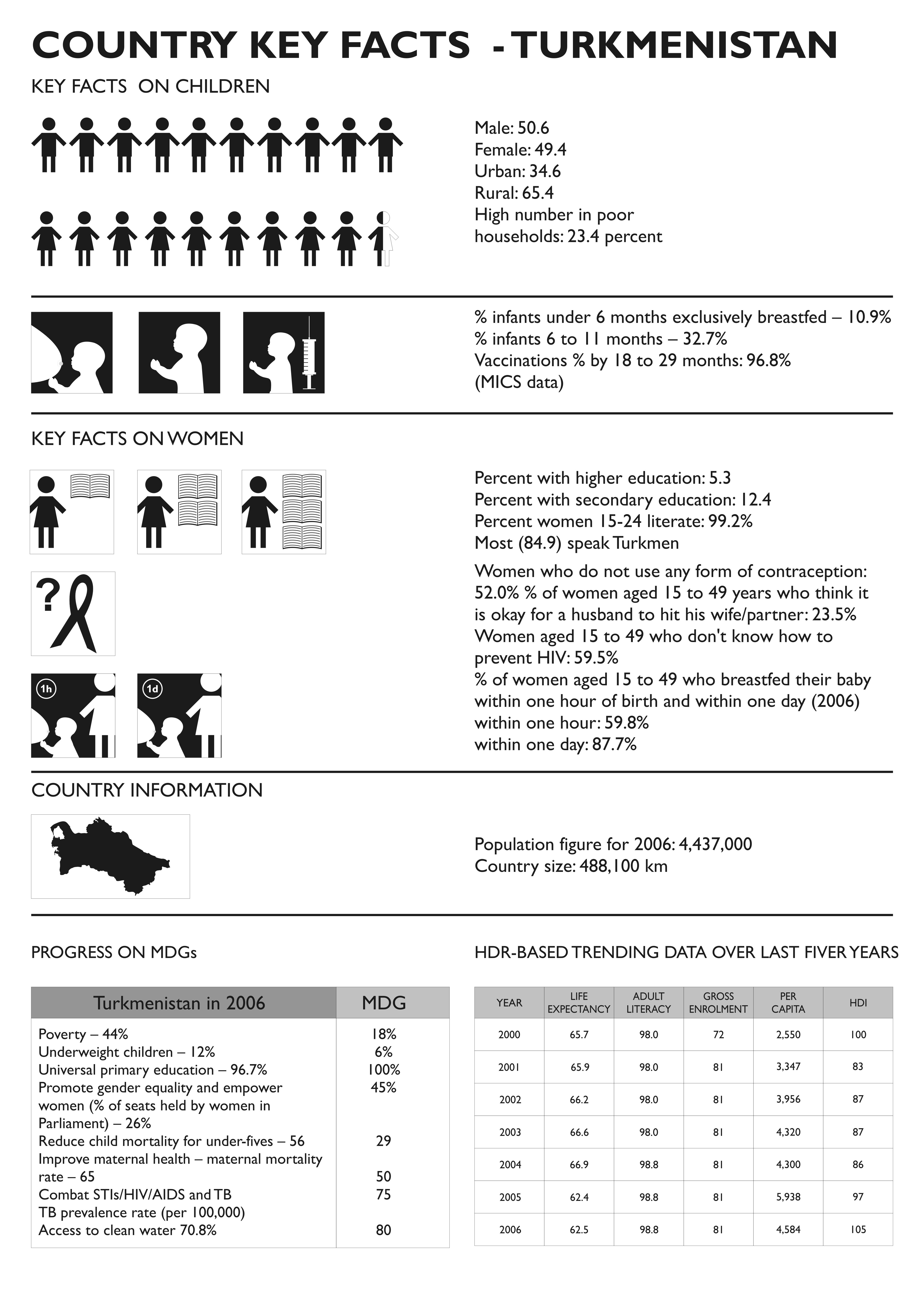
Rukhnama publishers in Turkmenistan’s capital, Ashgabat (2005). Photo: David SouthAn infographic commissioned for UN Turkmenistan MDGs report (2006).
“I highly recommend Mr. David South as a communications consultant who gets results.” Brian DaRin, Representative/Director, USAID Investment & Business Development Project, Global Technology Network/ International Executive Service Corps-Mongolia, 23 September 1999
Impact
Micro
working as a communications consultant for UN missions – Ukraine, South Africa, Mongolia, Turkmenistan
redeveloping mission websites, preparing content, reports, advising on communications strategy
working with local designers on new ways to present development data through inforgraphics (2005/2006)
Macro
in the course of travel and work, seeing the unfolding impact of the global communications revolution, in particular the rapid roll-out and take-up of mobile technologies, and the urgent need for the UN system to take this on board. Also witnessed firsthand the grassroots solutions revolution brought about by information and mobile technologies and the Internet, which needed to be fully embraced by the UN
Resources
A Marketing and e-Marketing Strategy – the New SASVO, Prepared from December 2004 to February 2005 for the Southern African Student Volunteers (University of Pretoria).

















 David South Consulting
You must be logged in to post a comment.