Tag: human development

  • 2013: Development Challenges, South-South Solutions

    2013: Development Challenges, South-South Solutions
    By David SouthDevelopment Challenges, South-South Solutions

    SOUTH-SOUTH CASE STUDY

    ISSN 2227-3905

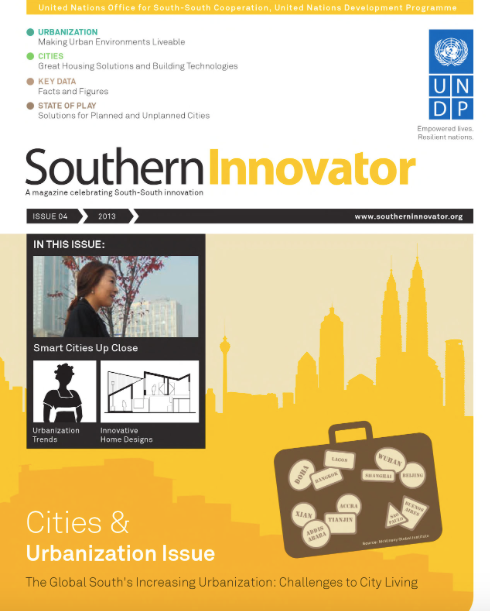
    The  fourth issue of Southern Innovator has launched online and in print. Order copies now for distribution. Email: southerninnovator@yahoo.co.uk.
    December

    Baker Cookstoves – Designing for the African Customer Development Challenges: An innovative social enterprise is using design to create an energy-efficient cookstove for Kenya. By turning to an experienced Swedish architecture and design firm, the people behind the Baker cookstove wanted to make sure the stove’s design was as efficient as possible and relevant to the customers’ needs, while also making sure it is visually appealing and something a person would proudly want in their home.

    Texting for Cheaper Marketplace Food with SokoText Development Challenges: An international group of graduate-social entrepreneurs from the London School of Economics (LSE) is pioneering a way to reduce food prices in Kenya using mobile phones.

    Ethiopia and Djibouti Join Push to Tap Geothermal Sources for Green Energy Development Challenges:Ethiopia and Djibouti are the latest global South countries to make a significant commitment to developing geothermal energy – a green energy source that draws on the heat below the earth’s surface (http://en.wikipedia.org/wiki/Geothermal_energy) – to meet future development goals.

    Tackling China’s Air Pollution Crisis: An Innovative Solution Development Challenges: China reached an undesired landmark in 2013. While the country’s impressive economic growth has amazed the world, it has come at a price: pollution. China recorded record levels of smog in 2013, with some cities suffering air pollution many times above what is acceptable for human health.

    November

    Ghana Wants to Tap Global Trendy Party Scene Development Challenges: Tourism is big business – and one of the most resilient parts of the global economy. Despite the international economic crisis that has wreaked havoc and increased unemployment and poverty in many countries since 2007, tourism is still going strong.

    China Pushing Frontiers of Medical Research Development Challenges: Cutting-edge medical research in China is promising to boost human health and development. Futuristic science is being conducted on a large scale and it is hoped this will increase the pace of discovery.

    Latin American Food Renaissance Excites Diners Development Challenges: Food is essential for a good life and plays a critical part in overall human health and development. The better the quality of food available to the population, the better each individual’s overall health will be, and this will have a direct impact on mental and physical performance (http://www.sciencedirect.com/science/article/pii/S2213453012000055).

    Perfume of Peace Helps Farmers Switch From Drug Trade Development Challenges: A tragedy in a time of war has led to a social enterprise that is creating jobs – and making the world smell a little better, too.

    US $450 Million Pledged for Green Economy Investments at Kenyan Expo Development Challenges: Innovators working in the global green economy could benefit from over US $450 million in investment recently pledged at the UN’s Global South-South Development Expo held in Nairobi, Kenya.

    October

    African Fashion’s Growing Global Marketplace Profile Development Challenges: Tales of African global fashion successes have multiplied in the last few years. African fashion is seeing its profile rise as more and more shows and festivals boost awareness of the continent’s designs, designers and models. In turn, African fashion and design is being taken more seriously as an income and job generator, and as a sector able to weather the ups and downs of the global economy: people always need to wear clothes.

    Cuban Entrepreneurs Embracing Changes to Economy Development Challenges: The Caribbean island of Cuba has gone its own way economically and socially since its revolution in 1959. The country has seen significant gains in its human development in the decades since, and can boast impressive education levels and good public health care.

    Radical Drone Solution to Woeful Infrastructure in Poor Countries Development Challenges: Drones – unpiloted aircraft, formally called Unmanned Aerial Vehicles (UAV) or Unmanned Aircraft Systems (UAS) – have long been used for military purposes. The U.S. military claims to have 7,500 drones – a massive growth from just 50 a decade ago – and has used them for surveillance and combat in conflicts from Afghanistan to Iraq.

    Pioneering African Airlines Help to Expand Routes Development Challenges: The last decade has seen a revolution in African air travel. The number of air routes has grown and this has paralleled the economic growth across the continent. As demand has been strong for Africa’s resources, it has also fueled a consumer boom that is benefiting an increasing number of people.

    September

    Affordable Space Programmes Becoming Part of South’s Development Development Challenges: Space: the final frontier. At least that was how heading off into the stars was portrayed in cult television and film series Star Trek. While many countries are working to raise living standards and eradicate poverty on earth, some are also looking to space for solutions to earth-bound problems.

    Solar Bottle Bulbs Light Up Dark Homes Development Challenges: Finding ways to generate low-cost or free light has captured the imagination of innovators across the global South. The desire for light is strong: Light gives an immediate boost to income-making opportunities and quality of life when the sun goes down or in dark homes with few windows.

    China Sets Sights on Dominating Global Smartphone Market Development Challenges: The rise of smartphones – mobile phones capable of Internet access and able to run ‘apps’ or applications – is the latest wave of the global connectivity revolution. Mobile phones rapidly made their way around the world to become almost ubiquitous – the most successful take-up of a piece of communications technology in history – and now smartphones are set to do the same. The number of mobile phone subscriptions in the world surpassed 6 billion in 2012 (out of a population of 7 billion) and, according to the International Telecommunications Union (ITU), the number of mobile phones will exceed the world’s population by 2014.

    Poorest Countries Being Harmed by Euro Currency Crisis Development Challenges: The ongoing economic crisis in Europe is forecast to harm the economies of the world’s poorest countries if it continues, according to a study by the United Kingdom’s Overseas Development Institute (ODI) (odi.org.uk).

    August

    Solar-Powered Mobile Clinics to Boost Rural Healthcare in Africa Development Challenges: Around the world, innovative thinking is finding new ways of using solar power technology to bring electricity to underserved areas of the global South. Innovators are experimenting with new technologies, new business models and new ways to finance getting solar power into the hands of the poor.

    Vietnamese Google Rival Challenging Global Giant Development Challenges: Information technologies are creating new business opportunities across the global South. As more and more people gain access to the Internet in one form or another, opportunities to offer them services also increase.

    More Futuristic African Cities in the Works Development Challenges: It has been well documented that China is undergoing the largest migration in human history from rural areas to cities. But this urbanization trend is occurring across the global South, including in Africa, as well. According to the UN, more than half the world’s population already lives in cities, and 70 per cent will live in urban areas by 2050. Most of the world’s population growth is concentrated in urban areas in the global South.

    Story cited in Beyond Gated Communities by Samer Bagaeen and Ola Uduku, Taylor & Francis, ISBN 9781317659051, 2015

    On Google Books: https://www.google.co.in/books/edition/Beyond_Gated_Communities/PVfeCQAAQBAJ?hl=en&gbpv=0.

    Haitian Coffee Becoming a Hit with American Connoisseurs Development Challenges: The Caribbean country of Haiti has had to deal with the twin challenges of recovering from a devastating earthquake in 2010 while also pulling itself out of the economic and social chaos that has resulted in its status as the poorest place in the Western hemisphere.

    New 3D Technology Makes Innovation Breakthrough and Puts Mind over Matter Development Challenges:Revolutions in technology are placing more and more power into the hands of the individual, and 3D printing and fabrication machines are opening a whole new chapter. These devices come in many forms, but they all do one thing: they can manufacture pretty well any three-dimensional object on the spot, from digital plans. These machines come in many sizes, from factory scale to smaller, home versions which are no bigger than personal computer printers, such as the well-known MakerBot Replicator 2 (makerbot.com).

    July

    African Infrastructure Dreams Back on Agenda Development Challenges: Africa’s patchy infrastructure is not keeping pace with the continent’s economic growth. Satellite photos of Africa at night show a place where light is concentrated overwhelmingly in the South – primarily South Africa – and in the North, with a sprinkling of lights on the west and east coasts (http://geology.com/articles/satellite-photo-earth-at-night.shtml).

    Mobile Phone Microscopes to Revolutionize Health Diagnostics Development Challenges: Mobile phone usage has increased hugely across the global South in the past five years. In Africa, the number of mobile phone subscribers reached 545 million in 2013, while there are 3.5 billion mobile phone users in Asia and the Pacific (ITU). Some 93 million people in Africa and 895 million in Asia and the Pacific have mobile phone Internet access (ITU).

    Small Fish Farming Opportunity Can Wipe Out Malnutrition Development Challenges: Pioneering work to boost diets across the global South is turning to the smallest of fish. While small in size, tiny fish are packed with nutrition when eaten whole, as they are in many cultures. Often these fish come packed with vitamin A, iron, zinc, calcium, protein and essential fats – all necessary elements to eradicate malnutrition and hidden hunger, especially among women and children.

    Burgeoning African E-commerce Industry Full of Opportunity Development Challenges: Africa has seen huge change since 2000 in the way people access information and do business electronically. The most championed accomplishment has been the widespread take-up of mobile phones. This has given birth to countless entrepreneurs and innovators who are using  phones to help people, do business and sell goods and services.

    Staple Foods Are Becoming More Secure in the South Development Challenges: Finding ways to ensure food security in countries experiencing profound economic and social change and stress is critical to achievement of development goals. Food security is crucial to ensuring economic development is sustainable, and it is vital to long-term human health. Just one bout of famine can damage a generation of youth, stunting brain development and leaving bodies smaller and weaker than they should be.

    June

    African Innovators Celebrated in Prize Development Challenges: Innovation is increasingly being recognized as the key to tackling long-standing development problems in Africa, as well as across the developing and developed world. While it is easy to draw up a list of challenges facing the global South, it takes a special person to see not problems but solutions.

    New Beer Helping to Protect Elephants Development Challenges: How to match the often conflicting goals of protecting animal habitats and supporting local economies? One clever solution may draw amusement but is actually a sharp marketing strategy to get attention for a product that is helping to preserve the elephants of Thailand’s Golden Triangle (http://en.wikipedia.org/wiki/Golden_Triangle_(Southeast_Asia).

    Solar Solution to Lack of Electricity in Africa Development Challenges: Electricity is critical to improving human development and living standards. Yet, for many in the global South, electricity is either non-existent or its provision is patchy, erratic, unreliable or expensive.

    Time-Tested Iranian Solutions to Cool and Refrigerate Development Challenges: Keeping food cool is critical for human health. No matter what the climate, a cool environment will prolong food preservation, stave off spoilage and lower the risk of food poisoning. This is crucial for the poor because it means they can reduce food waste and avoid illnesses caused by food poisoning. Diarrhea is a common problem when people do not have access to refrigeration for their food.

    May

    US $1 Trillion Opportunity for Africa’s Agribusinesses Says Report Development Challenges: As the world’s population continues to grow – surpassing 9 billion people by 2050, the United Nations estimates – and more and more people move to urban areas, producing enough food to feed this population will be one of the biggest economic challenges and opportunities in the global South.

    Ambitious Schemes Hope to Advance Economic Development Development Challenges: Sometimes it takes a bold, fresh start to speed up economic and human development goals. Taking a large-scale approach has been used around the world, either establishing new trade zones or even a new city.

    Indian Initiatives to Make Travel Safer for Women Development Challenges: Shocking assaults on women traveling in India have galvanized innovators to find solutions. One solution that is proving successful is to establish specialist taxi services for women. As a happy additional benefit, these taxi innovators are transforming the taxi experience, introducing more ethical practices such as honest fares, professional and safe driving habits and clean, hygienic and comfortable taxis.

    Kenya Reaches Mobile Phone Banking Landmark Development Challenges: Financial transactions and banking with mobile phones have been a Kenyan success story.

    April

    Online Education Could Boost African Development
 
Development Challenges: Education is recognized as a major catalyst for human development. During a high-level meeting on the Millennium Development Goals (MDGs) (http://www.undp.org/content/undp/en/home/mdgoverview.html) in 2010, UNESCO – the United Nations Educational, Scientific and Cultural Organization – pointed out the necessity of making rapid gains in education if all the MDGs are to be achieved. The goals deadline is 2015 – just two years away.

    African Digital Laser Breakthrough Promises Future Innovation Development Challenges:
 
For decades many African countries have experienced low investment in research and development (R&D) and scientific innovation. One of the few nations to benefit from a sophisticated university network and research and development sector was South Africa. It still ranks top on the continent for funding R&D and its high number of scientific journals.

    Preserving Beekeeping Livelihoods in Morocco Development Challenges: The clever combining of tourism and long-standing beekeeping skills has revived a local craft and is also helping to preserve the ecology of Morocco. Beekeeping, or apiculture (http://en.wikipedia.org/wiki/Beekeeping), has two clear benefits. Bee products, including honey, beeswax, propolis, pollen and royal jelly can be a valuable source of income. The other benefit is the critical role bees play in the ecology by pollinating flowers and plants as they go about their daily business.

    A New African Beer Helps Smallholder Farmers. Development Challenges: Africa’s growth in the past decade has held steady despite the trauma of the global economic crisis and the tumult of the “Arab Spring” in several countries of North Africa. African economies are growing because of a number of resilient trends. These include growing regional trade links, greater investment in infrastructure and the remarkable rise of China to become Africa’s number one trade partner, pushing the United States to second place (Technology + Policy). This has given birth to a growing consumer marketplace and consumer class – some 300 million people earning about US $200 a month (Africa Rising).

    Boosting Tourism in India with Surfing Culture Development Challenges: Tourism has experienced decades of growth and diversification and is now considered one of the fastest-growing economic sectors in the world. According to the UNWTO – the United Nations World Tourism Organization – modern tourism is “a key driver for socio-economic progress.”

    March

    Made-in-Africa Fashion Brand Pioneers Aim for Global Success Development Challenges: African fashion brands have not always been the first place fashionistas turned to when shopping for new clothes or shoes in developed economies. While Africa has long been a source of inspiration in contemporary and traditional fashion, the continent has had a weak reputation for manufacturing and selling mass market global fashion brands.

    Kenyan Book Company Brings Online Sales to East Africa Development Challenges: The Internet has revolutionized retail sales in many developed countries – and nowhere more so than for booksellers. The ability to offer an almost unlimited supply of books through a website is revolutionizing the way people shop and giving life to books long out of print or by unknown authors.

    African Innovation Helps Make Banking Transactions Safer Development Challenges: As economies grow in Africa, more and more people are conducting their financial transactions electronically. This can be either through mobile phones and digital devices, or through the hole-in-the-wall of the automatic teller machine, or ATM.

    New Apps Make Driving and Travelling in Egypt Easier, Safer Development Challenges: Mobile phones are ubiquitous across the global South. They have spawned whole new business opportunities and changed the way people solve problems and find solutions.

    Bangladesh Coffin-Maker Offers an Ethical Ending Development Challenges: Few people want to think about death, and many are ill-prepared when it happens to a loved one or friend. But it will happen to us all – and growing ethical and environmental concerns are reshaping the way many deal with the inevitable event. More and more people are seeking a lower-cost option for being disposed of that also does not harm the environment.

    February

    Thai Organic Supermarkets Seek to Improve Health
 Development Challenges: 
A Thai business is working hard to expand access to organic food in the country. It sees this as part of a wider campaign to improve health in the country – and its success has caught the attention of the government, which wants to turn Thailand into a global health destination.

    Global South Experiencing Transportation Revolution
 
Development Challenges: Away from the news headlines, a quiet revolution has been taking place in public transportation across the global South. As cities have expanded and grown, they have also been putting in place public transport systems to help people get around and get to work.

    Global South’s Middle Class is Increasing Prosperity Development Challenges: The global middle class is on the rise – and this is creating both challenges and opportunities. As poverty rates have come down across the global South, many countries have seen a rise in the proportion of their population categorized as “middle class”. Globally, being middle class is defined as a person able to consume between US $4 a day and US $13 a day (ILO).

    Angolan Film Grabs Attention at Film Festival Development Challenges: The power of the creative economy to transform lives, livelihoods – and perceptions – should never be underestimated. Creativity can transform the image of places and situations often seen in a negative light. A film from Angola is shining a light on the country’s music scene and showing the vitality of the nation in the wake of a long-running civil war.

    Back Issues

    Development Challenges, South-South Solutions Newsletter | 2011-2014

    Development Challenges, South-South Solutions Newsletter | 2007-2010

    2013

    2012

    2011

    2010

    2009

    2008

    2007

    Development Challenges, South-South Solutions was launched as an e-newsletter in 2006 by UNDP’s South-South Cooperation Unit (now the United Nations Office for South-South Cooperation) based in New York, USA. It led on profiling the rise of the global South as an economic powerhouse and was one of the first regular publications to champion the global South’s innovators, entrepreneurs, and pioneers. It tracked the key trends that are now so profoundly reshaping how development is seen and done. This includes the rapid take-up of mobile phones and information technology in the global South (as profiled in the first issue of magazine Southern Innovator), the move to becoming a majority urban world, a growing global innovator culture, and the plethora of solutions being developed in the global South to tackle its problems and improve living conditions and boost human development. The success of the e-newsletter led to the launch of the magazine Southern Innovator.

    Creative Commons License

    This work is licensed under a
    Creative Commons Attribution-Noncommercial-No Derivative Works 3.0 License.

    ORCID iD: https://orcid.org/0000-0001-5311-1052.

    © David South Consulting 2022

  • Indonesian Wooden Radio Succeeds with Good Design

    Indonesian Wooden Radio Succeeds with Good Design

    By David SouthDevelopment Challenges, South-South Solutions

    SOUTH-SOUTH CASE STUDY

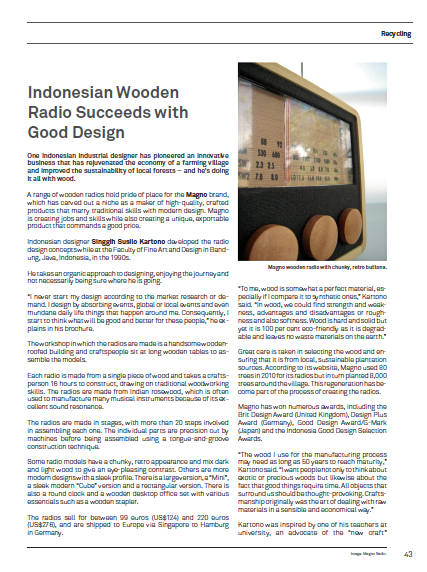
    One Indonesian industrial designer has pioneered an innovative business that has rejuvenated the economy of a farming village and improved the sustainability of local forests – and he’s doing it all with wood.

    A range of wooden radios (wooden-radio.com) hold pride of place for the Magno brand (http://www.magno-design.com/?id=wr01a), which has carved out a niche as a maker of high-quality, crafted products that marry traditional skills with modern design. Magno is creating jobs and skills while also creating a unique, exportable product that commands a good price.

    Indonesian designer Singgih Susilo Kartono developed the radio design concepts while at the Faculty of Fine Art and Design in Bandung, Java, Indonesia in the 1990s.

    He takes an organic approach to designing, enjoying the journey and not necessarily being sure where he is going.

    “I never start my design according to the market research or demand. I design by absorbing events, global or local events and even mundane daily life things that happen around me. Consequently, I start to think what will be good and better for these people,” he explains in his brochure.

    The workshop in which the radios are made is a handsome wooden-roofed building and craftspeople sit at long wooden tables to assemble the models.

    Each radio is made from a single piece of wood and takes a craftsperson 16 hours to construct, drawing on traditional woodworking skills. The radios are made from Indian rosewood, which is often used to manufacture many musical instruments because of its excellent sound resonance.

    The radios are made in stages, with more than 20 steps involved in assembling each one. The individual parts are precision cut by machines before being assembled using a tongue and groove (http://en.wikipedia.org/wiki/Tongue_and_groove) construction technique.

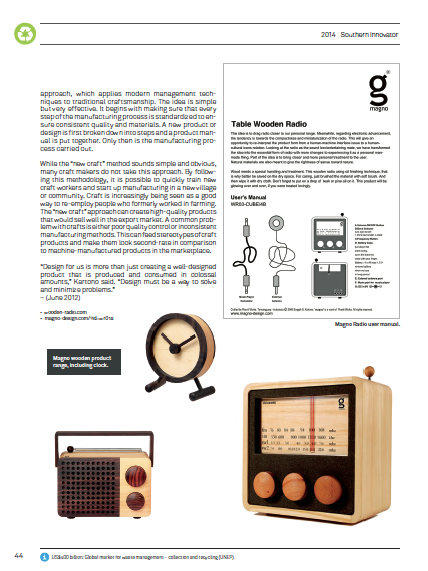
    Some radio models have a chunky, retro appearance and mix dark and light wood to give an eye-pleasing contrast. Others are more modern designs with a sleek profile. There is a large version, a ‘Mini’, a sleek modern Cube’ version and a rectangular version. There is also a round clock and a wooden desktop office set with various essentials like a wooden stapler.

    The radios sell for between Euros 99 (US $124) and Euros 220 (US $276), and are shipped to Europe via Singapore to Hamburg in Germany.

    “To me, wood is somewhat a perfect material – especially if I compare it to synthetic ones,” Kartono said. “In wood we could find strength and weakness, advantages and disadvantages or roughness and also softness. Wood is hard and solid but yet it is 100 per cent eco-friendly as it is degradable and leaves no waste materials on the earth.”

    Great care is taken in selecting the wood and ensuring it is from local, sustainable plantation sources. According to its website, Magno used 80 trees in 2010 for its radios but in turn planted 8,000 trees around the village. This regeneration has become part of the process of creating the radios.

    Magno has won numerous awards, including the Brit Design Award (UK), Design Plus Award (Germany), Good Design Award/G-Mark (Japan) and the Indonesia Good Design Selection Awards.

    “The wood I use for the manufacturing process may need as long as 50 years to reach maturity,” Kartono said. “I want people not only to think about exotic or precious woods but likewise about the fact that good things require time. All objects that surround us should be thought-provoking. Craftsmanship originally was the art of dealing with raw materials in a sensible and economical way.”

    As Kartono tells it, he faced the typical university graduate’s dilemma about his career path. Should he work as an in-house designer in a city or return to his home village of Kandangan and start a business? His choice was unusual. Once somebody with a university education leaves a small village, it is rare they return. And at first, Kartono did not.

    But he was drawn back by the dire situation in the village, and decided to apply his knowledge of product design to revive its economic fortunes. He started by visiting just twice a year because that was all he could afford. This had the advantage of giving him perspective on the situation in the village.

    “At first glance, these changes (happening to the village) were seen as a ‘progress,’” he said. “But when I looked more closely I concluded that it was only the ‘surface’ which experienced change. The basic structure of the village did not undergo any changes; moreover, some was actually deteriorating.”

    He concluded that the village was being damaged by various government attempts to modernize agricultural practices. The debt problems this caused meant many farmers lost their farms and were forced to seek work in the city or look for another way to make money.

    Craft work seemed to be the answer to this problem. It has many advantages, as Kartono sees it. It is something that can grow and fits well with village lifestyles. It is labour intensive, doesn’t need sophisticated technology and can use already existing local resources.

    Kartono was inspired by one of his teachers at university, an advocate of the ‘New Craft’ approach, which applies modern management techniques to traditional craftsmanship. The idea is simple but very effective. It begins with making sure every step of the manufacturing process is standardized to ensure consistent quality and materials. A new product or design is first broken down into steps and a product manual is put together. Only then is the manufacturing process carried out.

    While the New Craft method sounds simple and obvious, many craft makers do not take this approach. By following this methodology, it is possible to quickly train new craft workers and start up manufacturing in a new village or community. Craft is increasingly being seen as a good way to re-employ people who formerly worked in farming. The New Craft approach can create high-quality products that would sell well in the export market. A common problem with crafts is either poor quality control or inconsistent manufacturing methods. This can feed stereotypes of craft products and make them look second-rate in comparison to machine-manufactured products in the marketplace.

    “Design for us is more than just creating a well-designed product that is produced and consumed in colossal amount,” Kartono said. “Design must be a way to solve and minimize problems.”

    Published: June 2012

    Resources

    1) Cradle to Cradle: Remaking the Way We Make Things by William McDonough and Michael Braungart. It is a manifesto calling for the transformation of human industry through ecologically intelligent design. Website: http://www.mcdonough.com/cradle_to_cradle.htm

    2) Rio+20: At the Rio+20 Conference, world leaders, along with thousands of participants from governments, the private sector, NGOs and other groups, will come together to shape how we can reduce poverty, advance social equity and ensure environmental protection on an ever more crowded planet to get to the future we want. Website: http://www.uncsd2012.org/

    https://davidsouthconsulting.org/2021/03/20/accessing-global-markets-via-design-solutions/

    https://davidsouthconsulting.org/2021/03/12/afro-coffee-blending-good-design-and-coffee/

    https://davidsouthconsulting.org/2021/02/20/baker-cookstoves-designing-for-the-african-customer/

    https://davidsouthconsulting.org/2021/12/20/better-by-design-in-china/

    https://davidsouthconsulting.org/2021/08/29/brazilian-design-for-new-urban-middle-class-world/

    https://davidsouthconsulting.org/2022/08/02/design-collaborations-revitalize-traditional-craft-techniques/

    https://davidsouthconsulting.org/2021/01/26/designed-in-china-to-rival-made-in-china/

    https://davidsouthconsulting.org/2022/10/20/ghanaian-coffins-prove-design-and-craftsmanship-boost-incomes/

    https://davidsouthconsulting.org/2020/04/30/local-fashions-pay-off-for-southern-designers/

    https://davidsouthconsulting.org/2021/10/04/putting-quality-and-design-at-the-centre-of-chinese-fashion/

    Development Challenges, South-South Solutions was launched as an e-newsletter in 2006 by UNDP’s South-South Cooperation Unit (now the United Nations Office for South-South Cooperation) based in New York, USA. It led on profiling the rise of the global South as an economic powerhouse and was one of the first regular publications to champion the global South’s innovators, entrepreneurs, and pioneers. It tracked the key trends that are now so profoundly reshaping how development is seen and done. This includes the rapid take-up of mobile phones and information technology in the global South (as profiled in the first issue of magazine Southern Innovator), the move to becoming a majority urban world, a growing global innovator culture, and the plethora of solutions being developed in the global South to tackle its problems and improve living conditions and boost human development. The success of the e-newsletter led to the launch of the magazine Southern Innovator.

    https://davidsouthconsulting.org/2021/03/05/southern-innovator-issue-5/

    Creative Commons License

    This work is licensed under a
    Creative Commons Attribution-Noncommercial-No Derivative Works 3.0 License.

    ORCID iD: https://orcid.org/0000-0001-5311-1052.

    © David South Consulting 2023

  • CASE STUDY 5: GOSH/ICH Child Health Portal | 2001 – 2003

    CASE STUDY 5: GOSH/ICH Child Health Portal | 2001 – 2003

    Expertise: Strategy, vision, team leadership, managing suppliers, design vision, digital strategy, content creation, editing, project management, innovation, child health, public health, modernising large institutions. 

    Location: London, UK 2001 to 2003

    Project Manager: David South

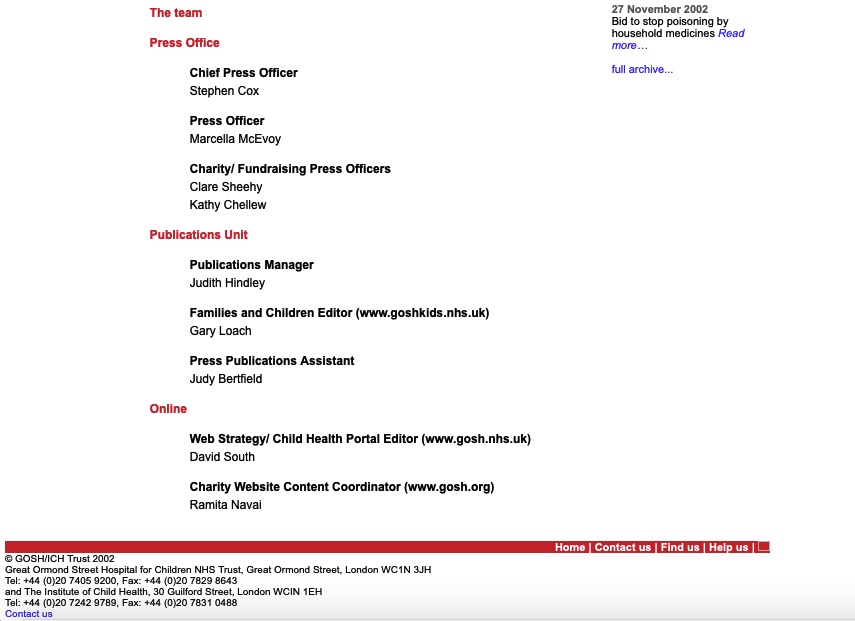
    Charity Content Coordinator: Ramita Navai

    Abstract 

    In 2001 I was hired to project manage and deliver a Child Health Web Portal for the prestigious Great Ormond Street Children’s Hospital NHS Trust (GOSH)/Institute of Child Health (ICH) based in London, UK.  

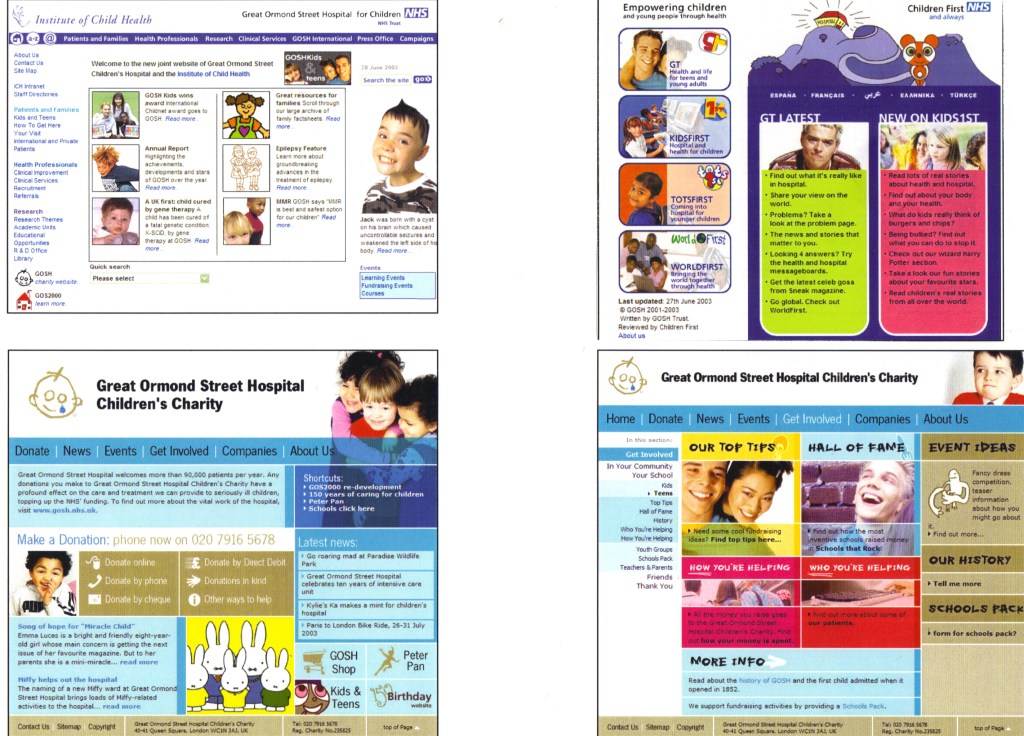
    The project was intended to lead on innovation at the institutions and in the wider National Health Service (NHS) and was delivered in three phases. Screen grabs can be viewed below:  

    Phase 1 

    Phase 2

    Phase 3

    About

    From the start, the project begged the question: Could we take a complex (and complicated) mandate and successfully achieve it in just two years? All under great public and media scrutiny (London being a world centre for media)? And how do you innovate for the 21st century in a major health care institution and build on its already high reputation?

    Britain’s best-loved children’s hospital and charity, Great Ormond Street Hospital for Children NHS Trust (GOSH), contracted me to lead a two-year project to modernise the hospital’s web presence and take its brand into the 21st century. GOSH is both Britain’s first children’s hospital and a pioneering child health institution (along with its partner the Institute for Child Health). The hospital’s outstanding reputation meant the project was carried out under intense public, media and professional scrutiny, and required a keen awareness of new media developments and the needs of the hospital’s patients, their families and the public. It drew on an extensive public consultation and the NHS Modernisation Plan and the Information for Health strategy – which had identified strong demand for services and information to be made available online – to develop this innovative online offering. The NHS had also set the goal of having 25 per cent of all its services accessible via the web. 

    From the start, the project represented a new phase in how the institutions communicated. An announcement in PR Week in April 2001 acknowledged this, declaring the role will deal “with what is increasingly becoming an important part of the press office and the hospital”. Prior to beginning the two-year project in 2001, the existing website was an amateurish affair and not suitable for an internationally renowned centre for paediatric treatment, training and research. 

    The UK had become out of step with wider web developments at that time and had to do a lot of catching up. But there was a ready audience for better web content already established in the country. By 2001, data showed 3 million children in the UK were using the Internet and 33 million UK citizens could access it through work, school or home. 

    By 2001, the Internet offered an estimated 100,000 health-related websites (most based in the United States, leaving a gap for high-quality information based on UK research and experience). Trust was key and this was a crucial part of the content strategy that was developed. 

    As lead staff member for the website, I was in charge of recruiting and managing staff and suppliers, liaising with stakeholders inside and outside the organisations, planning work and seeking opportunities and partnerships.

    The project was developed in three, distinct phases. Screen grabs from these phases are available for download and evaluation. They also include web traffic statistics. This unique snapshot of a complex project as it unfolded, should prove useful for other e-health practitioners. 

    As an innovator, the project became a catalyst for numerous online and offline initiatives across the institutions. The website made enormous strides, winning a number of national and international awards and leapfrogging to become one of the best NHS-linked sites in the UK. Areas radically improved included the design and navigation, patient information for families, press office, and the development and launch of the award-winning children’s website. 

    Phase 1 

    Phase 2 

    Phase 3 

    Each stage was transparently communicated and accompanied by high-profile publicity campaigns: a necessity because the hospital relies heavily on public trust and funding to function. 

    The first phase involved getting buy-in on a new design vision, assembling a team, extensive work on migrating the very large legacy website into the new template, and exciting colleagues on the potential of the new child health portal vision. It was launched in September 2001.  

    Ask Dr Jane Collins, a regular column written by the Chief Executive Dr. Jane Collins for The Times newspaper, was one of the more popular features of the child health portal. The portal was also directly connected to the NHS Direct service with its extensive online health encyclopedia.  

    In 2001, the project launched an interactive Christmas child health advent calendar offering top tips from health professionals on how to have a safe holiday season. It showed what could be done with the improving web design and production skills of the team. The PDF can be viewed here: http://www.scribd.com/doc/44905926/Christmas-Advent-Calendar-for-GOSH-Child-Health-Portal-2001.

    As another example, the hospital’s 150th birthday celebration on 14th February 2002, attended by Her Majesty the Queen (and celebrities, including Madonna), was accompanied by an online interactive history prepared by the project and was used to inform the wider public about the child health portal.  

    Phase two involved the launching of new content developed by some of the world’s top child health experts and scientists, substantial new resources for sick children and their families, an online awareness-raising campaign to drive traffic to the health portal as a trusted and reliable resource, plus a wider media campaign. Based on user experience testing and user feedback, changes were made to the design and content structure to make the portal more user-friendly and to follow best practice in web design at that time.  

    The overall child health portal also gave birth to a highly successful new resource, the award-winning Children First website in May 2002. This resource was a year in development and was calibrated by age to provide relevant resources to guide children through the hospital experience. It used high-quality animation and partnered with BBCi and BBC Science to create resources that would resonate with children and youth. It included high-profile elements such as the Write4GOSH children’s writing prize, attracting entries from around the world, with winners receiving prizes from Cherie Booth QC, Dannii Minogue and children’s writer Jacqueline Wilson.  

    Children First attracted an average of 700,000 visitors each month with over 800 children in its first year contributing to the site. It addressed a gap in the online marketplace for health resources written for children rather than for their parents and families. It also gave birth to its own project: The Virtual Children’s Hospital (VCH). Funded by the PPP Foundation in August 2002, it worked with a team of psychologists to meet the social, psychological and information needs of ill children. 

    In March 2003 the Commission for Health Improvement (CHI) in its review and assessment found, in answer to the question “What, if anything, did CHI find that the rest of the NHS can learn from?” at the hospital, it was the child health portal, because “The trust’s website has different sections for children and families as well as for health professionals. The website also has sections for children of different ages and a broad range of information leaflets is available to download. The website has 3.5 million hits per month.”  

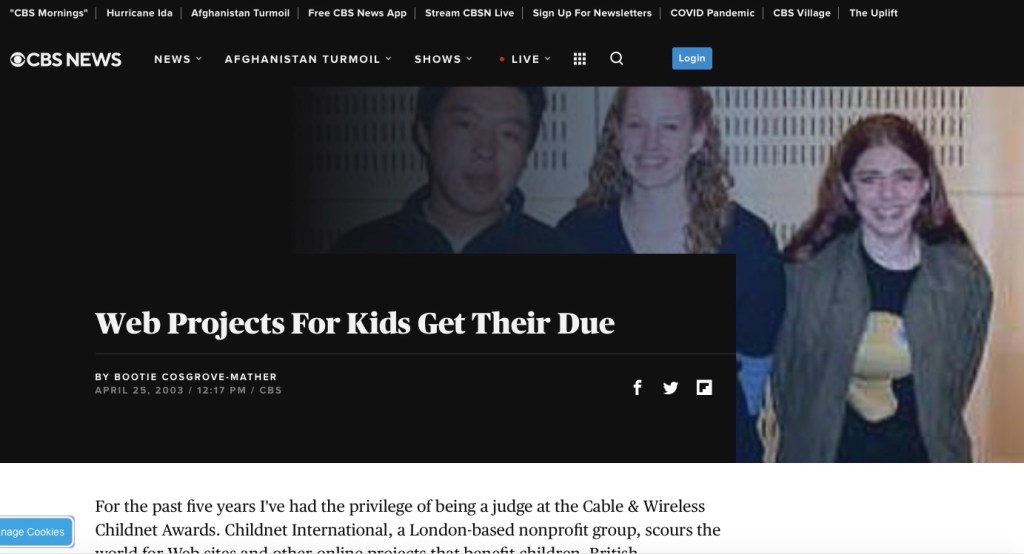
    In 2003, the UK’s Guardian newspaper called the Children First website one of the “three most admired websites in the UK public and voluntary sectors,” and a UK government assessment called the overall GOSH child health web portal a role model for the NHS. Children First also won the prestigious Cable and Wireless Childnet Award that year as well. And was short-listed for the New Stateman’s New Media Awards. 

    The GOSH Child Health Portal team receive the Childnet Award in 2003 at London’s Science Museum (Photo: CBBC Newsround).
    The Childnet Awards in 2003 were awarded by Trond Waage, the Norwegian Ombudsman for Children, at the Science Museum in London (and hosted by British media personality Carol Vorderman) (https://en.wikipedia.org/wiki/Carol_Vorderman).

    In 2006, The Times of London called Children First the Top Child Health Website in its Wellbeing on the Web: The Best Portals survey (November 11, 2006). 

    Phase three saw online traffic growing at a steady clip, the portal gaining accolades, awards and positive reviews; it also helped the hospital to gain the highest rating in a government review (5*), and Children First was awarded significant further funding so it could expand its resources. The award-winning team also re-developed thewww.gosh.org charity website (one of the highest profile charity brands in the UK) and launched it in 2003 as well.  

    A great way to track the historical development of a web project is to use the Wayback Machine’s Internet archivehere (https://archive.org). By typing in the web address (for example, http://www.gosh.nhs.uk, and http://www.gosh.org), you can see a chronological history of the website by month. 

    Timeline 

    PR Week: “PUBLIC SECTOR: Great Ormond Street to get website editor.”

    2001: Initial design vision articulated and team assembled. First phase of content creation and ‘soft launch’ of portal in September 2001. Begin experiments with new graphic design, including an online interactive Christmas advent calendar with health tips.  

    2002: Launch new content during the hospital’s 150th anniversary celebrations; begin development work on Children First content. Partnering with BBCi and BBC Science to improve quality of child and youth resources. Significant new content is launched throughout the year as the portal sees month-on-month growth in web traffic. Awarding of further funding for Children First and the Virtual Children’s Hospital. 

    2003: Winning of Childnet Award; launch of new GOSH Charity website. Record web traffic to the website.

    “Hospital unveils international website for children”: The Guardian, 8 October 2003.
    “The kids are alright”: The Guardian, 5 February 2003.
    “Web Projects For Kids Get Their Due”: CBS News, April 25, 2003.
    The GOSH Child Health Portal Team circa 2002.

    Testimonials

    “As a parent, I recognise how important it is to help your child understand all that they can about their stay in hospital and their care and treatment. Time spent in hospital can often be a very frightening experience. Making sure that your child has helpful, easy to read information will make a significant difference to their time in hospital. 

    I am sure that this website will prove very useful for children and their families.” Prime Minister Tony Blair, May 2002

    “A highly attractive website written by and with children at Britain’s biggest specialist hospital for children. The site is carefully segmented for different age groups and provides a powerful platform on which children can reach out from the confines of their hospital wards, share their experiences and learn about a range of medical issues as well as have access to fun interactive resources.” Childnet Award 2003

    “I am glad you mentioned the web site. If you can access it and haven’t recently please have a look. It has vastly improved and both David Latchman and I (it is a joint site with ICH) are very pleased.” Dr Jane Collins, Chief Exec’s Corner, Roundabout newsletter, February 2002

    “I never thought that GOSHKids would be so valuable to the hospital or, more importantly, to children and young people attending the hospital or simply interested in health matters. I think that this reflects my age, though!

    “Many of us over 30, even if we use the internet ourselves, are surprised how much children and young people use it both as a source of information and for entertainment. 

    “Even quite young children are using it routinely now and as an increasing number of families have access to it, either at home and/or at school or work, presumably more and more will do so. 

    “There are over 42,000 hits per day (1,260,000 a month) on our GOSHKids website already. Of course, part of the success of the website is down to its design and content. I would like to take this opportunity to congratulate Gary Loach, David South and the whole team who have worked so hard to make it successful.” Dr Jane Collins, Chief Exec’s Corner, Roundabout newsletter, June 2003 

    “The GOSH/ICH web site to date has been a notable success. Not only has it met a majority of its objectives as delineated in the PIN report of 2000 and achieved recognition as ‘exemplary’ among NHS resources, but it has also generated a number of spin-off projects, including Children First (as a successor to GOSHKids) and The Virtual Children’s Hospital.

    “It has moved from providing a poor representation of the organisations, to above average for corporate web resources, and compares highly favourably with those of other NHS sites and departments. The most notable success lies in the resource it now provided for the public, especially GOSHKids.

    “In a context in which less than 25% of all projects realise even 50% of their benefits, the satisfaction of 75% of the original objectives set out in the PIN report must rank as a significant achievement.” Website Project Audit by Passmasters Limited, 17 April 2003

    “Great Ormond Street Hospital has launched this health site targeted specifically at childen, with a separate version aimed at young teenagers. The site aims to give young ‘uns information about health, illness and treatment in an easily digestable, non-threatening manner.” Internet Magazine, July 2002

    “… it’s a good site and not just for those about to go into the hospital.” New Media Age, 20 June 2002

    “The project was instrumental in pulling together a number of key strategies (including the NHS’s Modernisation Plan, and its Information for Health Strategy), and acting as a catalyst for numerous online and offline initiatives. Critical to these strategies is the need to provide information and services online and in an accessible way. The aim has not only been about serving the specific needs of the institutions, but also to become a broader child health portal.  

    “The website in 2001 was an amateurish affair and a disgrace to an internationally renowned centre for paediatric treatment, training and research. Run largely from the Research Office it was focused on one particular audience, uninspiring in design, reactive in updating and made little use of the potential of the internet. We needed someone to take it forward …

    David [South] was lead staff member for the website, recruiting and managing staff and suppliers, liaising with stakeholders inside and outside the organisations, planning work and seeking opportunities and partnerships. It is fair to say that the site made enormous strides under his leadership, winning a number of national and international awards, and leapfrogging to become one of the best NHS-linked sites in the UK. 

     “A number of areas were drastically improved, including design and navigation, patient information for families, press material, and the award-winning children’s site, which is now an international project with many different partners. David [South] project managed many projects in this time including linked sites for London IDEAS Genetics Knowledge Park, and the hospital charity site …” Stephen Cox, Chief Press Officer, Great Ormond Street Hospital for Children NHS Trust and the Institute of Child Health

    Impact 

    Micro

    • took public consultation and consultant’s report and crafted and developed a strategy to implement the GOSH Child Health Web Portal
    • assembled team across two institutions
    • set clear milestones and brought project management methodology previously deployed with the United Nations
    • led on teaching new ways of project management for results
    • took GOSH brand forward for the digital age
    • advised colleagues on digital publishing and design
    • awarded additional funding

    Macro 

    • role model for NHS and government/charity sector. Awarded five stars in government review
    • Childnet Award
    • launched major milestones with well-known figures, including Her Majesty the Queen, Madonna, and pop stars
    • significant media coverage of project
    • attracted funding not only for the GOSH Child Health Portal but also for other projects at the institutions
    • grew web traffic month-on-month, becoming one of the top online child health resources
    • website cited in many other resources. One of the goals of the project was to increase access to high-quality child health resources and to have them cited in books etc.

    Citations

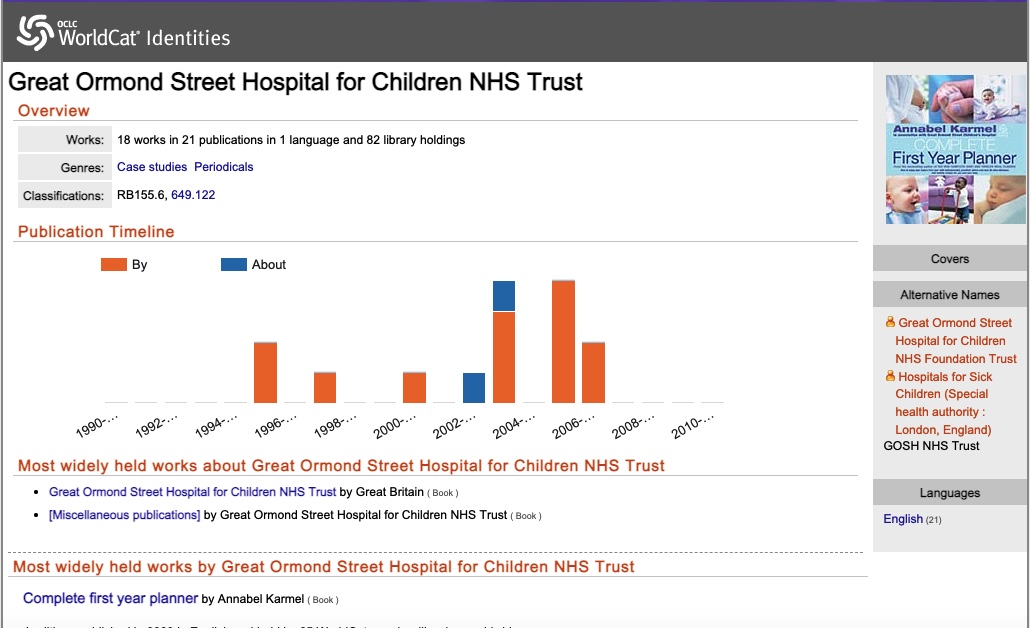
    The Great Ormond Street Hospital Manual of Children’s Nursing Practices by Susan Macqueen, Elizabeth Bruce and Faith Gibson, John Wiley & Sons, 2012

    Help! My Child’s in Hospital by Becky Wauchope, Marbec Family Trust, 2012

    Oxford Desk Reference: Nephrology by Jonathan Barratt, Peter Topham and Kevin P.G. Harris, Oxford University Press, 2008

    Research Review 2001: A Year of Excellence and Innovation, Institute of Child Health and Great Ormond Street Hospital for Children NHS Trust, 2001

    Research Review 2002: Building on Success, Institute of Child Health and Great Ormond Street Hospital for Children NHS Trust, 2002

    Other Resources

    GOSH Child Health Portal Phase 1a

    GOSH Child Health Portal Phase 1b

    GOSH Child Health Portal Phase 2a

    GOSH Child Health Portal Phase 2b

    GOSH Child Health Portal Phase 3 

    GOSH Project Launch Brochure and Screen Grabs, 2001-2003

    GOSH Child Health Portal 2001 to 2003 Resources

    Further Reading:

    Embedding Young People’s Participation in Health Services: New Approaches edited by Louca-Mai Brady, Policy Press, 7 October 2020

    “There is increasing interest in young people’s participation in the design and delivery of health services. But young people’s views are not consistently sought or acknowledged, and they are still often marginalised in healthcare encounters. Drawing on original research and a diverse range of practice examples, Brady explores the potential for inclusive and diverse approaches to young people’s participation in health services from the perspectives of young people, health professionals and other practitioners. She presents a practical new framework, embedded in children’s rights, that shows how young people’s participation can be integrated into services in ways that are meaningful, effective and sustainable.”

    DSC web address in green_mini (1)

    ORCID iD: https://orcid.org/0000-0001-5311-1052.

    © David South Consulting 2025

  • Citing Southern Innovator: Books And Papers | 29 November 2015

    Citing Southern Innovator: Books And Papers | 29 November 2015

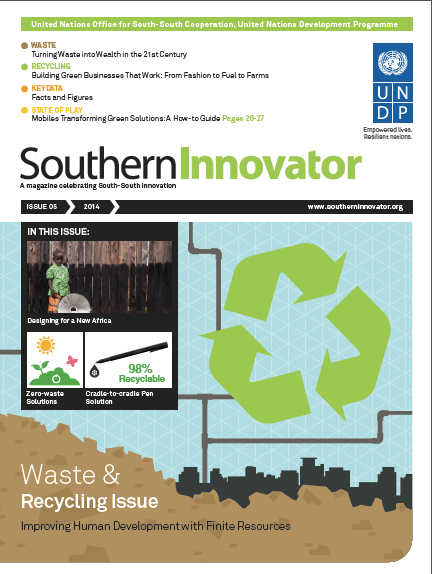
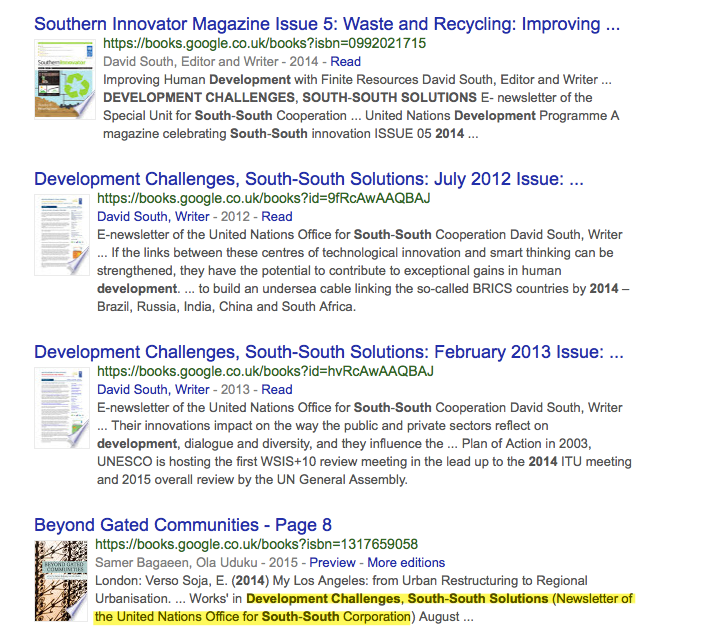
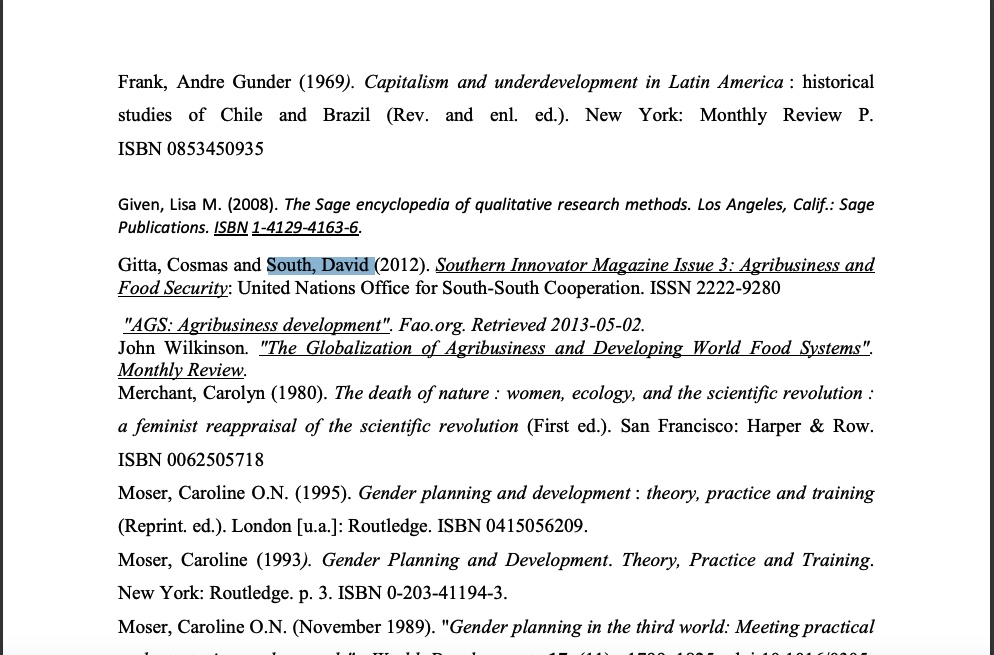
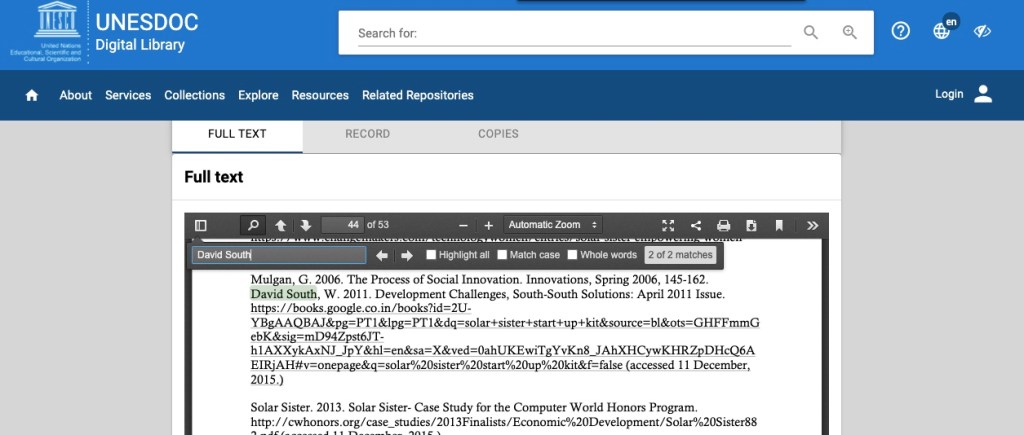
    Southern Innovator was initially launched in 2011 with the goal of – hopefully – inspiring others (just as we had been so inspired by the innovators we contacted and met). The magazine seeks to profile stories, trends, ideas, innovations and innovators overlooked by other media. The magazine grew from the monthly e-newsletter Development Challenges, South-South Solutions published by the United Nations Office for South-South Cooperation (UNOSSC) since 2006. A selection of books and papers citing stories from the magazine are featured below to aid researchers, in particular those interested in health and human development and the role of innovators in international development. 

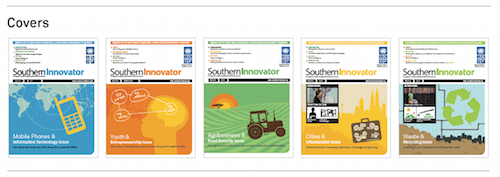
    The first five issues of Southern Innovator from 2011 to 2014. Called a “Beautiful, inspiring magazine from UNDP on South-South innovation.”

    Books

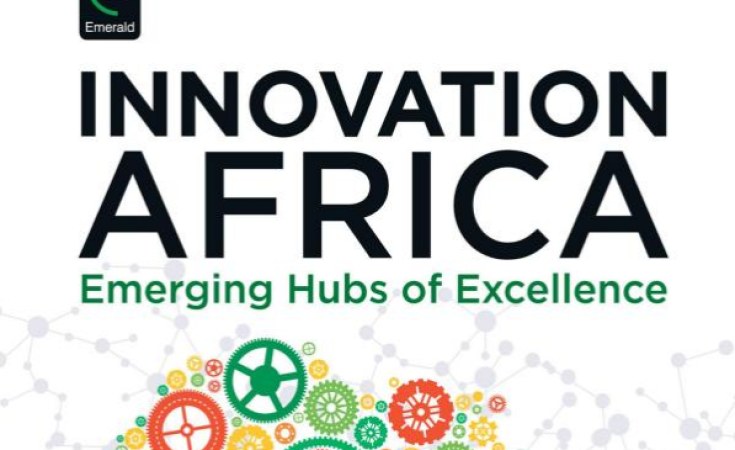
    Innovation Africa: Emerging Hubs of Excellence edited by Olugbenga Adesida, Geci Karuri-Sebina and João Resende-Santos (Emerald Group Publishing: 2016)

    “Innovation is critical to growth and development in Africa. In the context of a continent characterized by fast growing economies as well as an array of socioeconomic challenges, such as high levels of poverty and inequality, innovation in Africa must be understood in an encompassing manner. Africa needs to support the emergence of its own Silicon Valleys, but it must also foster the invention and adoption of cleaner technologies that limit respiratory illnesses, deforestation and combat climate change. This book contains a number of analytical case studies that examine the nature and origins of emerging high-end innovation hubs in Africa. These “hubs” or ecosystems are both understudied and little known inside and outside the continent. With this analysis, the book highlights and draws lessons from some of the most promising and successful innovation cases in Africa today, exploring the key factors driving their successful emergence, growth and future prospects. Relevant for scholars, policymakers, and business leaders, the book provides both inspiration and useful policy advice that can inform strategies and concrete measures to speed up the pace of innovation in Africa today.”

    Innovation Africa: Emerging Hubs of Excellence.

    Beyond Gated Communities edited by Samer Bagaeen and Ola Uduku (Routledge: 2015)

    “Research on gated communities is moving away from the hard concept of a ‘gated community’ to the more fluid one of urban gating. The latter allows communities to be viewed through a new lens of soft boundaries, modern communication and networks of influence.

    The book, written by an international team of experts, builds on the research of Bagaeen and Uduku’s previous edited publication, Gated Communities (Routledge 2010) and relates recent events to trends in urban research, showing how the discussion has moved from privatised to newly collectivised spaces, which have been the focal point for events such as the Occupy London movement and the Arab Spring.

    Communities are now more mobilised and connected than ever, and Beyond Gated Communities shows how neighbourhoods can become part of a global network beyond their own gates. With chapters on Australia, Canada, Europe, South America, Asia, Africa and the Middle East, this is a truly international resource for scholars and students of urban studies interested in this dynamic, growing area of research.”

    Chile in Transition: Prospects and Challenges for Latin America’s Forerunner of Development by Roland Benedikter and Katja Siepmann (Springer: 2015)

    “The economic, political and social situation in Chile shows a country in transition. Some observers anticipate a broad “reboot” of the nation. While Chile is still seen by many as an example of progress in South America and of developmental potential in the global South, it faces a complex political constellation, particularly in the aftermath of the re-election of Michelle Bachelet. Many wonder how social and institutional innovations can be incepted without interrupting the country’s remarkable success over the past decades.

    This book provides an interdisciplinary analysis of Chile’s situation and perspectives. In particular, it addresses the questions:

    • What is Chile’s real socio-political situation behind the curtains, irrespective of simplifications?
    • What are the nation’s main opportunities and problems?
    • What future strategies will be concretely applicable to improve social balance and mitigate ideological divisions?

    The result is a provocative examination of a nation in search of identity and its role on the global stage.

    Roland Benedikter, Dr., is Research Scholar at the Orfalea Center for Global and International Studies, University of California, Santa Barbara, Senior Research Scholar of the Council on Hemispheric Affairs Washington D.C., Trustee of the Toynbee Prize Foundation Boston and Full Member of the Club of Rome.

    Katja Siepmann, MA, is Senior Research Fellow of the Council on Hemispheric Affairs Washington D.C., Member of the German Council on Foreign Relations, and Lecturer at the Faculty of Interdisciplinary Cultural Sciences of the European University Frankfurt/Oder.

    The volume features a Foreword by Ned Strong, Executive Director of the David Rockefeller Center for Latin American Studies, Harvard University, and a Preface by Larry Birns, Director of the Council on Hemispheric Affairs, Washington D.C., and Former Senior Public Affairs Officer of the United Nations’ Economic Commission for Latin America (Santiago, Chile).”

    A Sociological Approach to Health Determinants by Toni Schofield (Cambridge University Press: 2015)

    “A Sociological Approach to Health Determinants investigates how the social works in determining health and health inequity. Taking a global perspective, the book shines a light on how experiences of health, illness and health care are shaped by a variety of complex social dynamics. Informed primarily by sociology, the book engages with the WHO’s social determinants of health approach and draws on contributions from history, political economy and policy analysis to examine issues such as class, gender, ethnicity and indigeneity, and the impact they have on health. A Sociological Approach to Health Determinants is a comprehensive resource that provides a new perspective on the influence of social structures on health, and how our understanding of the social can ensure improved health outcomes for people all over the globe. Toni Schofield is Associate Professor at the University of Sydney. She specialises in research and teaching in sociology, and public policy and administration.”

    New Directions in Children’s and Adolescents’ Information Behavior Research edited by Dania Bilal and Jamshid Beheshti (Emerald Group Publishing: 2014)”This book comprises innovative research on the information behavior of various age groups. It also looks at special populations such as ethnic minorities, indigenous peoples, and users with disabilities. The book presents research and reflections on designing systems that help the new generation cope with a complex knowledge society.

    Papers and Reports

    Afro-futurism and the aesthetics of hope in Bekolo’s Les Saignantes and Kahiu’s Pumzi by Mich Nyawalo, Journal of the African Literature Association, Volume 10, 2016, Issue 2

    Agribusiness strategy and rural development: A case study of Ihunga Sub County, Ntungamo District by Denis, Simpson Singahache, 2018

    Autonomous Systems in the Intelligence Community: Many Possibilities and Challenges by Jenny R. Holzer, PhD, and Franklin L. Moses, PhD, Studies in Intelligence Vol 59, No. 1 (Extracts, March 2015)

    Autonomous Systems in the Intelligence Community: Many Possibilities and Challenges by Jenny R. Holzer, PhD, and Franklin L. Moses, PhD, Studies in Intelligence Vol 59, No. 1 (Extracts, March 2015).

    Decoding the Brand DNA: A Design Methodology Applied to Favela Fashion by Magali Olhats, Universidade Federal de Santa Catarina Florianopolis, 2012

    Determinants of Capacity Utilization among Agribusiness Firms in Nigeria by Chukwuma Ume, Patience Ifeyinwa Opata, Kalu Uche Felix, Ukwuaba Charles Ikenna, Sunny Chukwuemeka Ume, Agu Amarachi Jacinta, Asian Journal of Managerial Science, Vol. 10 No. 2 (2021): July-December 2021 (DOI: https://doi.org/10.51983/ajms-2021.10.2.2926).

    Determinants of Women Participation in Agribusiness Development Projects in Sotik Sub-County, Bomet County, Kenya by Caroline Chebet Koros, Dr. Moses M. M Otieno and John Bosco Kisimbii, International Journal of Advanced Engineering and Management Research (ISSN: 2456-3676), Vol. 2, Issue 6, 2017

    Development of Luffa Cylindrica Nonwoven Structure and assessment of its suitability as a packaging and shopping bag material by C. Wetaka, Moi University School of Engineering, 2020

    Economy Reports for APEC Economies on demographics, policies & ICT applications for people with Special Needs (Seniors and People with Disabilities), Asia-Pacific Economic Cooperation, APEC Telecommunications and Information Working Group, January 2013

    Edible Insects and the Future of Food: A Foresight Scenario Exercise on Entomophagy and Global Food Security by Dominic Glover and Alexandra Sexton, Institute of Development Studies, King’s College London, Evidence Report No 149, September 2015

    Evaluation of Kenyan Film Industry: Historical Perspective by Edwin Ngure Nyutho, School of Journalism and Mass Communication, University of Nairobi, 2015

    Evaluation of the Regional Programme for Africa (2008-2013), UNDP Independent Evaluation Office, 2013

    Evaluation of the Regional Programme for Africa (2008-2013), UNDP Independent Evaluation Office, 2013.

    Evaluation of UNDP Contribution to South-South and Triangular Cooperation (2008-2011), Evaluation Office, UNDP 2013

    Exploring the Concept of QR Code and the Benefits of Using QR Code for Companies, Ji Qianyu, School of Business and Culture Degree Programme in Business Information Technology, Lapin AMK Lapland University of Applied Sciences, 2014

    Fashion: Tyranny and Revelation, Editor: Damayanthie Eluwawalage, Inter-Disciplinary Press, 2016

    Financing Renewable Energy in Developing Countries: Analysis of Business Models and Best Practices, Resources Future Publication, Pakistan Office, July 2018

    Gastrodiplomacy: foreign experience and potential of the republic of Uzbekistan by M. Abduazimov, International Relations: Politics, Economics, Law, 2017 

    Guidance Note on Recovery: Environment, United Nations Development Programme

    High-level Committee on South-South Cooperation Seventeenth Session: Framework of operational guidelines on United Nations support to South-South and triangular cooperation: Note by the Secretary-General22-25 May 2012, New York

    Impact of Digital Strategy in Business for Small and Medium Enterprises in Developing Countries by Malik Mustafa, International Journal for Modern Trends in Science and Technology, 7 (09): 205-210, 2021

    The Leapfrogging opportunity: role of education in sustainable development and climate change mitigation, Background paper prepared for the 2016 Global Education Monitoring Report: Education for people and planet: Creating sustainable futures for all, 2016

    Local Economic Development and Growth Strategy for Prestea Huni-Valley Municipal Assembly by Dr. Steve Manteaw and Nicholas Adamtey, West Africa Governance and Economic Sustainability in Extractive Areas, Global Affairs Canada, World University Service of Canada (WUSC), April 2018

    Milk Production Potential and Major Browse Species Consumed by Dromedary Camels in Tshabong by Katsane Kgaudi, Eyassu Seifu and Demel Teketay, A Special Issue on Botswana Notes and Records’ Golden Jubilee Volume in Honour of Sir Ketumile Masire, Volume 50, 2018

    Mobilising Finance for Infrastructure: A Study for the UK Department for International Development (DFID), Cambridge Economic Policy Associates Ltd., August 2015

    Modelo de Negocio para la Visibilizacion de Atributos Culturales Y Ambientales de Sistemas de Produccion Indigena. Caso de Estudio: Municipio de Puerto Narino – Amazonas (Colombia) by Juan Sebastian Romero Berbeo, Universidad Piloto de Colombia, Facultad de Ciencias Ambientales Programa en Administracion y Gestion Ambiental, 2016

    The New Middle Class and Urban Transformation in Africa: A Case Study of Accra, Ghana by Komiete Tetteh, The University of British Colombia, 2016

    Planet of slums by S. Cranby, Geodate, Volume 25, Issue 4, Pages 2-5, ISSN: 1835-5099, August 2012

    Problems and Prospects of Development of Apitourism in Kazakhstan, Zh. N. Aliyeva, R. M. Baiburiyev, David D. Lorant, A. S. Shagyrbay, Z. K. Kaliaskarova, Al-Farabi Kazakh National University, Almaty, Kazakhstan, Eotvos Lorand University, Budapest, Hungary, Bulletin of National Academy of Sciences of the Republic of Kazakhstan, ISSN 1991-3494, Volume 6, Number 382 (2019), 45-53 (https://doi.org/10.32014/2019.2518-1467.144)

    Propagating Gender Struggles Through Nollywood: Towards a Transformative Approach by Nita Byack George Iruobe, Geonita Initiative for Women and Child Development, 17 July 2015

    Reberberation: Musicians and the Mobilization of Tradition in the Berber Culture Movement by TMG Wiedenkenner et al, The University of Arizona,  2013

    Recasting ‘truisms’ of low carbon technology cooperation through innovation systems: insights from the developing world by Alexandra Mallett, Innovation and Development, 5:2, 297-311, DOI: 10.1080/2157930X.2015.1049851, Routledge Taylor & Francis Group, 2015

    “Slam the Slums”: Understanding architecture through the poor by Malini Foobalan, November 26th, 2009

    Song Lines: Mapping the South African Live Performance Landscape: Report of the CSA 2013 Live Mapping Project Compiled by Concerts South Africa, Samro Foundation, 2013 

    Strategic Framework of the United Nations Office for South-South Cooperation, 2014-2017Executive Board of the United Nations Development Programme, the United Nations Population Fund and the United Nations Office for Project Services, 27 to 31 January 2014, New York

    Taming the Tide: Stories from India by Claire Bentley, Vanessa Brombosz, Sofianne Gabrielli, Ga Eun Lee, Vaidehi Nafade, Lindsay Steele and Muhammad Wali, Global Health Case Studies: A Compilation from PPHS 511 Fundamentals of Global Health, McGill Global Health Programs, Case studies – Fall 2015, pages 23 to 32

    Using Mobile-Enabled Devices for Engagement and Monitoring of Patient with Chronic Disease: Hypertensive Case by Akinwole A. K., Yekini N.A., Oloyede A.O., Ojo O., International Journal of Scientific & Engineering Research, Volume 10, Issue 4, April 2019, ISSN 2229-5518


    Wearing Your Map on Your Sleeve: Practices of Identification in the Creation and Consumption of Philippine Map T-shirts 
    by Pamela Gloria Cajilig, paper presented at the 6th Global Conference (2014): Fashion: Exploring Critical Issues, Mansfield College, Oxford, United Kingdom, 15th to 18th September 2014

    Young Girls’ Affective Responses to Access and Use of Information and Communication Technology (ICT) in Information-Poor Societies by Dania Bilal et al, New Directions in Children’s and Adolescents’ Information Behavior Research, Library and Information Science, Volume 10, Emerald Group Publishing Limited, 2014

    Youth Empowered as Catalysts for Sustainable Human Development: UNDP Youth Strategy 2014-2017United Nations Development Programme, Bureau for Development Policy

    Online References

    Gastrodiplomacynews: 5th November 2015

    Online: https://archive.org/details/Httpsbooks.google.co.ukbooksidAQNt4YmhZagCdqsoutherninnovatorissue3sourcegbs_navlinks_s/page/n9/mode/2up?view=theater&q=gastrodiplomacy.

    Southern Innovator can be read online here:

    Scribd

    Issue 1: http://www.scribd.com/doc/57980406/Southern-Innovator-Issue-1

    Issue 2: http://www.scribd.com/doc/86451057/Southern-Innovator-Magazine-Issue-2

    Issue 3: http://www.scribd.com/doc/106055665/Southern-Innovator-Magazine-Issue-3-Agribusiness-and-Food-Security

    Issue 4: http://www.scribd.com/doc/128283953/Southern-Innovator-Magazine-Issue-4

    Issue 5:  http://www.scribd.com/doc/207579744/Southern-Innovator-Magazine-Issue-5-Waste-and-Recycling

    Google Books

    Issue 1: https://books.google.co.uk/books?id=Q1O54YSE2BgC&dq=southern+innovator&source=gbs_navlinks_s

    Issue 2: https://books.google.co.uk/books?id=Ty0N969dcssC&dq=southern+innovator&source=gbs_navlinks_s

    Issue 3: https://books.google.co.uk/books?id=AQNt4YmhZagC&dq=southern+innovator&source=gbs_navlinks_s

    Issue 4: https://books.google.co.uk/books?id=9T_n2tA7l4EC&dq=southern+innovator&source=gbs_navlinks_s

    Issue 5: https://books.google.co.uk/books?id=6ILdAgAAQBAJ&dq=southern+innovator&source=gbs_navlinks_s

    Southern Innovator is held in the following library collections:

    Biblioteca Nationala a Republicii Moldova: http://cc.sibimol.bnrm.md/opac/bibliographic_view/399949;jsessionid=C516885A73E277718AE64598E869BC70

    British Library: http://tinyurl.com/jfudl3z

    Centre multimédia sur l’environnement et le développement Dakar, Senegal: http://www.enda-sigie.org/bases/sigie/format_liste.php?lang=fr&onglet=1&link=O&format=court&sort=Date%20DESC&Chp4=CONCEPTION+DE+BATIMENT

    Library of Congress: http://catalog.loc.gov/vwebv/holdingsInfo?searchId=15784&recCount=25&recPointer=0&bibId=17462965

    Malaysian Academic Library Union: http://malcat.uum.edu.my/kip/Record/ukm.vtls003513851

    Princeton University Library: https://catalog.princeton.edu/catalog/9892864

    Toronto Public Library: http://vc4kb8yf3q.search.serialssolutions.com/?V=1.0&N=100&L=VC4KB8YF3Q&S=AC_T_B&C=southern+innovator

    Uganda Martyrs University: http://library.umu.ac.ug:81/cgi-bin/koha/opac-MARCdetail.pl?biblionumber=33335

    United Nations Library Geneva: Issues 2, 4, 5: Click ‘Get It’: http://pmt-eu.hosted.exlibrisgroup.com/primo_library/libweb/action/search.do?SFGlobal=southern+innovator&submitGlobal=Go&fn=search&ct=search&initialSearch=true&mode=Basic&tab=default_tab&indx=1&dum=true&srt=rank&vid=41UNOG_V1&frbg=&vl%28freeText0%29=southern+innovator

    Issue 1: http://pmt-eu.hosted.exlibrisgroup.com/primo_library/libweb/action/display.do?tabs=detailsTab&ct=display&fn=search&doc=41UNOG_Alma21105606680002391&indx=1&recIds=41UNOG_Alma21105606680002391&recIdxs=0&elementId=0&renderMode=poppedOut&displayMode=full&frbrVersion=&dscnt=0&frbg=&tab=default_tab&dstmp=1424959330694&srt=rank&mode=Basic&&dum=true&SFGlobal=southern+innovator&vl%28freeText0%29=southern%20innovator&vid=41UNOG_V1&submitGlobal=Go

    Universiti Teknologi Malaysia Libraries: http://ent.library.utm.my/client/en_AU/main/search/detailnonmodal/ent:$002f$002fSD_ILS$002f820$002fSD_ILS:820407/ada?qu=Youth&rw=1200&ic=true&ps=300

    University of Cape Town Libraries: http://aleph20.calico.ac.za/F/?local_base=uct01pub&func=find-b&find_code=OCLC&request=%28ocolc%29870179464

    University of Saskatchewan: http://sundog.usask.ca/search/t?SEARCH=southern+innovator&sortdropdown=-&searchscope=8

    If you would like hard copies of the magazine for distribution, then please contact the United Nations Office for South-South Cooperation: Website: https://unsouthsouth.org/2014/12/25/southern-innovator-magazine/.

    If you would like to either sponsor an issue of Southern Innovator or place an advertisement in the magazine, then please contact southerninnovator@yahoo.co.uk.

    We accept payments and donations. We use any funds received to keep content online, or to create new content. Thank you! https://www.paypal.me/davidsouthconsulting

    Scan code with your phone and help us out.

    ORCID iD: https://orcid.org/0000-0001-5311-1052

    © David South Consulting 2023