For millions of poor people around the world, life is lived on the economic margins and household and personal budgets are tight. There were 1.29 billion people in the world living on less than US $1.25 a day as of 2008 (World Bank), and 1.18 billion living on US $1.25 to US $2 per day. There was only a modest drop in the number of people living below US $2 per day – the average poverty line for developing countries – between 1981 and 2008, from 2.59 to 2.47 billion.
Since the global economic crisis erupted in 2008, the world’s poor have seen prices fluctuate wildly as the international financial system fights the effects of the turmoil. In 2008, this led to the Food and Agriculture Organization sounding the alarm about the harmful effects of rising food inflation.
Increasing hunger led to civil unrest and rioting that year.
Anything poor people can do to make their slim daily budgets go a little bit further means more money left over for better quality food and other expenses, like clothing, shelter, fuel and education. One clever invention from South Africa is trying to tackle household cooking costs and shave the cost of fuel required to prepare the family meal. The Wonderbag (http://nbwonderbag.com/) is a brightly coloured, puffy cooking bag that slow cooks a meal in a pot – be it a stew, curry, rice, soups – to save energy.
“The cost and savings per household are significant,” according to the Wonderbag’s inventor, Sarah Collins.
It has many other advantages, too: it is a time-saver, allowing people to spend the time doing something other than just tending the cooking pot. It can also reduce cooking accidents because less time is spent around the stove or fire.
It is an efficient cooking method that uses less water to cook meals. And it even avoids the risk of burning – and wasting – food.
“20 per cent of all staple food in Africa is burned, due to pots being placed on open fires and unregulated stove tops. With the Wonderbag, no burning happens,” confirms Collins.
To date, the Wonderbag has created 1,000 jobs and is looking to increase this to 7,000 jobs in the next five years.
Wonderbag bills itself as “eco-cooking that’s changing lives.”
Eco-cooking seeks to use every joule (http://en.wikipedia.org/wiki/Joule) of energy from the cooking fire or heat source to maximum effect. A pot is placed on the stove and brought to the temperature required for cooking the dish. Then the pot is placed in the Wonderbag. Since the bag is heavily insulated, it reflects back the existing heat in the dish and allows it to continue cooking for up to 12 hours. It can cook rice in one hour and lamb in two to three hours.
It works in four easy steps, summed up on the Wonderbag website: “boil it, bag it, stand it, serve it”.
The Wonderbag claims to use 30 per cent less energy than other cooking methods. According to cost breakdowns on the Wonderbag website, someone with a Wonderbag would use 2.4 litres a week of paraffin – a common fuel for cook stoves – compared to 4 litres without. This works out to a cost of US $2.40 a week with a Wonderbag and US $4.00 a week without.
The trade-off with the savings in money and energy is time – Wonderbag is not suitable for those looking for a quick meal. According to Wonderbag, meat that cooks in 20 minutes on the stove will take five hours in the Wonderbag.
Chicken that takes 15 minutes on the stove takes three hours in the Wonderbag. Vegetables that take five minutes on the stove will cook in an hour in the Wonderbag.
South African entrepreneur and inventor Collins originally developed the Wonderbag for people living in the townships of Durban (http://en.wikipedia.org/wiki/Durban). She found many of the residents spent up to a third of their income on fuel for cooking. They would either use paraffin or spend many hours gathering wood or dung.
These common fuel sources for cooking give off toxic fumes and are a health hazard if used for long periods. The Wonderbag means households spend less time inhaling fumes from a stove.
“The Wonderbag will always be a work in progress for me as I look to adapt the bag in line with my consumers’ feedback,” confirms Collins. “For example, we are now about to launch Wonderbag 2, which has an even more efficient insulator than polystyrene and is more readily available and easier to recycle following feedback earlier in the year.”
In South Africa, the bags sell for R170 (US $22) and there are discounts for the very poor. Collins estimates that a family of four could save US $80 a year if they used the Wonderbag two or three times a week.
Collins has used clever marketing strategies to get the Wonderbags out to the public, and 150,000 have been sold so far. One promotion gave away a Wonderbag with every purchase of boxes of curry powder.
Wonderbag has also partnered with local communities. Swartland Municipality (swartland.org.za) purchased 5,000 Wonderbags and distributed them to 4,700 of “the most indigent and deserving households – the poorest of the poor.”
It is also running a promotion in the United Kingdom where, for every Wonderbag bought, one is given to a family in the developing world.
The popularity and success of the Wonderbag prompted the multinational food company, Unilever – one of the world’s leading suppliers of fast-moving consumer goods – to purchase 5 million bags for distribution. According to the Wonderbag website, this could lead to savings of US $1.35 billion on fuel for the users.
“The partnership has also enabled us to scale up and test the Wonderbag in different markets,” explains Collins.
Wonderbag hope to expand to 12 or 15 developing countries in Africa in 2012.
The company says it plans to target developing countries with high poverty, fuel supply shortages, high incidence of health problems from air pollution, and high incidence of injuries from fuel fires.
And for Wonderbag’s success so far, Collins has this advice: “Immerse yourself in your product and the way of life of your consumers. Understand it and them inside out so you can be your best advert. Word of mouth is by far the best form of advertising and the truth out of your own mouth is a great start.”
Published: April 2012
Resources
1) Haybox: Haybox is another variation on the concept of heat retention for efficient cooking. Website: http://haybox.co.uk/
3) Solar ovens and cookers are another way to cut costs when making meals.This website has many designs and plans on how to build a solar cooker. Website: http://solarcooking.org/plans/
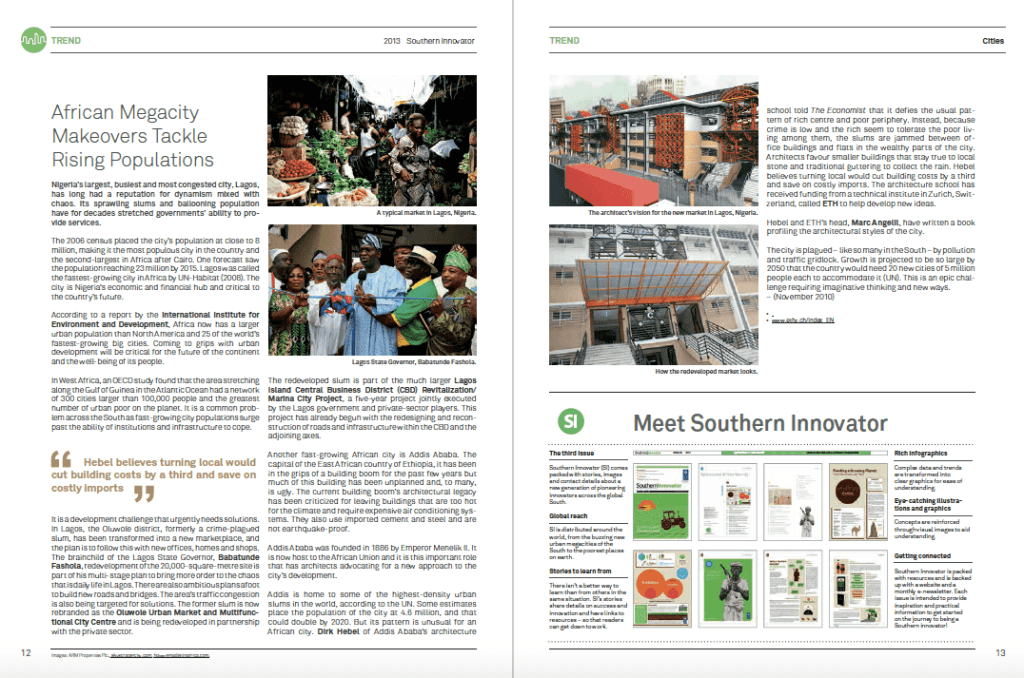
Nigeria’s largest, busiest and most congested city, Lagos, has long had a reputation for dynamism mixed with chaos. Its sprawling slums and ballooning population have for decades stretched governments’ ability to provide services.
The 2006 census placed the city’s population at close to 8 million, making it the most populous city in the country and the second largest in Africa after Cairo. One forecast saw the population reaching 23 million by 2015. It was called the fastest growing city in Africa by UNHABITAT (2008). The city is Nigeria’s economic and financial hub and critical to the country’s future.
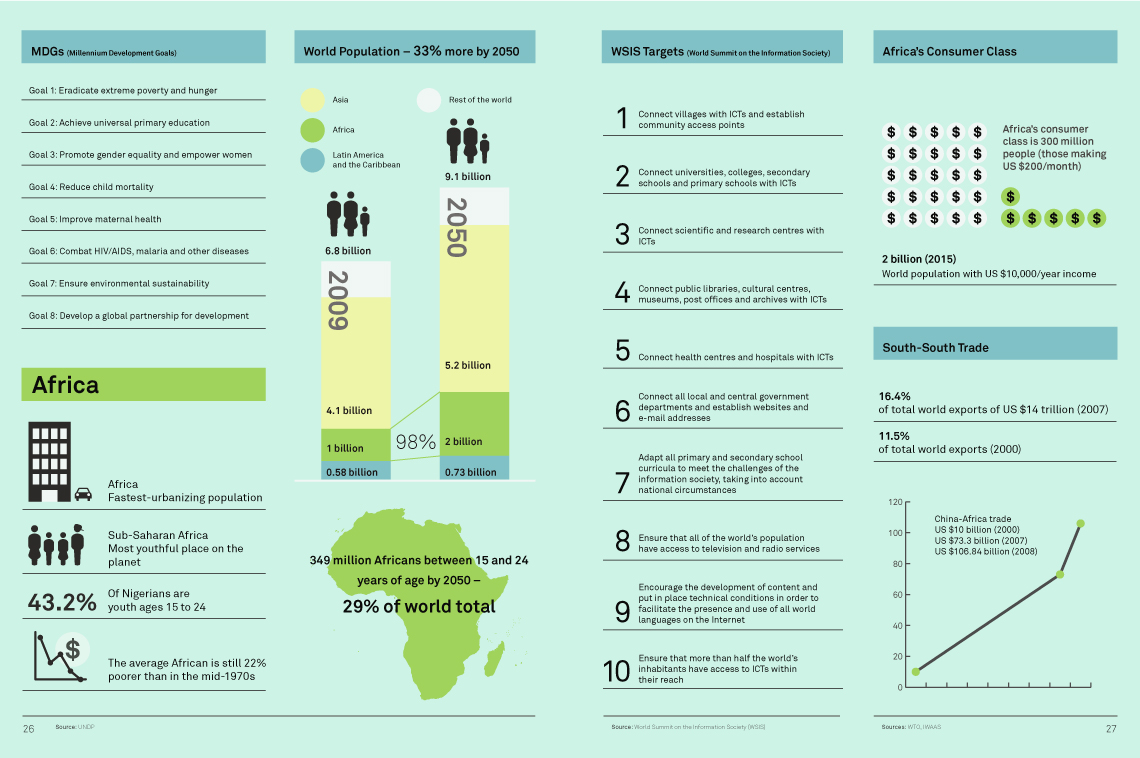
According to a report by the International Institute for Environment and Development, Africa now has a larger urban population than North America and 25 of the world’s fastest growing big cities. Getting to grips with urban development will be critical for the future of the continent and the wellbeing of its people.
In West Africa, an OECD study found the area stretching along the Gulf of Guinea in the Atlantic Ocean had a network of 300 cities larger than 100,000 people and the biggest collection of urban poverty on the planet.
It is a common problem across the South as fast-growing city populations surge past the ability of institutions and infrastructure to cope.
By 2025, Asia could have 10 or more cities with populations larger than 20 million (Far Eastern Economic Review).
It is a development challenge that urgently needs solutions.
In Lagos, the Oluwole district – formerly a crime-plagued slum – has been transformed into a new marketplace, and the plan is to follow this with new offices, homes and shops. The brainchild of the Lagos state governor Babatunde Fashola (http://en.wikipedia.org/wiki/Babatunde_Fashola), redevelopment of the 20,000 square metre site is part of his multi-stage plan to bring more order to the chaos that is daily life in Lagos. There are also ambitious plans afoot to build new roads and bridges. The area’s traffic congestion is also being targeted for solutions. The former slum is now re-branded as the Oluwole Urban Market and Multifunctional City Centre (http://tinyurl.com/2wmrscq) and is being re-developed in partnership with the private sector.
The re-developed slum is part of the much-larger Lagos Island Central Business District (CBD) Revitalisation/Marina City Project, a five-year project, jointly executed by the Lagos government and private sector players. This project has already begun with the redesigning and reconstruction of roads and infrastructure within the CBD and the adjoining axes.
Another fast-growing African city is Addis Ababa. The capital of the East African nation of Ethiopia, it has been in the grip of a building boom for the past few years. But much of this building has been unplanned and, to many, is ugly. The current building boom’s architectural legacy has been criticized for leaving buildings that are too hot for the climate and require expensive air conditioning systems. They also use imported cement and steel and are not earthquake-proof.
Addis is home to some of the highest density urban slums in the world, according to the UN. Some estimates place the population at of the city at 4.6 million people and that it could double by 2020. But its pattern is unusual for an African city. Dirk Hebel of Addis Ababa’s architecture school (http://www.eiabc.edu.et/managing-board/scientific-director.html) told The Economist it defies the usual pattern of rich centre and poor periphery. Instead, because crime is low and the rich seem to tolerate the poor living among them, the slums are jammed between office buildings and flats in the wealthy parts of the city.
Architects favour smaller buildings that stay true to local stone and traditional guttering to collect the rain. Hebel believes turning local would cut building costs by a third and save on costly imports.
The architecture school has received funding from a technical institute in Zurich, Switzerland called ETH (http://www.ethz.ch/index_EN) to help develop new ideas.
Hebel and ETH’s head, Marc Angelil, have written a book profiling the architectural styles of the city. The city has gone through various phases: during its Marxist period (1974-1991) government buildings mimicked the Soviet Union. During the Italian fascist occupation (1935-1941) they followed the styles favoured by Italian dictator Benito Mussolini. Political problems aside, the architects believe the Italians brought good planning, allowing streets to radiate out from landmark buildings.
The city is plagued – like so many in the South – by pollution and traffic gridlock. Growth is on projection to be so large by 2050, the country would need 20 new cities of 5 million people each to accommodate it (UN). This is an epic challenge requiring imaginative thinking and new ways.
Development Challenges, South-South Solutions was launched as an e-newsletter in 2006 by UNDP’s South-South Cooperation Unit (now the United Nations Office for South-South Cooperation) based in New York, USA. It led on profiling the rise of the global South as an economic powerhouse and was one of the first regular publications to champion the global South’s innovators, entrepreneurs, and pioneers. It tracked the key trends that are now so profoundly reshaping how development is seen and done. This includes the rapid take-up of mobile phones and information technology in the global South (as profiled in the first issue of magazine Southern Innovator), the move to becoming a majority urban world, a growing global innovator culture, and the plethora of solutions being developed in the global South to tackle its problems and improve living conditions and boost human development. The success of the e-newsletter led to the launch of the magazine Southern Innovator.
Fourth Issue of UNDP Magazine Southern Innovator Launches at Expo
United Nations, Nairobi, Kenya, 31 October 2013
Fourth issue of Southern Innovator launched at Global South-South Development Expo 2013 in Nairobi, Kenya
60-page color magazine gives snapshot of fast-changing world
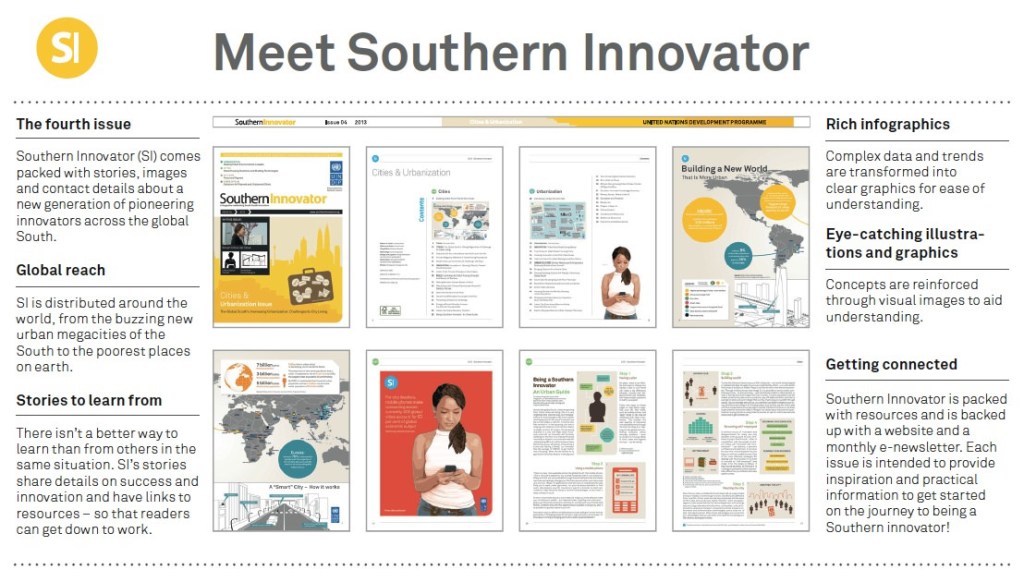
The fourth issue of Southern Innovator magazine has launched at the Global South-South Development Expo 2013 in Nairobi, Kenya. Southern Innovator Issue 4 visits the new cities being built to tackle the challenges of a rapidly urbanizing 21st-century world. The magazine also highlights some of the solutions being devised to the challenges people face as the world becomes a majority urban place.
Some innovators are building new cities from scratch, applying the latest thinking and hard-wiring in cutting-edge information technologies and innovative environmental measures to create ‘smart’ cities and eco-cities. Architects are designing and refining homes that are beautiful and functional, easy to build, affordable and conserve energy. Social entrepreneurs are innovating ways to create liveable and socially inclusive urban areas, often in places where planning has been scant and where incomes are very low. All those featured in the magazine were chosen for their focus on improving human development and their ingenuity and fresh thinking.
Southern Innovator champions a 21st-century global innovator culture. The magazine profiles and celebrates the innovators across the global South finding new ways to tackle poverty, create wealth and improve human development and achieve the Millennium Development Goals (MDGs). In its first issue in September 2011, Southern Innovator featured the people who are re-shaping new information technologies – from mobile phone apps to Internet technologies. Many of the innovators profiled in that first issue came from Kenya.
SI (southerninnovator.org) is based on intensive research and produced by the United Nations Office for South-South Cooperation in UNDP (UNOSSC) (formerly the Special Unit for South-South Cooperation in UNDP). UNOSSC organizes an annual Global South-South Development Expo (southsouthexpo.org), a roaming celebration and gathering of Southern innovators previously held in New York, Washington, D.C., Geneva, Rome and Vienna. This year’s Expo is being held in Nairobi, Kenya (28 October to 1 November 2013) and is hosted by the UN Environment Programme (unep.org).
SI is being distributed through the United Nations’ network and partners and reaches some of the world’s poorest and remotest places, as well as the vibrant but stressed growing global megacities. It is hoped the magazine will inspire budding innovators with its mix of stories, essential information, facts and figures, images and graphics.
We hope you enjoy the magazine and find its content interesting and illuminating: a snapshot of a fast-changing world awash, as we found out, with innovators, creators and do-ers making their world a better place. It is possible to sponsor issues of the magazine, either through helping to fund its print run, or through sponsored inserts covering that issue’s theme with relevant content for our readers.
For more information on Southern Innovator, contact Cosmas Gitta at cosmas.gitta@undp.org.
United Nations General Assembly: Sixty-ninth session, Item 24 (b) of the provisional agenda, Operational activities for development: South-South cooperation for development, 17 July 2014.The research informing Southern Innovator Magazine played a part in the formulation of the UN’s post-2015 development agenda, including the Sustainable Development Goals (SDGs).
Background: This is the original text from the brochure UNDP in Mongolia: The Guide first published in 1997. It, for the first time, provided a rolling update on what the United Nations was doing in Mongolia, offering key contacts and data to help advance human development in the country. It introduced transparency to the UN’s work in the country and made it easier to hold programme and project staff to account.
Mongolia – Population
With an area of more than 1.5 million square kilometres and a population of 2.38 million as of October 1997, Mongolia has a population density of only 1.5 people per square kilometre, one of the lowest in the world. The country has a relatively low growth rate of 1.6 per cent (1995), down from 2.5 per cent in 1989. At this rate, Mongolia’s population will reach 2.5 million by the year 2000.
Despite the popular image of Mongolians as nomadic herders, it is an increasingly urbanized country – 51.9 per cent of the population is urban, 48.1 per cent rural. More than one quarter of Mongolians live in the capital city, Ulaanbaatar. The other major urban centres are Darhan (pop. 90,000) and Erdenet (pop. 65,000 ).
The country is divided into 21 aimags (provinces), plus the autonomous capital region. The aimags are:
In the centre: Tuv, Uvurhangai, Arhangai
In the north: Bulgan, Selenge, Hovsgul, Zavhan, Darhan-Uul, Orhon
In the east: Hentii, Dornod, Suhbaatar
In the west: Hovd, Uvs, Bayan-Olgii, Gov-Altai
In the south: Dundgov, Dornogov, Omnogov, Bayanhongor, Gobisumber
The People:
About 86 per cent of the country’s population are Kalkh Mongols. Another 7 per cent are Turkic in origin, mostly Kazakhs living in the western aimags of Bayan-Olgii and Hovd. The rest belong to a wide variety of ethnic groups, including the Buryat, Dariganga, Bayad, Zakchin and Uriankhai. Mongolia’s smallest ethnic group is the Tsaatan, about 200 of whom live as reindeer herders in the far north of the country.
During the communist period, Mongolia was home to tens of thousands of Russians. Few remain.
More than 4 million Mongols live outside Mongolia, in Russia and the Chinese province of Inner Mongolia.
Human Development:
– Mongolia’s per capita GDP is U.S. $359 (1995). But this fails to take into account the cashless subsistence and barter economy widespread in rural areas.
– Poverty, though widespread, is difficult to tabulate. 1996 government figures put the poverty rate at 19.2 per cent – 19.8 per cent for rural areas, 18.7 for urban areas. But State Statistical Office figures for October 1997 indicate 36.8 per cent of urban residents and 27.5 per cent of rural Mongolians live below the poverty line.
– Omnogov, Gobisumber, Hovsgol, Ovorhangai and Bayanhongor are the aimags with the highest poverty rates.
– The average monthly household income in September 1997 was 58,516.7 tugrugs (U.S. $73). Average expenditure was 58,124.8 tugrugs. In 1995, 48 per cent of household expenditure went on food. In poor households, the figure was 64 per cent.
Social Data:
Life expectancy: 63.8 years (1995)
Infant mortality rate: 40 per 1000
Under five mortality rate: 56.4 per 1000
Maternal mortality rate: 185.2 per 100,000 (1995)
One-year-old immunization rate: tuberculosis 94.4 per cent, measles 85.2 per cent (1995)
Access to safe drinking water: rural 89.9 per cent, urban 46.1 per cent (1995)
Access to sanitation: 74 per cent (1995)
Adult literacy rate:
men 97.5 per cent,
women 96.3 per cent
Primary school net enrollment: 93.4 per cent
Secondary school net enrollment: 56.9 per cent
Physicians: 26 per 10,000
Hospital beds: 9.9 per 1000
Daily calorie intake: 2278.2
Data 1996 unless otherwise indicated. Sources: State Statistical Office, Human Development Report Mongolia 1997
Mongolia – Economy
An Economy in Transition:
After 70 years of centrally planned economy, Mongolia is embracing free-market principles with a vengeance. Economic liberalization began under the Mongolian People’s Revolutionary Party government in the early 1990s. The Democratic Coalition government, elected in June 1996, has vowed sweeping economic changes, including privatization of state assets, liberalization of trade and promotion of foreign investment.
The foreign investment law now encourages foreign investment in the form of share purchases, joint ventures and wholly foreign-owned concerns. Mining companies are given significant tax holidays. In May, 1997 parliament abolished customs duties expect on alcohol, tobacco and oil products.
All of this has been a shock to Mongolia and Mongolians. The country’s GDP shrank by a third in the early 1990s, though it has slowly recovered since. Inflation topped 300 per cent in 1993, but was brought down to below 50 per cent by 1997. The tugrug fell from 40 to U.S. $1 in 1991 to 800 to the dollar in 1997. Unemployment officially stands at 6.5 per cent – unofficial estimates are much higher.
The government’s ambitious privatization scheme has stalled; manufacturing and exports are down; imports are up. Adding to the problems is the fact that world prices for Mongolia’s major export items – copper and cashmere – have fallen.
The state retains at least 50 per cent ownership of the nation’s flagship enterprises, including the national airline, MIAT, the Gobi cashmere company and the power stations.
Mongolia has a resource-based economy, exporting mostly raw materials and importing mostly processed goods. The top exports are mineral products, textiles, base minerals, hides, skins and furs and animals and animal products. The major imports include petroleum products, industrial equipment and consumer goods.
Mongolia’s major trading partners are its two neighbours, China and Russia, though Korea and Japan are becoming more important – and the number-one export destination is Switzerland.
Sidebar: The rural economy
Half of Mongolia’s population is rural, and herding remains the backbone of the Mongolian economy. Agriculture accounts for 30 per cent of the nation’s GDP. The number of herding households grew during the economic turmoil of the early 1990s, and now stands at more than 170,000; there are 30 million head of livestock in Mongolia. Herders produce meat, skins and furs; more and more herders are investing in cashmere goats, a substantial money-earner.
Cultivation of crops, on the other hand, is limited. Before 1990, Mongolia was self-sufficient in cereals and even exported to the Soviet Union. But the sector suffered badly in the early 1990s. The 1997 harvest was 239,000 tonnes, 56 per cent of 1991-95 levels and only 40 per cent of pre-1990 harvests. Mongolia must now import 40 per cent of its cereal needs, a factor that contributes to a vulnerable food-security situation. Cultivation of vegetables is up, but remains minor – only 31,000 tonnes in 1997.
Sidebar: Rich in resources
Mongolia is resource-rich. This vast territory contains 15 per cent of the world’s supply of fluorspar and significant deposits of copper, molybdenum, iron, phosphates, tin, nickel, zinc, tungsten and gold, as well as at least 100 billion tonnes of coal.
Copper is the nation’s number one export.
Minerals account for more than a third of Mongolia’s GDP and earn half of its hard currency. Gold production is increasing.
Mongolia also contains significant reserves of oil, which could transform the economy. But infrastructure and transportation limitations mean that commercial extraction is limited. The completion of a pipeline to China could change all this.
Economic Data:
Exchange rate: $1 = Tg 808 (Nov 1997)
GDP: Tg 185.5 billion (1996)
GDP per capita: Tg 228,605 (1996)
Inflation: 325 per cent (1992), 53 per cent (1996)
State budget expenditure: Tg 203.6 billion (Jan-Oct 1997)
State budget revenue: Tg 176 billion (Jan-Oct 1997)
Seven decades of communist rule in Mongolia began to crumble in 1990, when the collapse of the old Eastern Bloc brought the first pro-democracy demonstrations. The ruling Mongolian People’s Revolutionary Party, which had already initiated a Mongolian version of glasnost, permitted the nation’s first multiparty elections in July, 1990.
Superior organization helped the MPRP win both the 1990 and 1992 elections (taking 71 of 76 parliamentary seats in the latter), but reform picked up speed. In 1992, the country adopted a new Constitution that enshrined human rights, private ownership and a state structure based on separation of power between legislative and judicial branches.
In the June 1996 election, major opposition groups united to form the Democratic Coalition, made up of the National Democratic Party, the Social Democratic Party, the Believers’ Party and the Green Party. Somewhat to its own surprise, the Coalition won a healthy 50 of 76 seats in the State Ikh Hural, or parliament. The composition of the Hural is now: National Democrats 35, Social Democrats 15, MPRP 25, Mongolian Traditional United Party 1.
In addition to their economic reforms, the Democrats have carried out radical restructuring of government, slashing the number of Ministries from 14 to 9.
The government has a healthy majority, but tensions sometimes emerge between the coalition partners. Mongolia’s transition to democracy has been remarkably peaceful, and the young democracy is robust – there are now more than 20 political parties in the country.
But economic hardship has caused resentments. In the 1997 Presidential election, voters elected N. Bagabandi, the candidate of the MPRP. In the fall of 1997, the government had to face demonstrations from students and pensioners and an opposition campaign that led to a confidence vote in parliament — a vote the government easily survived.
Political structure:
Mongolia has a parliamentary system of government, with a 76-seat legislature called the State Ikh Hural. The President, directly elected for a four-year term, is second in authority to the legislature, but he appoints judges and has the power of veto (which can be overturned by a 2/3 vote in parliament).
Chronology:
1911 collapse of Manchu Qing Dynasty; Mongolia declares its independence
1919 China invades Mongolia
1921 with Soviet help, Mongolia gains final independence from China
1924 Mongolian People’s Republic declared
1990 pro-democracy protests; Constitution amended; first multiparty elections
1992 second multiparty elections; new Constitution adopted
1996 Democratic Coalition elected as Mongolia’s first non-communist government, headed by Prime Minister Enkhsaikhan
1997 N. Bagabandi from the MPRP elected President
Voter turnout:
1996 elections: 92.2 per cent
1996 local Hural: 64.0 per cent
1997 presidential: 85.1 per cent
Mongolia – Society and Culture
Mongolia has a unique and durable traditional culture, centred around the herding lifestyle. Herders remain semi-nomadic, moving their animals with the seasons as they have for centuries
Many urban Mongolians retain strong links to the land, both literal and sentimental, and the country’s performing and visual arts often celebrate the landscape and the animals — especially horses — that are central to Mongolian life. Mongolia has several distinctive musical instruments and styles, including the morin khuur (horsehead fiddle), the long song (urtyn duu) and the throat-singing style known as khoomi.
After seven decades of communism, Mongolians are once again celebrating their traditional culture, and embracing the image and legacy of the most famous Mongolian of all time – Chinggis Khan, who in the 13th century initiated the Mongol Empire, the greatest land empire the world has ever known. He gives his name to everything from a brand of vodka to a luxury hotel, and centres for academic Chinggis research have been set up.
In sports, Mongolians favour the “three manly sports” — wrestling, archery and horse racing — that form the core of the annual festival known as Naadam. Mongolian wrestlers have won a number of medals at international competitions and are even entering the field of Japanese Sumo.
The 1990s have seen a flowering of freedom of expression. Mongolia has an extraordinary 525 newspapers and a wide range of magazines, while the first private radio and television stations have been established.
Religion:
Mongolians have been Buddhists since the 16th century, when the Mongolian king, Altan Khan, was converted by Tibetan lamas. In the pre-revolutionary period, Mongolia was ruled by a series of Living Buddhas, or Jebtzun Damba. The eighth, and last, Jebtzun Damba was removed after the communist takeover.
Traditionally, monasteries were centres both of learning and of power. It’s estimated Mongolia had 100,000 monks, or lamas, in 1921 — one third of the male population. In the 1930s, this power became the focus of a ruthless series of purges that reached a climax in 1937. Most of the country’s monasteries were destroyed, and as many as 17,000 monks were killed.
Today, Mongolia is once again embracing its Buddhist heritage. Monasteries are being restored, and are once again crowded with worshippers. The Dalai Lama is an enormously popular figure and has visited the country several times.
For many Mongolians, Buddhism is flavoured with traces of Shamanism, an even more ancient spirituality.
Mongolia also has a significant Muslim community — about 6 per cent of the population. These are mostly ethnic Kazakhs living in the far west of the country. The opening-up of the country has led to an influx of Christian missionaries, and this remains a source of some tension and debate.
A Young Country:
Mongolia is a remarkably young country — more than 60 per cent of the population is below the age of 30, and 40 per cent of Mongolians are younger than 16. This young generation, with its embrace of Western styles and ideas, is changing the complexion of the country. Western pop music and North American sports like basketball have a huge following among Mongolia’s youth. So, too, do homegrown artists like the pop groups Nikiton and Spike and the singer Saraa.
Social Data:
Television sets: 6.2 per 100 (1995)
Newspapers: 2 per 100 (1995)
Number of telephones: 82,800
Marriage: 10.9 per 1000 over 18
Divorce: 0.7 per 1000 over 18
Number of pensioners: 287,200
Crimes reported: 20,454 (Jan-Oct 97)
As percentage of same period in 1996: 114.4 per cent
Data 1996 unless indicated. Sources: State Statistical Office, Human Development Report Mongolia 1997








 David South Consulting
You must be logged in to post a comment.