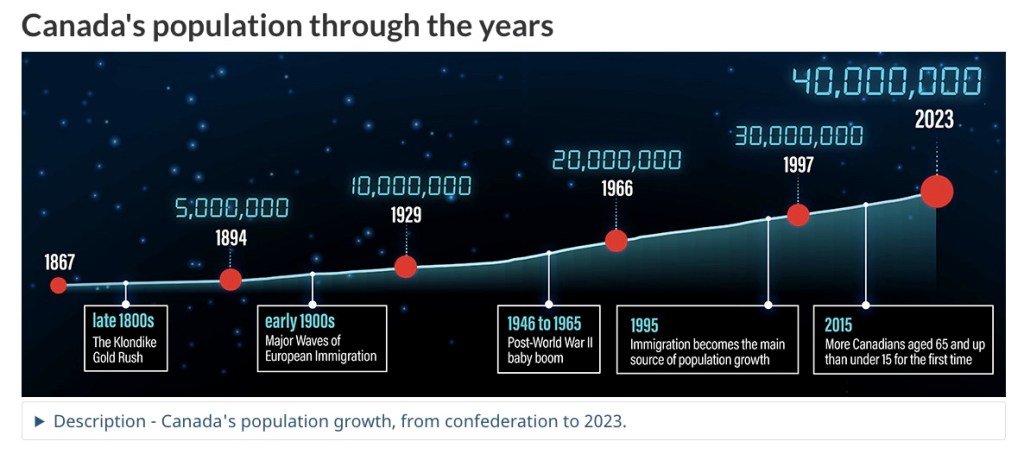
When I first emerged as a Canadian (I was born in 1966), the country’s population was 20 million. So the population has doubled in my lifetime.
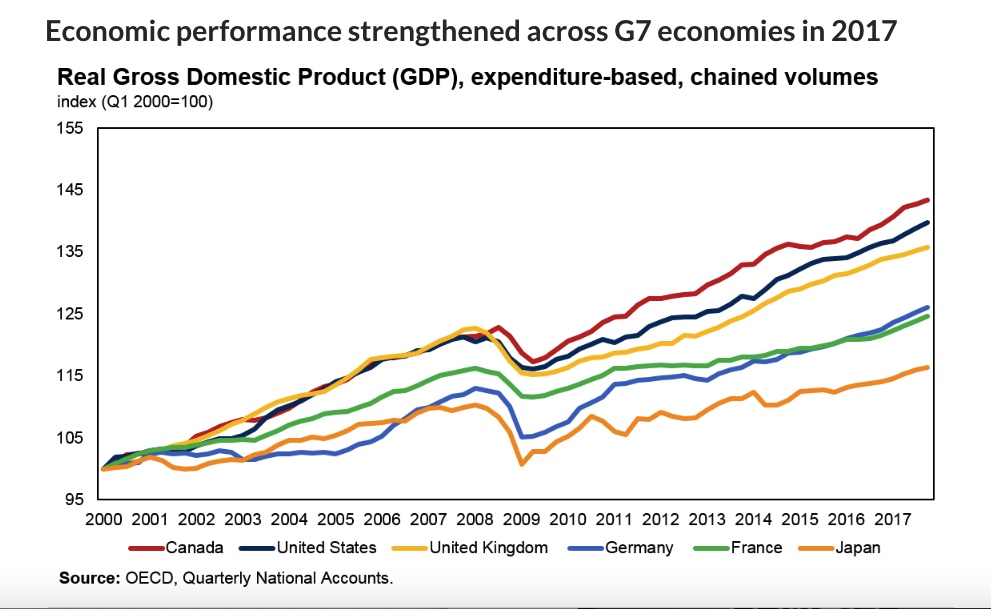
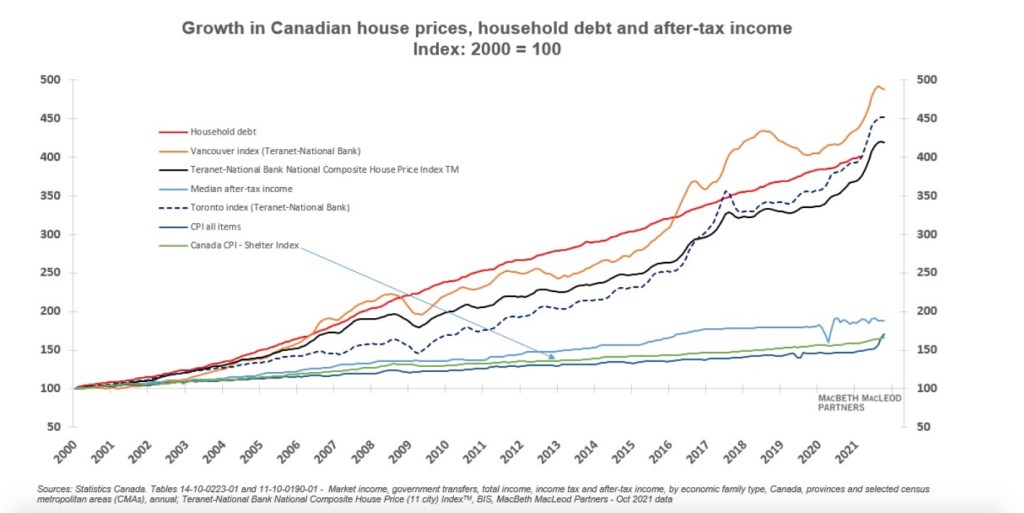
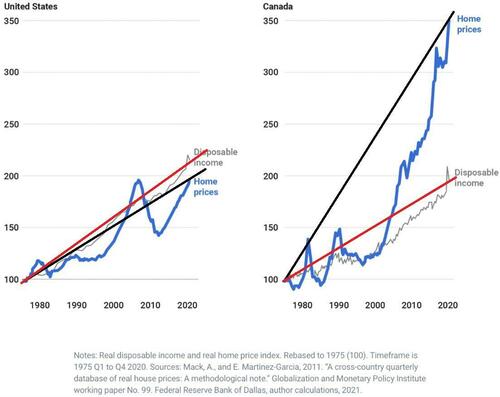
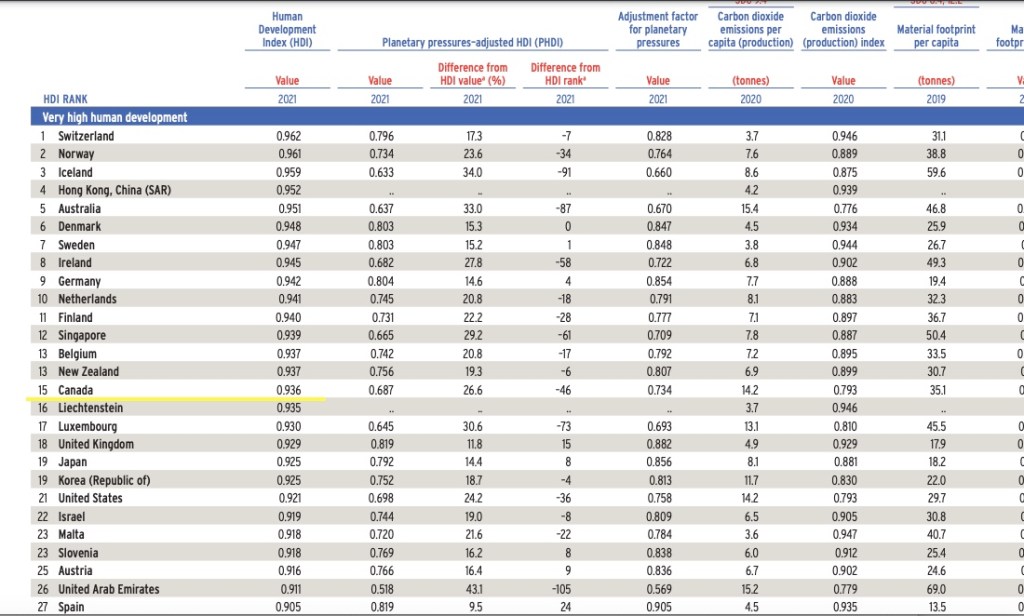
Since Canada topped the HDI rankings in the late 1990s, however, the population has grown, house prices have surged and GDP (Gross Domestic Product) has exploded, yet the country has also slipped down the rankings, hitting 15th place in 2021. Does this mean there are more people, but fewer living as well as they did in the 1990s?
Source: Statistics Canada. Source: Macleans.ca.
Since 2000 house prices in Canada have surged far past growth in Canadian household disposable income, as compared to US households.
The global economic crisis has spread around the world and is bringing many problems in its wake. As global currency markets gyrate wildly, and people find they can go from having wealth to being poor almost overnight, the question is being asked: “is there another way?”
The global economy is slowing rapidly. Even Iceland – a country recently named as having the best quality of life in the world (Human Development Index) (HDI) – has gone broke, and many other nations around the world will face serious economic crises. People will need to protect themselves from the worst effects of the fallout from various economic bubbles bursting.
Runaway inflation, as is occurring in Zimbabwe – reaching 231 million percent in October, 2008 according to official sources – shows faith in a country’s currency can be sorely tested. But do people and the poor in particular, need to be prisoners of the economy managed by a national currency?
The ‘prosumer’ movement (http://en.wikipedia.org/wiki/Prosumer), where consumers take an active role in re-shaping markets and economies to their benefit, around the world is looking for ways to bypass national currencies and make food, goods and services more affordable and stable, improving the lives of the poor. One way this is done is through alternative currencies (http://en.wikipedia.org/wiki/Alternative_currency).
Cimarrones, or the Cimarron, joins 10 other alternative currencies currently in operation across Venezuela. They are circular cardboard tokens with a picture of a runaway slave on them.
Supported by Hugo Chavez, the country’s president, the new currencies are aimed at tackling poverty and establishing new economies. The currencies can’t be exchanged for the Venezuelan currency, the bolivar.
It works like this: to be a prosumer, you must first bring something to sell before you can buy anything. The range of products for sale at prosumer markets is not vast, but that isn’t the point.
“It’s magic,” Pablo Mayayo, an Argentinian advising Venezuela on prosumer schemes, told The Economist. “ When you take away money, which is the cause of almost all the great evils in the world, people relate to each other in a different way, by cooperating, not competing.”
Argentina pioneered so-called “barter markets” in response to its economic crises, helping people avoid starvation, looting and perhaps a revolution. By the end of 2002, there were 4,500 barter markets being used by half a million people producing 600 million credits.
“They were organized geographically around church halls, car parks and baseball courts,” recalled Peter North, a Liverpool University geographer. “They offered a wide range of products and services, supplied by professionals, trades people and farmers, as well as housewives and the unemployed. Stalls attracted ‘prosumers’ in their thousands, who paid with credit coupons issued by one or more barter markets. Everyone involved was both a prosumer and a producer, since you couldn’t purchase credits or exchange them for pesos.”
In Rio Chico, a small town in the Venezuelan coastal region of Barlovento, the prosumer currency market has people happy with the prices.
“I grow coconuts,” said Angenia Hernandez. “In the shops they cost 3.5 bolivares each (US $1.63) at the official exchange rate), but we we’re going to sell them at [the equivalent of] 1.5.” She calls it an end to “commercial fascism.”
Because of global currency speculation and investment flows, national currencies are not entirely at the control of national governments. High inflation seriously hurts the poor and low-waged, and national currencies can hurt the rural poor, who become prisoners to high interest rates charged by urban lenders.
Turning to a local, alternative currency has many advantages: it stops currency speculation, stops the flow of wealth to urban areas, preserves purchasing power, keeps trading local. Avoiding the draining away of wealth to middlemen, it addresses currency scarcity, and fosters greater awareness of how economies function and the mechanisms of trade
Criticism of these schemes say it is just a re-run of regressive company currencies and feudal tokens that were used in the past to control people and force them to only buy products from the landowner or boss.
In Papua New Guinea , shells are used for money and are called Tabu. It is an ancient currency system used by the Tolai people of East New Britain Island . Stephen Demeulenaere (www.network-economies.com), who has worked on alternative currencies around the world and helped with the re-introduction of the Tabu in Papua New Guinea , sees it playing a key role in the local economy.
“Tabu was very effective at addressing poverty,” he said, “because anything could be purchased with it, from a handful of peanuts up to a piece of land or even a car, without needing national currency. Tabu is produced traditionally by women, so theoretically nobody would suffer from a lack of it. The advantage over the national currency is that it has a very long history of use, and people trust it more than the national currency.
“Tabu builds wealth by facilitating the exchange of locally-produced goods and services which may not circulate in a ‘national-currency only’ economy, and values activities that may not be considered to be economically viable if the use of national currency was the only option. In the west we see this where ‘mother’s work’, hobbies, mutual-aid and other traditional under-valued but economically important activities are not valued monetarily.
“By encouraging the exchange of locally-produced goods and services, wealth is built in the community from the ground up.”
Over 75,000 people now use the shells, usually traded in great rings.
Getting the introduction of an alternative currency right is critical. In Argentina, such currencies were criticised for being manipulated by criminal gangs and political forces.
“The main advice I have is to study the community closely, and our website at http://www.complementarycurrency.org, provides free resources for people wishing to start their system,” Demeulenaere said.
“The system must be transparent so that people trust it and participate in maintaining its health and stability; democratic, so that it can not be abused by those in power; appropriate, so that it achieves general social and economic goals and aspirations of the community; and to be complementary to the regular economy so that the system helps its members to improve their lives economically.”
At the Jai Marketplace in Thailand , all of the goods in the market can be bought entirely in the local currency called “Jai’. Jai is convertible to Thai Baht or to organic, locally made cow fertilizer, and is designed to improve the local economy and the climate for micro, small and medium enterprises through the local exchange network.
ReinventingMoney.com: A blog dedicated to exploring all issues of alternative currencies and money to promote “economic democracy, self-determination, and global harmony”. Website:http://reinventingmoney.com/
Complementary Currency Systems in Asia, Africa and Latin America: The website has resources and videos showing how alternative currencies work. Website:http://www.appropriate-economics.org/
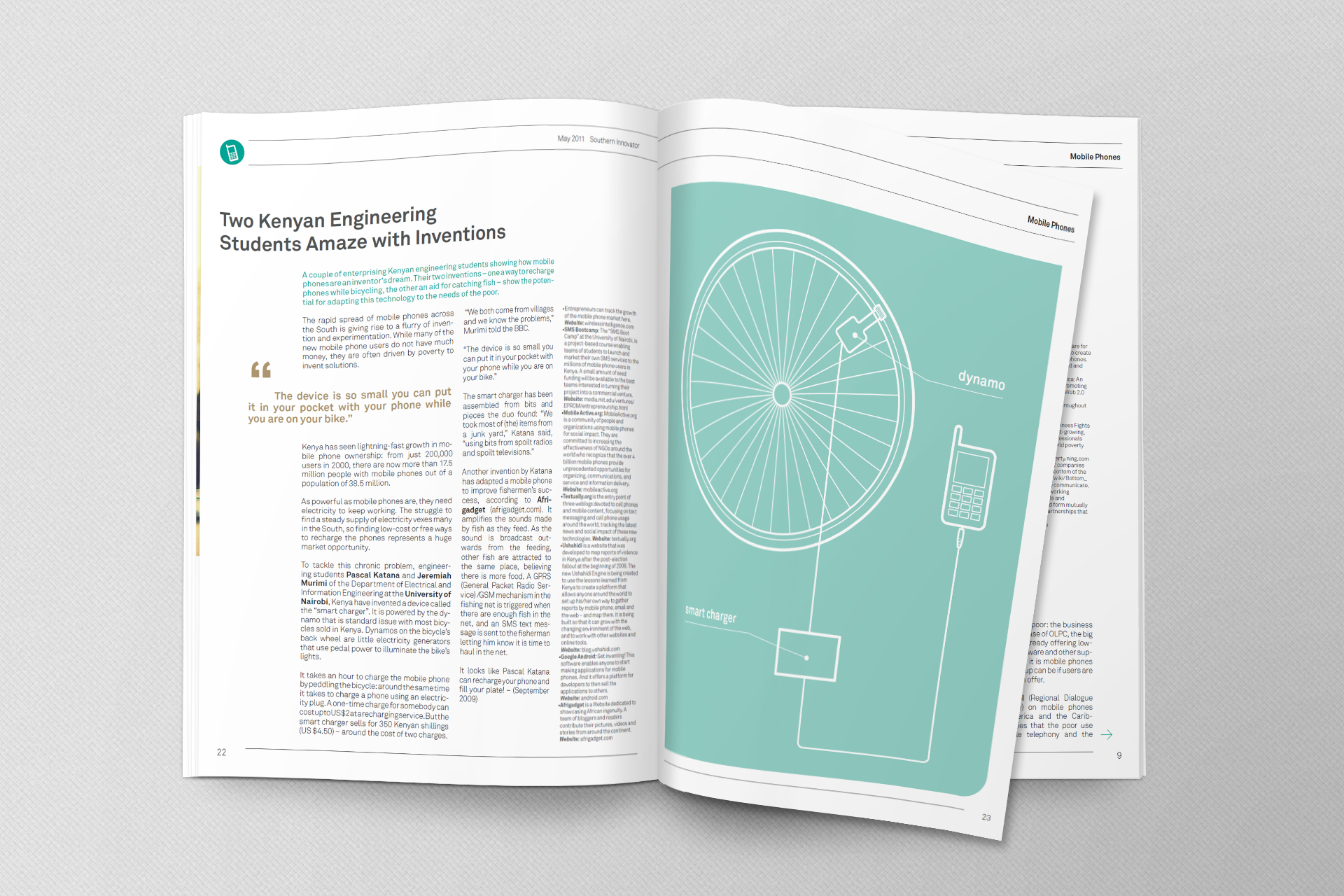
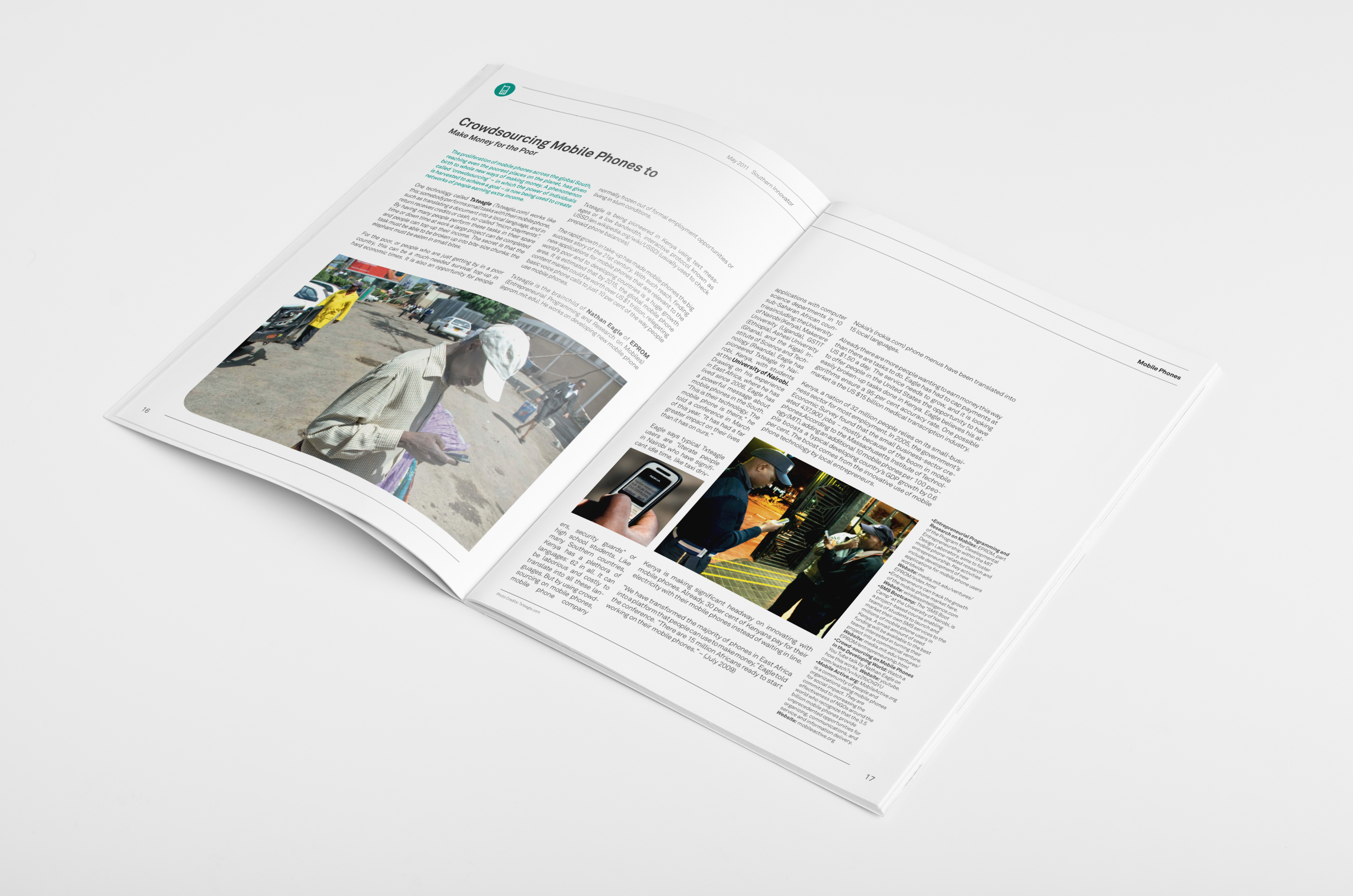
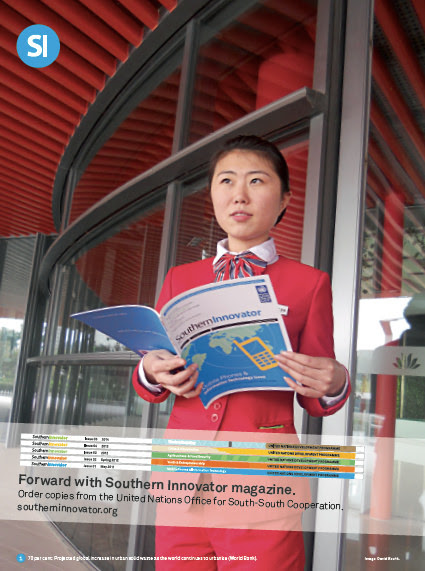
Development Challenges, South-South Solutions was launched as an e-newsletter in 2006 by UNDP’s South-South Cooperation Unit (now the United Nations Office for South-South Cooperation) based in New York, USA. It led on profiling the rise of the global South as an economic powerhouse and was one of the first regular publications to champion the global South’s innovators, entrepreneurs, and pioneers. It tracked the key trends that are now so profoundly reshaping how development is seen and done. This includes the rapid take-up of mobile phones and information technology in the global South (as profiled in the first issue of magazine Southern Innovator), the move to becoming a majority urban world, a growing global innovator culture, and the plethora of solutions being developed in the global South to tackle its problems and improve living conditions and boost human development. The success of the e-newsletter led to the launch of the magazine Southern Innovator.
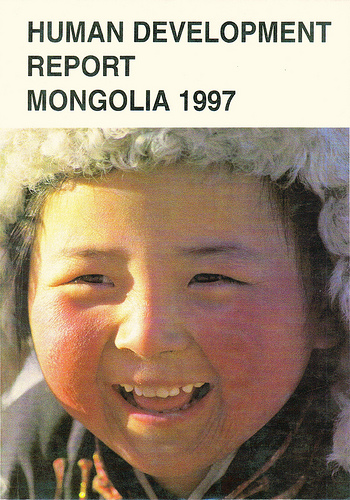
This groundbreaking Mongolian Human Development Report – the country’s first – went beyond just chronicling Mongolia’s state of development in statistics and graphs. It placed the story of the Mongolian people during the transition years (post-1989) at its heart, using photographs, stories and case studies to detail the bigger narrative at play.
Designed, laid out and published in Mongolia, the report broke with the practices of many other international organisations, who would publish outside of Mongolia – denying local companies much-needed work. The report’s costs helped to kick-start a publishing boom in the country and significantly raised standards in design and layout. The foundations laid down by the project producing the report ushered in a new age in publishing for Mongolia.
The report’s launch was innovative, not only being distributed for free across the country, but also part of a multimedia campaign including television programming, public posters, town hall meetings and a ‘roadshow’ featuring the report’s researchers and writers.
The initial print run of 10,000 copies was doubled as demand for the report increased. To the surprise of many, once hearing about the free report, herders would travel to the capital, Ulaanbaatar, to pick up their copy. The report proved people cared passionately about the development of their country and that development concepts are not to be the secret domain of ‘development practitioners’.
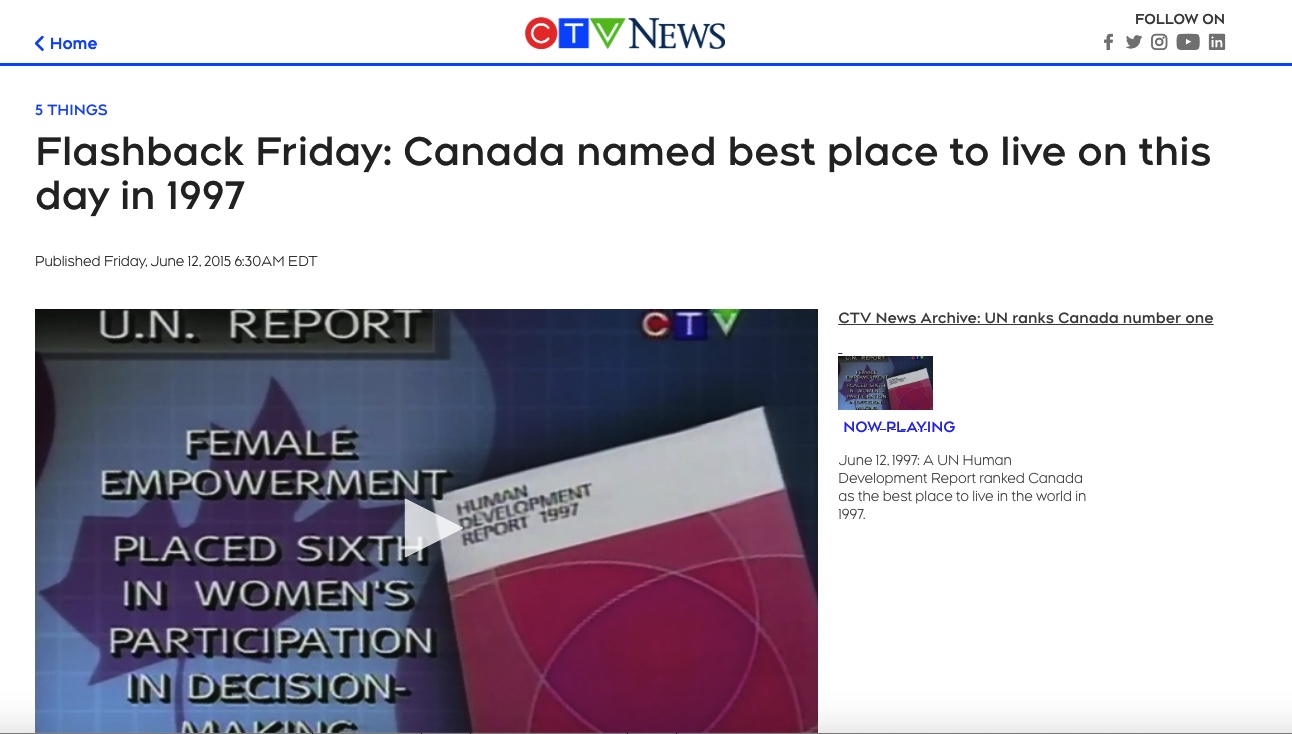
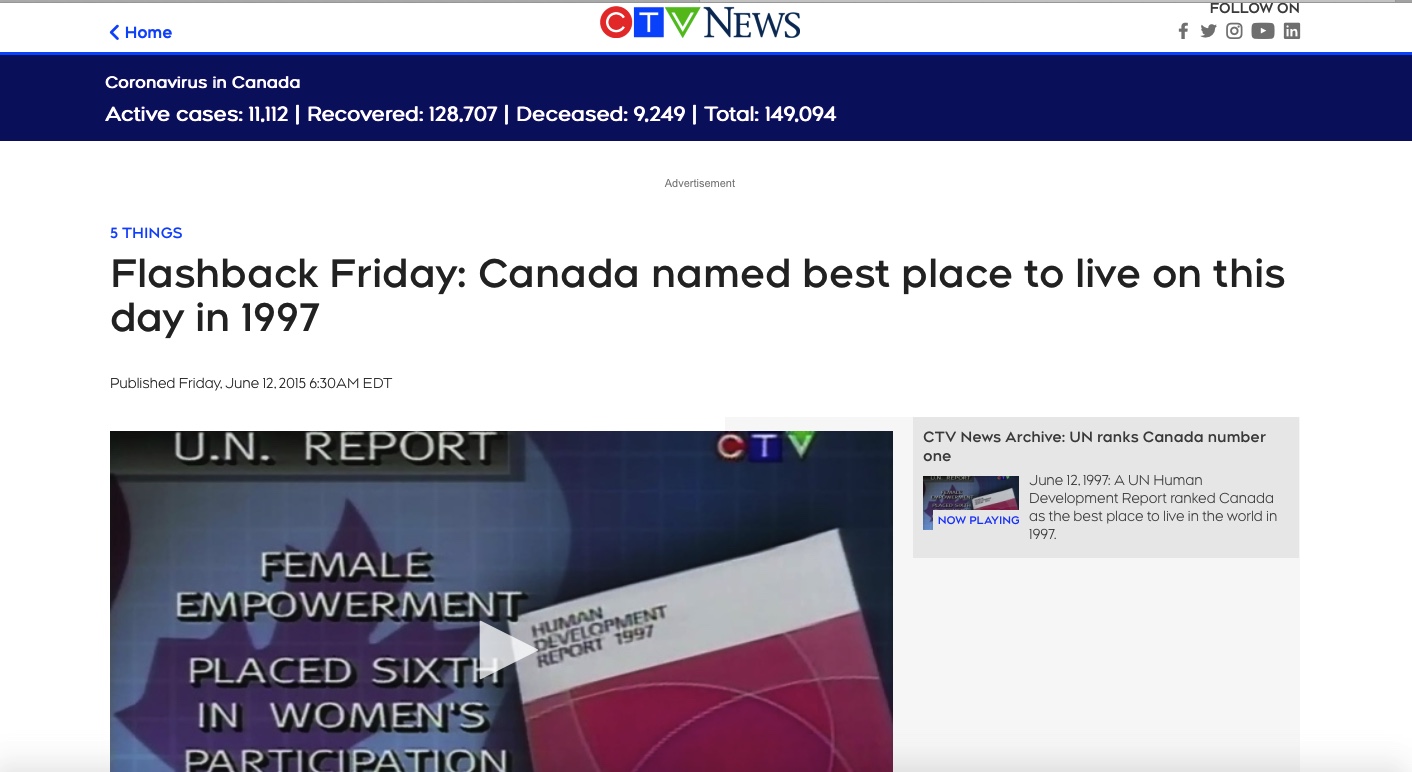
The MHDR 1997 was so popular it had two print runs. It has been cited in many books, journals and publications. It was the first exhaustive account of the country’s turbulent transition years and mapped the extent of poverty in the country.The Human Development Report Mongolia 1997 is available in many library collections around the world. In this case, the Oulu University Library Finland. The award-winning UN/UNDP Mongolia Development Portal was launched in 1997. It quickly became the go-to source on Mongolia’s development challenges.CTV News: “Canada named best place to live on this day in 1997”. I considered it an enormous privilege to be given the opportunity to work with fellow Canadians on sharing our experiences with Mongolia during the 1990s crisis.
“On this day in 1997, Canada was on top of the world. Or at least, on top of the United Nations’ annual ranking of the best places to live in the world.
“CTV News archival footage captured a proud moment for Canada on June 12, 1997, as then-National News anchor Lloyd Robertson hailed the UN ranking as a “report card to be proud of.”
“It’s not quite straight As but Canada is still at the head of the class,” Robertson said. “In fact, it’s No. 1 in the world.”
“Canada beat out France, Norway, the United States and Iceland for top spot on the UN human development list, which ranks countries based on a variety of factors linked to quality of life.
“It was the fourth straight year Canada topped the list.
“Canada earned top marks in the life expectancy, health, education and income categories, which helped propel the country’s overall Human Development Index score to No. 1 in the world.”
Ethiopia and Djibouti are the latest global South countries to make a significant commitment to developing geothermal energy – a green energy source that draws on the heat below the earth’s surface (http://en.wikipedia.org/wiki/Geothermal_energy) – to meet future development goals.
Ambitiously, Ethiopia also hopes to build Africa’s largest geothermal power plant.
It joins Kenya, which in 2012, announced projects to expand its geothermal capacity further. Currently, Kenya is Africa’s largest geothermal producer and has geothermal resources concentrated near a giant volcanic crater in the Great Rift Valley with 14 fields reaching from Lake Magadi to Lake Turkana. There are also low temperature fields in Homa Hills and Massa Mukwe (http://www.gdc.co.ke/index.php?option=com_content&view=article&id=191&Itemid=163). Around 1,400 steam holes are being drilled.
Cooperating with Reykjavik Geothermal (rg.is), a US-Icelandic private developer, Ethiopia will spend US $4 billion to build a 1,000 megawatt geothermal plant at Corbetti (http://www.volcano.si.edu/volcano.cfm?vn=221290). It is expected to be ready in eight to 10 years. The country wants to be carbon neutral by 2025.
Drilling will need to go down as deep as 3 kilometers to tap the source. This is expensive and a technological challenge, thus the need for international expertise. The country hopes to develop this source of energy and then export electricity to neighboring African countries.
Another plant, Aluto Langano 7, is being built 201 kilometers south of Addis Ababa, the capital, by a partnership between the Japanese government, Ethiopia and the World Bank.
Ethiopia has enormous potential for geothermal energy, according to a paper in the journal Geothermics: “Ethiopia holds an enormous capacity to generate geothermal energy in the volcano-tectonically active zones of the East African Rift System (http://www.sciencedirect.com/science/article/pii/S0375650513000023).”
At present, 70 per cent of people in sub-Saharan Africa, some 600 million, are without a domestic electricity supply (USAID). Electricity and other sources of energy are required if living standards are to be raised for millions of the world’s poor. The danger of this, however, is to the planet if the energy comes from polluting sources.
In March 2013 the World Bank announced a significant push to increase development of geothermal resources around the world, and in particular in energy-hungry, fast-developing countries.
“Geothermal energy could be a triple win for developing countries: clean, reliable, locally produced power,” the bank says. “And once it is up and running, it is cheap and virtually endless.”
The bank joined forces with Iceland to make a pledge to secure US $500 million in financing to get geothermal projects up and running. The announcement was made at the Iceland Geothermal Conference (http://geothermalconference.is/) in Reykjavík, the Icelandic capital.
Few countries have such easy access to geothermal energy as Iceland, with its plentiful volcanoes, geysers and hot springs bursting through the surface. But it is there, under the ground, and through the Global Geothermal Development Plan (GGDP), it is hoped this plentiful energy source will become the norm for countries around the world.
The World Bank believes at least 40 countries can get into geothermal on a significant scale with the correct investment. Many developing world regions are rich in geothermal resources, including East Africa, Southeast Asia, Central America, and the Andean region.
Just 11 gigawatts of geothermal capacity is currently being tapped in the world. Nuclear power, for example, generates 370 gigawatts a year (2012) (EIA). What has held back many countries has been the high upfront costs involved in getting projects going. A site must be found, drilled and tested to see if it is viable.
The GGDP plan is to raise US $500 million from donors and others to fund geothermal exploration and development. The GGDP will identify promising sites and then acquire funding to pay for drilling to identify commercially viable projects.
The World Bank has increased financing for geothermal development from US $73 million in 2007 to US $336 million in 2012. It comprises 10 per cent of the Bank’s renewable energy lending.
The Icelandic International Development Agency (iceida.is) signed a partnership in September 2013 with the government of Ethiopia to undergo geothermal surface exploration and to build Ethiopia’s capacity to develop this energy source. The World Bank estimates that Ethiopia has the potential to generate 5,000 megawatts (MW) of energy from geothermal sources.
The Geological Survey of Ethiopia (GSE) and the Ethiopian Electric Power Corporation (EEPCO) will undertake exploration at sites in Tendaho Alalobeda and Aluto Langano.
It fits in with a wider push by Ethiopia to develop its renewable energy resources. The country is also increasing investment in hydro-electric power.
The Ethiopia project is part of the wider World Bank-Iceland compact to develop global geothermal energy capacity. It is the second such arrangement, with the first already underway in Rwanda.
Djibouti is also moving into geothermal, with a new agreement with the World Bank to develop a site at Lake Assal. The World Bank will provide US $6 million to evaluate its commercial potential. Djibouti tried to develop its geothermal resources privately but was not successful.
Overall, geothermal power has the potential to help reduce Djibouti’s electricity production costs by 70 per cent, boost access to electricity for the population and alleviate the country’s energy dependency. The country hopes to have 100 per cent green energy by 2020.
Joining forces on helping boost geothermal in Africa is USAID’s Power Africa fund, which is providing US $7 billion in financial support and loan guarantees for energy projects.
Apart from generating electricity, what else can this powerful resource do? Countries such as Iceland now use hot geothermal water to heat homes and provide domestic hot water. Iceland also has an extensive network of swimming pools and spas in each town. The Blue Lagoon (bluelagoon.com) is a good example of how geothermal power generation can have lots of side benefits. The giant, steamy blue-colored lagoon is the consequence of an accident in 1976 at the nearby geothermal power plant; it’s now a spa and one of the country’s main tourist attractions.
The geothermal-heated pools and spas play a key role in keeping the cold north Atlantic country healthy – Iceland ranked number one on the UNDP human development index in 2007 – and provide a recreational source even in the depths of winter.
Published: December 2013
Resources
1) Iceland Review: A great way to learn about life on an island powered by geothermal energy. Website: icelandreview.com
2) Nordic Development Fund: The Nordic Development Fund (NDF) is the joint development finance institution of the five Nordic countries. The objective of NDF’s operations is to facilitate climate change investments in low-income countries. Website: ndf.fi
3) Icelandic International Development Agency (ICEIDA): The Icelandic International Development Agency (ICEIDA) is an autonomous agency under the Ministry of Foreign Affairs and is responsible for the implementation of official Icelandic bilateral development cooperation. It follows the Icelandic government’s Act on Development Cooperation No 121/2008, which is in keeping with the UN Millennium Development Goals and other international commitments, such as the Monterrey Consensus on Financing for Development and the Paris Declaration on Aid Effectiveness. Website: iceida.is
4) Geothermal Exploration Project, NDF: The main objective of the Geothermal Exploration Project is to assist countries in East Africa to enhance geothermal knowledge and capacity in order to enable further actions on geothermal energy development in the respective countries. The project could extend to 13 countries in the East Africa Rift Valley: Burundi, Comoros, Djibouti, DR Congo, Eritrea, Ethiopia, Kenya, Malawi, Mozambique, Rwanda, Tanzania, Uganda and Zambia. Website: http://www.iceida.is/iceida-projects/nr/1488
5) Power Africa: Power Africa – an initiative to double the number of people with access to power in sub-Saharan Africa. Power Africa will achieve this goal by unlocking the substantial wind, solar, hydropower, natural gas, and geothermal resources in the region to enhance energy security, decrease poverty, and advance economic growth. Website: http://www.usaid.gov/powerafrica
6) Geological Survey of Ethiopia: The GSE has been generating , collecting and managing geoinformation of the country for the last 4 decades. Website: http://www.gse.gov.et/index.php
Like geothermal energy? Then we think you will like our Southern Innovator Magazine. Designed and laid out in Iceland using 100% renewable energy (much of which is geothermal).
















 David South Consulting
You must be logged in to post a comment.