Categories
Archive Development Challenges, South-South Solutions Newsletters Southern Innovator magazine

Ugandan Fish Sausages Transform Female Fortunes

By David SouthDevelopment Challenges, South-South Solutions

SOUTH-SOUTH CASE STUDY

What to do when your food production enterprise is just not making much money? It is a common problem in the global South, where farmers and fishers often struggle to survive and can face the threat of bankruptcy and destitution when trying to provide essential food for their communities.

Some fish farmers in Uganda – many of them women – were caught up in this dilemma, unable to find a way to make a good income from the fish they were harvesting.

But a lucky hire for one fish cooperative, in the form of a humble secretary, has turned into a business and food success story that is getting set to jump across borders in Africa.

Lovin Kobusingya is the former secretary and university graduate who, through tenacity and ingenuity, has built a business selling fish sausages that has become a hit in Kampala, Uganda in East Africa.

Through trial and error, Kobusingya came upon the idea of turning the fish into sausages. The product, basically unknown in Uganda before, became a tidy solution to the dilemma of how to sell fish at a premium price that could boost the income of the farmers.

She joins the growing number of female entrepreneurs in Africa. Africa has the highest rate of female entrepreneurship in the world, according to the World Bank, which says two-thirds of women in Africa are in the labour force.

The 29-year-old mother of two set up Kati Fish Farms (http://katifarms.org) and Kati Farm Supplies Ltd. and now sells 500 kilograms of fish sausage a day.

Located in the country’s capital, Kampala, Kati Farm Supplies Ltd. prepares and sells a wide range of food products made with chicken, beef, fish, pork, goat, lamb and honey.

Kobusingya is notable not only for her success as a food entrepreneur, but also for the way she has generated attention and excitement around her business and products.

According to Kenya’s Nation newspaper, Kobusingya boosted her profile by gaining customers in Uganda’s hotels.

She graduated six years ago from Makerere University in Kampala (http://mak.ac.ug) and originally planned to go into banking. Like many graduates, she found it hard to break into the sector and get a steady job. After a year of frustrating job hunting, she found a position as a secretary with a fish cooperative society.

“I got a job after a rigorous interview,” she told the Nation. “It was not well-paying.

“The most challenging part of the job was dealing with fish farmers, who were grappling with an unsteady market for their produce.”

Despite all the problems facing the fish industry, Kobusingya became inspired to do something about it. Rather than just hoping market prices would turn in favour of the fish farmers, she diversified the cooperative’s products to add value to the raw fish ingredients.

“Most of our members were women who had taken up aquaculture (fish farming),” she said. “At the time, this was still a novelty.”

It is a tale of trial and error, as Kobusingya tells it.

“We tried selling our products, such as fish feeds, and even selling directly to consumers. But I felt that there was something more we could do to help the farmers even more.”

Becoming frustrated with the constraints of her role, she decided to start the business on top of her day job. She started buying fish directly from the farmers, filleting it herself and selling it to customers.

Yet, still fish was not selling and going to waste.

Then the eureka moment came: make fish sausages. This had never been done in Uganda and she set about undertaking research on the Internet to learn how to do it.

“I assembled bits and pieces of information from the Net on how to make the sausages,” Kobusyingya said.

“Everywhere I went seeking more information, people thought I was out of my mind.

“Nobody had heard of fish sausages but I received support from the Uganda Industrial Research Institute in 2011. They helped me to develop a formula for the product,” she said.

With the new product developed, Kobusingya tried selling it to the hotels in Kampala. And this was the crucial moment when her fortunes changed: people were excited by the new and novel product.

The first orders earned her US $800 and with that jolt of cash, she was able to launch the product in February 2012.

Production started at 100 kilograms of fish sausage a day. By the third month, she was able to produce 500 kilograms a day. And because the product is so popular, she is running hard to meet demand from hotels, food outlets and institutions.

Expanding into selling smoked fish and frozen chicken and beef, she is now working with 470 fish farmers, most of whom are women.

“This business has motivated farmers throughout Uganda,” she said.

“The enterprise, now worth about Ush50 million (US $19,230), has 16 permanent employees,” she said.

She also took the fish sausages on the road and introduced them to the SmartFish trade event in Lusaka, Zambia, where they became a hit with attendees.

SmartFish (http://www.smartfish-coi.org/#!home/mainPage) is funded by the European Union through the European Development Fund and is implemented by the Indian Ocean Commission in partnership with regional trade organizations. The objective of the event was to increase trade within the region.

With her confidence further boosted by the positive international reaction, Koubusingya is exploring how to sell into Kenya, Tanzania, Rwanda and Burundi.

“I always knew I was a businesswoman,” she told The New York Times. “When I was in high school, I used to sell illegal sweets. And I made money.”

“I am very happy and proud” of being a female entrepreneur. “When I was young, they said: ‘A woman is a woman – a man should take care of you.’ But women are actually contributing a lot more than men. We always find ourselves multitasking,” when juggling work and a family.

Published: November 2012

Resources

1) SmartFish: The SmartFish Programme aims at contributing to an increased level of social, economic and environmental development and deeper regional integration in the ESA-IO region through improved capacities for the sustainable exploitation of fisheries resources. Website: http://fisheries.ioconline.org/smartfish.html

2) Southern Innovator Issue 3: Agribusiness and Food Security: Packed with tips and tales on how to tackle the challenges of making food production pay. Website: http://www.scribd.com/doc/105746025/Southern-Innovator-Magazine-Issue-3

3) Uganda Industrial Research Institute: Uganda Industrial Research Institute is Uganda Government’s lead agency for industrialization. Website: http://www.uiri.org/

4) A photo gallery showing the harvesting of the fish and the making of the sausages. Website: http://katifarms.org/index.php?option=com_content&view=article&id=70&Itemid=90 

https://davidsouthconsulting.org/2022/11/21/agribusiness-food-security/

https://davidsouthconsulting.org/2021/06/04/an-innovators-big-chicken-agenda-for-africa/

https://davidsouthconsulting.org/2021/03/04/food-diplomacy-next-front-for-souths-nations/

https://davidsouthconsulting.org/2022/02/10/food-inflation-ways-to-fight-it/

https://davidsouthconsulting.org/2021/02/22/new-paper-citation-for-southern-innovator-issue-3/

https://davidsouthconsulting.org/2021/09/16/small-fish-farming-opportunity-can-wipe-out-malnutrition/

https://davidsouthconsulting.org/2021/03/05/southern-innovator-issue-3/

https://davidsouthconsulting.org/2022/10/18/woman-wants-african-farming-to-be-cool/

Development Challenges, South-South Solutions was launched as an e-newsletter in 2006 by UNDP’s South-South Cooperation Unit (now the United Nations Office for South-South Cooperation) based in New York, USA. It led on profiling the rise of the global South as an economic powerhouse and was one of the first regular publications to champion the global South’s innovators, entrepreneurs, and pioneers. It tracked the key trends that are now so profoundly reshaping how development is seen and done. This includes the rapid take-up of mobile phones and information technology in the global South (as profiled in the first issue of magazine Southern Innovator), the move to becoming a majority urban world, a growing global innovator culture, and the plethora of solutions being developed in the global South to tackle its problems and improve living conditions and boost human development. The success of the e-newsletter led to the launch of the magazine Southern Innovator.  

Follow @SouthSouth1

Google Books: https://books.google.co.uk/books?id=D_A1VeiJWycC&dq=development+challenges+november+2012&source=gbs_navlinks_s

Slideshare: http://www.slideshare.net/DavidSouth1/development-challenges-november-2012-issue

Southern Innovator Issue 1: https://books.google.co.uk/books?id=Q1O54YSE2BgC&dq=southern+innovator&source=gbs_navlinks_s

Southern Innovator Issue 2: https://books.google.co.uk/books?id=Ty0N969dcssC&dq=southern+innovator&source=gbs_navlinks_s

Southern Innovator Issue 3: https://books.google.co.uk/books?id=AQNt4YmhZagC&dq=southern+innovator&source=gbs_navlinks_s

Southern Innovator Issue 4: https://books.google.co.uk/books?id=9T_n2tA7l4EC&dq=southern+innovator&source=gbs_navlinks_s

Southern Innovator Issue 5: https://books.google.co.uk/books?id=6ILdAgAAQBAJ&dq=southern+innovator&source=gbs_navlinks_s

Creative Commons License

This work is licensed under a
Creative Commons Attribution-Noncommercial-No Derivative Works 3.0 License.

ORCID iD: https://orcid.org/0000-0001-5311-1052.

© David South Consulting 2023

Categories
Archive Development Challenges, South-South Solutions Newsletters

An Innovator’s ‘Big Chicken Agenda’ for Africa

By David SouthDevelopment Challenges, South-South Solutions

SOUTH-SOUTH CASE STUDY

Increasing the quantity and quality of food in Africa will be critical to improving the continent’s human development. And a key element in giving Africa a more secure food supply will be boosting science and knowledge on the continent and making sure it is focused on Africa’s needs and situation.

One pioneering scientist is looking to the humble chicken to tackle two big problems in Africa: food security and household incomes. By pumping up the weight and productivity of African chickens, she hopes to eradicate hunger and boost household incomes.

Kenyan scientist Sheila Ommeh (http://www.awardfellowships.org/participants/success-stories/108-sheilaommeh.html ) is showing how local knowledge can give farmers the edge when it comes to improving Africa’s animal stock. An animal geneticist, she is trying to create a disease-resistant African chicken that can also produce plenty of eggs.

Her pioneering work is about trailblazing “a big chicken agenda in Africa,” she explained to TrustLaw, a global hub for free legal assistance and information on good governance and women’s rights.  She grew up in an area – Mount Elgon in western Kenya – where raising chickens was the primary source of both income and food. Her family raised chickens and the income from this helped to pay for her schooling.

Raising chickens is common in rural Kenya, and many of the people doing it are women.

Based on her experience, she saw how virulent diseases kill chicken flocks and destroy family incomes and disrupt lives – diseases like Newcastle (http://www.avianbiotech.com/diseases/newcastle.htm) and Gumboro (gumboro.com).

She works at the International Livestock Research Institute (ilri.org) based in Nairobi, Kenya. The ILRI “works at the crossroads of livestock and poverty, bringing high-quality science and capacity-building to bear on poverty reduction and sustainable development” and conducts research in Africa, South and Southeast Asia and China.

“I’m really passionate about giving back to the community an improved chicken that will really help their lives,” she explains.

Another project she is working on is the development of a drought-tolerant chicken. This chicken could prove very helpful in parts of Africa suffering from drought and hunger, like in the Horn of Africa.

Women are considered to be the majority producers of food in Africa yet just one in four people working in agricultural research in Africa is a woman, according to TrustLaw.

Ommeh has a PhD in chicken genetics and is a staunch believer in seeking out solutions to Africa’s problems within Africa: “In my view = it’s about time Africa looked for solutions in Africa for Africa,” she told a group of British Members of Parliament.

She will continue her research by looking at native African chickens. She is worried indigenous African chickens are being wiped out by cross-breeding and the introduction into the continent of exotic breeds, which are making African chickens more susceptible to viruses.

Her goal is to produce a disease-resistant breed of chicken weighing four kilograms and laying 250 eggs a year. This would be a big increase on current average weights, and a trebling of the yield.

“Definitely the incomes of these households will increase and that will (create) a rippling effect that will trickle up … And we hope that in 10 to 15 years the poverty issue in Africa will not be so serious,” Ommeh said.

“Chicken is a small livestock but I believe it has the capacity to have a big impact.”

For female scientists working in agriculture, African Women in Agricultural Research and Development (AWARD) (http://awardfellowships.org/) is seeking researchers looking to boost their technical and leadership skills. It is hoped that supporting more women researchers will have the effect of turning research priorities towards the needs of smallholder farmers, who make up the majority of  farmers in Africa.

Published: May 2012

Resources

1) Artificial chicken: The contest to create artificial chicken meat offers a US $1 million prize. Website: http://www.guardian.co.uk/science/2012/jan/21/artificial-chicken-food-prize

2) Poultry Hub: “Poultry Hub can help you learn more about the amazing world of poultry and your place in it. Poultry is one of the world’s most technically advanced agricultural industries, offering rewarding career paths to talented young people in hundreds of countries.” The Hub includes the excellent “anatomy of the chicken” learning resource. Website: http://www.poultryhub.org/organisations/rural-industries-research-anddevelopment-corporation-rirdc-chicken-meat-program/

3) Poultry Research Centre: From the University of Alberta, the website offers resources and contacts on poultry sciences. Website: http://www.poultryresearchcentre.com/

4) Chickens: Basic information on chickens and their origins. Website: http://www.encyclopedia.com/topic/Chicken.aspx

https://davidsouthconsulting.org/2022/11/21/africa/

https://davidsouthconsulting.org/2022/11/21/agribusiness-food-security/

https://davidsouthconsulting.org/2022/09/27/avoiding-wasting-food-and-human-potential-with-icts/

https://davidsouthconsulting.org/2022/08/14/brazil-preserves-family-farms-keeping-food-local/

https://davidsouthconsulting.org/2022/10/10/cheap-farming-kit-hopes-to-help-more-become-farmers/

https://davidsouthconsulting.org/2020/04/25/china-pushing-frontiers-of-medical-research/

https://davidsouthconsulting.org/2021/03/08/the-dawn-of-the-genetics-revolution-2001-2003/

https://davidsouthconsulting.org/2021/03/04/food-diplomacy-next-front-for-souths-nations/

https://davidsouthconsulting.org/2022/02/10/food-inflation-ways-to-fight-it/

https://davidsouthconsulting.org/2022/10/14/indias-modernizing-food-economy-unleashing-new-opportunities/

https://davidsouthconsulting.org/2022/11/01/indonesian-food-company-helps-itself-by-making-farmers-more-efficient/

https://davidsouthconsulting.org/2022/05/04/insects-can-help-in-food-crisis/

https://davidsouthconsulting.org/2022/10/14/staple-foods-are-becoming-more-secure-in-the-south/

https://davidsouthconsulting.org/2021/03/20/texting-for-cheaper-marketplace-food-with-sokotext/

https://davidsouthconsulting.org/2022/11/11/urban-farming-to-tackle-global-food-crisis/

https://davidsouthconsulting.org/2022/10/10/us-1-trillion-opportunity-for-africas-agribusinesses-says-report/

https://davidsouthconsulting.org/2022/10/18/woman-wants-african-farming-to-be-cool/

Development Challenges, South-South Solutions was launched as an e-newsletter in 2006 by UNDP’s South-South Cooperation Unit (now the United Nations Office for South-South Cooperation) based in New York, USA. It led on profiling the rise of the global South as an economic powerhouse and was one of the first regular publications to champion the global South’s innovators, entrepreneurs, and pioneers. It tracked the key trends that are now so profoundly reshaping how development is seen and done. This includes the rapid take-up of mobile phones and information technology in the global South (as profiled in the first issue of magazine Southern Innovator), the move to becoming a majority urban world, a growing global innovator culture, and the plethora of solutions being developed in the global South to tackle its problems and improve living conditions and boost human development. The success of the e-newsletter led to the launch of the magazine Southern Innovator.

https://davidsouthconsulting.org/2021/03/05/southern-innovator-issue-1/

Creative Commons License

This work is licensed under a
Creative Commons Attribution-Noncommercial-No Derivative Works 3.0 License.

ORCID iD: https://orcid.org/0000-0001-5311-1052.

© David South Consulting 2021

Categories
Archive data Development Challenges, South-South Solutions Newsletters Southern Innovator magazine

Texting For Cheaper Marketplace Food With SokoText

By David SouthDevelopment Challenges, South-South Solutions

SOUTH-SOUTH CASE STUDY

An international group of graduate-social entrepreneurs from the London School of Economics (LSE) is pioneering a way to reduce food prices in Kenya using mobile phones.

Answering a call to action to address global food insecurity by the Hult Prize (hultprize.org), the team members looked at how they could make food cheaper for urban slum dwellers.

The Hult Prize, funded by Swedish educational entrepreneur and billionaire, Bertil Hult, is a start-up accelerator for budding young social entrepreneurs emerging from the world’s universities. The winner receives US $1 million and mentorship to make their idea become real.

SokoText (sokotext.com) (soko means market in Swahili) uses SMS (short message service) messages from mobile phones to empower vegetable sellers and kiosk owners in slums when it comes to bargaining the price for wholesale fresh produce. SokoText makes it possible for them to benefit from bulk prices by pooling their orders together every day. Usually vendors lack the funds to buy in bulk and have to make numerous time-consuming trips to the centre of Nairobi to buy stock.

SokoText reduces the price of fresh produce by 20 per cent for kiosk owners by buying the produce earlier in the supply chain. SokoText then delivers the food to a wholesale outlet at the entrance to the slum.

This approach makes available a wider range of produce and reduces the price. And best of all, it will knock down prices for the poorest people and enable them to buy more food and better quality food.

The team behind SokoText come from a variety of countries – Colombia, Canada, Kenya, Britain and Germany.

Hatched at the LSE, the enterprise prototyped its service in Mathare Valley, Nairobi, Kenya for four weeks during the summer of 2013 with 27 users and began the second phase of testing in November 2013, working with a local NGO, Community Transformers (https://www.facebook.com/pages/Community-Transformers-kenya/119937408165671).

According to SokoText, slum dwellers spend on average 60 per cent of their daily budget on food.

Mobile phones can be transformative since they are now a common communications tool, even in slums.

On the SokoText website, respected blogger and commentator on technology in Africa, Erik Hersman (http://whiteafrican.com/about/), calls it “a fantastic low-tech approach that could really scale for decreasing the inefficiencies in urban slum markets.”

SokoText’s 21-year-old co-founder and chief executive, Suraj Gudka, explained the genesis of the project to news and technology in Africa website, 140Friday.com.

“From our research, the Mama Mboga (small-scale vegetable retailers) spend between 150 and 200 Kenyan shillings (US $1.70 and US $2.3) daily, about 25 per cent of her revenue, to buy her stock, and since they do not buy in bulk they [she] get their goods at a higher price.”

Getting the market traders to cooperate is very difficult, Gudka found, because competition is fierce and trust is low. SokoText sees itself as a solution to this situation. By encouraging bulk buying by way of the SMS text service, there is no need to build trust between the traders before the produce is purchased.

“To use our service, the interested retailers would be required to send us an SMS every evening detailing what they need,” said Gudka, “and then we will source the produce and they come pick it up from us the next morning. In this way they do not have to incur the additional costs of transporting their goods and it also saves them time.”

SokoText is being incubated at the Nailab (nailab.co.ke) in Nairobi, a startup accelerator that offers a three to 12 month entrepreneurship program, with a focus on growing innovative technology-driven ideas.

SokoText’s summer pilot test confirmed taking the orders can work but found getting the product to the market in time was difficult.

The next step will be to set up a presence in the Mathare slum.

“We will be selling about seven to 10 different kinds of produce, and from our calculations, according to our projections for how much the Mama Mbogas buy every day, we hope to get  40-50 customers within three months,” Gudka said.

Published: December 2013

Resources

1) SokoText: The website explains further how the service works. Website: sokotext.com

2) Hult Prize: The Hult Prize Foundation is a not-for-profit organization dedicated to launching the world’s next wave of social entrepreneurs. It encourages the world’s brightest business minds to compete in teams to solve the planet’s biggest challenges with innovative ideas for sustainable start-up enterprises. Annual Hult Prize winners can make their ideas reality with the help of US $1 million in seed funding. Website: hultprize.org

3) White African: Where Africa and Technology Collide! Website: http://whiteafrican.com/about/

4) Nailab: Nailab (Nairobi Incubation Lab) is a startup accelerator that offers an entrepreneurship program focusing on growing innovative technology driven ideas. This is done through providing business advice, technical training and support, professional mentoring and coaching, giving access to market and fostering strategic partnerships as well as linking them to investors. Website: nailab.co.ke

https://davidsouthconsulting.org/2020/04/30/crowdsourcing-mobile-phones-to-make-the-poor-money/

https://davidsouthconsulting.org/2022/06/24/dabbawallahs-use-web-and-text-to-make-lunch-on-time/

https://davidsouthconsulting.org/2022/11/01/innovative-mobile-phone-applications-storm-south/

https://davidsouthconsulting.org/2022/10/27/kenyan-mobile-phone-innovations/

https://davidsouthconsulting.org/2021/09/06/microwork-pioneer-transforms-prospects-for-poor-vulnerable/

https://davidsouthconsulting.org/2020/12/20/mobile-phones-engineering-souths-next-generation-of-entrepreneurs/

https://davidsouthconsulting.org/2020/12/12/mobile-phones-new-market-tools-for-the-poor/

https://davidsouthconsulting.org/2022/06/16/web-2-0-to-the-rescue-using-web-and-text-to-beat-shortages-in-africa/

Development Challenges, South-South Solutions was launched as an e-newsletter in 2006 by UNDP’s South-South Cooperation Unit (now the United Nations Office for South-South Cooperation) based in New York, USA. It led on profiling the rise of the global South as an economic powerhouse and was one of the first regular publications to champion the global South’s innovators, entrepreneurs, and pioneers. It tracked the key trends that are now so profoundly reshaping how development is seen and done. This includes the rapid take-up of mobile phones and information technology in the global South (as profiled in the first issue of magazine Southern Innovator), the move to becoming a majority urban world, a growing global innovator culture, and the plethora of solutions being developed in the global South to tackle its problems and improve living conditions and boost human development. The success of the e-newsletter led to the launch of the magazine Southern Innovator.  

Follow @SouthSouth1

Google Books: https://books.google.co.uk/books?id=hPNcAwAAQBAJ&dq=development+challenges+december+2013&source=gbs_navlinks_s

Slideshare: http://www.slideshare.net/DavidSouth1/development-challenges-december-2013-issue

Southern Innovator Issue 1: https://books.google.co.uk/books?id=Q1O54YSE2BgC&dq=southern+innovator&source=gbs_navlinks_s

Southern Innovator Issue 2: https://books.google.co.uk/books?id=Ty0N969dcssC&dq=southern+innovator&source=gbs_navlinks_s

Southern Innovator Issue 3: https://books.google.co.uk/books?id=AQNt4YmhZagC&dq=southern+innovator&source=gbs_navlinks_s

Southern Innovator Issue 4: https://books.google.co.uk/books?id=9T_n2tA7l4EC&dq=southern+innovator&source=gbs_navlinks_s

Southern Innovator Issue 5: https://books.google.co.uk/books?id=6ILdAgAAQBAJ&dq=southern+innovator&source=gbs_navlinks_s

SokoText co-founder Sofia Zab (left). She oversees SokoText’s marketing strategy and manages SokoText’s technology products.

Development Challenges, South-South Solutions was launched as an e-newsletter in 2006 by UNDP’s South-South Cooperation Unit (now the United Nations Office for South-South Cooperation) based in New York, USA. It led on profiling the rise of the global South as an economic powerhouse and was one of the first regular publications to champion the global South’s innovators, entrepreneurs, and pioneers. It tracked the key trends that are now so profoundly reshaping how development is seen and done. This includes the rapid take-up of mobile phones and information technology in the global South (as profiled in the first issue of magazine Southern Innovator), the move to becoming a majority urban world, a growing global innovator culture, and the plethora of solutions being developed in the global South to tackle its problems and improve living conditions and boost human development. The success of the e-newsletter led to the launch of the magazine Southern Innovator.

https://davidsouthconsulting.org/2021/03/05/southern-innovator-issue-1/

https://davidsouthconsulting.org/2021/03/05/southern-innovator-issue-5/

Creative Commons License

This work is licensed under a
Creative Commons Attribution-Noncommercial-No Derivative Works 3.0 License.

ORCID iD: https://orcid.org/0000-0001-5311-1052.

© David South Consulting 2023
Categories
Archive Blogroll Southern Innovator magazine

Southern Innovator Magazine

Estimated Reading Time: 2 mins

“What a tremendous magazine your team has produced! It’s a terrific tour de force of what is interesting, cutting edge and relevant in the global mobile/ICT space… Really looking forward to what you produce in issues #2 and #3. This is great, engaging, relevant and topical stuff.”

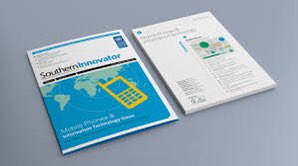
Southern Innovator was initially launched in 2011 with the goal of inspiring others (just as we had been so inspired by the innovators we contacted and met). The magazine seeks to profile stories, trends, ideas, innovations and innovators overlooked by other media. The magazine grew from the monthly e-newsletter Development Challenges, South-South Solutions published by the United Nations Office for South-South Cooperation (UNOSSC) since 2006.

https://sites.google.com/davidsouthconsulting.org/southern-innovators/home

Issue 6’s theme has been decided on: it will focus on Science, Technology and Innovation. For this issue, Southern Innovator is seeking invitations from cutting-edge knowledge and science innovators in the global South to view their work. Time is tight, so don’t miss this opportunity to let the whole global South know about your work. In the past, Southern Innovator has visited green pioneers in Cuba, a smart city in South Korea and an eco-city in China.

Contact me if you wish to receive a copy/copies of the magazine for distribution. Follow @SouthSouth1.

Southern Innovator Issue 1

Southern Innovator Issue 2

Southern Innovator Issue 3

Southern Innovator Issue 4

Southern Innovator Issue 5

“Beautiful, inspiring magazine from UNDP on South-South innovation. Heart is pumping adrenaline and admiration just reading it”

Southern Innovator Issue 6

Innovator Stories and Profiles

Citing Southern Innovator

Finding Southern Innovator

Press Release 1

Press Release 2

Press Release 3

Southern Innovator Impact Summaries | 2012 – 2014

“The e-newsletter Development Challenges, South-South Solutions proved to be a timely and prescient resource on the fast-changing global South, tracking the rise of an innovator culture driven by the rapid adoption of mobile phones and information technology …

“In 2010, work began on the development of the world’s first magazine dedicated to the 21st-century innovator culture of the global South. My goal was to create a magazine that would reach across countries and cultures, meet the UN’s standards, and inspire action. Southern Innovator was the result. Mr. [David] South played a vital role in the magazine’s development from its early conception, through its various design prototypes, to its final global launch and distribution.

“Both the e-newsletter and magazine raised the profile of South-South cooperation and have been cited by readers for inspiring innovators, academics, policy makers and development practitioners in the United Nations and beyond.

“I highly recommend Mr. [David] South as a thoughtful, insightful, analytical, creative and very amicable person who has the unique ability to not only grasp complex problems but also to formulate a vision and strategy that gets things done. … ” Cosmas Gitta, Former Assistant Director, Policy and United Nations Affairs at United Nations Office for South-South Cooperation (UNOSSC) in UNDP

“I think you [David South] and the designer [Solveig Rolfsdottir] do great work and I enjoy Southern Innovator very much!” Ines Tofalo, Programme Specialist, United Nations Office for South-South Cooperation

Team | Southern Innovator Phase 1 Development (2010 – 2015)

According to zoominfo in 2023, Southern Innovator is one of the Popular Searches online for the United Nations Office for South-South Cooperation (UNOSSC).

Like our content? Help contribute to the costs of keeping it online. 

Scan code with your phone and help us out.

https://davidsouthconsulting.org/southern-innovator-scale-up-fundraiser/

ORCID iD: https://orcid.org/0000-0001-5311-1052.

© David South Consulting 2021