Categories
Archive

Gobi Desert Wine to Tackle Poverty and Boost Incomes

By David South, Development Challenges, South-South Solutions

SOUTH-SOUTH CASE STUDY

In the arid Gobi Desert spanning the two Asian nations of China and Mongolia is a bold attempt to make wine and reduce poverty. The environment is harsh, with temperatures swinging from sub-zero winter cold to sweltering summer heat. The desert is also home to high winds and notorious dust storms that plague China’s capital Beijing every year.

China’s wine industry is booming as people have embraced the drink’s perceived health-giving qualities and are using it to celebrate new-found wealth as the economy has flourished. Current wine consumption in China is half a litre per person per year, low compared to the French average of 55 litres a year. But this is growing quickly.

Well-known brands include Great Wall, Dynasty and Changyu (http://www.changyu.com.cn/english/index.html), which is considered the world’s 10th largest wine producer.

One innovative winery is using this wine boom to tackle poverty and increase local wealth.

Chateau Hansen (hansenwine.com) in Inner Mongolia has been operating since the 1980s, but recent expansion and modernization have significantly increased its earning power and the number of people it employs. Located in an area with high levels of poverty, it has developed a successful wine business in the desert by tapping the plentiful water supplies from the Yellow River. The area is now considered one of the best for growing wine grapes in China.

Located near Wuhai city (http://en.wikipedia.org/wiki/Wuhai), 670 kilometres west of Beijing, Chateau Hansen has 250 hectares of Merlot, Cabernet Sauvignon and Cabernet Gernischt grapevines.

The vines are buried under the sand to protect them from the harsh weather in the winter.

“The lowest temperature gets down to is below -20 degrees C (Celsius), but in summer, it can reach 38 or 40 degrees C (102 or 104 F),” Li Aixin, Chateau Hansen’s head of viticulture, told MSNBC. “Here the four seasons are good for the growth of the grapes, but in the winter we need to bury them in the earth” to keep them from freezing. Hansen has been ambitious in its approach. It has a European-style chateau, hotel and even a French wine expert, Bruno Paumard, on site to help with the wine making. The chateau’s cellar now stores 1,000 barrels of wine.

Paumard arrived in China in 2005. He has thrown himself into Chinese culture and tasted and tested the country’s wines. Hansen has produced 400,000 bottles of wine, mostly sold in China, where red wine drinking has become a big part of the culture of celebration.

Hansen sells the majority of its wine to government organizations and regional enterprises. It has seen its profits double to 100 million yuan (US $18 million) in 2011 and hopes sales will double again in 2012.

“Eighty per cent of the market in China is really the local governments who encourage the enterprises in their cities to consume red wine, of a certain brand, at their banquets in the place of Chinese ‘baijiu’ for their incessant and never-ending toasts,” said Paumard, referring to China’s home-grown rice wine. “So it’s actually a market that’s totally unique.”

Hansen’s Cotes du Fleuve Jaune du Desert de Gobi has become one of the biggest award-winning wines in China. It received a bronze medal from the International Wine Challenge of Blaye, near Bordeaux, France.

China now stands as the world’s fifth-largest consumer of wine (International Wine and Spirit Research study) (http://www.iwsr.co.uk/). The market in China is forecast to grow by 54 per cent from 2011 to 2015, adding up to a billion bottles.

A map of China’s vineyards and their terroir or soil conditions shows a diverse wine-making sector (http://www.hansenwine.com/english/vineyardlink.html).

In this busy marketplace, Hansen prides itself on being organic. It also has the goal of turning the arid desert into green vineyards using irrigation from the Yellow River and groundwater. It wants to create employment and raise living standards in the region and is fitting into a national strategy to raise living standards for poor regions.

There is a training programme for the around 400 workers employed by the winery. No pesticides are used and only sheep dung is used as a fertilizer provided by 3,000 sheep on site. Trees also play a role in providing humus (http://en.wikipedia.org/wiki/Humus) for the vines. There is also accommodation in a nearby village for the employees.

There are 250 hectares of vineyards and the grapes are harvested by hand. Expansion began in 2001 when the chateau and winery were built. It is strategically located just 500 metres from an airport and the chateau has a luxury hotel. Around 20,000 people visit a year, according to Hansen’s website, bringing in further income for the winery. The winery also uses Mongolian culture and cuisine as a selling point to attract tourists.

The chief executive of Hansen is Han Jianping, who made his first fortune in real estate development.

Han believes that “the momentum of growth in the wine industry is huge.”

“With a great foundation of more than 1 billion people as we have in China, and (the industry) growing at 20 or 30 per cent a year, there is a huge potential for more growth,” he said.
Republished in 2021 in cnwinenews.com.

Resources

1) China Wine Online: An information service that also produces the China Wine Business magazine and runs the China Wine Study Tour. Website: http://www.winechina.com/en/index.asp

2) The 10th Shanghai International Wine and Spirits Expo 2013: Website: http://www.winefair.com.cn/sugar/en/index.asp

Creative Commons License

This work is licensed under a
Creative Commons Attribution-Noncommercial-No Derivative Works 3.0 License.

We accept payments and donations. We use any funds received to keep content online, or to create new content. Thank you! https://www.paypal.me/davidsouthconsulting.

Scan code with your phone and help us out.

More on the Gobi Desert here:

Development Profile: UNDP In The Southern Gobi Desert | May-June 1998
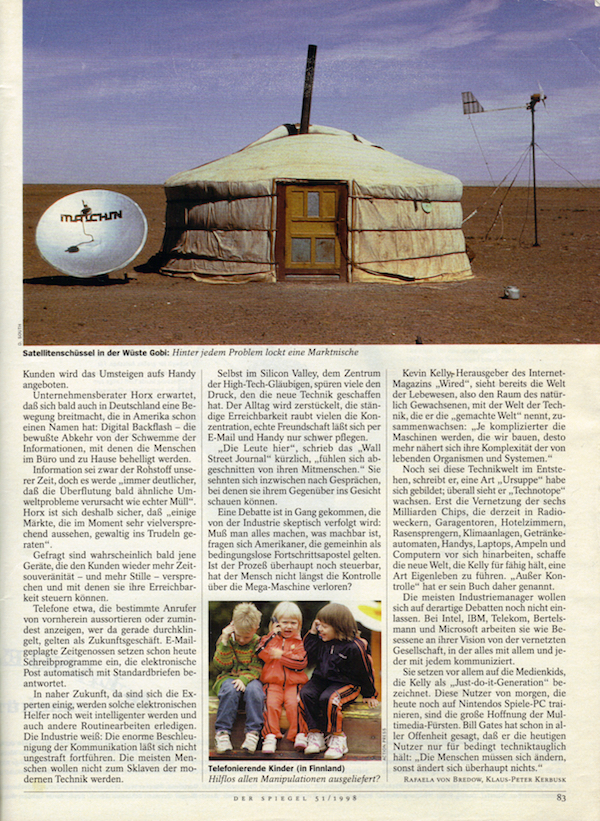
Kommunikation total: Der siebte Kontinent

Wild East 17 Years Later | 2000 – 2017

ORCID iD: https://orcid.org/0000-0001-5311-1052.

© David South Consulting 202421

Categories
Archive Blogroll Southern Innovator magazine

Southern Innovator Magazine

Estimated Reading Time: 2 mins

“What a tremendous magazine your team has produced! It’s a terrific tour de force of what is interesting, cutting edge and relevant in the global mobile/ICT space… Really looking forward to what you produce in issues #2 and #3. This is great, engaging, relevant and topical stuff.”

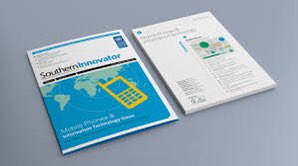
Southern Innovator was initially launched in 2011 with the goal of inspiring others (just as we had been so inspired by the innovators we contacted and met). The magazine seeks to profile stories, trends, ideas, innovations and innovators overlooked by other media. The magazine grew from the monthly e-newsletter Development Challenges, South-South Solutions published by the United Nations Office for South-South Cooperation (UNOSSC) since 2006.

https://sites.google.com/davidsouthconsulting.org/southern-innovators/home

Issue 6’s theme has been decided on: it will focus on Science, Technology and Innovation. For this issue, Southern Innovator is seeking invitations from cutting-edge knowledge and science innovators in the global South to view their work. Time is tight, so don’t miss this opportunity to let the whole global South know about your work. In the past, Southern Innovator has visited green pioneers in Cuba, a smart city in South Korea and an eco-city in China.

Contact me if you wish to receive a copy/copies of the magazine for distribution. Follow @SouthSouth1.

Southern Innovator Issue 1

Southern Innovator Issue 2

Southern Innovator Issue 3

Southern Innovator Issue 4

Southern Innovator Issue 5

“Beautiful, inspiring magazine from UNDP on South-South innovation. Heart is pumping adrenaline and admiration just reading it”

Southern Innovator Issue 6

Innovator Stories and Profiles

Citing Southern Innovator

Finding Southern Innovator

Press Release 1

Press Release 2

Press Release 3

Southern Innovator Impact Summaries | 2012 – 2014

“The e-newsletter Development Challenges, South-South Solutions proved to be a timely and prescient resource on the fast-changing global South, tracking the rise of an innovator culture driven by the rapid adoption of mobile phones and information technology …

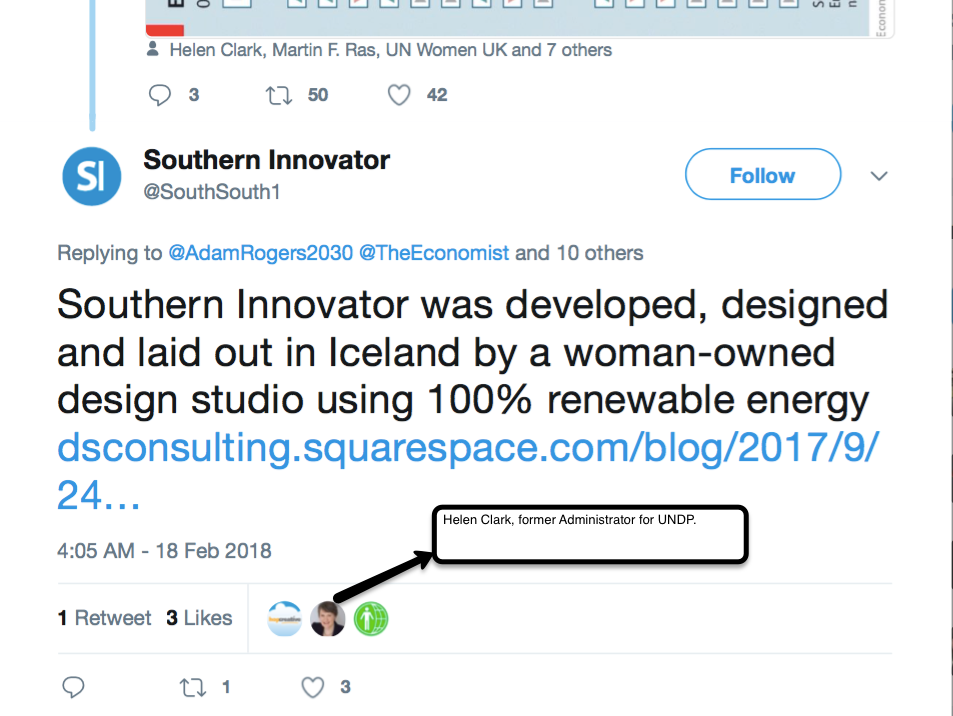
“In 2010, work began on the development of the world’s first magazine dedicated to the 21st-century innovator culture of the global South. My goal was to create a magazine that would reach across countries and cultures, meet the UN’s standards, and inspire action. Southern Innovator was the result. Mr. [David] South played a vital role in the magazine’s development from its early conception, through its various design prototypes, to its final global launch and distribution.

“Both the e-newsletter and magazine raised the profile of South-South cooperation and have been cited by readers for inspiring innovators, academics, policy makers and development practitioners in the United Nations and beyond.

“I highly recommend Mr. [David] South as a thoughtful, insightful, analytical, creative and very amicable person who has the unique ability to not only grasp complex problems but also to formulate a vision and strategy that gets things done. … ” Cosmas Gitta, Former Assistant Director, Policy and United Nations Affairs at United Nations Office for South-South Cooperation (UNOSSC) in UNDP

“I think you [David South] and the designer [Solveig Rolfsdottir] do great work and I enjoy Southern Innovator very much!” Ines Tofalo, Programme Specialist, United Nations Office for South-South Cooperation

Team | Southern Innovator Phase 1 Development (2010 – 2015)

According to zoominfo in 2023, Southern Innovator is one of the Popular Searches online for the United Nations Office for South-South Cooperation (UNOSSC).

Like our content? Help contribute to the costs of keeping it online. 

Scan code with your phone and help us out.

https://davidsouthconsulting.org/southern-innovator-scale-up-fundraiser/

ORCID iD: https://orcid.org/0000-0001-5311-1052.

© David South Consulting 2021

Categories
Archive Blogroll Southern Innovator magazine Special Unit for South-South Cooperation United Nations Development Programme

Southern Innovator Issue 2

Launched in May 2011, the new global magazine Southern Innovator (ISSN 2222-9280) is about the people across the global South shaping our new world, eradicating poverty and working towards the achievement of the Millennium Development Goals (MDGs). 

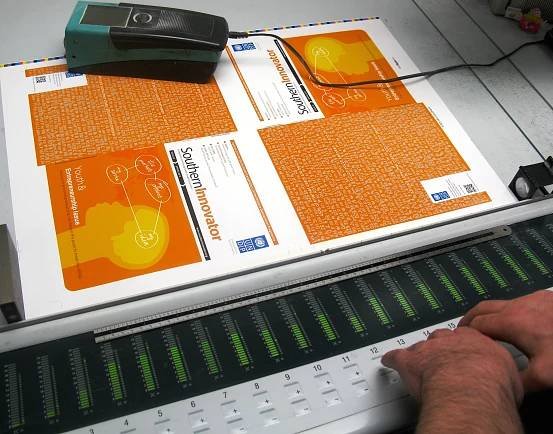
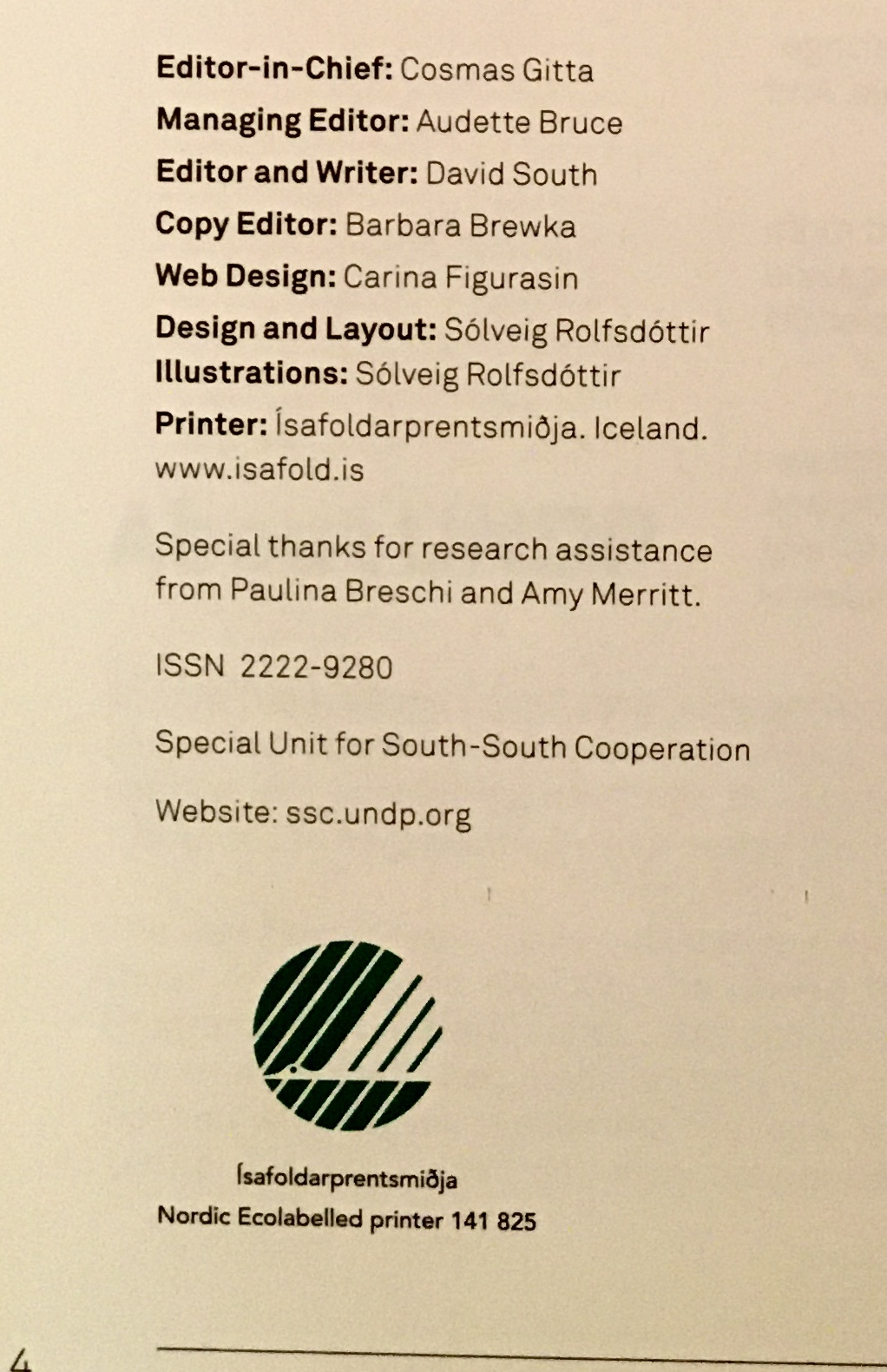
The second issue of Southern Innovator was printed in 2012 in Iceland by Ísafoldarprentsmiðja, a Nordic Ecolabelled printer (ISSN 2227-0523/2222-9280).

https://www.nordic-ecolabel.org

Team | Southern Innovator Phase 1 Development (2010 – 2015)

They are the innovators.

Follow the magazine on Twitter @SouthSouth1. 

Southern Innovator Issue 1

Southern Innovator Issue 2

Southern Innovator Issue 3

Southern Innovator Issue 4

Southern Innovator Issue 5

If you would like hard copies of the magazine for distribution, then please contact the United Nations Office for South-South Cooperation (UNOSSC)(https://www.unsouthsouth.org/2014/12/25/southern-innovator-magazine/).

Copies of Southern Innovator can be viewed at the UN Library Geneva.

https://davidsouthconsulting.org/southern-innovator-scale-up-fundraiser/

ORCID iD: https://orcid.org/0000-0001-5311-1052.

© David South Consulting 2021

Categories
Archive Blogroll data Southern Innovator magazine Special Unit for South-South Cooperation United Nations Development Programme

Southern Innovator Issue 1

Launched in May 2011, the new global magazine Southern Innovator (ISSN 2222-9280) is about the people across the global South shaping our new world, eradicating poverty and working towards the achievement of the Millennium Development Goals (MDGs). 

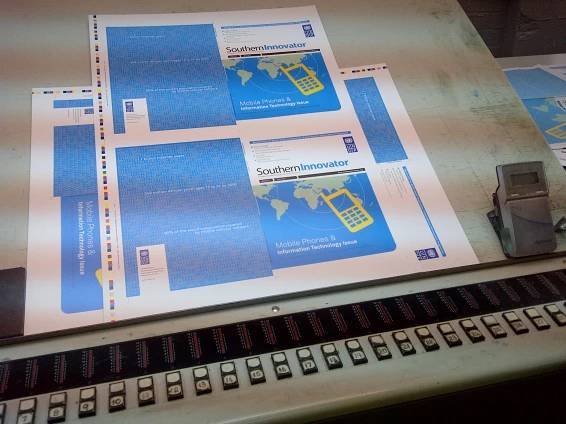
The first issue of Southern Innovator was printed in 2011 in the UK by Wyndeham Grange Ltd. UK (ISSN 2222-9280).

Team | Southern Innovator Phase 1 Development (2010 – 2015)

They are the innovators.

Follow the magazine on Twitter @SouthSouth1. 

Southern Innovator Issue 2

Southern Innovator Issue 3

Southern Innovator Issue 4

Southern Innovator Issue 5

If you would like hard copies of the magazine for distribution, then please contact the United Nations Office for South-South Cooperation (UNOSSC)(https://www.unsouthsouth.org/2014/12/25/southern-innovator-magazine/).

Copies of Southern Innovator can be viewed at the UN Library Geneva.
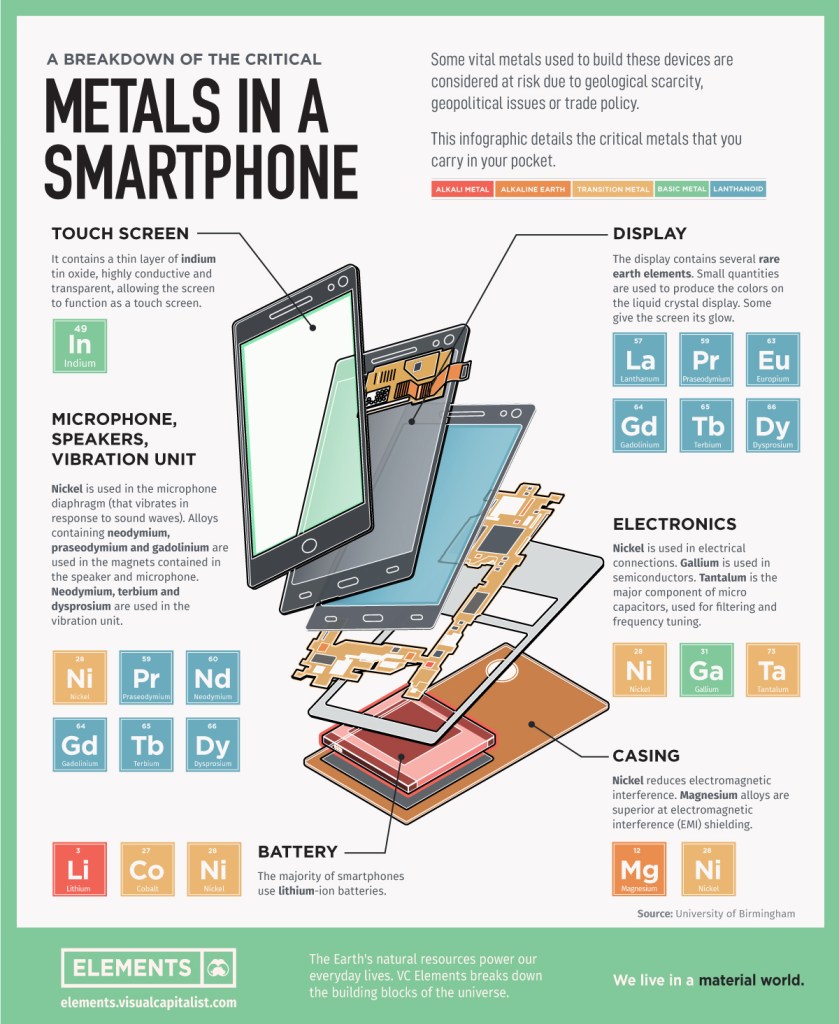
The elements that make up a smartphone from Visual Capitalist.

https://davidsouthconsulting.org/2021/07/30/disrupted-whatever-happened-to-southern-innovator-issue-6/

https://davidsouthconsulting.org/2021/07/30/issue-6-will-launch-in-autumn-2014-get-on-board-28-july-2014/

https://davidsouthconsulting.org/2021/12/20/press-release-1-southern-innovator/

https://davidsouthconsulting.org/2021/12/20/press-release-2-southern-innovator/

https://davidsouthconsulting.org/2021/12/20/press-release-3-southern-innovator/

https://davidsouthconsulting.org/2021/03/05/southern-innovator-issue-2/

https://davidsouthconsulting.org/2021/03/05/southern-innovator-issue-3/

https://davidsouthconsulting.org/2021/03/05/southern-innovator-issue-4/

https://davidsouthconsulting.org/2021/03/05/southern-innovator-issue-5/

https://davidsouthconsulting.org/southern-innovator-scale-up-fundraiser/

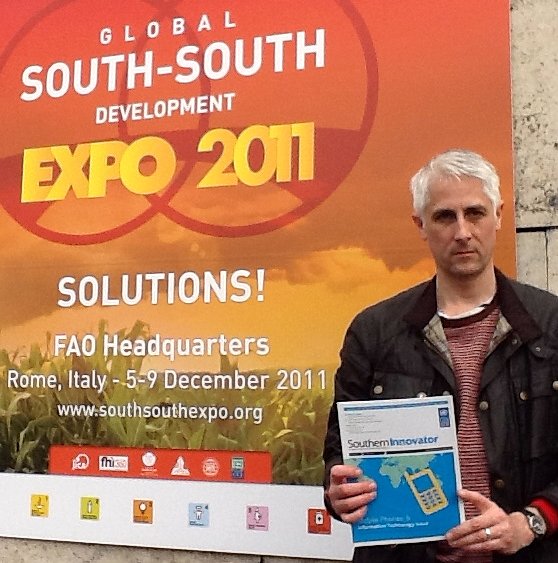
Southern Innovator Editor and Writer David South with Issue 1 at the GSSD Expo 2011, hosted at the FAO Headquarters, Rome, Italy. Photo: Jill Lawless
Creative Commons License

This work is licensed under a
Creative Commons Attribution-Noncommercial-No Derivative Works 3.0 License.

ORCID iD: https://orcid.org/0000-0001-5311-1052.

© David South Consulting 2024