Tag: Goal 1

  • Cool Food for the Poor

    Cool Food for the Poor

    By David SouthDevelopment Challenges, South-South Solutions

    SOUTH-SOUTH CASE STUDY

    A whole wave of high-tech, innovative products are now being developed and marketed for the world’s poor. These products are designed to raise the quality of life of poor people and treat them as a market with real needs, rather than a mass of people to be ignored.

    One of the major challenges of the 21st century is finding ways to make these products affordable for the poor – bringing significant development gains in health and quality of life – without increasing the burden on the world’s environment. In India, this vast new market is rapidly coming alive, with new marketing channels reaching deep into the country’s slums and aided by a lively media scene turning people on to new products.

    India is turning its large number of well-trained engineers and product designers to the task of making relevant products for the country’s millions of rural poor.

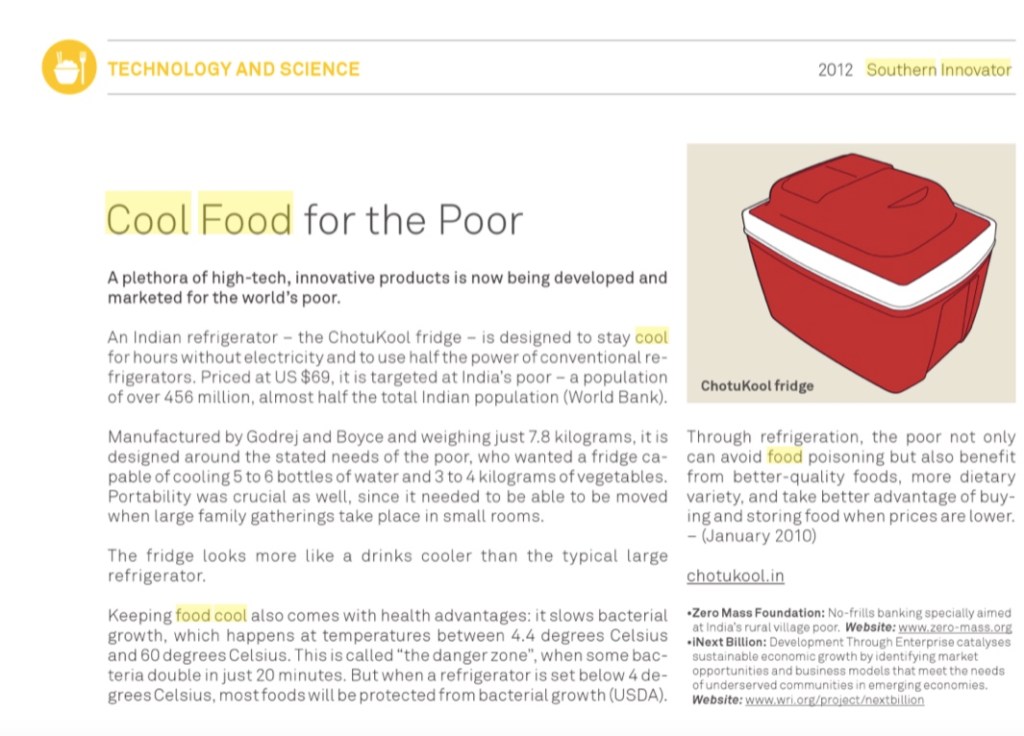
    An Indian refrigerator – the ChotuKool fridge (http://www.new.godrej.com/godrej/godrej/index.aspx?id=1) – is designed to stay cool for hours without electricity and to use half the power of conventional refrigerators. Priced at US $69, it is targeted at India’s poor – a population of over 456 million, almost half the total Indian population (World Bank).

    Manufactured by Godrej and Boyce and weighing just 7.8 kilograms, it is designed around the stated needs of the poor, who wanted a fridge capable of cooling 5 to 6 bottles of water and 3 to 4 kilograms of vegetables. Portability was crucial as well, since it needed to be moved when large family gatherings take place in small rooms.

    As a video shows (http://www.youtube.com/watch?v=dtCRlynp0bM), the fridge looks more like a drinks cooler than the typical large refrigerator. It works by replacing the standard compressor motor found in most fridges with a battery-powered heat exchanger.

    A group of village women was involved in the design process from the beginning. The fridges are being distributed by a microfinance group.

    While people in developed countries take it for granted they will have both a refrigerator and a steady supply of electricity, the world’s poor have few options for keeping food cool.

    There is a strong economic advantage to refrigeration: many farmers have to throw away vegetables or sell at high discounts because they are quickly spoiling in the heat. By refrigerating, they can keep them fresh and get the higher price. For somebody living on less than US $2 a day, this is a big economic boost.

    Keeping food cool also comes with health advantages: it slows bacterial (http://en.wikipedia.org/wiki/Bacteria) growth, which happens at temperatures between 4.4 degrees Celsius and 60 degrees Celsius. This is called ‘the danger zone’, when some bacteria double in just 20 minutes. But when a refrigerator is set below 4 degrees Celsius, most foods will be protected from bacteria growth (USDA).

    Through refrigeration, the poor not only can avoid food poisoning, but also benefit from better quality foods, more dietary variety, and better take advantage of buying and storing food when prices are lower. For example, eggs in a refrigerator can last for up to five weeks. Fresh fish can be stored unfrozen for up to two days.

    The quality of life improvements from refrigeration are obvious. But with conventional refrigerators costly and dependent on a steady supply of electricity, the poor will not buy them.

    An Indian government survey in 2007/08 found daily pay in rural areas ranged from 45 rupees a day (US $1) to 110 rupees a day (US $2.40). This means the ChotuKool fridge costs between one and two month’s wages for a rural worker.

    Some argue even the cost of the ChotuKool is still too prohibitive to many poor people. And there are other initiatives out there to offer low-tech solutions to cooling food.

    In Nigeria, grassroots inventor Mohammed Bah Abba has designed a cooler called the Zeer (http://practicalaction.org/?id=zeerpots). It works like this: two ceramic earthenware pots of different sizes are arranged one inside the other. The space between the pots is filled with wet sand and kept moist. The user then places their drinks or vegetables inside and covers with a damp cloth. As the water from the moist sand evaporates (http://en.wikipedia.org/wiki/Evaporation), the air inside the centre pot is cooled several degrees, enough to preserve some foods and drinks.

    Another Indian innovation is also targeting the rural poor consumer: a water filter. Called the Swach water purifier (http://www.tata.com/article.aspx?artid=TtOdcdNuSRk=), it is aimed at households and stands just less than 1 metre (just over 3 feet) in height. The filter is designed to do bulk water purification and is the result of 10 years’ research. It is aimed at the one billion people in the world who do not have access to clean water. It will sell for 1,000 rupees (US $21.50).

    It is very slick and modern in design, with a mix of white and clear plastic, resembling the commonly used Brita (http://www.brita.net/) water filters found in many homes. It works by using ash from rice milling to filter out bacteria. The ash is impregnated with silver particles to kill germs that cause diarrhoea, cholera and typhoid. It is able to purify 3,000 litres of water before the cartridge needs to be replaced.

    It is manufactured by the Indian industrial giant Tata.

    “It was the pressing need of people trapped by the effects of natural disasters such as the (2004 Indian Ocean) tsunami that saw the deployment of one of the earliest versions of this product,” said Tata vice chairman S. Ramadorai. “A key part was the insight that a natural material like rice husk can be processed to significantly reduce water-borne germs and odours when impure water is passed through it.”

    Published: January 2010

    Resources

    1) Indian Firms Shift Focus to the Poor: An article in the Wall Street Journal on this new trend. Website: http://online.wsj.com/article/SB125598988906795035.html?mod=relevancy

    2) Zero Mass Foundation: No-frills banking specially aimed at India’s rural village poor. Website: http://www.zero-mass.org/

    3) iNext Billion: Development Through Enterprise catalyzes sustainable economic growth by identifying market opportunities and business models that meet the needs of underserved communities in emerging economies. Website: http://www.wri.org/project/nextbillion

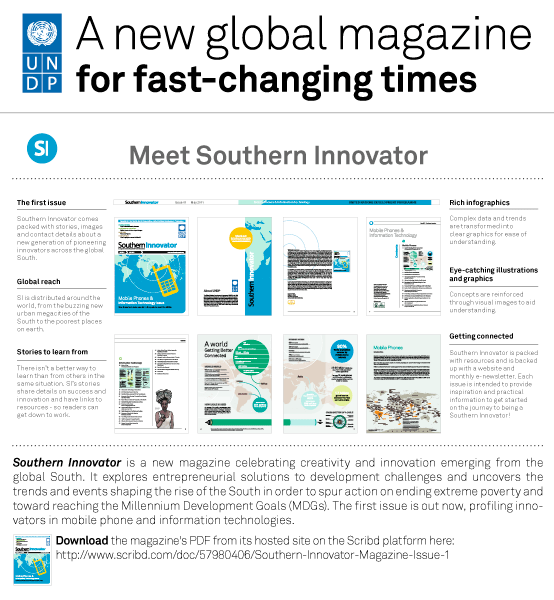
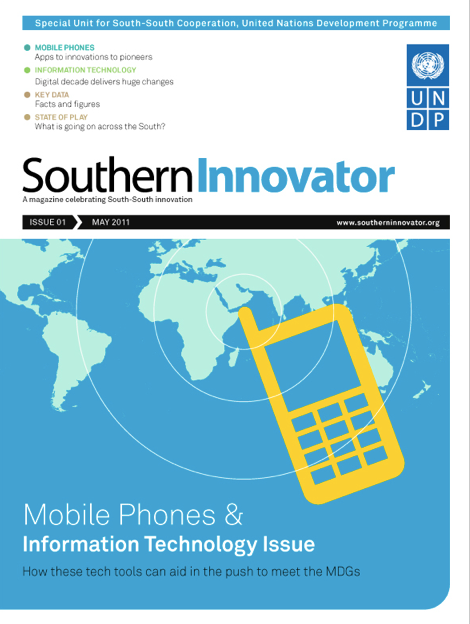
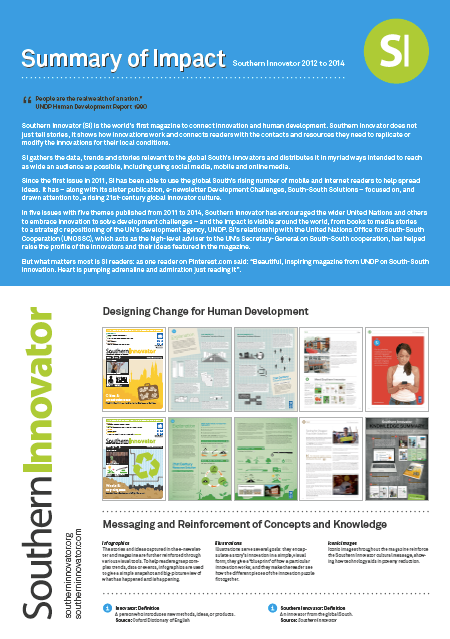
    Development Challenges, South-South Solutions was launched as an e-newsletter in 2006 by UNDP’s South-South Cooperation Unit (now the United Nations Office for South-South Cooperation) based in New York, USA. It led on profiling the rise of the global South as an economic powerhouse and was one of the first regular publications to champion the global South’s innovators, entrepreneurs, and pioneers. It tracked the key trends that are now so profoundly reshaping how development is seen and done. This includes the rapid take-up of mobile phones and information technology in the global South (as profiled in the first issue of magazine Southern Innovator), the move to becoming a majority urban world, a growing global innovator culture, and the plethora of solutions being developed in the global South to tackle its problems and improve living conditions and boost human development. The success of the e-newsletter led to the launch of the magazine Southern Innovator.  

    Creative Commons License

    This work is licensed under a
    Creative Commons Attribution-Noncommercial-No Derivative Works 3.0 License.

    ORCID iD: https://orcid.org/0000-0001-5311-1052.

    © David South Consulting 2023
  • Shoes with Sole: Ethiopian Web Success Story

    Shoes with Sole: Ethiopian Web Success Story

    By David SouthDevelopment Challenges, South-South Solutions

    SOUTH-SOUTH CASE STUDY

    Ethiopia’s bustling capital, Addis Ababa, is experiencing a building and business boom. Foreign investors and Ethiopia’s entrepreneurial and widespread global diaspora are investing again in the country. But Ethiopia still relies for most of its foreign currency wealth on exports of unprocessed coffee beans and leather hides — a model that leaves the bulk of the profits made outside of Ethiopia.

    But one shoe company provides an example of a home-grown business that is finding success in the international marketplace, while repatriating most of the profits for its goods back to Ethiopia, creating jobs and local wealth.

    Ethiopia’s economy is mostly dependent on agriculture, which accounts for 60 percent of exports and 80 percent of employment (CIA World Factbook). The country has a tiny private sector and high youth unemployment. It is difficult to find funding for small businesses. Yet, because of the high population growth, the country needs to create more jobs.

    The Economist magazine has forecast Ethiopia’s economy will grow by 7 percent in 2010, becoming the fifth fastest growing economy in the world, and on course to surpass Kenya to become East Africa’s biggest economy. While this sounds impressive, the country has to run hard to create enough jobs to meet its growing population and still faces significant food security problems.

    One company, soleRebels, is combining a clever twist on a local tradition – recycling rubber from old truck tires into shoes, locally known as selate shoes – with sophisticated design concepts and high quality craftsmanship to make a global footwear hit.

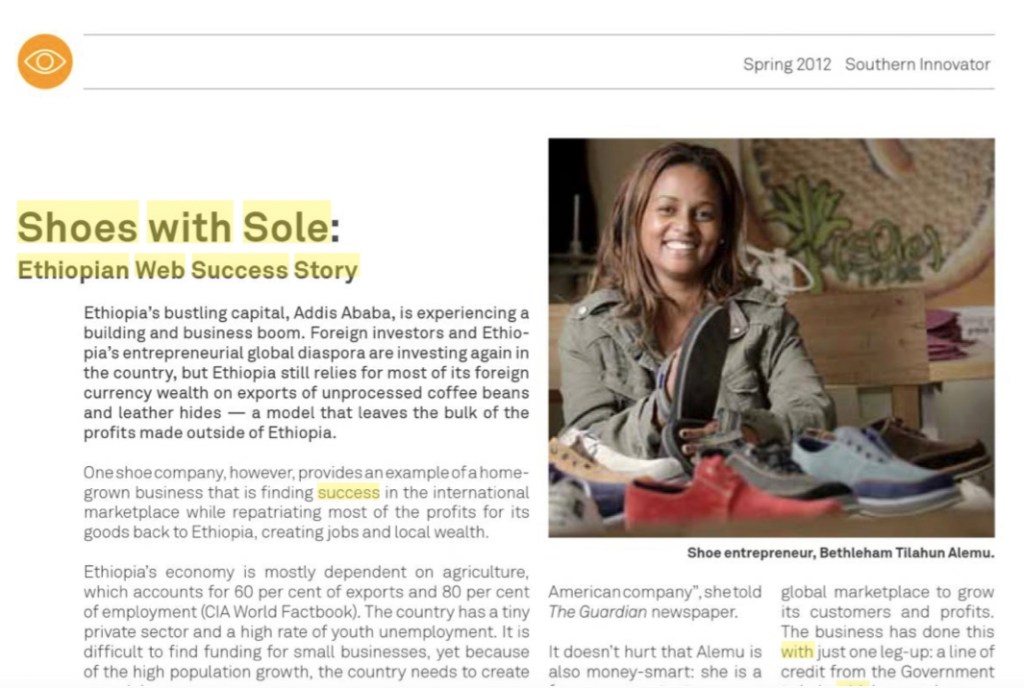
    Co-founder and managing director Bethleham Tilahun Alemu, a 30-year-old African web-vending entrepreneur, has turned this local craft into a global fashion design hit by adding colourful cotton and leather uppers to the tire shoes. The recycled rubber shoes come in many styles: from handmade flip-flops to boat shoes, loafers, and athletic trainers resembling the popular American sports shoe, Converse (http://www.converse.com/).

    SoleRebels’ (http://solerebelsfootwear.weebly.com/index.html) shoe factory is on the outskirts of Addis Ababa in the historic village of Zenabework. Despite its location, it is reaching the international markets through online retailers like Amazon.com. Shipments take between three and five days to arrive in the United States.

    And the secret to this small start-up’s success? Apart from great shoes and funky design, Alemu puts it down to this: “We are sitting in Addis Ababa but acting like an American company,” she told The Guardian newspaper.

    It doesn’t hurt that Alemu is also money-smart: she is a former accountant.

    Started five years ago, soleRebels now employs 45 full-time staff making 500 pairs of shoes a day. The shoes cost between US $33 and US $64. They are also being sold in Japan and the United Kingdom on Amazon’s shoe-selling website, http://www.javari.co.uk.

    In 2010, Alemu hopes soleRebels will make US $481,000. But soleRebels has an even more ambitious goal: to become “the Timberland or Sketchers of Africa.”

    Timberland (http://www.timberland.com/home/index.jsp), an American shoe and boot maker, has been a pioneer in high-quality leather footwear, breaking new ground in adopting green manufacturing processes and exploiting the power of the web by allowing customers to customise their footwear.

    SoleRebels has cleverly exploited the advantages of the global marketplace to grow its customers and profits. The business has done this with just one leg-up: a line of credit from the government to help with large orders. With 6.2 million people out of a population of 80 million needing food aid, Ethiopia is still highly dependent on international aid. But Alemu is showing there is a way to build a sustainable successful business.

    Inspiration for Alemu came about when she was thinking what Ethiopian product could be produced in a sustainable way. She remembered the sandals worn in the country.

    “Recycling is a way of life here – you don’t throw things away that you can use again and again,” she said. “I wanted to build on that idea.”

    Ethiopian shoe makers have had a difficult time in recent years, trying to compete with cheaper Chinese imports. But rather than just trying to come up with a shoe that was even cheaper than the Chinese ones, soleRebels decided to build a business selling shoes to the more lucrative export market.

    Alemu reasoned that good design would attract a higher price. She did research on the internet to find out which designs worked well and what were the latest trends in footwear.

    This research formed the basis of her range of shoes, which have catchy names like Class Act or Gruuv Thong. The sandals and flip-flops are either cotton-covered or leather covered. The Urban Runner shoe sells best and is inspired by the Converse All Star sneaker.

    SoleRebels has a regular supplier of old truck tires and inner tubes and has women weave and dye the cotton, jute and hemp uppers for the shoes. Almost all materials are locally sourced. Old army uniforms are cannibalized for their camouflage pattern.

    SoleRebels has also been canny in seeking Fair Trade certification (http://www.fairtrade.org.uk) to help with marketing and selling the shoes.

    To increase the market for the shoes, Alemu bombarded American retailers with emails and shoe samples to pique their interest. Because of the U.S. African Growth and Opportunity Act (http://www.agoa.gov), soleRebels’ shoes can be imported into the United States duty-free: a big price advantage in the U.S. marketplace which has helped grab the interest of retailers like Whole Foods and Urban Outfitters.

    This interest soon snowballed, and people were placing orders through the soleRebels website (http://solerebelsfootwear.weebly.com/index.html). Orders come by courier from Ethiopia in about a week to the United States.

    With all this interest building, Amazon, the leviathan online retailer, decided to become a customer for the shoes. Online retailing has been a huge boost to the growth of soleRebels. According to Alemu, it has enabled the company “to understand the market needs and demands in real time” — a huge advantage to a start-up company far away from its markets.

    There is another advantage to using the web to grow a business: it has enabled soleRebels to take greater control of the whole process. The company negotiates directly with retailers, handling orders and credit collection, and this makes sure most of the profits of the business return to Ethiopia.

    Making soleRebels quickly profitable has been a benefit to its workers. Starters at the company make US $1.92 a day, while experienced shoe-makers earn US $11 a day (a good wage in Ethiopia).

    “In Ethiopia we have become used to taking money from the West, to always getting help,” Alemu told the Guardian. “That does not make for a sustainable economy. We need to solve our own problems.” And what does success enable them to do? SoleRebels are now building a solar-powered factory to replace their current workshop. And there is a steely pride in the firm’s success: “People buy soleRebels because they are good, not just because they are green or from Ethiopia,” Alemu said. “Our product speaks for itself.”

    Published: January 2010

    Resources

    1) The online service CafePress is a specially designed one-stop shop that lets entrepreneurs upload their designs, and then sell them via their online payment and worldwide shipping service. Website: http://www.cafepress.com/cp/info/sell/

    2) Once inspired to get into the global fashion business, check out this business website for all the latest news, jobs and events. Website: http://us.fashionmag.com/news/index.php

    3) iFashion: This web portal run from South Africa has all the latest business news on fashion in Africa and profiles of up-and-coming designers. Website: http://www.ifashion.co.za/index.php?option=com_frontpage&Itemid=1

    4) The red dot logo stands for belonging to the best in design and business. The red dot is an internationally recognised quality label for excellent design that is aimed at all those who would like to improve their business activities with the help of design. Website: http://www.red-dot.de

    5) Dutch Design in Development: As a matchmaker, DDiD puts together European clients, Dutch designers and small and medium-sized enterprises in developing countries. The designers share their knowledge of European consumer tastes, product development, design and quality standards. Website: http://www.ddid.nl

    6) ShopAfrica53: Pledging in its motto to reach “every African nook and cranny,” ShopAfrica53is an online shopping portal similar to famous brands like Amazon or eBay, but focused entirely on giving African traders the ability to sell across the continent and to the world online. Website: http://www.shopafrica53.com/

    7) Havianas: A Brazilian global fashion success with its rubber flip flops. Website: http://www.havaianas.com/

    8) Arise Africa Fashion Week: The place to be seen and to see. Website: http://www.africanfashioninternational.com/africaFashionWeek/

    As featured in Southern Innovator Issue 2: Youth and Entrepreneurship. Designed and laid out in Iceland using 100% renewable energy.

    https://davidsouthconsulting.org/2022/11/19/african-culture-as-big-business/

    https://davidsouthconsulting.org/2021/02/09/african-fashions-growing-global-marketplace-profile/

    https://davidsouthconsulting.org/2021/01/05/afropolitan-african-fashion-scene-bursting-with-energy/

    https://davidsouthconsulting.org/2021/01/25/creating-green-fashion-in-china/

    https://davidsouthconsulting.org/2022/10/09/fashion-closes-gap-between-catwalk-and-crafts/

    https://davidsouthconsulting.org/2022/11/17/fashion-recycling-how-southern-designers-are-re-using-and-making-money/

    https://davidsouthconsulting.org/2022/11/16/favela-fashion-brings-women-work/

    https://davidsouthconsulting.org/2022/10/24/made-in-africa-fashion-brand-pioneers-aim-for-global-success/

    https://davidsouthconsulting.org/2022/06/27/new-swimwear-for-plus-size-women-in-brazil/

    https://davidsouthconsulting.org/2021/10/04/putting-quality-and-design-at-the-centre-of-chinese-fashion/

    https://davidsouthconsulting.org/2020/11/24/too-black/

    Creative Commons License

    This work is licensed under a
    Creative Commons Attribution-Noncommercial-No Derivative Works 3.0 License.

    ORCID iD: https://orcid.org/0000-0001-5311-1052.

    © David South Consulting 2023

  • Web 2.0 to the Rescue! Using Web and Text to Beat Shortages in Africa

    Web 2.0 to the Rescue! Using Web and Text to Beat Shortages in Africa

    By David SouthDevelopment Challenges, South-South Solutions

    SOUTH-SOUTH CASE STUDY

    The beep-beep of a received text on a mobile phone is now becoming a much-needed lifeline to Africans. Zimbabweans, who continue to struggle every day with inflation that has shot to 3,731 percent (Zimbabwe Central Statistical Office), have usd African ingenuity and 21st century technology to survive another day.

    New website services have become a literal lifeline for millions suffering from economic and social hardships. At least four new web-based services have stepped in to link expatriate Zimbabweans working outside the country with their relatives back home. All share a common service: people can log into the websites and shop and select what they like to purchase or transfer to their relativs. Once a purchase has been made, a message is sent by mobile phone text to Zimbabwe, either transferring money credits or credits for fuel, food or medical services.

    Mukuru.com is the most elaborate and ambitious of the services, and is expanding across Africa (currently in Zimbabwe and South Africa, it is expanding to Kenya, Malawi and Zambia). Started in 2006, it now boasts 8,000 customers and is averaging 1,200 orders per month, ranging from money transfers to fuel and digital satellite television subscriptions. A voucher number sent by mobile phone also allows the recipient to swap a PIN (personal identification) number for coupons redeemable at certain garages.

    One of the great advantages of this new technology is its ability to give real-time updates and tracking throughout the transaction. Senders are informed about every stage of the transaction, right up until the gas is gushing into the car’s tank.

    “Basically anybody who is able to work will do their best to support family back home,” said Mukuru’s UK-based Nix Davies. “Mukuru’s birth is the result of our inability to sit back and watch, as well as the desperate need to help those back home. The power of an instant SMS being able to provide value to its recipient is inspiring.

    “Launching Mukuru.com has not been without its hurdles,” continues Davies. “Promoting a brand with one foot in the first world and having to deal with third world inconsistencies is always challenging.” Mukuru also has plans to expand into travel, freight, mail (letters are printed out and sent within Zimbabwe), and music to help local musicians.

    Over at another website, Zimbuyer.com, expatriate Zimbabweans can buy groceries for their relatives at home and make sure that the money is not spent on the wrong thing.
    “They’re a lot of people who left Zimbabwe and, for example, have left their children over there,” a spokesman told the BBC’s website. “But sometimes the money they have sent home for the care of the children is diverted into other things. With our service, people buy the stuff – and we deliver them to the recipients so they know what they’re buying.”

    Zimbuyer’s website is similar to food shopping websites in developed countries. Prices are listed in British pounds, but the food items are Zimbabwean staples like sadza maize, Cashel Valley Baked Beans and Ingrame Camphor Cream – all delivered to people living in Harare, Chitungwiza and Bulawayo.Zimbuyer’s most popular products are cooking oil and sugar, while “power generators are proving popular because the electricity always goes off nearly every day.”

    Another service is Zimland.com, which has a network of 52 supermarkets nationwide. As it starkly boasts on its website, it gives Zimbabweans abroad “a quick and efficient way of ensuring their families do not starve in Zimbabwe.”

    The Zimland Superstore offers a variety of hampers of food and essentials for families, from the Madirativhange to the Mafidhlongo to the Hotch Potch Delux, and boys and girls ‘Back to School’ hampers.

    Yet another service has taken on the problem of paying for medical and health services. Beepee Medical Services allows Zimbabweans to pay for doctors’ appointments, prescription drugs and surgery for relatives.

    Launched in September 2006 by Dr Brighton Chireka and his wife Prisca, a nurse, the business is small but growing.

    “Mostly we’re running it as a service to help people,” said Dr Chireka, adding he gets about two consultation bookings a day (US $30 an appointment). “It should be able to pay for itself… We’ve employed people who are working full-time in Zimbabwe. This side (the UK), it’s on a part-time basis to answer the calls.”

    Please visit the following link for more information:

    An up-to-date report from The Economist magazine on the country situation in Zimbabwe: www.economist.com

    Published: November 2008

    https://davidsouthconsulting.org/2022/10/14/anti-bribery-website-in-india-inspires-others/

    https://davidsouthconsulting.org/2022/06/24/dabbawallahs-use-web-and-text-to-make-lunch-on-time/

    https://davidsouthconsulting.org/2022/03/07/david-south-consulting-ranked-in-the-top-10-million-websites/

    https://davidsouthconsulting.org/2021/05/25/ger-mongolias-first-web-magazine-and-a-pioneering-web-project-for-the-united-nations-12-january-2016/

    https://davidsouthconsulting.org/2022/06/25/shoes-with-sole-ethiopian-web-success-story/

    https://davidsouthconsulting.org/2022/10/21/social-networking-websites-a-way-out-of-poverty/

    https://davidsouthconsulting.org/2021/05/14/un-ukraine-web-development-experience-2000/

    https://davidsouthconsulting.org/2022/11/18/web-2-0-networking-to-eradicate-poverty/

    Creative Commons License

    This work is licensed under a
    Creative Commons Attribution-Noncommercial-No Derivative Works 3.0 License.

    ORCID iD: https://orcid.org/0000-0001-5311-1052.

    © David South Consulting 2023

  • Info Ladies and Question Boxes: Reaching Out to the Poor

    Info Ladies and Question Boxes: Reaching Out to the Poor

    By David SouthDevelopment Challenges, South-South Solutions

    SOUTH-SOUTH CASE STUDY

    Quick access to accurate and useful information is crucial for development. With the remarkable spread of information around the world via the Internet – one of the greatest achievements of the 21st century – more than 1.5 billion people now use the Web to boost their incomes and opportunities (Internet World Stats).

    For those lucky enough to be able to afford regular access to the Internet – as well as a computer and electricity – this new technology is a powerful tool for economic and social advancement. But what about people who are overlooked by technology companies because they are too poor, or too remote, or who are illiterate?

    Two initiatives are bringing the benefits of information and communication technologies (ICTs) to the poor and the illiterate in ingenious ways.

    Bangladesh’s (http://www.virtualbangladesh.com) ‘Info Lady’ scheme is the brainchild of D.Net (Development Research Network) (http://www.dnet-bangladesh.org/), a non-profit organization formed in 2001 to use information and communication technology (ICT) for economic development.

    Info Ladies typically come equipped with a mobile phone, laptop computer, Internet modem, headphone, webcam, digital camera, and photo printer. They roam around remote villages on bicycles and are a one-stop access point for the rural poor for information, telephone calls and digital services like photography. And Info Ladies can also be Info Men, though this seems to be a problem because women have an easier time being invited into people’s homes.

    One Info Lady is Luich Akhter Porag. She travels the countryside on her bicycle, equipped with a laptop computer, modem and a mobile phone, and can provide a commercial phone service, photography, livelihood information, knowledge services, international and local voice calls, video and animation and Internet resources.

    When farmer Dula Miah had two of his cows bitten by a rabid dog, he was puzzled as to what to do. According to Bangladesh’s Daily Star newspaper, Info Lady Luich Akhter Porag came by to help. By using a software programme called ‘Jeeon’ (http://www.dnet.org.bd/MultimediaSoftware.php?BookType=8) – software designed to provide nine essential services to rural people –  Porag was able to identify the solution: a vaccine and a trip to the Sundarganj Veterinary Hospital.

    Around 24 Info Ladies are now working in various villages in the districts of Gaibandha, Noakhali and Satkhira. The concept is effective: after receiving training in how to use the laptop computer and resources, they are dispatched on bicycles to remote villages to connect the poor and uneducated with crucial information.

    D.Net started with something they called ‘Mobile Lady’ which used just mobile phones, but became frustrated with the limits of the service and decided to combine the phones with a laptop computer, effectively turning the women into mobile ‘telecentres’ (http://en.wikipedia.org/wiki/Telecentre).

    Dr Ananya Raihan, executive director of D.Net, told The Daily Star that each Info Lady now earns between Tk 2,500 (US $36) and Tk 20,000 (US $290) per month. It has proven to be a good business for rural women, he said. And things are set to grow: “We are planning to increase the number of info ladies to 1,000 by year-end (2009).”

    While traditional technology companies have stayed away from rural villages because it isn’t worth it for them to go there, the Info Ladies are simultaneously making money in the villages and connecting people to the outside world.

    Porag says she has provided services to around 6,000 villagers.

    “Now I earn more than Tk 2,500 (US $36) to Tk 3,500 (US $50) per month after becoming an info lady,” said Porag who started working as an Info Lady in June 2007.

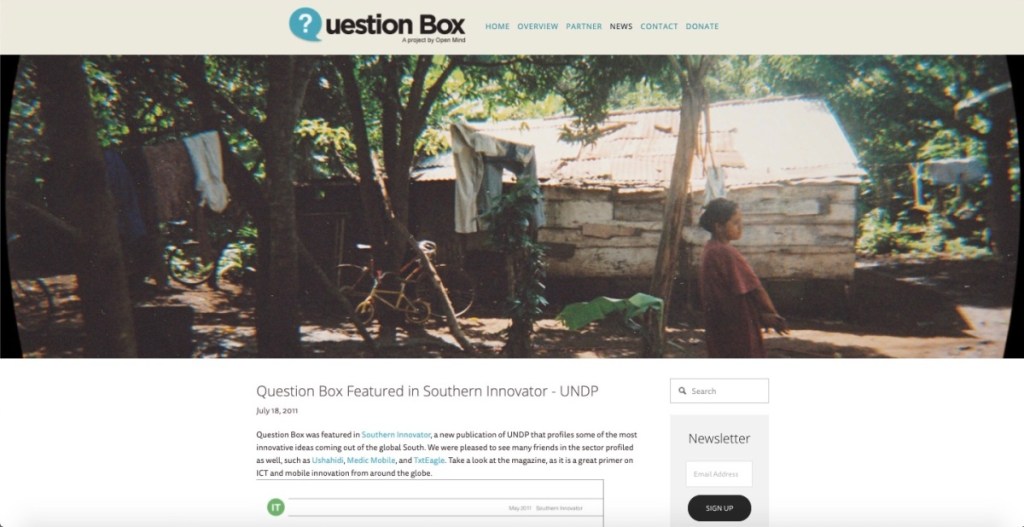
    Another initiative that is filling the gap between the needs of the poor and powerful information technologies is the Question Box (www.questionbox.org).

    Pioneered in India – home to the largest number of illiterate people in the world: 304.11 million (Human Development Report) – the idea is brilliantly simple. An intercom-like white tin box with a phone inside is placed in a village’s public areas. Using the existing phone networks, the user just has to hit a simple button to get an operator at the other end. The operator sits in front of an Internet-enabled computer. The user just asks their question, and the operator turns these questions into search queries. When the computer’s search engine gives back answers, the operator selects the best one and then replies in the user’s native language and in layman’s terms.

    The Open Mind Program’s Question Box Project opened its first Box in September 2007 and now operates in Pune, Maharashtra.

    It has also expanded to Uganda, where the Question Box and Grameen Foundation (http://www.grameenfoundation.org/) have partnered to bring what they call AppLab Question Box (AQB) to rural Uganda. AQB is a live, local-language telephone hotline service that brings the Internet to the fields and market stalls in Uganda where there are no computers.

    The Question Box is based on an idea from Rose Shuman, a business and international development consultant. Shuman had become frustrated that with all the clever people and vast sums of money going into information technology, few were developing low-cost ways to take the power of computers to the people.

    Following the constant improvement approach favoured in information technology, the Box is now in its third iteration. One of the adjustments made has been the switch to solar power for the boxes because the electricity grid was too unreliable, according to Shuman.

    Published: September 2009

    Resources

    1) The Question Box project in photos. Website:http://www.flickr.com/photos/73495762@N00/ and Website: http://www.questionbox.org/ and blog: Website:http://questionblog.posterous.com/
    2) Info Dev (www.infodev.org) has a quick guide to low-cost computing devices and initiatives for the developing world. Website: http://www.infodev.org/en/Publication.107.html

    Question Box in Southern Innovator Magazine.

    https://davidsouthconsulting.org/2022/11/19/cooking-up-a-recipe-to-end-poverty/

    https://davidsouthconsulting.org/2021/09/23/david-south-consulting-books-1997-2014/

    https://davidsouthconsulting.org/2022/10/24/flurry-of-anti-poverty-innovations/

    https://davidsouthconsulting.org/2021/04/06/gobi-desert-wine-to-tackle-poverty-and-boost-incomes/

    https://davidsouthconsulting.org/2022/11/22/happy-nigeria-west-african-nation-has-good-attitude/

    https://davidsouthconsulting.org/2022/06/10/illiterate-get-internet-at-touch-of-a-button/

    https://davidsouthconsulting.org/2022/11/20/kiva-new-gateway-of-loans-for-the-poor/

    https://davidsouthconsulting.org/2022/10/21/local-animation-a-way-out-of-poverty/

    https://davidsouthconsulting.org/2022/11/20/old-adage-gets-new-life/

    https://davidsouthconsulting.org/2022/10/21/social-networking-websites-a-way-out-of-poverty/

    https://davidsouthconsulting.org/2021/03/05/southern-innovator-issue-1/

    https://davidsouthconsulting.org/2021/01/23/a-steppe-back-economic-liberalisation-and-poverty-reduction-in-mongolia/

    https://davidsouthconsulting.org/2021/01/23/the-sweet-smell-of-failure-the-world-bank-and-the-persistence-of-poverty/

    https://davidsouthconsulting.org/2022/11/20/venezuelas-currencies-promote-cooperation-not-competition/

    https://davidsouthconsulting.org/2022/11/18/web-2-0-networking-to-eradicate-poverty/

    Creative Commons License

    This work is licensed under a
    Creative Commons Attribution-Noncommercial-No Derivative Works 3.0 License.

    ORCID iD: https://orcid.org/0000-0001-5311-1052.

    © David South Consulting 2023