Categories
Archive Development Challenges, South-South Solutions Newsletters

Session 2: Social Policy: Country and Regional Perspectives

A Report from the UN Conference on the Social and Political Dimensions of the Global Crisis: Implications for Developing Countries (12-13 November 2009)

Organised by the United Nations Research Institute for Social Development (UNRISD), Geneva, Switzerland. Held at the Palais des Nations.

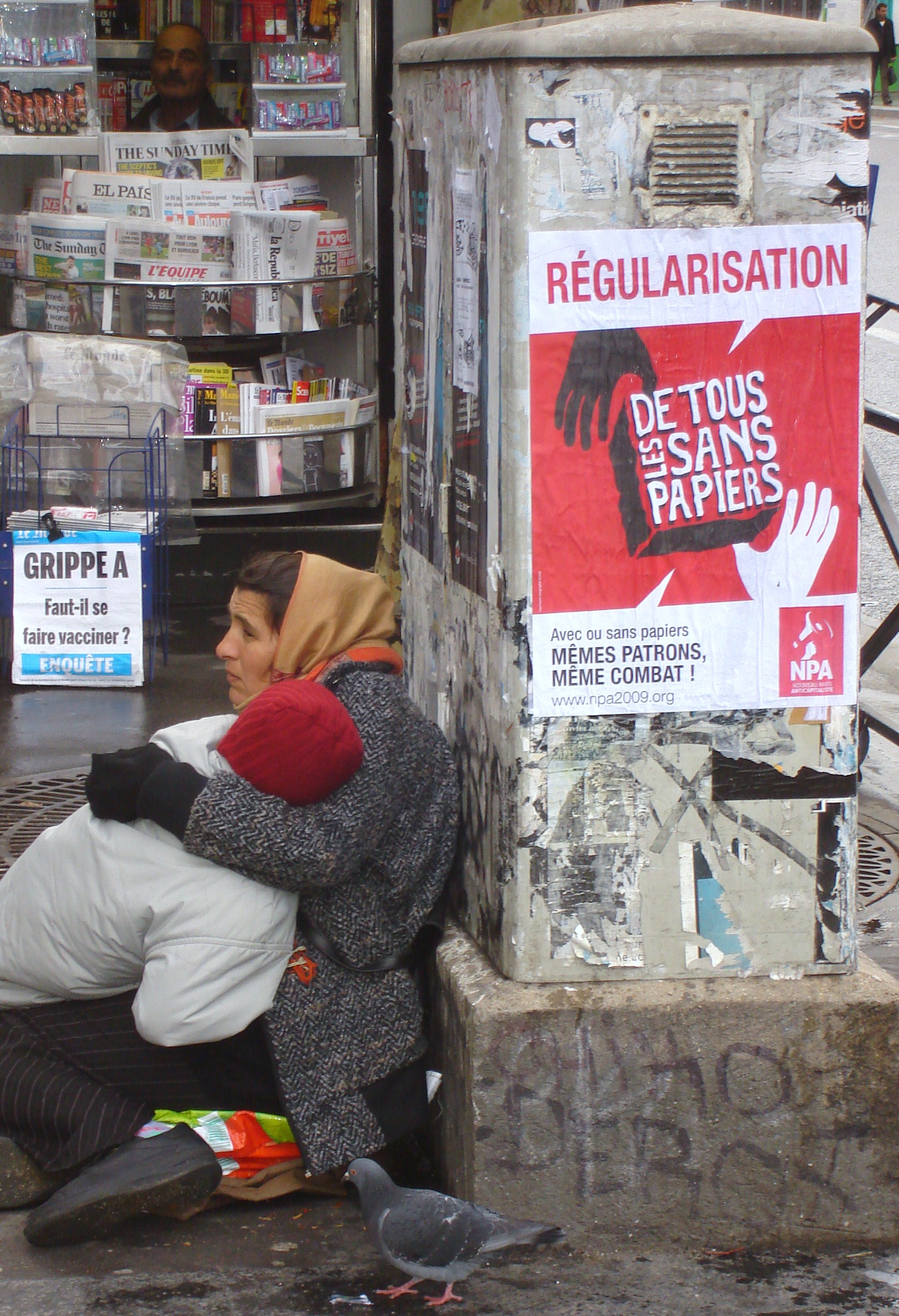
Just as now (2021) 2009 was a year in which the questions revolved around receiving a vaccine (for H1N1) and how best to affirm a person’s identity and citizenship.

Session 2: Social Policy: Country and Regional Perspectives

China’s role in the crisis and the recovery was tackled by UNRISD’s director, Dr. Sarah Cook. China has travelled a long way from 30 years ago, when it was poor and isolated. Twenty years ago it faced severe internal crisis, but by the Asian economic crisis in 1997 it was economically dynamic enough to help pull the rest of Asia out of the crisis. Cook noted China now sits at the cusp of becoming a global leader and this poses the question: Can China save the global financial system?

The country was able to draw on its substantial cash reserves to launch a large fiscal stimulus of 4 trillion Yuan (US $600 bn). This has meant most of the current growth in China is being generated by the stimulus. And the main driving factor behind government policy is social stability, with the state and bureaucracy playing key roles in setting priorities.

Thailand in 1997 was compared with India today by Govind Kelkar, from the Institute for Human Development. India saw a big fall in domestic demand, and lost confidence in short-term growth. There has been a 30 percent growth in women in low-pay occupations, while skilled workers have lost jobs, and temporary workers at construction sites have all but disappeared. Even India’s prosperity darling, information technology, has experienced a slowing in growth. Many IT workers had their pay cut 50 percent and were seconded to NGOs to keep them busy.

Women and children are entering the workforce to help families survive. And more people are working longer hours for less pay.

The Indian Government has been able to offer help to the rural, agricultural sector through fertiliser and food subsidies. The NREGA (http://nrega.nic.in/) (National Rural Employment Guarantee Act) is reaching 50 million households. However, mostly men have benefited because the work on offer is skilled work.

The Indian stimulus for rural areas is a direct result of the rural poor vote being a large lobby in the world’s biggest democracy. And while the rapid growth of the past decade has helped the urban upper class, the government is being forced back into inclusive growth because of the pressure of politics. This contrasts with Thailand in 1997, where many women went into sex work, and the government targeted its stimulus at the urban market because the rural vote was not powerful.

Shiree (http://www.shiree.org/), Bangladesh, an NGO supporting the Government of Bangladesh to achieve the Millennium Development Goal targets on income poverty and hunger, called for a portion of the bank bailouts to go to the poor.

It reported Bangladesh was unprepared for the crisis and has not responded well. Interestingly, Shiree believes any organisation targeting the extreme poor should be obligated to graduate them from poverty within three years and to keep them out of extreme poverty for at least three to five years.

Another country that has been caught out by the global economic crisis is Senegal. Elizabeth Paul from the University of Liege and Ousmane Faye from African Population and Health Research Center (APHRC), pointed out subsidies for fuel and food hurt the public finances but didn’t help the poor. Within Senegal, 44 percent of people believe poverty in households has grown. While at first Senegal didn’t think it would be affected, the consequences of the downturn have been many: tourism is down, foreign direct investment (FDI) is down, exports are down 13 percent, there is a reduction in aid flows, and overall government revenue is down.

Senegal is a member of the West African Economic and Monetary Union (http://www.uemoa.int/index.htm) and found its hands tied when it came to how it could respond because it must stick to the terms of the Union. Overall, the researchers observed, the government has not reflected on the crisis and just focused on the public finances, with no special measures for the crisis.

Funding pensions is a hot topic all around the world. While the legacy of well-funded public pensions in developed countries after the Second World War had become much-admired, recent years have shown these funds to be inadequately funded to meet need. This has led to many governments seeing a solution in privatising public pension funds. But the cases of Argentina and Nigeria – both inspired by the experience of Chile – offers lessons in what not to do.

Camila Arza, Latin American School of Social Sciences  (FLACSO) Argentina (http://www.flacso.org.ar/), explained how much of the new money was absorbed by administration costs, rather than expanding the fund. It also failed to keep up with the expansion of informal employment and extending coverage to these workers.

The experience of the Nigerian pension system was presented by Bernard H Casey, of the University of Warwick. Inspired by reforms in Chile (unfortunately just around the time Chile was abandoning those reforms), the Nigerian pension scheme only covered 10 percent of the workforce, comprising some of the public sector and large private sector firms. Yet most employment in Nigeria is informal and outside the pension system.

The new fund had such high administration fees, around 40 percent of what is saved over a lifetime was eaten up by the fees. Worse, the fund invested in the highly volatile stock market and earned returns that were 5 percent below the inflation rate: a loss of 60 percent during the lifetime of the pension.

Casey concluded it is a mistake to use pension reform to spur economic development; economic development should instead create well-funded pensions. This sort of massive mismanagement of government programmes has the effect of generating significant public cynicism in the government’s ability to run social programmes.

A Report from the UN Conference on the Social and Political Dimensions of the Global Crisis: Implications for Developing Countries (12-13 November 2009)

Session 2: Social Policy: Country and Regional Perspectives

Session 3: Social Policy: Global Perspective

Session 4: Political Economy Dimensions of Crisis

Relevant stories previously covered in Development Challenges, South-South Solutions:

Accessing Global Markets Via Design Solutions (https://davidsouthconsulting.wordpress.com/south-south-case-studies/development-challenges-south-south-solutions/accessing-global-markets-via-design-solutions/)

Info Ladies and Question Boxes: Reaching Out to the Poor (https://davidsouthconsulting.wordpress.com/south-south-case-studies/development-challenges-south-south-solutions/info-ladies-and-question-boxes-reaching-out-to-the-poor/)

This work is licensed under a Creative Commons Attribution 4.0 International License.

ORCID iD: https://orcid.org/0000-0001-5311-1052.

© David South Consulting 2021
Categories
Archive

Icelandic Credit Crunch Demonstrations 2008

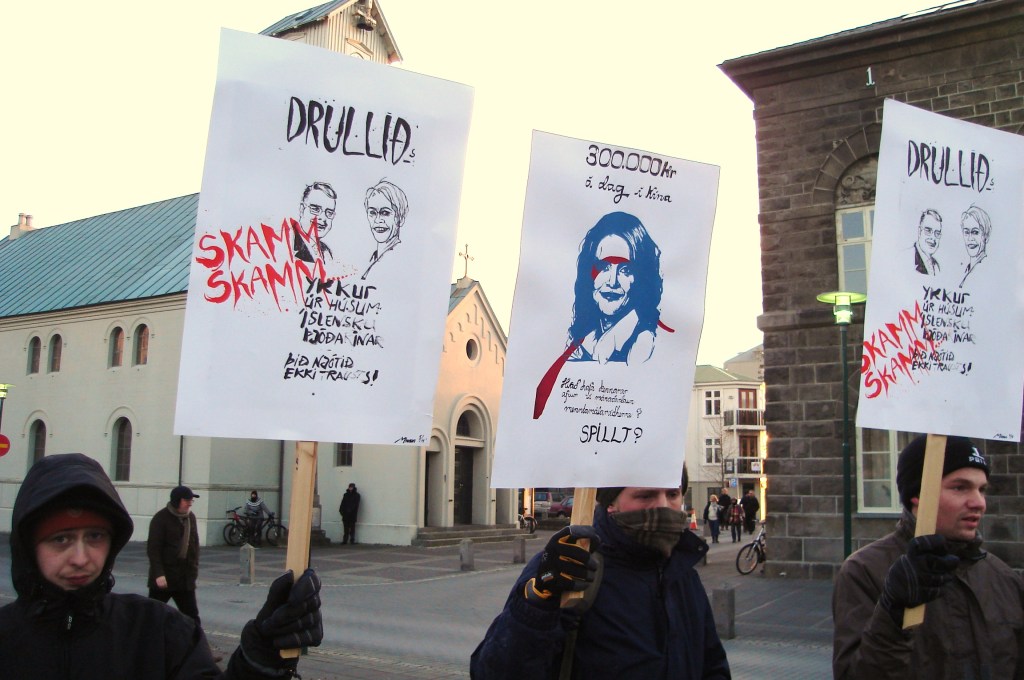
Icelandic Humour Targets UK PM
Tensions were high as the Global Financial Crisis (2007-2008) roiled the world economy.

The unfolding Global Financial Crisis (GFC) in 2008, while caused by the collapse of the financial system, also presented an opportunity to apply the lessons learned in the late 1990s. The crisis was a roller coaster ride and provided a front row seat to what happens when too much debt and fraud overwhelms the financial system. A conference in Switzerland on African trade opportunities in 2008 was disrupted by the crisis as participants received frantic calls from London and New York and grabbed their bags and fled. Later that year I joined Associated Press foreign correspondent Jill Lawless in Reykjavik, Iceland as demonstrations erupted resulting from the collapse of the country’s banks.

Icelandic Humour Targets UK PM

Further Reading:

Learn more about the demonstrations and why they occurred (and find links to Jill Lawless’ on-the-ground reports from the demonstrations and the crisis) here: https://en.wikipedia.org/wiki/2009_Icelandic_financial_crisis_protests

Icelandic police tear gas protesters

By VALUR GUNNARSSON and JILL LAWLESS – Jan 22, 2009

Crisis response media from David South Consulting:

Team | Southern Innovator Phase 1 Development (2010 – 2015)

More on the Global Financial Crisis response: A Report from the UN Conference on the Social and Political Dimensions of the Global Crisis: Implications for Developing Countries (12-13 November 2009)

Just as now (2021) 2009 was a year in which the questions revolved around receiving a vaccine (for H1N1) and how best to affirm a person’s identity and citizenship.

This work is licensed under a Creative Commons Attribution 4.0 International License.

ORCID iD: https://orcid.org/0000-0001-5311-1052.

© David South Consulting 2021

Categories
Archive

UNRISD Blog

A Report from the UN Conference on the Social and Political Dimensions of the Global Crisis: Implications for Developing Countries (12-13 November 2009)

Organised by the United Nations Research Institute for Social Development (UNRISD), Geneva, Switzerland. Held at the Palais des Nations.

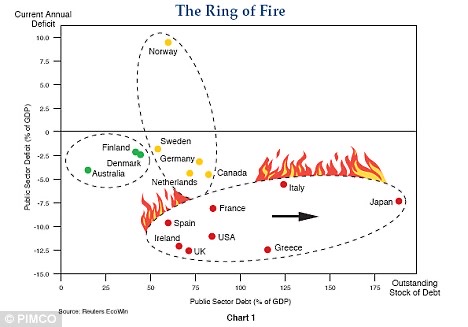
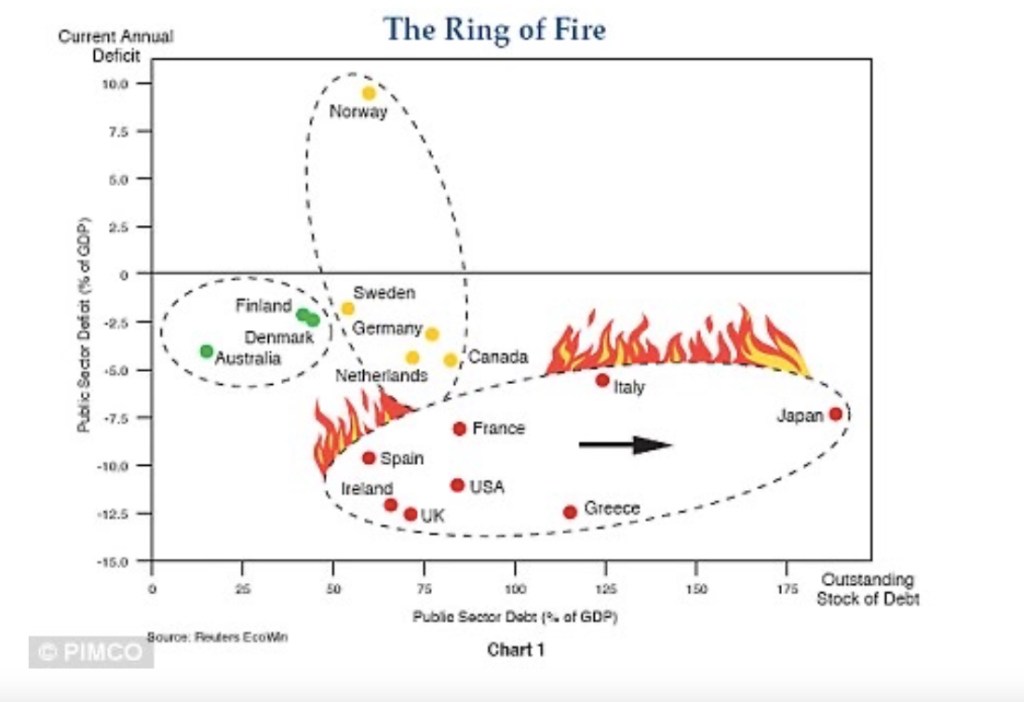
Just as this chart showed at the time of the Global Financial Crisis, the countries in “The Ring of Fire” have experienced exceptional turbulence and turmoil in the years after the crisis. For example, the UK has had austerity budgets, a no-growth economy, Brexit and the ‘shock therapy’ of the COVID-19 pandemic. The US, on the other hand, has clashed with its allies, seen a new cold war emerge with rivals China and Russia, and experienced significant domestic unrest, culminating in the storming of its seat of Government, the Capitol.
Just as now (2021) 2009 was a year in which the questions revolved around receiving a vaccine (for H1N1) and how best to affirm a person’s identity and citizenship. Photo: David South
Iceland saw its banking system collapse during the Global Financial Crisis, sparking demonstrations (October 2008-2011) and the “Pots and Pans Revolution”. Photo: David South

A conference in Geneva struck a pessimistic note on the current global financial crisis and any hope for a new social and economic order. The conference asked “whether current policy reforms are conducive to a transformative social change or if they only reproduce the status quo.”

A March 2009 IMF report on the downturn’s affect on the Global South and developing countries found that “fluctuating commodity prices, high fuel costs, the rise in food prices in addition to a decrease in remittances, foreign direct investment and aid flow could mean an increase in the financing needs of low-income countries by at least US $25 billion.”

The presenters at the conference painted a picture of a robust neo-liberal economic order that is already in the process of dusting itself off from the crisis and restoring its dominance.

Bob Jessop, from the University of Lancaster, captured the paralysis of opposition to the neo-liberal order by saying “They are busy doing it and we are busy talking about it.”

To paraphrase philosopher Friedrich Nietzsche, that which does not kill us makes us stronger. Neo-liberalism may in fact be strengthened by the crisis, according to presenters. It will evolve and take on new forms, they argued.

The world’s business elites have an enormous capacity to re-shape the rules of the economic game back in their favour. While the massive state support to the banking sector had led some to believe governments were restoring faith in public investments, in fact state support is seen as “timely, targeted and temporary.”

When asked about the future as the crisis passes and countries come out of recession, the presenters believed this was a short-term recovery, and that far worse economic crises would be coming in the next five to 10 years.

Andrew Martin Fischer, from the Institute for Social Studies at Erasmus University, believes the harmful effects of the bailouts will be pushed to the periphery over the next five to 10 years, harming the poor. He also believes a major financial crisis is brewing in China. He called ‘China the fault line in the future.’

The powerful, he pointed out, displaced the costs of their mistakes onto other people. Proponents of different approaches had missed the moment because they were not able to present off-the-shelf strategies that could be deployed in a crisis on short notice. Thus, they had left the field open to neo-liberal solutions.

The global crisis in the short-term has not been worse because of unprecedented global cooperation. Keynsian measures have been used to solve the crisis, but are also used to preserve Wall Street. Also, the enormous contribution of growth in China and India means there are other sources of wealth in the world than just the North.

Getting back to normal should not be what we are doing, the panellists concluded at the conference’s final session. Governments should look at new opportunities for social policy. The panellists were disturbed that the International Monetary Fund (IMF) is seen as part of the solution. This means deep cuts in public expenditure are coming. There will not be a trickle down of wealth and the imbalances from before the crisis will remain. In short, the system was not working before the crisis.

Some policy suggestions put forward included: rural income guarantees, managed migration to support development goals, making a gender perspective critical to development. Governments should take a preventive approach to tackle future crises. Unfortunately, it now seems no money is left to address these problems. Yet business as usual is not an option with so many inequalities and imbalances.

“This conference on the social and political consequences of crisis is a critical subject for debate at this juncture,” said UNRISD’s director, Dr. Sarah Cook. “We are now at a point where many countries, particularly in the North, are emerging out of the severe shock of immediate crisis. Discussions of alternative policies and institutional arrangements at national and global levels may become less urgent; the status quo is reasserting itself and the space for ideas and policies that offer the possibilities of more stable, sustainable and equitable development will quickly shrink.”

Session 1: Impacts, Coping Strategies and Livelihoods

Session 2: Social Policy: Country and Regional Perspectives

Session 3: Social Policy: Global Perspective

Session 4: Political Economy Dimensions of Crisis

Southern Innovator Magazine was developed from 2008-2010 in London, New York and Iceland by the United Nations in response to the Global Financial Crisis and was launched in 2011.

Business Insider has reproduced a fascinating presentation about the crisis put together by the French bank, Societe Generale (SocGen). The presentation can be found here: http://www.businessinsider.com/socgen-prepare-yourself-for-the-worst-case-scenario-2009-11#first-it-starts-with-sky-high-public-debt-1

From 1997 to 1999, I worked as the head of communications for the United Nations mission in Mongolia. The country was already experiencing a severe economic crisis as a result of its transition to free markets and democracy from the Soviet economic system. The scale of the economic collapse following the fall of communism was described at the time as the worst peacetime, post-WWII economic collapse. On top of this challenge, the Asian economic crisis erupted.

You can read the Mongolia Update 1998 book I wrote here: http://www.scribd.com/doc/20864541/Mongolia-Update-1998-Book. It shows how chaotic events are in the middle of a major crisis. Some of the key lessons we learned during this time include: 1) transparency: trust was critical and all our work was done under the full glare of public and media scrutiny, 2) action: with our existing budgets we made sure to keep doing and spending to hire people, 3) strategy: to encourage the growth of businesses and innovation, in particular the take-up of new information technologies.

This work is licensed under a Creative Commons Attribution 4.0 International License.

ORCID iD: https://orcid.org/0000-0001-5311-1052.

© David South Consulting 2021