Development Profile: UNDP in the Southern Gobi Desert
In late May UNDP visited its environment and poverty projects in Omnogobi or South Gobi on the border with China and in the heart of the Gobi Desert. The aimag (province) is home to 45,000 people spread over a territory of 165,000 kilometers. It is a harsh environment where temperatures can plummet to minus 40 degrees Celsius in winter and shoot up to plus 40 in summer. What is striking about the capital of Omnogobi, Dalanzadgad, is how well things are working. It is a garden capital – despite being in the desert the central boulevard is covered in trees – and trade with China has brought a prosperity for some herdsmen, many of whom buzz around the town on Planeta motorcycles. The offices of the Malchin television company are hidden by a bouquet of white satellite dishes – it is not an uncommon sight to see a ger with a satellite dish in South Gobi.
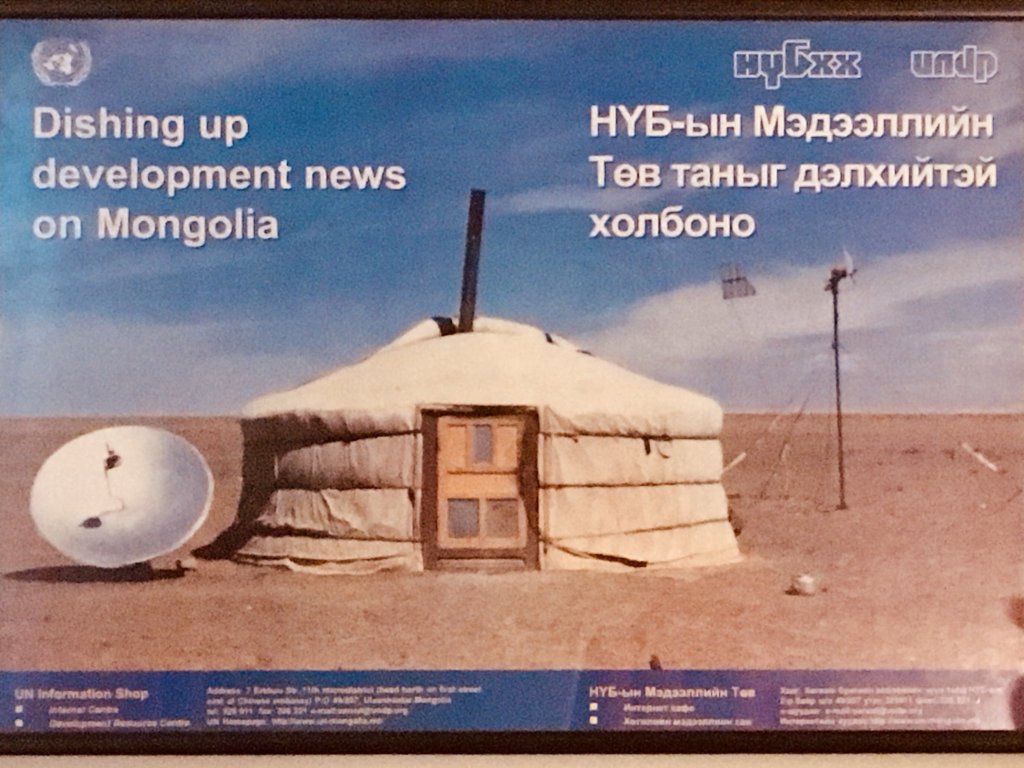
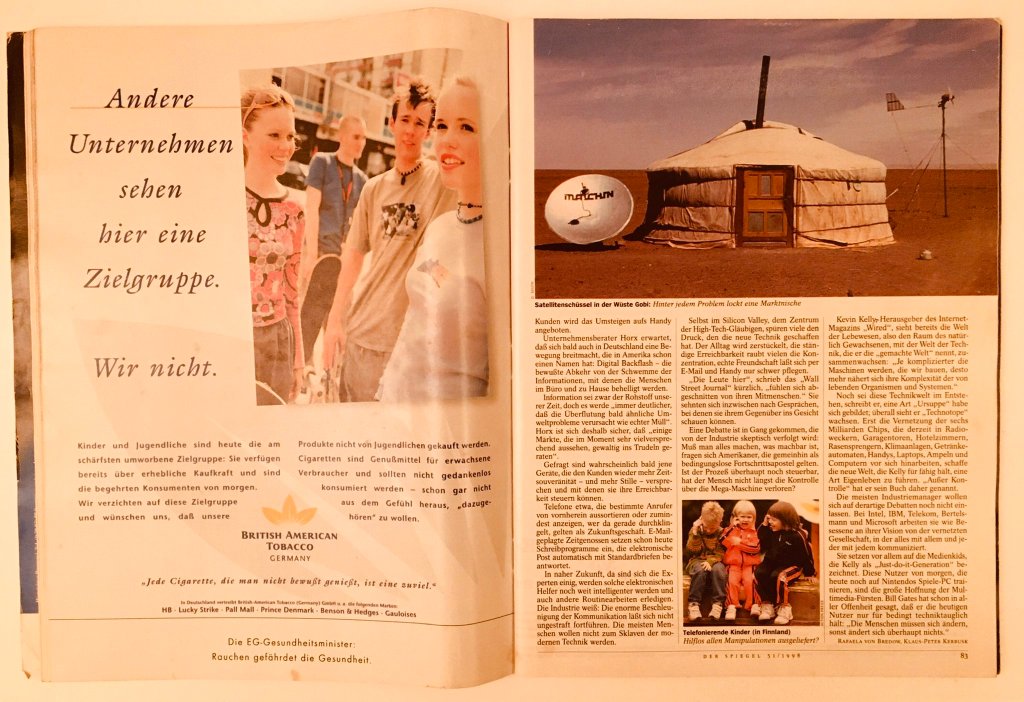
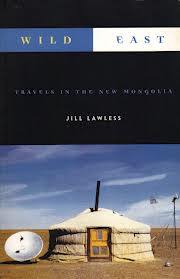
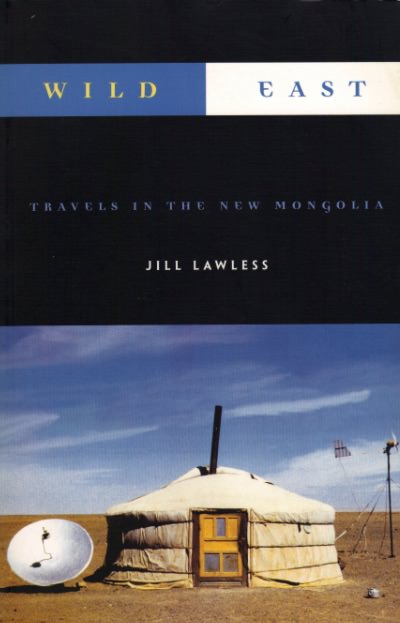
“Dishing up development news on Mongolia”: a UNDP Mongolia Communications Office poster campaign from the late 1990s. Photo: David South. In 1998 Der Spiegel’s “Kommunikation total” issue profiled the global connectivity revolution underway and being accelerated by the Internet boom of the late 1990s. It chose my picture of a satellite dish and a ger in the Gobi Desert to symbolise this historic event.
Der Spiegel is a German weekly news magazine and is one of Europe’s largest publications of its kind. It chose my photo taken in the Gobi Desert for its profile of the Internet revolution in 1998.
English translation: “Total communication: the seventh continent – The cell phone society was just the beginning: Experts see a new continent emerging in the spheres of the Internet. The information elite live here, surrounded by PCs, pagers and power books. The multimedia industry is becoming the key industry of the 21st century – with serious consequences for society.” (http://t-off.khd-research.net/Spiegel/10.html)
Electricity in the air – 85 women discover the Women’s Development Fund
The Mongolian Human Development Report singled out South Gobi for having the highest poverty incidence in Mongolia (41.9 per cent). While this ranking is hotly debated by locals who say it is a statistical anomaly resulting from their low population, there is no question life is hard in the Gobi.
In a crowded room in the Governor’s building, 85 of the poorest women in Dalanzadgad have gathered to hear about an innovative UNDP-initiated fund. The meeting, organised by the NGO the Liberal Women’s Brain Pool, is introducing the Women’s Development Fund. Many questions are asked as to why some of the women were passed over when the local government started distributing poverty alleviation funds.
With the assistance of the British Government who donated Tg 12 million, these women are getting a chance. The Women’s Development Fund was founded in partnership with the Poverty Alleviation Programme Office to take account of the unique role women have in the prosperity of families. Support is key and the women will be assisted by community activists as they develop their project ideas and begin to implement them. In early June they started to receive funding for their projects.
Note: This story was part of a series highlighting life and the state of human development in Mongolia’s Gobi Desert after the publishing of the country’s first human development report in 1997.
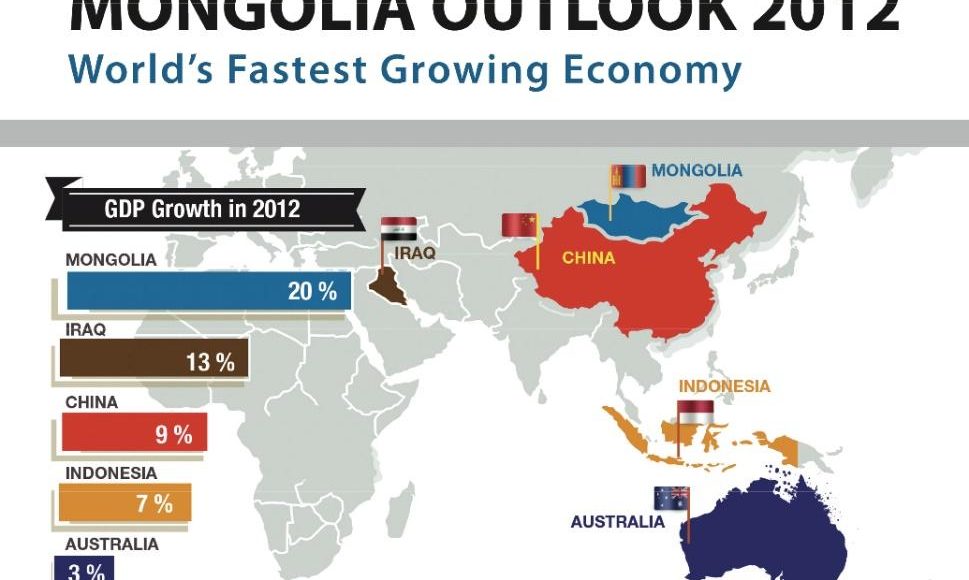
The world has changed considerably since then; and so has Mongolia. The digital revolution has rolled across the planet, the attacks of 9/11 unleashed a wave of violence and wars, and Mongolia even became the fastest-growing economy in the world a few years ago (2012). But back when this book was researched, Mongolia was just coming out of decades of isolation within the Soviet orbit under Communism, and the country experienced in the 1990s “one of the biggest peacetime economic collapses ever” (Mongolia’s Economic Reforms: Background, Content and Prospects, Richard Pomfret, University of Adelaide, 1994).
That collapse made for some crazy times, as Wild East shows.
Wild East was called one of the top 10 Canadian travel books of 2000 by The Globe and Mail.
Reviews for Wild East: Travels in the New Mongolia by Jill Lawless:
The Globe and Mail
“Engaging…a revealing and often amusing account of her journeys through a beautiful country awakening from a tumultuous era.”
The Georgia Straight, Vancouver
“This readable and reportorial book is the perfect antidote to … those tiresomely difficult, pointlessly dangerous, and essentially fake expedtions undertaken against the advice of local people who know better.”
Toronto Star
“Lawless introduces us to Mongolia’s tabloid press, to teenage mineworkers, sharp-eyed young hustlers, nomads whose only possessions are their livestock, Mongolian wrestlers and Mongolian horse races.”
Mongolian Buryat Civilisation Bookstore
“Wryly funny and wide-spectrum account of Mongolia’s tumultuous rebirthing into the 21st century. Half the population lives in Soviet apartment blocks and watches satellite TV but the other half still eek a living from the exquisite, barren hills while living in nomadic felt tents. Of course, I’d much rather be in the tents… but whatever your preference, you will definitely enjoy Ms. Lawless’ writing. She was editor of an Ulaan Baator newspaper for two years, and she tells it like it is. Very highly recommended.”
“Jill Lawless’ book is not a scholarly tome per se, yet it is of definite value to the contemporary Mongolian scholar … Lawless’ period is 1997-1999, the heart of the tumultuous and ill-spent years of Democratic Coalition Government… a period of great hopes for democratic flowering and free market enterprise leading the nation to prosperity and progress.”
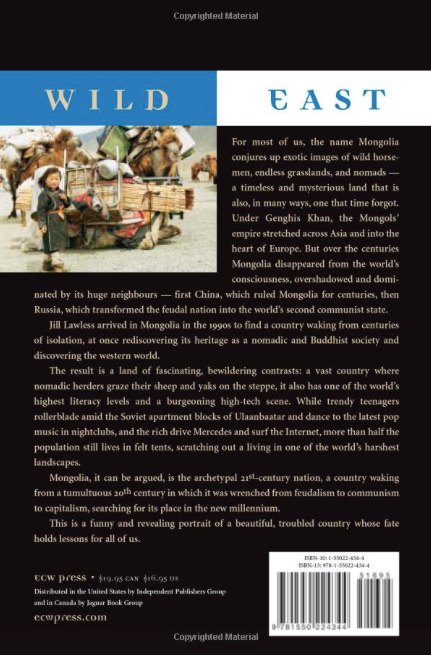
Copies of Wild East: Travels in the New Mongolia by Jill Lawless are still available in various editions and languages.A promotional poster for Wild East from 2003.
The New York Post called Wild East: Travels in the New Mongolia “harrowing, hilarious” (April 26, 2016).New brand sites for Jill Lawless and Wild East on the way for 2021.
“This is a good, fun book about life in Mongolia. … it’s an interesting and often amusing series of stories loosely connected.”
On the difference between Wild East: Travels in the New Mongolia and other travel writing on contemporary Mongolia:
“Others sent me Jill Lawless’s Wild East: The New Mongolia, a compilation of pieces she wrote when she was editor of Mongolia’s English-language newspaper, the UB Post, during Mongolia’s transition from a socialist people’s republic to young democracy. With the wind shaking the frame of my ger, I lit the stove and read what these and other writers claimed to have found just outside my flapping felt walls.
“By the time veteran journalist Jasper Becker’s Mongolia: Travels in an Untamed Land arrived, I had put aside books written since Mongolia opened up to the West in the early 1990s. Most Western travellers and writers discovered the same sights from the back of a borrowed horse. Only Lawless had investigated the place over time on its own terms. The others, full of pith and vinegar and a standard set of assumptions about what they would find, built books on flights of fancy – golfing across Mongolia, following the path of medieval monks, ‘rediscovering shamanism’ – that were flimsier even than those that had set me in motion. The books were as exciting as museum diorama, papier-mâché models of their ‘medieval’ travels and capitalist fantasies.” Three Years in Mongolia: Trying to be a Travel Writer, Luke Meinzen, Kill Your Darlings, 10 April 2012
“In the early 2000s, Canadian journalist Jill Lawless accepted a correspondent position at a news outlet in the remote and isolated foreign capital of Ulaanbaatar, Mongolia. At that time, Mongolia’s media was newly privatized from beneath Communist oversight, and her role was as much a consultant for how to run a newspaper under freedom of the press, as she was a journalist with the UB Post.









 David South Consulting
You must be logged in to post a comment.