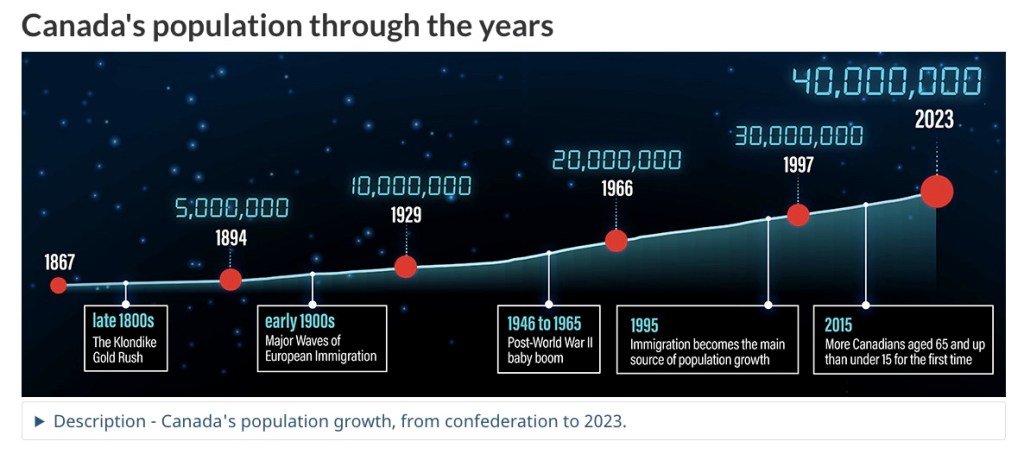
When I first emerged as a Canadian (I was born in 1966), the country’s population was 20 million. So the population has doubled in my lifetime.
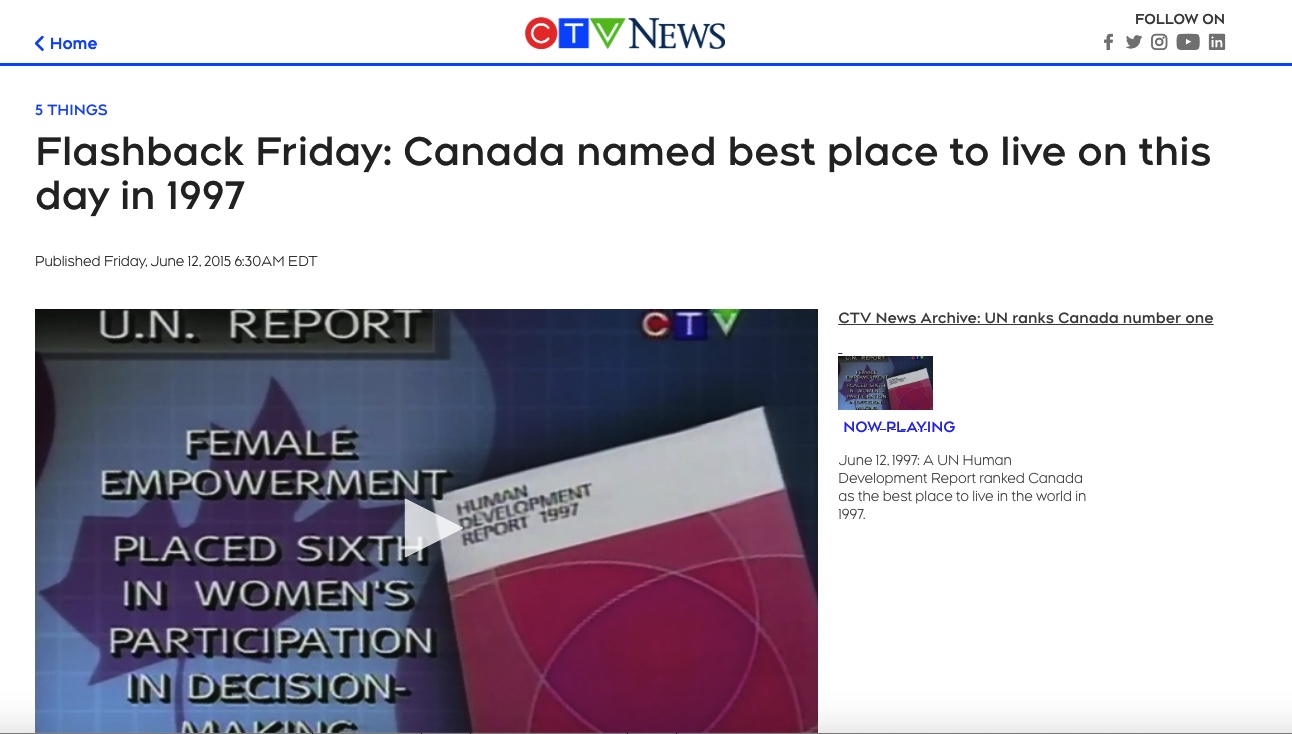
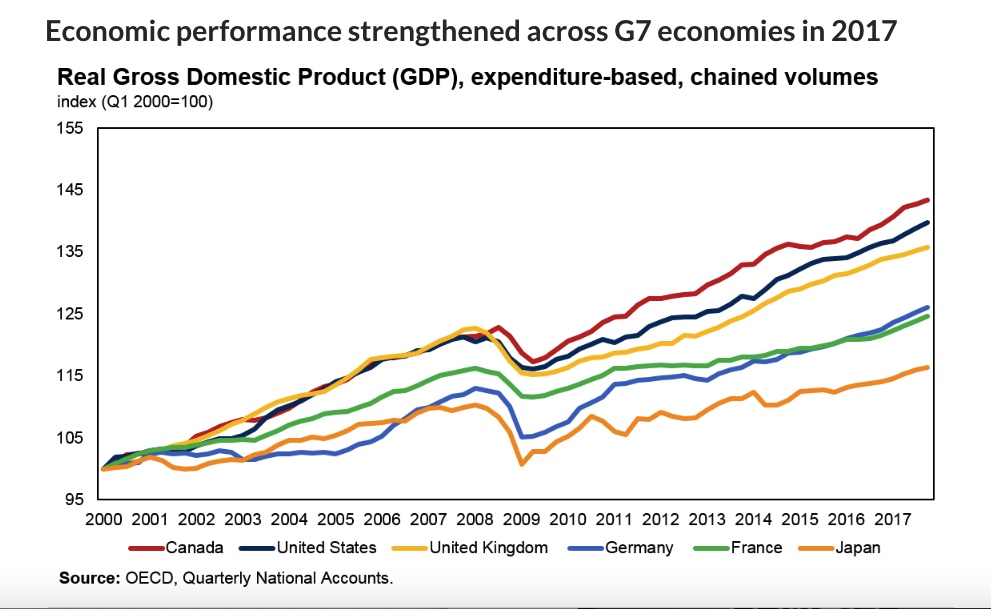
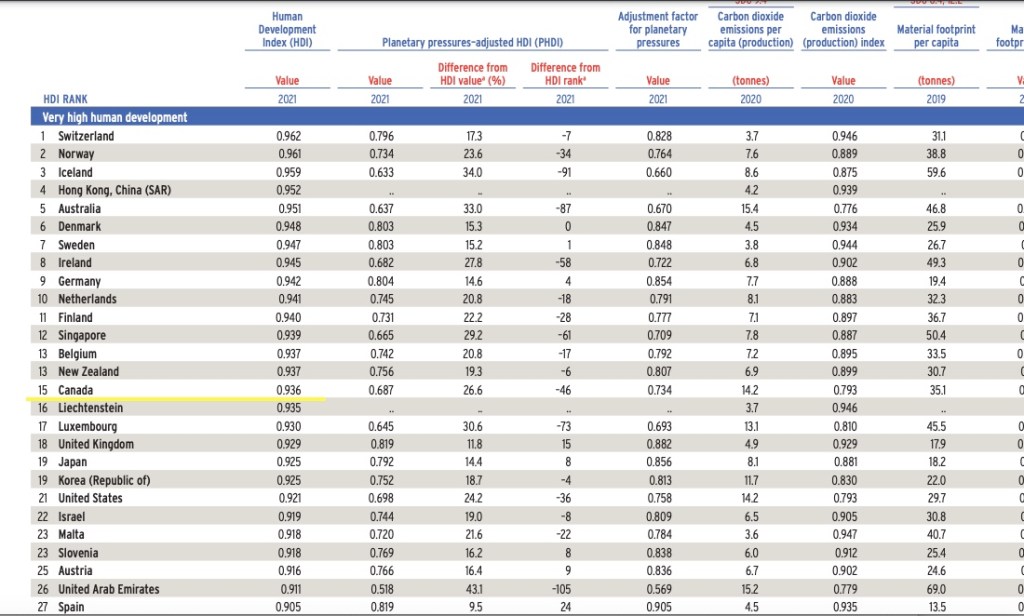
Since Canada topped the HDI rankings in the late 1990s, however, the population has grown, house prices have surged and GDP (Gross Domestic Product) has exploded, yet the country has also slipped down the rankings, hitting 15th place in 2021. Does this mean there are more people, but fewer living as well as they did in the 1990s?
Source: Statistics Canada. Source: Macleans.ca.
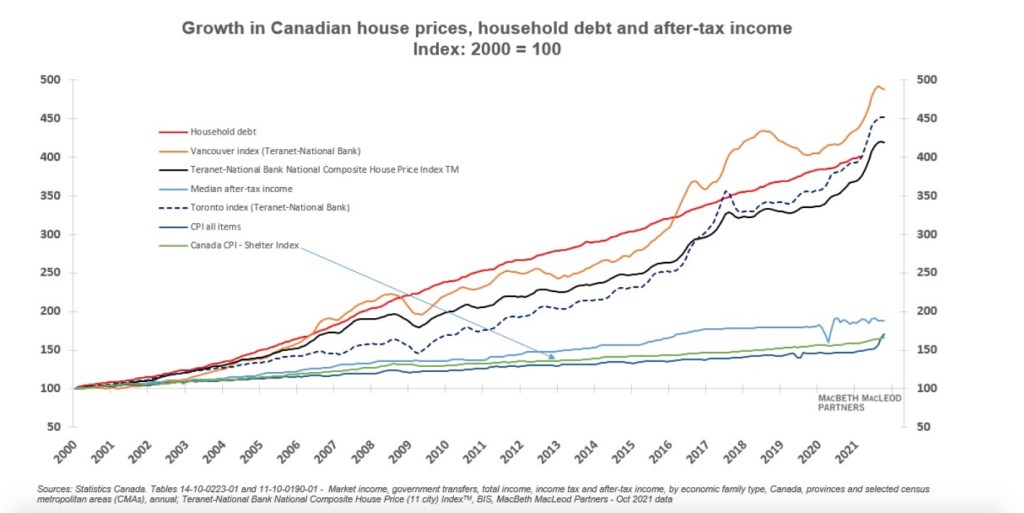
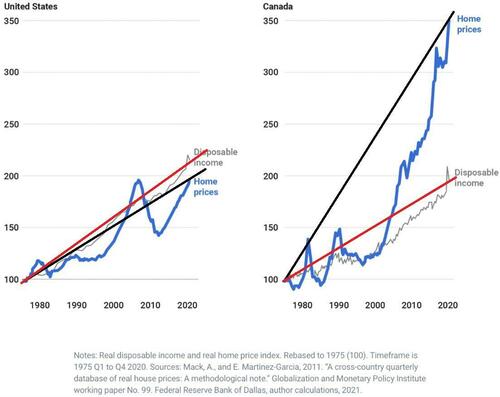
Since 2000 house prices in Canada have surged far past growth in Canadian household disposable income, as compared to US households.
As economies across Africa grow, the continent still has a long way to go to create infrastructure to match people’s rising expectations of what a modern, prosperous life looks like.
Africa’s current economic growth has mainly been driven by commodities and oil and gas exports. Critics say this boom has failed to bring tangible benefits to many of Africa’s poor, who feel left out of the prosperity.
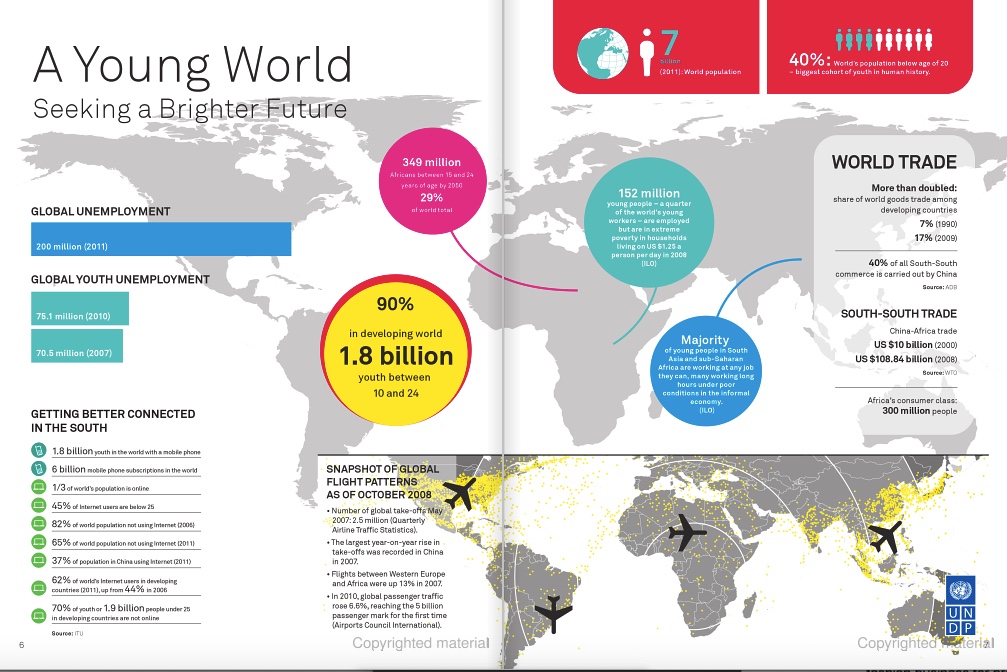
Trade has been flourishing not only because of exports to traditional markets in Europe and North America but also because of explosive growth in trade and investment between China and Africa.
Two trends now underway are set to transform people’s wealth and living standards despite the many obstacles caused by the inequalities of current economic growth. The first is the rise and rise of retail shopping options
looking to meet a strong appetite for consumer goods. And the second is the expansion of flying options on a continent notorious for its poor air links. Increasing investment in retail and flight networks will be a source of jobs, careers and wealth for the coming decade.
The aviation sector supports 6.7 million jobs on the continent, according to TradeMark Southern Africa (http://www.trademarksa.org), and makes a US $67.8 billion contribution to Africa’s gross domestic product (GDP).
But the woeful state of Africa’s air networks means that it is often cheaper for people to fly to other parts of Africa via European airports. And Africa has a long way to go to match air safety standards found elsewhere: there was one accident for every 305,000 flights involving Western-built jets in Africa last year (IATA) – nine times the global average.
But Africa is now receiving the attention of the global airline industry. The Abuja Declaration (http://nigerianaviationnews.blogspot.co.uk/2012/07/aviation-safety-in-africa-abuja.html) aims to bring the African accident rate in line with the global average by 2015. And it is hoped the added competition and introduction of more global players will also raise standards and make flying in Africa safer, more convenient and cheaper.
The experience of Europe and North America shows that increased air traffic brings a boost to economic growth.
With more frequent, safer and more reliable air routes, business people will be able to move around and strike deals, tourists can get around and traders can cross borders without the hassle of navigating poor road networks.
Airlines are lining up to compete on improving air links in Africa to capitalize on rising incomes and economic dynamism.
State-owned South African Airways (SAA) (http://www.flysaa.com/gb/en/) is also starting to expand its network to include every capital city in Africa. SAA will start by adding flights to Ivory Coast and the Democratic Republic of Congo, making it able to serve 26 African destinations. In the short term, it is doing this by halting flights between Cape Town and London, leaving that route to Virgin Atlantic and British Airways.
Operating out of bases in Kenya, Tanzania, Ghana and Angola, a new African discount airline, FastJet (http://www.fastjet.com/) – with EasyJet (http://www.easyjet.com/en) founder Stelios Haji-Ioannou as its backer – is taking over Fly540 (http://www.fly540.com/) and adding 15 leased Airbus aircraft. It will launch flights to Ghana, Kenya, Tanzania and Angola. According to Kenya’s Nation newspaper, the plan is to replicate the success of EasyJet connecting Europe and North Africa with cheap flights in sub-Saharan Africa.
Analysts believe the entry of an aggressive and experienced player like Haji-Ioannou will shake up competition within African aviation.
Other global players lining up to expand in Africa include Emirates, Etihad, Qatar Airways, Turkish Airlines and Korea Air, which has already started flying between South Korea and Kenya’s capital, Nairobi. This is being seen as a boost to the trade in electronics goods between the two countries.
The added excitement in the African air industry has also prompted Air Uganda (http://www.air-uganda.com/) and RwandaAir (http://www.rwandair.com/) to increase their destinations. Qatar Airways (http://www.qatarairways.com/uk/en/homepage.page) will start flying in November 2012 to Maputo, Mozambique three times a week, increasing to 20 the number of destinations the airline serves, according to the Nation.
And while Emirates has a 41 per cent share of the African market, African player Ethiopian Airlines (http://www.flyethiopian.com/en/default.aspx) ambitiously wants to become Africa’s largest airline by 2025.
For shoppers, West Africa is experiencing a boom in new retail spaces being developed, according to a report from Euromonitor International (http://www.euromonitor.com) (http://www.howwemadeitinafrica.com/ghana-%E2%80%93-africas-new-retail-hotspot/18544/). The advantages of creating and developing modern retail spaces are numerous: hygienic shopping environments with greater safety and security attract multinational and global brands, which tend to create lots of long-term jobs.
Euromonitor International has identified Ghana as the next hotspot for retailers. The country is seen to have the right business environment in place that is attractive to foreign investors. It also has the right mix of political stability, cultural tolerance and rising prosperity.
The country is now being seen as the gateway to West Africa’s market of 250 million consumers. Ghana is able to leverage its position as a gateway into landlocked nations and on its strong ties with English-speaking powerhouses like Britain and the United States.
On top of these strategic advantages, the country has focused on upgrading retail spaces in the capital, Accra. The Accra Mall (http://www.accramall.com/), opened in 2007, is considered the most modern shopping mall in Ghana.
Euromonitor found Ghana’s retail industry grew by 14 per cent between 2006 and 2011.
Euromonitor found companies like multinational Unilever and PZ Cussons believed basing their operations in Ghana was a big advantage.
“The presence of such manufacturers provides a good opportunity for retailers as they can source these manufacturers’ products cheaper locally rather than importing them,” it said.
Euromonitor identified three other African countries as potential retail marketplaces. This includes Zambia, a potential agribusiness powerhouse. It is already developing a strong reputation in beef through its Zambeef (http://www.zambeefplc.com/) operation. South African companies have done well in Zambia, including Shoprite, Pick n Pay, Mr Price and the Foschini Group. Much of the action is around the capital, Lusaka.
Rwanda is known for its ease of doing business and there is activity going on in residential areas, roads, hotels, offices and retail spaces. The capital, Kigali, has a new modern, shopping mall, The Union Trade Centre, with a 24-hour store.
Angola has been benefiting from peace since the end of its civil war in 2002. Foreign companies have been attracted to Angola from South Africa, Portugal and Brazil. The Belas Shopping Mall (http://belasshopping.com/website/) opened in 2007 in the capital, Luanda, followed by the Ginga Shopping Mall on the city’s outskirts in 2011.
Published: August 2012
Resources
1) How we made it in Africa: A great website packed with inspirational people and stories on business success in Africa. Website:http://www.howwemadeitinafrica.com/
Development Challenges, South-South Solutions was launched as an e-newsletter in 2006 by UNDP’s South-South Cooperation Unit (now the United Nations Office for South-South Cooperation) based in New York, USA. It led on profiling the rise of the global South as an economic powerhouse and was one of the first regular publications to champion the global South’s innovators, entrepreneurs, and pioneers. It tracked the key trends that are now so profoundly reshaping how development is seen and done. This includes the rapid take-up of mobile phones and information technology in the global South (as profiled in the first issue of magazine Southern Innovator), the move to becoming a majority urban world, a growing global innovator culture, and the plethora of solutions being developed in the global South to tackle its problems and improve living conditions and boost human development. The success of the e-newsletter led to the launch of the magazine Southern Innovator.
Tourism has experienced decades of growth and diversification and is now considered one of the fastest-growing economic sectors in the world. According to the UNWTO – the United Nations World Tourism Organization – modern tourism is “a key driver for socio-economic progress.”
The scale of global tourism means it rivals other sectors, such as oil exports, food products and automobiles in terms of economic clout. With such an important role to play in global commerce, it has become a top income source for developing countries in the global South.
International tourist arrivals grew by 4 per cent in 2012, reaching a record 1.035 billion worldwide (UNWTO). Emerging economies led the growth in tourism, with Asia and the Pacific showing the strongest gains. Tourism outpaced growth in the wider world economy in 2012, contributing US $2.1 trillion to global GDP and supporting 101 million jobs (WTTC).
“2012 saw continued economic volatility around the globe, particularly in the Eurozone. Yet international tourism managed to stay on course” said UNWTO Secretary-General Taleb Rifai. “The sector has shown its capacity to adjust to the changing market conditions and, although at a slightly more modest rate, is expected to continue expanding in 2013. Tourism is thus one of the pillars that should be supported by governments around the world as part of the solution to stimulating economic growth.”
One country that has found tourism becoming a key contributor to its national income is India. The country’s travel and tourism industry is now three times larger than its automotive manufacturing industry, and generates more jobs than chemical manufacturing, communications and the mining sector combined (World Travel and Tourism Council).
Indian Tourism Minister Subodh Kant Sahai called for the sector to create 25 million new jobs over the next five years and it is hoping to grow the market by 12 per cent by 2016 (The Economic Times).
Travel and tourism now contributes 6.7 billion rupees (US $124 million) – or 6.4 per cent – of the country’s total GDP (gross domestic product). The sector supports 39 million jobs directly and indirectly.
But competition for global tourist dollars is fierce. As more flight routes open up – Africa for example, is seeing new airlines and routes emerge every year – a person looking for somewhere to holiday has an ever-growing range of options to choose from. Will it be Africa this year, or shall we go to Asia? One way to attract tourists and gain an extra edge in the global travel marketplace is to show imagination and innovation. Being different and novel can be the clincher for a tourist, especially one who is widely travelled and is searching for new experiences.
In Southern India, the state of Kerala is well known for its ayurvedic medicine (http://en.wikipedia.org/wiki/Ayurveda) and food tradition going back centuries, combined with its laid-back beach culture. It is a heady combination that successfully attracts many people, who come to relax and boost their health. Now, Kerala is offering a new dimension to this experience: surfing. Surfing is a water sport involving a person riding ocean waves (https://en.wikipedia.org/wiki/Surfing), usually on a long board. India has enormous and mostly untapped potential as a surfing destination, with its hot weather and 7,000 kilometres of coastline.
Soul and Surf (http://soulandsurf.com) in Golden Beach, Varkala is within walking distance of the Varkala Cliff tourist area and an hour away from the closest major airport, Trivandrum International Airport.
The founders of Soul and Surf, Ed and Sofie Templeton, were captivated by “surfing warm, empty waves, eating wonderful fresh, cheap seafood, practicing yoga and receiving ayurvedic treatments”, according to their website.
“Enchanted by India’s magical, spiritual atmosphere, the warmth of the local people and the raw natural beauty of the area,” they set up a combined surfing and yoga retreat in 2010.
They have become part of a growing surfing scene in Kerala, and an increasing awareness in the country that its long ocean coastline is perfect for water sports.
As surfing grows in India, the owners wanted to create a business that supported the local area, particularly coastal fishing communities surrounding Varkala.
They have also expanded to run a luxury surf and yoga retreat in Sri Lanka and guided trips to the Andaman Islands.
Soul and Surf was inspired by the Surfing India Surf Ashram (surfingindia.net), a 12-hour trip up the coast from Surf and Soul in Karnataka.
Their so-called “Surfing Swamis” have discovered the best places to surf in India and are spirited champions of the whole surfing lifestyle. A swami (http://en.wikipedia.org/wiki/Swami) is a Hindu male religious teacher. Surfing India promotes adventure sport in India and was started in 2004. At the time, surfing in India had a very low profile. Surfing India offers a sophisticated experience to travellers, including Wi-Fi Internet access, vegetarian food and all the equipment required.
All the staff are volunteers and work for room and board. Profits are plowed back into keeping the surf ashram going and helping its activities, which include adventure tours, a surf camp, surf school, yoga retreat, bodyboarding, snorkelling and wakeboarding.
The Surfing Swamis Foundation is a non-profit organization whose goal is to “teach surfing and environmental awareness to children, orphans, and handicapped persons of any age or gender.”
It also sponsors the All India Surf Team for boys and girls across India.
4) United Nations World Tourism Organization: The World Tourism Organization (UNWTO) is the United Nations agency responsible for the promotion of responsible, sustainable and universally accessible tourism. Website: unwto.org
It was announced in January 2014 that China has surpassed the United States to become the world’s number one trading nation, as measured by the total value of exports and imports. This new economic behemoth also continued to grow its trade relationships with Africa.
US exports and imports of goods totaled US $3.82 trillion in 2013, according to the U.S. Commerce Department. China’s annual trade in goods passed US $4 trillion for the first time in 2013 (Guardian).
Zheng Yuesheng, a spokesman for China’s customs administration, told The Guardian that becoming the world’s number one trading nation was “a landmark milestone for our nation’s foreign trade development.”
Significantly for Africa, 2012 was also a record year for China-Africa trade, which reached 5 per cent of China’s total foreign trade and made up 16 per cent of all of Africa’s international trade, according to a new report from South Africa.
Consultancy Africa Intelligence (consultancyafrica.com), a South African-based organization with more than 200 consultants focused on “expert research and analysis on Africa” highlights the achievements of this strong trade relationship – and also some of its threats and weaknesses – in its report.
Trade between China and Africa has surged during the decade since China joined the World Trade Organization (WTO) (wto.org) in 2001, rising from around US $10 billion in 2000 to US $198.49 billion in 2012, according to China’s Ministry of Commerce. Ambitiously, it could reach US $300 billion by 2015, announced Cheng Zhigang, secretary-general of the China-Africa Industrial Cooperation and Development Forum (www.zfhz.org) (China Daily).
China’s trade and poverty reduction.
The World Bank reported South-South trade now surpasses South-North trade, meaning exports from developing countries to other developing countries exceed exports to wealthy developed countries. South-South trade experienced rapid growth in the 2000s, accounting for 32 per cent of world trade by 2011 (World Bank).
South-South trade and investment between Africa and lower-income and middle-income developing countries rose from 5 per cent in the 1990s to almost 25 per cent in 2010 (Consultancy Africa Intelligence). Before the 1990s, over 90 per cent of trade for Africa was with high-income or developed countries.
China is attractive as a trade partner for many reasons. One of them is the strong admiration for its success in lifting millions out of poverty through an aggressive growth strategy and rapid urbanization with big investments in education, science, technology, infrastructure – modern airports, ports, roads and rail – and research and development.
Since 1978, it is believed China has lifted 500 million people out of poverty, out of a population of 1.3 billion people (World Bank). Incomes have doubled every 10 years with average GDP growth of 10 per cent a year, meaning the country has almost reached all the Millennium Development Goals.
Building a trade relationship with China has led to Zambia’s copper mines running again, Gabon’s oil fields being re-explored, and Sudan becoming a major oil exporter to China. Angola, Democratic Republic of Congo (DRC), Equatorial Guinea, Republic of Congo and South Africa are all benefiting from exporting commodities to China.
The relationship has not been entirely beneficial, according to the Consultancy Africa Intelligence report. Some African industries, such as textiles, have suffered from competition with cheaper Chinese imports, leading to factory closures and job loses.
Non-commodity exports from Africa to China amounted to just 10 per cent of the trade total. Many of the contracts signed for projects also go to Chinese companies, the report found.
Renewed concern has also emerged over rising debt levels in Africa.
In summary, the report finds a growing trade relationship with China has brought to Africa commodity booms, growing GDP (gross domestic product), and lots of foreign investment. On the negative side of the ledger, there have been job loses due to cheaper imports, rising personal and government debt levels and an over-dependence on minerals for economic growth.
Across Africa, new infrastructure has emerged where it probably would not have come about under the continuing debt burdens from the 1970s and 1980s. The continent has received a shot of energy, but it remains to be seen whether governments can sustain this economic jolt and make the wise choices that create African jobs and build liveable cities for the 21st century.
Published: March 2014
Resources
1) Global South-South Development Expo: The Global South-South Development Expo (GSSD Expo) is the only Expo solely from the South and for the South. It showcases successful Southern-grown development solutions (SDSs) addressing the need to meet the Millennium Development Goals (MDGs). Website: southsouthexpo.org
2) World Trade Organization (WTO): There are a number of ways of looking at the World Trade Organization. It is an organization for trade opening. It is a forum for governments to negotiate trade agreements. It is a place for them to settle trade disputes. It operates a system of trade rules. Essentially, the WTO is a place where member governments try to sort out the trade problems they face with each other. Website: http://www.wto.org
3) Djibouti Free Zone: Djibouti Free Zone was created with one primary goal in mind – to bring about a sea-change in the way Africa thinks and does business. No red tape, ruthless efficiency and genuinely exhaustive services – in essence, it offers the ideal conditions for trade and commerce to flourish. Website: djiboutifz.com/
4) Forum on China-Africa Cooperation: Keep up with the busy diplomatic and trade contacts between China and African countries. Website: http://www.focac.org/eng/
5) China-Africa Cooperation Net: China-Africa Industrial Forum (CAIF) is the collective dialogue and cooperation mechanism that was set up by both China and friendly African countries in the year 2000. Website: http://www.zfhz.org/html/en_gywm.html
China has been a member of the WTO (World Trade Organization) since 11 December 2001. The World Trade Organization deals with the global rules of trade between nations. Its main function is to ensure that trade flows as smoothly, predictably and freely as possible.








 David South Consulting
You must be logged in to post a comment.