Tag: free markets

  • Mobile Phone Shopping to Create Efficient Markets across Borders

    Mobile Phone Shopping to Create Efficient Markets across Borders

    By David SouthDevelopment Challenges, South-South Solutions

    SOUTH-SOUTH CASE STUDY

    An anticipated game-changing revolution in African trading set for 2013 is getting one innovative business very excited.

    Southern African mobile phone “m-commerce” pioneer moWoza (mowoza.com) is developing new ways of selling services and products through mobile phones and developing the networks and infrastructure to capitalize on coming changes in Africa as cross-border trade is liberalized.

    It is already selling food packages containing well-known South African brands that can be ordered by migrants on their mobile phones and then delivered to recipients – family or friends – even in remote and hard-to-reach communities. The service is currently operating between Mozambique and South Africa – the two countries share a border.

    The start-up hopes to help the millions of migrant workers and small traders who contribute to the constant flow of trade and wealth between states in Africa. These people face many obstacles, including bureaucratic red tape, corruption and harassment.

    Cross-border trade by economic migrants is largely informal. moWoza hopes to make it formal and efficient while reducing exploitation of migrants and corrupt practices by officials. By providing an easy-to-use mobile phone service, it hopes to build trust with these transactions.

    Africa is a market of a billion people worth US $2 trillion in trade and business, but the World Bank estimates the continent is losing billions of dollars in potential earnings because of high trade barriers. It found that it is easier for African countries to trade with the rest of the world than with other African countries.

    The continent’s leaders are calling for a continent-wide free trade area by 2017.

    Studies by the World Bank and others have repeatedly shown that inefficient transport and trade barriers translate into higher prices of goods for consumers as importers pass along high transport costs to consumers. Food prices remain extremely high in Africa – almost 25 per cent higher than they were in 2006, according to the World Bank. In developing countries, people normally spend up to 80 per cent of their incomes on food.

    With the world in the grip of an ongoing food crisis brought about by multiple factors – including growing populations, environmental challenges such as drought and soil depletion, declining rural economies, inefficient farming methods and commodity speculation – measures that increase efficiencies and trade can be a powerful counterweight and help drive prices back down again.

    moWoza – mo stands for mobile and Woza is a Zulu word meaning running -sells a range of products including basic foodstuffs to a target market of cross-border migrants in Southern Africa. moWoza estimates there are 7 million migrant and cross-border shoppers in South Africa alone, and it’s building a network reaching into remote communities to deliver packages ordered through its m-commerce service on mobile phones.

    moWoza aims to open up access to products in these underserved markets.

    moWoza is trying to position itself for the new opportunities that will arise when, in 2013, 23 African borders open for regional trade, creating a vast trading area stretching from Cairo in Egypt to Cape Town in South Africa.

    moWoza wants to be the m-commerce brand that people will turn to. It is chasing customer markets that include African economic migrants, small and medium-sized enterprises doing cross border trade, and the 30 million African economic migrants who are supporting family back in their home countries.

    Founder Suzana Moreira says the company carried out extensive research in South Africa, Mozambique, Lesotho, Zimbabwe and Kenya before launching its first trial runs between South Africa and Mozambique. “We ran several pilots to determine the most efficient way to provide access to packages for the beneficiaries and developed the necessary technology to enable our customers (migrants) to place orders simply. We are now operating between Johannesburg and Maputo,” she said.

    Officially incorporated in 2009, moWoza did not get up and running until 2010.

    Once a customer has experienced a delivery from moWoza, they are introduced to other services like banking or how to download information from the Internet. Many customers are only just learning about the resources available online.

    “We look forward to the opening up of cross border trade as our findings suggest that the liberalization and facilitation of the cross-border trade initiative will increase demand for all products and services from South Africa to neighbouring countries,” Moreira said. “South Africa offers an extensive range of products compared to the choice of products that are offered in many of the neighbouring countries.

    “The structures and networks that compel migrants to come to South Africa are well established,” she explained.

    “The social networks encourage the movement of labour. Hundreds of thousands of male migrants from the Southern African Develoment Community, SADC (http://www.sadc.int/), countries have spent the greater parts of their working lives in South Africa. They in turn had parents or grandparents who had worked in South Africa, while providing a lifeline to the family in the home country.

    “This practice will continue: mobile money to a degree will facilitate this lifeline but as long as products can be sourced cheaper in South Africa, the demand for South African products will continue.”

    The people behind moWoza sound like business radicals, proclaiming that traditional ‘bricks and mortar’ businesses will be replaced in a shopping revolution by WAP (wireless application protocol) and SMS (short message service) business platforms operating on mobile phones.

    Apart from developing the m-commerce business, moWoza aspires to become a well-known brand for the migrant community.

    “Becoming a lifestyle brand is a bold statement on our part,” Moreira said. “However, this goal reflects a measure of success and would demonstrate that we are delivering value to our customers (migrants and micro-merchants) and their beneficiaries.”

    The moWoza brand hopes to reflect the lives of their customers and be all about embracing fluidity and mobility.

    “As our primary customers are transnational and highly mobile (immigrants with a dual existence), we would like moWoza to represent mobility and fluidity (attune to anytime, anywhere, always).” she said. “Their greatest aspiration is an improved livelihood and a simplification of the rigours of grass-roots existence.”

    moWoza foresees big changes coming for the economies of the African countries affected by the opening up of regional trade. According to its website: “New markets and trading routes will mushroom, traditional value chains will be replaced with ICT [information and communications technology] innovations; a savvier and younger consumer will emerge who will value convenience and simplicity.”

    For users, moWoza’s service works like this: A customer uses a mobile phone to make a purchase. An agent helps with selecting the right package and delivery options. When the payment is made, an SMS mobile receipt – a so-called m-receipt – is sent to the customer. The person who will be receiving the parcel will also receive a text message. During the delivery process, ‘m-updates’ are sent on progress to both parties and when the parcel is finally delivered, a final notification is sent of delivery.

    Special drop-off points have been set up in countries where the service is available and there is follow-up contact with the customer to determine their continuing needs.

    MoWoza hires people from the communities they operate in as agents. An agent works with the customer to show how the Internet works on mobile phones and to improve their literacy skills.

    Product parcels are selected to meet the World Health Organization (WHO) nutritional guidelines. The packages are selected based on focus groups and customer feedback.

    With offices in South Africa and the United Kingdom, moWoza is looking forward to expanding what it can offer.

    “We will continue to innovate, and deliver services that improve the livelihoods of our target market and their beneficiaries,” Moreira said. “We will extend our packages to include seeds and other agricultural products, school and educational materials, and health products. As we grow, our services will extend to digital (virtual) goods, e.g. insurance products specifically targeting the underserved communities.”

    Published: August 2012

    Resources

    1) A downloadable map showing border delays, bribes and barriers impeding cross-border trade. Website: http://www.borderlesswa.com/resources/18th-usaid-uemoa-road-governance-map

    2) Borderless Alliance: Removing Trade Barriers in West Africa: Borderless is a vision for competitive trade in West Africa – of eliminating barriers to trade. Streamlining procedures, attacking corruption and facilitating the movement of people and goods will lower costs. Consequently, businesses will expand, create jobs and generate more revenue for government and more income for people. Website: http://www.borderlesswa.com/

    3) Borderless Conference 2013 and 2014: Call for proposals: The Borderless Alliance Secretariat announces a call for proposals to host the 2013 annual Borderless Conference. Borderless Conference 2013 will be the second transport and trade annual conference in West Africa, and will bring together more than 300 stakeholders from around the world to discuss efficiency in logistics, using data for decision making and advocacy. Website:http://www.borderlesswa.com/news/borderless-conference-2013-2014-call-proposals

    4) West Africa Trade Hub: Website:http://www.watradehub.com

    5) Trade Mark East Africa: Supporting East African Integration: Through TradeMark East Africa, a cost-effective regional aid delivery mechanism has been established that can focus on building long-term East African capacity. TradeMark East Africa provides a durable platform for scaling-up of Aid For Trade to East Africa. Website: http://www.trademarkea.com/home/

    6) Geneva Trade and Development Forum. Website: http://www.gtdforum.org/

    7) Spaza News: The newspaper aimed at spaza shop owners seeking to connect them. Website: http://www.spazanews.co.za/

    8) Africa Trade Gateway: Website: https://www.africatradegateway.com/

    9) Cross Border Trade Desk: This website is a ‘resource’ to help cross border traders in Eastern and Southern Africa to find an association near to them, to voice their opinions and explain what COMESA is doing in improving conditions for small-scale cross border traders. Website: http://www.cbtcomesa.com/

    10) Defragmenting Africa website including the report De-Fragmenting Africa: Deepening Regional Trade Integration in Goods and Services by the World Bank. Website: http://tinyurl.com/cta3ykf

    https://davidsouthconsulting.org/2022/10/09/a-new-mobile-phone-aimed-at-the-poor/

    https://davidsouthconsulting.org/2020/04/30/crowdsourcing-mobile-phones-to-make-the-poor-money/

    https://davidsouthconsulting.org/2020/05/01/diy-solution-charges-mobile-phones-with-batteries/

    https://davidsouthconsulting.org/2022/10/09/entrepreneurs-use-mobiles-and-it-to-tackle-indian-traffic-gridlock/

    https://davidsouthconsulting.org/2022/11/01/innovative-mobile-phone-applications-storm-south/

    https://davidsouthconsulting.org/2022/10/27/kenyan-mobile-phone-innovations/

    https://davidsouthconsulting.org/2022/10/10/mobile-applications-market-opportunities-for-south/

    https://davidsouthconsulting.org/2020/12/20/mobile-phones-engineering-souths-next-generation-of-entrepreneurs/

    https://davidsouthconsulting.org/2020/12/12/mobile-phones-new-market-tools-for-the-poor/

    https://davidsouthconsulting.org/2020/12/20/mobile-phones-bring-the-next-wave-of-new-ideas-from-the-south/

    Development Challenges, South-South Solutions was launched as an e-newsletter in 2006 by UNDP’s South-South Cooperation Unit (now the United Nations Office for South-South Cooperation) based in New York, USA. It led on profiling the rise of the global South as an economic powerhouse and was one of the first regular publications to champion the global South’s innovators, entrepreneurs, and pioneers. It tracked the key trends that are now so profoundly reshaping how development is seen and done. This includes the rapid take-up of mobile phones and information technology in the global South (as profiled in the first issue of magazine Southern Innovator), the move to becoming a majority urban world, a growing global innovator culture, and the plethora of solutions being developed in the global South to tackle its problems and improve living conditions and boost human development. The success of the e-newsletter led to the launch of the magazine Southern Innovator.

    https://davidsouthconsulting.org/2021/03/05/southern-innovator-issue-1/

    Creative Commons License

    This work is licensed under a
    Creative Commons Attribution-Noncommercial-No Derivative Works 3.0 License.

    ORCID iD: https://orcid.org/0000-0001-5311-1052.

    © David South Consulting 2022

  • Mobile Phones: New Market Tools for the Poor

    Mobile Phones: New Market Tools for the Poor

    By David SouthDevelopment Challenges, South-South Solutions

    SOUTH-SOUTH CASE STUDY

    Bangladesh’s poor can now buy and sell goods and services with their mobile phones, thanks to a Bangladeshi company’s pioneering mobile phone marketplace. The company, CellBazaar, serves as a useful role model for other Southern entrepreneurs and companies looking to develop and market mobile phone applications for the poor that really help them.

    CellBazaar is simple to use: A user begins the process by texting the word “buy” to short message (SMS) code 3838. They then are offered a list of all the items for sale and scroll through them to find what they want. When they have found something, they send another SMS. In response, an SMS comes back telling the seller’s phone number. And from that point, business is underway between the buyer and the seller.

    “It’s a far more efficient way of finding things. In the past you have to go to newspapers, magazines, and find the best match,” founder Kamal Quadir told MobileActive.

    The categories run from used cars and motorcycles, to new laptops, agricultural products like corn, chickens and fish, educational tutors, jobs, and places for sale and rent.

    Quadir said he had the idea for CellBazaar when he was a graduate student at MIT, the Massachusetts Institute of Technology in the United States.

    “I was surrounded by technologically sophisticated people,” he said. “I saw all this technological possibility and heard one top-notch scientist mentioning that a very cheap mobile phone had the same capabilities as a NASA computer in 1968. A country like Bangladesh has 35 million NASA-type computers, and most importantly, they’re in people’s pockets.”

    Quadir saw all this power going to waste, and realized how business was being held back by the lack of information. Absence of market intelligence – or what is available for sale and what is a good price – was a big impediment to more profitable and efficient business transactions.

    Quadir first created the idea at MIT Media Labs and eventually signed a contract with GrameenPhone. CellBazaar launched in July of 2006, and, after a year of beta testing, the team started to actively market the service in August 2007.

    CellBazaar can also be accessed through its website. This has the advantage of making what is a very local market an international market.

    Partnering with Grameen Phone, Bangladesh’s leading telecommunications service provider with more than 18 million subscribers, had its advantages. With 60 percent of the Bangladesh market, “their network is larger than others,” Quadir said.

    Just as web applications like Google and the powerful social networking website Facebook (www.facebook.com) transformed the way people work and socialize, so CellBazaar has needed to encourage a change in behaviour for it to work. At first, people didn’t think they had anything worth selling, or that they could use the text messages to connect to a marketplace.

    “In the past, a rural village person couldn’t even imagine that they wanted to sell something and the whole world would be willing to buy it,” Quadir said. “The biggest challenge we have is people blocking that audacity and courage.”

    To date, over 1 million people have used the service out of a country of 150 million people. “Fundamentally the real issue is about changing people’s patterns,” he said. “But once they learn how to use it, people start doing it really frequently.”

    The CellBazaar experience also shows how critical clever marketing is to business success. The company has been marketed through tastefully designed stickers placed in the windows of cars, taxis and microbuses — ubiquitous and continuous publicity for low cost.

    CellBazaar also has launched educational booklets for four target audiences: villagers and farmers, the elderly and retired, young professionals, and tech-savvy teenagers. There are detailed booklets for those who want step-by-step instructions, as well as short leaflets for customers who want to carry a “quick guide” in their pocket.

    CellBazaar launched its first television campaign during the Muslim festival of Eid in 2007. The ads featured a newspaper seller called Shamsu Hawker, and show how he begins a new career buying and selling used televisions with the help of CellBazaar. The advertisement’s unusual setting on a train, as well as positive imagery of Bangladesh, created a sensation among TV viewers. The character “Shamsu Hawker” has become a nationally recognized icon and popular cultural figure.

    As the service grows, the demographic that uses it has also expanded. “Young people were the early adopters,” said Quadir. “Initially urban people used it more, because we didn’t market very aggressively. Word of mouth spread faster because of the higher concentration of people in cities. But now it has spread to rural areas as well.”

    CellBazaar has won many awards for its innovation in social and economic development.

    The ambitious Quadir wants to expand CellBazaar into East Africa, Eastern Europe, and South Asia. Unlike the web, CellBazaar has to make deals with local mobile phone providers. He can’t just offer the service through the internet. “The Internet belongs to everybody — like highways and like fresh air,” said Quadir. “Mobile networks are privately owned.”

    “So far the operators we have worked with have been very good,” he said. “We are very selective in terms of what operator we work with.” As CellBazaar looks to expand, Quadir is focusing efforts on places that have high mobile penetration rates and low web penetration. “We’re looking at any place that has less internet. No matter how good the application is, having internet and high computer penetration doesn’t help us,” he said. “And mobile is everywhere.”

    The same lesson is being learned around the world. A study of grain traders in Niger found that “cell phones reduce grain price dispersion across markets by a minimum of 6.4 percent and reduce intra-annual price variation by 10 percent.” According to the study, “The primary mechanism by which cell phones affect market-level outcomes appears to be a reduction in search costs, as grain traders operating in markets with cell phone coverage search over a greater number of markets and sell in more markets.”

    Mobile phones are now the fastest growing consumer product in history. Portio Research estimates that between 2007 and 2012 the number of mobile subscribers will grow by another 1.8 billion, mostly in emerging economies like India and China.

    Informa Telecoms and Media estimates mobile networks now cover 90 per cent of the world’s population – 40 per cent of whom are covered but not connected. With such reach, finding new applications for mobile phones that are relevant to the world’s poor and to developing countries is a huge growth area. It is estimated that by 2015, the global mobile phone content market could be worth over US $1 trillion, and basic voice phone calls will account for just 10 per cent of how people use mobile phones.

    Leonard Waverman of the London Business School has estimated that an extra 10 mobile phones per 100 people in a typical developing country, leads to an extra half a percentage point of growth in GDP per person.

    The experience in the Philippines has shown that the best way to drive fast take up of mobile phone services is to offer something very practical and connected to personal income.

    “The most significant lesson learned so far,” said Shawn Mendes, lead author on the report, The Innovative Use of Mobile Applications in the Philippines: Lessons for Africa, “is that m-Banking, rather than more altruistic applications such as m-Health and m-Education, has delivered the greatest benefits to people in developing countries.”

    Published: October 2008

    Resources

    • SME Toolkit: A free online resource aimed at the South to help entrepreneurs and small businesses access business information, tools, and training services to be able to implement sustainable business practices. Website:http://www.smetoolkit.org/smetoolkit/en
    • Entrepreneurial Programming and Research on Mobiles: EPROM, part of the Program for Developmental Entrepreneurship within the MIT Design Laboratory, aims to foster mobile phone-related research and entrepreneurship. Key activities include development of new applications for mobile phone users worldwide. Website: http://eprom.mit.edu/
    • Textually.org: a very inspiring website profiling loads of innovations with mobile phones in the developing world. 
      Website:http://www.textually.org/textually/archives/cat_mobile_phone_projects_thir
    • The innovative use of mobile applications in the Philippines Lessons for Africa: A paper from the Swedish International Development Cooperation Agency (Sida) on mobile phone innovation. Website:http://www.sida.se/sida/jsp/sida.jsp?d=118&a=33306&language=en

    https://davidsouthconsulting.org/2020/04/30/crowdsourcing-mobile-phones-to-make-the-poor-money/

    https://davidsouthconsulting.org/2020/05/01/diy-solution-charges-mobile-phones-with-batteries/

    https://davidsouthconsulting.org/2022/10/09/entrepreneurs-use-mobiles-and-it-to-tackle-indian-traffic-gridlock/

    https://davidsouthconsulting.org/2022/06/15/indian-mobile-phone-application-innovators-empower-citizens/

    https://davidsouthconsulting.org/2022/11/01/innovative-mobile-phone-applications-storm-south/

    https://davidsouthconsulting.org/2020/12/20/kenya-reaches-mobile-phone-banking-landmark/

    https://davidsouthconsulting.org/2022/10/27/kenyan-mobile-phone-innovations/

    https://davidsouthconsulting.org/2022/10/10/mobile-applications-market-opportunities-for-south/

    https://davidsouthconsulting.org/2022/03/08/mobile-phone-microscopes-to-revolutionize-health-diagnostics/

    https://davidsouthconsulting.org/2022/04/06/mobile-phone-peacekeeping/

    https://davidsouthconsulting.org/2020/12/12/mobile-phone-shopping-to-create-efficient-markets-across-borders/

    https://davidsouthconsulting.org/2020/12/20/mobile-phones-bring-the-next-wave-of-new-ideas-from-the-south/

    https://davidsouthconsulting.org/2020/12/20/mobile-phones-engineering-souths-next-generation-of-entrepreneurs/

    https://davidsouthconsulting.org/2022/10/09/a-new-mobile-phone-aimed-at-the-poor/

    https://davidsouthconsulting.org/2021/11/09/ring-tones-and-mobile-phone-downloads-are-generating-income-for-local-musicians-in-africa/

    Development Challenges, South-South Solutions was launched as an e-newsletter in 2006 by UNDP’s South-South Cooperation Unit (now the United Nations Office for South-South Cooperation) based in New York, USA. It led on profiling the rise of the global South as an economic powerhouse and was one of the first regular publications to champion the global South’s innovators, entrepreneurs, and pioneers. It tracked the key trends that are now so profoundly reshaping how development is seen and done. This includes the rapid take-up of mobile phones and information technology in the global South (as profiled in the first issue of magazine Southern Innovator), the move to becoming a majority urban world, a growing global innovator culture, and the plethora of solutions being developed in the global South to tackle its problems and improve living conditions and boost human development. The success of the e-newsletter led to the launch of the magazine Southern Innovator.

    https://davidsouthconsulting.org/2021/03/05/southern-innovator-issue-1/

    Creative Commons License

    This work is licensed under a
    Creative Commons Attribution-Noncommercial-No Derivative Works 3.0 License.

    ORCID iD: https://orcid.org/0000-0001-5311-1052.

    © David South Consulting 2023

  • Wild East 17 Years Later | 2000 – 2017

    Wild East 17 Years Later | 2000 – 2017

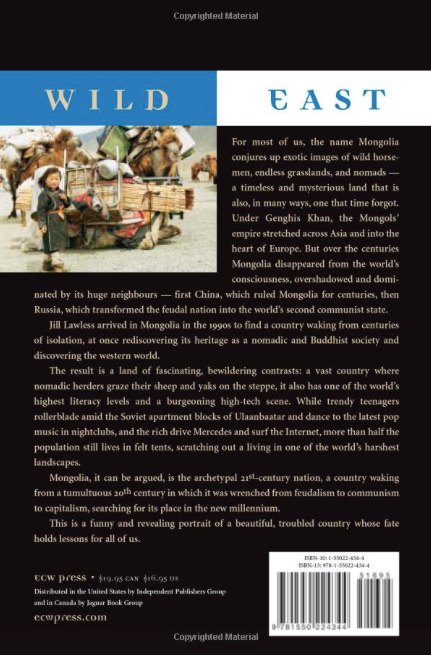
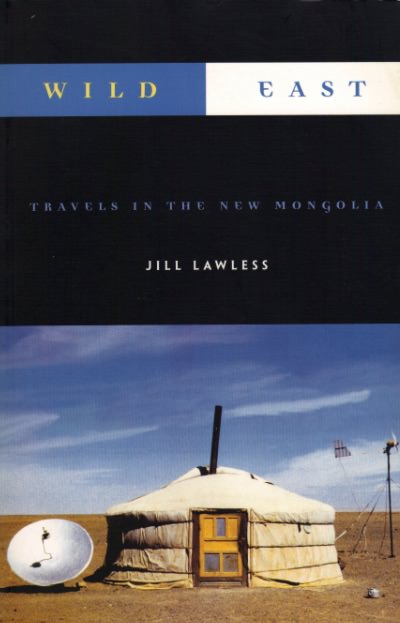
    Published in 2000 (ECW Press: Toronto), Wild East: Travels in the New Mongolia is 17 years old. It is also 100 years since the 1917 October Revolution in Russia that began the long experiment of the Soviet Union. Mongolia was the second country after Russia to adopt Communism.

    “Engaging…a revealing and often amusing account of her journeys through a beautiful country awakening from a tumultuous era.”

    Wild East author and foreign correspondent Jill Lawless.

    “One of the top 10 Canadian travel books of 2000.” The Globe and Mail

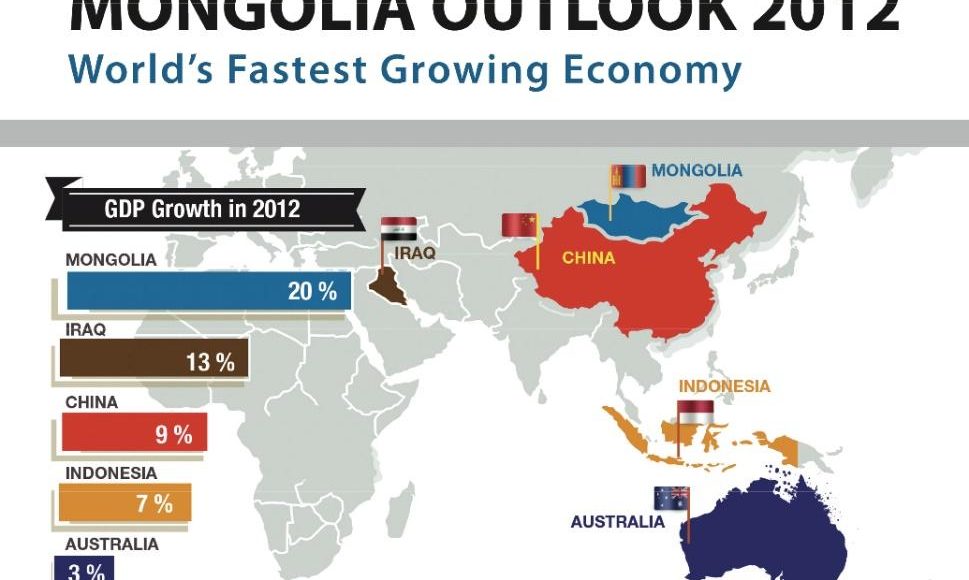
    The world has changed considerably since then; and so has Mongolia. The digital revolution has rolled across the planet, the attacks of 9/11 unleashed a wave of violence and wars, and Mongolia even became the fastest-growing economy in the world a few years ago (2012). But back when this book was researched, Mongolia was just coming out of decades of isolation within the Soviet orbit under Communism, and the country experienced in the 1990s “one of the biggest peacetime economic collapses ever” (Mongolia’s Economic Reforms: Background, Content and Prospects, Richard Pomfret, University of Adelaide, 1994). 

    “The years 1998 and 1999 have been volatile ones for Mongolia, with revolving door governments, the assassination of a minister, emerging corruption, a banking scandal, in-fighting within the ruling Democratic Coalition, frequent paralysis within the Parliament, and disputes over the Constitution. Economically, the period was unstable and rife with controversies.” Mongolia in 1998 and 1999: Past, Present, and Future at the New Millennium by Sheldon R. Severinghaus, Asian Survey, Vol. 40, No. 1, A Survey of Asia in 1999 (Jan. – Feb., 2000), pp. 130-139 (Publisher: University of California)

    That collapse made for some crazy times, as Wild East shows. 

    Wild East was called one of the top 10 Canadian travel books of 2000 by The Globe and Mail. 

    Reviews for Wild East: Travels in the New Mongolia by Jill Lawless:

    The Globe and Mail

    “Engaging…a revealing and often amusing account of her journeys through a beautiful country awakening from a tumultuous era.”

    The Georgia Straight, Vancouver

    “This readable and reportorial book is the perfect antidote to … those tiresomely difficult, pointlessly dangerous, and essentially fake expedtions undertaken against the advice of local people who know better.”

    Toronto Star

    “Lawless introduces us to Mongolia’s tabloid press, to teenage mineworkers, sharp-eyed young hustlers, nomads whose only possessions are their livestock, Mongolian wrestlers and Mongolian horse races.”

    Mongolian Buryat Civilisation Bookstore

    “Wryly funny and wide-spectrum account of Mongolia’s tumultuous rebirthing into the 21st century. Half the population lives in Soviet apartment blocks and watches satellite TV but the other half still eek a living from the exquisite, barren hills while living in nomadic felt tents. Of course, I’d much rather be in the tents… but whatever your preference, you will definitely enjoy Ms. Lawless’ writing. She was editor of an Ulaan Baator newspaper for two years, and she tells it like it is. Very highly recommended.”

    Alicia J. Campi in Mongolian Studies

    “Jill Lawless’ book is not a scholarly tome per se, yet it is of definite value to the contemporary Mongolian scholar … Lawless’ period is 1997-1999, the heart of the tumultuous and ill-spent years of Democratic Coalition Government… a period of great hopes for democratic flowering and free market enterprise leading the nation to prosperity and progress.” 

    Join the conversation about Wild East: Travels in the New Mongolia at goodreads and post reviews: https://www.goodreads.com/book/show/773080.Wild_East

    Read a story by Jill in The Guardian (9 June 1999): Letter from Mongolia | Herding instinct .

    Copies of Wild East: Travels in the New Mongolia by Jill Lawless are still available in various editions and languages.
    A promotional poster for Wild East from 2003.

    Explore further Jill Lawless’ work here: https://muckrack.com/jilllawless

    UK edition (Summersdale Travel: 2002). Front cover images © David South and Liz Lawless.

    The New York Post called Wild East: Travels in the New Mongolia “harrowing, hilarious” (April 26, 2016).
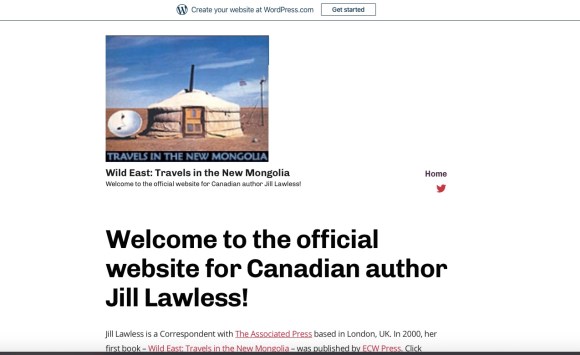
    New brand sites for Jill Lawless and Wild East on the way for 2021.
    “This is a good, fun book about life in Mongolia. … it’s an interesting and often amusing series of stories loosely connected.”

    On the difference between Wild East: Travels in the New Mongolia and other travel writing on contemporary Mongolia: 

    “Others sent me Jill Lawless’s Wild East: The New Mongolia, a compilation of pieces she wrote when she was editor of Mongolia’s English-language newspaper, the UB Post, during Mongolia’s transition from a socialist people’s republic to young democracy. With the wind shaking the frame of my ger, I lit the stove and read what these and other writers claimed to have found just outside my flapping felt walls.

    “By the time veteran journalist Jasper Becker’s Mongolia: Travels in an Untamed Land arrived, I had put aside books written since Mongolia opened up to the West in the early 1990s. Most Western travellers and writers discovered the same sights from the back of a borrowed horse. Only Lawless had investigated the place over time on its own terms. The others, full of pith and vinegar and a standard set of assumptions about what they would find, built books on flights of fancy – golfing across Mongolia, following the path of medieval monks, ‘rediscovering shamanism’ – that were flimsier even than those that had set me in motion. The books were as exciting as museum diorama, papier-mâché models of their ‘medieval’ travels and capitalist fantasies.” Three Years in Mongolia: Trying to be a Travel Writer, Luke Meinzen, Kill Your Darlings, 10 April 2012

    “I put Becker away and pulled out Wild East by Jill Lawless. She was heaps better than Becker, which wasn’t hard.” MÖRÖN TO MÖRÖNTwo Men, Two Bikes, One Mongolian Misadventure, Tom Doig, Allen & Unwin, 2013

    “In the early 2000s, Canadian journalist Jill Lawless accepted a correspondent position at a news outlet in the remote and isolated foreign capital of Ulaanbaatar, Mongolia. At that time, Mongolia’s media was newly privatized from beneath Communist oversight, and her role was as much a consultant for how to run a newspaper under freedom of the press, as she was a journalist with the UB Post.

    Lawless was in Mongolia during a time of exciting political and cultural transition. Wild East is less of a travel memoir, but rather essays and shorter narratives of creative non-fiction that describe her adventures in reporting. Even so, it provides a compelling narrative into the historical moment when Mongolia dropped its isolation and began to connect to China and Europe on its journey toward modernization.” Three Works of Travel Writing to Ignite Your Imagination (while we patiently wait for the pandemic to run its course), Barefoot Journey with Amanda, 10 Nov 2020.

    Creative Commons License

    This work is licensed under a
    Creative Commons Attribution-Noncommercial-No Derivative Works 3.0 License.

    ORCID iD: https://orcid.org/0000-0001-5311-1052.

    © David South Consulting 2022
  • State Of Decay: Haiti Turns To Free-Market Economics And The UN To Save Itself

    State Of Decay: Haiti Turns To Free-Market Economics And The UN To Save Itself

    By David South

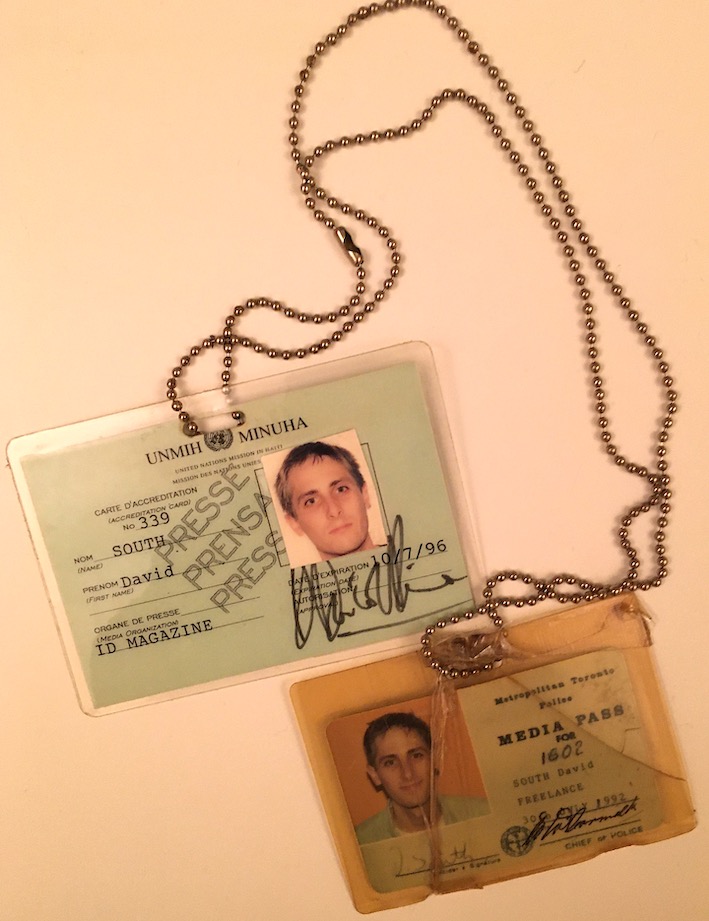
    Id Magazine (Canada), July 11-25, 1996

    Port-au-Prince – Brand-new four-by-four jeeps in various shapes and sizes bounce over the moon-like craters of Port-au-Prince’s roads. The presence of so many expensive vehicles in a country unable to feed all its citizens is hard to take, but it is not one of the worst paradoxes of Haiti.

    The appalling state of the roads – more like occassional stretches of asphalt to break up the monotony of potholes – is an apt symbol of Haiti, a reminder with every jar of the tailbone of the public squalor of the many and the private wealth of the few. The shiny new jeeps are not a sign of recent good times, but reveal who has all the money in this nation of almost seven million: the tiny Haitian elite, thieves, the United Nations and the multitude of non-governmental aid agencies.

    When democratically-elected president Jean-Bertrand Artistide, deposed in a 1991 coup, returned to complete his term in office in 1994, many Haitians hoped that this country would at last begin to shake off centuries of exploitation at the hands of a selfish elite backed by American corporate masters and begin to build a democratic future.

    The United Nations mission in Haiti, which includes 700 Canadian troops, is intended to support the country’s fledgling democracy. But Haiti’s future remains uncertain – as does the role the UN will play in shaping it.

    Despite negotiating a peaceful and democratic transition last February 7 from Aristide – a firebrand former priest and passionate advocate of Haiti’s poor – to successor Rene Garcia Preval, Haiti hasn’t stopped its economic freefall. Economists predict the country won’t match 1991 earning levels until the next century. Political unrest resulting from opposition to the government’s privatization plans could also spell trouble ahead.

    The United Nations presence, due to end June 30, has been extended another five months at the request of the Haitian government. The newly-minted UN Support Mission in Haiti, a military force of 600 UN troops supported by 700 soldiers paid through voluntary contributions, is being assembled. It will replace the current force of 1900.

    Lousy loans

    Meanwhile, the government of Rene Preval is negotiating with the International Monetary Fund (IMF), the World Bank and the United States to get much-needed loans to help balance the budget. Critics say the world’s banks are trying to lock the poorest country in the Western hemisphere further into crippling debt. The Haitian budget is US $750 million, 60 per cent of which the government hopes to raise from loans.

    But there is a condition. Haiti must embark on a structural adjustment programme: widespread firings of the public service, privatization of most of the public sector, loosening of controls over foreign capital, adherance to the ethos of global trading blocks espoused by the North American Free Trade Agreement (NAFTA). Some call this neo-liberalism, others neo-conservatism. Either way, it forces this impoverished country to limit how it can address rebuilding a crumbling infrastructure.

    The government’s hands are tied, though, as the conditions were part of the deal to return Aristide to power.

    A Canadian public relations company, Gervais-Gagnon-Covington Associates, has been paid US $800,000 by the American government to sell the idea of privatization of Haiti’s handful of idle and near-bankrupt state enterprises.

    In order to plunge deep into this Haitian quagmire, I pitch up at the legendary Hotel Oloffson – made famous by novelist Graham Greene in The Comedians – and begin interviewing in the languid atmosphere by the pool.

    “Aristide has put Haitians in a giant trap with the IMF plan,” says Jane Regan, who runs an independent news service based in Port-au-Prince. “The US $1 billion in loans will double the national debt.

    “Haiti used to be self-sufficient in rice – last year they bought US $56 billion in US rice. The roads are worse now than a year ago. Right now the UN mission is of questionable worth and Canadians are getting taken advantage of.  They have been sent to clean up after the Americans. These are the same neo-liberal economic policies that hurt Canadian workers – just imagine what Haitians are feeling!”

    Regan thinks that, so far, the only people to make any money out of this arrangement are businesses and the more than 800 NGOs operating in Haiti. And on that note, the feisty Regan disrobes and plunges into the Hotel’s pool.

    According to Kim Ives, a reporter with the Haitian newspaper Haiti Progres, there are a few cracks in the solidarity between Preval and Aristide: “Aristide is hitting out against privatizations. In a two-hour TV interview, he drew a line between himself and Preval.”

    One of the few visible signs of change in Haiti is the dusty Octobre 15 road leading from the airport past former president Aristide’s palatial home on its way to the wealthy suburb of Petionville. It is bordered on one side by Camp Maple Leaf, and on the other by dilapidated shanty towns and desperate street vendors.

    Cynics point out the road conveniently serves the interests of the elite once again. It offers a direct and more or less pothole-free route from the secluded mansions of Petionville to the airport – a crucial escape route in a politically volatile developing country. In fact, a development of monster homes that would make a Canadian suburbanite blush is going up near the airport to capitalise on this.

    Canadian troops

    Caught between the Haitian government and its people is the United Nations, including Canada’s troops. Canadian troops form the first line of defence – along with Preval’s personal secuity guards – to defend the National Palace. They accompany the president wherever he goes, 24 hours a day.

    Some fear growing resentment among Haitians for government policies will pitch the population against the soldiers.

    At Camp Maple Leaf, the home base of Canada’s military contingent in Haiti, the troops are scrambling to adjust to a new mission sanctioned by the United Nations. As of June 30, they must take a back seat to the troubled Haitian police force as it tries to prove that the intensive training provided by police from around the world has paid off.

    In the first week of July, the Canadian soldiers of the Royal 22nd Regiment – the famous Vandoos  – receive confusing news about a change in their firing orders or Rules of Engagement. ROEs dictate the tone and behaviour of peacekeepers on a UN mission and, as the experience of Somalia demonstrates, they can be the difference between success and disaster.

    As the new mandate starts, the Canadians are first told they will be only able to use deadly force to defend themselves and not Haitians. If a member of the government is assassinated, they must stand by. If a Haitian is clubbed to death before their eyes, they must stand back. It is a qualitative change from their ROEs prior to June 30.

    Ottawa military spokesman Captain Conrad Bellehumour says the change is indicative of an evolving mandate. But a military spokesman in Haiti says the old ROEs are now back in force, and Canadians can intervene to save a Haitian’s life.

    “Maybe somebody’s been listening to Jean-Luc Picard too much,” quips retired Brigadier-General Jim Hanson, in a reference to TV show Star Trek’s prime directive of non-interference in a culture.

    Preval’s police

    A large banner hangs over a Port-au-Prince street: “Police + Population = Securite + Paix”. The UN has placed its greatest emphasis on reforming Haiti’s policing and justice system. The Police Nationale d’Haiti (PNH) was formed, and the RCMP and the American Federal Bureau of Investigation (FBI) were asked to provide training. The idea is to break from the past – when the military used policing as an opportunity to terrorize the population – and establish a police force to serve and protect.

    But the efforts of the Haitians and their international police advisers have had a mixed success. According to Canadian soldiers, the Haitian police need to be coaxed into conducting routine patrols and have not given up patrolling in large numbers in the back of a pick up truck with rifles at the ready. To be fair, seven police officers have been killed since January, in what many believe is an organized campaign of terror orchestrated by sympathizers of the old dictatorship and drug gangs.

    According to Sergeant Serge Martin of the Vandoos, “The PNH use 15 police officers to patrol and don’t talk to anybody.”

    “You don’t depend on police to protect you,” claims Regan. “The Haitian government has no control over them. You don’t know if there is going to be a coup tomorrow.”

    Jean-Yves Urfie, editor of the pro-democracy Libete newspaper in Port-au-Prince, believes the campaign to kill police goes back to the United States. “I am convinced the coup d’etat was financed by the Republican administration. I believe the Republicans want to destroy things here to show (President) Clinton wasted his time bringing Aristide back.

    “The government was forced to incorporate former members of the military into the police force. And it would be terrible if the population develops the impression all cops are bad.”

    “They are 10 years away from a viable police force,” concludes Hanson.

    A stop at the fourth precinct police station shows just how far things still need to go. At the counter is a lone police officer, sharply turned out in his beige shirt and yellow-striped navy pants, courtesy of the Royal Canadian Mounted Police. But this proves to be a veneer of change. Canadian soldiers ask if everything is alright. They then ask to see tonight’s prisoners. The officer sheepishly leads the troops down a narrow corridor to 9 ‘ by 12 ‘ foot cell stuffed with nine prisoners. It is very hot and the stench from an open drain overflowing with sewage is nauseating.

    Outside the Penitencier National in downtown Port-au-Prince, a yellow concrete structure with peeling pain, Haitians lined up to feed the inmates, talk about their frustrations with a justice system that has collapsed. Many complain that only the rich, who can hire lawyers, can enjoy the fruits of democracy. While state-directed beatings and killings have been dramatically reduced, most prisoners rot on remand until they are charged with a crime. Heiner Rosentdahl, the UN representative in Haiti in charge of prison reform, tries to be upbeat. “There have been no changes in conditions in Haiti’s prisons. Treatment of the prisoners is better, though there have been some abuses. We have developed a nation-wide register book of prisoners to help keep track of who is in prison.”

    Another mixed blessing, according to Rosendahl, is the new requirement that all prisoners be fed two meal a day. The food is so poor, prisoners have been getting sick.

    He is frustrated with the pace of penal reform. “The Haitian prison system hasn’t had a budget since October 1995, because of battles within the parliament,” he says. “The Haitian government didn’t ask for a plan to change this situation despite the minister of justice visiting the prison for the first time.”

    According to Rosendahl, it is not the routine killing of thieves by mobs that worries the elite. Nor is it the assassination of police officers, or the untold thousands dying of disease and hunger. The only thing that is beginning to rock their world is a new phenomenon for Haiti: kidnapping and extortion.

    Voodoo economics

    For such a seriously depressed economy, there is an astonishingly large number of lottery booths – or Borlettes – on Haitian streets. They are so plentiful, they join gas stations as the main landmarks of the streets.

    The industrial park which is now home to the remaining American troops stationed in Port-au-Prince, is a good monument to Haiti’s economic problems. Dilapidated and only barely functioning, this facility once supported, directly and indirectly, a large portion of the city’s population. As crummy as the sweatshop jobs were, they provided valuable income for the capital’s poor.

    The Haitian economy under Francois Duvalier and his son, Jean-Claude, before the chaos of the late 1980s and 1990s, was based on assembling manufactured goods for the US market. Haiti was the world’s largest producer of baseballs, and ranked as “top three in the assembly of such diverse products as stuffed toys, dolls and apparel, especially brassieres. All told, the impact of international subcontracting was considerable,” according to author Paul Farmer in his book, The Uses of Haiti.

    Today, Pierre Joseph, a Haitian-American from New York City, has a new job: he screens the ID cards of Haitian workers as they enter the park. He says there were once over 50 factories operating here; now there are 30.

    Evidence of Haiti’s economic collapse is everywhere. On the walls outside the National Palace is scrawled Aba Preval Granhanje – Preval is a liar. Across the wide boulevard in a square are around 75 homeless children. They joke with the Canadian soldiers, especially boyish 2nd Lt. Marc Verret, who looks like a baby in soldiers clothes. The kids beg him for water and money.

    In the market area, the piles of garbage, rotting meat and excrement make a muddy devil’s stew. Homeless children sleep on top of the abandoned crates. One small child is curled up in an American flag, asleep.

    Desecrating dead

    The dead also suffer the indignities of economic ruin. Outside the gates of the Hopital Generale, a man lies dead on a broken trolley in the yard. Others still alive, with limbs missing, are sprawled out on the ground. Chickens and goats roam the grounds. In the back is the main morgue for Port-au-Prince. The odour just 25 feet from the entrance to the morgue is normal for this city strewn with rotting garbage and stewed by a hot sun.

    Inside, an overpowering odour like rotten chicken meat is the product of 450 human cadavers. Like rag dolls laid out in a ghoulish toy store, row upon row of children dead from starvation and disease – Haiti’s infant mortality rate is 127 per 1,000 babies born – are stacked almost to the ceiling. There are also adults. Old women, young men badly mutilated for stealing, are strewn out on the dirty concrete floor and on shelves.

    There is no refrigeration, and according to military doctor Major Tim Cook, “something really nasty is going to come out of there if they don’t do something.”

    Proving peacekeeping

    More is at stake in Haiti than the re-building of a politically and economically devastated nation. For Canada’s armed forces, shaken and little stirred by the Somalia scandal, it is an opportunity to make amends. This time around, the peacekeepers are keeping the needs of the local population foremost in their gun sights. When the Vandoos head out on another one of their 24-hour patrols, the atmosphere is friendly and filled with gentle ribbing with the locals. They have the advantage of being able to speak French, a language understood to varying degrees by most of the population.

    The approach of the individual soldiers varies widely. On a routine patrol, Alpha Company engaged in good-natured kidding around, with splashing the locals the worst offence. But a day out with Charlie Company, led by Sergeant Serge Martin, proved another story. The two privates assigned to accompany a group of journalists were a couple of operators. The day included a visit to a perfume shop, a trip through the wharf area looking for prostitutes and constant propositioning of the local women.

    One Canadian corporal with the Vandoos, Eric Charbonneau, has been trying to make a small difference to the lives of the 400 people living in the community of Cazeau, a shanty town near the international airport. He has started literacy and hygiene lessons and raised money to help the residents build concrete houses to replace the mud dwellings they currently inhabit.

    “I was walking along the fence and started to build a relationship with the kids,” he explains. “Some guy approached me and needed some help. It took three weeks to build a relationship. They are too used to white people giving away things for doing nothing. They were surprised when they had to work for it.”

    At the gates to Camp Maple Leaf is a spray-painted sign. In Creole, French and English beside a Canadian flag, it says “No More Jobs.” While it could look at home back in Canada, it illustrates how important the presence of soldiers, the United Nations and charities are right now to the economy.

    Some observers see the UN presence as part of a slide back into dependency on foreign money, restricting Haiti’s ability to assert itself. But others believe the turn to the international community is Haiti’s last hope of breaking with a past littered with dictatorships and poverty.

    According to Captain Roberto Blizzard – an erudite and wise observer of the situation – the base has been stampeded with desperate Haitians looking for work. Blizzard has tried to find work for as many Haitians as he can, even helping them to form a laundry co-operative he hopes will survive long past the Canadians’ stay.

    “There is a danger of the Haitian people turning into full-time beggars,” he says with sadness.

    Further reading:

    Failed States and Institutional Decay: Understanding Instability and Poverty in the Developing World by Natasha M. Ezrow and Erica Frantz, Bloomsbury Academic, 18 July 2013.

    Towards a taxonomy of failed states in the New World Order: decaying Somalia, Liberia, Rwanda and Haiti by Jean-Germain Gros, Third World Quarterly, Vol. 17 No. 3 September 1996 Section 5 Page 455

    https://davidsouthconsulting.org/2021/10/28/ending-gang-violence-while-cleaning-the-streets-in-haiti/

    https://davidsouthconsulting.org/2021/09/01/haiti-earthquake-prompts-tech-aid/

    https://davidsouthconsulting.org/2021/01/08/haitian-coffee-becoming-a-hit-with-american-connoisseurs/

    https://davidsouthconsulting.org/2021/10/28/milk-co-operatives-help-hungry-haiti/

    https://davidsouthconsulting.org/2022/09/23/opinion-canada-is-allowing-u-s-to-dictate-haitis-renewal-more-news-and-opinion-on-what-the-un-soldiers-call-the-haitian-vacation/

    https://davidsouthconsulting.org/2021/01/26/u-s-elections-update-clinton-is-using-canada-to-keep-control-of-haiti/

    Creative Commons License

    This work is licensed under a
    Creative Commons Attribution-Noncommercial-No Derivative Works 3.0 License.

    ORCID iD: https://orcid.org/0000-0001-5311-1052.

    © David South Consulting 2025