Tag: food security

  • India’s Modernizing Food Economy Unleashing New Opportunities

    India’s Modernizing Food Economy Unleashing New Opportunities

    By David SouthDevelopment Challenges, South-South Solutions

    SOUTH-SOUTH CASE STUDY

    Increasing prosperity in India is reshaping the country’s relationship to its food. A number of trends are coming together that point to significant improvements to India’s long-running problems with food supply and distribution. This matters because India, despite its two-decade economic boom – and increasing middle-class population – is still home to about 25 per cent of the world’s hungry poor, according to the World Food Programme (WFP).

    According to Indian government figures, around 43 per cent of children under five are malnourished and more than half of pregnant women between 15 and 49 suffer from anaemia (http://en.wikipedia.org/wiki/Anemia), a consequence of poor diets (WFP).

    Many Indians go hungry despite the fact that the country grows enough food for its entire population. The problem isn’t lack of food but a wasteful system that fails to distribute affordable food efficiently and to make participating in the food system a viable income source. Farming employs as much as 70 per cent of Indians. But many work small plots of land, are heavily in debt and earn a meagre income.

    However, a number of developments are improving the efficiency of India’s food system and modernizing the way it works.

    There are signs that big changes lie ahead: New restaurants exploring foreign cuisines; modern supermarkets; online food shopping services; food academies teaching new skills; food gurus proselytising for new approaches; and a thriving publishing and media sector.

    They are creating new jobs, increasing price competition and encouraging more modern delivery, marketing and distribution systems.

    In 2011 the introduction of global supermarkets into the Indian marketplace became a hot debate. The Indian government announced it would open the marketplace to global competition and foreign direct investment (FDI), but put the move on hold in December after an outcry by political parties and protests by small- and medium-sized retailers fearful it would harm livelihoods. The Indian supermarket sector is a market estimated to be worth US $475 (The Guardian).

    One retailer that is already bringing international methods to Indian retailing is the Best Price chain of wholesale stores. Best Price is a joint venture between U.S.-based Walmart and Bharti Enterprises, one of India’s largest business groups. In 2007, Walmart India made a deal with Bharti Enterprises to set up a cash and carry business called Best Price Modern Wholesale. The first store opened in 2009, and by 2012 there were 15 outlets.

    By teaming up with Walmart, Bharti Enterprises gets to learn from one of the world’s leading retailers and a pioneer in efficiencies, logistics, supply chain management and sourcing.

    The stores have all the hallmarks of modern food selling – warehouses, sophisticated inventory control, hygienic conditions and connection to new information technologies (http://www.indiaretailing.com/bharti-walmart-II.asp).

    Best Price Modern Wholesale employs 3,710 people, and the stores sell more than 6,000 items, a mix of food and non-food products. It claims 90 per cent of the goods and services are sourced locally.

    Food is a highly volatile and politicized issue in India. High food inflation – which reached 12.21 per cent in November 2011, according to India’s Finance Minister Pranab Mukherjee – has led to political tensions. Inflation has driven up the price of staple foods, essential commodities and imported products.

    At the same time, India’s commerce ministry has forecast that 10 million jobs will be created if foreign supermarkets are allowed to set up in India. Many of these jobs will be in logistics as more efficient, modern methods shake up India’s food industry. Poor logistics in the Indian food sector means that as much as 40 per cent of produced food does not reach consumers. This waste comes at a high cost in a country with 50 million malnourished children.

    New jobs are already being created in the country’s restaurant industry.

    While there have always been high-end restaurants in India’s cities, the gastronomic scene has received a recent boost from expatriate Indian restaurateurs returning from the competitive London, Tokyo and New York scenes, bringing skills and experience from some of the most demanding kitchens in the world.

    One example is Megu, a restaurant in New Delhi’s Leela hotel(theleela.com/new-delhi-megu.html) that sells Japanese-influenced food.

    Such cuisine is being called “elite Indian international gastronomy”, according to The Guardian newspaper.

    “We are aiming at the affluent traveller or the ultra-rich local,” Aishwarya Nair, a senior executive at the Leela, told The Guardian. “The idea is to give people a taste of globalization. In our restaurant you don’t know you are in India. You could be in New York, Japan, anywhere.”

    That appeals to many newly affluent Indians, food critic Vir Sanghvi told the newspaper.

    “The food (at somewhere like Megu) doesn’t matter so much as the experience and the glamour,” Sanghvi said. “There is a lot of money outside the traditional elite now and these people are looking for ways to spend it on something that seems sophisticated.”

    The new food fascination is also leading families who once would have employed a cook to watch 24-hour TV channels about food. This programming changes habits and encourages buying new foods and exploring new flavours.

    Market analysts believe these trends are likely to continue. A middle class with spending power has been growing in India for almost two decades, and forecasts see the number of middle class Indians reaching 250 million by 2016.

    “With bigger and better restaurants and international food brands coming in to the country, it’s only a matter of time before fine dining finds its place among a growing cosmopolitan population,” said Siddharth Mathur, manager of the independent Smoke House Room restaurant (facebook.com/SmokeHouseRoom).

    Online food shopping in India is also thriving. Research by Juxt found that 65 million people use the web in India, four-fifths of whom shop online. Murali Krishnan, head of eBay India, told the BBC that the country could become one of the top 10 e-commerce hubs in the world by 2015.

    Online grocery services include MyGrahak.com, which calls itself “India’s Largest Food Store” and offers home delivery of food, toiletries and pet supplies. Another is Greenytails.com, which brings together multiple food retailers into one online shopping website and is based in Bangalore and Hyderabad.

    As an example of the spin-offs that can be created from rising interest in food culture, there is the story of Nita Mehta. Considered one of India’s most celebrated cookbook authors, Mehta (nitamehta.com) not only publishes recipes but also runs a chain of cooking academies.

    As she tells it, her interest in cooking was always there and she started experimenting at home with new recipes for her friends and family. The response was encouraging and she started teaching people how to make ice cream in her home. Curious students flocked to her classes to learn how to make flavours like mint, chocolate chip and mocha.

    Following on this success, she started teaching classes in baking, Chinese cooking and what she calls “multicuisine”.

    The lessons soon turned into a cookbook, which she wrote after doing her household chores. But her battles had only begun: publishers were not interested so she self-published. She called her publishing company Snab Publishers and released her first book, “Vegetarian Wonders”. It was modestly successful but it was with her second book, “Paneer All the Way”, that things got cooking. Her publishing company has now produced 400 cook books and sold 5 million copies. She has won international awards, does TV cooking programmes, has established several cooking institutes in New Delhi and teaches classes in the U.S., Canada, Britain and other countries.

    With successes like Nita Mehta, the Indian food revolution is well underway.

    Published: March 2012

    Resources 

    1) India Retailing.com: Calling itself “a path-breaking retail information interface portal. Addressed and directed towards the retailing community across the world, the portal provides a wide-angle view and analysis of the business of retail in India”. Website: indiaretailing.com

    2) Retailers Association of India (RAI): RAI is the unified voice of Indian retailers. RAI works with all the stakeholders for creating the right environment for the growth of the modern retail industry in India. Website: rai.net.in/

    3) The Wal-Mart Effect: A book on how highly competitive retail supermarkets can drive down food prices and inflation. Website: http://www.amazon.co.uk/Wal-Mart-Effect-Out—town-Superstore/dp/0141019794/ref=sr_1_1?s=books&ie=UTF8&qid=1322570100&sr=1-1

    4) More on India’s food situation from the World Food Programme. Website: http://www.wfp.org/countries/india

    5) Report on the State of Food Insecurity in Urban India: A report from Networked Ideas. The Report reveals an alarming situation of a permanent food and nutrition emergency in urban India. Website: http://www.networkideas.org/focus/feb2012/fo28_M_S_Swaminathan.htm

    Development Challenges, South-South Solutions was launched as an e-newsletter in 2006 by UNDP’s South-South Cooperation Unit (now the United Nations Office for South-South Cooperation) based in New York, USA. It led on profiling the rise of the global South as an economic powerhouse and was one of the first regular publications to champion the global South’s innovators, entrepreneurs, and pioneers. It tracked the key trends that are now so profoundly reshaping how development is seen and done. This includes the rapid take-up of mobile phones and information technology in the global South (as profiled in the first issue of magazine Southern Innovator), the move to becoming a majority urban world, a growing global innovator culture, and the plethora of solutions being developed in the global South to tackle its problems and improve living conditions and boost human development. The success of the e-newsletter led to the launch of the magazine Southern Innovator. 

    Creative Commons License

    This work is licensed under a
    Creative Commons Attribution-Noncommercial-No Derivative Works 3.0 License.

    ORCID iD: https://orcid.org/0000-0001-5311-1052.

    © David South Consulting 2023

  • Staple Foods Are Becoming More Secure in the South

    Staple Foods Are Becoming More Secure in the South

    By David SouthDevelopment Challenges, South-South Solutions

    SOUTH-SOUTH CASE STUDY

    Finding ways to ensure food security in countries experiencing profound economic and social change and stress is critical to achievement of development goals.

    Food security is crucial to ensuring economic development is sustainable, and it is vital to long-term human health. Just one bout of famine can damage a generation of youth, stunting brain development and leaving bodies smaller and weaker than they should be.

    Thankfully, many innovators are working on this problem and are making significant progress. A report from the Asian Development Bank, The Quiet Revolution in Staple Food Value Chains (http://www.adb.org/publications/quiet-revolution-staple-food-value-chains), found improvements to security of rice and potatoes – common staple foods in many countries. It said the so-called value chains – the various activities a company does to deliver a product or service to the marketplace (http://en.wikipedia.org/wiki/Value_chain) – for potatoes and rice have seen significant improvements in Bangladesh, China and India.

    This is important because improvements in access to staple foods will mean better food security and less threat of extreme hunger events. This matters because it just takes one extreme hunger event and a generation is scarred for life.

    The human brain is a heavy user of energy: it uses between 20 and 30 per cent of a person’s energy intake. Failure to consume enough calories means brain functioning begins to  be altered (brain-guide.org).

    Hunger and starvation slow a person’s mental responsiveness. Low energy intake from minimal diets leads to apathy, sadness and depression. Fetuses and infants are especially sensitive to brain damage caused by malnutrition. A malnourished child can suffer life-long low intelligence and cognitive defects.

    More than 70 per cent of the world’s 146 million underweight children aged five and under live in just 10 countries, with more than 50 per cent located in South Asia alone (UNICEF). A quarter of all children – roughly 146 million – in developing countries are underweight, and it is estimated that 684,000 child deaths worldwide could be prevented by increasing access to vitamin A and zinc (WFP).

    Undernutrition contributes to 53 per cent of the 9.7 million deaths of children under five each year in developing countries (UNICEF).

    Food insecurity also shows on the faces of people who experience it. This extreme stress scars people and harms their prospects in the labour market and their ability to improve their incomes.

    Why is access to staple foods improving? It seems, according to the report, to result from innovations such as rapid modernization, with the increasing roll out of supermarkets, the use of cold storage facilities and large rice mills. It also cites the impact of small farmers taking on modern technologies, such as mechanized farming, and making the most of soil by using fertilizers and efficient techniques.

    Supermarkets by their nature encourage highly sophisticated supply lines to ensure a steady stream of fresh produce coming in from farms to urban areas. Because of the variety and vast range of produce on offer, they require finely-tuned organizing models and information technologies. In short, they radically alter the way people buy their food, and what people will expect from food providers.

    By negotiating deals with farmers, supermarkets create stability, as well as low and competitive prices. They allow for better traceability for food and give consumers more confidence in what they are purchasing. They use cold storage, which means food lasts longer and there is less waste than if food is left to spoil in a marketplace without refrigeration – a revolutionary change in hot countries.

    The downside with supermarkets, as has been the case in some countries, is they can quickly dominate the marketplace and push out all other competitors with their economies of scale. When this happens, farmers can also find themselves with little bargaining power again and be hostage to the price the supermarket tells them to sell their product at.

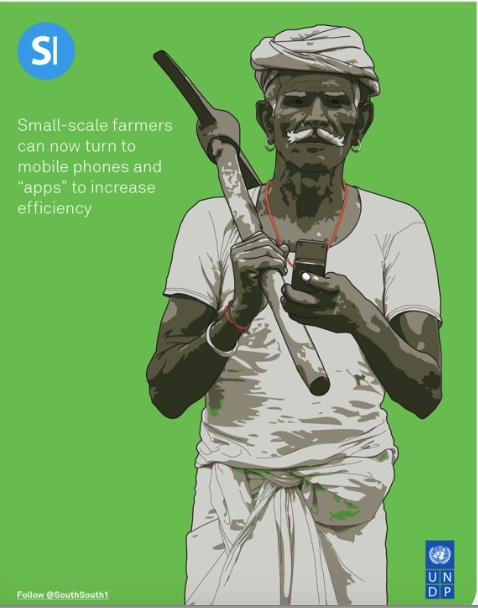
    Another critical improvement is the rapid spread of mobile phones. Armed with a mobile phone, small-scale farmers are able to access critical knowledge and information. This means they can make better decisions and quickly adjust what they are doing when mistakes are made.

    The survey found that India is a country where the food-supply game has changed dramatically. In the past, traders would advance cash to farmers in the form of loans. But since the use of mobile phones has increased, the balance of power has shifted: farmers now have many other options to finance their operations than turning to middlemen and traders. This means they are no longer as easily manipulated by the traders and can negotiate better prices. Also, better roads, combined with greater competition to provide services to farmers, are improving farming of staple foods in general.

    Among potato farmers in rural areas, 73 to 97 per cent have mobile phones and use them to organize deals with traders or receive market information. The take-up of mobile phones was also a recent development for the farmers: most had acquired a mobile phone in the last four years.

    It is clear this quiet revolution in food security for staples is a result of greater use of innovative technology and taking on of new techniques.

    Published: July 2013

    Resources

    1) How to start a supermarket in Lagos, Nigeria: A supermarket is one of the most lucrative businesses that can thrive anywhere in the world. Website: http://www.ackcity.net/supermarket-startup-in-lagos

    2) Write a supermarket business plan: Templates for writing professional business plans. Website: http://planmagic.com/business_plan/supermarket_business_plan.html

    3) How to get your product into a supermarket: Use this mindmap to remind you what you should be doing at every stage of the process. Website: http://www.smarta.com/advice/suppliers-and-trade/logistics-management/mindmap-how-to-get-your-product-into-a-supermarket/

    4) The hidden tricks behind making a successful supermarket: Website: http://www.independent.co.uk/news/business/news/the-secrets-of-our-supermarkets-8228864.html

    Development Challenges, South-South Solutions was launched as an e-newsletter in 2006 by UNDP’s South-South Cooperation Unit (now the United Nations Office for South-South Cooperation) based in New York, USA. It led on profiling the rise of the global South as an economic powerhouse and was one of the first regular publications to champion the global South’s innovators, entrepreneurs, and pioneers. It tracked the key trends that are now so profoundly reshaping how development is seen and done. This includes the rapid take-up of mobile phones and information technology in the global South (as profiled in the first issue of magazine Southern Innovator), the move to becoming a majority urban world, a growing global innovator culture, and the plethora of solutions being developed in the global South to tackle its problems and improve living conditions and boost human development. The success of the e-newsletter led to the launch of the magazine Southern Innovator. 
    Creative Commons License

    This work is licensed under a
    Creative Commons Attribution-Noncommercial-No Derivative Works 3.0 License.

    ORCID iD: https://orcid.org/0000-0001-5311-1052.

    © David South Consulting 2023

  • South African Wine Industry Uncorks Opportunities

    South African Wine Industry Uncorks Opportunities

    By David SouthDevelopment Challenges, South-South Solutions

    SOUTH-SOUTH CASE STUDY

    Wine-making is one of South Africa’s oldest industries and plays a key part in the country’s economy. And now both wine making and production are being transformed and creating new economic opportunities. Once seen only as the preserve of the country’s white minority population, wine is slowly becoming a black thing too.

    With exports growing from less than 50 million litres in 1994 to more than 400 million litres in 2008 – year-on-year growth of 17 percent – it is an industry that would be remiss if it didn’t share the profits of this success with the 80 percent of the country’s population who are black.

    Since the end of the racist Apartheid regime (http://en.wikipedia.org/wiki/South_Africa_under_apartheid) in the mid-1990s, various government and industry initiatives have begun to reverse the iniquities of the country’s wine-making industry – and in turn, introduce more black South Africans to the pleasures of drinking this fine local product.

    One product of this shift in sentiment is Zimbabwean Tariro Masayiti. A vintner for the prestigious South African winery Nederburg, he made history by being commissioned to create two of the three selected official wines for the World Cup of football held in South Africa this year. His Sauvignon Blanc and Dry Rose were drunk while fans watched the competition.

    He says his introduction to the world of wine-making came about by chance.

    “It was by accident really,” he said. “My brother used to work at a farm close to the Mukuyu wineries in Marondera (Zimbabwe). During my days at the university he recommended I do general work at the winery as I needed pocket money and something to help my family with.

    “It was here that I got interested in winemaking. I used to see visitors from all over the world and some of them encouraged me to take up winemaking as a career. I applied and was accepted for a place at the University of Stellenbosch where I studied Viticulture and Oenology (winery),’ Masayiti told SW Radio Africa news.

    “I was headhunted by Nederburg before I even finished my studies.”

    Masayiti’s job involves testing the grapes that go into the winery’s product.

    “I smell them and at the same time look for specific characters and flavours,” he said. “You improve on the job with training – you just need to taste a lot of wine. You need to love wine and having a science background is useful, so you understand the technical processes. But one thing that serves me well is I am dedicated and passionate about winemaking.”

    Another symbol of these changes is Vernon Henn, general manager of Thandi wines (http://www.thandi.com). He worked his way up to this prestigious role in the white-dominated South African wine industry from being an office cleaner. Thandi is the first wine brand in the world entirely owned and run by a black collective.

    Thandi (which means “nurturing love” in the Xhosa language) was started in 1995 and became the world’s first Fair Trade-certified wine in 2003. It sells cabernet sauvignon, merlot, pinot noir, sauvignon blanc, semillon, chardonnay and chenin.

    “The whole of the industry has been changing slowly,” Henn told the Guardian newspaper. “We can now up the pace of transformation. There’s still a misconception that anything from black-owned manufacturing has to be inferior. We have always focused on quality and tried to redress misconceptions about black-owned labels.”

    Other black-owned labels include M’hudi (http://www.mhudi.com); Ses’fikile (http://www.winedirectory.co.za/index.php/138/sesfikile), led by three former township schoolteachers; and Seven Sisters (http://www.sevensisters.co.za/wmenu.php) – cultivated by seven sisters.

    “We are a tiny minority but we are here to stay,” said Vivian Kleynhans of the African Vintners Alliance, comprising eight companies led by black women. “So they will just have to accept us.”

    Another success is the Indaba brand (http://twitter.com/IndabaWines) first launched in the US in 1996, just after South Africa became a democratic republic. “Indaba” is the Zulu word for “a meeting of the minds,” or a traditional gathering of tribal leaders for sharing ideas.

    The brand was created as a celebration of the democratization process in South Africa, and from its inception the wines have conveyed the spirit of South Africa to the world’s wine drinkers.

    The Indaba range of wines consists of the Indaba Sauvignon Blanc, Indaba Chenin Blanc, Indaba Chardonnay, Indaba Merlot and Indaba Shiraz.

    There is also the 6th annual Soweto Wine Festival (http://www.sowetowinefestival.co.za/About.htm) held in the Soweto township of Johannesburg. Soweto was home to the resistance against the Apartheid regime, and still has a very poor slum area in its midst. But it is also home to the new and rising black middle class. Many parts of Soweto could now pass for affluent suburbs in any wealthy country. Hatched as an idea in 2004, the wine festival is about “introducing South Africa’s quality wines to the remaining 80 percent of our population,” says Mnikelo Mangciphu, co-founder of the Soweto Wine Festival“Wine is not for white South Africans only to enjoy. It should be a way of life for all South Africans.”

    Mangciphu is also the owner and manager of the only wine shop in Soweto – Morara Wine & Spirit Emporium, which he launched after the first Soweto Wine Festival in 2005.

    The idea behind the festival is to shift attitudes in South Africa about wine drinking. Soweto has been the home to many trends in the country, from politics to fashion to pop music. And so it seemed the right place to start shifting attitudes towards wine. The number of participants has grown from 3,000 people to 5,520. Five years after it began, the festival showcases wines from 103 wineries.

    Mangciphu had spotted a shift in drinking habits away from just beer and so he opened his wine boutique in Soweto to cater to these new tastes. The shop is an elegant place with wooden shelves displaying the bottles of wine.

    South Africa’s wine industry now employs around 257,000 people directly and indirectly, including farm labourers and those involved in packaging, retailing and wine tourism.

    Wine tourism alone employs over 59 000 people. The Western Cape region, home to much of the wine industry, has seen its economy grow on the back of wine tourism.

    By volume, South Africa ranks ninth in the world for wine production.

    There is a scholarship fund also available to encourage young people to enter the South African wine industry as a career. Mzokhona Mvemve was one of the first awarded the Indaba Scholarship and became South Africa’s first black wine maker in 2001, working for Cape Classics.

    Published: October 2010

    Resources

    Development Challenges, South-South Solutions was launched as an e-newsletter in 2006 by UNDP’s South-South Cooperation Unit (now the United Nations Office for South-South Cooperation) based in New York, USA. It led on profiling the rise of the global South as an economic powerhouse and was one of the first regular publications to champion the global South’s innovators, entrepreneurs, and pioneers. It tracked the key trends that are now so profoundly reshaping how development is seen and done. This includes the rapid take-up of mobile phones and information technology in the global South (as profiled in the first issue of magazine Southern Innovator), the move to becoming a majority urban world, a growing global innovator culture, and the plethora of solutions being developed in the global South to tackle its problems and improve living conditions and boost human development. The success of the e-newsletter led to the launch of the magazine Southern Innovator. 
    Creative Commons License

    This work is licensed under a
    Creative Commons Attribution-Noncommercial-No Derivative Works 3.0 License.

    ORCID iD: https://orcid.org/0000-0001-5311-1052.

    © David South Consulting 2023

  • Cheap Farming Kit Hopes to Help More Become Farmers

    Cheap Farming Kit Hopes to Help More Become Farmers

    By David SouthDevelopment Challenges, South-South Solutions

    SOUTH-SOUTH CASE STUDY

    Food security is key to economic growth and human development. A secure and affordable food supply means people can meet their nutrition needs and direct their resources to improving other aspects of their lives, such as housing, clothing, health services or education.

    One solution hopes to boost productivity for small-scale farmers and make agriculture a more attractive income source to the young and poor, by making it possible to grow food year-round. Kenyan social enterprise Amiran Kenya is selling the Amiran Foundation Kit (amirankenya.com), a simple-to-use greenhouse farming kit. As well as helping people grow both food and their agricultural business, Amiran Kenya hopes young people will also buy the kits at a discount and then sell them for a profit to others.

    The technology to grow food year-round is already available, but it is generally expensive to set up. This cost is usually prohibitive to the poor and young: two groups who could really benefit from the income. And if young people in Africa learn the basics of farming, in time they could expand and develop into agribusinesses and benefit from the growing food demand on the continent.

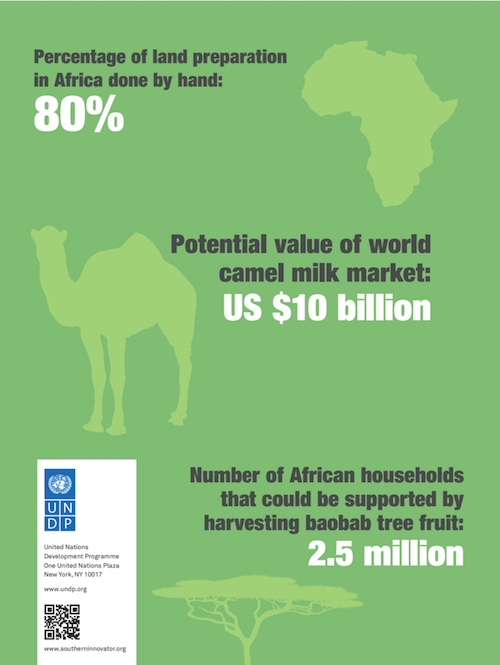
    Africa, a continent undergoing significant economic change, has yet to fully realize its potential as a producer of agricultural products to feed itself and the world. Africa currently has a labour-intensive but very inefficient agriculture system. While many Africans either make their living in agriculture or engage in subsistence farming for survival, much of Africa’s farming is inefficient and fails to make the most of the continent’s rich resources and potential.

    At present, agriculture, farmers and agribusinesses make up almost 50 per cent of Africa’s economic activity, and the continent’s food system is worth an estimated US $313 billion a year (World Bank). A World Bank report, Growing Africa: Unlocking the Potential of Agribusiness (http://siteresources.worldbank.org/INTAFRICA/Resources/africa-agribusiness-report-2013.pdf), argues that Africa could have a trillion-dollar agriculture market by 2030.

    While large-scale agribusinesses are increasing in Africa, it is still reliant on small-scale farmers to meet the daily food needs of most of the population.

    “The time has come for making African agriculture and agribusiness a catalyst for ending poverty,” said Makhtar Diop, World Bank Vice President for Africa. The continent needs to “boost its high growth rates, create more jobs, significantly reduce poverty, and grow enough cheap, nutritious food to feed its families, export its surplus crops, while safeguarding the continent’s environment.”

    Any country that has to import food will be vulnerable to currency fluctuations and the inflation in prices this can cause. A country that has many options for food, and reduces its dependency on imported food resources, will have greater resilience when crisis strikes.

    Greenhouses are a great way to expand the growing season, avoiding ups and downs in temperature. But they can be expensive to set up – something the kit hopes to resolve. A typical greenhouse kit will cost a Kenyan an estimated 10 times more than the Amiran Foundation Kit, which retails at Sh 14,500 (US $168).

    The package includes a drip-feed kit, a 250 liter water tank, a one liter sprayer, instructional growing guides, fertilizer, agro chemicals and high-quality seeds. Crops that can be grown include cabbage, watermelon, kale and spinach. The drip kit is highly durable and can last eight years, according to its manufacturer.

    The kit is being marketed as a “kick starter for the small scale farmers who want to adopt agribusiness” as their method for growing food.

    “The farmers will have a chance to start small and grow bit by bit until they are able to afford the modern greenhouses which will set the ball rolling for them to enjoy the benefits of modern agribusiness,” Yariv Kedar, Amiran Kenya’s Deputy Director, explains on the company’s website.

    The plan is to draw more people into agriculture by showing they do not need to be prisoners of weather patterns. Larger agribusiness enterprises already have the resources to benefit from technology such as greenhouses and avoid the worst effects of the weather.

    By transcending fickle weather patterns, it is possible to reduce the risk of crop failure and the resulting financial damage – one reason people shy away from farming.

    Amiran’s philosophy behind the kit is simple: knowledge and know-how matched with high-quality inputs that do not harm the environment. The idea is to introduce people to the concept of agribusiness, no matter how small their land size. Amiran estimates that by investing Sh 14,500 (US $168), a person could make Sh 25,000 (US $290) per season – making back in a season the initial investment cost.

    Urban farmers and home gardeners are among those who can benefit, along with small-scale farmers in arid and semi-arid areas of Kenya.

    Kedar said the kit’s drip pipes, which deliver water directly to the root of the plant, ensure that “every drop counts” and save between 30 to 60 per cent of water compared to other methods of irrigation.

    “Using the Amiran Foundation Kit, farmers are now able to grow all year round and experience high yields while still conserving the scarce resource, water,” he said.

    Published: March 2014

    Resources

    1) World Vegetable Center: The World Vegetable Center is the world’s leading international non-profit research and development institute committed to alleviating poverty and malnutrition in developing countries through vegetable research and development. Website: http://www.avrdc.org

    2) Songhai Centre: a Benin-based NGO that is a training, production, research, and development centre in sustainable agriculture. Website: http://www.songhai.org/english

    3) Marketing African Leafy Vegetables: Challenges and Opportunities in the Kenyan Context by Kennedy M. Shiundu and Ruth. K. Oniang. Website: http://www.ajfand.net/Issue15/PDFs/8%20Shiundu-IPGR2_8.pdf

    4) African Alliance for Capital Expansion: A management consultancy focused on private sector development and agribusiness in West Africa. Website: http://www.africanace.com/v3

    Development Challenges, South-South Solutions was launched as an e-newsletter in 2006 by UNDP’s South-South Cooperation Unit (now the United Nations Office for South-South Cooperation) based in New York, USA. It led on profiling the rise of the global South as an economic powerhouse and was one of the first regular publications to champion the global South’s innovators, entrepreneurs, and pioneers. It tracked the key trends that are now so profoundly reshaping how development is seen and done. This includes the rapid take-up of mobile phones and information technology in the global South (as profiled in the first issue of magazine Southern Innovator), the move to becoming a majority urban world, a growing global innovator culture, and the plethora of solutions being developed in the global South to tackle its problems and improve living conditions and boost human development. The success of the e-newsletter led to the launch of the magazine Southern Innovator. 
    Creative Commons License

    This work is licensed under a
    Creative Commons Attribution-Noncommercial-No Derivative Works 3.0 License.

    ORCID iD: https://orcid.org/0000-0001-5311-1052.

    © David South Consulting 2023