Tensions were high as the Global Financial Crisis (2007-2008) roiled the world economy.
The unfolding Global Financial Crisis (GFC) in 2008, while caused by the collapse of the financial system, also presented an opportunity to apply the lessons learned in the late 1990s. The crisis was a roller coaster ride and provided a front row seat to what happens when too much debt and fraud overwhelms the financial system. A conference in Switzerland on African trade opportunities in 2008 was disrupted by the crisis as participants received frantic calls from London and New York and grabbed their bags and fled. Later that year I joined Associated Press foreign correspondent Jill Lawless in Reykjavik, Iceland as demonstrations erupted resulting from the collapse of the country’s banks.
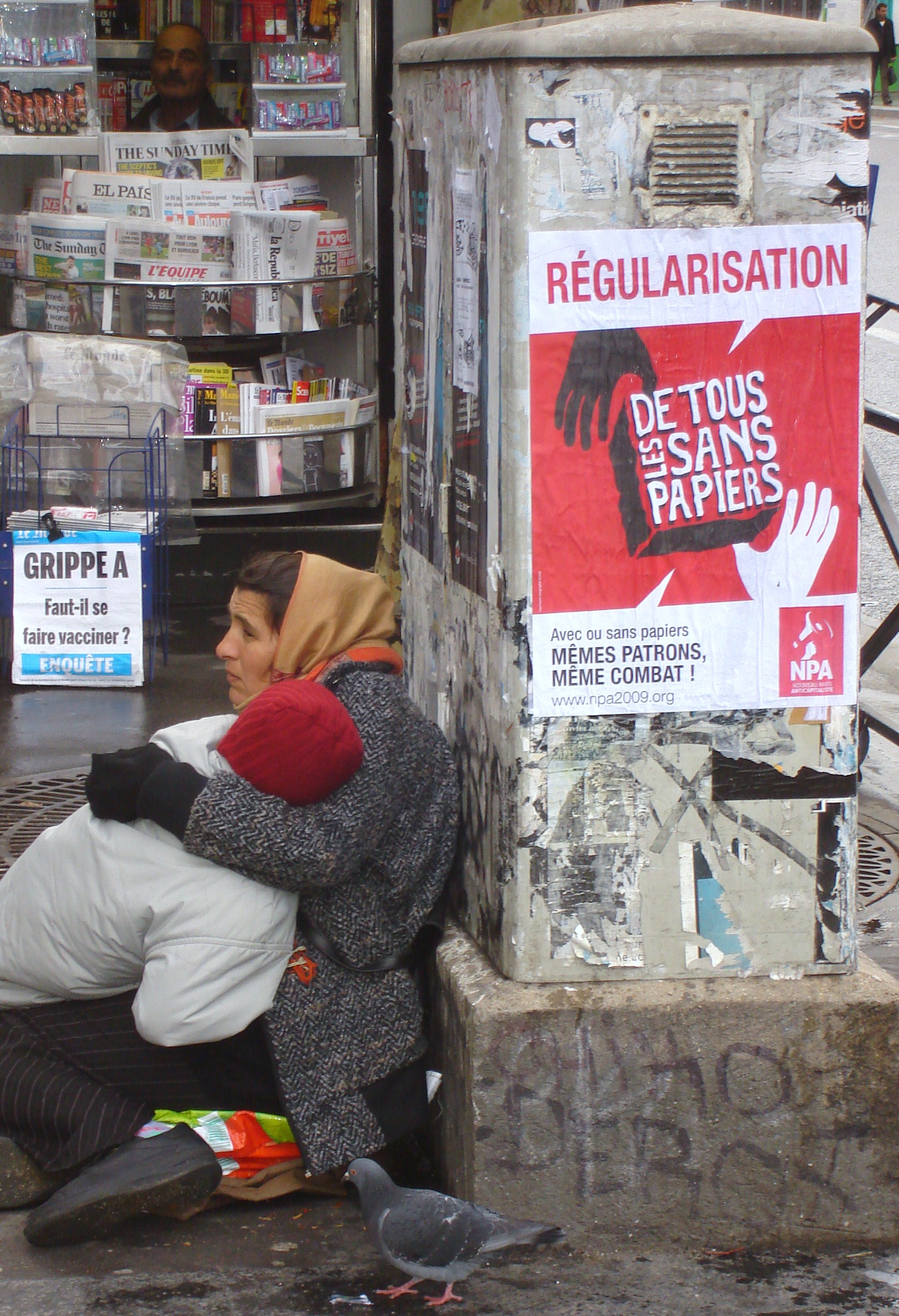
Just as now (2021) 2009 was a year in which the questions revolved around receiving a vaccine (for H1N1) and how best to affirm a person’s identity and citizenship.
A Report from the UN Conference on the Social and Political Dimensions of the Global Crisis: Implications for Developing Countries (12-13 November 2009)
Organised by the United Nations Research Institute for Social Development (UNRISD), Geneva, Switzerland. Held at the Palais des Nations.
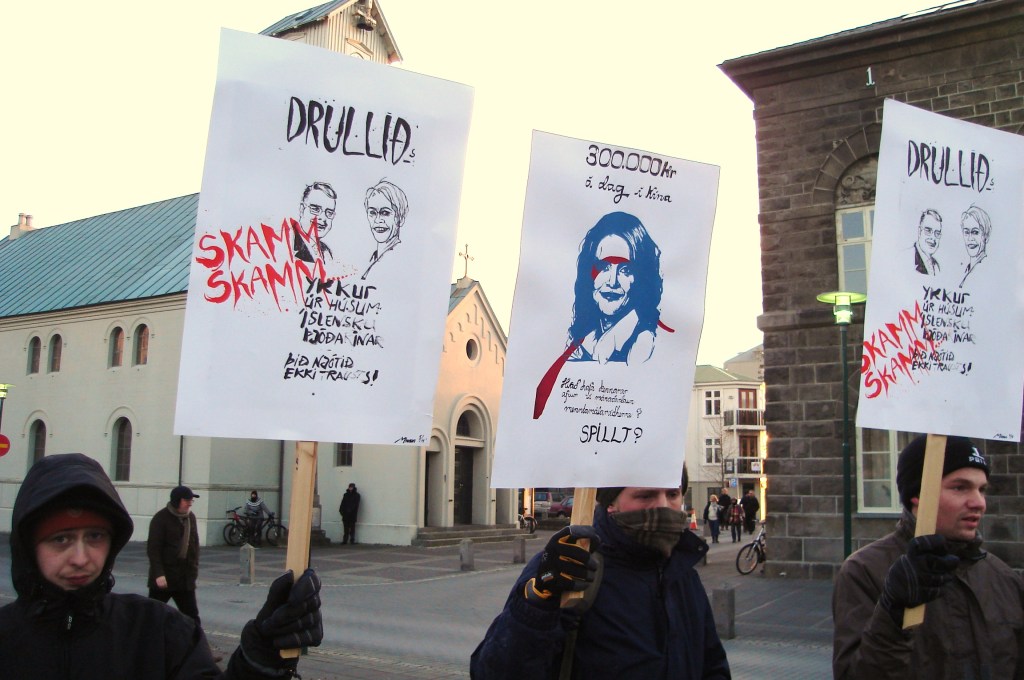
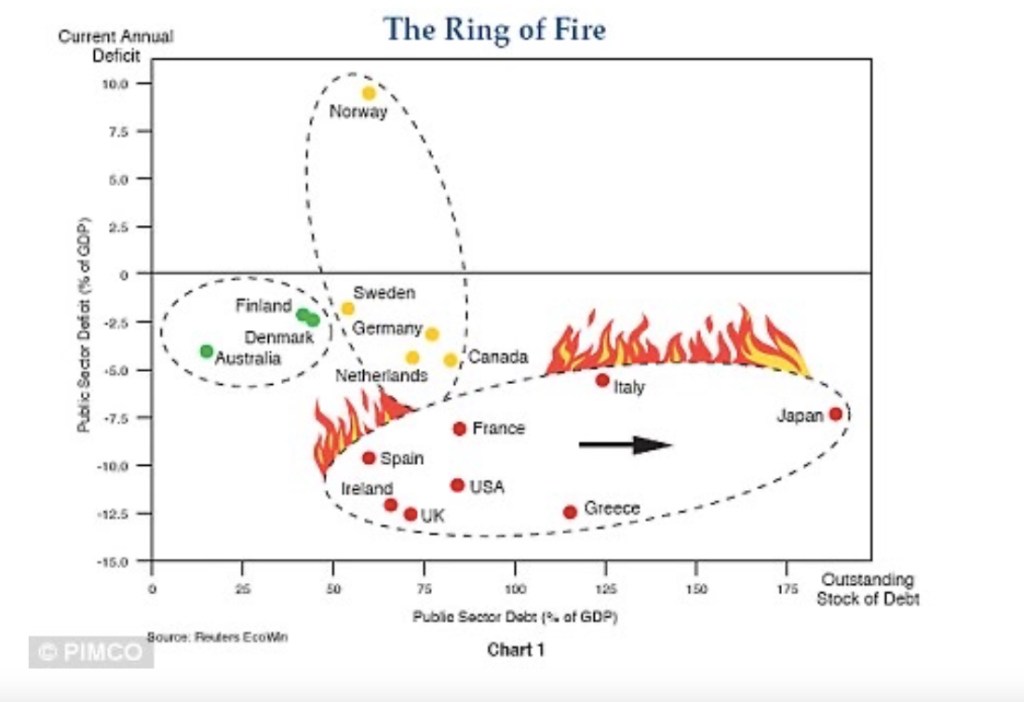
Just as this chart showed at the time of the Global Financial Crisis, the countries in “The Ring of Fire” have experienced exceptional turbulence and turmoil in the years after the crisis. For example, the UK has had austerity budgets, a no-growth economy, Brexit and the ‘shock therapy’ of the COVID-19 pandemic. The US, on the other hand, has clashed with its allies, seen a new cold war emerge with rivals China and Russia, and experienced significant domestic unrest, culminating in the storming of its seat of Government, the Capitol. Just as now (2021) 2009 was a year in which the questions revolved around receiving a vaccine (for H1N1) and how best to affirm a person’s identity and citizenship. Photo: David South Iceland saw its banking system collapse during the Global Financial Crisis, sparking demonstrations (October 2008-2011) and the “Pots and Pans Revolution”. Photo: David South
A conference in Geneva struck a pessimistic note on the current global financial crisis and any hope for a new social and economic order. The conference asked “whether current policy reforms are conducive to a transformative social change or if they only reproduce the status quo.”
A March 2009 IMF report on the downturn’s affect on the Global South and developing countries found that “fluctuating commodity prices, high fuel costs, the rise in food prices in addition to a decrease in remittances, foreign direct investment and aid flow could mean an increase in the financing needs of low-income countries by at least US $25 billion.”
The presenters at the conference painted a picture of a robust neo-liberal economic order that is already in the process of dusting itself off from the crisis and restoring its dominance.
Bob Jessop, from the University of Lancaster, captured the paralysis of opposition to the neo-liberal order by saying “They are busy doing it and we are busy talking about it.”
To paraphrase philosopher Friedrich Nietzsche, that which does not kill us makes us stronger. Neo-liberalism may in fact be strengthened by the crisis, according to presenters. It will evolve and take on new forms, they argued.
The world’s business elites have an enormous capacity to re-shape the rules of the economic game back in their favour. While the massive state support to the banking sector had led some to believe governments were restoring faith in public investments, in fact state support is seen as “timely, targeted and temporary.”
When asked about the future as the crisis passes and countries come out of recession, the presenters believed this was a short-term recovery, and that far worse economic crises would be coming in the next five to 10 years.
Andrew Martin Fischer, from the Institute for Social Studies at Erasmus University, believes the harmful effects of the bailouts will be pushed to the periphery over the next five to 10 years, harming the poor. He also believes a major financial crisis is brewing in China. He called ‘China the fault line in the future.’
The powerful, he pointed out, displaced the costs of their mistakes onto other people. Proponents of different approaches had missed the moment because they were not able to present off-the-shelf strategies that could be deployed in a crisis on short notice. Thus, they had left the field open to neo-liberal solutions.
The global crisis in the short-term has not been worse because of unprecedented global cooperation. Keynsian measures have been used to solve the crisis, but are also used to preserve Wall Street. Also, the enormous contribution of growth in China and India means there are other sources of wealth in the world than just the North.
Getting back to normal should not be what we are doing, the panellists concluded at the conference’s final session. Governments should look at new opportunities for social policy. The panellists were disturbed that the International Monetary Fund (IMF) is seen as part of the solution. This means deep cuts in public expenditure are coming. There will not be a trickle down of wealth and the imbalances from before the crisis will remain. In short, the system was not working before the crisis.
Some policy suggestions put forward included: rural income guarantees, managed migration to support development goals, making a gender perspective critical to development. Governments should take a preventive approach to tackle future crises. Unfortunately, it now seems no money is left to address these problems. Yet business as usual is not an option with so many inequalities and imbalances.
“This conference on the social and political consequences of crisis is a critical subject for debate at this juncture,” said UNRISD’s director, Dr. Sarah Cook. “We are now at a point where many countries, particularly in the North, are emerging out of the severe shock of immediate crisis. Discussions of alternative policies and institutional arrangements at national and global levels may become less urgent; the status quo is reasserting itself and the space for ideas and policies that offer the possibilities of more stable, sustainable and equitable development will quickly shrink.”
Southern Innovator Magazine was developed from 2008-2010 in London, New York and Iceland by the United Nations in response to the Global Financial Crisis and was launched in 2011.
From 1997 to 1999, I worked as the head of communications for the United Nations mission in Mongolia. The country was already experiencing a severe economic crisis as a result of its transition to free markets and democracy from the Soviet economic system. The scale of the economic collapse following the fall of communism was described at the time as the worst peacetime, post-WWII economic collapse. On top of this challenge, the Asian economic crisis erupted.
You can read the Mongolia Update 1998 book I wrote here: http://www.scribd.com/doc/20864541/Mongolia-Update-1998-Book. It shows how chaotic events are in the middle of a major crisis. Some of the key lessons we learned during this time include: 1) transparency: trust was critical and all our work was done under the full glare of public and media scrutiny, 2) action: with our existing budgets we made sure to keep doing and spending to hire people, 3) strategy: to encourage the growth of businesses and innovation, in particular the take-up of new information technologies.
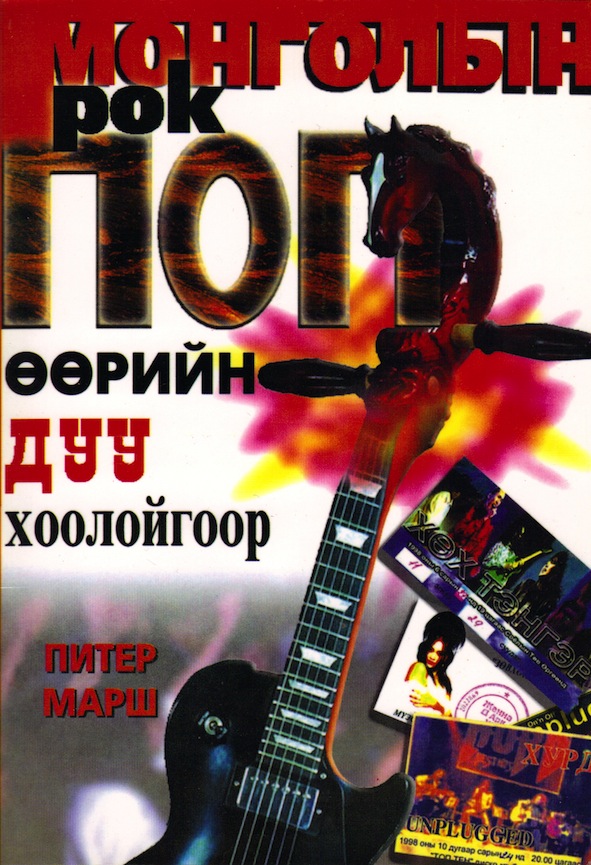
It was the late 1990s. Mongolia was still recovering from “one of the biggest peacetime economic collapses ever” (Mongolia’s Economic Reforms: Background, Content and Prospects, Richard Pomfret, University of Adelaide, 1994). But it was the country’s young musicians who were showing the way out of the crisis, setting an example for entrepreneurship in the new, free-market economy that emerged in the country after 1990.
As UNDP Communications Officer N. Oyuntungalag wrote in the Blue Sky Bulletin (BSkyB) newsletter, “A thriving pop and rock scene has emerged over the last four years. .. The energy of these musicians and singers has not gone unnoticed by the burgeoning advertising market. Pop bands are promoting many things, from face creams to beer. … [but] there has been little serious writing on the business of popular music.”
As the book’s author, American ethnomusicologist Peter Marsh, said in an interview with UNDP’s Blue Sky Bulletin newsletter, “we thought our book would provide important ideas about the direction and nature of the nation’s development.
“My impression about Mongolian pop-rock is that it is a lively, diverse and at times innovative Mongolian art form that closely reflects many of the hopes, fears and aspirations of its primary audience, Mongolian youth.”
The book still stands as an unusual and innovative contribution to thinking around the role played by youth in development and business and in crisis recovery.
Google Books Key Words: авдаг адил аль англи аялан байж байлаа байх байхад байхгүй бараг барууны бас бензин Бид нар бидний биз бизнес бий биш болох бөгөөд бусад бүжиг бүр бүтээлчид бүх гадаад гадаадад









 David South Consulting

You must be logged in to post a comment.