Categories
Archive

Bolivian Film School’s Film Scene Paying Off

By David SouthDevelopment Challenges, South-South Solutions

SOUTH-SOUTH CASE STUDY

A film school in Bolivia shows how a creative hub can become the start of something much bigger. The school is inspiring a new generation of young people to get into filmmaking. And one of its lecturers is already experiencing global success acting in an award-winning new Spanish film.

Bolivia’s economy has grown over the last decade, and the country is beginning to shed its long-standing reputation for grinding poverty and political instability. Public spending has risen, and more money has been put into programmes to reduce poverty. More students are entering higher education and the country recognizes an urgent need for greater awareness and understanding of modern technology.

Film and media production have been targeted as an important way to advance Bolivia’s social and economic development.

Veteran Bolivian filmmaker Jorge Sanjines (http://en.wikipedia.org/wiki/Jorge_Sanjin%C3%A9s) has been one of the most passionate exponents of using film to spread the stories and wisdom of Bolivia’s indigenous people. He believes their stories understand the need to balance the demands of humanity with preservation of the environment. Film, to him, is a way to liberate Bolivian society and address its pervasive problems of poverty, hunger and marginalization.

This chimes with rising global awareness of the importance of the creative economy in future development. No longer seen as a frippery, the creative economy is the “interface between creativity, culture, economics and technology in a contemporary world dominated by images, sounds, texts and symbols” (UNCTAD). It is seen as a way for emerging economies to leapfrog into high-growth areas in the world economy.

It’s a formula that has worked well in many other places. A successful art gallery fosters a scene and draws in audiences, buyers and new businesses. Soon, a creative economy comes alive and that means serious money. Both New York and London have shown how this can work. By 2005, New York City’s creative economy employed over 230,899 people in 24,481 businesses (Americans for the Arts).

Creative economies tend to create excitement and pride in the country; creative businesses like advertising and design make it much easier to sell products and connect with customers. It is hard to imagine the Apple computer brand (http://www.apple.com/) being as successful as it is without intelligent and engaging design.

Regeneration – of poor neighbourhoods, districts, even whole countries – is both a challenge and a key to transforming lives. There is a strong track record of turning to artists and creative people to re-imagine neighbourhoods or a country’s culture, restoring pride and vitality to places beaten down by life’s hardships.

In the Bolivian city of El Alto (http://en.wikipedia.org/wiki/El_Alto,_La_Paz), the Cine Alto film school at the Municipal Arts School of El Alto (http://cinealto.blogspot.com/2009/01/nueva-carrera-de-artes-cinematogrficas.html), offers students a free education in filmmaking. Lecturer and actor Juan Carlos Aduviri is one of the high-profile successes to come from the school since it opened in 2006.

A graduate of the school and a lecturer on screenwriting, he got a big career boost by acting in a major new, award-winning film and is nominated as Best Newcomer by Spain’s top film awards, the Goyas (http://www.academiadecine.com/home/index.php). The nomination is for his role in the Spanish film Even the Rain (http://www.tambienlalluvia.com/) – set in the Bolivian city of Cochabamba, where protests a decade ago broke out over privatisation of water services. It stars well-known Mexican actor Gael Garcia Bernal, who plays a filmmaker set on making a movie about the Spanish conquest of the Americas. While making the film, the so-called “water wars” break out and the actor played by Aduviri must balance his film role with being a protest leader.

The protests against water privatisation in Cochabamba led to the election of Evo Morales (http://en.wikipedia.org/wiki/Evo_Morales) as Bolivia’s president in December 2005.

Cine Alto is one of four film schools in Bolivia but the only one that does not charge students tuition. Cash is tight for the school, which is a simple place and runs on thin resources. The classrooms have bare walls and broken windows, but the school is serious about transforming the lives of young people. The curriculum emphasises a strong theoretical foundation in combination with technical and practical training.

“Conditions in Bolivia to make a film are challenging and in El Alto, it’s even more difficult,” Aduviri told the BBC.

“Life is hard here in El Alto, and this film school is trying to rescue this talent, and support these young people.”

A member of Bolivia’s indigenous people, the Aymara (http://en.wikipedia.org/wiki/Aymara_people), Aduviri grew up in El Alto, a city known for its strong pride and resilience. It is home to almost a million people, most of whom are Aymara.

He studied screenwriting and turned to teaching at the school after graduating. He is passionate about filmmaking as an alternative to negative influences in the community: he wanted the film school “to give a voice to all the talent that we’re losing to alcohol, drugs, prostitution, homelessness and gangs.”

One student, Edson Chambiborque, told the BBC: “”He has taught us to value the little that we have in this school, and never drop our heads despite all the difficulties we may have.”

Aduviri comes from a poor family but now makes a good salary by Bolivian standards: US $200 a month. (The average monthly wage in Bolivia is around US $90). He still lives with his mother in a poor neighbourhood. His father, a miner, died of lung disease.

He wants to become a director and screenwriter and dreams of his film career taking him to the Cannes Film Festival in France (http://www.festival-cannes.com/).

He will continue acting to raise the money to be able to finance his own films. With the money he has made from appearing in the Spanish film, he has bought a computer with film editing software and a television. He has a goal to watch two movies a day on his new television and keep learning.

Appearing in the film has catapulted his career to the next level: the phone is always ringing and the world’s media keep asking for interviews. It has come with trips to Europe to promote the film and receive awards. He also won the best actor award from the Festival de Cinema Europeen des Arcs (http://www.lesarcs-filmfest.com/2010/programme/). An impressive journey for somebody from a poor family.

When he saw his first movie he was inspired by the magic of filmmaking. He told the BBC: “It was showing Rambo. And that day I realised what I wanted to do. When I left the cinema, I said: I want to make films.”

Bolivian film has had to fight for attention with other Central and South American countries. Brazil, Argentina and Chile all have experienced global success. The country has a rich – but little-known – film history, with significant Bolivian filmmakers including Pedro Sambarino, Jorge Ruiz, Oscar Soria, Jorge Sanjines, Antonio Eguino, Paolo Agazzi, Rodrigo Bellott, Juan Carlos Valdivia, Adriana Montenegro, Marcos Loayza.

Bolivia is looking to the digital age to rectify its relative anonymity, and Cine Alto may be ground zero for a Bolivian film new wave.

Published: March 2011

Resources

1) European film festival in Bolivia, with screenings across the country. Website: http://www.cineeuropeobolivia.org/

2) Cine Alto on Facebook: Website: http://es-la.facebook.com/cine.alto

3) Global Creative Economy Convergence Summit 2009: The summit is about the successful and emerging creative technologies and initiatives that are driving economic growth locally, nationally and internationally. Website: http://www.gcecs2009.com/

4) AltoTV: A non-profit television documentary-making project that has made small films on El Alto. Website:http://www.altotvgerman.blogspot.com/

5) The Public University of El Alto: Website:http://www.enlaupea.com/

6) Creative Economy Report 2008. An economic and statistical assessment of creative industries world-wide as well as an overview of how developing countries can benefit from trade in creative products and services, produced by UNCTAD and the Special Unit for South-South Cooperation in UNDP. Website: http://www.unctad.org/en/docs/ditc20082cer_en.pdf

7) A course on Bolivian filmmaking taught by award-winning filmmaker Ismael Saavedera. Website:http://www.sit.edu/studyabroad/sss_blv.cfm
Creative Commons License

This work is licensed under a
Creative Commons Attribution-Noncommercial-No Derivative Works 3.0 License.

ORCID iD: https://orcid.org/0000-0001-5311-1052.

© David South Consulting 2022

Categories
Archive

Angolan Film Grabs Attention at Film Festival

By David SouthDevelopment Challenges, South-South Solutions

SOUTH-SOUTH CASE STUDY

The power of the creative economy to transform lives, livelihoods – and perceptions – should never be underestimated. Creativity can transform the image of places and situations often seen in a negative light. A film from Angola is shining a light on the country’s music scene and showing the vitality of the nation in the wake of a long-running civil war.

Angola’s vicious civil war ran from 1975 to 2002 (http://en.wikipedia.org/wiki/Angolan_Civil_War) and the country is still recovering from the economic and social damage wreaked by the conflict.

The film Death Metal Angola (deathmetalangola.com) was a hit of the recent Dubai International Film Festival (dubaifilmfest.com/en/), an annual film showcase running every December in the United Arab Emirates (UAE) in the Middle East.

Death Metal Angola illustrates the power of film storytelling to draw attention to a country and spark interest in its culture and challenges.

The film focuses on the hidden world of heavy metal music (of which death metal is a sub-genre) (http://en.wikipedia.org/wiki/Heavy_metal_music) in Angola – but it was not supposed to be about heavy metal music at all.

The story starts with American director Jeremy Xido (http://jeremyxido.com/). Originally asked to do a film on immigration, Xido happened upon a railway line in Angola being built by Chinese workers. The railway line was being built in the town of Huambo (http://en.wikipedia.org/wiki/Huambo) in central Angola.

“There’s only one cafe in Huambo where you can get a decent cup of coffee,” he told the UAE’s The National news website. “Everyone interested in coffee is there: expats, military guys, Lebanese businessmen, people from all over the place.”

Hanging out in the café, he met a young man, Wilker Flores, who said he was a musician.

“He said he played death metal, and I just thought: ‘I have to hear this.’”

Flores’ partner, Sonia Ferreira, runs an orphanage and Wilker invited Xido to come hear him play.

“It was in this really poor neighbourhood with no electricity, and there’s Wilker with an amplifier and guitar and stolen electricity from this wire. We lit him with the headlights from an SUV (sport utility vehicle) and he proceeded to play this impromptu death metal concert in the middle of an orphanage with kids running around. It was the most amazing thing I’ve ever seen.

“

Xido then discovered that Ferreira and Flores were organizing the country’s first heavy metal music concert. While they were planning the concert, Xido was inspired to switch to making the film Death Metal Angola.

The documentary took about six weeks to film. Filming took place around Huambu, Benguela and Angola’s booming capital, Luanda. It is a mix of interviews with musicians, including some from the death metal and thrash metal scenes.

The origins of this music scene in Angola reaches back to the country’s former colonial ruler, Portugal, a country where heavy metal rock music has a strong fan base.

Xido found the love for metal music was a by-product of the civil war years. “During the war, a lot of the young guys – if they had the opportunity – would go to Portugal to study to get away from armed service, and they were often exposed to contemporary rock.”

There are local links, too. “Wilker says that rock is actually African in its roots, and says that a lot of the rhythms you’ll find in the countryside are the rhythms you’ll find in death metal.”

“I think a lot of it has to do with looking back at the war and the sort of unfilled promises of post-war,” said Xido, who adds that the lyrics have very political messages and those involved are highly intellectual.

“A lot of these guys are working in banks or doing IT. There’s a young guy who is considered to have the best metal growl. He wanted to come to Dubai, but is studying electronics and has exams.”

Filmmaking is a vibrant part of the global creative economy. According to a 2011 UIS (UNESCO Institute for Statistics) survey, two countries in the global South lead the world in filmmaking. India remains the world’s leading film producer, and Nigeria, with its prolific home video market, continues to hold second place ahead of the United States.

According to the Creative Economy Report 2010, the creative economy is “A new development paradigm” linking the economy and culture, embracing economic, cultural, technological and social aspects of development at both the macro and micro levels.

“Central to the new paradigm is the fact that creativity, knowledge and access to information are increasingly recognized as powerful engines driving economic growth and promoting development in a globalizing world,” the report says.

And as for Xido, making the film has opened his ears to heavy metal music, which he says was not what he listened to growing up.

“Because of these guys I started listening to Pantera and Sepultura and I really got into it. Metal on headphones in New York is fantastic. I love the way they like it in Angola, where it’s a huge expression of joy.”

But what about the other film, the one about immigration and the railway? “It’s still in production,” Xido said.

Published: February 2013

Resources

1) UNESCO Institute for Statistics: A treasure trove of data and analysis on the impact of culture. Website: http://www.uis.unesco.org/Culture/Pages/movie-statistics.aspx

2) How to Make a Movie: Tips on movie-making in 23 steps with pictures. Website: http://www.wikihow.com/Make-a-Movie

3) How to Make a Video: The 3-step process of making a video. Website: http://www.mediacollege.com/video/tutorial/

4) Coming soon … how to make the perfect movie trailer: If you want to get your movie noticed, you need an eye-catching trailer. Just follow these simple rules. Website: http://www.guardian.co.uk/film/2012/jun/16/how-to-make-a-movie-trailer

Southern Innovator logo

London Edit

31 July 2013

Creative Commons License

This work is licensed under a
Creative Commons Attribution-Noncommercial-No Derivative Works 3.0 License.

ORCID iD: https://orcid.org/0000-0001-5311-1052.

© David South Consulting 2022

Categories
Archive Blogroll Development Challenges, South-South Solutions Newsletters

New Cuban Film Seeks to Revive Sector

By David SouthDevelopment Challenges, South-South Solutions

SOUTH-SOUTH CASE STUDY

Since Cuba’s 1959 revolution, the country’s film sector has largely survived on the largesse of the state. The switch to Communism as the guiding economic model of the country after the revolution led, at first, to generous support to filmmakers. The government ranked cinema ahead of television seeing both cinema and television as the two most important forms of artistic expression in the country. But as state funding has dwindled in recent years, adventurous independent filmmakers have tried to keep the Cuban film tradition going using other sources.

Prior to the revolution, Cuban cinema had been dominated by American and Mexican companies that used Cuba as an exotic backdrop for their productions and dominated the distribution of film in the country.

In the 17 years after the 1959 revolution, generous funding for filmmaking in Cuba produced 74 full-length films and 600 documentary shorts (Julianne Burton: Revolutionary Cuban Cinema). Soon Cuba had established a reputation for making its own, interesting, high-quality films. These range from “Memories of Underdevelopment” (http://en.wikipedia.org/wiki/Memories_of_Underdevelopment) released in 1968, with its innovative narrative technique, to Academy Award-nominated “Strawberry and Chocolate” in 1993 and 2006’s “Tomorrow” (http://www.cubaabsolutely.com/articles/art/article_art.php?landa=23).

But funding for Cuban film has been dropping since the ending of generous state supports with the collapse of the Soviet Union in 1991. Cuba had received extensive subsidies from the Soviet Union and enjoyed preferential trading privileges.

But a new Cuban film is grabbing fistfuls of international accolades and shows it is possible to make films with a combination of foreign investment and state support.

The zombie horror-comedy “Juan of the Dead” (juanofthedeadmovie.com/lang/en/) has raised more than a few eyebrows but it is also showing a more commercial instinct among Cuban filmmakers and points the way to greater diversity in Cuba’s film sector.

The film’s poster declares: “50 years after the Cuban revolution a new one is about to start.” The film’s website is a colourful feast of images from the film and uses slick graphic design. It has previews, background resources and online clips for viewers to sample.

Calling itself a “zombie comedy”, the film was written and directed by Alejandro Brugués and produced by Gervasio Iglesias, Inti Herrera and Claudia Calviño.

The plot revolves around Juan, a 40-year-old man who has spent most of his life doing nothing. He and his lazy pal Lazaro witness people starting to attack each other. Mistaking this for another stage in Cuba’s revolution, the pair at first believe the government media when it says the incidents are provoked by dissidents paid by the U.S. government. But it begins to dawn on the two men they are surrounded by zombies. Taking a Cuban approach to the problem, Juan decides to get rid of the zombies while making some money at it.

“Cubans have basically three ways of dealing with problems: they try to make a business out of it, they get used to it and keep going with their lives; or they throw themselves to the sea to run away from the island,” Brugués says on the movie’s website. “‘Juan’ gave me the opportunity to make things really difficult for Cubans, filling the country with zombies, which is in a way what we have become after all these years, but also gave me a leading character that could take a different option, that could stand and say ‘I’m not going to allow this, this is my country, I love it and will stay to defend it’ … after trying to make a business out of it and keep going with his life, of course.”

The film has received enthusiastic praise from international film festivals and audiences, and its producers are hoping it will give a boost to Cuban cinema.

Released in 2011 as a joint Spanish/Cuban co-production, “Juan of the Dead” was filmed on location in Cuba’s capital, Havana. The country’s first feature length horror film in half a century, its title is a play on George Romero’s 1978 zombie classic “Dawn of the Dead”, which also inspired the successful 2004 British comedy “Shaun of the Dead”.

It cost US $2.7 million, and the funds were raised from Spanish investors and the Cuban Institute on Cinematographic Industry and Arts (ICAIC) (http://www.cubarte.cult.cu/paginas/servicios/directorio/directorio.php?id_institucion=77&selected=&offset=36&windowstart=1&letra=&canal).

Brugués was born in Buenos Aires, Argentina in 1976 and graduated from the International Film and Television School of San Antonio de los Baños, Cuba.

He built up his expertise in the Cuban film industry as a scriptwriter for several Cuban films and is one of the partners at the Cuban indie film production company Producciones La 5ta Avenida (http://eses.facebook.com/pages/Producciones-de-la-5ta-Avenida/110339122340016).

His first feature film was “Personal Belongings”, which received worldwide distribution.

“I have been a follower of the zombie movies since I was a little kid (zombie movies have followers, not fans),” Brugués said. “The idea of ‘Juan’ simply came from watching the reality around me. That reality is Cuba, so one day inevitably, I was asking myself if we were so different from film zombies. Besides that, Cuba is a country that has been preparing itself for a confrontation with the United States during the last 50 years. So, what if instead of that, have to confront zombies?”

Brugués sees a coming together of independent filmmakers and state-funded filmmakers in the future: “At the moment there are two trends, films produced by Cuba’s state production company and films made outside of that,” he told the BBC.

“There needs to be a balance but I think the two will eventually merge. When this happens I think this will produce the best Cuban cinema.”

Published: March 2012

Resources 

1) UNCTAD Global Database on the Creative Economy. Website: http://unctadstat.unctad.org/ReportFolders/reportFolders.aspx?sCS_referer=&

sCS_ChosenLang=en

2) Creative Economy Report 2010: Creative Economy: A Feasible Development Option. Website: www.unctad.org/Templates/WebFlyer.asp?intItemID=5763&lang=1

Creative Commons License

This work is licensed under a
Creative Commons Attribution-Noncommercial-No Derivative Works 3.0 License.

ORCID iD: https://orcid.org/0000-0001-5311-1052.

© David South Consulting 2023

Categories
Archive Blogroll Development Challenges, South-South Solutions Newsletters

Nollywood: Booming Nigerian Film Industry

By David SouthDevelopment Challenges, South-South Solutions

SOUTH-SOUTH CASE STUDY

The digital revolution in filmmaking over the last decade has given birth to an African success story: Nollywood – Nigeria’s answer to Hollywood, uses low-cost digital filmmaking and editing to tell local stories — in the process making money and creating thousands of jobs.

This do-it-yourself (DIY), straight-to-DVD and video market has in just 13 years ballooned into a US $250 million-a-year industry employing thousands of people. In terms of the number of films produced each year, Nollywood is now in third place behind India’s Bollywood and America’s Hollywood. Despite rampant pirating of DVDs and poor copyright controls, directors, producers, actors, stars, vendors and technicians are all making a living in this fast-growing industry.

The power of creative industries to create jobs and wealth has been a focus of UNESCO, through its Global Alliance for Cultural Diversity. UNESCO has been in the forefront in helping African countries re-shape their policies to take cultural industries into consideration. The promotion of cultural industries also has been incorporated into the New Partnership for Africa’s Development (NEPAD).

What is particularly attractive about Nollywood to the poor in the South is its rough-and-ready approach to filmmaking: combining low-cost digital cameras and film editing software on personal computers, with small budgets and fast turn-around times. Films are made on location using local people. These factors make getting into filmmaking accessible and within reach of more people.

Nollywood grew out of frustration, necessity and crisis: in the late 1980s and early 1990s, Nigerian cities became crime hotbeds. People were terrified to go out on the streets, and this led to the closing down of many movie theatres. Desperate for entertainment at home – and unsatisfied with foreign imports from India and the West – Nigerians turned to telling their own stories to stave off the boredom of staying in.

The film credited with sparking off the industry is 1992’s Living in Bondage – a huge financial hit credited with raising the level of professionalism and production values in Nigerian cinema.

Now, between 500 and 1,000 feature-length movies are made each year, selling well across the continent of Africa. Average productions take 10 days and cost around US $15,000 (www.thisisnollywood.com). Nollywood stars are famous throughout Africa – and Nigeria culturally dominates West Africa just as the US does the world. It is estimated there are 300 producers and that 30 titles go to shops and market stalls every week. On average, a film sells 50,000 copies: a hit will sell several hundred thousand. With each DVD costing around US $2, it is affordable to most Nigerians and very profitable for the producers.

“These are stories about Africa, not someone else’s,” well-known actor Joke Silva told the Christian Science Monitor.

Focused on Africa, the films’ themes revolve around AIDS, corruption, women’s rights, the occult, crooked cops and prostitution. They do so well because they speak directly to the lives of slum-dwellers and rural villagers.

“We are telling our own stories in our way, our Nigerian way, African way,” said director Bond Emeruwa. “I cannot tell the white man’s story. I don’t know what his story is all about. He tells his story in his movies. I want him to see my stories too.”

The big brands – Sony, Panasonic, JVC and Canon – all produce cameras capable of high-definition digital filmmaking and these have become the staple tools of this filmmaking revolution.

More and more, the films are capitalising on the large African diaspora around the world, on top of Africa’s large internal market. And this is offering a step-up into the global marketplace for Nigerian directors and producers.

The Nollywood phenomemon has been documented in the documentary This is Nollywood, directed by Franco Sacchi, a teacher from the Center of Digital Imaging Arts at Boston University.

The prospects for the industry are only looking up: the Nigeria in the Movies project has been launched to help grow the industry, establish standards, improve distribution and broaden its international appeal and awareness. It also offers filmmaking grants for neophyte filmmakers.

Of course, filmmaking can be a tricky business: authorities in largely Muslim northern Nigeria have imposed 32 restrictions on the local film industry — nicknamed “Kannywood” after the city of Kano. A six-month ban lost the industry US $29 million and put thousands out of work: a sign of the economic importance of this DIY filmmaking business. The message is clear: filmmakers need to be sensitive to the cultural norms of the communities in which they work.

Kannywood, started in 1992, has 268 production companies and 40 editing studios, employing over 14,000 people.

Adim Williams is one Nigerian director who is getting an international audience. He spends about US $40,000 on films that take two weeks to shoot. He has already secured an American release of a comedy, Joshua. Another director, Tunde Kelani, is regularly featured at international film festivals, where Nollywood screenings are more common.

And some, like young director Jeta Amata, believe Nollywood’s cheap, fast-production, DIY approach has a lot to teach Hollywood, with its expensive filmmaking and ponderous production cycles.

Published: March 2008

Resources

  • This is Nollywood: A documentary about Nigeria’s booming movie industry.
    Website: http://www.thisisnollywood.com
    There is also an inspiring trailer to the film here.
    Website: http://www.thisisnollywood.com
  • The global charity Camfed (dedicated to eradicating poverty in Africa through the education of girls and empowerment of women) has projects to teach women filmmaking skills.
    Website: http://uk.camfed.org
  • Festival Panafricain du Cinema et de la Television de Ouagadoogou 2009: Africa’s biggest film festival.
    Website: http://www.fespaco.bf/
  • Naijarules: Billing itself as the “largest online community of lovers and critics of Nollywood”, an excellent way to connect with all the players in the business.
    Website: http://www.naijarules.com/vb/index.php
  • Nollywood Foundation: Based in the US, aims to bring Nigerian films and culture to an international audience and to promote new films and new media.
    Website:http://www.nollywoodfoundation.org/home.php

https://davidsouthconsulting.org/2022/03/30/angolan-film-grabs-attention-at-film-festival/

https://davidsouthconsulting.org/2022/04/01/bolivian-film-schools-film-scene-paying-off/

https://davidsouthconsulting.org/2022/04/01/new-african-film-proving-power-of-creative-economy/

https://davidsouthconsulting.org/2021/02/04/new-cuban-film-seeks-to-revive-sector/

https://davidsouthconsulting.org/2022/03/30/riverwood-kenyan-super-fast-super-cheap-filmmaking/

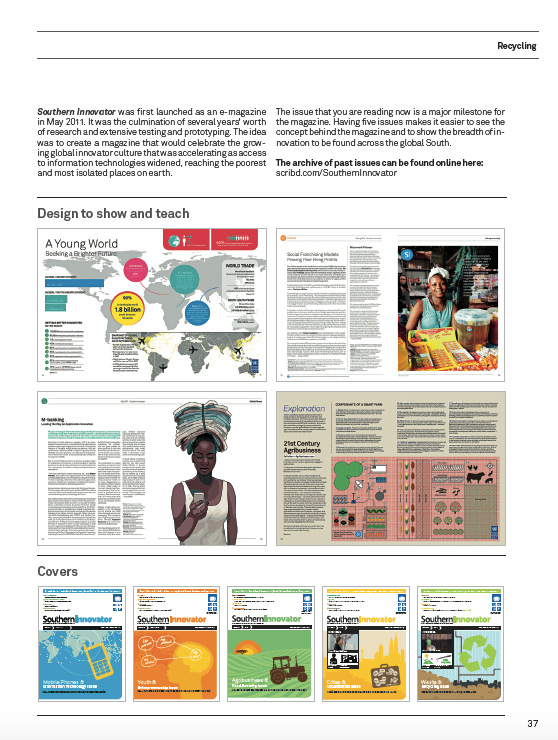
Development Challenges, South-South Solutions was launched as an e-newsletter in 2006 by UNDP’s South-South Cooperation Unit (now the United Nations Office for South-South Cooperation) based in New York, USA. It led on profiling the rise of the global South as an economic powerhouse and was one of the first regular publications to champion the global South’s innovators, entrepreneurs, and pioneers. It tracked the key trends that are now so profoundly reshaping how development is seen and done. This includes the rapid take-up of mobile phones and information technology in the global South (as profiled in the first issue of magazine Southern Innovator), the move to becoming a majority urban world, a growing global innovator culture, and the plethora of solutions being developed in the global South to tackle its problems and improve living conditions and boost human development. The success of the e-newsletter led to the launch of the magazine Southern Innovator.  

Follow @SouthSouth1

Google Books: https://books.google.co.uk/books?id=DqmXBgAAQBAJ&dq=development+challenges+march+2008&source=gbs_navlinks_s

Slideshare: http://www.slideshare.net/DavidSouth1/development-challengessouthsouthsolutionsmarch2008issue-44443163

Southern Innovator Issue 1: https://books.google.co.uk/books?id=Q1O54YSE2BgC&dq=southern+innovator&source=gbs_navlinks_s

Southern Innovator Issue 2:https://books.google.co.uk/books?id=Ty0N969dcssC&dq=southern+innovator&source=gbs_navlinks_s

Southern Innovator Issue 3:https://books.google.co.uk/books?id=AQNt4YmhZagC&dq=southern+innovator&source=gbs_navlinks_s

Southern Innovator Issue 4: https://books.google.co.uk/books?id=9T_n2tA7l4EC&dq=southern+innovator&source=gbs_navlinks_s

Southern Innovator Issue 5:https://books.google.co.uk/books?id=6ILdAgAAQBAJ&dq=southern+innovator&source=gbs_navlinks_s

One of the many stories we covered on Africa’s fast-growing cities from 2007. It was witnessing first-hand Africa’s innovators and their adaptive use of mobile and information technologies that inspired us to give birth to Southern Innovator’s first issue.

Citations

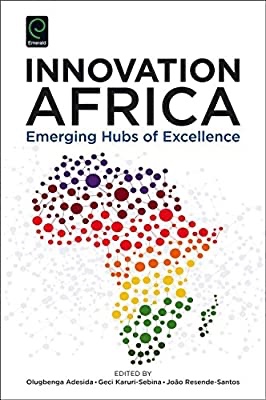
Cited in Innovation Africa: Emerging Hubs of Excellence edited by Olugbenga Adesida, Geci Karuri-Sebina, Joao Resende-Santos (Emerald Group Publishing, 2016).

https://davidsouthconsulting.org/2021/03/05/southern-innovator-issue-2/

Creative Commons License

This work is licensed under a
Creative Commons Attribution-Noncommercial-No Derivative Works 3.0 License.

ORCID iD: https://orcid.org/0000-0001-5311-1052.

© David South Consulting 2023