While many designers are telling us to don platform shoes and love beads, the man behind London-based Hi-Tek watches is looking even further back in time – drawing his inspiration from classic visions of the future.
Hi-Tek’s stainless steel timepieces bring to mind early futuristic films such as Lang’s Metropolis and Chaplin’s Modern Times with their grotesque exaggerations of modern machinery. That era’s confusion, fear, or simple wonderment at new technology influenced everything from toasters to steam trains.
For the equally economically and technologically turbulent ‘90s, Hi-Tek designer Alexander has captured this sense of techno-wonder with watches, sunglasses, and other hip accessories. One watch looks as if a Cuisinart hit it, leaving gears strewn across the face. Another has a retractable lid like an astronomer’s observatory. Yet another tells time with the blinker of a radar screen. Despite their made-exclusively-for-James-Bond appearance, all cost less than $190. Available at Possessions in Montreal, Body Body in Toronto, and D and R in Vancouver.
It was the decade of the happy face, bell-bottoms, avocado fridges, disco and the Bay City Rollers; in short, the 70s was a pimple on the ass of history, better evaporated in a pot haze on a waterbed. Not so says 70s-obsessed author Pagan Kennedy, who believes the much-maligned decade is the victim of a bum rap perpetuated by the idolization of the 60s.
Kennedy says the 70s saw all the radical ideas and culture of the 60s go mainstream and mutate in a way the hippies couldn’t imagine.
Social relations and culture were profoundly reshaped during this decade as the non-traditional family took form, women flooded the workplace and unions became rich monoliths.
The social turmoil spawned blue collar red-necks with Confederate flags customizing fuck trucks – vans complete with waterbed, eight-track stereo, bong and sleazy airbrushed exteriors of naked women – to cruise the nation’s highways enjoying the liberal sexual values while keeping conservative political views. Sexual liberation for these clowns consisted of bumper stickers saying “Ass, gas or grass – nobody rides for free!”. Kennedy remembers it all too well.
“This was the midst of the energy crisis, so big cars that wasted a lot of gas were really cool,” she says. “I guess it came out of the whole drug culture, sex culture thing. It was like a basement kids have, only it was on wheels – a party on wheels. It’s not just the mattress for the fuck truck, you’re supposed to be doing your bong hits in there – so the police can’t see you.”
Sex holidays
“Our lives are much more constrained than they were in the 70s,” continues Kennedy. “I think the 70s must seem like an exotic time to grow up in. One of my favourite parts in Douglas Coupland’s Generation X is when the characters want to take a sex holiday to 1974.
“There was a lot of obsession in the early 70s with swingers and wife-swapping. It was the one time when suddenly the sexual revolution was kicking in, not just for white, privileged college kids, but for everybody – for the working class. There were discos and orgy clubs. There was Plato’s Retreat in New York City where you would go in and there was an orgy in full progress.”
In music, the 70s rocketed between extremes. There was nauseating soft rock, concept albums and “progressive” rock. There was the outrageous glam, with artists like Slade and Gary Glitter jacked up on elevator shoes in sequin one-piece flare suits. There was disco and punk. But the sickest phenomena says Kennedy was corporate rock.
David Cassidy
“In the 60s, people were just learning how to package rock and make it a big corporate thing. By the 70s they had learned a lot. The Partridge Family was a group that was entirely fabricated. David Cassidy had a bigger fan club than Elvis. This was a guy who didn’t become a rock star until he went on TV. In the 60s, FM was alternative radio – you could play anything. Corporate guys got their hooks into FM by the 70s. They were formatting. It was no longer what the DJ wanted to hear. You were getting playlists. The money came from big rock concerts, so there was a desire to push these mega-groups and superstars.”
Another truly 70s phenomena was TV as social conscience. Before the 70s, TV variety shows focused on pure entertainment. But now writers, directors and producers schooled in the 60s political milieu were in control.
Blaxploitation
“All in the Family, Maude and Good Times were all part of the same world. All in the Family acknowledged the deep rifts in American society – America was at war with itself. Yet it did it in a soft enough way to not offend people.”
US blacks had been ignored until the civil rights struggle of the 1960s woke up a dopey white America. In the 1970s, blacks were being portrayed like never before in the media and popular culture. But all of this awareness took a twisted turn.
“I think what happened among blacks was they saw their leaders either killed or put in jail. And that was devastating. Blacks really turned to electoralism in the 70s. A lot of black people started running for office. While trying to change things from outside the system, they realized the price was too high. A lot of black people were involved in making those blaxploitation movies, but so were a lot of white people. Shaft and Superfly are like the bookends of the genre. They were really made by black filmmakers. But then there were all these ripoff versions starring football players – whitebread ideas of what black culture was like.”
Pagan Kennedy’s latest book, Platforms: A Microwaved Cultural Chronicle of the 1970s, is published by St. Martin’s Press and available in most book shops. She’s got a really cool collection of eight-track tapes and drives a yetch! 1974 Plymouth Valiant.
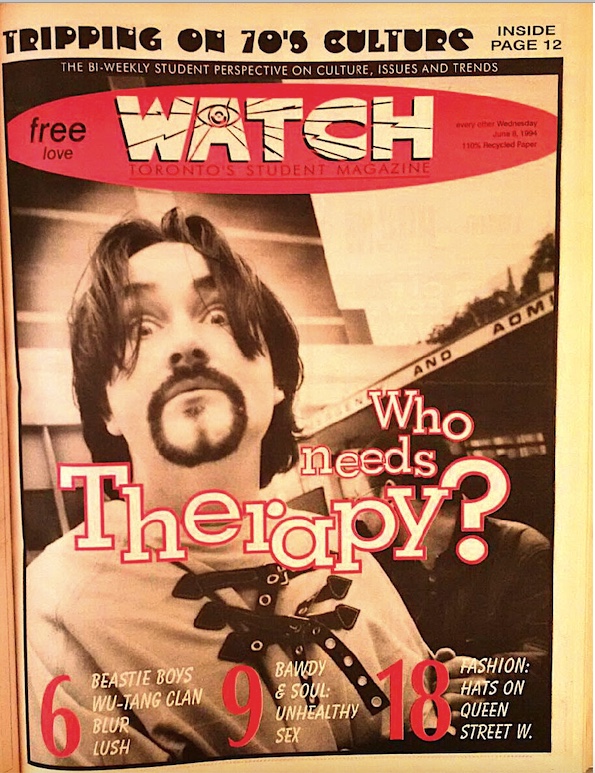
“Tripping on 70s Culture”: Watch Magazine was published in Toronto, Canada in the 1990s. “The Bi-Weekly Student Perspective on Culture, Issues and Trends.”
Brazil is well known for its stylish swimwear, with styles usually targeted at young women and those with more conventional, media-friendly body shapes. But now a company is making visiting the beach more comfortable and empowering for plus-size women.
Prior to the arrival of plus-size swimwear, women turned to over-sized t-shirts and baggy shorts to hit the beach. Now, Brazilian companies are pioneering fashionable and sexy swimwear for women of all sizes.
Brazil has a well-known beach culture – a culture celebrated over the years in popular pop tunes like ‘The Girl From Ipanema’ (http://en.wikipedia.org/wiki/The_Girl_from_Ipanema). The country has successfully turned its alluring beach culture into lucrative businesses,including fashion enterprises that have become global brands. The global hit brand of beach flip flops Havaianas (havaianas.com) is a good example.
Lehona (lehona.com.br) makes ‘Moda Praia’ – plus-size – swimwear for women. The swimsuits are specially designed to flatter larger body shapes and give women the confidence to go back to the beach. It is seeking to end the discrimination inherent in beach culture that favours the “thin, the rich and the chic.”
Body shapes have been changing in Brazil – as they have been across the world and the global South. While one cause is the global obesity crisis -ballooning as diets change with rising prosperity – there is also another, more positive cause: greater access to nutrition and increasing consumption of milk and meat tends to lead to larger body shapes. This has happened across the world and in many countries irrespective of the racial and ethnic background of the people. Norwegians in Northern Europe were once some of the shortest people in Europe and suffered from poverty and malnutrition. But, as food security increased and nutrition improved, they have over time become the second tallest people in Europe behind the Netherlands (The Changing Body: Health, Nutrition,and Human Development in the Western World since 1700).
For Brazil, malnutrition was widespread until recently. Records show 10 per cent of the country’s rural northeast in the 1970s was considered underweight.
The Brazilian statistics institute has found the past decade’s economic boom has had another consequence as well as lifting many millions out of poverty. It has found 48 per cent of adult women and 50 per cent of adult men are now overweight. This compares with 1985, when 29 per cent of women and 18 per cent of men were overweight.
Diets have changed in the intervening years. Rice, beans and vegetables are now in competition with potato chips, processed meats and sugary soft drinks.
And apart from nutrition and diet changes because of increasing incomes,there is also a cultural change. While the wealthy are more used to lifestyles with plenty of exercise, newly prosperous people do not necessarily have the fitness habit. One study found just 10 per cent of Brazilian teens and adults exercise regularly.
The Lehona brand has become a quick hit and receives many telephone calls and emails from would-be customers, its owners claim.
The Brazilian cultural expectation for women’s beachwear is skimpy, showing more rather than less. This prejudices women who do not have slim body shapes or who are not under 30.
Started in 2010 by clothing designer Clarice Rebelatto and run by her son Luiz Rebelatto, Lehona was started out of personal need.
“Honestly, the problem went way beyond just bikinis. In Brazil, it used to be that if you were even a little chunky, finding any kind of clothes in the right size was a real problem,” said Clarice Rebelatto, a size 10, to The Associated Press.
“And I thought, ‘I’m actually not even that big compared to a lot of women out there, so if I have problems, what are they doing?’”
The approach to the swimsuits is counter to many other brands targeting plus-size women. They are bold and emphasize the shape rather than try to cover it up and hide it.
The brand sells itself through specialty stores for large and tall women in Brazil. A bikini sells for around 130 reais (US $66).
“Some brands, they don’t want their image to be associated with chunky women= Only the thin, the rich and the chic,” Luiz Rebelatto told The Associated Press.
“We’re working from the principle that bigger women are just like everyone else: They don’t want to look like old ladies, wearing these very modest, very covering swimsuits in just black.”
The plus-size market has even been taken up by conventional Brazilian swimwear manufacturer Acqua Rosa (http://www.acquarosanet.com.br/site/). It released its plus-size line in 2008 and claims sales now account for 70 per cent of their total sales.
One woman frequenting Copacabana beach copacabana.info) in Rio de Janeiro is Elisangela Inez Soares. She is happy and confident with the new swim suits.
“It used to be bikinis were only in tiny sizes that only skinny girls could fit into. But not everyone is built like a model,” concludes Soares.
Published: May 2012
Resources
1) Start a Fashion Business: A website packed with step-by-step advice on starting a fashion business. Website: startafashionbusiness.co.uk/
“I think you [David South] and the designer [Solveig Rolfsdottir] do great work and I enjoy Southern Innovator very much!” Ines Tofalo, Programme Specialist, United Nations Office for South-South Cooperation
Awareness of the sourcing of materials for fashion has been on the rise in the past decade. Concerns about how the global fashion industry functions and its impact on the environment have given rise to savvy retailers who take care over the sourcing of their materials and the working conditions of their employees. Consumers have shown a willingness to pay a little more to know that a garment is sustainably produced and has the lowest possible impact on the environment.
The global textile industry is the second biggest consumer of water in the world. The dyeing processes used by these manufacturers do extensive damage to the water table that is used for drinking water.
In China, there have been violent demonstrations over working conditions and increasing concern over the health consequences of many modern manufacturing methods. In order to get change, new business models need to emerge, and consumers and customers need to be educated and to demand better-quality, low- or non-polluting products.
One business has accomplished something remarkable: it has succeeded in producing high-quality, ethically sourced products while also employing vulnerable people who have significant care duties and need a flexible and understanding employer.
NuoMi (http://www.nuomishanghai.com) has three stores and a store/design studio in Shanghai, China. NuoMi means “sticky rice” in Mandarin (http://en.wikipedia.org/wiki/Mandarin_Chinese). It was founded by Filipino fashion designer Bonita Lim, a mother of four, who uses her business to help single mothers and the less fortunate.
NuoMi is also pioneering sustainable and green goods for the Chinese market. This is unusual in a country more known for its sweatshop, low-wage manufacturing industries that have propelled the country into an economic powerhouse.
NuoMi sells women’s clothing made from sustainable sources while creating jobs for people from disadvantaged communities. There are organic cotton, bamboo, silk and wool garments, and no artificial dyes or synthetic materials are used.
The design team works on colourful knitwear, dresses and baby clothes. They also offer a custom order service.
“When I was 13 or 14 years old, I dreamed of building a special company that could help people who have trouble finding a job,” Lim told the Global Times.
“I called the name of my brand NuoMi, which is (the) Chinese name for sticky rice … Our company works like sticky rice; we support and love each other.”
Born in the Philippines and educated in Canada, Lim had become frustrated while working with the Filipino government and wanted to help the poor. She started NuoMi in 2006 in Shanghai, a city booming as China’s economy continues to grow. It is also a city with a population with long-standing sophisticated consumer tastes. Shanghai had been home to various foreign concessions before the Communists took power and its population was exposed to foreign languages, cultures and tastes.
Lim became a single mother after she divorced, and this experience made her sympathetic to how hard life is for single mothers. Drawing on her passion for fashion, she hired a designer to work with her on designing a line of clothing.
“I was surprised that many of my friends really liked my designs, so they asked me to design clothes for them and introduced some clients to me,” Lim told Global Times. “I tried to design and sell clothes abroad. I got a lot of good feedback, but it exhausted me so I decided to work in Shanghai.”
Despite starting out as a hobby, the business had built a network of 20 clients. It had become impossible to just do it part-time so she formalised the business as NuoMi. She began hiring single mothers in prison in the Philippines and designed clothing that could be easily made by them.
“Those single mothers in prison were very anxious because they had no way to help their children. Most of them committed crimes because they needed money for their kids,” Lim said.
By 2008 she had built a professional design team and now had 60 clients. With the brand NuoMi growing, she opened its first store. This has grown to four stores in Shanghai. Most of the company’s workforce is now in Shanghai but they are still people living in a vulnerable situation.
Nuomi’s newly opened store in 2008 carried a spring and summer collection of long dresses made from bamboo, cotton and soya. These fabrics were chosen for their breathability in the hot, steamy Shanghai weather.
One of the employees is 52-year-old Zhu Linfang, who takes care of a stroke-damaged father and a mother with liver cancer. “I was introduced through a friend. They paid me more than other companies. At my age almost no company wants to hire me, but working for NuoMi, I earn between 2,000 yuan (US $300) and 3,000 yuan per month,” she said.
Other employees look after ill children and have care duties that occupy much of their time. They do sewing and make toys for NuoMi.
Lim takes the time to train the employees to make sure they can do the work to a high standard.
“I tried to design products that were both suitable for them to make and could be sold in the market,” she said.
NuoMi also sells environmentally friendly glycerine soaps in flavours from mango to chocolate, jewellery made from recycled industrial materials and bathwear, pillows, and purses. The stores even carry matching mother-daughter and father-son clothing.
Wisely, service is offered in Chinese and English to customers – Shanghai is a popular destination for tourists. NuoMi is clearly a trail-blazer and a business to watch.
Published: October 2011
Resources
1) Ecodesignfair: Eco Design Fair is a bi-annual grass-roots community event whose purpose is to showcase eco-conscious designers and products to general consumers. Website:http://www.ecodesignfair.cn
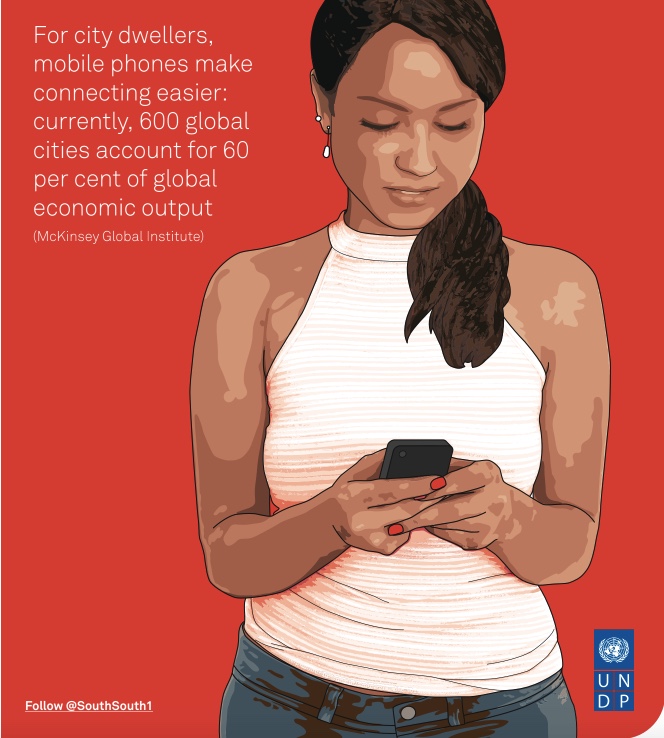
Development Challenges, South-South Solutions was launched as an e-newsletter in 2006 by UNDP’s South-South Cooperation Unit (now the United Nations Office for South-South Cooperation) based in New York, USA. It led on profiling the rise of the global South as an economic powerhouse and was one of the first regular publications to champion the global South’s innovators, entrepreneurs, and pioneers. It tracked the key trends that are now so profoundly reshaping how development is seen and done. This includes the rapid take-up of mobile phones and information technology in the global South (as profiled in the first issue of magazine Southern Innovator), the move to becoming a majority urban world, a growing global innovator culture, and the plethora of solutions being developed in the global South to tackle its problems and improve living conditions and boost human development. The success of the e-newsletter led to the launch of the magazine Southern Innovator.











 David South Consulting
You must be logged in to post a comment.