Categories
Archive Development Challenges, South-South Solutions Newsletters

Perfume of Peace Helps Farmers Switch From Drug Trade

By David SouthDevelopment Challenges, South-South Solutions

SOUTH-SOUTH CASE STUDY

A tragedy in a time of war has led to a social enterprise that is creating jobs – and making the world smell a little better, too.

The 7 Virtues perfume range was started by Canadian Barb Stegemann (http://www.barbstegemann.com/barb-stegemann-in-the-news.html) to harness the energy of social enterprise and women’s buying power to change the dynamic of war and misery created by conflict around the world.

Stegemann ran a successful public relations company when she was inspired to do something after tragedy struck a good friend who was serving in Afghanistan with the Canadian Armed Forces as part of the NATO mission (http://www.isaf.nato.int/). Hit on the head with an axe while involved in a village meeting, Captain Trevor Greene was thought to be fatally injured but survived, though he is still unable to walk.

The violent attack shocked Stegemann into action. The enterprise was founded not out of hatred and revenge, but as a way of addressing the serious economic problems and poverty of Afghanistan.

Wanting to do something, Stegemann was referred to the Turquoise Mountain Foundation (turquoisemountain.org), which is based in Afghanistan’s capital, Kabul. The Turquoise Mountain Foundation is a social enterprise working in Afghanistan to regenerate the country’s traditional arts and historic areas in order to create jobs and boost skills.

Stegemann was inspired by a farmer called Abdullah Arsala from Jalalabad in the eastern part of the country. He was growing the ingredients for making essential oils, rather than the much more lucrative opium poppies which are used to make the drug heroin and help fuel a vast global illegal drug trade. Heroin addiction ruins many lives around the world and often leads to crime and violence.

The Turquoise Mountain Foundation did a study and found that if farmers could be paid US $9,912 for a litre of rose oil or US $7,994 for orange blossom oil it would be enough of a market incentive to lure them away from growing opium poppies.

Stegemann decided to provide that incentive.

Using her life savings, she established a perfume company. To start, Stegemann bought Arsala’s entire stock of orange blossom oil. After getting further investment through the Canadian television program Dragons’ Den – on which entrepreneurs compete for funding – she launched the company with two perfumes: Orange Blossom of Afghanistan and Noble Rose of Afghanistan.

With the whole collection rebranded as The 7 Virtues (http://www.the7virtues.com/), the Afghanistan Orange Blossom went on sale at the prestigious Selfridges department store in London, U.K.

Using Arsala as a go-between, 2,500 farmers in Afghanistan are now supplying essential oils for the perfumes.

To further expand the concept, Stegemann has launched Middle East Peace (http://www.the7virtues.com/middle_east_peace.php), a perfume made from sweetie grapefruit oil from Israel with lime and basil oils from Iran.

In Haiti, a country still recovering from the 2010 earthquake disaster and decades of grinding poverty and political and economic chaos, she has created a scent for men using fragrant grass.

She hopes to also do the same for Rwanda and Syria.

The perfumes are all-natural and are put together in Toronto, Canada. They are sold in stores in Canada and the United States, as well as Selfridges in London.

The success has snowballed and a special gift pack has been put together for American Airlines.

“I never imagined I’d end up on a beauty counter, but this is where the women are and we must connect with them if we are going to reverse this cycle of war and poverty,” Stegemann told The Sunday Times. “Imagine if there were 300 women like me doing things like this. We could make a real difference.”

Published: November 2013

Resources

1) Centre for International Policy Studies: University of Ottawa: A focal point for scholarship and debate on international affairs in Canada. Website: http://cips.uottawa.ca/

2) Post-war Reconstruction and Development Unit: The PRDU is an international centre of excellence for the study of post-conflict societies and their recovery. Website: http://www.york.ac.uk/politics/centres/prdu/

3) Peacebuilding and post-conflict recovery: The experience of recent years has also led the United Nations to focus as never before on peacebuilding – efforts to reduce a country’s risk of lapsing or relapsing into conflict by strengthening national capacities for conflict management, and to lay the foundations for sustainable peace and development. Website: http://www.un.org/en/ecosoc/about/peacebuilding.shtml

United Nations Office on Drugs and Crime: UNODC is a global leader in the fight against illicit drugs and international crime. UNODC is mandated to assist Member States in their struggle against illicit drugs, crime and terrorism. Website: http://www.unodc.org

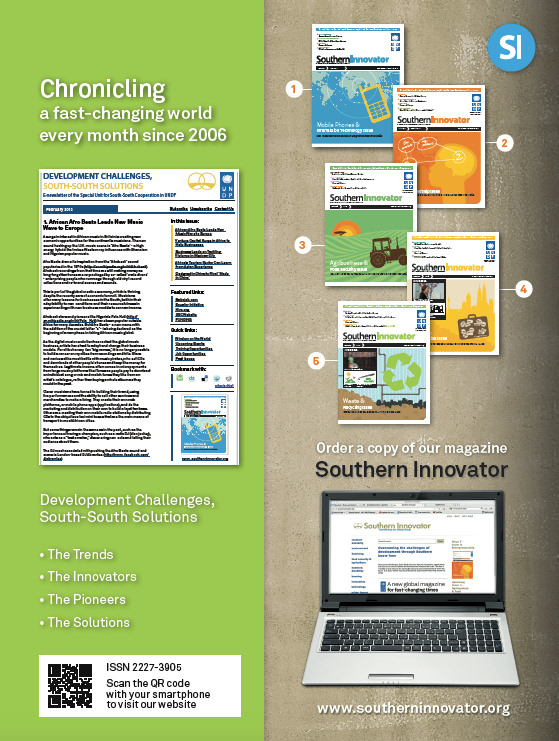
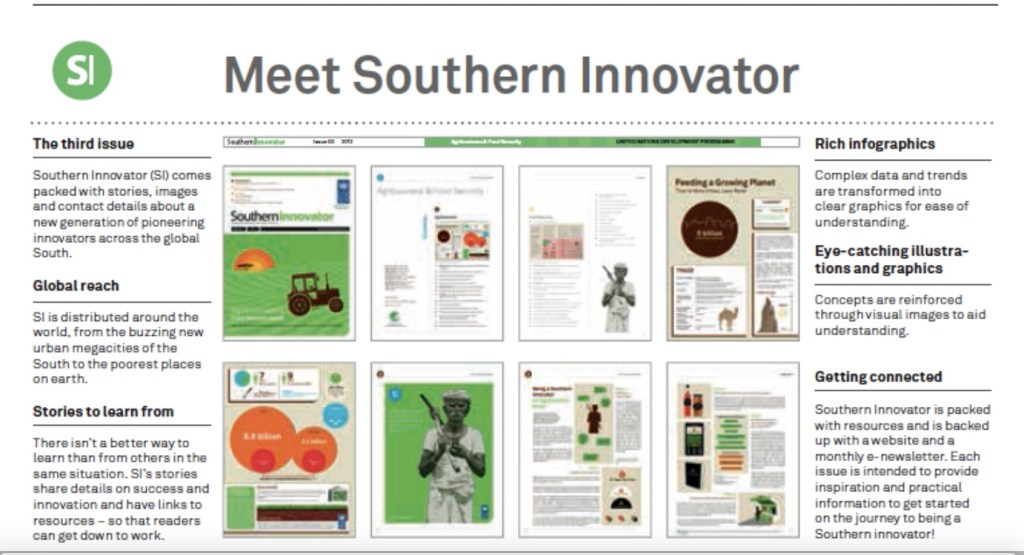
Development Challenges, South-South Solutions was launched as an e-newsletter in 2006 by UNDP’s South-South Cooperation Unit (now the United Nations Office for South-South Cooperation) based in New York, USA. It led on profiling the rise of the global South as an economic powerhouse and was one of the first regular publications to champion the global South’s innovators, entrepreneurs, and pioneers. It tracked the key trends that are now so profoundly reshaping how development is seen and done. This includes the rapid take-up of mobile phones and information technology in the global South (as profiled in the first issue of magazine Southern Innovator), the move to becoming a majority urban world, a growing global innovator culture, and the plethora of solutions being developed in the global South to tackle its problems and improve living conditions and boost human development. The success of the e-newsletter led to the launch of the magazine Southern Innovator. 

Creative Commons License

This work is licensed under a
Creative Commons Attribution-Noncommercial-No Derivative Works 3.0 License.

ORCID iD: https://orcid.org/0000-0001-5311-1052.

© David South Consulting 2022

Categories
Archive Development Challenges, South-South Solutions Newsletters

A New African Beer Helps Smallholder Farmers

By David SouthDevelopment Challenges, South-South Solutions

SOUTH-SOUTH CASE STUDY

Africa’s growth in the past decade has held steady despite the trauma of the global economic crisis and the tumult of the “Arab Spring” in several countries of North Africa. African economies are growing because of a number of resilient trends. These include growing regional trade links, greater investment in infrastructure and the remarkable rise of China to become Africa’s number one trade partner, pushing the United States to second place (Technology + Policy). This has given birth to a growing consumer marketplace and consumer class – some 300 million people earning about US $200 a month (Africa Rising).

The continent as a whole now stands as the 10th largest economy in the world.

How will Africans spend this new money in their pockets (or more than likely, on their mobile phones)? They could go for the big, famous global brands that they see advertised in magazines or on television. Or they could also spend it on local products and services that seem just as enticing and life-improving. Creating local African products and services with strong brands will have an important knock-on effect of creating new wealth and jobs within Africa.

One new product being introduced to the West African country of Ghana’s thirsty beer drinkers is the Eagle beer brand. But this is not just any beer made from the traditional ingredients of water, hops, malted barley and yeast (http://en.wikipedia.org/wiki/Beer) – it is brewed from the root vegetable cassava.

A staple of many African diets, cassava (http://en.wikipedia.org/wiki/Cassava) is a starchy, tuberous root vegetable and a common crop across the continent.

It is believed that 70 per cent of Ghana’s farms are just 3 hectares in size or smaller. They grow many things, but cassava is the most common crop.

Cassava soon spoils once it has been harvested and needs to be consumed quickly. Currently, too much of it goes to waste. In Ghana, according to The Guardian, there is an annual surplus of some 40 per cent of cassava produced.

The Accra Brewery Limited (ABL) (http://www.sabmiller.com/index.asp?pageid=1156) decided to find a way to put the cassava from smallholder farms to good use and stop the waste. The brewery had observed the success of parent company SABMiller (http://www.sabmiller.com/index.asp?pageid=27) elsewhere in Africa, in turning cassava and the grain sorghum from smallholder farmers into beer. Farmers had directly benefited from the purchase of their surplus product.

Eagle brand cassava beer is creating opportunities for business, consumers and smallholder farmers in Ghana. According to The Guardian, the company hopes to source cassava from 1,500 smallholders.

By having a guaranteed purchase from the brewery on a regular basis, farmers are able to move beyond subsistence agriculture and turn themselves into functioning businesses.

The spare income from selling the cassava also can be used to improve a farmer’s household access to healthcare and education.

The Accra Brewery provides advice on agricultural techniques and growing a diverse range of crops, to ensure farmers are not dependent on a monocrop harvest. It also offers advice on business and developing commercial relationships.

The Eagle brand cassava beer will be sold at a 30 per cent discount to low-income drinkers in order to lure them away from illicit and informal alcohol drinks of dubious quality.

Professor Ethan Kapstein of business school INSEAD found that ABL and its water business Voltic (GH) Ltd. was a creator and supporter of high-quality jobs in Ghana and supported 17,600 jobs throughout the Ghanaian economy.

Adjoba Kyiamah (http://www.sabmiller.com/index.asp?pageid=1766&blogid=172), corporate and legal affairs director at Accra Brewery, told The Guardian she believes Eagle brand beer will help create even more jobs, boost government revenues and expand consumer choice.

This is an innovative first, as cassava beer had never been made before in Ghana on a commercial scale. This had not been possible in the past because of the challenge of collecting fresh cassava from farms widely spread out over a large territory. As well as spoiling quickly, Cassava is heavy, being mostly made up of water, and is difficult to transport over large distances.

“Part of our strategy across Africa is to make high quality beer which is affordable for low-income consumers while simultaneously creating opportunities for smallholder farmers in our markets. The launch of Eagle in Ghana ticks both these boxes,” said Mark Bowman, Managing Director of SABMiller Africa.

“Eagle is aimed at attracting low-income consumers away from illicit alcohol. This is a virtuous circle: smallholder cassava farmers have a guaranteed market for their crop, which is then used to make consistently high quality, affordable beer for consumers; and the government realises increased revenues as people trade up into formal, taxable alcohol consumption.”

ABL is using a mobile processing unit developed by DADTCO (Dutch Agricultural Development and Trading Company) Cassava Processing Ghana Ltd. It is designed to process the cassava on site, preserving the integrity of the starch.

Eagle is sold in 375 millilitre bottles at a price 70 per cent lower than that charged for other lager beers. The use of local ingredients, and a reduced excise tax awarded to the brand because is it is boosting local agriculture, allows for the lower price.

Production of cassava beer got its start first in Mozambique, with the launch of the Impala brand (http://www.sabmiller.com/index.asp?pageid=149&newsid=1748), the first commercial-scale cassava-based clear beer, in October 2011.

Published: April 2013

Resources

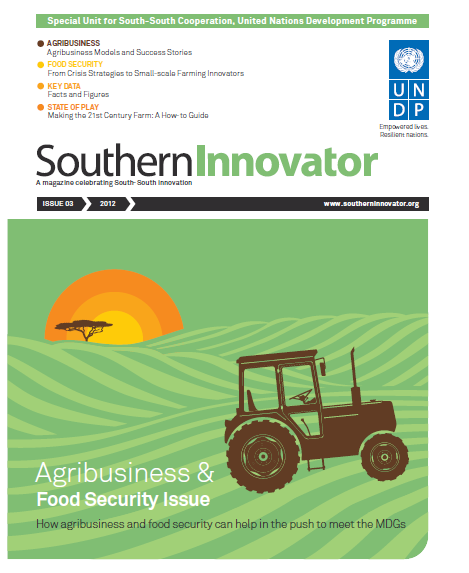
1) Southern Innovator Magazine Issue 3: Agribusiness and Food Security. Packed with information, insights and business models to turn smallholder farmers into agribusinesses. Website: http://www.scribd.com/doc/106055665/Southern-Innovator-Magazine-Issue-3-Agribusiness-and-Food-Security

2) Cassava can become Africa’s new cash crop: Cassava is abundant in sub-Saharan Africa, and could be an ideal crop to improve food security for millions of people. Website: http://www.guardian.co.uk/global-development-professionals-network/2013/mar/28/cassava-food-security-sub-saharan-africa

3) Cassava recipes from the BBC. Website: http://www.bbc.co.uk/food/cassava

Southern Innovator logo

London Edit

31 July 2013

Development Challenges, South-South Solutions was launched as an e-newsletter in 2006 by UNDP’s South-South Cooperation Unit (now the United Nations Office for South-South Cooperation) based in New York, USA. It led on profiling the rise of the global South as an economic powerhouse and was one of the first regular publications to champion the global South’s innovators, entrepreneurs, and pioneers. It tracked the key trends that are now so profoundly reshaping how development is seen and done. This includes the rapid take-up of mobile phones and information technology in the global South (as profiled in the first issue of magazine Southern Innovator), the move to becoming a majority urban world, a growing global innovator culture, and the plethora of solutions being developed in the global South to tackle its problems and improve living conditions and boost human development. The success of the e-newsletter led to the launch of the magazine Southern Innovator. 

Creative Commons License

This work is licensed under a
Creative Commons Attribution-Noncommercial-No Derivative Works 3.0 License.

ORCID iD: https://orcid.org/0000-0001-5311-1052.

© David South Consulting 2022

Categories
Archive Development Challenges, South-South Solutions Newsletters

Small-scale Farmers Can Fight Malaria Battle

By David SouthDevelopment Challenges, South-South Solutions

SOUTH-SOUTH CASE STUDY

Malaria is one of Africa’s biggest killers. Each year globally 300 to 500 million people are infected, and around 1 million die from the disease (theglobalfund). Ninety percent of malaria deaths occur in sub-Saharan Africa – mostly to children under the age of five. The disease costs African countries US$12 billion a year in lost gross domestic product.

Malaria is a parasitic disease – the parasite plasmodium – transmitted by mosquito bites. Symptoms include fever, headache and vomiting. Internal bleeding, kidney and liver failure may follow and can result in coma and death.

The most common and effective treatment, recommended by the World Health Organization, is artemisinin-based combination therapies, known as ACTs. ACTs have low toxicity, few side effects and act rapidly against the parasite. Research shows that artemisinin remedies cure 90 percent of patients within three days.

But there are far fewer doses available than people who need them. WHO has claimed the quantity made available by pharmaceutical companies falls far short of the more than 130 million doses required to combat malaria throughout the world.

And ACTs are very expensive to deliver: in just one country, Tanzania, providing such therapy for three years would cost US $48.3 million. Every year, this would account for 9.5 percent of Tanzania’s health budget, and 28.7 percent of yearly spending on medical supplies: a six-fold increase in budget for malaria treatment (Malaria Journal 2008, 7:4).

But a cheap alternative to the expensive pill form of the treatment is being piloted across Africa. It involves the drinking of a tea made from the bushes of the artemisia plant. Artemisia annua is an annual shrub and the active ingredient in the pills (artemisinin). It is native to China and Vietnam and has been used for 2,000 years to treat fevers.

Bushes cultivated by farmers in Kenya, Malawi, Tanzania, Zambia, Zimbabwe and Mozambique under the supervision of the World Agroforestry Centre in Nairobi, Kenya, are helping to bring down malaria rates without the long wait for the pills to arrive.

The leaves are boiled and made into a tea. Drinking the tea gives a high enough dose of artemisinin in the blood to cure malaria. Helen Meyer, a nurse operating nine mobile health clinics in rural Mozambique, is using the bitter tea made from the dried leaves. Even in treating drug resistant malaria, she has found the artemisia tea effective: “If you drink the tea, you feel better after the first day. Other medicines take a few days.”

A special hybrid of artemisia, A-3, is used because it is adapted for warmer climates. The wild variety grows to only five centimetres in the tropics, but A-3 grows to three metres and packs 20 times more artemisinin. It is also highly economical: thousands of plants can come from a single stem.

The daily adult dose of anti-malaria tea just needs five grams of dried A-3 leaves in one litre of water. The tea is drunk every six hours for seven days. Each plant produces 200 grams of dried leaves, and a thousand shrubs can cure 5,700 people. Since it is a cheap cure, money can be spent instead on other things. Farmers are also able to supplement their income by growing the bushes. And the dried leaves have long-lasting power: even after three years the leaves retain close to a 100 percent of their artemisinin.

Access to authentic artemisinin is critical: it is estimated 16 percent of malaria medicines in Kenya are counterfeit. Elsewhere, the proliferation of counterfeit anti-malarials substantially raises the risk of the emergence of resistance to artemesinin combination therapy, the last truly effective treatment against malaria. Past misuse of other malaria drugs, such as chloroquine in the 1980s and sulphadoxine/pyrimethamine in the 1990s, resulted in the malaria parasite becoming resistant. Hundreds of thousands of people in malaria-prone areas may have died as a result.

The World Agroforestry Centre, recognizing potential problems with artemesinin monotherapies, is working to combine it with indigenous herbal remedies made from other anti-malarial trees, producing a herbal combination therapy (HCT).

“I used to grow fruits and beans here,” said Charles Kiruthi, a Kenyan farmer, to the IRIN news service. “but I will get a better return from this plant. No pests attack it, and until harvesting time it requires very little labour.”

“I expect to get a good return, and I am also very happy to be helping fight malaria,” continued Kiruthi. “I recently lost two friends to the disease, and my child gets sick with malaria sometimes.”

Published: July 2008

Resources

Development Challenges, South-South Solutions was launched as an e-newsletter in 2006 by UNDP’s South-South Cooperation Unit (now the United Nations Office for South-South Cooperation) based in New York, USA. It led on profiling the rise of the global South as an economic powerhouse and was one of the first regular publications to champion the global South’s innovators, entrepreneurs, and pioneers. It tracked the key trends that are now so profoundly reshaping how development is seen and done. This includes the rapid take-up of mobile phones and information technology in the global South (as profiled in the first issue of magazine Southern Innovator), the move to becoming a majority urban world, a growing global innovator culture, and the plethora of solutions being developed in the global South to tackle its problems and improve living conditions and boost human development. The success of the e-newsletter led to the launch of the magazine Southern Innovator. 

Creative Commons License

This work is licensed under a
Creative Commons Attribution-Noncommercial-No Derivative Works 3.0 License.

ORCID iD: https://orcid.org/0000-0001-5311-1052.

© David South Consulting 2023

Categories
Archive Development Challenges, South-South Solutions Newsletters

US $1 Trillion Opportunity for Africa’s Agribusinesses Says Report

By David SouthDevelopment Challenges, South-South Solutions

SOUTH-SOUTH CASE STUDY

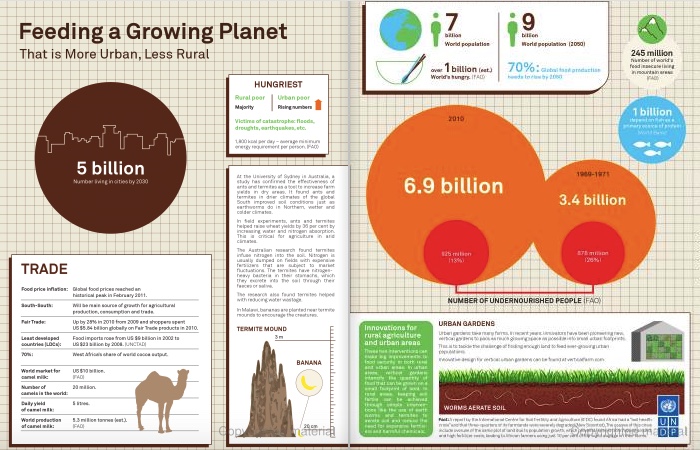
As the world’s population continues to grow – surpassing 9 billion people by 2050, the United Nations estimates – and more and more people move to urban areas, producing enough food to feed this population will be one of the biggest economic challenges and opportunities in the global South.

Africa, a continent undergoing significant economic change, has yet to fully realize its potential as a producer of agricultural products to feed itself and the world. Africa currently has a labour-intensive but very inefficient agriculture system. While many Africans either make their living in agriculture or engage in subsistence farming for survival, much of the continent’s farming is inefficient and fails to make the most of the continent’s rich resources and potential.

A new World Bank report, Growing Africa: Unlocking the Potential of Agribusiness (http://siteresources.worldbank.org/INTAFRICA/Resources/africa-agribusiness-report-2013.pdf), argues that Africa could have a trillion-dollar agriculture market by 2030.

What will need to change to make this happen? African farms will need greater access to capital, as well as more investment in infrastructure and better irrigation. All of these elements will need to dramatically improve if Africa is going to compete effectively in global markets.

The report urges greater cooperation between governments and agribusinesses, farmers and consumers and for all parties to recognize that the continent is being rapidly urbanized, changing the way food is grown, sourced and distributed.

It says Africa’s farmers and agribusinesses require more capital, steady supplies of electricity, better technology and irrigated land. All these resources then need to be applied to the growing of high-value, nutritious foods.

At present, agriculture, farmers and agribusinesses make up almost 50 per cent of Africa’s economic activity, and the continent’s food system is worth an estimated US $313 billion a year (World Bank). But the report believes this could triple if governments and business leaders adopted radically different policies.

“The time has come for making African agriculture and agribusiness a catalyst for ending poverty,” said Makhtar Diop, the World Bank Vice President for Africa. “We cannot overstate the importance of agriculture to Africa’s determination to maintain and boost its high growth rates, create more jobs, significantly reduce poverty, and grow enough cheap, nutritious food to feed its families, export its surplus crops, while safeguarding the continent’s environment.”

The report addresses the problems African agriculture is currently experiencing: slow yield growth for major food crops, slowing research spending, degraded land, water scarcity, and climate change. It looks at solutions to allow Africa to tackle these problems and seize the opportunity to significantly increase its food and agricultural exports.  Africa can more than meet its own needs and meet the world’s needs too, the report argues.

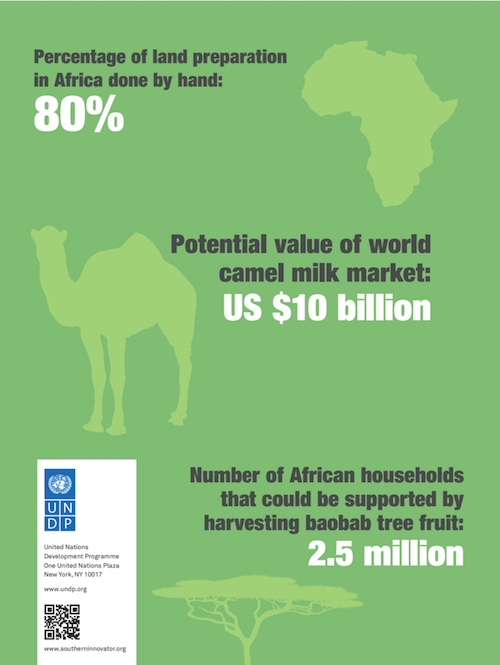
But what can be done? At present, 50 per cent of the world’s uncultivated land suitable for growing food resides in Africa. This works out to 450 million hectares of land that is neither forested, protected nor densely populated – all could be available for growing food.

The report also found Africa is using just 2 per cent of its renewable water resources while the rest of the world averages 5 per cent. African harvests currently do not yield anything close to what is possible. Another weakness is waste from post-harvest losses, averaging 15 to 20 per cent for cereals, and even more for perishable foods, because of poor storage and farm infrastructure.

Areas the report recommends farmers and agribusinesses should focus on include fast-growing markets for rice, maize, soybeans, sugar, palm oil, biofuel and feedstock. In sub-Saharan Africa, the focus should be on rice, feed grains, poultry, dairy, vegetable oils, horticulture and processed foods for the domestic market. And there are also good examples to follow by studying the ways Latin America and Southeast Asia used world markets to boost income and profits.

Agribusiness enterprises looking to purchase more land to expand the number of hectares under cultivation are urged to act ethically and not to threaten existing people’s livelihoods or violate local users’ rights. This includes consulting with locals and paying fair market price for land bought.

Rice is one crop that needs attention. Significant quantities of rice are imported and consumed in Africa. Half the rice eaten is imported, costing around US $3.5 billion a year (World Bank). Big importers include Ghana and Senegal – both countries singled out in the report for needing to improve their domestic rice production and quality.

Another food staple needing attention is maize (corn). A daily food staple for many Africans, it takes up 14 per cent of crop lands on the continent. While most Zambians get half their calories from maize, Zambia is currently unable to export maize at a cost comparable to market leader Thailand – Zambian maize costs one-third more. Zambia was singled out as needing to raise yields, reduce costs, and remove disincentives for the private sector in markets and trade.

“Improving Africa’s agriculture and agribusiness sectors means higher incomes and more jobs. It also allows Africa to compete globally. Today, Brazil, Indonesia and Thailand each export more food products than all of sub-Saharan Africa combined.  This must change,” said Jamal Saghir, the World Bank’s Director for Sustainable Development in the Africa Region.

How to make the most of this opportunity?

One innovative idea coming out of Africa comes from the mega-brewer SABMiller (sabmiller.com). As a sign of confidence in the continent’s growing economies, the brewer has pledged to slash its beer prices and use more African-grown grains – a boost to local farmers – and to start a campaign of opening new breweries for the next three years. Countries targeted include Ghana, Nigeria, Mozambique and Zambia.

“African farmers and businesses must be empowered through good policies, increased public and private investments and strong public-private partnerships,” according to Gaiv Tata, World Bank director for Financial and Private Sector Development in Africa.  “A strong agribusiness sector is vital for Africa’s economic future.”

Published: May 2013

Resources

1) Southern Innovator Magazine Issue 3: Agribusiness and Food Security: Southern Innovator’s third issue finds innovators transforming agribusiness and boosting food security. Website: http://www.scribd.com/doc/106055665/Southern-Innovator-Magazine-Issue-3-Agribusiness-and-Food-Security

2) The New Harvest: Agricultural Innovation in Africa by Calestous Juma. Website: http://belfercenter.ksg.harvard.edu/publication/20504/new_harvest.html

3) Growing Africa: Unlocking the Potential of Agribusiness. Website: http://siteresources.worldbank.org/INTAFRICA/Resources/africa-agribusiness-report-2013.pdf

4) Edible Insects: future prospects for food and feed security, Publisher: FAO. Website: http://www.un.org/apps/news/story.asp?NewsID=44886

5) Six-legged livestock: edible insect farming, collecting and marketing in Thailand, Publisher: FAO. Website: http://www.fao.org/asiapacific/rap/home/news/detail/en/?news_uid=176061

Southern Innovator logo

London Edit

31 July 2013

https://davidsouthconsulting.org/2020/12/14/african-farming-wisdom-now-scientifically-proven/

https://davidsouthconsulting.org/2022/11/21/agribusiness-food-security/

https://davidsouthconsulting.org/2022/08/14/brazil-preserves-family-farms-keeping-food-local/

https://davidsouthconsulting.org/2022/10/10/cheap-farming-kit-hopes-to-help-more-become-farmers/

https://davidsouthconsulting.org/2022/02/10/food-inflation-ways-to-fight-it/

https://davidsouthconsulting.org/2021/03/04/growing-a-southern-brand-to-global-success-the-olam-story/

https://davidsouthconsulting.org/2022/10/14/indias-modernizing-food-economy-unleashing-new-opportunities/

https://davidsouthconsulting.org/2022/05/04/insects-can-help-in-food-crisis/

https://davidsouthconsulting.org/2022/10/31/new-kenyan-services-to-innovate-mobile-health-and-farming/

https://davidsouthconsulting.org/2022/11/23/putting-worms-to-work/

https://davidsouthconsulting.org/2021/09/16/small-fish-farming-opportunity-can-wipe-out-malnutrition/

https://davidsouthconsulting.org/2021/03/05/southern-innovator-issue-3/

https://davidsouthconsulting.org/2022/10/14/staple-foods-are-becoming-more-secure-in-the-south/

https://davidsouthconsulting.org/2021/03/20/texting-for-cheaper-marketplace-food-with-sokotext/

https://davidsouthconsulting.org/2022/11/11/urban-farming-to-tackle-global-food-crisis/

https://davidsouthconsulting.org/2022/10/18/woman-wants-african-farming-to-be-cool/

Development Challenges, South-South Solutions was launched as an e-newsletter in 2006 by UNDP’s South-South Cooperation Unit (now the United Nations Office for South-South Cooperation) based in New York, USA. It led on profiling the rise of the global South as an economic powerhouse and was one of the first regular publications to champion the global South’s innovators, entrepreneurs, and pioneers. It tracked the key trends that are now so profoundly reshaping how development is seen and done. This includes the rapid take-up of mobile phones and information technology in the global South (as profiled in the first issue of magazine Southern Innovator), the move to becoming a majority urban world, a growing global innovator culture, and the plethora of solutions being developed in the global South to tackle its problems and improve living conditions and boost human development. The success of the e-newsletter led to the launch of the magazine Southern Innovator. 

Creative Commons License

This work is licensed under a
Creative Commons Attribution-Noncommercial-No Derivative Works 3.0 License.

ORCID iD: https://orcid.org/0000-0001-5311-1052.

© David South Consulting 2023