Tag: FAO

  • Brazil’s Agricultural Success Teaches South How to Grow

    Brazil’s Agricultural Success Teaches South How to Grow

    By David SouthDevelopment Challenges, South-South Solutions

    SOUTH-SOUTH CASE STUDY

    Inflation, environmental stresses and population and economic growth are testing the world’s food supply systems. There is a strong need to boost yields and improve the quality of food.

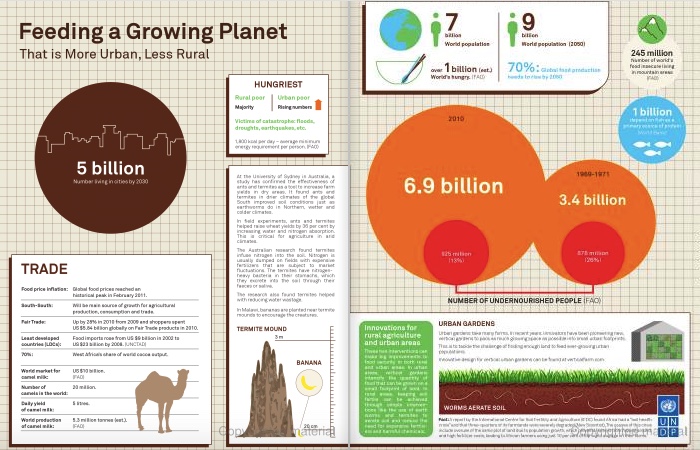
    Between now and 2050 the world’s population will rise from 7 billion to 9 billion. Urban populations will probably double and incomes will rise. City dwellers tend to eat more meat and this will boost demand.

    The UN’s Food and Agriculture Organization (FAO) reckons grain output will have to rise by around half but meat output will have to double by 2050 to meet demand.

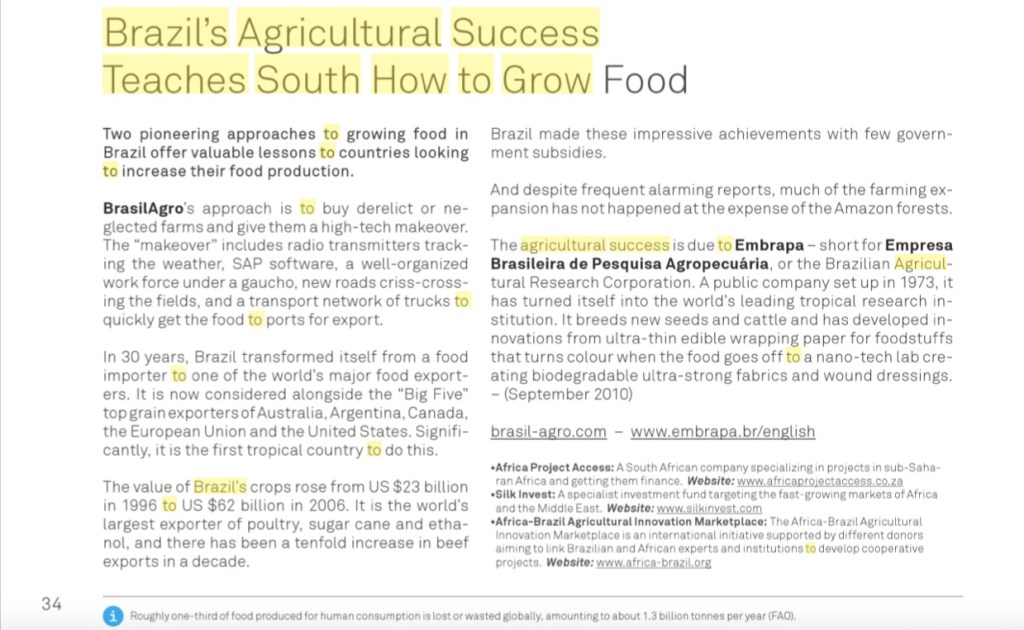
    Two pioneering approaches to growing food in Brazil offer valuable lessons to countries looking to increase their food production.

    One is taking place in Bahia state in north-eastern Brazil. On Brazil’s cerrado (savannah) (http://en.wikipedia.org/wiki/Cerrado), enormous farms grow cotton, soybeans and maize. One of them, Jatoba farm, has 24,000 hectares of land: vastly larger than comparable farms in the United States.

    On the Cremaq farm in the north of the country in Piaui state, a transformation has taken place. Once a failed cashew farm, it is now a highly modern operation. Owned by BrasilAgro, it is benefiting from clever agricultural innovation that gets results.

    BrasilAgro’s approach is to buy derelict or neglected farms and give them a high-tech makeover. The ‘makeover’ includes radio transmitters tracking the weather, SAP software (http://en.wikipedia.org/wiki/SAP_AG), a well-organized work force under a gaucho (http://en.wikipedia.org/wiki/Gaucho), new roads criss-crossing the fields, and a transport network of trucks to quickly get the food to ports for export. Piaui is an isolated place with few services: it can take half a day to get to a health clinic. Dependence on state welfare payments for survival is the norm for many residents.

    Brazil, over 30 years, transformed itself from a food importer to one of the world’s major food exporters. It is now considered alongside the ‘Big Five’ top grain exporters of America, Canada, Australia, Argentina and the European Union. Importantly, it is the first tropical nation to do this.

    The value of Brazil’s crops rose from US $23 billion in 1996, to US $62 bn in 2006. It is the world’s largest exporter of poultry, sugar cane and ethanol, and there has been a tenfold increase in beef exports in a decade.

    Brazil made these impressive achievements with few government subsidies. According to the Organization for Economic Co-operation and Development (OECD), state support accounted for just 5.7 percent of total farm income in Brazil from 2005-07. In the US it was 12 percent, while the OECD average is 26 percent and the level in the European Union is 29 percent.

    And despite frequent alarming reports, much of the farming expansion has not happened at the expense of the Amazon forests.

    The agricultural success is down to Embrapa (http://www.embrapa.br/english) – short for Empresa Brasileira de Pesquisa Agropecuária, or the Brazilian Agricultural Research Corporation. A public company set up in 1973, it has turned itself into the world’s leading tropical research institution. It breeds new seeds and cattle and has developed innovations from ultra-thin edible wrapping paper for foodstuffs that turns colour when the food goes off to a nano-tech lab creating biodegradable ultra-strong fabrics and wound dressings.

    Its biggest achievement has been turning the vast expanses of the cerrado green for agriculture. Norman Borlaug, an American plant scientist often called the father of the Green Revolution, told the New York Times that “nobody thought these soils were ever going to be productive.” They seemed too acidic and too poor in nutrients.

    Embrapa uses what its scientists call a “system approach”: all the interventions work together. Improving the soil and developing new tropical soybeans were both needed for farming the cerrado. The two together also made possible the changes in farm techniques which have boosted yields further.

    Many believe this approach can be applied to Africa as well. There are several reasons to think it can. Brazilian land is like Africa’s: tropical and nutrient-poor. The big difference is that the cerrado gets a decent amount of rain and most of Africa’s savannah does not (the exception is the swathe of southern Africa between Angola and Mozambique).

    Another approach that Brazil has been pioneering is making small, family farms sustainable and productive for the 21st century.

    There has long been a tension between those who believe in very large farms, agribusiness and mono-crops (http://en.wikipedia.org/wiki/Mono-cropping), and those who believe in having a large number of smaller farms with a wide variety of crops and animals.

    But small farms have endured. The livelihoods of more than 2 billion people depend on the 450 million smallholder farms across the world. With their families, they account for a third of the world’s population.

    Family farms are critical to weathering economic crises and ensuring a steady and secure food supply. The International Fund for Agricultural Development (IFAD) (www.ifad.org)called in 2008 for small family farms to be put at the heart of the global response to high food prices and uncertain food security.

    In Brazil, this call is being answered by a bold initiative to create what is termed a “social technology”, combining a house building programme with diverse family farms.

    The Brazilian farmers’ cooperative Cooperhaf: Cooperativa de Habitacao dos Agricultores Familiares (http://www.cooperhaf.org.br) – a World Habitat Awards winner – combines housing and farm diversification to support family farmers.

    “Family farming is very important for the country – 70 percent of food for Brazilians comes from family farming,” said Adriana Paola Paredes Penafiel, a projects adviser with the Cooperhaf. “The government wants to keep people in rural areas.”

    “We see the house as the core issue,” she continued.  “The farmers can improve their productivity but the starting point is the house.”

    Started in 2001 by a federation of farmers unions, the Cooperhaf works in 14 Brazilian states with family farmers. In Brazil farmers have a right to a house in the law and the cooperative was formed to make sure this happened.

    “We promote diversification to make farmers less vulnerable: if they lose a crop in macro farming, they lose everything. We encourage diversification and self-consumption to guarantee the family has food everyday. We help to set up a garden.”

    The concept is simple: a good quality home acts as an anchor to the family farm, making them more productive as farmers. The farmers receive up to 6,000 reais (US $2,290) for a house, and can choose designs from a portfolio of options from the Cooperhaf.

    As in other countries, the Cooperhaf and other co-ops encourage markets and certification programmes to promote family farmed food and raise awareness. Penafiel says promoting the fact that the food is family farmed is critical: to the consumer it is healthier, fresher and contains fewer chemicals than imported produce.

    “Most agri business is for export,” said Penafiel. “If we don’t have food in the country, food for poor communities would not be available. This enables farmers to be more autonomous, not having to buy fertilizers and equipment and take on too much debt. That approach is not sustainable as we saw with the so-called Green Revolution.”

    Published: September 2010

    Resources

    • Africa Project Access: A South African company specializing in projects in sub-Saharan Africa and getting them finance. Website:http://www.africaprojectaccess.co.za/
    • Silk Invest: A specialist investment fund targeting the fast-growing markets of Africa and the Middle East. Website:http://www.silkinvest.com/
    • Olam: A global food supply company in ‘agri-products’ that got its start in Nigeria  and shows how a Southern brand can grow and go global and overcome the difficulties of cross-border trade. Website: www.olamonline.com

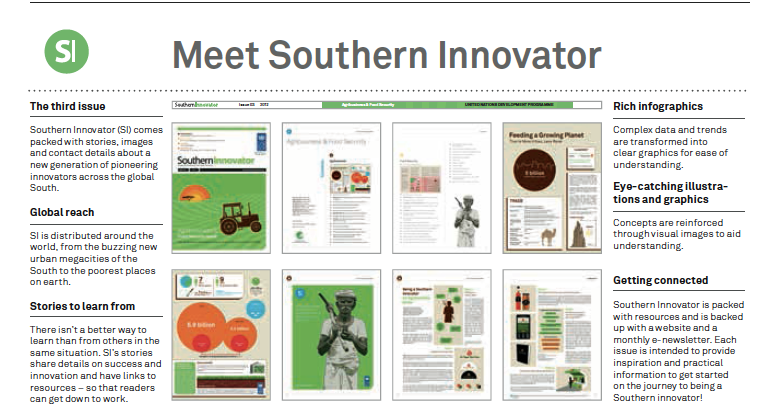
    Development Challenges, South-South Solutions was launched as an e-newsletter in 2006 by UNDP’s South-South Cooperation Unit (now the United Nations Office for South-South Cooperation) based in New York, USA. It led on profiling the rise of the global South as an economic powerhouse and was one of the first regular publications to champion the global South’s innovators, entrepreneurs, and pioneers. It tracked the key trends that are now so profoundly reshaping how development is seen and done. This includes the rapid take-up of mobile phones and information technology in the global South (as profiled in the first issue of magazine Southern Innovator), the move to becoming a majority urban world, a growing global innovator culture, and the plethora of solutions being developed in the global South to tackle its problems and improve living conditions and boost human development. The success of the e-newsletter led to the launch of the magazine Southern Innovator. 

    Creative Commons License

    This work is licensed under a
    Creative Commons Attribution-Noncommercial-No Derivative Works 3.0 License.

    ORCID iD: https://orcid.org/0000-0001-5311-1052.

    © David South Consulting 2022

  • Urban Farming to Tackle Global Food Crisis

    Urban Farming to Tackle Global Food Crisis

    By David SouthDevelopment Challenges, South-South Solutions

    SOUTH-SOUTH CASE STUDY

    The world’s population is becoming more urban by the day. By 2030, some five billion people around the world will live in cities. This year is the tipping point: urban dwellers (3.3 billion people) now outnumber rural residents for the first time (UNFPA’s State of the World Population 2007 Report). 

    But with rising food prices across the globe, many city-dwellers are experiencing hunger and real hardship. On international commodity markets, food prices have gone up 54 percent over the last year, with cereal prices soaring 92 percent (FAO – World Food Situation). While living in an urban environment means living cheek-by-jowl with other people, it doesn’t mean there aren’t ways to grow food and supplement urban dwellers’ tight budgets and boost diets.

    U.N. Secretary General Ban Ki-moon has called for food production to increase 50 percent by 2030 just to meet rising demand – and right now there are 862 million people undernourished (FAO). But one solution, urban farming, can make a huge difference, as the Caribbean island of Cuba has shown.

    Today, Cuba imports about 50 percent of its minimum fuel and food requirements – a cost that reached US $1.6 billion last year for food. (Reuters). The island has been buffeted by one food crisis after another in the past two decades, first by the collapse of its aid from the Soviet Union, and then by a fuel crisis. But now, urban farming in Cuba provides most of the country’s vegetables, thanks to urban gardens that have sprung up on abandoned land in the country’s cities and towns. And the food is pesticide-free: 70 percent of the vegetables and herbs on the island are organic (http://www.soilassociation.org/web/sa/saweb.nsf/Living/ whatisorganic.html).

    These urban farms mean fresh food is just a short walk away from the people who eat it. And in a world of rising fuel prices, Cuba has reduced the use of fossil fuels in the production and transportation of food.

    The urban farms have created 350,000 jobs that pay better than most government jobs. It has also improved Cuban’s health: many have moved from diets dominated by rice and beans and imported canned goods from Eastern Europe, to fresh vegetables and fruits.

    While Cubans receive at least a basic state ration of rice, beans and cooking oil, the rations do not include fresh fruit and vegetables. After the withdrawal of Soviet subsidies, the average Cuban’s daily calorie intake fell sharply. Between 1989 and 1993, daily calorie intake dropped from 3,004 to 2,323 (UN). But with the growth of urban farms, this has moved up to 3,547 calories a day – even higher than the amount recommended for Americans by the US government.

    The secret to this success has been the rise of entrepreneurs like Miladis Bouza, a 48-year-old former research biologist who had to abandon a comfortable middle class life after the collapse of the Soviet Union. Her government salary dropped to US $3 a month. Unable to make ends meet and provide food for her family, she quit her job.

    The Cuban government allowed people to turn unused urban land into mini farms. The cities have many vacant lots because the state owns most land and there isn’t competition from private developers, as in many other countries. Unusually for communist Cuba, 80 percent of the profits are kept by the farmers. This can be an average wage of US $71 per month.

    “Those salaries are higher than doctors, than lawyers,” Roberto Perez, an agronomist who runs the country’s first urban farm, told The Associated Press. “The more they produce, the more they make. That’s fundamental to get high productivity.”

    Miladis grabbed this opportunity to farm a half-acre plot near her home in Havana. Along with her husband, she grows tomatoes, sweet potatoes and spinach, and sells the vegetables at a stall on nearby busy street. This has enabled her monthly income to rise to between US $100 per month and US $250 per month, far more than the average government salary of US $19 per month.

    Cuba was inspired by greenbelt farms in Shanghai (http://en.shac.gov.cn/hjgl/jqgk/t20030805_82028.htm): but Cuba has gone even further to make urban farming a key part of the national food supply.

    All this urban farming is also all-natural farming. Farms have had to turn to natural compost as fertilizer, and natural pesticides like strong-smelling celery to ward off insects.

    So-called organoponicos (http://academicos.cualtos.udg.mx/Pecuarios/ PagWebEP/Lecturas/ORGANOPONICOS.htm ) gather together a wide variety of vegetables, fruits and herbs, as well as ornamental plants. Customers are offered mangos, plantains, basil, parsley, lettuce, garlic, celery, scallions, collard greens, black beans, watermelon, tomatoes, malanga, spinach and sweet potatoes.

    “Nobody used to eat vegetables,” said David Leon, 50, buying two pounds of Swiss chard at a Havana organoponico. “People’s nutrition has improved a lot. It’s a lot healthier. And it tastes good.”

    Published: June 2008

    Resources

    https://davidsouthconsulting.org/2020/12/14/african-farming-wisdom-now-scientifically-proven/

    https://davidsouthconsulting.org/2022/10/10/cheap-farming-kit-hopes-to-help-more-become-farmers/

    https://davidsouthconsulting.org/2023/01/16/hip-driven-pump-brings-water-to-parched-fields/

    https://davidsouthconsulting.org/2022/11/23/kenyan-farmer-uses-internet-to-boost-potato-farm/

    https://davidsouthconsulting.org/2022/10/31/new-kenyan-services-to-innovate-mobile-health-and-farming/

    https://davidsouthconsulting.org/2021/11/09/pocket-friendly-solution-to-help-farmers-go-organic/

    https://davidsouthconsulting.org/2021/09/16/small-fish-farming-opportunity-can-wipe-out-malnutrition/

    https://davidsouthconsulting.org/2022/10/18/woman-wants-african-farming-to-be-cool/

    Development Challenges, South-South Solutions was launched as an e-newsletter in 2006 by UNDP’s South-South Cooperation Unit (now the United Nations Office for South-South Cooperation) based in New York, USA. It led on profiling the rise of the global South as an economic powerhouse and was one of the first regular publications to champion the global South’s innovators, entrepreneurs, and pioneers. It tracked the key trends that are now so profoundly reshaping how development is seen and done. This includes the rapid take-up of mobile phones and information technology in the global South (as profiled in the first issue of magazine Southern Innovator), the move to becoming a majority urban world, a growing global innovator culture, and the plethora of solutions being developed in the global South to tackle its problems and improve living conditions and boost human development. The success of the e-newsletter led to the launch of the magazine Southern Innovator. 

    https://davidsouthconsulting.org/2021/03/05/southern-innovator-issue-3/

    Creative Commons License

    This work is licensed under a
    Creative Commons Attribution-Noncommercial-No Derivative Works 3.0 License.

    ORCID iD: https://orcid.org/0000-0001-5311-1052.

    © David South Consulting 2023

  • Insects Can Help in Food Crisis

    Insects Can Help in Food Crisis

    By David SouthDevelopment Challenges, South-South Solutions

    SOUTH-SOUTH CASE STUDY

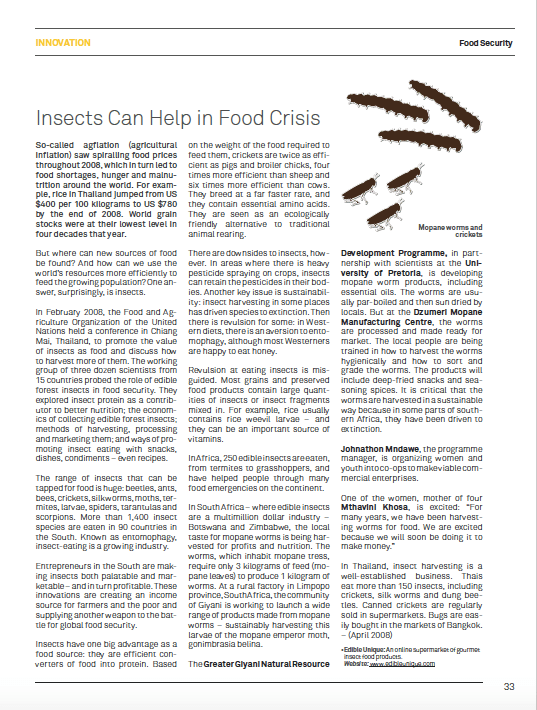
    For many years it was a given that the world’s problem was not a lack of food, but that it was unfairly shared. But as the switch to biofuels gathers pace, farmland is being diverted away from growing food for people, to food for fuel. On top of this, growing prosperity in many countries in the South has boosted demand for better quality food, including grain-devouring meat diets – it takes 10 kilograms of grain to get one kilogram of meat from a cow. The crisis has deeply alarmed the UN’s World Food Programme and the World Bank. In the economic battle for food, the poor are the most vulnerable.

    So-called agflation (agricultural inflation) has seen spiraling food prices, which in turn are causing food shortages, hunger and malnutrition around the world. For example, rice in Thailand has jumped from US $400 per 100 kilograms in January, to US $760. World grain stocks are at their lowest level in four decades.

    But where can new sources of food be found? And what would be a more efficient use of the world’s resources to feed the growing population? One answer, surprisingly, is insects.

    In February this year the UN’s Food and Agriculture Organization held a conference in Chiang Mai, Thailand to devour the dietary value of insects as food and discuss how to harvest more of them. The working group of three dozen scientists from 15 countries probed the role of edible forest insects in food security. They explored insect protein as a contributor to better nutrition, the economics of collecting edible forest insects, methods of harvesting, processing and marketing edible forest insects, and ways of promoting insect eating with snacks, dishes, condiments — even recipes.

    The range of insects that can be tapped for food is huge: beetles, ants, bees, crickets, silk worms, moths, termites, larvae, spiders, tarantulas and scorpions. More than 1,400 insect species are eaten in 90 countries in the South. Known as entomophagy, insect eating is a growing industry. Entrepreneurs in the South are making insects both palatable and marketable – and in turn profitable. These innovations are adding another income source for farmers and the poor, and supplying another weapon to the battle for global food security.

    Insects have one big advantage as a food source: they are efficient converters of food into protein. Based on the weight of the food required to feed them, crickets are twice as efficient as pigs and broiler chicks, four times more efficient than sheep and six times more efficient than cows. They breed at a far faster rate, and they contain essential amino acids. They are seen as an ecologically friendly alternative to traditional animal rearing.

    There are downsides to insects, however. In areas where there is heavy pesticide spraying on crops, insects can retain the pesticides in their bodies. Another key issue is sustainability: insect harvesting in some places has driven species to extinction. Then there is revulsion for some: in Western diets, there is an aversion to entomophagy, although most Westerners are happy to eat honey.

    Revulsion at eating of insects is misguided. Most grains and preserved food products contain large quantities of insects or insect fragments mixed in. For example, rice usually contains rice weevil larvae – and they can be an important source of vitamins.

    In Africa, 250 edible insects are eaten, from termites to grasshoppers, and have helped people through many food emergencies on the continent.

    In South Africa — where edible insects are a multimillion dollar industry — Botswana and Zimbabwe, the local taste for mopane worms is being harvested for profits and nutrition. The worms, which inhabit mopane tress, require only three kilograms of feed (mopane leaves) to produce one kilogram of worms. At a rural factory in Limpopo province, South Africa, the community of Giyani is working to launch a wide range of products made from mopane worms – sustainably harvesting this larvae of the mopane emperor moth, gonimbrasia belina.

    The Greater Giyani Natural Resources Development Programme in partnership with scientists at the University of Pretoria, is developing mopane worm products, including essential oils. The worms are usually par-boiled and then sun dried by locals. But at the Dzumeri Mopane Manufacturing Centre, the worms are processed and made ready for market. The local people are being trained in how to harvest the worms hygienically, and how to sort and grade the worms. The products will include deep-fried snacks and seasoning spices. It is critical the worms are harvested in a sustainable way, because in some parts of southern Africa, they have been driven to extinction.

    Johnathon Mndawe, the programme manager, is organizing women and youth into co-ops to make viable commercial enterprises. “We expect the product to hit supermarket shelves in 2009,” said Morewane Mampuru, coordinator for the Centre for Scientific and Industrial Research, another partner.

    One of the women, mother of four Mthavini Khosa, is excited: “For many years, we have been harvesting worms for food. We are excited because we will soon be doing it to make money.”

    In Thailand, insect harvesting is a well-established business. Thais eat more than 150 insects, including crickets, silk worms and dung beetles. Canned crickets are regularly sold in supermarkets. Bugs are easily bought in the markets of Bangkok.

    Online vendor Thailand Unique, based in Udon Thani, sells and markets a wide range of edible insects. They include edible scorpions, preserved giant water bugs, roasted grasshoppers, edible big crickets, bamboo worms, crushed giant bug paste, and introducing this year, Bug Snackz and Scorpion Thai Green Curry. There is even a ‘Bug Sample Pack’, containing a mix of seven edible insects and arachnids, all slow roasted for easy snacking.

    Another important centre for insect harvesting is Latin America. In Venezuala, the Pemon Indians eat fire ants during the rainy season.

    In Colombia, so-called “fatass ant” or “hormiga culona” is eaten like popcorn in movie theatres. Some believe it is a defence against cancer, or a natural aphrodisiac. Eating the ants or culona, has been happening right back to the ancient Guane Indians.

    In Santander province, farmers are exporting the ants for sale, some being dipped in Belgian chocolate and sold as a luxury food in London’s Harrods and Fortnum and Mason department stores. The abundant ant population brings in US $11 a pound (kilogram conversion) for the farmers, a doubling in price since 2000.

    Farmers in the artist colony of Barichara harvest the ants – though concerns have been raised that they have been over-harvesting the population. Restaurants in the area offer ant-based spreads for bread and an ant-flavored lamb sauce.

    “It’s an age-old dilemma for the farmer — should I kill it or eat it?” said Andres Santamaria to CBS News, who was given a $40,000 grant from Santander’s government to develop an environmentally sustainable, export-oriented programme for breeding the ants.

    In Tijuana, Mexico, ancient Aztec, pre-Colombian insect meals are on offer at this restaurant, joining a global trend. Cien Anios (“100 Years”), specialises in pre-Colombian, Aztec insect recipes. It is proof there is money in preparing insects for food. Typical dishes include garlicky ant eggs and cactus worms in butter.

    Published: April 2008

    Resources

    • A network for insect collectors: Website: www.insect.net
    • Sunrise Land Shrimp: A do-it-yourself guide to raising and harvesting insects for food, with important information on health and hygiene: Website: www.slshrimp.com
    • Edible Unique: An online supermarket of gourmet insect food products. Website: www.edibleunique.com

    https://davidsouthconsulting.org/2022/11/18/farmers-weather-fertilizer-crisis-by-going-organic/

    https://davidsouthconsulting.org/2022/11/11/urban-farming-to-tackle-global-food-crisis/

    Tijuana‘s Cien Años was the original inspiration for this story. As one of the first stories to draw attention to the insects-for-food market, it contributed to a growing awareness of this exciting food source. I had a delicious all-insect meal there in 2002.

    https://davidsouthconsulting.org/2021/03/05/southern-innovator-issue-3/

    Creative Commons License

    This work is licensed under a
    Creative Commons Attribution-Noncommercial-No Derivative Works 3.0 License.

    ORCID iD: https://orcid.org/0000-0001-5311-1052.

    © David South Consulting 2022

  • Camel Ice Cream Delivering Desert Dessert

    Camel Ice Cream Delivering Desert Dessert

    By David South, Development Challenges, South-South Solutions

    SOUTH-SOUTH CASE STUDY

    The global food crisis is forcing people around the world to think differently about how food is produced and what new products can boost the incomes of farmers. U.N. Secretary General Ban Ki-moon has called for food production to increase 50 percent by 2030 just to meet rising demand – and right now there are 862 million people worldwide who are undernourished (FAO).

    The world’s over 19.4 million camels (FAO, 2003) are now being tapped for their highly nutritious, healing and tasty milk. Camel milk is three times as rich in Vitamin C as cow’s milk. And it has several unique properties that differ from other milks, like cow and buffalo. It contains enzymes with anti-bacterial and anti-viral properties to fight diseases. The milk also contains insulin (http://en.wikipedia.org/wiki/Insulin), a hormone that regulates blood sugar levels, something that is critical to the survival of diabetics.

    With more and more areas of the world suffering from severe drought or desertification, camels’ renowned ability to go without a drink of water for up to three weeks makes them ideal animals. Camels continue to lactate milk even in a dehydrated state.

    The current 5.4 million tonnes of camel milk produced every year isn’t enough to meet demand. The Food and Agriculture Organization (FAO) is confident, that with the right investment and innovation, camel milk has a potential market of a minimum 200 million people in the Arab world, and many millions more in Africa, Europe and the Americas.

    Fresh camel milk fetches roughly US $1 dollar a litre on African markets. A world market worth US $10 billion is entirely within the realm of possibility, the FAO says.

    “The potential is massive,” said FAO dairy and meat expert Anthony Bennett. “Milk is money.”

    “No one is suggesting intensive camel dairy farming,” said Bennett. “But just with improved feed, husbandry and veterinary care, daily yields could rise to 20 litres (per camel).”

    An Indian NGO – the Lokhit Pashu-Pala Sansthan (LPPS), which supports landless livestock owners and means “welfare organization for livestock keepers” in Hindi – is re-inventing the business model for camel herding in India (http://www.lpps.org/). The LPPS is a canny user of publicity and has created products that are eye-catching and instant conversation starters: camel ice cream and camel-dung paper.

    Produced in the Indian state of Rajasthan (http://en.wikipedia.org/wiki/Rajasthan), the camel milk ice cream is being sold in shops and hotels. It comes in two flavours: kesar (saffron) (http://en.wikipedia.org/wiki/Saffron) and strawberry vanilla.

    The camel is integral to the traditional way of life in Rajasthan and is the state’s signature animal. India once boasted the third-largest population of camels in the world: over 1 million.

    But that number has fallen to just 400,000. Grazing areas once just for camels are now being used by agriculture and wildlife sanctuaries. The camel breeders, the Raika people, have experienced a serious decline in income from camel herding, and many have sold their camels for slaughter.

    If there was to be a future for camel herding in Rajasthan, new products had to be developed and the whole business of camel herding re-branded.

    The ice cream is part of a two-year project to help camel breeders develop new products using camel milk. Camels are seen as ideal animals to raise in the drought-afflicted climate of Rajasthan, and can produce four to six litres of milk a day.

    ‘With groundwater levels dropping rapidly, it spells the end of water-intensive agriculture. In this scenario, camel husbandry represents a perfect solution to the chronic water woes of the state,’ said Bagdi Ram Raika, president of the Rajasthan Pastoralist Development Association.

    ‘We would like to see the camel breeders of Rajasthan make use of their traditional assets and avail themselves of the new marketing opportunities. Our role is to support them in this,’ said Hanwant Singh, director of LPPS.

    The highly inventive people at LPPS have also come up with paper made from camel dung. Handmade, the notebooks, diaries and greeting cards are all made from the dung paper. The camel’s dung contains undigested fibre, which makes an excellent material for making paper.

    Published: April 2009

    Resources

    Creative Commons License

    This work is licensed under a
    Creative Commons Attribution-Noncommercial-No Derivative Works 3.0 License.

    ORCID iD: https://orcid.org/0000-0001-5311-1052.

    © David South Consulting 2021