Categories
Archive Development Challenges, South-South Solutions Newsletters

West African Chocolate Success Story

By David SouthDevelopment Challenges, South-South Solutions

SOUTH-SOUTH CASE STUDY

A Ghanaian chocolate company has become a big success in the United Kingdom and shown how it is possible to develop and market a high-quality product grown in West Africa. While the chocolate bars are manufactured in the Netherlands, the cooperative that owns the company initiated the push into producing a mass-market chocolate brand – and shares in the profits.

The Divine chocolate brand is available in shops and supermarkets across Britain and is the product of the Kuapa Kokoo (http://www.kuapakokoo.com/) cocoa farmers cooperative. The Divine brand was launched in the U.K. in 1998 as the first Fairtrade (http://www.fairtrade.org.uk) chocolate bar aimed at the mass market. Previously, most Fairtrade chocolate was made for high-end customers.

Apart from the chocolate bars, the co-op also sells its cocoa butter to The Body Shop (http://www.thebodyshop.co.uk/_en/_gb/index.aspx), a chain of natural beauty retailers.

In 1997, at the co-op’s annual general meeting, members decided to create a mass-market chocolate bar of their own. Ambitiously, they did not want to just be a small, niche-market chocolate bar. They wanted to take on the big brands. They set up The Day Chocolate Company in 1998 and received support from a collection of international charities, aid agencies and businesses.

The Chocolate Company is structured to have two members of the co-op on its board of directors, with one out of four yearly board meetings held in Ghana. As shareholders, the farmers also receive a share of the profits of chocolate sales. Britain’s chocolate market is worth £4 billion a year (US $6 billion) and the country has hundreds of chocolate brands, making competition for customers fierce. The Divine range of chocolate has been designed to match U.K. market tastes.

Ghana has an excellent reputation for the quality of its cocoa beans and has been growing cocoa since it was first brought to the country from Equatorial Guinea in 1878 by Tetteh Quarshie (http://www.ghanaweb.com/GhanaHomePage/people/pop-up.php?ID=128).

Kuapa Kokoo’s success story has its origins in responding to the structural adjustment programmes (http://en.wikipedia.org/wiki/Structural_adjustment) which started liberalizing Ghana’s cocoa market in 1993.

The lock the government had on selling cocoa to the Cocoa Marketing Company had been lifted. Now the opportunity was there for others to sell to the Marketing Company and some farmers decided to form a cooperative, Kuapa Kokoo – “the best of the best”. They wanted to get a better price for the cocoa and to improve working conditions and lives of the pickers.

The cooperative does all the processing of the cocoa and delivers it to market. One of the great advantages for the farmers is the honest weighing of the beans – something previous buying agents would cheat doing. By creating a more efficient and fair process, greater savings are made on the price paid for the beans and this is passed on to the co-op’s members.

The farmers are also trained to do tasks like weighing and bagging the cocoa, removing the need for outside help. Every year the farmers receive cash bonuses based on the co-op’s profits and any efficiencies made.

With this success, Kuapa Kokoo grew and now has more than 40,000 members spread over 1,300 villages.

The co-op offers various services to the farmers including a credit union to help with finances. There are also 33 Research and Development Officers employed by the co-op to oversee training and election.

The number of women farmers has grown over the years, from 13 percent to 30 percent.

Extra income-generating skills are encouraged for the women farmers as well. One project is to make soap from the potash produced from burnt cocoa husks. Women have also been given machines to crack palm kernels for cooking oil.

Comfort Kumeah, a 62-year-old co-op farmer, lives in the village of Mim in the Ashanti region. A former teacher for 39 years, she inherited 20 acres of land from her husband’s family.

“Each farmer has a passbook to record weight and payment. In the whole of Ghana, only Kuapa Kokoo … is certified Fairtrade,” she told the Sunday Times.

“I was voted chair of the farmers’ trust and national secretary for the union; once a year I attend a conference to vote on how the Fairtrade premium is spent. Last year we bought a palm-nut crusher and we sell the red oil on the market.”

“Before, I was always cheated. Purchasing clerks would come and weigh the beans and you never knew if their scales were correct, as no one checked them. Some embezzled the money instead of paying it to the farmers.”

“Owning this company has given cocoa farmers a voice for the first time.”

Kuapa Kokoo sells around 1,000 tonnes of cocoa every year to the European Fairtrade market (http://www.etfam.com/index2.php). This has many advantages for sellers if they meet certain conditions. These conditions include health and safety requirements and democratic decision making. If they are met, the producers receive a guaranteed price for their goods and long-term trading contracts. This means a stable price despite market fluctuations. With a stable price, it is easier to plan and save money.

Ghanaian cocoa has a good international reputation and trades at a higher price because of this. Cocoa once made up 66 percent of Ghana’s foreign exchange, but is now down to 35-40 percent as the economy has diversified into areas like information technology.

Cocoa is usually grown on small family farms in Ghana. Farmers also grow crops like plantain to provide food for the family. Around 1.6 million people are involved in growing cocoa and its business in Ghana. Cocoa trees grow to 15 metres in height and take three to four years to start producing a crop. An entire year’s worth of a tree’s crop can make three large chocolate bars.

A tree can produce two crops a year. Each cocoa pod produces around 40 seeds.

“A cocoa farmer’s life is hard,” admits Comfort. “In the lean season, we have no income. Also, cocoa is controlled by climate. Drought followed by too much rain causes fungus and rot, and then every farmer is poor.”

“I have saved money for my children’s education but my own needs are few: clothes, soap and toothpaste. Generally, you know, women are strong. Last year more women than men were voted onto the Kuapa Kokoo national executive and now hold some of the most senior positions.”

Learn more about cocoa trading and Africa’s role here (content provided by commodity.com): Cocoa’s Future as Commodity: What If Africa Can’t Keep Up the Supply? – Where’s Cocoa From and How Much Does It Contribute to the World’s Economy?

Cocoa has many health benefits. From the British Journal of Clinical Pharmacology: The neuroprotective effects of cocoa flavanol and its influence on cognitive performance

“In summary, the flavonoids contained in cocoa and chocolate appear able to improve various types of cognitive and visual tasks, possibly as the result of more efficient perfusion of blood to different neural tissues, clearly both forebrain and more posterior cortex and possibly also influence retinal blood flow and visual function.”

Published: April 2010

Resources

1) Divine’s online shop. Website: www.divinechocolateshop.com

2) An online shop with various Fairtrade chocolate brands for sale. Website: http://www.simplyfair.co.uk/acatalog/Chocolate.html?icid=J158-11634392-071H&gclid=CMOlycDN8KACFUkrDgodjXDsEg

3) How to make chocolate bars from the bean to bar. Website: http://www.wikihow.com/Make-Chocolate

4) Home Chocolate Factory: A website selling the moulds and other accessories for making chocolate products in small factories or at home. Website: http://www.homechocolatefactory.com/

https://davidsouthconsulting.org/2022/10/17/connoisseur-chocolate-from-the-south-gets-a-higher-price/

https://davidsouthconsulting.org/2022/11/01/indonesian-food-company-helps-itself-by-making-farmers-more-efficient/

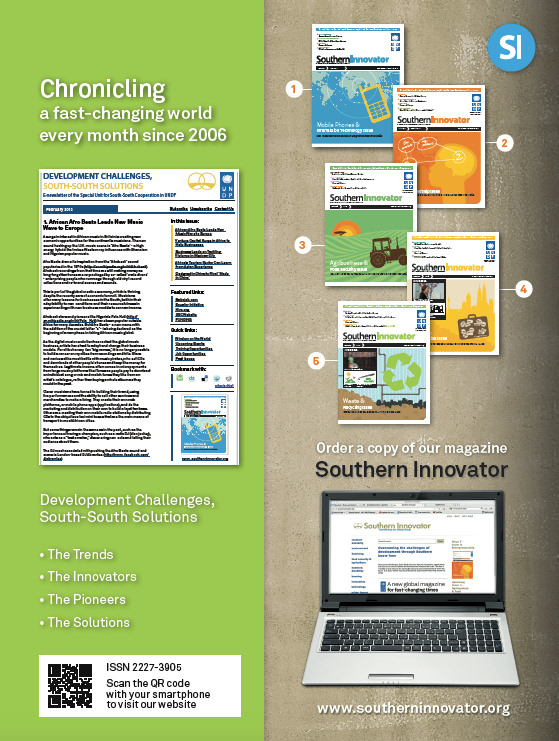
Development Challenges, South-South Solutions was launched as an e-newsletter in 2006 by UNDP’s South-South Cooperation Unit (now the United Nations Office for South-South Cooperation) based in New York, USA. It led on profiling the rise of the global South as an economic powerhouse and was one of the first regular publications to champion the global South’s innovators, entrepreneurs, and pioneers. It tracked the key trends that are now so profoundly reshaping how development is seen and done. This includes the rapid take-up of mobile phones and information technology in the global South (as profiled in the first issue of magazine Southern Innovator), the move to becoming a majority urban world, a growing global innovator culture, and the plethora of solutions being developed in the global South to tackle its problems and improve living conditions and boost human development. The success of the e-newsletter led to the launch of the magazine Southern Innovator. 

https://davidsouthconsulting.org/2021/03/05/southern-innovator-issue-3/

Creative Commons License

This work is licensed under a
Creative Commons Attribution-Noncommercial-No Derivative Works 3.0 License.

ORCID iD: https://orcid.org/0000-0001-5311-1052.

© David South Consulting 2023

Categories
Archive Development Challenges, South-South Solutions Newsletters

Connoisseur Chocolate from the South Gets a Higher Price

By David SouthDevelopment Challenges, South-South Solutions

SOUTH-SOUTH CASE STUDY

Like coffee beans, cocoa beans are grown around the world and are a major commodity, highly prized in wealthy countries. West Africa accounts for 70 percent of the world’s output, with the rest grown either in Indonesia and Brazil (20 percent), or on a smaller scale in countries across the South, from Belize to Madagascar.

Global sales of cocoa beans have grown by an average of 3.7 percent a year since 2001, and the World Cocoa Foundation estimates 40-50 million people depend on cocoa for their livelihood.

But harvesting cocoa comes at a price to the farmers and those who work on the farms. It is estimated that 284,000 children in West Africa work under abusive conditions to harvest the beans. Cocoa farmers usually only benefit from the price of cocoa in the harvest season between October and February. In Ghana, the second largest producer of beans, child slavery allegations have plagued the cocoa plantations, along with too-low prices paid to farmers. Fluctuating global market prices constantly put small-scale farmers at risk of losing everything they have worked for.

But consumers are developing ever-more sophisticated tastes for chocolate, paying more attention to the quality and origin of the beans. Savvy cocoa producers are using this greater awareness to increase prices for farmers and improve conditions for those who work on the farms.

Maturing consumers’ palates are now picking chocolate and other food products from the South in much the same way as connoisseurs pick wines. In the United Kingdom alone, sales of Fairtrade-branded goods (www.fairtrade.org.uk)- a scheme that offers guaranteed prices and better trading conditions to farmers – have reached £560 million (US$1.1 billion) a year. A survey of consumers in six countries found awareness of fairly traded chocolate was highest in the UK, with 43 percent of people having tried it (http://www.barry-callebaut.com).

British consumers willing to pay more for ethical products are at the forefront of a global surge in fair trade. Hans Vriens, chief innovation officer with Belgian chocolate makers Barry Callebaut, told The Independent newspaper: “Nowadays, chocolate consumption is coming to resemble the way we enjoy wine: we sample and compare different tastes.”

The world’s appetite for chocolate is voracious: For example by 2007, volume sales of chocolate confectionery increased from 1998 by 30 percent in Eastern Europe, and by 40 percent in the Asia Pacific region. Europeans devour 35 percent of the world’s cocoa.

In order to be classed as Fair Trade, a producer must meet a strict set of criteria governing how people and the environment are treated. The Fair Trade scheme pays farmers a higher price for cocoa beans, calculated on the basis of world market prices, plus fair trade premiums. The Fair Trade premium for standard quality cocoa is US$150 per tonne. The minimum price for Fair Trade standard quality cocoa, including the premium, is US$1,750 per tonne. Fair Trade ensures a minimum price of 80 US cents a pound under long-term contracts, with access to credit, and prohibits abusive child labour and forced labour.

At the Chuao Plantation in Venezuela, the local Chuao Empresa Campesina cooperative, representing 100 farmers, is reaping the benefits of developing an exclusive relationship with an Italian chocolate company. Chocolatier Alessio Tessieri was willing to pay a lot more for the beans if high standards were maintained. His sister Cecilia was struck by the aroma of the rare Criollo bean grown by the farmers: it is the least productive in terms of output, but prized for its flavour.

“We found an aroma that was greatly reminiscent of ripe red fruit and plum preserves, with an extremely delicate aftertaste,” she said. “A highly complex and sophisticated aroma lacking any trace of acidity.”

Located in Parque Nacional Henri Pittier, a road and sea trip from the capital Caracas, the town of Chuao, population 1,500, has ideal growing conditions because of its high humidity. In the village, the women take care of the drying process. Throughout the town the cocoa beans lay out in the open on verandas. In the warehouses the enormous “masorche” – the fruit of the cocoa trees, looking like big red melons – are split in half and the pulp is removed, revealing the super-sweet white-coated beans inside.

Alessio struck a good deal with the farmers in recognition of the exclusivity of the beans. He pays US$4 per kilogram against the US$1.30 per kilo paid by the local merchants. He also took on the farmers’ debts with the merchants. But most importantly, he ensured that one of his agronomists would stay behind and supervise the plantation and increase its production, from the current level of 120-130 kilos per hectare to a projected 250-300 kilos.

The Toledo Hills Cacao Cooperative in Belize, South America has developed a relationship with one of the UK’s pioneers in fair trade chocolate, Green & Blacks. The Mayan Indians who farm the cocoa live a traditional life more or less as they have done for centuries. They also live in one of the poorest areas of Belize. The profits made are ploughed back into buying machetes, or rubber boots to protect against snake bites. The cocoa harvest helps supplement their traditional way of life.

Green & Blacks has been buying organic cocoa from the farmers’ co-operative since 1994 and paying a guaranteed price above the world cocoa price. In 2003, they extended their activities with the cocoa farmers and started the Belize Programme to provide even more support. With an investment of £225,000 (US$443,350) over three years, the investment was used to help improve management and farming practices, rehabilitate hurricane-damaged crops, plant more cocoa trees, and train farmers in better growing methods. Green & Blacks continues to provide technical advice and support to the farmers. The business relationship with Green & Blacks has been so successful that other farmers in Belize are now interested in cocoa farming.

The pattern is being repeated elsewhere in Latin America. In San Martin, Peru, rice farmers have moved into cocoa to reap the rewards of the higher prices. Alvis Valles Sajami and Alberto Inou Amasifuen are both graduates of the Peru Farmer Field School. Sajami uses a plant nursery as an extra source of income by selling cocoa plants to other farmers. “I already have 4,000 plants, he said. “This (the nursery) will be so important to increase my cocoa area. I can sell planting material to other farmers in order to have a new source of income for my family.”

Amasifuen has already increased his own cocoa production from two hectares to five, and has also established a nursery to produce cocoa and timber tree seedlings to sell to area farmers.

“We have an increase in demand for cocoa plants in San Martín,” he said. “We expect to provide seedlings not only to our farm, but also to other farmers in expanding their production area.”

Learn more about cocoa trading and Africa’s role here (content provided by commodity.com): Cocoa’s Future as Commodity: What If Africa Can’t Keep Up the Supply? – Where’s Cocoa From and How Much Does It Contribute to the World’s Economy?

Published: June 2008

Resources

  • International Cocoa Organization, a good source of current data on the trade.
    Website: http://www.icco.org/about/chocolate.aspx
  • The Fairtrade Labelling Organization sets the standards for fair-trade and is the place to go to receive official certification.
    Website: www.fairtrade.org.uk
  • The Max Havelaar Foundation offers a similar service and is popular in continental Europe.
    Website: http://www.maxhavelaar.nl/pages/default.asp?rID=4
  • The International Federation of Organic Agriculture Movements (IFOAM) represents the organic farmers’ movement.
    Website: www.ifoam.org
  • World Cocoa Federation was formed in 2000 to play a leading role in helping cocoa farming families by developing and managing effective, on-the-ground programs, raising funds and acting as a forum for broad discussion of the cocoa farming sector’s needs.
    Website: http://www.worldcocoafoundation.org/about/default.asp

More on chocolate here: West African Chocolate Success Story

https://davidsouthconsulting.org/2022/11/21/agribusiness-food-security/

https://davidsouthconsulting.org/2021/10/03/civet-cat-coffee-brews-filipino-opportunity/

https://davidsouthconsulting.org/2022/10/14/indias-modernizing-food-economy-unleashing-new-opportunities/

https://davidsouthconsulting.org/2022/10/21/new-beer-helping-to-protect-elephants/

https://davidsouthconsulting.org/2022/10/31/rainforest-gum-gets-global-market/

https://davidsouthconsulting.org/2021/03/05/southern-innovator-issue-2/

https://davidsouthconsulting.org/2021/03/05/southern-innovator-issue-3/

https://davidsouthconsulting.org/2022/10/20/trade-to-benefit-the-poor-up-in-2006-and-to-grow-in-2007/

https://davidsouthconsulting.org/2022/10/17/west-african-chocolate-success-story/

https://davidsouthconsulting.org/2022/10/18/woman-wants-african-farming-to-be-cool/

Development Challenges, South-South Solutions was launched as an e-newsletter in 2006 by UNDP’s South-South Cooperation Unit (now the United Nations Office for South-South Cooperation) based in New York, USA. It led on profiling the rise of the global South as an economic powerhouse and was one of the first regular publications to champion the global South’s innovators, entrepreneurs, and pioneers. It tracked the key trends that are now so profoundly reshaping how development is seen and done. This includes the rapid take-up of mobile phones and information technology in the global South (as profiled in the first issue of magazine Southern Innovator), the move to becoming a majority urban world, a growing global innovator culture, and the plethora of solutions being developed in the global South to tackle its problems and improve living conditions and boost human development. The success of the e-newsletter led to the launch of the magazine Southern Innovator. 

Creative Commons License

This work is licensed under a
Creative Commons Attribution-Noncommercial-No Derivative Works 3.0 License.

ORCID iD: https://orcid.org/0000-0001-5311-1052.

© David South Consulting 2023

Categories
Archive Development Challenges, South-South Solutions Newsletters

Women Empowered by Fair Trade Manufacturer

By David SouthDevelopment Challenges, South-South Solutions

SOUTH-SOUTH CASE STUDY

There is sometimes a great deal of negativity surrounding the issue of manufacturing in Africa. Some claim the risks of doing business are too high or that the workers are not motivated enough. But one garment manufacturer is out to prove the skeptics wrong. It pays decent wages and gives its mostly female workforce a stake in the business in a bid to drive motivation and make it worthwhile to work hard.

Liberty and Justice (http://libertyandjustice.com), one of Africa’s newest fair-trade garment manufacturers, is drawing attention for the way it is transforming women’s lives. It is also giving opportunities to a group often ignored by employers: women over the age of 30.

Liberty and Justice has factories in Liberia and Ghana, and 90 per cent of its workers are female. The company says it pays 20 per cent higher wages than the industry norm, and gives employees collectively a 49 per cent stake in the enterprise.

The global fair trade market – in which producers are guaranteed a minimum fair price and goods are marketed under the Fairtrade logo – has been growing year on year since it was established in the late 1980s.

The brand and certification process is managed by the Fairtrade Foundation (fairtrade.net) and is considered the most recognized ethical mark in the world.

More than 1 million small-scale producers and workers around the world participate in the Fairtrade system. As of 2013, fair trade has become a 5 billion euro-a-year (US $6.79 billion a year) global movement.

The label can be found on more than 30,000 products, ranging from tea to bananas to sugar and chocolate. It benefits more than 1.35 million farmers and workers around the world.

Liberty and Justice specializes in “high-volume, time-sensitive, duty-free goods for leading American clothing brands, trading companies, and other importers who care about exceptional quality, on-time delivery, social and environmental impact, and geographic diversity.”

The company wants to “transform the apparel supply chain from worker exploitation and environmental degradation to partnership and sustainability.”

Liberty and Justice was established by Chid Liberty (http://libertyandjustice.com/#about), the son of an exiled Liberian diplomat. His life had been a privileged one living amongst Africa’s overseas diplomatic community.

“I thought Africans drove (Mercedes) Benzes and dressed up every day and went to the best schools,” he told Fast Company magazine. “It even messed up my orientation on things like race, because we had all different kinds of people working in my house as a kid – German, Indian, Turkish – and all of them were serving us in some way. So I just kind of grew up thinking that Africans were at the top of the food chain.”

Living in a prosperous bubble in Germany, he had an awakening to the real conditions in Africa when he was in the seventh grade: “When I read only 2 per cent of people have a telephone, I was so confused,” he said. “I started to really understand my place.”

After the death of his father, Liberty started to wonder about life back in Liberia. He had moved on to working in Silicon Valley in California, helping technology startups get funding. Inspired by Liberia’s President Ellen Sirleaf (http://en.wikipedia.org/wiki/Ellen_Johnson_Sirleaf) and the end of the country’s 15-year civil war, he thought: “‘All right, well, I think I can apply that skill to providing economic opportunities for women.’ And decided to come here and try, in an industry that I knew absolutely nothing about.”

In 2010 he and Adam Butlein founded Liberty and Justice fair-trade apparel manufacturer. The company now makes tops and bottoms for brands such as Prana, FEED Projects, Haggar and others in the US.

“We really try to be worker-focused,” Liberty said. “And we actually think that’s what gave us a cutting edge at the end of the day: having really devoted workers. People don’t really believe in these types of factories in Africa, because they believe that African workers aren’t motivated. I think that’s hogwash.”

The company faced a dilemma common to any manufacturing enterprise trying to make goods for the highly competitive global export markets. How to produce the garments fast enough? A consultant had advised them to only hire young women. But Liberty and Justice had hired women in their 30s, 40s and 50s. Rather than firing everyone, the company decided to invest in the workers’ skills and get productivity to where it should be.

“These older women really set the culture of the Liberian Women’s Sewing Project, our first factory,” Liberty said. “They come to work an hour early – we never asked them to do that – they pray and sing together before they get on the machines, they’re very serious about the details of how your uniform should look, and you just wouldn’t have gotten that out of a bunch of 19-year-old girls the first time.”

Liberty and Justice expanded to Ghana in 2012 and launched the Ghanaian Women’s Sewing Project. It had to adapt to how things are done in Ghana, and that was a steep learning curve.

But the company has learned a great deal about how to succeed in Africa as opportunities increase alongside growing wealth and incomes.

“You could easily get squashed in Africa if you don’t know the right people. You’ll just get sent down rabbit holes every day,” Liberty said.

“In Liberia, the World Bank reports that about 40 per cent of children are enrolled in school. Among the women for whom we provide jobs, 98 per cent of their children are in school. So to me it’s very clear: You give a woman the opportunity to work, and her priority will be putting her kids in school.”

And he believes this is just the beginning of something big. As LIberia recovers from civil war, it will lead to an economic and innovation renaissance that will filter out across West Africa.

“I really think that the opportunities for innovation are right here. And once we get the social finance opportunities right, I think you’ll see a little West African impact renaissance happening. There’s still a lot of work to do. I hope Liberty and Justice can be a small part of that.”

Published: March 2014

Resources

1) Fairtrade International: Fair trade is an alternative approach to conventional trade based on a partnership between producers and traders, businesses and consumers. The international Fairtrade system – made up of Fairtrade International and its member organizations – represents the world’s largest and most recognized fair trade system. Website: http://www.fairtrade.net/

2) Fairtrade Max Havelaar Netherlands: The Max Havelaar Foundation is an independent non-profit organization that licenses use of the Fairtrade Certification Mark on products in the Netherlands in accordance with internationally agreed Fairtrade standards. Website: http://www.maxhavelaar.nl/

3) Ten Thousand Villages: Ten Thousand Villages is an exceptional source for unique handmade gifts, jewelry, home decor, art and sculpture, textiles, serveware and personal accessories representing the diverse cultures of artisans in Asia, Africa, Latin America and the Middle East. One of the world’s largest fair trade organizations and a founding member of the World Fair Trade Organization (WFTO), the company strives to improve the livelihood of tens of thousands of disadvantaged artisans in 38 countries. Website: http://www.tenthousandvillages.com/

4) Ananse Village: An online marketplace selling traditional African crafts produced in a fair trade environment. Website: http://www.anansevillage.com/

5) Ecouterre: An online guide to the best ideas, innovations and emerging trends in eco fashion, sustainable style, organic beauty and ethical apparel. Website: http://www.ecouterre.com

6) Partnering with the United Nations-endorsed Ethical Fashion Initiative, whose motto “Not Charity, Just Work” seeks to promote sustainable development over aid, New Zealand designer Karen Walker tasked Kenya’s finest micro-producers, designers, and craftspeople to produce screen-printed pouches that will accompany every Karen Walker eyewear purchase from the collection. Website: http://www.karenwalkereyewear.com/ and https://www.facebook.com/media/set/?set=a.10152167286434183.1073741834.92673569182&type=1

Google Books: https://books.google.co.uk/books?id=WBM9BQAAQBAJ&dq=development+challenges+march+2014&source=gbs_navlinks_s

Slideshare: http://www.slideshare.net/DavidSouth1/development-challenges-march-2014-published-44135069

Southern Innovator Issue 1: https://books.google.co.uk/books?id=Q1O54YSE2BgC&dq=southern+innovator&source=gbs_navlinks_s

Southern Innovator Issue 2: https://books.google.co.uk/books?id=Ty0N969dcssC&dq=southern+innovator&source=gbs_navlinks_s

Southern Innovator Issue 3: https://books.google.co.uk/books?id=AQNt4YmhZagC&dq=southern+innovator&source=gbs_navlinks_s

Southern Innovator Issue 4: https://books.google.co.uk/books?id=9T_n2tA7l4EC&dq=southern+innovator&source=gbs_navlinks_s

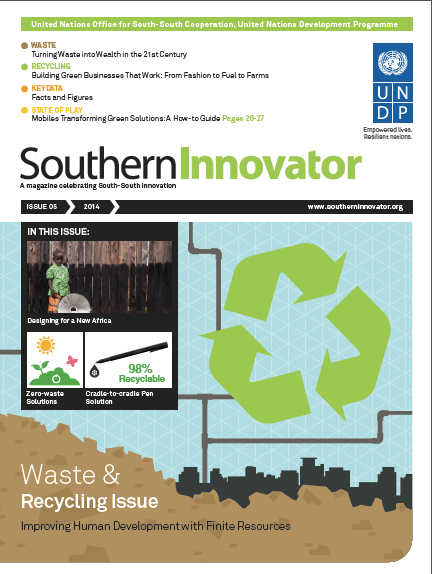
Southern Innovator Issue 5: https://books.google.co.uk/books?id=6ILdAgAAQBAJ&dq=southern+innovator&source=gbs_navlinks_s

Development Challenges, South-South Solutions was launched as an e-newsletter in 2006 by UNDP’s South-South Cooperation Unit (now the United Nations Office for South-South Cooperation) based in New York, USA. It led on profiling the rise of the global South as an economic powerhouse and was one of the first regular publications to champion the global South’s innovators, entrepreneurs, and pioneers. It tracked the key trends that are now so profoundly reshaping how development is seen and done. This includes the rapid take-up of mobile phones and information technology in the global South (as profiled in the first issue of magazine Southern Innovator), the move to becoming a majority urban world, a growing global innovator culture, and the plethora of solutions being developed in the global South to tackle its problems and improve living conditions and boost human development. The success of the e-newsletter led to the launch of the magazine Southern Innovator.  

Creative Commons License

This work is licensed under a
Creative Commons Attribution-Noncommercial-No Derivative Works 3.0 License.

ORCID iD: https://orcid.org/0000-0001-5311-1052.

© David South Consulting 2023

Categories
Archive Now Magazine This Magazine

The Ethics Of Soup: Grading Supermarket Shelves – For Profit

By David South

This Magazine (Canada), March-April, 1993

Where social activists have tried and failed to get Canadian corporations to change their behaviour towards the environment, labour, women and minorities, EthicScan Canada – a for-profit consulting and research firm – steps in.

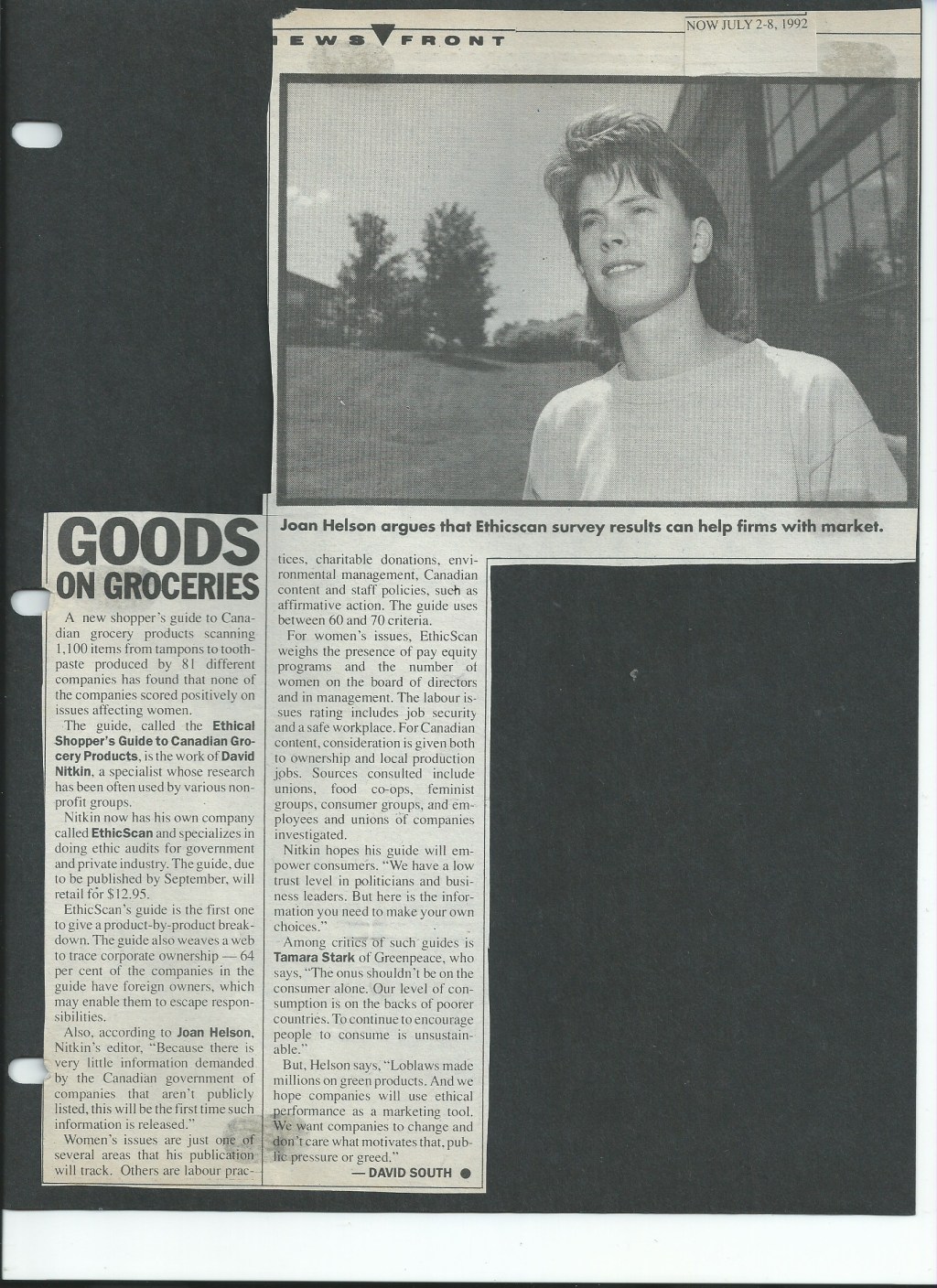
Toronto-based EthicScan acts as a consultant on ethical issues to both government and private businesses and produces a guide for investors. Its latest project hit the bookstores last fall. The Ethical Shopper’s Guide to Supermarket Products rates products according to companies’ ethical performance. “EthicScan is the only company in Canada doing this,” says senior writer Joan Helsen. “Companies respond to us differently because we are – like them – a business. We have a very good reputation for doing strong research and presenting the facts.”

Non-profit groups have produced similar guides. In the US, perhaps the best known is the American Council on Economic Priorities’ Shopping for a Better World. Here in Canada, both Pollution Probe’s Green Consumer Guide and the Ontario Public Interest Research Group’s The Supermarket Tour offer educational information.

But The Ethical Shopper’s Guide is the first guide in Canada to give a product-by-product breakdown, and to detail the web of corporate ownership. It lists more than 1,200 brand-name products from baby food to soft drinks, with the manufacturer’s “grade” for each ethical category. The guide also profiles 87 companies, with an “honour roll” of 37 corporations.

All of this can be confusing. Oxo gets an F for “women’s issues” and F+ for “environmental management,” but scores A+ on “progressive staff policies” and “environmental performance.” (Apparently. “environmental management” has to do with company structures for dealing with environmental issues while “environmental performance” measures how much it actually pollutes.) What aspect of Oxo’s ethical behaviour do you reward or punish?

EthicScan’s approach fits current advertising trends. Nissan tells us it is just trying to build cars we can live with. Loblaws puts “Green” on everything from plastic garbage bags to tubes of shampoo. But once idea-starved ad copywriters move on to the next gimmick, EthicScan may find that the relationship between ethics and profit isn’t as straightforward as its grading system suggests.

Find in a library:

Worldcat.org: Ethics of soup: grading supermarket shelves — for profit (EthicScan), This Magazine, 26, March-April 1993, 6

ISSN: 1491-2678

OCLC Number / Unique Identifier: 8247756182

Available to subscribers to Gale In Context: College database.

“Goods on Groceries” was published in Now Magazine, July 2-8, 1992 (Toronto, Canada).

https://davidsouthconsulting.org/2022/11/02/african-online-supermarket-set-to-boost-trade/

https://davidsouthconsulting.org/2022/10/20/bangladesh-coffin-maker-offers-an-ethical-ending/

https://davidsouthconsulting.org/2022/04/28/health-care-in-danger/

https://davidsouthconsulting.org/2022/10/24/kenyan-products-a-global-success-story/

https://davidsouthconsulting.org/2022/11/16/palestinian-olive-oils-peaceful-prosperity/

https://davidsouthconsulting.org/2021/07/28/pavlovs-army-this-magazine-august-1992/

https://davidsouthconsulting.org/2022/11/17/sos-shops-keep-food-affordable-for-poor-unemployed/

https://davidsouthconsulting.org/2022/11/16/thai-organic-supermarkets-seek-to-improve-health/

https://davidsouthconsulting.org/2022/10/20/trade-to-benefit-the-poor-up-in-2006-and-to-grow-in-2007/

https://davidsouthconsulting.org/2020/04/17/virtual-supermarket-shopping-takes-off-in-china/

https://davidsouthconsulting.org/2022/10/17/west-african-chocolate-success-story/

Creative Commons License

This work is licensed under a
Creative Commons Attribution-Noncommercial-No Derivative Works 3.0 License.

ORCID iD: https://orcid.org/0000-0001-5311-1052.

© David South Consulting 2023