Categories
Archive Development Challenges, South-South Solutions Newsletters

Mountain People: Innovative Ways to Help the World’s Most Vulnerable

By David SouthDevelopment Challenges, South-South Solutions

SOUTH-SOUTH CASE STUDY

Physically isolated and socially and politically marginalized, mountain dwellers are among the most vulnerable in the world, according to the Food and Agriculture Organization. A disproportionate number of the world’s 840 million chronically undernourished people live in highland areas — about 270 million mountain people lack food security, with 135 million suffering chronic hunger. Large numbers of additional people in lowland areas also depend on mountains.

In October in Rome, more than 60 representatives from mountain countries around the world called for a coherent approach to sustainable agriculture and rural development in the world’s highland areas to address this crisis. First identified as a problem back at the 1992 Earth Summit in Rio, the degradation of mountain eco-systems and the poverty of those living there, has only worsened with increasing conflict and war. Mountain forests are rapidly vanishing across the globe.

Mountains occupy 24 per cent of the earth’s landscape, and are home to 12 per cent of the world’s people; a further 14 per cent live beside mountains. Most are in the Andes, the Hengduan-Himalaya-Hindu Kush system, and a number of African mountains. Many mountain people are from ethnic minorities, and are often frozen out of political or commercial power. Poverty is common: more than 60 per cent of the rural Andean population lives in extreme poverty, and most of the 98 million Chinese considered to be among the world’s “absolute poor”, are ethnic minorities who live in mountains.

Mountains make up a quarter of the world’s landscapes, and mountain watersheds are critical to water supply – up to 80 per cent of the planet’s fresh surface water comes from mountains. Over half of the world’s population depend on mountains for water, food, hydro-electricity, timber and mineral resources (UN University Mountain Programme).

By their way of life, mountain peoples have expertise in small-hold farming, medicinal uses for native plants, and sustainable harvesting of food, fodder and fuel from forests.

In China, the MinYiYuan company has developed a model to help the millions of impoverished Chinese in the countryside who are being left out of the country’s current economic boom. While many are migrating to the cities to work as labourers, mostly women and children are left behind in villages, with few options to support themselves.

Cai Tingfen saw an opportunity to help the ethnic minority population of Liupanshui City in Guizhou Province. Founded in 2005, MinYiYuan bridges the handcraft culture of the region with the bigger national economy. Its model is unique: rather than buying ready-made handicrafts from craftspeople, MinYiYuan sets the design standards for the quality of the raw materials and sources them itself. This avoids problems with inconsistencies and guarantees customers get a reliably high-quality product. The craftspeople use these raw materials to make handcrafts in their homes, and the finished goods are bought back by the company.

The company buys cotton, hemp and Chinese herbs from local farmers, luring them away from livelihoods that cause deforestation. In 2006, the MinYiYuan Folk Art Centre sold 60,000 (batik) wax prints, 8,000 embroideries, and 20,000 ethnic handicrafts. It made 1.13 million yuan (US $149.319). The company is ambitious, and is already looking to building a research and development base to integrate design, manufacturing, packaging and sales.

Another model that is working is in the Philippines. After the Mount Pinatubo volcano eruptions in the early 1990s, the Aetas people of Luzon found their community was buried under ash and stone. Unable to work the land anymore and live off of the fish and wildlife, the Aetas were close to starvation. Many migrated to the cities to look for work: And without many relevant urban skills, most ended up living in squalor.

One by-product of the volcanic explosion was vast quantities of pumice stone, used in the garment industry to produce ‘stone-washed’ denim. Entrepreneurs were soon turning up to gather the stones.

The Asian Institute for Technology helped the Aeta people organize themselves in marketing social enterprises to gather, market and sell the stones to the many garment makers in the Philippines. By forming cooperatives, the Aeta are able to change the power dynamics with the garment companies: where they had to sell very cheaply to middlemen, the cooperatives enable them to charge more and make a liveable income, allowing them to stay in the community and avoid environmentally more harmful ways to make a living.

In Peru, coffee growers in the mountains have banded together as a social enterprise and use market solutions to increase living standards. The Cepicafe brand in the Piura Mountains, promotes its Fair Trade practices to secure higher prices for the growers. It does this by countering the increasing competition in the coffee market and lower world prices for the beans, with better quality coffee grains and bypassing middlemen to access markets directly.

Cepicafe raises the skills of the growers by providing education to increase productivity and quality, while reducing the farms ecological impact. The premium that fair trade is able to get is then used to improve the farmers’ lives with better housing, new clothes, shoes, better diets, and access to medicine.

They have 51 grassroots member organizations, totaling to 4,800 small-scale coffee producers. Over 18 per cent are women. By introducing a business culture and using radio programmes to further spread knowledge, productivity and quality have increased.

Cepicafe’s access to markets in the US and Europe means it can pay between 60 and 80 per cent more than local buyers.

Published: November 2007

Resources

  • Mountain Forum: created in 1995, it is a great resource for sustainable mountain development and conservation.
  • The Mountain Institute: A non-profit organization dedicated to conservation, community development and cultural preservation in the Andean, Appalachian and Himalayan mountain ranges.
  • Adelboden Group: Established in 2002, it exists as a forum to discuss mountain policies, exchange experience and coordinate planning.

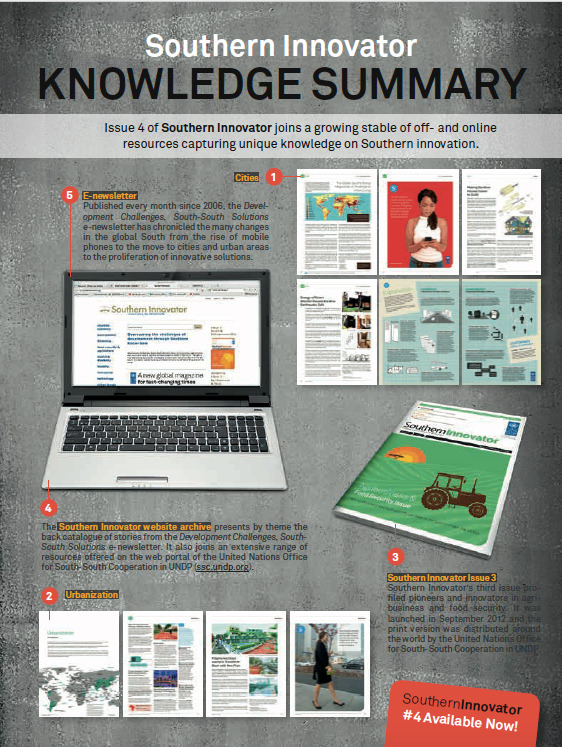
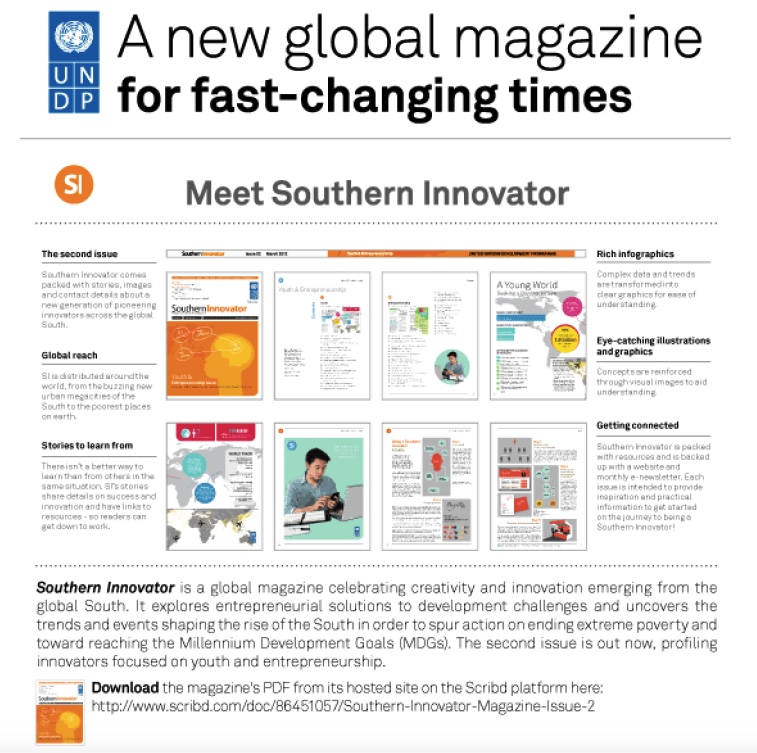
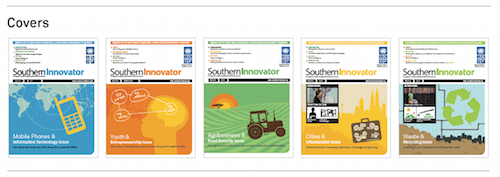
Development Challenges, South-South Solutions was launched as an e-newsletter in 2006 by UNDP’s South-South Cooperation Unit (now the United Nations Office for South-South Cooperation) based in New York, USA. It led on profiling the rise of the global South as an economic powerhouse and was one of the first regular publications to champion the global South’s innovators, entrepreneurs, and pioneers. It tracked the key trends that are now so profoundly reshaping how development is seen and done. This includes the rapid take-up of mobile phones and information technology in the global South (as profiled in the first issue of magazine Southern Innovator), the move to becoming a majority urban world, a growing global innovator culture, and the plethora of solutions being developed in the global South to tackle its problems and improve living conditions and boost human development. The success of the e-newsletter led to the launch of the magazine Southern Innovator.

Creative Commons License

This work is licensed under a
Creative Commons Attribution-Noncommercial-No Derivative Works 3.0 License.

ORCID iD: https://orcid.org/0000-0001-5311-1052.

© David South Consulting 2022

Categories
Archive Development Challenges, South-South Solutions Newsletters

Palestinian Olive Oil’s Peaceful Prosperity

By David SouthDevelopment Challenges, South-South Solutions

SOUTH-SOUTH CASE STUDY

The economic devastation of the conflict between Israel and the Palestinians (http://en.wikipedia.org/wiki/Palestine) has brought much hardship to the Palestinian people. The United Nations under the UNRWA mission has been working to lesson the hardship for over 60 years (http://www.unrwa.org). But there is only so much it can do.

However, several business initiatives are creating strong Palestinian food brands to improve the reputation and awareness of Palestine around the world. In particular, Palestinian olive oil has led the way and enjoyed strong sales in countries like the United Kingdom.

Since 2004, the Palestine Fair Trade Association (PFTA) (http://www.palestinefairtrade.org) has been leading the movement of fair trade producers in Palestine, linking small Palestinian farms in fair trade collectives and cooperatives across the country.

Zatoun (http://www.zatoun.com) – or Zaytoun (http://www.zaytoun.org) as its known in the UK – are olive oil and soap brands using the Arabic word for olive. Olive oil (http://en.wikipedia.org/wiki/Olive_oil) is a popular cooking and seasoning oil and is sought after for its health benefits. Most of it is cultivated in the Mediterranean region, with Spain the largest single producer. Like wine, the quality of the olive oil varies greatly and the bouquet and viscosity of the oil play a big role in how consumers select a brand. The trend in the past 10 years has been for consumers to be more selective about the olive oil they buy and to be more informed about the choices available. This increasingly sophisticated consumer choice is what is helping the Palestinian oil succeed.

Another factor is the growing global popularity of the traditional Mediterranean diet. Research has linked it to the prevention of cancers, obesity and cardiovascular diseases, and an aid to food digestion. Olive oil and olives make up one of the six key groups of foods that are part of the Mediterranean Diet. The other elements are grains, fruits and vegetables, legumes and nuts, dairy products and fish.

The Zatoun brand of olive oil uses its profits to help olive tree farmers and their families in Palestine.

The brand is also hoping to alter public perceptions of Palestine. As its website states, “Zatoun helps to create a context based in ordinary everyday life to view and discuss the situation in Palestine-Israel. No longer is it an abstract geopolitical issue involving power elites and undefined national interest.”

The Zatoun brand is led in Canada by Robert Massoud, winner of the 2004 YMCA Peace Medallion. Zatoun is sold in Canada through peace groups and social justice and faith groups and is “intended as a tool to help promote their work and bring home the message that the struggle of Palestinians is ultimately one of human rights and social justice.”

The olive oil is certified fair trade under the Institute for Marketecology (IMO) (http://www.imo.ch/index.php?seite=imo_index_en) in Switzerland. The brand is operated as a not-for-profit with volunteer labour and the entire cost of the product goes to the farmers, customs and shipping costs, and promotion and administration. Each 750mL bottle sells from between CAD $15 (US $14) and CAD $17.50 (US $17.22) and each bar of soap is CAD $5.00 (US $4.90).

In the U.K., the Zaytoun brand was started by British women Heather Masoud and Cathi Pawson, also in 2004. The Palestinian olive oil has benefited from sales promotion during the United Kingdom’s annual Fair Trade Fortnight: a highly publicized promotion over two weeks that has consistently raised the profile of all Fair Trade products. Palestinian products were profiled during the 2009 event.

The Zaytoun brand is certified with the World Fair Trade Organization (www.wfto.com) and has been able to break through to sales in British supermarkets as a result. Having this certification is key to being accepted for display on the supermarket shelves. By being certified, the farmers are able to get guaranteed above market prices for their olives. This makes it easier to plan and invest in the farm and the community and avoid the wild fluctuations of market prices. It is common around the world for farmers to be bankrupted and impoverished when market prices crash and fall below the cost of growing and harvesting the product.

“We have been working for the Fair Trade certificate for four years,” Nasser Abufarha, chairman of the Palestinian Fair Trade Association told the Guardian newspaper. “Fair Trade will increase our sales, and bring us new markets and widen our reach.

“We have given farmers hope,” he said. “An economic exchange that recognises Palestinian farmers’ rights and respects the value of their connection to their land, after marginalization under Israeli occupation, is a major accomplishment.”

Olives are Palestine’s biggest crop, and critical to the local economy. The industry employs more than 100,000 people and its economic health affects many more. But the ongoing conflict has harmed the olive industry in many ways, from the bulldozing of orchards to make way for the Israeli security fence – over 1,100 hectares olive orchards were cut off by the fence in the West Bank village of Anin alone – to clearing fields for the building of new settlements.

For some of the farms, fair trade has meant access to outside markets they haven’t had for 40 years.

The Palestinian olive oil is in a market with fierce competition. In the UK, the oil can retail for £14.49 (US $23) a litre, while some Italian olive oils can be had for just US $9. But the Palestinian olive oil has a number of advantages in the marketplace: consumers have shown a willingness to pay the premium to support the farmers and Palestine, and most importantly in the competitive world of food sales, food connoisseurs rave about it. Food and wine writer Malcom Gluck called Zaytoun olive oil “one of the aggressive yet pungently attractive olive oils I have tasted”. He believes it easily ranks alongside the best Sicilian, Cretan and northern Spanish oils.

Another Palestinian company having success with the olive products is the Anabtawi Group (http://www.anabtawigroup.com/index.php?a=1&lid=3&lid1=24). Based in Nablus in the West Bank, it started in 2008 the Al-Ard Palestinian Agri-Products Company and sells Al-Ard extra virgin olive oil, virgin olive oil and an olive oil soap. Operating on a large scale, the group has the largest olive oil storage facility in Palestine and provides training and support to the farmers. It also undertakes marketing of the products in new markets including Latin America.

Ziad Anabtawi, the company’s president and CEO, told the Brazil-Arab News Agency “Palestinian olive oil is known worldwide for its high quality and its very striking aroma. It is ‘premium’ and organic by nature. Farmers grow the product the traditional way. They do not irrigate the olive trees, [irrigation] comes from rainwater and we do not use any chemicals.”

The Palestinian experience shows it is possible to create new economic opportunities for farmers under even the most arduous political and security conditions.

Published: October 2010

Resources

Development Challenges, South-South Solutions was launched as an e-newsletter in 2006 by UNDP’s South-South Cooperation Unit (now the United Nations Office for South-South Cooperation) based in New York, USA. It led on profiling the rise of the global South as an economic powerhouse and was one of the first regular publications to champion the global South’s innovators, entrepreneurs, and pioneers. It tracked the key trends that are now so profoundly reshaping how development is seen and done. This includes the rapid take-up of mobile phones and information technology in the global South (as profiled in the first issue of magazine Southern Innovator), the move to becoming a majority urban world, a growing global innovator culture, and the plethora of solutions being developed in the global South to tackle its problems and improve living conditions and boost human development. The success of the e-newsletter led to the launch of the magazine Southern Innovator. 

https://davidsouthconsulting.org/2021/03/05/southern-innovator-issue-3/

Creative Commons License

This work is licensed under a
Creative Commons Attribution-Noncommercial-No Derivative Works 3.0 License.

ORCID iD: https://orcid.org/0000-0001-5311-1052.

© David South Consulting 2022

Categories
Archive Development Challenges, South-South Solutions Newsletters Southern Innovator magazine

Rainforest Gum Gets Global Market

By David SouthDevelopment Challenges, South-South Solutions

SOUTH-SOUTH CASE STUDY

Mexico is home to the second largest rainforest in the Americas after the Amazon jungle. But the country’s forests face serious threats from logging, cattle ranching and agriculture. As much as 80 percent of Mexico’s original forests have already been lost.

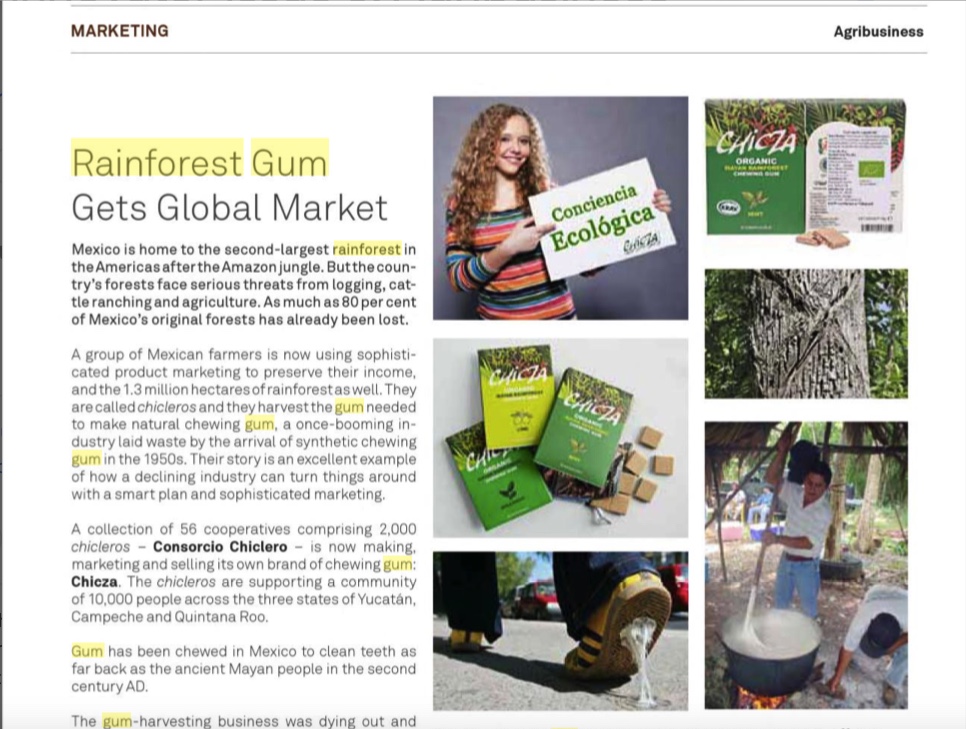
A group of Mexican farmers is now using sophisticated product marketing to preserve their income, and the 1.3 million hectares of rainforest as well. They are called chicleros and they harvest the gum needed to make natural chewing gum, a once-booming industry laid waste by the arrival of synthetic chewing gum in the 1950s. Their story is an excellent example of how a declining industry can turn things around with a smart plan and sophisticated marketing.

A collection of 56 cooperatives comprising 2,000 chicleros – called Consorcio Chiclero – is now making, marketing and selling its own brand of chewing gum: Chicza (http://www.chicza.com/index.php). The chicleros are supporting a community of 10,000 people across the three states of Yucatán, Campeche and Quintana Roo.

Gum has been chewed in Mexico to clean teeth as far back as the ancient Mayan people in the second century AD.

The gum harvesting business was dying out and young people, put off by the low pay, were leaving for jobs elsewhere. The adminstrators of the chiclero co-operative created Chicza Rainforest Gum brand to save the industry. They made a deal with Britain’s Waitrose supermarket chain, which specializes in fair trade products, and the gum is being launched in 100 stores.

The brightly coloured packages of chewing gum are now being sold as organic and a way to preserve the forest. Frustrated by the decades of decline and attendant poverty and community decay, the chicleros decided to take matters into their own hands. Five years ago they decided to avoid the middlemen who would buy their raw gum products, and instead manufacture and market the chewing gum themselves. And it is paying off: by adding value to the raw product, each farmer’s income has grown six times higher than he would earn as a mere provider of raw material.

The gum comes in three flavours: wild mint, heirloom lime and spearmint. Future flavours will blend tropical fruits, herbs and spices.

The Consorcio Chiclero coordinates the production, the logistics, the trade and the finances for the manufacture of gum from the chicozapote tree (Manilkara zapota).

Certified organic, the Chicza gum is completely natural and free of synthetic ingredients and also biodegrades when it is discarded – a boon to city governments who hate the mess and cost of traditional gum left on sidewalks.

The farmers work in the rainforest at the southern end of Mexico’s Yucatan peninsula (http://en.wikipedia.org/wiki/Yucat%C3%A1n_Peninsula), bordering Guatemala and Belize. It is a place with one of the most bio diverse ecosystems in the world, and an environment the farmers are in harmony with. The chicle gum (http://en.wikipedia.org/wiki/Chicle) is harvested from chicozapote trees – some living for more than 300 years – by hacking z-shaped cuts into the bark of the 100 foot trees. The harmless cuts zig zag down the tree and a bucket is placed at the bottom to collect the dripping sap.

Once collected, the sap is boiled, dried and made into a sticky paste, which is then kneaded and shaped into bricks called marquetas. Each marqueta is carefully marked by its maker. Since the sustainable management of their rainforests is certified by FSC (Forest Stewardship Council) (http://www.fsc.org/), these marks contain relevant information that tells the name of the chiclero who harvested it, and the exact location of the harvested tree in the rainforest. Few products offer such perfect traceability.

“I started following my dad around the rainforest when I was 10 and working when I was 12,” farmer Porfirio Banos told The Guardian newspaper. “I am a chiclero to my core.”

Working in a remote area of rainforest jungle with just spider monkeys for company, the chicleros are paid by the amount of chicle harvested

“We don’t kill the trees like farmers do when they clear land to grow corn or graze cattle,” says Roberto Aguilar, 60. “We leave a wound, it’s true, but eight years after it is healed and producing chicle again.”

The chicleros face two main risks while doing the job: falling from the trees if their rope gives out; and being bitten by poisonous snakes.

Chicle was once the basis of all commercial chewing gum. Beginning in New York 141 years ago, it was the only source for chewing gum until the 1950s, when synthetic substitutes destroyed the industry.

It was the economic desperation of a Mexican general, Antonio Lopez de Santa Anna, living in exile in the United States in 1869, that gave birth to gum-chewing as a global practice. Working with a local inventor, Thomas Adams, he tried to use the chicle to make a rubber substitute. But when this failed, Adams added sugar and flavouring, making chewing gum.

Apart from being a great chew, the natural gum’s unique selling point is saving money: local governments tight for cash are looking for other ways to deal with the menace of chewing gum on pavements. A small fortune is spent every year trying to keep streets clean of gum. The British alone spend over UK £150 million every year trying to clean their streets of chewing gum.

And despite the global recession, the chicleros are optimistic they can do well: during the Great Depression of the 1930s, chewing gum was an affordable treat and sold well.

Published: April 2009

Resources

https://davidsouthconsulting.org/2022/11/10/acai-berry-brazils-boon/

https://davidsouthconsulting.org/2022/11/10/brazilian-restaurant-serves-amazonian-treats/

https://davidsouthconsulting.org/2022/10/17/connoisseur-chocolate-from-the-south-gets-a-higher-price/

https://davidsouthconsulting.org/2022/11/01/indonesian-food-company-helps-itself-by-making-farmers-more-efficient/

https://davidsouthconsulting.org/2022/10/24/latin-american-food-renaissance-excites-diners/

https://davidsouthconsulting.org/2022/10/31/rainforest-rubbers-save-lives/

https://davidsouthconsulting.org/2022/11/10/saving-the-amazon-forest-while-making-a-living/

https://davidsouthconsulting.org/2022/10/17/west-african-chocolate-success-story/

Development Challenges, South-South Solutions was launched as an e-newsletter in 2006 by UNDP’s South-South Cooperation Unit (now the United Nations Office for South-South Cooperation) based in New York, USA. It led on profiling the rise of the global South as an economic powerhouse and was one of the first regular publications to champion the global South’s innovators, entrepreneurs, and pioneers. It tracked the key trends that are now so profoundly reshaping how development is seen and done. This includes the rapid take-up of mobile phones and information technology in the global South (as profiled in the first issue of magazine Southern Innovator), the move to becoming a majority urban world, a growing global innovator culture, and the plethora of solutions being developed in the global South to tackle its problems and improve living conditions and boost human development. The success of the e-newsletter led to the launch of the magazine Southern Innovator. 

https://davidsouthconsulting.org/2021/03/05/southern-innovator-issue-3/

Creative Commons License

This work is licensed under a
Creative Commons Attribution-Noncommercial-No Derivative Works 3.0 License.

ORCID iD: https://orcid.org/0000-0001-5311-1052.

© David South Consulting 2022
Categories
Archive Development Challenges, South-South Solutions Newsletters

Trade to Benefit the Poor Up in 2006 and to Grow in 2007

By David SouthDevelopment Challenges, South-South Solutions

SOUTH-SOUTH CASE STUDY

The global fair trade market – in which goods and services are traded under the Fairtrade logo, guaranteeing a minimum fair price to producers experienced unprecedented growth in 2006. In the UK alone, 2006 sales totalled £290 million – a jump of 46 percent from 2005. The Fairtrade Foundation predicts sales will reach UK £300 million in 2007.

In 2005 Fairtrade sales were € 1.1 billion in the brand’s main markets of Switzerland, the UK, New Zealand, Australia and the US. At present fair trade works with 5 million farmers in the global South, and it represents an ever-increasing opportunity for Southern entrepreneurs.

A tipping point has been reached in Western awareness of and demand for the Fairtrade brand and concept, and it is now being adopted by major supermarkets. In the UK, 62 percent of consumers know the logo and understand what it means.

The concept of fair trade began in the Netherlands in 1988, when the Max Havelaar Foundation launched the Fairtrade consumer label with coffee from Mexico. Unlike conventional businesses, where the price paid to a producer is what the market dictates, fair trade guarantees the producer a minimum price for their product. This amount is set at a level that ensures the producer can live a life with dignity and meet all the essentials. A portion of the profits is also kept in a communal fund which the producers democratically elect to spend as they wish (many choose to spend it on community projects).

Fair trade has been criticized for a number of reasons. It has been seen as too small and marginal to really make inroads on poverty, and has been accused of privileging a small number of producers while ignoring the rest. It has also been criticized for not focusing enough on innovation and increasing production to really eradicate poverty in the developing world.

For all its faults and shortcomings, it is a fact that the Fairtrade brand is a runaway success and offers a wide range of opportunities for entrepreneurs.

In the UK, fair trade now includes 2,500 products, ranging from footballs, to tea, cotton and honey – up from just 150 in 2003, an astonishing rate of growth. Where fair-trade products were once confined to co-operative and charity shops, they are now widely sold in major supermarkets.

The success of fair trade is not confined to Europe and the US. It is growing in Japan, where, says fair trade retailer Sonoko Iwasa, “the concept of using trade to equalize the world by buying goods from developing countries from Asia and Africa was a notion that had no connection with everyday lives.”

Iwasa’s Rumaba Goods store just outside Tokyo sells organic chocolates from Africa, woollen gloves and hats from Nepal, and elegant clothes from Thailand. Iwasa found that the key in the highly competitive Japanese consumer market was to focus on quality, not fairness. This, she says, has made these products fashionable.

At present, the fair trade market is worth only about US $6 to $7 million a year in Japan and includes 1,500 products. But according to Michiko Ono of Japan’s best-known fair trade label, People Tree, the trend is catching on among the country’s socially aware youth.

To start a fair trade business, entrepreneurs or producers need first to contact the international body that certifies fair trade products and ensure that production meets the ethical standards required.

Published: January 2007

Resources

https://davidsouthconsulting.org/2022/06/02/afghanistans-juicy-solution-to-drug-trade/

https://davidsouthconsulting.org/2022/11/02/african-online-supermarket-set-to-boost-trade/

https://davidsouthconsulting.org/2022/10/26/african-trade-hub-in-china-brings-mutual-profits-2/

https://davidsouthconsulting.org/2022/11/21/chinese-trade-in-angola-helps-recovery/

https://davidsouthconsulting.org/2022/11/19/cooking-up-a-recipe-to-end-poverty/

https://davidsouthconsulting.org/2022/04/12/djibouti-re-shapes-itself-as-african-trade-hub/

https://davidsouthconsulting.org/2022/10/24/flurry-of-anti-poverty-innovations/

https://davidsouthconsulting.org/2021/07/19/global-south-trade-boosted-with-increasing-china-africa-trade-in-2013/

https://davidsouthconsulting.org/2022/10/21/local-animation-a-way-out-of-poverty/

https://davidsouthconsulting.org/2022/10/26/perfume-of-peace-helps-farmers-switch-from-drug-trade/

https://davidsouthconsulting.org/2022/10/21/social-networking-websites-a-way-out-of-poverty/

https://davidsouthconsulting.org/2021/07/19/south-south-trade-helping-countries-during-economic-crisis/

https://davidsouthconsulting.org/2021/03/05/southern-innovator-issue-2/

https://davidsouthconsulting.org/2021/01/23/a-steppe-back-economic-liberalisation-and-poverty-reduction-in-mongolia/

https://davidsouthconsulting.org/2021/01/23/the-sweet-smell-of-failure-the-world-bank-and-the-persistence-of-poverty/

https://davidsouthconsulting.org/2022/11/18/web-2-0-networking-to-eradicate-poverty/

https://davidsouthconsulting.org/2022/10/05/women-empowered-by-fair-trade-manufacturer/

https://davidsouthconsulting.org/2022/06/16/women-mastering-trade-rules/

Development Challenges, South-South Solutions was launched as an e-newsletter in 2006 by UNDP’s South-South Cooperation Unit (now the United Nations Office for South-South Cooperation) based in New York, USA. It led on profiling the rise of the global South as an economic powerhouse and was one of the first regular publications to champion the global South’s innovators, entrepreneurs, and pioneers. It tracked the key trends that are now so profoundly reshaping how development is seen and done. This includes the rapid take-up of mobile phones and information technology in the global South (as profiled in the first issue of magazine Southern Innovator), the move to becoming a majority urban world, a growing global innovator culture, and the plethora of solutions being developed in the global South to tackle its problems and improve living conditions and boost human development. The success of the e-newsletter led to the launch of the magazine Southern Innovator. 

Creative Commons License

This work is licensed under a
Creative Commons Attribution-Noncommercial-No Derivative Works 3.0 License.

ORCID iD: https://orcid.org/0000-0001-5311-1052.

© David South Consulting 2023