Categories
Archive UB Post UNDP Mongolia 1997-1999

Mongolia Prepares For A Magazine Explosion | 1998

Story: Jill Lawless

Publication: UB Post

Date: 08/09/1998

Ulaanbaatar (Mongolia) – Mongolian newsstands are bursting at the seams. But while the content of the country’s publications is varied, their form is not. Newsprint rules this country’s publishing industry. The few glossy magazines for sale are imports from Russia.

When the democratic revolution unleashed the tide of free expression in the early 1990s, a flood of newspapers poured forth. It made sense. The cheap-and-cheerful technology of newsprint is low-tech, accessible and inexpensive. Suddenly everyone could be a publisher. 

But Mongolia’s increasingly sophisticated media landscape is about to go “glossy”. Tomorrow (September 9) sees the launch of Ger (Home), Mongolia’s first on-line magazine. A bilingual quarterly funded by the United Nations, it combines entertainment – articles on the changing sexual attitudes of young Mongolians and the country’s vibrant pop scene – with information on the work of the UN and other NGOs in Mongolia.

“We want something that will tell the stories of Mongolians and their experiences over the last eight years – both to Mongolians and to the rest of the world,” says David South, communications coordinator at the United Nations Development Programme.

This month also brings the premiere issue of Tusgal (Strike), billed as the first full-colour, general-interest magazine in the new Mongolia. Published by Mongol News Company – the privately owned media group whose stable of publications includes the daily newspaper Onoodor and The UB Post – it offers a lively mix of sport, culture and celebrity articles, also aimed primarily at the young.

These two publications are just the top of the stack. Mongolia’s two best-known printing houses, Admon and Interpress, are said to be working on titles of their own.

Mongolia’s quick-to-learn capitalists see a gap – and they want to fill it. 

“In Mongolia there are many newspapers, but no world-class magazines,” says Tusgal’s editor-in-chief, Do. Tsendjav. “On the streets you can see a lot of publications that aren’t exactly magazines but you can’t call newspapers, either – newspapers that appear every 10 days or two weeks.

“We want to fill this space. We want to produce the first colour magazine that will reach world standards, something close to Time or Newsweek.” 

“There’s an enormous thirst for quality journalism, quality publications that are interesting to look at, top photojournalism – all the things newspapers don’t cover,” adds South. 

“We’ve seen newspapers moving to more colour, more photographs, and that shows a desire for quality.”

That quality comes at a price. Tusgal, with 70 colour pages, will sell for between Tg 1500 and Tg 2000 – not much cheaper than an American publication like Time, and too expensive for many Mongolians. 

With only 1000 Internet subscribers in Mongolia, Ger has an even smaller market within the country – though South is quick to point out, the UN has established public-access Internet centres in Ulaanbaatar and several aimags. 

And he says a print version is planned to follow. 

“Distribution is the big problem right now,” he says. 

“We have to see how we can organize distribution to reach the whole country. I know more magazines will be launched soon in Mongolia, and hope a distribution network may grow out of that.”

The editors know Mongolia’s magazine market and magazine technology are in their infancy. Although companies like Admon and Interpress get more sophisticated equipment by the month, the capacity to produce quality publications is still limited – the first issue of Tusgal has been printed outside Mongolia. 

Human resources need to develop as well, Tsendjav admits. 

“To produce a monthly magazine you need highly qualified journalists. We don’t have that right now. We’re still seeking them out.”

But he is confident this will change – and quickly, too, if the pace of development in the past eight years is anything to go by. 

“During socialism, Mongolia had many magazines, but it all stopped after 1990,” notes Tsendjav. “It was a question of economics.

“At first we don’t think we can earn money from this. If you want to make money you have to wait two or three years. So what we are aiming for at first is to build a readership.

“I think in two or three years, living standards will improve. People will have more money to spend on things like magazines. But we don’t want to wait for people to get enough money. We want to be the first, so people will develop an interest.

“There will be competition. Nowadays a lot of business-people understand the importance of the media. I welcome competition. It’ll make us work harder. It’s good for everybody.”

From In Their Own Words: Selected Writings by Journalists on Mongolia, 1997-1999

Read a story by Jill in The Guardian (9 June 1999): Letter from Mongolia | Herding instinct 

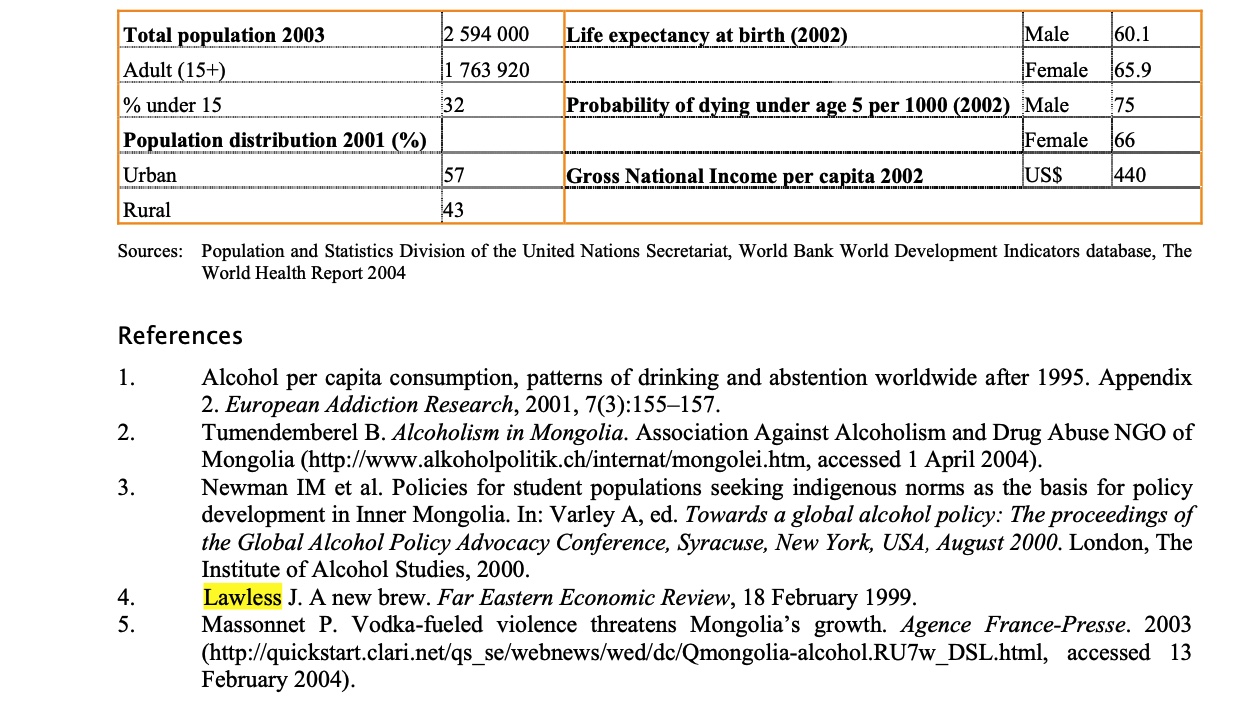
Jill’s story for the Far Eastern Economic Review is cited in the WHO Global Status Report on Alcohol 2004.
Wild East: Travels in the New Mongolia by Jill Lawless offers a vibrant account of what it was like to be a journalist in Mongolia in the late 1990s.

ORCID iD: https://orcid.org/0000-0001-5311-1052.

© David South Consulting 2018
Categories
Archive Blogroll Today's Seniors

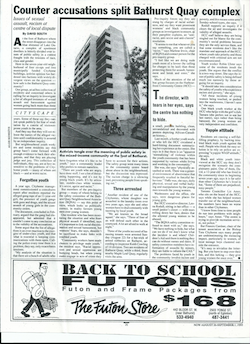
Health Care On The Cutting Block: Ministry Hopes For Efficiency With Search And Destroy Tactics

By David South

Today’s Seniors (Canada), August 1993

It’s search and destroy time at Ontario’s ministry of health: search out savings and destroy inefficiency and waste. But many remain apprehensive that not all the cuts are going to be logical and fear the province’s health and well-being will be affected. 

As part of the social contract deal, the Ontario Medical Association must find $20 million in cuts from the list of services covered by OHIP. The OMA and the provincial government are currently haggling over which procedures and examinations will be cut. 

“We look at services that aren’t medically necessary,” says health ministry spokesperson Layne Verbeek. “Because we were wealthier in the past, we were able to cover some services. We aren’t in that position now. But I don’t see how eliminating medically unnecessary treatments will affect the population.”

The fallout of the Rae government’s attempts to reign in costs and recover lost revenues may take years to unfold, but it is already apparent that Ontarians will be paying more. 

“Access to necessary treatment should not depend on a person’s ability to pay,” says health policy critic Carol Kushner. “What disturbs me about any delisting program is that virtually every medical service could be termed medially necessary. There are very few services that are an out-and-out waste of time.

“We often point to the fact that Ontario spends $200 million a year treating the common cold. Well, most of that is a waste of time. But delisting even that kind of service would be a detriment to the public’s health, because a small group of patients really do need to see a doctor when they have a cold.”

OMA spokesperson Jean Chow says it’s too early to pin down the exact cuts that will be made. “It’s a little premature to try and speculate what the final list will be.”

The newly-created Non-Tax Revenue Group is hard at work finding fees, fines and penalities the government can add or hike to boost revenue from this source from $5 billion to $10 billion a year. 

The spring budget saw the first hit, with the addition of $240 million in non-tax revenue. 

A radical reshaping of medicare is taking place. Private sector services – for which consumers pay directly or through insurance companies – now make up 34 per cent of Ontario’s health care funding, compared to 42 per cent in the United States, according to a recent study by the Canadian Medical Association. 

Health minister Ruth Grier has also floated the idea of widespread hospital closures. Both the Toronto and Windsor district health councils (DHCs) are carrying out feasibility studies on “reconfiguration.” The ministry is remaining tight-lipped about which hospitals will get the chop. 

“One suspects there’s room for efficiency – there are a lot of empty beds in a number of different places,” says ministry spokesperson Verbeek. 

“All hospitals are being reviewed, with a view to closing one or two hospitals,” says health planner Lisa Paolatto, who is working on a feasibility study on “reconfiguration” for the Essex County District Health Council, along with Toronto’s DHC. 

Closing hospitals could present a serious political hot potato for the government. In Britain, the Conservative government is still recovering from the bad feelings surrounding proposals to close world-renowned hospitals in the London area. The public feels great loyalty to local hospitals, a feeling that has been further fostered by hospital charities that raise millions a year from the communities’ good will. 

“This is going to open up new discussions of money between doctors and patients,” says Kushner. “Seniors are a unique group in Canada because they remember what it was like before medicare – what it was like not to be able to pay for the doctor, to forgo treatment that they thought was necessary. They understand the financial hardship that could occur if they were unlucky enough to have a family member who needs expensive medical treatment.” 

All Posts

More from Canada’s Today’s Seniors

Feds Call For AIDS, Blood System Inquiry: Some Seniors Infected

Government Urged To Limit Free Drugs For Seniors

Health Care On The Cutting Block: Ministry Hopes For Efficiency With Search And Destroy Tactics

New Seniors’ Group Boosts ‘Grey Power’: Grey Panthers Chapter Opens With A Canadian Touch

Seniors Falling Through The Health Care Cost Cracks

ORCID iD: https://orcid.org/0000-0001-5311-1052.

© David South Consulting 2021

Categories
Archive Blogroll Now Magazine

US Health Care Businesses Chasing Profits Into Canada

Some fear corporate health care will kill equality of treatment

By David South

Now Magazine (Toronto, Canada), April 8-14, 1993

American-style private health care is slipping across the Canadian border under the noses of three provincial NDP governments, say researchers representing an association of health care workers.

Jackie Henwood and Colleen Fuller of the 7,500-member Health Sciences Association of British Columbia charge in a recent report that a combination of free trade and tightfisted government spending is undermining the universality of medicare and ushering in the beginnings of a two-tier system.

While the health care industry created more jobs than any other sector of the economy between 1984 and 1991, they point out, things have changed dramatically since the Canada-US free trade agreement came into effect in 1989. Now much of this growth is clustering in the private sector.

And they expect that this trend will continue under the forthcoming North American free trade agreement.

“NAFTA will accelerate trends towards a privatized, nonunion and corporate dominated system of health care in Canada,” says the report.

Binding provisions

Chapter 14 of the Canada-US free trade agreement opened competition for health-care facilities management services to US companies. Certain NAFTA provisions will bind all levels of government to consider for-profit health care companies on equal footing with public providers when bidding for services, and entitles them to compensation if they can prove to an arbitration board that they’ve been wronged.

“That represents a substantial encroachment on the democratic right of local, provincial and federal governments to make decisions,” says Cathleen Connors, who chairs the Canadian Health Coalition, which includes labour activists, nurses, doctors and other health-care workers.

This, in combination with health care cutbacks – both federal and provincial – is resulting in service and job cuts, bed closures, increased drug costs and an increase in privatization, the report says.

In the area of home care, for example – visiting nurses, physiotherapists, homemakers and other services – private firms now take in close to half of all OHIP billings. Many of their clients pay out of their own pockets for services.

The Ontario ministry of health doesn’t keep statistics on the private home health care sector in the province, but the Ontario Home Health Care Providers’ Association, a trade group, estimates that private firms in the industry now employ 20,000 people.

The industry is dominated by a small number of large firms, including Paramed, Comcare and Med+Care.

“It’s a market situation,” says Henwood. “If the services aren’t available to people within the public sector, they will go outside of it.

“We’ve seen this in other countries like England, where they had a public system and now have a parallel private system. If you erode a system enough that people get pissed off, they are going to start to look for alternatives, and the people with the greatest liberty are those with money.”

Connors says that because the Canada Health Act only covers the provision of hospital and physician services, the prinicples of universality and comprehensiveness don’t extend down to community-based services like home care.

The study also found that giant US private health insurers are positioning themselves to reap profits in the fertile Canadian market.

Last week, Wisconsin-based American Medical Security Inc. announced it will begin offering American hospital insurance to Ontario residents this month, citing a demand in Canada to bypass lengthening waiting lists for medical treatment.

Giant US west-coast insurer Kaiser Permanente declared in the March 1992 issue of Fortune magazine that they have targeted Canada as the next growth market. And American Express membership now offers the privilege of health insurance.

With private health care services sprouting up like spring weeds, says Henwood, provinces are placing yearly limits on the number of private services covered under provincial health plans, thus preventing people shopping around for services, no matter what their income.

Sheila Corriveau, corporate relations coordinator at Toronto-based Dynacare, Canada’s largest full-range private health care company – which operates labs, retirement homes, homecare services and consulting services – is enthusiastic about expansion plans, and says that removing patients from hospitals into their homes has been a boon for private health-care services.

“I think the health system will benefit, because what you are really doing is off-loading the cost from the public sector and from the treasury to private enterprise,” says Harry Shapiro of Dynacare. “Private enterprise depends on its own ingenuity for survival and its own levels of efficiency.”

But advocates of the public system say the free-market option now looming is being ushered in by the very parties that Canadians have come to rely on to defend medicare.

Medicare stance

Ontario’s new health minister, Ruth Grier, however, denies her government is jeopardizing medicare.

“I want to disagree with that as profoundly as I can,” she says, fidgeting with an ashtray during a recent interview. “Our government has reaffirmed its commitment to medicare. Over the last decade, under conservative and liberal governments, health care costs have increased in double-digit figures. The system would have collapsed at that rate of growth.

“I guess I haven’t found a way of blaming free trade for failures of the health care system at this point,” she says.

But critics say in the last year alone, Ontario’s ministry of health has capped health coverage for travellers abroad, removed coverage for physical exams requested by employers, chopped hospital beds and cut back the number of drugs covered on the provincial drug plan.

Grier says that the government’s vision relies on a new view of medical care seekers as consumers who are going to take more responsibility for their own health care

“Government can’t do it all,” she says.

Now Magazine (Toronto, Canada), April 8-14, 1993.

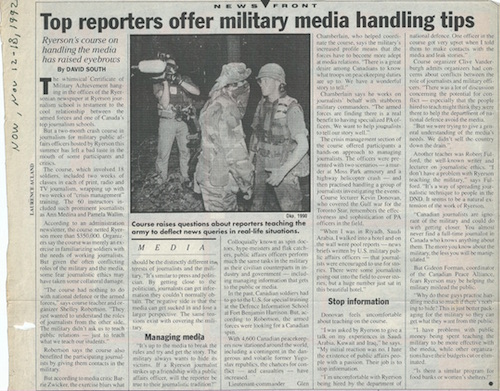
More investigative journalism by David South for Toronto’s Now Magazine:

Now Magazine (Toronto, Canada), November 12-18, 1992.

More healthcare reporting by David South from Canada’s Today’s Seniors

Feds Call For AIDS, Blood System Inquiry: Some Seniors Infected

Government Urged To Limit Free Drugs For Seniors

Health Care On The Cutting Block: Ministry Hopes For Efficiency With Search And Destroy Tactics

New Seniors’ Group Boosts ‘Grey Power’: Grey Panthers Chapter Opens With A Canadian Touch

Seniors Falling Through The Health Care Cost Cracks

ORCID iD: https://orcid.org/0000-0001-5311-1052.

© David South Consulting 2021

Like our content? Help contribute to the costs of keeping it online.

Scan code with your phone and help us out.
Creative Commons License

This work is licensed under a
Creative Commons Attribution-Noncommercial-No Derivative Works 3.0 License.

ORCID iD: https://orcid.org/0000-0001-5311-1052.

© David South Consulting 2022

Categories
Archive Blogroll New Media Markets

Channel Regulation: Swedes Will Fight Children’s Advertising All The Way

By David South

Financial Times New Media Markets (NMM) (London, UK), November 30, 1995

ISSN: 02654717

OCLC Number / Unique Identifier: 1266447669

The Swedish government is set to clamp down on satellite channels which carry advertising aimed at children and will tell channels to drop such advertising or face legal action.

The centre-left government’s threat of tough action follows Sweden’s winning extra powers last week through an amendment to the European directive on transfrontier broadcasting agreed by European culture ministers (NMM 13:42). 

The main focus of the Swedish government’s wrath is the TV3 channel, owned by Kinnevik, which uplinks to the Astra 1a and Sirius satellites from the UK. TV3 based itself in the UK in order to benefit from the Independent Television Commission’s more liberal rules on advertising. 

TV3’s main commercial television rival, TV4, has long protested to the government about what it sees as unfair competition from TV3 and other foreign-based channels. 

The government will initially go after TV3 and the Luxembourg-based cable and satellite channel Femmen. The Ministry of Cultural Affairs said that pro-European satellite channels such as TNT/Cartoon Network and the Children’s Channel were lesser priorities, but could face action in the future. 

TNT/Cartoon Network has a Swedish soundtrack and many Children’s Channel programmes are subtitled in Swedish on cable systems.

The Ministry of Cultural Affairs plans a two-pronged attack to remove the advertising it finds offensive and which is banned under Swedish broadcasting law: advertising aimed at children under 12 and carried in breaks around children’s programming. 

First, the consumer-protection agency the Konsument Ombudsmanen will take action against advertising agencies which produce children’s advertising. Monica Bengtsson, a legal adviser to the Ministry of Culture, said that agencies will be warned once and then fined if they violate the rules a second time. 

If this fails – and some observers believe that it will, because advertisers could move their accounts to non-Swedish agencies – the Ombudsmanen would then try the riskier move of taking channels to court to stop the ads. 

The Ombudsmanen is not expected to act until it hears the results of the case it has already taken to the European Court of Justice against Italian children’s magazine publishers De Agostini for allegedly placing commercials targetting children under the age of 12 on both TV4 and TV3. Judgement is expected in mid-1996. 

The Swedish government is also banking on public opinion to help pressure satellite channels to stop showing children’s advertising. The political climate in Sweden is strongly in favour of strict controls on advertising aimed at children. Swedish prime minister, Ingvar Carlsson, made cracking down on such advertising a key part of his opening speech to the present session of the Swedish parliament. 

The amended directive (which still needs the approval of the European Parliament) allows a member state to ban children’s advertisements under its own rules even if the channel satisfies the rules of the country from which it is broadcast. 

The Swedish government believes that the combination of the amended directive provisions and its ban on children’s advertising is all it needs to prevent the adverts. 

Per Bystedt, vice-president of TV3, insisted this week that the channel is UK-licensed and therefore does not fall under Swedish law: “We are following the Independent Television Commission’s rules.”

New definitions on which countries are responsible for regulating channels, adopted by the European culture ministers last week, could lead to TV3 being regulated in Sweden rather than the more liberal UK if it is deemed that the channel is really established there. However, the Swedish government has investigated the extent to which TV3 is based in the UK and, according to Bystedt, has declared that it is satisfied that the company is British. 

Creative Commons License

This work is licensed under a
Creative Commons Attribution-Noncommercial-No Derivative Works 3.0 License.

ORCID iD: https://orcid.org/0000-0001-5311-1052.

© David South Consulting 2023