Tag: exports

  • Chinese Trade in Angola Helps Recovery

    Chinese Trade in Angola Helps Recovery

    By David SouthDevelopment Challenges, South-South Solutions

    SOUTH-SOUTH CASE STUDY

    Two-way trade between Africa and China has been an outstanding success story of the past decade. It has led to significant new investment in the continent and brought many new job opportunities. The Chinese community in Africa comprises a mix of entrepreneurs and workers. In formerly war-torn Angola, Chinese workers and investors have led an economic boom as the country recovers from decades of conflict.

    The Chinese are generally young, well-educated, English-speaking, ambitious and hard-working. Estimates put the number of Chinese people in Angola at 100,000, and about 1 million across Africa.

    The reason these bright young things need to come to Africa goes back to the essential reality of modern China: despite rapid economic growth, per capita incomes classify it as a poor country. While the outside world sees the glitzy, go-go progress of China’s cities, the country’s rural poor go unseen. Around 400 million of China’s 1.3 billion people have annual per-capita income equivalent to US $8,000, while the remaining 900 million have per-capita incomes as little as one-tenth that amount.

    Some 6.3 million people in China will graduate this year from university, and it is still very hard for a well-educated Chinese person to get a good job right away. More than a quarter of these graduates will be unemployed, according to the Education Ministry.

    There has also been disquiet in parts of Angola over China’s role, with some calling it “neo-colonialism”. But clearly, both Africa and China have much to gain by increasing cooperation.

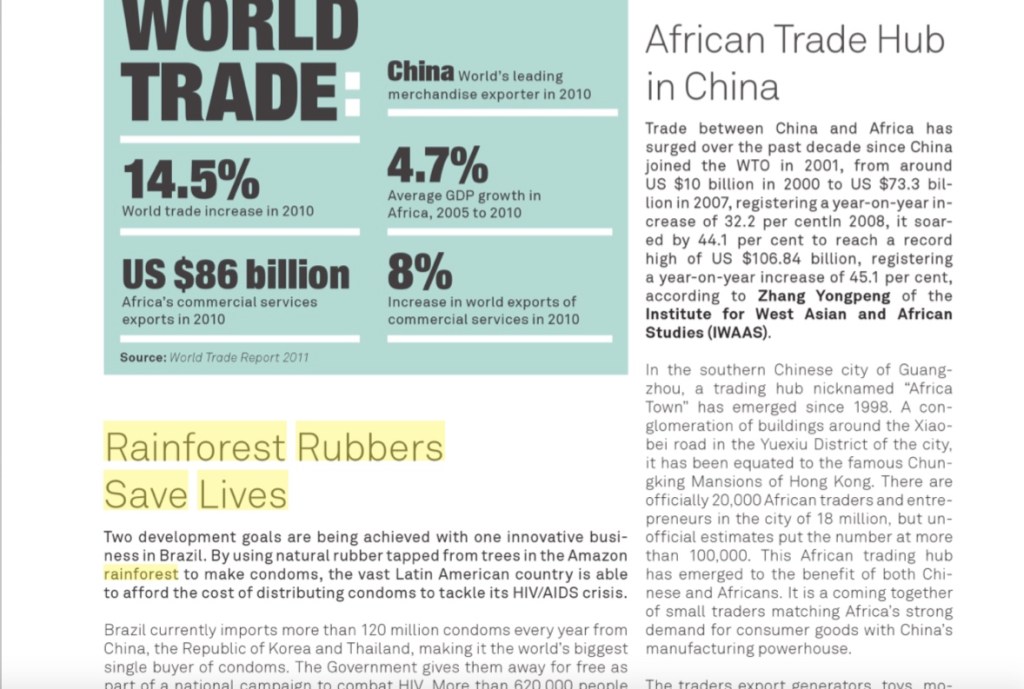
    In the southern Chinese city of Guangzhou (http://en.wikipedia.org/wiki/Guangzhou), a trading hub nicknamed “Africa Town” has emerged since 1998. There are officially 20,000 African traders and entrepreneurs in the city of 18 million, but unofficial estimates put the number at more than 100,000. This African trading hub has emerged to the benefit of both the Chinese and Africans. It is a coming together of small traders matching Africa’s strong demand for consumer goods with China’s manufacturing powerhouse.

    In Angola, the mix of entrepreneurs and workers is having a big impact on the country’s development.

    Betty, a 22-year-old Chinese woman who has various projects in Angola, including the local Chinese language newspaper, is a typical go-getter.

    “I am doing much better here than if I had stayed in China,” she told the BBC.

    Another beneficiary of the two-way trade is Deng, a construction a worker: “I earn twice as much as I would at home and I have got a better job,” he said.

    For most Chinese, foreign travel is still rare and the excitement of going to Africa to work both attracts and repels because of the continent’s reputation.

    “At first I found it frightening, “said Wang. “You hear lots of stories of Chinese people being robbed by the locals.” But he found “there are great opportunities here.”

    Another, Jet, who runs an air conditioning business, came to Angola five years ago.

    “Everything had been destroyed,” he recalled. “There were no roads, railways, shops, nothing. Some Western companies were already here selling their products but I knew I could import things cheaper from China.”

    The large infrastructure projects being undertaken by major Chinese companies are also creating new opportunities. Many Chinese labourers are working on building roads, railways, hospitals and vast housing complexes.

    One of the more visible symbols of Chinese investment in Angola is the restoration of the Benguela Railway (http://en.wikipedia.org/wiki/Benguela_railway), considered one of the great routes of Africa and built by British contractors. An engineering triumph, its 1,344 kilometres (835 miles) of track stretch up the Angolan coast, right into southern Congo. The railway took almost 30 years to build in the late 19th and early 20th centuries, but little remained. Until very recently all but a tiny stretch of the line was closed. Now Chinese investment is rebuilding the railway and bringing economic improvement in its wake.

    “I couldn’t do this before the railway was fixed,” a woman using the train to get to the market to sell her plump red tomatoes told the BBC. “Before, I had to travel by car which was much more expensive.”

    And her income has improved along with the refurbished railway. “I am not rich, but a bit richer,” she said.

    And unlike the British, who used the railway to export copper without paying for the resource, the Chinese labourers are getting paid and the Angolan government is paying back the Chinese loan for the railway repairs by selling oil overseas for a market rate.

    Published: October 2010

    Resources

    https://davidsouthconsulting.org/2022/06/02/afghanistans-juicy-solution-to-drug-trade/

    https://davidsouthconsulting.org/2022/11/02/african-online-supermarket-set-to-boost-trade/

    https://davidsouthconsulting.org/2022/10/26/african-trade-hub-in-china-brings-mutual-profits-2/

    https://davidsouthconsulting.org/2022/04/12/djibouti-re-shapes-itself-as-african-trade-hub/

    https://davidsouthconsulting.org/2021/07/19/global-south-trade-boosted-with-increasing-china-africa-trade-in-2013/

    https://davidsouthconsulting.org/2022/10/26/perfume-of-peace-helps-farmers-switch-from-drug-trade/

    https://davidsouthconsulting.org/2021/07/19/south-south-trade-helping-countries-during-economic-crisis/

    https://davidsouthconsulting.org/2021/03/05/southern-innovator-issue-2/

    https://davidsouthconsulting.org/2022/11/01/southern-innovator-magazine-2010-2014/

    https://davidsouthconsulting.org/2022/10/20/trade-to-benefit-the-poor-up-in-2006-and-to-grow-in-2007/

    https://davidsouthconsulting.org/2022/10/05/women-empowered-by-fair-trade-manufacturer/

    https://davidsouthconsulting.org/2022/06/16/women-mastering-trade-rules/

    Development Challenges, South-South Solutions was launched as an e-newsletter in 2006 by UNDP’s South-South Cooperation Unit (now the United Nations Office for South-South Cooperation) based in New York, USA. It led on profiling the rise of the global South as an economic powerhouse and was one of the first regular publications to champion the global South’s innovators, entrepreneurs, and pioneers. It tracked the key trends that are now so profoundly reshaping how development is seen and done. This includes the rapid take-up of mobile phones and information technology in the global South (as profiled in the first issue of magazine Southern Innovator), the move to becoming a majority urban world, a growing global innovator culture, and the plethora of solutions being developed in the global South to tackle its problems and improve living conditions and boost human development. The success of the e-newsletter led to the launch of the magazine Southern Innovator.

    Creative Commons License

    This work is licensed under a
    Creative Commons Attribution-Noncommercial-No Derivative Works 3.0 License.

    ORCID iD: https://orcid.org/0000-0001-5311-1052.

    © David South Consulting 2023

  • Brazil’s Agricultural Success Teaches South How to Grow

    Brazil’s Agricultural Success Teaches South How to Grow

    By David SouthDevelopment Challenges, South-South Solutions

    SOUTH-SOUTH CASE STUDY

    Inflation, environmental stresses and population and economic growth are testing the world’s food supply systems. There is a strong need to boost yields and improve the quality of food.

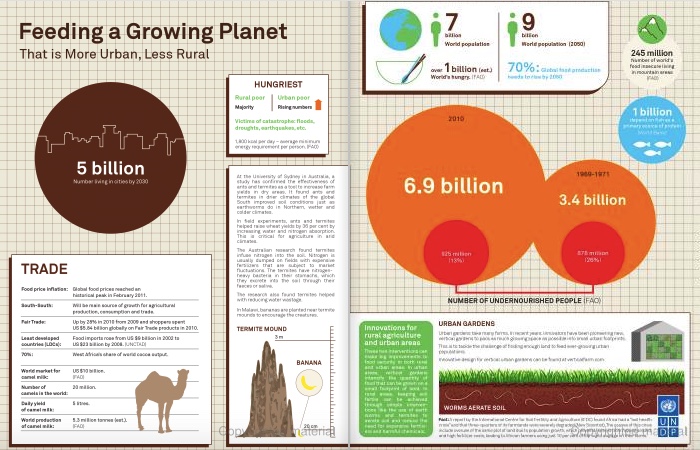
    Between now and 2050 the world’s population will rise from 7 billion to 9 billion. Urban populations will probably double and incomes will rise. City dwellers tend to eat more meat and this will boost demand.

    The UN’s Food and Agriculture Organization (FAO) reckons grain output will have to rise by around half but meat output will have to double by 2050 to meet demand.

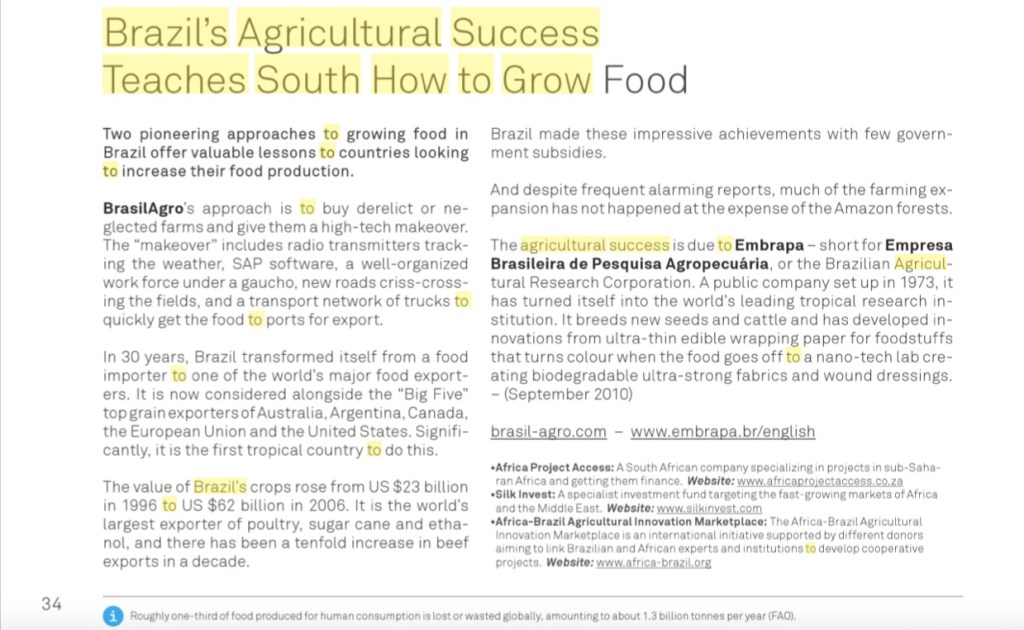
    Two pioneering approaches to growing food in Brazil offer valuable lessons to countries looking to increase their food production.

    One is taking place in Bahia state in north-eastern Brazil. On Brazil’s cerrado (savannah) (http://en.wikipedia.org/wiki/Cerrado), enormous farms grow cotton, soybeans and maize. One of them, Jatoba farm, has 24,000 hectares of land: vastly larger than comparable farms in the United States.

    On the Cremaq farm in the north of the country in Piaui state, a transformation has taken place. Once a failed cashew farm, it is now a highly modern operation. Owned by BrasilAgro, it is benefiting from clever agricultural innovation that gets results.

    BrasilAgro’s approach is to buy derelict or neglected farms and give them a high-tech makeover. The ‘makeover’ includes radio transmitters tracking the weather, SAP software (http://en.wikipedia.org/wiki/SAP_AG), a well-organized work force under a gaucho (http://en.wikipedia.org/wiki/Gaucho), new roads criss-crossing the fields, and a transport network of trucks to quickly get the food to ports for export. Piaui is an isolated place with few services: it can take half a day to get to a health clinic. Dependence on state welfare payments for survival is the norm for many residents.

    Brazil, over 30 years, transformed itself from a food importer to one of the world’s major food exporters. It is now considered alongside the ‘Big Five’ top grain exporters of America, Canada, Australia, Argentina and the European Union. Importantly, it is the first tropical nation to do this.

    The value of Brazil’s crops rose from US $23 billion in 1996, to US $62 bn in 2006. It is the world’s largest exporter of poultry, sugar cane and ethanol, and there has been a tenfold increase in beef exports in a decade.

    Brazil made these impressive achievements with few government subsidies. According to the Organization for Economic Co-operation and Development (OECD), state support accounted for just 5.7 percent of total farm income in Brazil from 2005-07. In the US it was 12 percent, while the OECD average is 26 percent and the level in the European Union is 29 percent.

    And despite frequent alarming reports, much of the farming expansion has not happened at the expense of the Amazon forests.

    The agricultural success is down to Embrapa (http://www.embrapa.br/english) – short for Empresa Brasileira de Pesquisa Agropecuária, or the Brazilian Agricultural Research Corporation. A public company set up in 1973, it has turned itself into the world’s leading tropical research institution. It breeds new seeds and cattle and has developed innovations from ultra-thin edible wrapping paper for foodstuffs that turns colour when the food goes off to a nano-tech lab creating biodegradable ultra-strong fabrics and wound dressings.

    Its biggest achievement has been turning the vast expanses of the cerrado green for agriculture. Norman Borlaug, an American plant scientist often called the father of the Green Revolution, told the New York Times that “nobody thought these soils were ever going to be productive.” They seemed too acidic and too poor in nutrients.

    Embrapa uses what its scientists call a “system approach”: all the interventions work together. Improving the soil and developing new tropical soybeans were both needed for farming the cerrado. The two together also made possible the changes in farm techniques which have boosted yields further.

    Many believe this approach can be applied to Africa as well. There are several reasons to think it can. Brazilian land is like Africa’s: tropical and nutrient-poor. The big difference is that the cerrado gets a decent amount of rain and most of Africa’s savannah does not (the exception is the swathe of southern Africa between Angola and Mozambique).

    Another approach that Brazil has been pioneering is making small, family farms sustainable and productive for the 21st century.

    There has long been a tension between those who believe in very large farms, agribusiness and mono-crops (http://en.wikipedia.org/wiki/Mono-cropping), and those who believe in having a large number of smaller farms with a wide variety of crops and animals.

    But small farms have endured. The livelihoods of more than 2 billion people depend on the 450 million smallholder farms across the world. With their families, they account for a third of the world’s population.

    Family farms are critical to weathering economic crises and ensuring a steady and secure food supply. The International Fund for Agricultural Development (IFAD) (www.ifad.org)called in 2008 for small family farms to be put at the heart of the global response to high food prices and uncertain food security.

    In Brazil, this call is being answered by a bold initiative to create what is termed a “social technology”, combining a house building programme with diverse family farms.

    The Brazilian farmers’ cooperative Cooperhaf: Cooperativa de Habitacao dos Agricultores Familiares (http://www.cooperhaf.org.br) – a World Habitat Awards winner – combines housing and farm diversification to support family farmers.

    “Family farming is very important for the country – 70 percent of food for Brazilians comes from family farming,” said Adriana Paola Paredes Penafiel, a projects adviser with the Cooperhaf. “The government wants to keep people in rural areas.”

    “We see the house as the core issue,” she continued.  “The farmers can improve their productivity but the starting point is the house.”

    Started in 2001 by a federation of farmers unions, the Cooperhaf works in 14 Brazilian states with family farmers. In Brazil farmers have a right to a house in the law and the cooperative was formed to make sure this happened.

    “We promote diversification to make farmers less vulnerable: if they lose a crop in macro farming, they lose everything. We encourage diversification and self-consumption to guarantee the family has food everyday. We help to set up a garden.”

    The concept is simple: a good quality home acts as an anchor to the family farm, making them more productive as farmers. The farmers receive up to 6,000 reais (US $2,290) for a house, and can choose designs from a portfolio of options from the Cooperhaf.

    As in other countries, the Cooperhaf and other co-ops encourage markets and certification programmes to promote family farmed food and raise awareness. Penafiel says promoting the fact that the food is family farmed is critical: to the consumer it is healthier, fresher and contains fewer chemicals than imported produce.

    “Most agri business is for export,” said Penafiel. “If we don’t have food in the country, food for poor communities would not be available. This enables farmers to be more autonomous, not having to buy fertilizers and equipment and take on too much debt. That approach is not sustainable as we saw with the so-called Green Revolution.”

    Published: September 2010

    Resources

    • Africa Project Access: A South African company specializing in projects in sub-Saharan Africa and getting them finance. Website:http://www.africaprojectaccess.co.za/
    • Silk Invest: A specialist investment fund targeting the fast-growing markets of Africa and the Middle East. Website:http://www.silkinvest.com/
    • Olam: A global food supply company in ‘agri-products’ that got its start in Nigeria  and shows how a Southern brand can grow and go global and overcome the difficulties of cross-border trade. Website: www.olamonline.com

    Development Challenges, South-South Solutions was launched as an e-newsletter in 2006 by UNDP’s South-South Cooperation Unit (now the United Nations Office for South-South Cooperation) based in New York, USA. It led on profiling the rise of the global South as an economic powerhouse and was one of the first regular publications to champion the global South’s innovators, entrepreneurs, and pioneers. It tracked the key trends that are now so profoundly reshaping how development is seen and done. This includes the rapid take-up of mobile phones and information technology in the global South (as profiled in the first issue of magazine Southern Innovator), the move to becoming a majority urban world, a growing global innovator culture, and the plethora of solutions being developed in the global South to tackle its problems and improve living conditions and boost human development. The success of the e-newsletter led to the launch of the magazine Southern Innovator. 

    Creative Commons License

    This work is licensed under a
    Creative Commons Attribution-Noncommercial-No Derivative Works 3.0 License.

    ORCID iD: https://orcid.org/0000-0001-5311-1052.

    © David South Consulting 2022

  • Global South Trade Boosted with Increasing China-Africa Trade in 2013

    Global South Trade Boosted with Increasing China-Africa Trade in 2013

    By David SouthDevelopment Challenges, South-South Solutions

    SOUTH-SOUTH CASE STUDY

    It was announced in January 2014 that China has surpassed the United States to become the world’s number one trading nation, as measured by the total value of exports and imports. This new economic behemoth also continued to grow its trade relationships with Africa.

    US exports and imports of goods totaled US $3.82 trillion in 2013, according to the U.S. Commerce Department. China’s annual trade in goods passed US $4 trillion for the first time in 2013 (Guardian).

    Zheng Yuesheng, a spokesman for China’s customs administration, told The Guardian that becoming the world’s number one trading nation was “a landmark milestone for our nation’s foreign trade development.”

    Significantly for Africa, 2012 was also a record year for China-Africa trade, which reached 5 per cent of China’s total foreign trade and made up 16 per cent of all of Africa’s international trade, according to a new report from South Africa.

    Consultancy Africa Intelligence (consultancyafrica.com), a South African-based organization with more than 200 consultants focused on “expert research and analysis on Africa” highlights the achievements of this strong trade relationship – and also some of its threats and weaknesses – in its report.

    Trade between China and Africa has surged during the decade since China joined the World Trade Organization (WTO) (wto.org) in 2001, rising from around US $10 billion in 2000 to US $198.49 billion in 2012, according to China’s Ministry of Commerce. Ambitiously, it could reach US $300 billion by 2015, announced Cheng Zhigang, secretary-general of the China-Africa Industrial Cooperation and Development Forum (www.zfhz.org) (China Daily).

    China’s trade and poverty reduction.

    The World Bank reported South-South trade now surpasses South-North trade, meaning exports from developing countries to other developing countries exceed exports to wealthy developed countries. South-South trade experienced rapid growth in the 2000s, accounting for 32 per cent of world trade by 2011 (World Bank).

    South-South trade and investment between Africa and lower-income and middle-income developing countries rose from 5 per cent in the 1990s to almost 25 per cent in 2010 (Consultancy Africa Intelligence). Before the 1990s, over 90 per cent of trade for Africa was with high-income or developed countries.

    China is attractive as a trade partner for many reasons. One of them is the strong admiration for its success in lifting millions out of poverty through an aggressive growth strategy and rapid urbanization with big investments in education, science, technology, infrastructure – modern airports, ports, roads and rail – and research and development.

    Since 1978, it is believed China has lifted 500 million people out of poverty, out of a population of 1.3 billion people (World Bank). Incomes have doubled every 10 years with average GDP growth of 10 per cent a year, meaning the country has almost reached all the Millennium Development Goals.

    Building a trade relationship with China has led to Zambia’s copper mines running again, Gabon’s oil fields being re-explored, and Sudan becoming a major oil exporter to China. Angola, Democratic Republic of Congo (DRC), Equatorial Guinea, Republic of Congo and South Africa are all benefiting from exporting commodities to China.

    The relationship has not been entirely beneficial, according to the Consultancy Africa Intelligence report. Some African industries, such as textiles, have suffered from competition with cheaper Chinese imports, leading to factory closures and job loses.

    Non-commodity exports from Africa to China amounted to just 10 per cent of the trade total. Many of the contracts signed for projects also go to Chinese companies, the report found.

    Renewed concern has also emerged over rising debt levels in Africa.

    In summary, the report finds a growing trade relationship with China has brought to Africa commodity booms, growing GDP (gross domestic product), and lots of foreign investment. On the negative side of the ledger, there have been job loses due to cheaper imports, rising personal and government debt levels and an over-dependence on minerals for economic growth.

    Across Africa, new infrastructure has emerged where it probably would not have come about under the continuing debt burdens from the 1970s and 1980s. The continent has received a shot of energy, but it remains to be seen whether governments can sustain this  economic jolt and make the wise choices that create African jobs and build liveable cities for the 21st century.

    Published: March 2014

    Resources

    1) Global South-South Development Expo: The Global South-South Development Expo (GSSD Expo) is the only Expo solely from the South and for the South. It showcases successful Southern-grown development solutions (SDSs) addressing the need to meet the Millennium Development Goals (MDGs). Website: southsouthexpo.org

    2) World Trade Organization (WTO): There are a number of ways of looking at the World Trade Organization. It is an organization for trade opening. It is a forum for governments to negotiate trade agreements. It is a place for them to settle trade disputes. It operates a system of trade rules. Essentially, the WTO is a place where member governments try to sort out the trade problems they face with each other. Website: http://www.wto.org

    3) Djibouti Free Zone: Djibouti Free Zone was created with one primary goal in mind – to bring about a sea-change in the way Africa thinks and does business. No red tape, ruthless efficiency and genuinely exhaustive services – in essence, it offers the ideal conditions for trade and commerce to flourish. Website: djiboutifz.com/

    4) Forum on China-Africa Cooperation: Keep up with the busy diplomatic and trade contacts between China and African countries. Website: http://www.focac.org/eng/

    5) China-Africa Cooperation Net: China-Africa Industrial Forum (CAIF) is the collective dialogue and cooperation mechanism that was set up by both China and friendly African countries in the year 2000. Website: http://www.zfhz.org/html/en_gywm.html

    China has been a member of the WTO (World Trade Organization) since 11 December 2001. The World Trade Organization deals with the global rules of trade between nations. Its main function is to ensure that trade flows as smoothly, predictably and freely as possible. 

    https://davidsouthconsulting.org/2022/06/02/afghanistans-juicy-solution-to-drug-trade/

    https://davidsouthconsulting.org/2022/11/02/african-online-supermarket-set-to-boost-trade/

    https://davidsouthconsulting.org/2022/10/26/african-trade-hub-in-china-brings-mutual-profits-2/

    https://davidsouthconsulting.org/2022/11/21/chinese-trade-in-angola-helps-recovery/

    https://davidsouthconsulting.org/2022/04/12/djibouti-re-shapes-itself-as-african-trade-hub/

    https://davidsouthconsulting.org/2022/10/26/perfume-of-peace-helps-farmers-switch-from-drug-trade/

    https://davidsouthconsulting.org/2021/07/19/south-south-trade-helping-countries-during-economic-crisis/

    https://davidsouthconsulting.org/2021/03/05/southern-innovator-issue-2/

    https://davidsouthconsulting.org/2022/11/01/southern-innovator-magazine-2010-2014/

    https://davidsouthconsulting.org/2022/10/20/trade-to-benefit-the-poor-up-in-2006-and-to-grow-in-2007/

    https://davidsouthconsulting.org/2020/12/30/unrisd-blog/

    https://davidsouthconsulting.org/2022/10/05/women-empowered-by-fair-trade-manufacturer/

    https://davidsouthconsulting.org/2022/06/16/women-mastering-trade-rules/

    Creative Commons License

    This work is licensed under a Creative Commons Attribution 4.0 International License.

    ORCID iD: https://orcid.org/0000-0001-5311-1052.

    © David South Consulting 2023
  • Accessing Global Markets Via Design Solutions

    Accessing Global Markets Via Design Solutions

    ByDavid South,Development Challenges, South-South Solutions

    SOUTH-SOUTH CASE STUDY

    The power of design to improve products and the way they are manufactured is increasingly being seen as a critical component of successful economic development.

    The importance of trade – both South-South and South-North – as a reducer of poverty in developing countries is now widely acknowledged. Countries that have made the biggest gains in reducing poverty, like China, India and Brazil, have done it through trade.

    The power of trade in high quality goods to raise incomes has been proven for more than a decade. South-South trade grew by an average of 13 percent per year between 1995 and 2007. By 2007, South-South trade made up 20 percent of world trade. And over a third of South-South commerce is in high-skill manufacturing. Making finished goods, rather than just selling raw materials, improves workers’ skill levels and increases the return on trade.

    But trying to get other people to desire and buy your products is very tricky. Design plays a major part in understanding the unique demands of countries and markets, and what people find appealing or repellent.

    A product that has both a successful design (people want to buy it) and is produced efficiently (a well-designed manufacturing process), will generate a good profit.

    In India, the Craft Resource Centre or CRC Exports Limited of Kolkata (http://en..wikipedia.org/wiki/Calcutta)has been successfully selling leather travel bags to the Vodafone (>http://www.vodafone.com/hub_page.html) mobile phone company in The Netherlands. It did this by teaming up with Dutch Designers in Development (http://www.ddid.nl/english/index.html), an NGO focused on matching European importers and retailers and professional designers with small and medium enterprises in the South.

    Founded in 1989, CRC applies the concept of adding value to turn small-scale and poor artisans into successful and sustainable businesses. Many of these traditional handicraft artisans subsist on low incomes. CRC provides artisans across India with marketing, design, finance and exporting help. It also connects them with other artisans and helps to divide projects between them. This has the power of using networks to help in bad times while also sharing opportunities when they come up.

    CRC’s director, Irani Sen, has divided the more than 15,000 artisans they work with into 15 different trading groups. CRC has also consulted to over 350 projects across Asia.

    “The best thing fair trade gives (artisans) is the continuity of work … and with the continuity comes the basic security,” Sen said on the CRC website. “With that security they can develop, they can plan and then we try to motivate them for education, health (and) education for their children.”

    It all began with a need: Dutch company Unseen Products (http://www.unseenproducts.com/home) needed somebody to make high-quality leather travel bags for their client, Vodafone, who in turn wanted the bags as an incentive for their employees. Unseen Products is a business connecting European retailers with small producers in the South to build long-term business relationships. They seek to make “unseen or hard to find products accessible at commercially interesting prices.”

    They approached Dutch Designers in Development (DDiD), which in turn recommended CRC.

    As a matchmaker, DDiD puts together European clients, Dutch designers and small and medium-sized enterprises in developing countries. The designers share their knowledge of European consumer tastes, product development, design and quality standards.

    DDiD receives orders from companies, NGOs and government agencies to stimulate the production and sale of sustainable products from developing countries in Europe.

    The Dutch group works with producers to develop skills and adapt producers’ products to present and future demands in Europe. By following this approach, Southern producers can reduce the risk of making products nobody wants, or that lack originality in the marketplace and thus won’t sell.

    DDiD explains to producers the importance of design and how it improves the product and the business. Good design, the group believes, should reduce production costs and the time taken to get to market, and boost the reputation of the product brand and maker.

    Well-known Dutch bag designer Ferry Meewisse (http://www.frrry.com/hiep/Entrance.seam?labelId=1) was brought in to work with CRC’s artisans to craft new bags and a new way of making them.

    Meewisse said he was uncertain at first whether the artisans would be able to make the highly complex bags. The solution was to break down the bag into smaller parts. And that is where the knowledge of design process comes into play.

    “The button bag for example is a complex bag that has been taken apart: compartments, pockets, handles,” said Meewisse. “This provided us with elements that were each really simple to manufacture. After that the pieces would only have to be clicked together with the buttons. And there it was: a complete bag with all the elements you need in a good bag.”

    The bags can be seen here: http://www.frrry.com/hiep/guest/GuestSeries.seam?seriesId=9&conversationId=30930

    Stella van Himbergen, a project manager at DDiD, said the concept is about introducing a new way of looking at things through the prism of design.

    “Small producers in developing countries are not lacking craftsmanship,” said Himbergen. But, she added, “it is important for producers to receive support in production-led design, and not only in aesthetic design.”

    Conceptually, this is the difference between designing and making something because it is aesthetically pleasing, and taking a market-driven design approach – letting market demands lead to the design solution. As a different way of looking at things, it takes in the company’s vision, brand values and positioning in the marketplace, production requirements (costs, sustainability), organization, and client’s needs.

    DDiD helps producers learn how to quickly create new products based on market demands. They also raise the level of awareness of design to global standards, and show how to apply this across the production process, from graphic design, to packaging, retail and exhibition space, brand design and design management. Since 2005, the group has completed 46 international projects.

    DDiD also stresses sustainability, encouraging the use of environmentally friendly materials such as biological cotton, bamboo and water hyacinth for paper and rope.

    Apart from Vodafone, the CRC-made bags are sold in shops and on the web.

    The extra attention to design seems to have paid off. CRC’s bags have been such a success that a second order has been placed. And CRC has picked up another project from Dutch importer Global Goodies (http://www.globalgoodies.nl/). 

    Published: March 2009

    https://davidsouthconsulting.org/2021/03/12/afro-coffee-blending-good-design-and-coffee/

    https://davidsouthconsulting.org/2021/02/20/baker-cookstoves-designing-for-the-african-customer/

    https://davidsouthconsulting.org/2021/12/20/better-by-design-in-china/

    https://davidsouthconsulting.org/2021/08/29/brazilian-design-for-new-urban-middle-class-world/

    https://davidsouthconsulting.org/2022/08/02/design-collaborations-revitalize-traditional-craft-techniques/

    https://davidsouthconsulting.org/2021/01/26/designed-in-china-to-rival-made-in-china/

    https://davidsouthconsulting.org/2022/11/17/fashion-recycling-how-southern-designers-are-re-using-and-making-money/

    https://davidsouthconsulting.org/2022/10/20/ghanas-funeral-economy-innovates-and-exports/

    https://davidsouthconsulting.org/2022/10/20/ghanaian-coffins-prove-design-and-craftsmanship-boost-incomes/

    https://davidsouthconsulting.org/2021/06/11/indonesian-wooden-radio-succeeds-with-good-design/

    https://davidsouthconsulting.org/2021/01/19/a-local-drink-beats-global-competition/

    https://davidsouthconsulting.org/2020/04/30/local-fashions-pay-off-for-southern-designers/

    https://davidsouthconsulting.org/2022/11/22/popular-characters-re-invent-traditional-carving/

    https://davidsouthconsulting.org/2021/10/04/putting-quality-and-design-at-the-centre-of-chinese-fashion/

    Development Challenges, South-South Solutions was launched as an e-newsletter in 2006 by UNDP’s South-South Cooperation Unit (now the United Nations Office for South-South Cooperation) based in New York, USA. It led on profiling the rise of the global South as an economic powerhouse and was one of the first regular publications to champion the global South’s innovators, entrepreneurs, and pioneers. It tracked the key trends that are now so profoundly reshaping how development is seen and done. This includes the rapid take-up of mobile phones and information technology in the global South (as profiled in the first issue of magazine Southern Innovator), the move to becoming a majority urban world, a growing global innovator culture, and the plethora of solutions being developed in the global South to tackle its problems and improve living conditions and boost human development. The success of the e-newsletter led to the launch of the magazine Southern Innovator.  

    Follow@SouthSouth1

    Google Books: https://books.google.co.uk/books?id=PBB0LYdAPx8C&dq=development+challenges+march+2009&source=gbs_navlinks_s

    Slideshare: http://www.slideshare.net/DavidSouth1/development-challengessouthsouthsolutionsmarch2009issue

    Southern Innovator Issue 1: https://books.google.co.uk/books?id=Q1O54YSE2BgC&dq=southern+innovator&source=gbs_navlinks_s

    Southern Innovator Issue 2: https://books.google.co.uk/books?id=Ty0N969dcssC&dq=southern+innovator&source=gbs_navlinks_s

    Southern Innovator Issue 3: https://books.google.co.uk/books?id=AQNt4YmhZagC&dq=southern+innovator&source=gbs_navlinks_s

    Southern Innovator Issue 4:https://books.google.co.uk/books?id=9T_n2tA7l4EC&dq=southern+innovator&source=gbs_navlinks_s

    Southern Innovator Issue 5:https://books.google.co.uk/books?id=6ILdAgAAQBAJ&dq=southern+innovator&source=gbs_navlinks_s

    https://davidsouthconsulting.org/2021/03/05/southern-innovator-issue-2/

    Creative Commons License

    This work is licensed under a
    Creative Commons Attribution-Noncommercial-No Derivative Works 3.0 License.

    ORCID iD:https://orcid.org/0000-0001-5311-1052.

    © David South Consulting 2025