UNDP Mongolia Communications Coordinator (1997-1999):David South
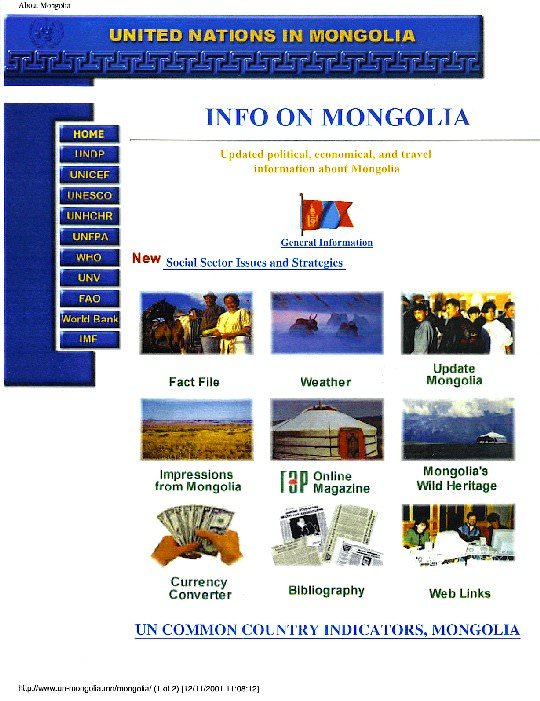
I launched this portal in 1997, in the middle of a major economic crisis in Mongolia. This award-winning (winner in 1998 of the People’s Choice WebSite 500 award and the CyberTeddy Top 500 Website award) and pioneering United Nations Mongolia development web portal was singled out by UN headquarters as an example of what a country office website should be like.
At this time, Mongolia was still recovering from the chaotic and turbulent transition from Communism to free markets and democracy begun at the start of the 1990s, called by some “one of the biggest peacetime economic collapses ever” (Mongolia’s Economic Reforms: Background, Content and Prospects, Richard Pomfret, University of Adelaide, 1994). There was a thirst for information: access to the Internet was still limited and access to mobile phones was just the preserve of the rich. As a legacy of the past, information, especially that about the outside world and the country’s true economic and social conditions, was restricted. During the years of Communism, even simple travel from one place to the next was strictly regulated.
While today we can take it for granted the world’s information arrives in seconds via the Internet on mobile and smart phones and devices, this just was not the case in the late 1990s in Mongolia.
The UN/UNDP Mongolia development web portal addressed the urgent need to communicate what was happening in the country during a major crisis, and to transparently show what the UN was doing to address the crisis. It made critical data on the country’s development easy to find, and informed the wider world about the country and its people and culture. While the Internet had only just arrived in Mongolia, from the start the UNDP Mongolia Communications Office was experimenting with this powerful new technology to reach a global audience. This included Mongolia’s first web magazine, Ger (launched in 1998).
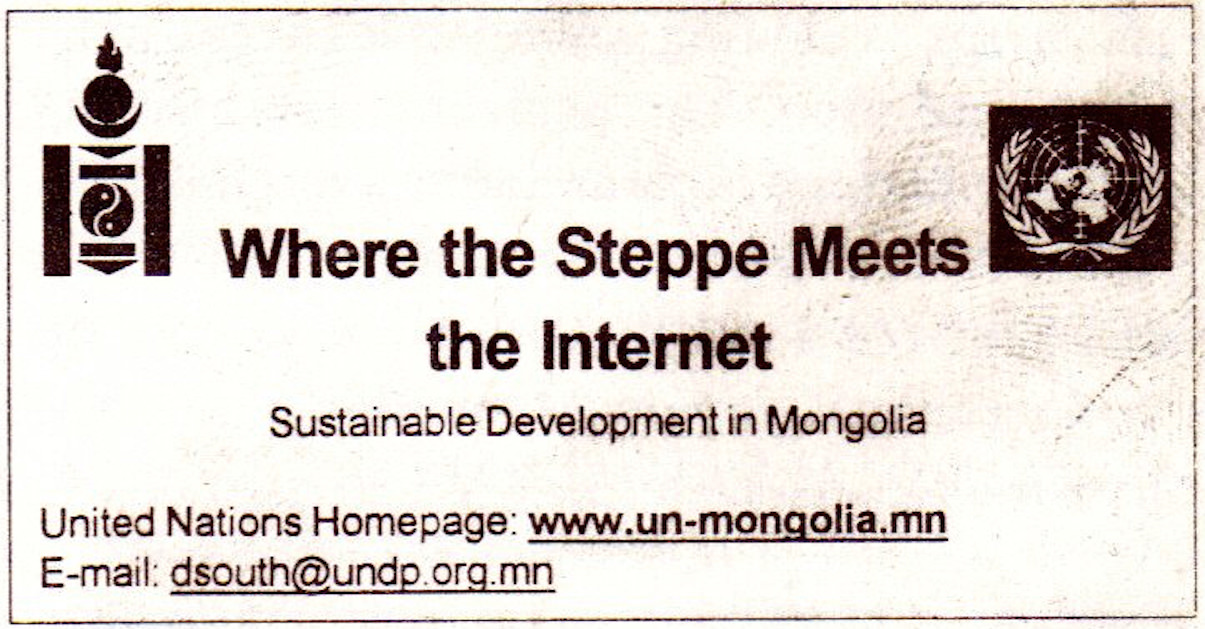
After the http://www.un-mongolia.mn website launched in 1997, a media campaign began to inform readers of its presence. This ad appeared regularly in magazines, newsletters and newspapers.
Ger Magazine was launched on September 9, 1998 (Ger is the Mongolian word for both the traditional tent dwelling and home). The theme of youth in the transition was explored by a combined team of Mongolian and foreign journalists. The Ger Magazine project had basically three goals: first, raise the quality of journalism in the country, secondly, introduce the country to a wider global audience and, thirdly, by being the country’s first online magazine, prove the Internet was an effective way to communicate.
Issue 1 of the magazine investigated what life was like for youth during the transition years (post-1989). Stories tackled the struggle to find work in the free market, the booming pop music scene and how it is leading the way in business entrepreneurship, reproductive health, the basics on Mongolian culture, and vox pop views from Mongolian youth.Issue 2 of the magazine investigated modern life in Mongolia during transition. The team of journalists were hitting their stride by this issue. Stories probed the proliferation of bars and the problem of alcoholism, corrupt banking practices and the loss of savings, how the young were the country’s leading entrepreneurs, Mongolia’s meat and milk diet, “girl power” and the strong role played by women, the burgeoning new media, the rise and rise of Buddhism, and Mongolia’s dynamic fashion designers (this article inspired foreign fashion designers to embrace the Mongolian ‘look’ in the next season’s designs).
The UN/UNDP Mongolia homepage quickly became the top resource for development news on Mongolia in the late 1990s.“A UN System site. A very nice, complete, professional site. Lots of information, easily accessible and well laid out. The information is comprehensive and up-to-date. This is a model of what a UNDP CO web site should be.”
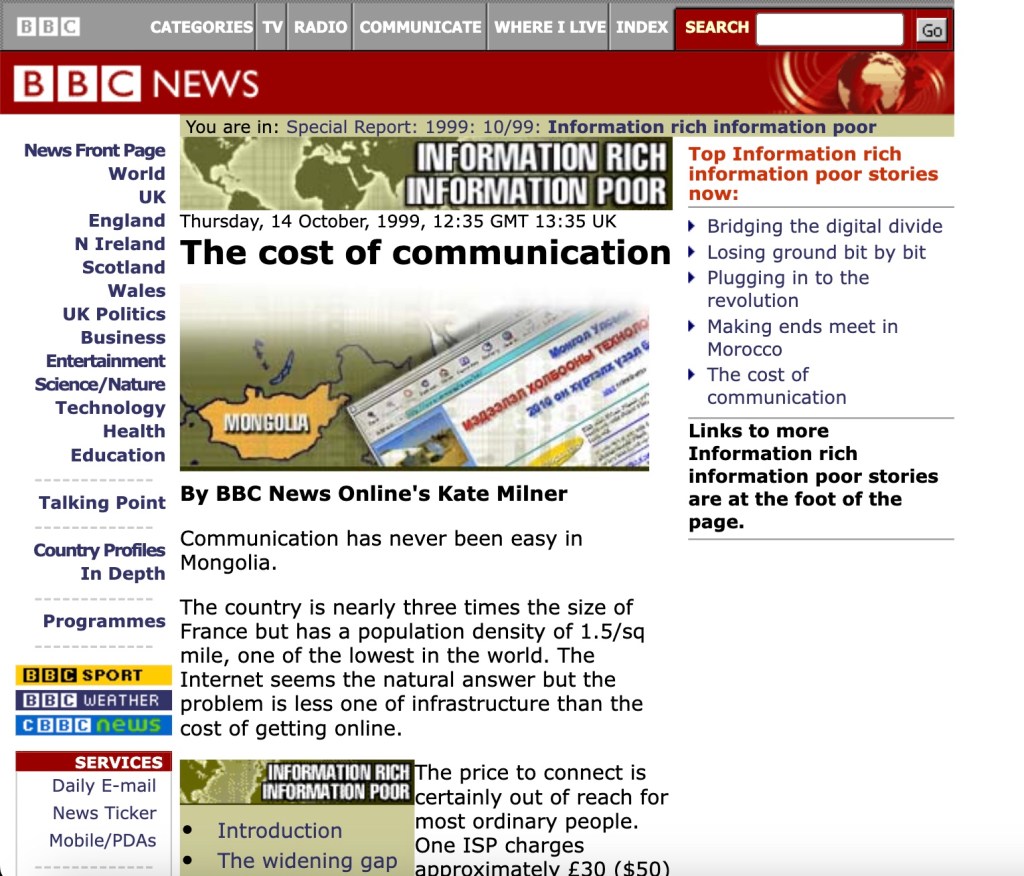
“Information Rich Information Poor: The cost of communication”, BBC News Online, Thursday, 14 October 1999.
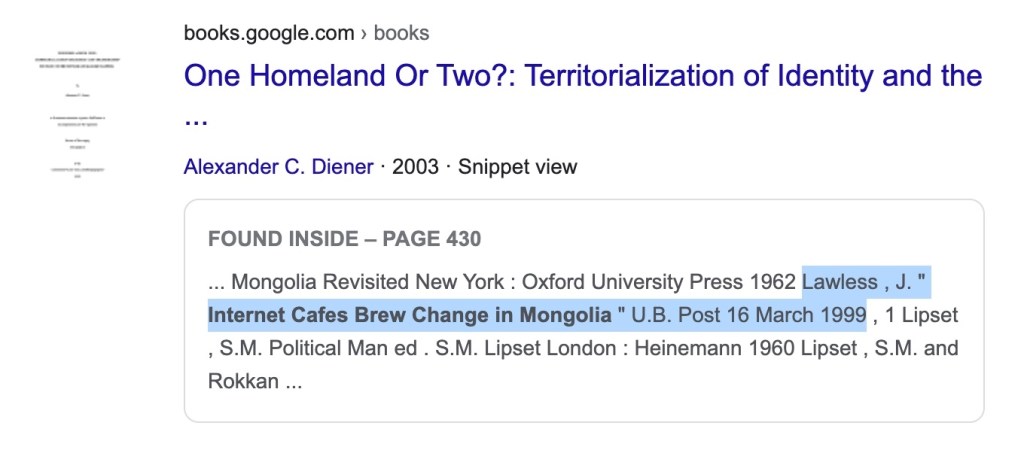
“Internet Cafes Brew Change in Mongolia”, UB Post 16 March 1999 by Jill Lawless, cited in One Homeland or Two?: Territorialization of Identity and the Migration Decision of the Mongolian-Kazakh Diaspora by Alexander C. Diener, 2003.
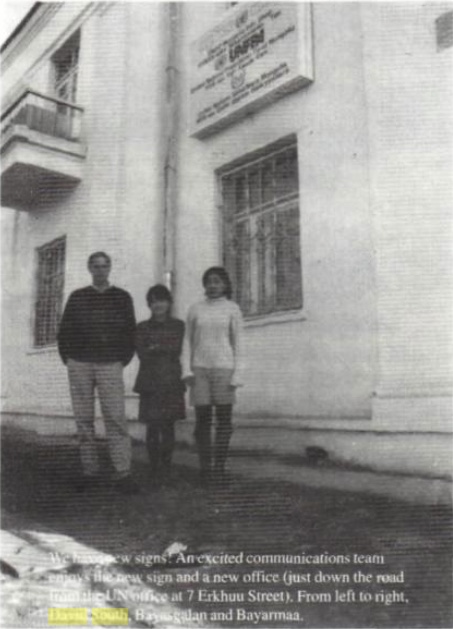
United Nations Cyber Center Ulaanbaatar, Mongolia: UNDP Mongolia established the first public internet cafe in its former headquarters as part of the UNDP Mongolia Communications Office hub in the late 1990s.
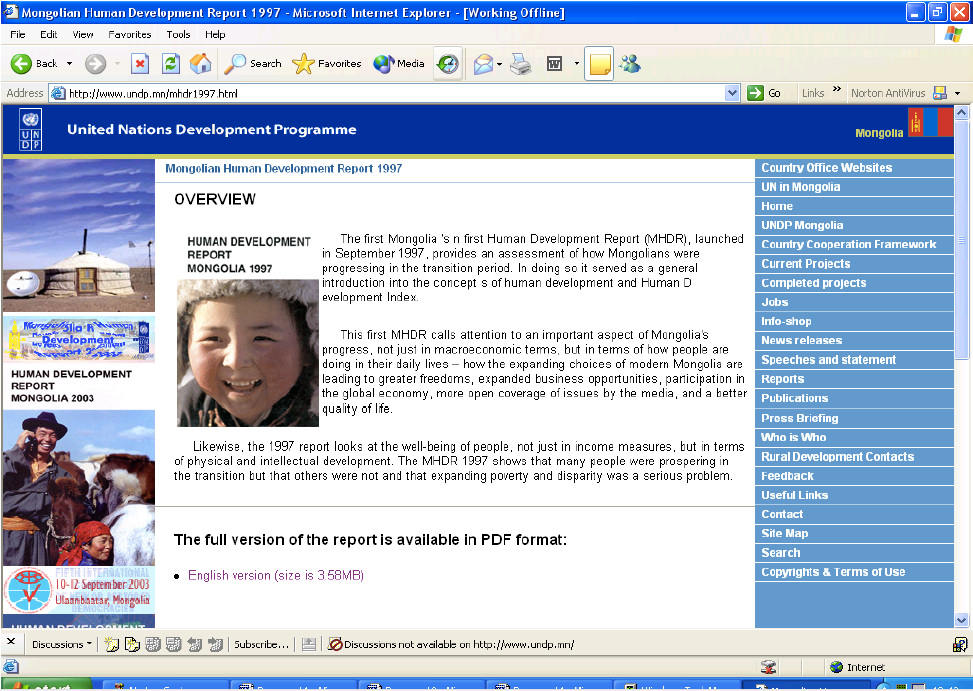
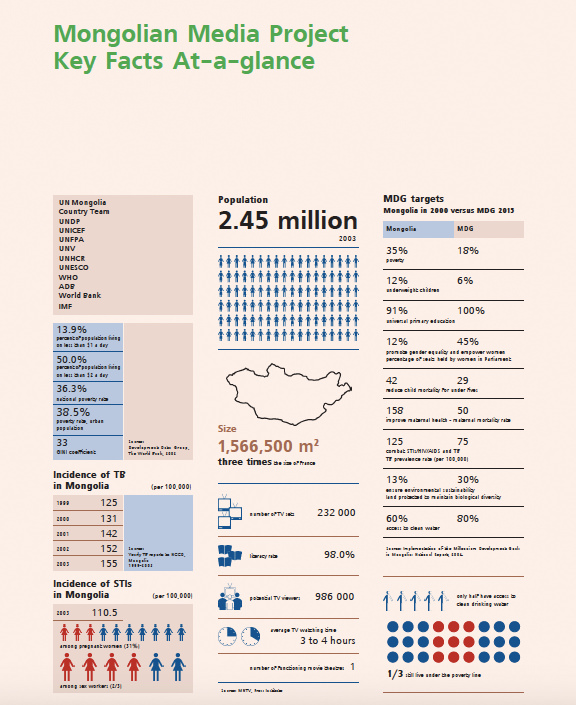
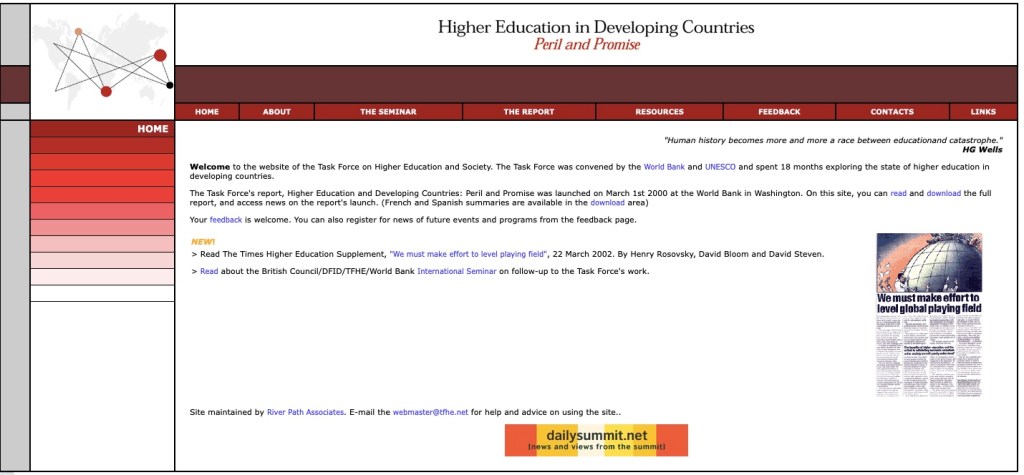
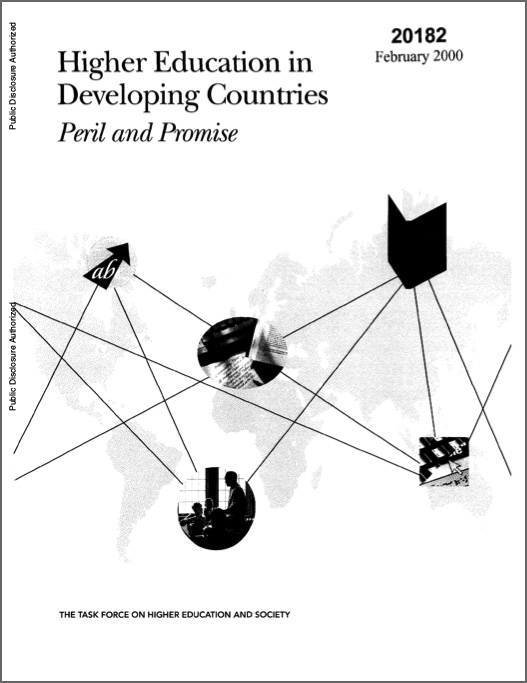
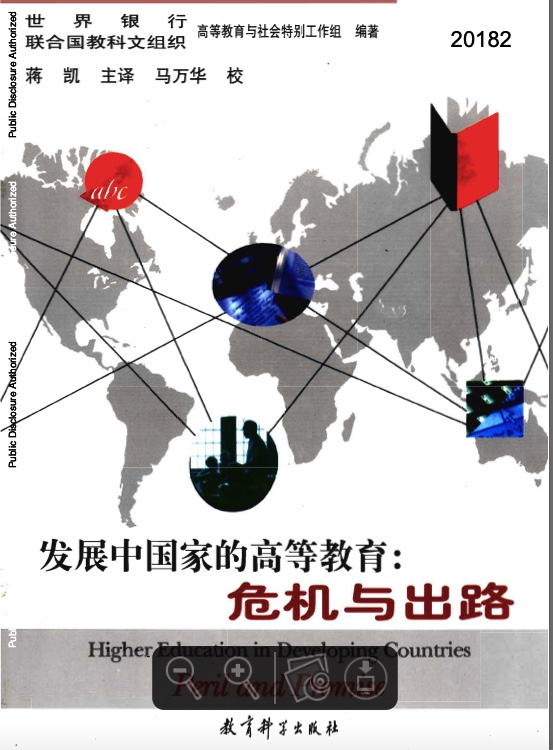
In 2000, the Kiev-based UN Ukraine team had to improve the design and capability of the mission website to handle new content and online services. There was a strong demand for information on country conditions and how to support the UN’s work (for example, on HIV/AIDS). It was a dangerous time to be involved in any online communications and the media and online communicators were routinely threatened with violence and even death.Whilst with a UK-based international development consultancy, I worked on the drafting and online launch in 2000 of the World Bank’s Task Force on Higher Education and Society report, Higher Education in Developing Countries: Peril and Promise. At the time, it was still rare to see reports made user friendly for the world’s web audience. As a survey in 2014 discovered, a shocking third of the Bank’s publications are never downloaded, 40 per cent were downloaded just 100 times, and only 13 per cent were downloaded more than 250 times in their lifetime (The Washington Post).As the Millennium Development Goals (MDGs) were being communicated, the link between the powerful new digital and mobile/information technologies and development goals became explicit in information materials. The cleaner and more modern design introduced with Mongolia’s first human development report in 1997, continued in future publications and online, as can be seen in this screen grab from 2003 and that year’s human development report. The first use of infographics was also introduced in a report on the MDGs for UNDP Mongolia in 2005. Importantly, a country that had been isolated from the non-Communist world for decades, was now routinely using the Internet to tell its stories and post development data.
Human Development Infographics: Infographics have proven a useful visual aid for communicating human development concepts. This example was created for a UNDP Mongolia report during missions undertaken in 2005.
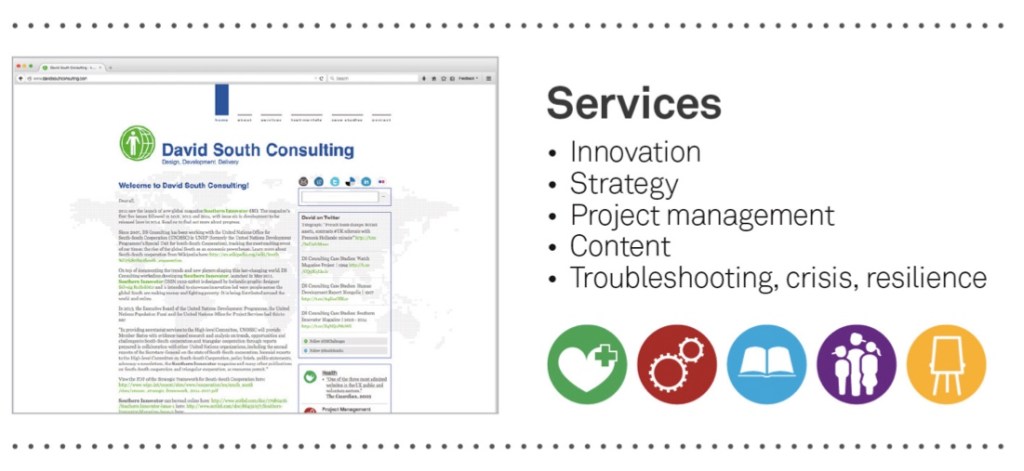
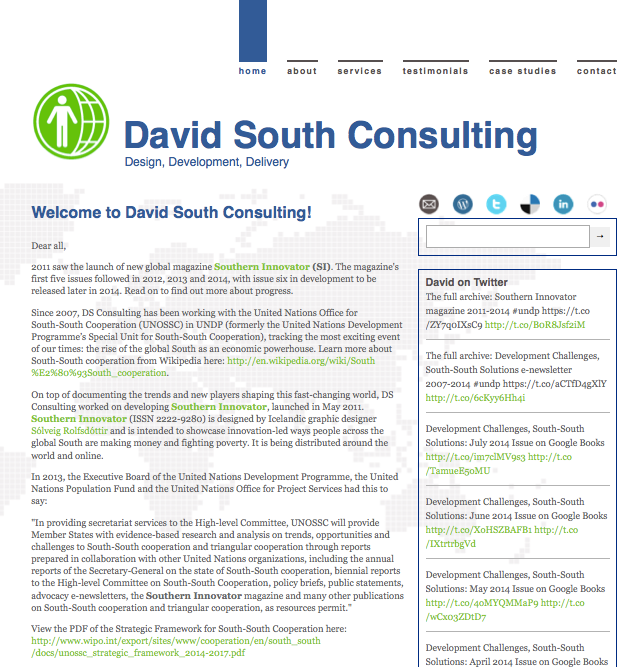
Five years prior to the MDGs deadline in 2015, the David South Consulting website went live (2010). Featuring a new branding and design, it signaled a new design phase more comfortable with developments in social media and online and mobile content sharing. Designed by Solveig Rolfsdottir, one of Iceland’s top graphic designers and illustrators, the website’s design was intentially made compatible with the new global magazine, Southern Innovator (also designed by Solveig Rolfsdottir).The online story archive for Southern Innovator was launched by the United Nations Office for South-South Cooperation (UNOSSC) in 2011. Organized by theme, the stories were cited in blogs, books and reports around the world.
The new template for the United Nations e-newsletter Development Challenges, South-South Solutions was launched in 2011 and designed by Solveig Rolfsdottir. It included a QR code for mobile and smartphone users to connect to the Southern Innovator website.
In 2016 the mobile-friendly version of the David South Consulting website was launched.
“This publication reports on 18 months of research, debate, and deliberation by the Task Force on Higher Education and Society, convened by the World Bank and UNESCO, to bring together experts from 13 countries to explore the future of higher education in developing nations.”
In 1999 I began work on the communications strategy as well as editing the expert contributions for the Task Force on Higher Education and Society’s report, Higher Education in Developing Countries: Peril and Promise (2000). The brief was to unpack the report and present its findings in a web-friendly format. At the time, it was still rare to see reports made user friendly for the world’s web audience. As a survey in 2014 discovered, a shocking third of the World Bank’s publications are never downloaded, 40 per cent were downloaded just 100 times, and only 13 per cent were downloaded more than 250 times in their lifetime (The Washington Post).
Education is recognized as critical for development and improving people’s lives. Universal primary education is a Millennium Development Goal and countries are now allocating more funds for primary education across the global South. However, the options available to youth after primary education are often very limited.
The World Bank estimates that only nine percent of youth in the developing world will be able to go to a university or benefit from higher education scholarships. For the vast majority of youth, getting a job is often the only viable option to securing a livelihood; but in most developing countries the number of formal sector jobs is low and the only option is self-employment. Acquiring relevant training and practical skills can be crucial to becoming successfully self-employed. But where will the training and skills come from and who will provide it and pay for it?
This dilemma is being addressed by the “self-sufficient schools” concept. The model combines entrepreneurship and vocational education through school-based businesses that blend training and revenue-generation. The principle is simple: entrepreneurship and entrepreneurial skills are taught by successful entrepreneurs.
The model is being pioneered in several countries and has been successfully applied by UK-based charity TeachAManToFish in Ghana and Paraguay, targeting rural youth from farming families through a network of 250 vocational experts and institutions in 45 countries. The approach promotes a model for making education both more relevant and financially sustainable in rural communities.
Self-sufficient schools share several characteristics: they produce and sell goods and services; they focus on developing an entrepreneurial culture; they make a direct connection between theory, practical work and financial reward; they encourage learning by doing; they strive to keep improving in order to remain economically competitive; students are encouraged to work cooperatively; and students receive support after graduating, often in the form of microfinance for their new businesses.
In the South American nation of Paraguay, the Fundacion Paraguaya – San Francisco Agricultural High School – run by an NGO committed to poverty reduction through supporting entrepreneurship – found that small-scale farmers not only knew how to produce food, they also knew how to make a prosperous living out of it when given the right tools. Taking over a school previously run by a religious order, the NGO had the opportunity to put the concept to the test.
The organization’s head, Martin Burt states, ”It is not a matter of knowing how to grow the crop, or raise the animal; it is a matter of how to make money and then how to be financially successful doing farming in poor countries.”
The Paraguayan school is half way through its five-year plan, and already is covering two thirds of its recurring costs from the production and sale of goods and services, including specialist cheeses.
Published: May 2007
Resources
A paper on the concept of self-sufficient schools: Click here
CIDA City Campus, Johannesburg, South Africa: CIDA is the country’s only “’free’, open-access, holistic, higher educational facility” and is “operated and managed by its students, from administration duties to facilities management. In addition every student is required to return to their rural schools and communities, during holidays, to teach what they have learnt.”
The First International Conference on Self-Sufficient Schools is being planned by TeachAManToFish. Expressions of interest are sought from all individuals and organizations interested in taking part in the conference. Email conference@teachamantofish.org.uk for more information.
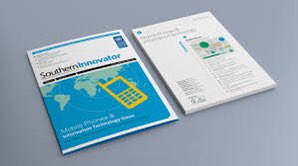
Development Challenges, South-South Solutions was launched as an e-newsletter in 2006 by UNDP’s South-South Cooperation Unit (now the United Nations Office for South-South Cooperation) based in New York, USA. It led on profiling the rise of the global South as an economic powerhouse and was one of the first regular publications to champion the global South’s innovators, entrepreneurs, and pioneers. It tracked the key trends that are now so profoundly reshaping how development is seen and done. This includes the rapid take-up of mobile phones and information technology in the global South (as profiled in the first issue of magazine Southern Innovator), the move to becoming a majority urban world, a growing global innovator culture, and the plethora of solutions being developed in the global South to tackle its problems and improve living conditions and boost human development. The success of the e-newsletter led to the launch of the magazine Southern Innovator.
Education is recognized as a major catalyst for human development. During a high-level meeting on the Millennium Development Goals (MDGs) (http://www.undp.org/content/undp/en/home/mdgoverview.html) in 2010, UNESCO – the United Nations Educational, Scientific and Cultural Organization – pointed out the necessity of making rapid gains in education if all the MDGs are to be achieved. The goals deadline is 2015 – just two years away.
Two of the eight goals are directly related to education systems. MDG2 focuses on boosting universal primary education by 2015, and MDG3 calls for the elimination of barriers to primary and secondary education for women and girls.
UNESCO found that between 2000 and 2007, the share of total government education expenditure devoted to primary education across sub-Saharan Africa fell from 49 per cent to 44 per cent (Rawle, 2009). It also found total aid for education was on the decline and foreign aid for basic education began to stagnate in 2008. This contrasted, UNESCO stated, with the “strong advances made over the past decade.”
Overall, in the countries of sub-Saharan Africa, resources for education fell by US $4.6 billion a year on average in 2009 and 2010 (UNESCO, 2010).
With funding for education dependent on fluctuating factors such as foreign aid, government budgets and the state of the global economy, alternatives are needed to retain the gains made in education and to improve them even further.
Thankfully, one new innovative learning tool, dubbed massive open online courses (MOOCs) (http://en.wikipedia.org/wiki/Massive_open_online_course), is about to have a major impact in Africa. Rapid improvements in access to the Internet in Africa means that online learning tools could be a growing solution to the education deficit.
MOOCs mean people will have access to a global treasure trove of free online courses in science, technology, engineering and math. Many believe the leapfrog into digital education will do for education what mobile phones have done for African’s ability to communicate and do business.
These online courses vary in approach – some have set start and finish dates and can last from six to 10 weeks, while others are more loosely structured. But they all offer students the ability to learn from online video lectures and use online forums as a replacement for seminars, debates and question-asking.
According to a recent paper by Harvard University Professor of International Development Calestous Juma, “There is a real possibility for Africa to dramatically improve its teaching – especially in science, technology, engineering, and math – through the deployment of MOOCs.”
The diffuse nature of the Internet means many of the drivers behind promoting this trend in Africa will be found at the regional rather than the national level. The Internet helps remove the dependence on national governments and their education policies and funding – or lack thereof – to further education goals. This means the ability to make the most of the powerful new resource of MOOCs will be amplified by innovators within Africa, from entrepreneurs to information technology pioneers.
Their solutions will help make it easier to access these learning resources.
MOOCs are a variation on OpenCourseWare (http://en.wikipedia.org/wiki/OpenCourseWare) university courses, created for free distribution on the Internet. MOOCs bypass the hazard in the past of digital courses going missing or being mislaid: they are online and always available. Nobody can mislay the content by accident.
The Khan Academy (khanacademy.org) is one of the best-known popular MOOCs pioneers. It was founded in the United States in 2008 by Salman Khan, who quit his job as a hedge fund manager to run the business full time. Khan is academically highly accomplished – he has three degrees from MIT and an MBA from Harvard University. The Khan Academy targets mainly secondary school students and claims to have 5.5 million unique users a month. It is run as a not-for-profit and receives donations to keep it going.
It does this with a staff of just 37: proof of how much can be achieved when the power of the Internet is leveraged to pass on knowledge.
The Khan Academy platform greets readers with questions such as “What is the eccentricity of an ellipse?” or “What if there’s a negative exponent?” And if you do not know, you better get cracking doing their problem sets. Students can practice their math skills, answer other students’ questions or watch a video walk-through of the services on offer on the website. The main categories are math, science and economics, computer science, the humanities and help with preparing for various standardized tests such as the GMAT (Graduate Management Admission Test). There are over 4,000 videos on offer on the website.
“Each video is a digestible chunk, approximately 10 minutes long, and especially purposed for viewing on the computer,” the website states.
“I teach the way that I wish I was taught. The lectures are coming from me, an actual human being who is fascinated by the world around him,” states Khan.
MOOCs offer not just course materials, videos, readings and problem sets but also discussion forums for the students, professors/teachers and tutorial assistants to build a community. This is considered an ideal model for reaching students over great distances and in remote regions. So-called “open” educational resources are used and often no fees or tuition are charged.
The OpenCourseWare (OCW) (http://ocw.mit.edu/index.htm) project at the Massachusetts Institute of Technology (MIT) seeks to “publish all of our course materials online and make them widely available to everyone,” according to Dick K.P. Yue, Professor at MIT’s School of Engineering.
Through its website, it offers nearly all of MIT’s course content, a treasure trove from one of the top research universities in the world, a long-standing home for pioneers and innovators in science and technology.
By way of the Internet, anybody anywhere in the world can access this resource. The most visited courses online as of February 2013 included undergraduate “Introduction to Computer Science and Programming,” “Physics I: Classical Mechanics,” “Introduction to Electrical Engineering and Computer Science I,” “Principles of Microeconomics,” “Introduction to Algorithms,” and “Principles of Chemical Science.” There are 2,150 courses and so far 125 million visitors to the website.
Having access to the courses allows teachers to gain new insights into the subjects they teach and benefit from the impressive resources of MIT.
MIT also sees it as a way to aid people to tackle the big development issues of our time, including climate change and health problems such as cancer.
Other MOOCs providers include Peer-to-Peer University (https://p2pu.org/en/), Udemy (udemy.com), Coursera (coursera.org), Udacity (udacity.com), and edX (edx.org), a not-for-profit partnership between Harvard and MIT to develop courses for interactive study on the Internet.
Boosting access to MOOCs presents a great business opportunity for Africa’s mobile phone entrepreneurs and its mushrooming information technology (IT) hubs (https://africahubs.crowdmap.com/).
“I view online learning as a rising tide that will lift all boats,” Anant Agarwal, professor of electrical engineering and computer science at MIT and president of edX, told The Financial Times. “It will not only increase access, it will also improve the quality of education at all our universities.”
All of this matters because it means Africans will increasingly have the tools to participate in the global marketplace of ideas and products and services on a more level playing field. By far the biggest obstacle to competing is the lack of timely information and knowledge about what is happening in the global economy. It is a frequent complaint, from the farmer desperate for the latest news on market prices and trends and innovations, to the strivers in the growing megacities of the continent who have their sights set on global success.
2) Queen Elizabeth Prize for Engineering: The Queen Elizabeth Prize for Engineering is a new global engineering prize that will reward and celebrate an individual (or up to three individuals) responsible for a ground-breaking innovation in engineering that has been of global benefit to humanity. Website:http://www.qeprize.org/
3) Belfer Center for Science and International Affairs: The Belfer Center is the hub of the Harvard Kennedy School’s research, teaching, and training in international security affairs, environmental and resource issues, and science and technology policy. Website: http://belfercenter.ksg.harvard.edu/
4) A place to host MOOC news and information. Website:http://mooc.ca/
5) OpenCourseWare Consortium: The OpenCourseWare Consortium is a collaboration of higher education institutions and associated organizations from around the world creating a broad and deep body of open educational content using a shared model. Website:http://www.ocwconsortium.org/
7) Hiobo MoPC: Joining the ongoing push to drive down the price of personal computers in Africa is the latest offering from Mauritian information technology company, Hiobo. Website:http://www.hiobo.com/mopc/
London Edit
31 July 2013
Development Challenges, South-South Solutions was launched as an e-newsletter in 2006 by UNDP’s South-South Cooperation Unit (now the United Nations Office for South-South Cooperation) based in New York, USA. It led on profiling the rise of the global South as an economic powerhouse and was one of the first regular publications to champion the global South’s innovators, entrepreneurs, and pioneers. It tracked the key trends that are now so profoundly reshaping how development is seen and done. This includes the rapid take-up of mobile phones and information technology in the global South (as profiled in the first issue of magazine Southern Innovator), the move to becoming a majority urban world, a growing global innovator culture, and the plethora of solutions being developed in the global South to tackle its problems and improve living conditions and boost human development. The success of the e-newsletter led to the launch of the magazine Southern Innovator.


















 David South Consulting
You must be logged in to post a comment.