Tag: economy

  • Local Animation: A Way Out of Poverty

    Local Animation: A Way Out of Poverty

    By David SouthDevelopment Challenges, South-South Solutions

    SOUTH-SOUTH CASE STUDY

    One of the more remarkable creative developments since 2000 has been the explosion in animation production in the developing world, in particular Asia. Once seen as frivolous or unnecessary, animation is now acknowledged as a high-growth area and a critical component in the emerging economies being shaped by information technology.

    The demand for more animation is being fuelled by several trends. Lucrative outsourcing contracts with major global film studios like Walt Disney and Warner Brothers get much of the attention. But even more importantly for small entrepreneurs, the rapid growth of information technology and mobile phones is fuelling demand for animation with a local flavour, which is an excellent way to make applications more attractive to users. As computers and animation software become cheaper, it is easier for entrepreneurs to compete with the bigger studios. It all started with the popularity of Japanese anime animation, which kicked the door open in the West, sparking an appetite for fresh, new styles unseen before.

    The animation leaders in Asia are Japan, Republic of Korea, Philippines and Taiwan Province of China, with India rising quickly. As animation production is very lucrative and a labor-intensive business (labor takes up 70 to 80 percent of business costs), other Asian countries such as India, China, Vietnam, Malaysia and Singapore have recently started their own industries.

    The National Association of Software and Service Companies (NASSCOM) has forecast the Indian animation sector to gross overall turnover of US $950 million in 2009, while its gaming industry will reach US $300 million in 2009 (from US $30 million in 2005). The global industry is huge: it is estimated that games will gross US $11 billion and animation US $35 billion by 2009. In the Philippines, growth has been 25 per cent a year since 2005 (National Statistics Office), and the government has been heavily promoting animation as a viable career and business opportunity. China was able to make US $604 million in 2005. The AWN’s Animation Industry Database lists 48 studios operating in the Philippines alone. Others benefiting are Thailand, Taiwan Province of China and Republic of Korea. And even in Africa, there have been attempts to get things going.

    Ambitiously, China hopes to raise its home-made share of the animation pie from 10 per cent and to increase its overall animation programming from 5,000 hours/year to 16, 7000/year. In 2004, the Chinese government set up four animation schools: Communication University of China, Beijing Film Academy, China Academy of Art, and Tianjin Sorun Digital Media School. More than 200 animated films were produced in 2004.

    Indian animation feature productions have exploded in the past few years. In 2005, animated feature Jai Hanuman started the current boom. Its quality marked a departure from past Indian productions and heralded in a new era. Importantly, it out-grossed any Disney film in India, and proved films featuring local topics could be commercially successful. It is a difficult market with 14 official languages and 1,400 dialects. At present, the huge Indian market has little locally produced animation to feed its needs. But by 2007, 71 Indian animation films were announced to be in production.

    Productions in development draw heavily on India’s culture and love of gods. They include Epiphany Films’ The Dream Blanket, a Tibetan fairy tale, and Graphiti studios’ Action Hero BC, a teenager who fights evil.

    The world’s animation producers scour India for talent to outsource. Global films with some Indian production in them include Finding Nemo, The Lion King and The Adventures of Tenali Raman. Toonz Animation Studio based at the Technopark in Kerala, was called by Animation Magazine one of the top ten studios in the world.

    In Africa, South Africa has by far the most dynamic and sophisticated animation sector. Ten years after the birth of democracy, hundreds of production companies and several 2D animation houses were established. In turn, South Africa advertises itself as a cheaper place to produce animation.

    The highly successful South African 3D animated series Magic Cellar by Morula Pictures – the first of its kind based on African culture – was successfully sold to the US Home Box Office channel this year. Based on 20 folk tales, the stories were collected through interviews with elders in African villages. Mfundi Vundla, 58, who owns Johannesburg’s Morula Pictures, South Africa’s largest black-led studio, said his productions are meant to counter the perception of “Africans as unsophisticated, superstitious idiots who visited witch doctors to solve problems.” It employs 60 people and dozens of actors.

    In 2004, UNESCO’s Africa Animated! was launched, with East Africa’s first animation project. The participants undertook animation, drawing techniques, scriptwriting for animation and storyboarding. The project was launched to assemble resources and expertise for the production of culturally relevant children’s animated cartoons and programmes in Africa. It sought to create a high-quality “African branded” training and production model, in order to make African animation competitive for regional organizations to produce animated TV series, Public Service Announcements (PSA) and short films.

    The Nairobi office is seeking to establish a Regional Training and Production Centre for Animation in Kenya in 2008.

    Moustapha Alassane of Niger and one of Africa’s film pioneers, said: “The good thing about animation is that you can do it on a shoe-string budget. With the computer, animation is getting easier and anyone can do it now. I want to encourage young Africans to use new technologies for animation.”

    Published: December 2007

    Resources

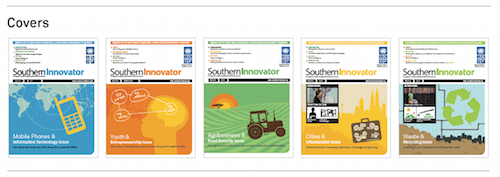
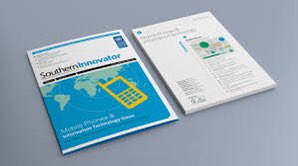
    Development Challenges, South-South Solutions was launched as an e-newsletter in 2006 by UNDP’s South-South Cooperation Unit (now the United Nations Office for South-South Cooperation) based in New York, USA. It led on profiling the rise of the global South as an economic powerhouse and was one of the first regular publications to champion the global South’s innovators, entrepreneurs, and pioneers. It tracked the key trends that are now so profoundly reshaping how development is seen and done. This includes the rapid take-up of mobile phones and information technology in the global South (as profiled in the first issue of magazine Southern Innovator), the move to becoming a majority urban world, a growing global innovator culture, and the plethora of solutions being developed in the global South to tackle its problems and improve living conditions and boost human development. The success of the e-newsletter led to the launch of the magazine Southern Innovator. 

    Creative Commons License

    This work is licensed under a
    Creative Commons Attribution-Noncommercial-No Derivative Works 3.0 License.

    ORCID iD: https://orcid.org/0000-0001-5311-1052.

    © David South Consulting 2023

  • Trade to Benefit the Poor Up in 2006 and to Grow in 2007

    Trade to Benefit the Poor Up in 2006 and to Grow in 2007

    By David SouthDevelopment Challenges, South-South Solutions

    SOUTH-SOUTH CASE STUDY

    The global fair trade market – in which goods and services are traded under the Fairtrade logo, guaranteeing a minimum fair price to producers experienced unprecedented growth in 2006. In the UK alone, 2006 sales totalled £290 million – a jump of 46 percent from 2005. The Fairtrade Foundation predicts sales will reach UK £300 million in 2007.

    In 2005 Fairtrade sales were € 1.1 billion in the brand’s main markets of Switzerland, the UK, New Zealand, Australia and the US. At present fair trade works with 5 million farmers in the global South, and it represents an ever-increasing opportunity for Southern entrepreneurs.

    A tipping point has been reached in Western awareness of and demand for the Fairtrade brand and concept, and it is now being adopted by major supermarkets. In the UK, 62 percent of consumers know the logo and understand what it means.

    The concept of fair trade began in the Netherlands in 1988, when the Max Havelaar Foundation launched the Fairtrade consumer label with coffee from Mexico. Unlike conventional businesses, where the price paid to a producer is what the market dictates, fair trade guarantees the producer a minimum price for their product. This amount is set at a level that ensures the producer can live a life with dignity and meet all the essentials. A portion of the profits is also kept in a communal fund which the producers democratically elect to spend as they wish (many choose to spend it on community projects).

    Fair trade has been criticized for a number of reasons. It has been seen as too small and marginal to really make inroads on poverty, and has been accused of privileging a small number of producers while ignoring the rest. It has also been criticized for not focusing enough on innovation and increasing production to really eradicate poverty in the developing world.

    For all its faults and shortcomings, it is a fact that the Fairtrade brand is a runaway success and offers a wide range of opportunities for entrepreneurs.

    In the UK, fair trade now includes 2,500 products, ranging from footballs, to tea, cotton and honey – up from just 150 in 2003, an astonishing rate of growth. Where fair-trade products were once confined to co-operative and charity shops, they are now widely sold in major supermarkets.

    The success of fair trade is not confined to Europe and the US. It is growing in Japan, where, says fair trade retailer Sonoko Iwasa, “the concept of using trade to equalize the world by buying goods from developing countries from Asia and Africa was a notion that had no connection with everyday lives.”

    Iwasa’s Rumaba Goods store just outside Tokyo sells organic chocolates from Africa, woollen gloves and hats from Nepal, and elegant clothes from Thailand. Iwasa found that the key in the highly competitive Japanese consumer market was to focus on quality, not fairness. This, she says, has made these products fashionable.

    At present, the fair trade market is worth only about US $6 to $7 million a year in Japan and includes 1,500 products. But according to Michiko Ono of Japan’s best-known fair trade label, People Tree, the trend is catching on among the country’s socially aware youth.

    To start a fair trade business, entrepreneurs or producers need first to contact the international body that certifies fair trade products and ensure that production meets the ethical standards required.

    Published: January 2007

    Resources

    https://davidsouthconsulting.org/2022/06/02/afghanistans-juicy-solution-to-drug-trade/

    https://davidsouthconsulting.org/2022/11/02/african-online-supermarket-set-to-boost-trade/

    https://davidsouthconsulting.org/2022/10/26/african-trade-hub-in-china-brings-mutual-profits-2/

    https://davidsouthconsulting.org/2022/11/21/chinese-trade-in-angola-helps-recovery/

    https://davidsouthconsulting.org/2022/11/19/cooking-up-a-recipe-to-end-poverty/

    https://davidsouthconsulting.org/2022/04/12/djibouti-re-shapes-itself-as-african-trade-hub/

    https://davidsouthconsulting.org/2022/10/24/flurry-of-anti-poverty-innovations/

    https://davidsouthconsulting.org/2021/07/19/global-south-trade-boosted-with-increasing-china-africa-trade-in-2013/

    https://davidsouthconsulting.org/2022/10/21/local-animation-a-way-out-of-poverty/

    https://davidsouthconsulting.org/2022/10/26/perfume-of-peace-helps-farmers-switch-from-drug-trade/

    https://davidsouthconsulting.org/2022/10/21/social-networking-websites-a-way-out-of-poverty/

    https://davidsouthconsulting.org/2021/07/19/south-south-trade-helping-countries-during-economic-crisis/

    https://davidsouthconsulting.org/2021/03/05/southern-innovator-issue-2/

    https://davidsouthconsulting.org/2021/01/23/a-steppe-back-economic-liberalisation-and-poverty-reduction-in-mongolia/

    https://davidsouthconsulting.org/2021/01/23/the-sweet-smell-of-failure-the-world-bank-and-the-persistence-of-poverty/

    https://davidsouthconsulting.org/2022/11/18/web-2-0-networking-to-eradicate-poverty/

    https://davidsouthconsulting.org/2022/10/05/women-empowered-by-fair-trade-manufacturer/

    https://davidsouthconsulting.org/2022/06/16/women-mastering-trade-rules/

    Development Challenges, South-South Solutions was launched as an e-newsletter in 2006 by UNDP’s South-South Cooperation Unit (now the United Nations Office for South-South Cooperation) based in New York, USA. It led on profiling the rise of the global South as an economic powerhouse and was one of the first regular publications to champion the global South’s innovators, entrepreneurs, and pioneers. It tracked the key trends that are now so profoundly reshaping how development is seen and done. This includes the rapid take-up of mobile phones and information technology in the global South (as profiled in the first issue of magazine Southern Innovator), the move to becoming a majority urban world, a growing global innovator culture, and the plethora of solutions being developed in the global South to tackle its problems and improve living conditions and boost human development. The success of the e-newsletter led to the launch of the magazine Southern Innovator. 
    Creative Commons License

    This work is licensed under a
    Creative Commons Attribution-Noncommercial-No Derivative Works 3.0 License.

    ORCID iD: https://orcid.org/0000-0001-5311-1052.

    © David South Consulting 2023

  • African Hotel Boom Bringing in New Investment and Creating Jobs

    African Hotel Boom Bringing in New Investment and Creating Jobs

    By David SouthDevelopment Challenges, South-South Solutions

    SOUTH-SOUTH CASE STUDY

    Africa is experiencing a boom not seen for decades. The IMF forecasts economic growth in sub-Saharan Africa of 6 per cent in 2014, compared to global growth of 3.6 per cent.

    And this boom is getting an additional jolt of support from the world’s multinational hotel chains. January 2014 saw Africa’s largest hotel chain bought by global giant Marriott (marriott.com). For decades major global multinationals shied away from Africa, but today they are battling to get a place in Africa’s fast-growing economies and to serve the growing middle classes.

    Marriott is leading the way by investing US $1.5 billion in 25 new hotels equalling 5,000 rooms. To boost capacity further, Marriott is taking over South Africa’s Protea group (proteahotels.com) and its 116 African hotels.

    “We have 25 Marriott brand hotels under construction in seven countries in Africa that will come on stream over the next four years,” Alex Kyriakidis, the chain’s president for the Middle East and Africa, told Bloomberg (bloomberg.com).

    The new hotels “are going to bring us into Benin, Gabon, Ghana, Ethiopia and Mauritius. With our existing hotels plus those in the pipeline and those Protea operates today, we will be in 16 countries in Africa by 2017.”

    Bloomberg calls what Africa is experiencing the “fastest pace of hotel development in the world”.
    “Our mission here is to grow, grow, grow,” according to Kyriakidis.

    Meanwhile, a further boost is coming from the US $5 billion Angolan sovereign wealth fund, Fundo Soberano de Angola (fundosoberano.ao/language/en/). It will be investing in hotels and commercial infrastructure in sub-Saharan Africa, according to Bloomberg. This could include 50 sub-Saharan African hotels in the next three years.

    “We believe there’s a lot of investment interest in Africa,” said Chairman Jose Filomeno dos Santos. “It has a lot of mineral potential, almost a commodity hub. We believe this interest will remain there for the coming years.”

    Little thought is given to the role hotels play in development, yet they are a critical development tool for any country wishing to move up the economic ladder. As the quality of hotels improves, they tend to become key gathering and meeting places. Conferences and seminars can act as catalysts for change, attracting people from around the world. When quality hotels are in place, then the top-drawer global conferences will come to town, in turn bringing new tourist income for local businesses.

    Anyone who has stayed in a hotel in Africa knows that standards are variable: the pool with dirty water, the power cuts, the food hygiene standards that might not match what people are used to at home. This is what international hotel chains can change. Not only do they demand the highest standards in their own establishments, they also push up standards at local competitors, as all of them battle for the attention of visitors.

    Africa has been overlooked by the large global hotel chains and brands since the end of the colonial period in the 1960s and 70s. Africa was considered too poor, too chaotic, too dangerous and too much hard work for it to be worth the effort.

    But now the tune has changed. With Africa’s population over a billion, and many of the continent’s economies experiencing rapid growth while also urbanizing, conditions are fortuitous for the hotel trade.

    The situation has changed in the last decade, for a variety of reasons: debt relief, a rise in commodity prices, expanding trade and investment with China and the global South, and a growing middle class — all slowing the growth of poverty. Africa is still notorious for under-investment in infrastructure and has a long way to go to catch up to the fast-moving economies of Asia. But greater optimism is leading to greater real investment. And the world’s large hotel brands are the latest to join in the rush to Africa.

    Large chains including Four Seasons, Ritz-Carlton, Hyatt and Kempinski hope to open 300 new hotels in Africa over the next five years. The number of hotel beds is set to increase by 30 per cent by 2018.

    Four Seasons Safari Lodge Serengeti in Tanzania (http://www.fourseasons.com/serengeti/) is the first investment in Africa by the Canadian brand. Four Seasons is known for its luxury, upmarket city hotels and has kept with this tradition by building the largest and most luxurious safari lodge ever built in Africa.

    This is having a knock-on effect on African hotel operators. The surge in investment is giving these local operators the right incentives to create African brands and to raise their game.

    Nairobi in Kenya has become something of a test market for high-end boutique hotels. Already a city benefiting from its status as an international development hub, home to many agencies including the UN Environment Programme’s sprawling and verdant headquarters (unep.org), it has also become a corporate headquarters for Africa and has a large U.S. presence (nairobi.usembassy.gov). This means lots of people coming to the city to do business and attend events, creating a market for better quality accommodation.

    The Kenyan-owned, 156-room Sankara Nairobi Hotel (sankara.com) boasts of having the best wine list in Africa and claims to be a five-star hotel. It also capitalizes on being close to the international airport and the UN’s Nairobi headquarters.

    “There’s an appetite for something local that’s different and, for the first time, there’s the confidence and funding to bankroll new developments,” said Sankara Hotel Group director Rohan Patel to Wallpaper Magazine. “Africans don’t want a theme-park African hotel, with prints of ‘the big five’ on the wall. That’s condescending. Nor do they want a New York-style hotel. They’ve probably been to New York. They want modern, connected Africa.”

    Elsewhere in Nairobi, the Kenyan-owned Tribe Hotel (tribe-hotel.com) is looking to expand to meet growing market demand.

    “The market for new, authentic, yet modern African hotels is growing,” manager Michael Flint, who previously ran New York’s Ritz-Carlton, told Wallpaper.

    “We’ve been so successful here we are building a new 187-room hotel in Nairobi. We’ve taken over a boutique hotel called Westhouse (westhouse.co.ke). And we’re looking to expand further, with properties at the airport and on the coast. Who knows what will be next? Tribe will be a mini empire.”

    In Rwanda’s capital Kigali, the Rwanda Marriott has ambitious plans. Rwanda was ripped apart by ethnic genocide in the 1990s that killed an estimated 500,000 to 1 million people (http://en.wikipedia.org/wiki/Rwandan_Genocide). Now, the country’s economy is booming and its hotels are getting an upgrade.

    The Akilah Institute for Women (akilahinstitute.org) in Kigali has been helping in training women for the hotel sector. They sent trainees to Dubai and Doha to learn how to do hotel service the Marriott way.

    Starwood (starwoodhotels.com), a competitor to Marriott, is hoping to grow its African hotel investment by 30 per cent as well. It will be done through the Sheraton, Aloft, Le Meridien, St Regis and Four Points brands. The first St Regis has already opened in Mauritius.

    Neil George, Starwood’s head of African development, believes “Africa is the final frontier. It’s adventurous.

    “I would rather arrive in Kinshasa and work out how to do a hotel there than do it in Frankfurt,” he told Wallpaper.

    The Hyatt (hyatt.com) brand is now running the Hyatt Kilimanjaro Hotel in Dar es Salaam (http://daressalaam.kilimanjaro.hyatt.com/en/hotel/home.html), Tanzania. Peter Norman, Hyatt’s African head, is working on opening a Park Hyatt in Zanzibar (http://zanzibar.park.hyatt.com/en/hotel/home.html) and another Hyatt Regency (http://investors.hyatt.com/phoenix.zhtml?c=228969&p=irol-newsArticle&ID=1863203&highlight=) will open in Arusha and a further 140-room Hyatt in Senegal (http://investors.hyatt.com/phoenix.zhtml?c=228969&p=irol-newsArticle&ID=1863204&highlight=).

    The 200-room Villa Rosa Kempinski in Nairobi (http://www.kempinski.com/en/nairobi/hotel-villa-rosa/welcome/), boasting an outdoor heated pool, and the Olare Mara Kempinski (http://www.kempinski.com/en/masai-mara/olare-mara/welcome/) luxury camp in the Maasai Mara will also be joined by projects in Ghana and Equatorial Guinea.

    Kempinski also has properties in Chad and the Congo, has bought the Hotel des Mille Collines (https://www.millecollines.net/) in Kigali and aims to operate 20 hotels across sub-Saharan Africa.

    British entrepreneur Richard Branson has the Mahali Mzuri in the Maasai Mara and it is seen as a stylish role model for other hotels. The local landowners and herdsmen have been included in the business, benefiting from the hotel and helping to preserve the local ecosystem.

    EasyHotel (http://www.easyhotel.com/news/2011/africa0.html), a low budget hotelier, is also rapidly expanding across southern Africa.

    Published: May 2014

    Resources

    1) Catererglobal.com: Catererglobal.com offers a unique service that provides an easy-to-use, specific recruitment website for vacancies in the world’s best hotels and cruise ships. Website: http://www.catererglobal.com/jobs/africa/hotel/

    2) South African hotel jobs: HotelJobs South Africa is an industry specific job website for the hotel, hospitality and catering industry. Website: http://www.hoteljobs.co.za/

    3) Hotel Staff Africa: Many hotel jobs across Africa. Website: http://www.hotelstaff.co.za/

    4) Hotel Career: Many hotel jobs for the Middle East and Africa. Website: http://www.hotelcareer.com/jobs/middle-east-africa

    Development Challenges, South-South Solutions was launched as an e-newsletter in 2006 by UNDP’s South-South Cooperation Unit (now the United Nations Office for South-South Cooperation) based in New York, USA. It led on profiling the rise of the global South as an economic powerhouse and was one of the first regular publications to champion the global South’s innovators, entrepreneurs, and pioneers. It tracked the key trends that are now so profoundly reshaping how development is seen and done. This includes the rapid take-up of mobile phones and information technology in the global South (as profiled in the first issue of magazine Southern Innovator), the move to becoming a majority urban world, a growing global innovator culture, and the plethora of solutions being developed in the global South to tackle its problems and improve living conditions and boost human development. The success of the e-newsletter led to the launch of the magazine Southern Innovator. 
    Creative Commons License

    This work is licensed under a
    Creative Commons Attribution-Noncommercial-No Derivative Works 3.0 License.

    ORCID iD: https://orcid.org/0000-0001-5311-1052.

    © David South Consulting 2023

  • Global South’s Rising Economies Gain Investor Spotlight

    Global South’s Rising Economies Gain Investor Spotlight

    By David SouthDevelopment Challenges, South-South Solutions

    SOUTH-SOUTH CASE STUDY

    A new book is arguing that the world’s attention should switch away from BRICS countries – Brazil, Russia, India, China and South Africa – and take another look at nations and regions elsewhere across the global South. It argues many are lodestones of future growth and prosperity in the making and will see dramatic changes over the next decade.

    The story of the BRIC and BRICS countries is an impressive one. In just eight years from 2000 to 2008, the BRIC countries’ combined share of total world economic output rose from 16 to 22 per cent. This led to a 30 per cent increase in global output during the period, showing how key these countries were to global prosperity in the 2000s. BRIC countries make up nearly half the world’s population and are regional leaders. Taken together, their gross domestic products (GDPs) are not far behind the United States.

    Ruchir Sharma’s Breakout Nations: In Pursuit of the Next Economic Miracles (http://www.amazon.com/Breakout-Nations-Pursuit-Economic-Miracles/dp/0393080269) argues that the BRICS are now entering a more stable growth path and thus will not see the rapid-fire expansion and quick profits investors have become used to in the past decade.

    “The BRICs,” Sharma told Forbes magazine, “were last decade’s team.”

    The BRIC acronym (http://en.wikipedia.org/wiki/BRIC) was coined in 2001 by Goldman Sachs managing director Jim O’Neill, in a 2001 paper titled “Building Better Global Economic BRICs” (http://www.goldmansachs.com/ourthinking/brics/building-better.html). O’Neill predicted that this handful of countries would dominate the growth and economic development story for the years 2000 to 2010. This was because they all shared a similar stage of advanced economic development.

    The BRIC states first began meeting together in 2006. South Africa was added in 2010 to form the BRICS acronym.

    The buzz surrounding the BRICS countries over the past decade has been justified by their impressive growth rates, declining poverty levels,modernizing economies and societies and growing middle class populations.

    China alone had seen its gross domestic product grow by US $5 trillion between 2001 and 2011.

    Now, Sharma argues, it is someone else’s turn.

    Sharma is head of emerging markets with Morgan Stanley Investment Management in New York, and Breakout Nations looks at where the next economic surprise stories will take place.

    “A breakout nation is a nation that will grow above expectations, and will grow more than nations with similar per capita income,” Sharma told Forbes. “You can’t bunch all of the emerging markets together anymore. The last decade saw these countries behaving the same economically, but I think that is behind us now. Investors today will really have to pick their spots.”

    He points out that Indonesia was the best performing emerging market in 2011 and has an economy that will surpass a trillion dollars in the coming years.

    He also believes Sri Lanka and Nigeria are economies to watch.

    Sharma says funds flowing into emerging market stocks grew by 478 per cent from 2005 to 2010, a massive jump compared to 2000 to 2005, when they grew by 92 per cent.

    As he sees it, China has now reached middle-income status and its growth rates will not be as high as they have been for the past two decades. In his research, he found that countries like Japan, South Korea and Taiwan all slowed down once their per capita income went past US $5,000.

    Investors who watch the emerging markets predict the hot growth areas for the next decade will be around energy, technology, and agricultural resources.

    Sharma picks out Indonesia, Turkey, the Philippines, Poland and the Czech Republic for future investment interest, but urges caution with thinking all emerging economies are on course to boom.

    “You’ve got to pick your spots, rather than just assume that because you put a tag of emerging on a particular nation, it’s going to boom,” Sharma told The Globe and Mail newspaper.

    To make sense of the complexity of fast-emerging economies, a flurry of new investor acronyms has popped up. One of the country clusters is called the CIVETS: Colombia, Indonesia, Vietnam, Egypt, Turkey, South Africa (http://en.wikipedia.org/wiki/CIVETS).

    The MINTS (Mexico, Indonesia, Nigeria and Turkey) are also set for great growth in the next decade, many investors believe.

    Then there is the N-11 or Next 11. This is the MINTS plus Bangladesh, Egypt,Iran, Pakistan, the Philippines, South Korea and Vietnam.

    And after that there is VISTA (Vietnam, Indonesia, South Africa, Turkey and Argentina). While clearly the creative juices are flowing at investment houses as they come up with ever-catchier acronyms, a more serious point is being made: many countries in the global South, for the first time in history, are no longer solely dependent on the Western economic system for demand.

    These countries, investors note, now have an unprecedented range of options uncoupled from the political, financial and economic legacy of Western developed nations. They say that many nations in the global South are set for a runaway investment boom because they are making changes and modernizing their economies faster than many expect.

    As the BRICS economies mature and slow down and take on different priorities based around improving the quality of life of their citizens, those seeking faster profits will look elsewhere. This trend is even happening within the BRICS, as Chinese and Brazilian companies offshore work to Vietnam and Colombia.

    There are many new centres of economic activity and rising prosperity across the emerging markets that often fail to gain wider attention. Few would probably know that the Northeast Asian nation of Mongolia – mired in the 1990s in the worst peacetime economic collapse in half a century (http://www.scribd.com/doc/20864541/Mongolia-Update-1998-Book) – is now the world’s fastest-growing economy (http://www.worldbank.org/en/news/2012/02/28/what-behind-mongoliaeconomic-boom) and one of the top places for mobile phone usage and penetration (http://www.businessmongolia.com/mongolia/2012/03/19/mongolia-ringing-the-changes/).

    Then there is Myanmar (formerly Burma), where many are hoping recent moves toward democracy and improvements in diplomatic relations will lead to an economic boon for the region. Investors are also targeting Kazakhstan in Central Asia.

    Reflecting these changing realities, Standard Bank, Africa’s largest bank, has been documenting the rising role played by the Chinese currency in international trade. A recent report forecast US $100 billion (R768 billion) in Sino-African trade would be settled in the Chinese currency, the renminbi, by 2015. This would be double the trade between China and Africa in 2010. It also found 70,000 Chinese companies are using the renminbi in international trade transactions.

    Published: April 2012

    Resources 

    1) Beyondbrics blog: A blog by the Financial Times calling itself “The Ft’s emerging markets hub”. Website: http://blogs.ft.com/beyond-brics/

    2) BRICS Summit: The Fourth BRICS Summit was hosted in New Delhi on 29 March 2012 under the overarching theme of “BRICS Partnership for Global Stability, Security and Prosperity.” The Summit has imparted further momentum to the BRICS process. Website: bricsindia.in

    3) Market Oracle: A good source for updates on investor sentiment about the emerging market economies. Website: marketoracle.co.uk

    4) Monocle magazine: “A briefing on global affairs, business, culture and design” often featuring trends in the emerging market countries. Website: monocle.com

    5) BRICS Information Centre, University of Toronto. Website: brics.utoronto.ca

    https://davidsouthconsulting.org/2022/04/15/african-youth-want-to-do-business-in-fast-growing-economy/

    https://davidsouthconsulting.org/2022/03/20/global-south-eco-cities-show-how-the-future-can-be/

    https://davidsouthconsulting.org/2021/07/19/global-south-trade-boosted-with-increasing-china-africa-trade-in-2013/

    https://davidsouthconsulting.org/2022/10/20/global-souths-middle-class-is-increasing-prosperity/

    https://davidsouthconsulting.org/2022/10/20/global-souths-rising-economies-gain-investor-spotlight-2/

    https://davidsouthconsulting.org/2021/11/12/global-souths-rising-megacities-challenge-idea-of-urban-living/

    https://davidsouthconsulting.org/2022/11/15/indonesian-middle-class-recycle-wealth-back-into-domestic-economy/

    https://davidsouthconsulting.org/2022/10/20/trade-to-benefit-the-poor-up-in-2006-and-to-grow-in-2007/

    https://davidsouthconsulting.org/2022/11/20/venezuelas-currencies-promote-cooperation-not-competition/

    https://davidsouthconsulting.org/2022/10/10/wireless-internet-culture-helping-zimbabwe-economy-recover/

    Development Challenges, South-South Solutions was launched as an e-newsletter in 2006 by UNDP’s South-South Cooperation Unit (now the United Nations Office for South-South Cooperation) based in New York, USA. It led on profiling the rise of the global South as an economic powerhouse and was one of the first regular publications to champion the global South’s innovators, entrepreneurs, and pioneers. It tracked the key trends that are now so profoundly reshaping how development is seen and done. This includes the rapid take-up of mobile phones and information technology in the global South (as profiled in the first issue of magazine Southern Innovator), the move to becoming a majority urban world, a growing global innovator culture, and the plethora of solutions being developed in the global South to tackle its problems and improve living conditions and boost human development. The success of the e-newsletter led to the launch of the magazine Southern Innovator. 

    https://davidsouthconsulting.org/2021/03/05/southern-innovator-issue-2/

    Creative Commons License

    This work is licensed under a
    Creative Commons Attribution-Noncommercial-No Derivative Works 3.0 License.

    ORCID iD: https://orcid.org/0000-0001-5311-1052.

    © David South Consulting 2022