Tag: economy

  • Kenyan Bank Helps the Poor and Gets Rich

    Kenyan Bank Helps the Poor and Gets Rich

    By David SouthDevelopment Challenges, South-South Solutions

    SOUTH-SOUTH CASE STUDY

    Good quality banking services are a basic building block to rising incomes. Yet the poor across the South are often overlooked and denied access to savings accounts and loans. Many low-income people are openly discriminated against as ‘bad risks’ by banks, and denied the sort of banking services middle and higher income people take for granted. Yet it is a myth that the poor do not have money or do not wish to save and invest for their future or for business.

    The so-called Bottom of the Pyramid (BOP) – the 4 billion people around the world who live on less than US $2 a day – are being targeted by a wide range of businesses. Indian business consultant and professor CK Prahalad (http://en.wikipedia.org/wiki/C.K._Prahalad) , the man who coined the term BOP, has gone so far as to claim this is a market potentially worth US $13 trillion, while the World Resources Institute puts it at US $5 trillion in its report, “The Next 4 Billion” (http://www.nextbillion.net/thenext4billion).

    A Kenyan commercial bank has proven it is possible to target the BOP and become successful doing it; so successful that they have seen off foreign rivals and were voted Kenya’s third most respected company.

    By offering Kenya’s poor people savings accounts and microloans, Equity Bank (http://www.equitybank.co.ke/) has captured 50 percent of the Kenyan bank market. It now has more than 3 million customers and 2.8 million account holders and opens 4,000 new accounts a day.

    Its chief executive officer, James Mwangi, said Equity Bank built its success by doing the opposite of what other banks have done – it doesn’t target the middle and upper classes, but the “the watchmen, tomato sellers and small-scale farmers”.

    The Kenyan banking sector in the past was dominated by foreign banks. But by investing in the 46 percent of the population who still live below the food poverty line, Equity has become the third most profitable bank in the country. Its approach was once considered odd. Most of the bank’s borrowers work in the informal sector and have few assets to use as collateral for the loans. So Equity uses what it calls ‘social collateral’. This includes a mix of measures: in some cases, account holders join together to guarantee a person’s debt. Even more unusually, women offer their matrimonial beds as security – it would be shameful for a woman to admit her bed has been taken to pay for the debt.

    “For us it’s psychological security. Nobody wants to be excommunicated and lose their inheritance,” said Mwangi.

    “By focusing on the previously excluded, Equity has revolutionized the banking sector,” James Shikwati, a director of Kenyan think tank the Inter Region Economic Network (http://www.irenkenya.com/), told The Guardian newspaper. “It has forced the multinational banks to change their business strategies.”

    Started in 1984, the bank was still insolvent by 1994, when Mwangi joined as an accountant. Things were looking grim as Kenya’s economy was in a slump and foreign banks like Barclays were closing branches outside big centres.

    Mwangi and other Equity Bank managers realized there were millions of low-paid poor in Kenya – all BOP – but who wanted to save and borrow but had nowhere to go.

    “Banking was the only industry in Kenya led by supply rather than demand,” said Mwangi. “There was no ‘bottom of the pyramid bank’.”

    While absolute poverty in Kenya has declined in recent years, inequality remains high. The population of 37 million people make on average a per capita income of US $580.

    By 2003, as the economy picked up, Equity Bank gained 256,000 account holders. It now has 100 branches across the country and 500 automatic teller machines (ATMs). It uses armoured trucks to go into rural areas so that the people can receive banking services. While traditional banks require pay slips and utility bills as proof of a person’s address before letting them open an account, and charge high monthly fees, Equity only requires an identity card.

    Within just one year, the bank saw the number of account holders jump to 600,000. Mwangi likes to say that the bank’s competition is the bed mattress, since most people have never had a bank account before. Most savers have around US $148 in their savings account.

    The bank’s micro credit operation makes loans of less than US $7 and gives borrowers a few months to repay them.

    The bank claims loan defaults are less than 3 percent on 600,000 outstanding loans – the banking industry average is 15 percent.

    It keeps its transaction costs down by using the latest in information technology. These efficiencies enabled the bank to earn pre-tax profits of more than US $40 million in 2007.

    Equity does face competition, as its success attracts mainstream banks into the BOP market.

    In Africa these days, banking is hot: a South African research and analysis company BMI-TechKnowledge (http://www.bmi-t.co.za/) in a report identifies a boom in banking services across Africa. In particular, South Africa, Botswana, Namibia, Angola, Mauritius, Tanzania, Kenya, Ghana, Nigeria, Egypt and Morocco – all have seen surges in profit and services as a result of improving banking regulations and political conditions.

    Mwangi isn’t worried, however, since the number of people still without bank accounts is huge. Equity Bank is expanding its operations into Uganda, Rwanda and Sudan.

    Elsewhere, mobile phone banking in Kenya is proving highly successful. Equity has a service, but so does Safaricom with M-PESA (http://www.safaricom.co.ke/index.php?id=745). Customers can deposit, transfer and withdraw money using their phones. Over 4 million are now using the service.

    Published: January 2009

    Resources

    1) NextBillion.net: Hosted by the World Resources Institute, it identifies sustainable business models that address the needs of the world’s poorest citizens.
    Websites: http://www.nextbillion.net/ and World Resources Institute

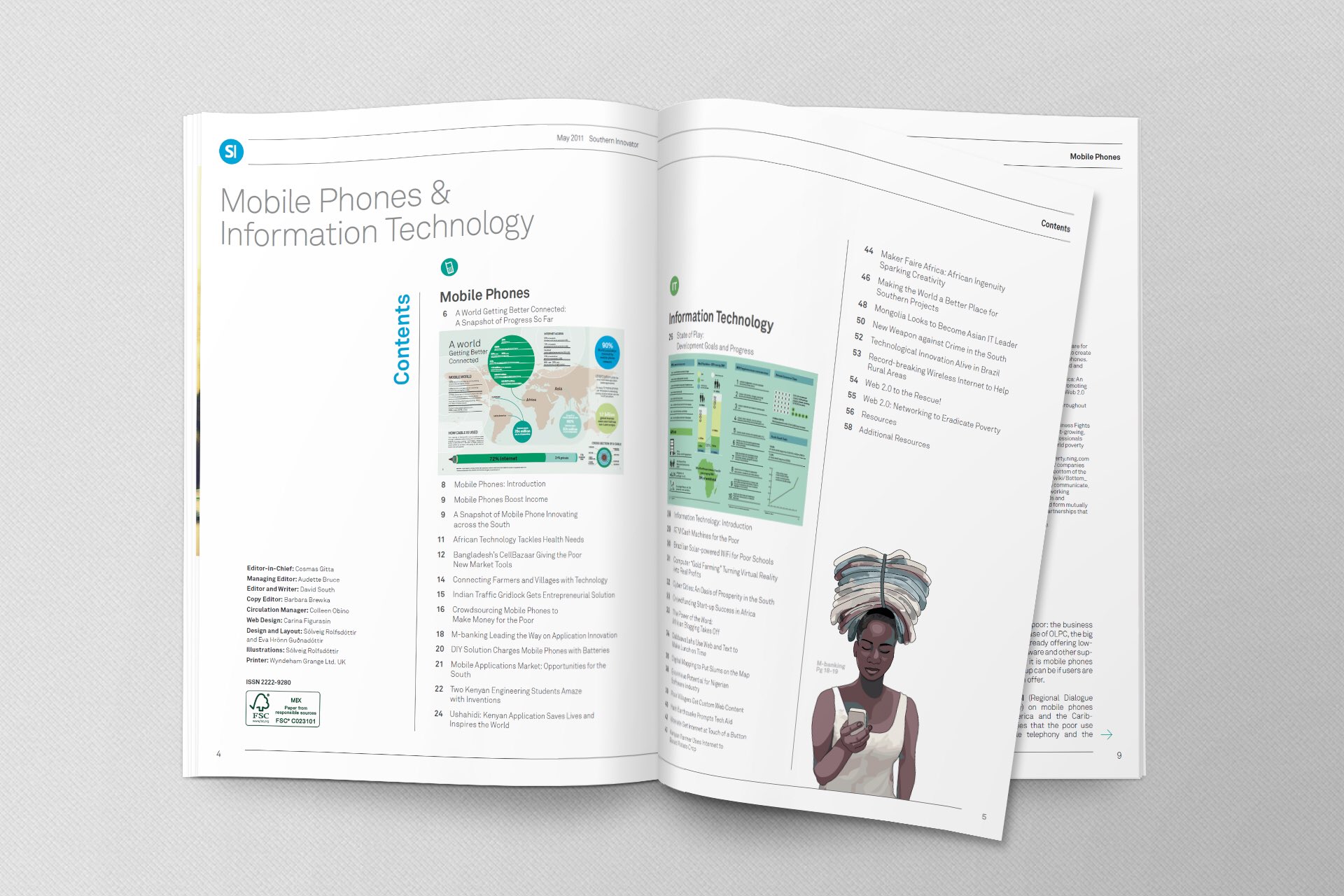
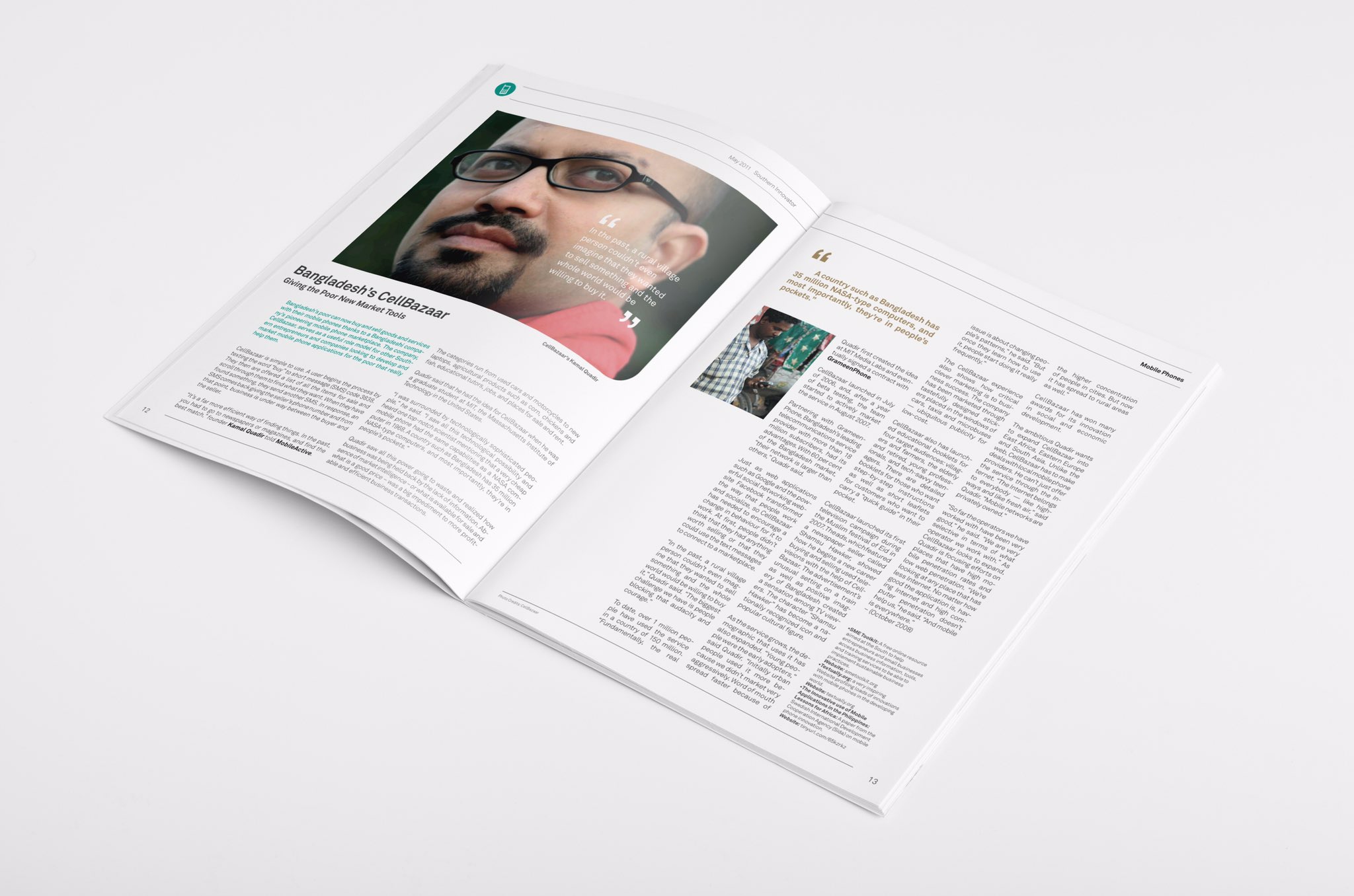
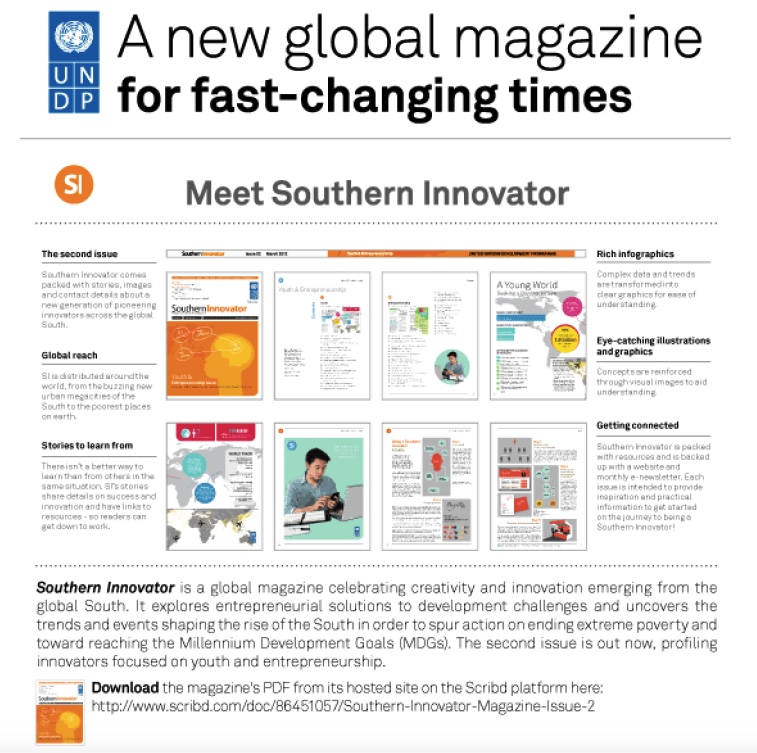
    Development Challenges, South-South Solutions was launched as an e-newsletter in 2006 by UNDP’s South-South Cooperation Unit (now the United Nations Office for South-South Cooperation) based in New York, USA. It led on profiling the rise of the global South as an economic powerhouse and was one of the first regular publications to champion the global South’s innovators, entrepreneurs, and pioneers. It tracked the key trends that are now so profoundly reshaping how development is seen and done. This includes the rapid take-up of mobile phones and information technology in the global South (as profiled in the first issue of magazine Southern Innovator), the move to becoming a majority urban world, a growing global innovator culture, and the plethora of solutions being developed in the global South to tackle its problems and improve living conditions and boost human development. The success of the e-newsletter led to the launch of the magazine Southern Innovator. 
    Creative Commons License

    This work is licensed under a
    Creative Commons Attribution-Noncommercial-No Derivative Works 3.0 License.

    ORCID iD: https://orcid.org/0000-0001-5311-1052.

    © David South Consulting 2023

  • Arab World Domain Name Opportunity Huge Economic Help

    Arab World Domain Name Opportunity Huge Economic Help

    By David SouthDevelopment Challenges, South-South Solutions

    SOUTH-SOUTH CASE STUDY

    With the so-called Arab Spring still unfolding across much of the Arabic-speaking world, it is easy to miss a rising new economic opportunity: The introduction of an Arabic domain name system for the Internet.

    The explosion in mobile phones in the Arab world has dramatically increased the number of people who can now access the Internet. One Arabic financial website put the number of people who can now access the Internet in one way or another in the Arab world as 75 million (www.nuqudy.com). As highlighted in the 2003 Arab Human Development Report (AHDR), Arabic-speaking countries have been at a knowledge disadvantage for some time: more than 270 million citizens have access to fewer books than other languages, slower growth economies, and greater illiteracy than the faster-growing emerging economies. At the time, the AHDR found there were just 18 computers per 1,000 people compared to a global average of 78. And just 1.6 percent of Arabs had Internet access, one of the lowest ratios in the world (AHDR 2003).

    Since the dawn of the Internet, Latin script has been used exclusively for top-level web domain names, the addresses that end .com, .org and so on. That has been a big obstacle for users of non-Latin script languages like Arabic. It is estimated just 10 percent of people in the Arab world speak English. Many of the resources on the Internet and its utility have been lost to these people. But by using Arabic domain names, there will be a consistency and no more guesswork.

    A typical problem in Latin transliterations of Arabic is the conundrum as to either using El or Al as the prefix to a word. This problem is eliminated when Arabic is used.

    The Arab world is also very mixed, including the resource-rich, cash-rich Gulf States – Kuwait, Qatar, United Arab Emirates, Saudi Arabia, Oman and Bahrain – and states with high rates of poverty such as Egypt, Djibouti and Yemen.

    The protests and uprisings this year in Tunisia, Egypt and elsewhere – with their Facebook pages and Twitter streams – have shown that a growing group of highly Internet-savvy young people is emerging in the Arab world. But for many without the education or the resources, access to knowledge still remains weak. But armed with Internet-capable mobile phones and Arabic language domain names, rapid change is now possible.

    The number of books published in Arabic is notoriously relatively low, and print runs are small. Arabic language books make up just 1.1 percent of world production.

    The AHDR reports have called this knowledge deficit a direct obstacle to human development in Arab countries.

    But things are changing and the rise of Arabic domain names offers the potential for an explosion in Arabic language Internet content.

    In May 2010 ICANN, the world’s Internet domain authority, decided to allow top-level domains in non-Latin script. For Arabic speakers, it started this program in Egypt, Saudi Arabia and the United Arab Emirates.

    As a sign of the importance of Arabic participation in future growth of the Internet, this year’s World Summit for the Information Society (WSIS) held in Geneva, Switzerland in May 2011 was sponsored by the United Arab Emirates (UAE).

    A catchy domain name has many advantages. For Arabic speakers, this means they can type in Arabic domain names for websites and even do it right to left, as they do in print.

    In 2009, the first Arabic domain name was grabbed by Egypt. As the Internet naming authority, the Internet Corporation for Assigned Names and Numbers (ICANN) (www.icann.org), started to allow the registering of non-Latin script names. The domain was for the Arabic word for Egypt or “.masr”.

    As an early adopter, Egypt sees it as an important part of bringing more Arabic speakers online. George Victor, from the Egyptian National Telecom Regulatory Authority, told the BBC: “We believe that this is a great step that will open new horizons for many e-services in Egypt, and it will have its direct impact, enlarging the number of online users.”

    Victor believes using Arabic builds trust.

    “Having a domain name in your own language is a point of having a local identity,” he said.

    “When talking about Arabic domain names, we are talking about having users which are not online now. People with languages disabilities – people who are having language as a barrier to connect online.”

    From now on Internet address names will be able to end with almost any word in any language, offering organizations around the world the opportunity to market their brand, products, community or cause in new and innovative ways.

    The advantages of registering an Arabic domain name are numerous. They include clear improvements to business and trade: an ability to protect a trademark, better communication with Arabic customers, better Arabic-language advertising opportunities, better memorability for Arabic domain names because they will be in the Arabic language, and greater access to Arabic customers.

    But there are also significant improvements to how the Internet functions in the Arabic world. Search results on Arabic search engines will be more precise with Arabic domain names; catchy, memorable domain names will be a spur to the advertising and marketing industries; and a more Arab-friendly Internet will draw in more Arabic-speaking Internet users, helping them to enjoy the fruits of this great technological advance just as speakers of other languages have.

    In March 2011, the Gulf state of Qatar enthusiastically started to offer Arabic domain names.

    “The launch of Qatar’s Arabic top-level domain names is a major milestone as we work to build a more digitally inclusive society,” said Dr. Hessa Al Jaber, Secretary General of the Supreme Council of Information and Communication Technology, which will manage Qatar’s Internet domain names through the Qatar Domains Registry.

    “As more organizations and individuals begin adopting Arabic domain names, the Internet will literally be opened up to broad new audiences. The Arab world represents a region with enormous potential for growth both in terms of usage and the creation of new digital content, especially Arabic content.”

    ICANN’s President and Chief Executive, Rod Beckstrom, sees this as a new phase for the Internet: “ICANN has opened the Internet’s naming system to unleash the global human imagination. Today’s decision respects the rights of groups to create new Top Level Domains in any language or script. We hope this allows the domain system to better serve all of mankind.”

    Published: July 2011

    Resources

    1) Watch the ICANN educational video “Get Ready for the Next Big Thing”, explaining how domain names work and what the changes mean. Website: http://www.icann.org

    https://davidsouthconsulting.org/2022/10/26/africa-to-get-own-internet-domain/

    https://davidsouthconsulting.org/2022/11/11/berber-hip-hop-helps-re-ignite-culture-and-economy/

    https://davidsouthconsulting.org/2020/12/04/data-surge-across-global-south-promises-to-re-shape-the-internet/

    https://davidsouthconsulting.org/2022/02/11/egyptian-youth-turns-plastic-waste-into-fuel/

    https://davidsouthconsulting.org/2022/11/11/innovation-cairos-green-technology-pioneers/

    https://davidsouthconsulting.org/2022/10/29/new-apps-make-driving-and-travelling-in-egypt-easier-safer/

    https://davidsouthconsulting.org/2022/10/21/preserving-beekeeping-livelihoods-in-morocco/

    https://davidsouthconsulting.org/2022/10/21/social-networking-websites-a-way-out-of-poverty/

    Development Challenges, South-South Solutions was launched as an e-newsletter in 2006 by UNDP’s South-South Cooperation Unit (now the United Nations Office for South-South Cooperation) based in New York, USA. It led on profiling the rise of the global South as an economic powerhouse and was one of the first regular publications to champion the global South’s innovators, entrepreneurs, and pioneers. It tracked the key trends that are now so profoundly reshaping how development is seen and done. This includes the rapid take-up of mobile phones and information technology in the global South (as profiled in the first issue of magazine Southern Innovator), the move to becoming a majority urban world, a growing global innovator culture, and the plethora of solutions being developed in the global South to tackle its problems and improve living conditions and boost human development. The success of the e-newsletter led to the launch of the magazine Southern Innovator. 

    Creative Commons License

    This work is licensed under a
    Creative Commons Attribution-Noncommercial-No Derivative Works 3.0 License.

    ORCID iD: https://orcid.org/0000-0001-5311-1052.

    © David South Consulting 2023

  • Africa to Get Own Internet Domain

    Africa to Get Own Internet Domain

    By David SouthDevelopment Challenges, South-South Solutions

    SOUTH-SOUTH CASE STUDY

    Africa is in the midst of an Internet revolution that is set only to accelerate. The continent is one of the last places to experience the information technology revolution that has swept the world in the past two decades.

    Africa has been at a disadvantage for several reasons, the most basic of which has been the lack of bandwidth capacity available from the undersea cables that connect other continents to the Internet. A map showing the world’s undersea cable links says it all: the majority of traffic goes between Europe and the United States (http://www.telegeography.com/telecom-resources/telegeography-infographics/submarine-cable-map/).

    But this is changing: a glance at recent developments with the launching of the Seacom, EASSy, MainOne and other cables shows a continent getting better connected by the year (http://manypossibilities.net/african-undersea-cables/).

    With seven out of the 10 fastest-growing economies in the world between 2011 and 2015 projected to be in sub-Saharan Africa, the conditions are ripe to grow African Internet businesses. For example, Ghana, with its booming information technology sector, boasted 13 percent economic growth last year, among the fastest in the world.

    In eight of the past 10 years, sub-Saharan Africa has grown faster than Asia (The Globe and Mail).

    While Africa has come late to the Internet party, the continent can benefit from two decades of experience elsewhere to avoid making the mistakes others have. Africa can upload tried and tested Internet platforms and can also create new, Africa-specific platforms that tackle the continent’s own needs and challenges.

    One of the ways to make the most of the opportunities presented by the Internet is to have an Africa-specific Internet domain name. A domain name (http://en.wikipedia.org/wiki/Domain_name) is the suffix placed after the period in Internet URL (uniform resource locator) (http://en.wikipedia.org/wiki/Uniform_resource_locator) addresses. Common ones familiar to most people who use the Internet include .com (for commercial websites), .org (for non-profit websites and organizations), .co.uk (for British businesses) or .ca (for Canadian organizations).

    The dot Africa (.africa) domain name will be available in the next 15 months according to the Internet Corporation for Assigned Names and Numbers (ICANN) (http://www.icann.org/). It is currently reviewing 500 African organizations that have expressed interest in managing the domain name registrations, and will choose one at the beginning of 2013.

    Countries such as Kenya and South Africa – two places in Africa with booming information technology sectors – are hoping to make the most of the new dot Africa domain name.

    The idea is to use the dot Africa domain name to build a stronger brand for the continent’s Internet that will be bigger than the individual country domain names. Sophia Bekele, executive director of DotConnectAfrica, told CNN the suffixes for individual African countries had proven unpopular during the decade since their introduction.

    Her organization found that 80 per cent of African domain name registrants had opted for “.com” or “.org” suffixes, which were price competitive, reliable to register and had wide recognition.

    The country-level domain names suffered from being “usually owned by governments, and governments are typically not very good at marketing,” she told CNN.

    Bekele’s research found young developers involved in creating local content felt a stronger affinity with the “.africa” suffix than to the “.com” domains. And the new suffix will let companies unify their presence across the continent under a single online brand.

    A major benefit of the “.africa” domain will be that proceeds from African domain registrations remain on the continent, rather than flowing offshore. DotConnectAfrica says it plans to reinvest surpluses into developing the African Internet sector.

    The African Union Commission (http://www.au.int/en/commission) is also looking to register the .afrique (French language websites) and .afriqia (Arabic language websites).

    The AUC’s head of information society, Moctar Yedaly, told CNN the commission’s vision for the .africa domain is not just commercial.

    “It may well be a very good business in terms of money generating. If it may generate some revenue we can use for the development of ICT in Africa, then that is all very good, but that’s not my primary goal,” he told CNN. “My primary goal is to ensure the identity of Africa, the image, the culture are well-maintained.”

    Published: October 2012

    Resources

    1) The Wikipedia page on the .africa initiative. Website: http://en.wikipedia.org/wiki/.africa

    2) ICANN: To reach another person on the Internet you have to type an address into your computer — a name or a number. That address must be unique so computers know where to find each other. ICANN coordinates these unique identifiers across the world.  Website: http://www.icann.org/

    3) DotConnectAfrica, a non-profit organization registered in Mauritius, is one of the is trying win the right to manage the dot africa name space for businesses and individuals across the continent. Website: http://www.dotconnectafrica.org/

    4) Dot.Africa: Dot.Africa is specialised in realising internet access for international organisations with sites in Africa. Website: http://www.dotafrica.com/about/index.html 

    https://davidsouthconsulting.org/2022/11/21/africa/

    https://davidsouthconsulting.org/2022/11/11/african-breakthroughs-to-make-life-better/

    https://davidsouthconsulting.org/2022/11/19/african-culture-as-big-business/

    https://davidsouthconsulting.org/2022/10/26/arab-world-domain-name-opportunity-huge-economic-help/

    https://davidsouthconsulting.org/2022/10/04/the-brck-kenyan-developed-solution-to-boost-internet-access/

    https://davidsouthconsulting.org/2022/11/23/kenyan-farmer-uses-internet-to-boost-potato-farm/

    https://davidsouthconsulting.org/2022/10/17/mapping-to-protect-kenyas-environment-the-emazingira-solution/

    https://davidsouthconsulting.org/2020/11/30/nollywood-booming-nigerian-film-industry/

    https://davidsouthconsulting.org/2021/03/09/the-power-of-the-word-african-blogging-and-books/

    https://davidsouthconsulting.org/2022/03/30/riverwood-kenyan-super-fast-super-cheap-filmmaking/

    https://davidsouthconsulting.org/2022/10/10/wireless-internet-culture-helping-zimbabwe-economy-recover/

    Development Challenges, South-South Solutions was launched as an e-newsletter in 2006 by UNDP’s South-South Cooperation Unit (now the United Nations Office for South-South Cooperation) based in New York, USA. It led on profiling the rise of the global South as an economic powerhouse and was one of the first regular publications to champion the global South’s innovators, entrepreneurs, and pioneers. It tracked the key trends that are now so profoundly reshaping how development is seen and done. This includes the rapid take-up of mobile phones and information technology in the global South (as profiled in the first issue of magazine Southern Innovator), the move to becoming a majority urban world, a growing global innovator culture, and the plethora of solutions being developed in the global South to tackle its problems and improve living conditions and boost human development. The success of the e-newsletter led to the launch of the magazine Southern Innovator. 

    Creative Commons License

    This work is licensed under a
    Creative Commons Attribution-Noncommercial-No Derivative Works 3.0 License.

    ORCID iD: https://orcid.org/0000-0001-5311-1052.

    © David South Consulting 2023

  • Shopping and Flying in Africa’s Boom Towns

    Shopping and Flying in Africa’s Boom Towns

    By David SouthDevelopment Challenges, South-South Solutions

    SOUTH-SOUTH CASE STUDY

    As economies across Africa grow, the continent still has a long way to go to create infrastructure to match people’s rising expectations of what a modern, prosperous life looks like.

    Africa’s current economic growth has mainly been driven by commodities and oil and gas exports. Critics say this boom has failed to bring tangible benefits to many of Africa’s poor, who feel left out of the prosperity.

    Trade has been flourishing not only because of exports to traditional markets in Europe and North America but also because of explosive growth in trade and investment between China and Africa.

    Two trends now underway are set to transform people’s wealth and living standards despite the many obstacles caused by the inequalities of current economic growth. The first is the rise and rise of retail shopping options

    looking to meet a strong appetite for consumer goods. And the second is the expansion of flying options on a continent notorious for its poor air links. Increasing investment in retail and flight networks will be a source of jobs, careers and wealth for the coming decade.

    The aviation sector supports 6.7 million jobs on the continent, according to TradeMark Southern Africa (http://www.trademarksa.org), and makes a US $67.8 billion contribution to Africa’s gross domestic product (GDP).

    But the woeful state of Africa’s air networks means that it is often cheaper for people to fly to other parts of Africa via European airports. And Africa has a long way to go to match air safety standards found elsewhere: there was one accident for every 305,000 flights involving Western-built jets in Africa last year (IATA) – nine times the global average.

    But Africa is now receiving the attention of the global airline industry. The Abuja Declaration (http://nigerianaviationnews.blogspot.co.uk/2012/07/aviation-safety-in-africa-abuja.html) aims to bring the African accident rate in line with the global average by 2015. And it is hoped the added competition and introduction of more global players will also raise standards and make flying in Africa safer, more convenient and cheaper.

    The experience of Europe and North America shows that increased air traffic brings a boost to economic growth.

    With more frequent, safer and more reliable air routes, business people will be able to move around and strike deals, tourists can get around and traders can cross borders without the hassle of navigating poor road networks.

    Airlines are lining up to compete on improving air links in Africa to capitalize on rising incomes and economic dynamism.

    The competition to serve the air passengers has heated up with the announcement of numerous new airlines, as well as well-established global carriers making plans to expand routes across Africa. Kenya Airways (http://www.kenya-airways.com/) has pledged to reach all of Africa’s countries by 2017 while also launching its own budget airline called Jambo Jet (http://www.ventures-africa.com/2012/06/kenya-airways-tolaunch-low-cost-airline-as-it-prepares-for-competition/).

    State-owned South African Airways (SAA) (http://www.flysaa.com/gb/en/) is also starting to expand its network to include every capital city in Africa. SAA will start by adding flights to Ivory Coast and the Democratic Republic of Congo, making it able to serve 26 African destinations. In the short term, it is doing this by halting flights between Cape Town and London, leaving that route to Virgin Atlantic and British Airways.

    Operating out of bases in Kenya, Tanzania, Ghana and Angola, a new African discount airline, FastJet (http://www.fastjet.com/) – with EasyJet (http://www.easyjet.com/en) founder Stelios Haji-Ioannou as its backer – is taking over Fly540 (http://www.fly540.com/) and adding 15 leased Airbus aircraft. It will launch flights to Ghana, Kenya, Tanzania and Angola. According to Kenya’s Nation newspaper, the plan is to replicate the success of EasyJet connecting Europe and North Africa with cheap flights in sub-Saharan Africa.

    Analysts believe the entry of an aggressive and experienced player like Haji-Ioannou will shake up competition within African aviation.

    Other global players lining up to expand in Africa include Emirates, Etihad, Qatar Airways, Turkish Airlines and Korea Air, which has already started flying between South Korea and Kenya’s capital, Nairobi. This is being seen as a boost to the trade in electronics goods between the two countries.

    The added excitement in the African air industry has also prompted Air Uganda (http://www.air-uganda.com/) and RwandaAir (http://www.rwandair.com/) to increase their destinations. Qatar Airways (http://www.qatarairways.com/uk/en/homepage.page) will start flying in November 2012 to Maputo, Mozambique three times a week, increasing to 20 the number of destinations the airline serves, according to the Nation.

    And while Emirates has a 41 per cent share of the African market, African player Ethiopian Airlines (http://www.flyethiopian.com/en/default.aspx) ambitiously wants to become Africa’s largest airline by 2025.

    For shoppers, West Africa is experiencing a boom in new retail spaces being developed, according to a report from Euromonitor International (http://www.euromonitor.com) (http://www.howwemadeitinafrica.com/ghana-%E2%80%93-africas-new-retail-hotspot/18544/). The advantages of creating and developing modern retail spaces are numerous: hygienic shopping environments with greater safety and security attract multinational and global brands, which tend to create lots of long-term jobs.

    Euromonitor International has identified Ghana as the next hotspot for retailers. The country is seen to have the right business environment in place that is attractive to foreign investors. It also has the right mix of political stability, cultural tolerance and rising prosperity.

    The country is now being seen as the gateway to West Africa’s market of 250 million consumers. Ghana is able to leverage its position as a gateway into landlocked nations and on its strong ties with English-speaking powerhouses like Britain and the United States.

    On top of these strategic advantages, the country has focused on upgrading retail spaces in the capital, Accra. The Accra Mall (http://www.accramall.com/), opened in 2007, is considered the most modern shopping mall in Ghana.

    Euromonitor found Ghana’s retail industry grew by 14 per cent between 2006 and 2011.

    Euromonitor found companies like multinational Unilever and PZ Cussons believed basing their operations in Ghana was a big advantage.

    “The presence of such manufacturers provides a good opportunity for retailers as they can source these manufacturers’ products cheaper locally rather than importing them,” it said.

    Euromonitor identified three other African countries as potential retail marketplaces. This includes Zambia, a potential agribusiness powerhouse. It is already developing a strong reputation in beef through its Zambeef (http://www.zambeefplc.com/) operation. South African companies have done well in Zambia, including Shoprite, Pick n Pay, Mr Price and the Foschini Group. Much of the action is around the capital, Lusaka.

    Rwanda is known for its ease of doing business and there is activity going on in residential areas, roads, hotels, offices and retail spaces. The capital, Kigali, has a new modern, shopping mall, The Union Trade Centre, with a 24-hour store.

    Angola has been benefiting from peace since the end of its civil war in 2002. Foreign companies have been attracted to Angola from South Africa, Portugal and Brazil. The Belas Shopping Mall (http://belasshopping.com/website/) opened in 2007 in the capital, Luanda, followed by the Ginga Shopping Mall on the city’s outskirts in 2011.

    Published: August 2012

    Resources

    1) How we made it in Africa: A great website packed with inspirational people and stories on business success in Africa. Website: http://www.howwemadeitinafrica.com/

    Development Challenges, South-South Solutions was launched as an e-newsletter in 2006 by UNDP’s South-South Cooperation Unit (now the United Nations Office for South-South Cooperation) based in New York, USA. It led on profiling the rise of the global South as an economic powerhouse and was one of the first regular publications to champion the global South’s innovators, entrepreneurs, and pioneers. It tracked the key trends that are now so profoundly reshaping how development is seen and done. This includes the rapid take-up of mobile phones and information technology in the global South (as profiled in the first issue of magazine Southern Innovator), the move to becoming a majority urban world, a growing global innovator culture, and the plethora of solutions being developed in the global South to tackle its problems and improve living conditions and boost human development. The success of the e-newsletter led to the launch of the magazine Southern Innovator. 

    Creative Commons License

    This work is licensed under a
    Creative Commons Attribution-Noncommercial-No Derivative Works 3.0 License.

    ORCID iD: https://orcid.org/0000-0001-5311-1052.

    © David South Consulting 2023