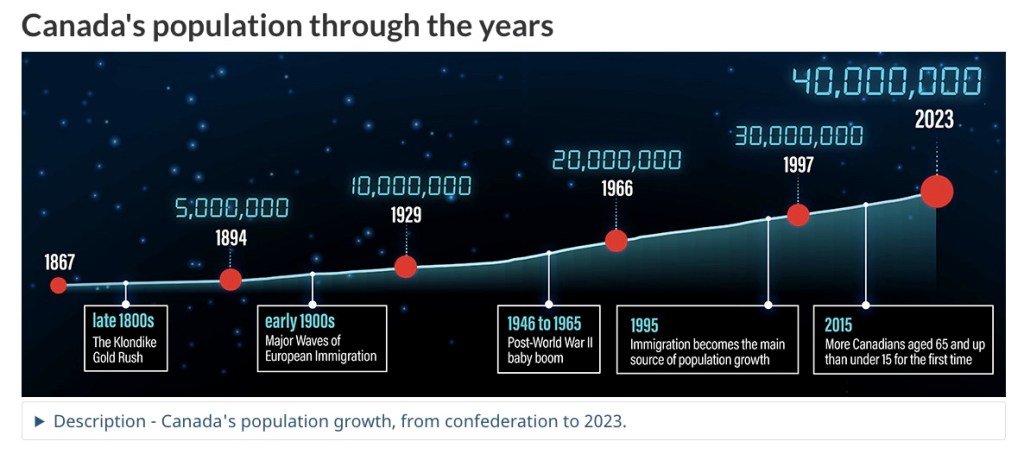
When I first emerged as a Canadian (I was born in 1966), the country’s population was 20 million. So the population has doubled in my lifetime.
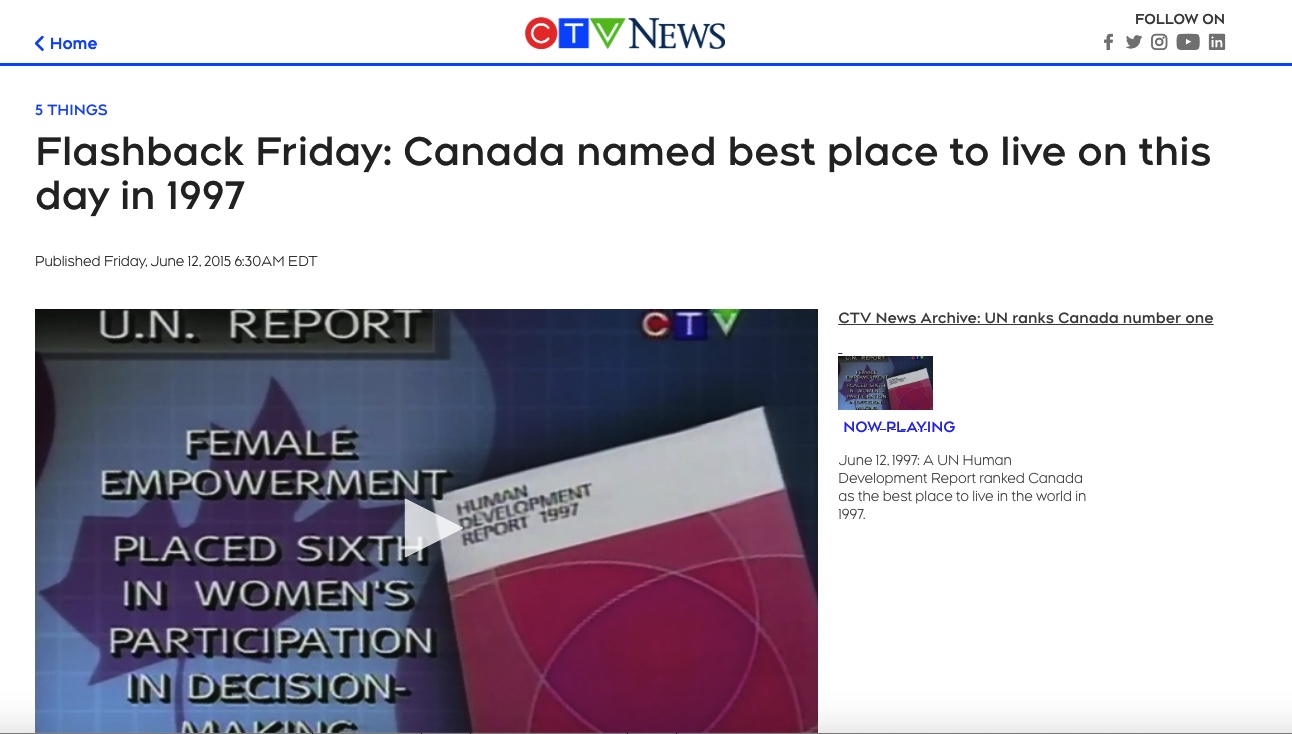
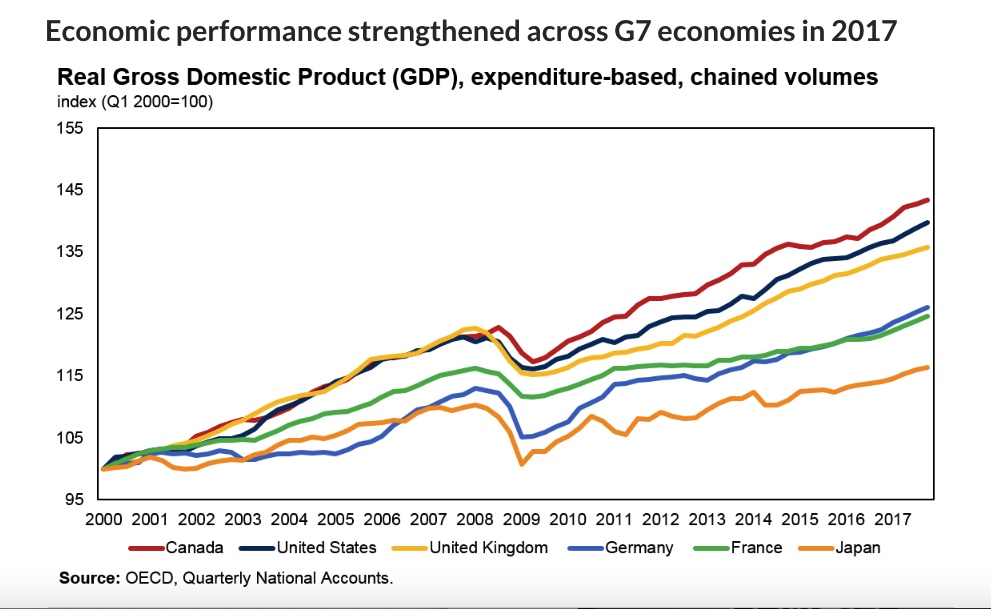
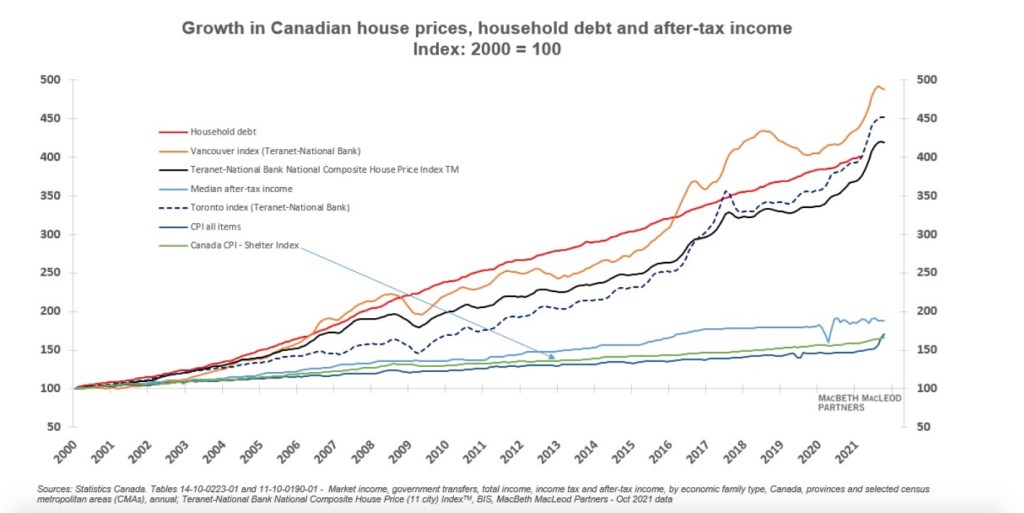
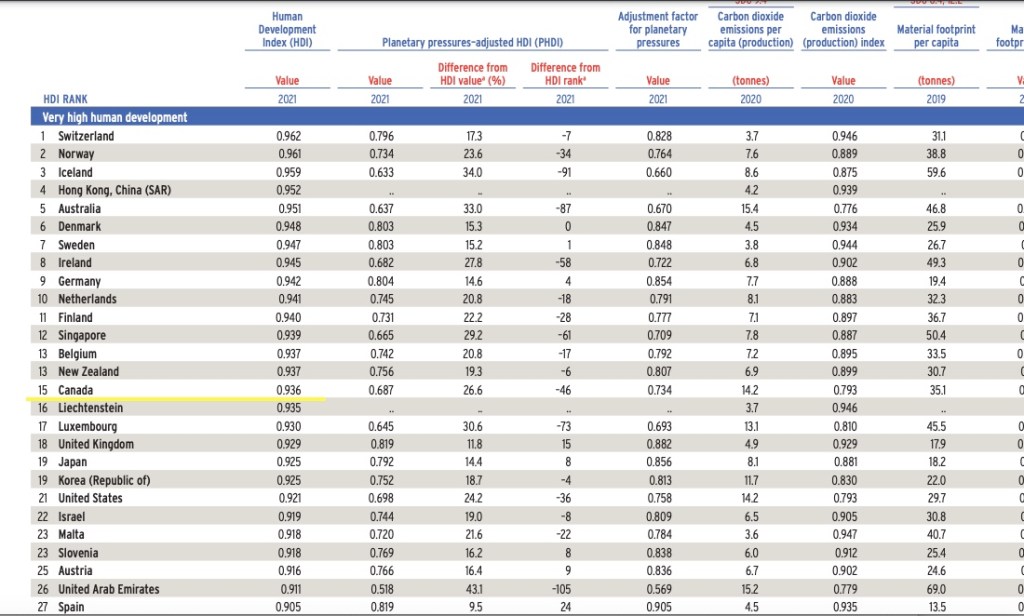
Since Canada topped the HDI rankings in the late 1990s, however, the population has grown, house prices have surged and GDP (Gross Domestic Product) has exploded, yet the country has also slipped down the rankings, hitting 15th place in 2021. Does this mean there are more people, but fewer living as well as they did in the 1990s?
Source: Statistics Canada. Source: Macleans.ca.
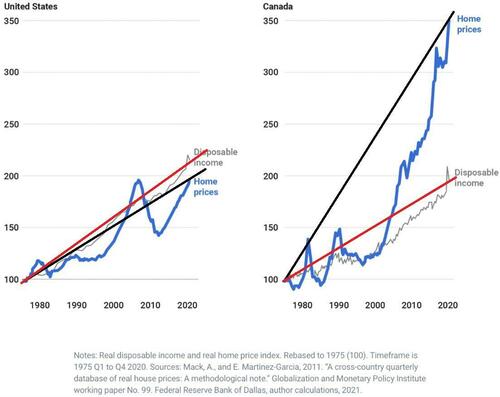
Since 2000 house prices in Canada have surged far past growth in Canadian household disposable income, as compared to US households.
More than 1 billion people around the world lack decent shelter. Of these, the majority live in urban areas, usually in slums and informal settlements (UN-HABITAT).
The world’s megacities – like Mumbai, India, where more than 22 million live in the metropolitan region – have to find a way to provide housing that is both affordable and does the minimum possible amount of harm to the environment.
About one-third of the world’s urban dwellers live in slums, and the United Nations estimates that the number of people living in such conditions will double by 2030 as a result of rapid urbanization in developing countries.
The fast pace of growth of India’s cities presents an enormous challenge: how to house so many people with dignity and to a good standard. India’s city slums are notorious and recently became the subject of the Oscar-winning film Slumdog Millionaire (http://www.slumdogmillionairemovie.co.uk/).
With a population of 1.2 billion, India needs to find 25 million homes a year to meet current demand, according to McKinsey and Co.
Housing prices have risen by 16 percent a year for the past four years. While the middle class – estimated at over 300 million people – has piled into high-end apartments and houses, it has been the country’s low-income people who have been frozen out of the option of quality homes.
The concept of targeting those at the ‘bottom of the pyramid’ (BOP) (http://en.wikipedia.org/wiki/The_Fortune_at_the_Bottom_of_the_Pyramid) has drawn attention to the estimated 23 million poor urban dwellers in India, and 180 million rural families, who have savings and want to own a home. Monitor India (http://www.monitor.com/in/) believes these people have annual earnings between US $1,400 and US $3,000.
The Indian manufacturing powerhouse Tata – which this year launched a BOP-focused car, the Tata Nano – has designed and is building, Nano Homes – small apartments outside Mumbai for US $8,600 (http://tatahousing.in/pages/home.php). It also hopes to expand to other major Indian cities as well.
The Nano homes are built on a modest scale: there are three sizes with the smallest measuring 67 square metres. They consist of a single room that doubles as a bedroom by night with a sink, bath and toilet behind a partition.
Criticisms include location – on the edges of major cities – where residents would have to commute long distances to get to their jobs.
Even so, Nano apartments are so popular buyers are being chosen by lottery.
“India’s housing crisis lies in the fact that the poor in the cities are priced out of the market,” Sundar Burra, an adviser to the Society for the Promotion of Area Resource Centre, a Mumbai-based housing rights organization, told Canada’s Globe and Mail newspaper.
“State supply of housing for the poor is woefully inadequate in relation to the need. Slums proliferate as a solution to this state of affairs.”
People can get a mortgage for the homes from Tata Home Finance.
Tata is not the only company targeting this market. India’s Matheran Realty (http://www.tmcity.in/) is building what it claim is India’s largest affordable housing project, Tanaji Malusare City, in the villages of Shirse and Akurle of Karjat (http://en.wikipedia.org/wiki/Karjat). The 15,000 homes would house 70,000 people and would sell for US $4,698.
Another developer, Godrej Properties (http://www.godrejproperties.com/), is building a BOP housing development outside the city of Ahmedabad with apartments costing US $11,749.
“(Property) developers have recognized that the real demand no longer lies in the premium segment and are opting to build smaller, no-frills apartments,” said Deepak Parekh of the Housing Development Finance Corporation (http://www.hdfcindia.com/).
It estimates the affordable housing market will be worth US$ 110 billion in India by 2013 and will account for 80 percent of India’s housing market.
“Affordable housing is not about box-sized, budget homes in far-flung places where there is no connectivity to workplaces and little surrounding infrastructure,” Parekh told HDFC’s shareholders. “Affordable housing has to be able to cut across all income segments and has to make economic sense in terms of proximity to the workplace.”
Published: November 2009
Resources
1) Building and Social Housing Foundation: BSHF is an independent organisation that works both in the UK and internationally to identify innovative housing solutions and to foster the exchange of information and good practice. Website:http://www.bshf.org/home.cfm
2) Tiny House Design Blog: The blog is full of ideas and plans for making small homes cheaply. Website:http://www.tinyhousedesign.com/
Development Challenges, South-South Solutions was launched as an e-newsletter in 2006 by UNDP’s South-South Cooperation Unit (now the United Nations Office for South-South Cooperation) based in New York, USA. It led on profiling the rise of the global South as an economic powerhouse and was one of the first regular publications to champion the global South’s innovators, entrepreneurs, and pioneers. It tracked the key trends that are now so profoundly reshaping how development is seen and done. This includes the rapid take-up of mobile phones and information technology in the global South (as profiled in the first issue of magazine Southern Innovator), the move to becoming a majority urban world, a growing global innovator culture, and the plethora of solutions being developed in the global South to tackle its problems and improve living conditions and boost human development. The success of the e-newsletter led to the launch of the magazine Southern Innovator.
The global South is currently experiencing the biggest surge in urban population ever seen in human history. This transformation from urban to rural is happening in many different ways across the global South. Some countries have highly detailed plans and are building new cities from scratch, while other countries feel overwhelmed by their booming urban populations.
By 2025, it is estimated the developing world could become home to 37 megacities with more than 10 million residents (http://en.wikipedia.org/wiki/Megacity) (The Guardian). Sixty years ago there were just two megacities: New York and Tokyo. Today, there are between 21 and 23, and the UN is forecasting that by 2025 Asia will have nine new megacities. By 2025, the majority of the world’s megacities will be in the global South.
But how will these cities be built? How will they use resources well and ensure the rapidly rising new buildings are safe and healthy?
A Chinese innovator and Internet sensation has developed a way to rapidly build high-density, high-rise structures that are also safe and meet strict earthquake-proofing standards. Building upwards is an efficient way to get more use out of space and to free up land for things like parks.
Just as the first megacities such as New York began building skyscrapers a century ago, going upwards will be the solution many of the new megacities will choose as they feel the pressing twin demands of rising populations and financial restraints.
The BROAD Group calls itself “an enterprise based on the vision of unique technologies and the philosophy of preserving life.”
The company is a pioneer in making non-electric air conditioning equipment, energy systems, and sustainable building technology.
The company has come a long way since it was started in 1988 with just US $3,000. By 1995, it had shed its debts and loans. It sees its mission as confronting the two major crises facing the world today: atmospheric pollution and global warming. The company hopes to evolve into a social enterprise.
BROAD calls itself a world leader in making central air conditioning powered by natural gas and waste heat (http://en.wikipedia.org/wiki/Broad_Group). The company is currently exporting its systems to more than 60 countries and was an official supplier to the 2010 Shanghai Expo.
BROAD has recently been expanding its product range and moving into constructing sustainable buildings. In particular it is developing an expertise in rapid construction techniques. This is important in the modern world as cities across the global South experience population growth and the pressing need to house people and create workplaces efficiently. BROAD is proud of the 15-storey hotel in Dongting Lake in Hunan Province it built in just six days, which became a hit on YouTube (http://www.youtube.com/watch?v=sjGhHl-W8Wg). After this achievement, BROAD constructed a 30-storey hotel in 15 days.
Part of the BROAD Group, Broad Sustainable Building (BSB) claims to make the “World’s first factory-made building.” BROAD says its buildings are sustainable because they efficiently use recycled construction materials, rely on materials free of formaldehyde, lead, radiation and asbestos and avoid “construction sewage” dust or waste.
BROAD was provoked into making sustainable buildings after the Wenchuan Earthquake in 2008 (http://quake.mit.edu/~changli/wenchuan.html). A year after the earthquake, 300 researchers from BROAD developed an earthquake-resistant building technology.
The factory-made building works like this: a “main board” is prepared with a floor and ceiling, ventilation, water supply and drainage, electricity and lighting. This is then placed on a truck and taken to the building site. All the workers need to do on site is assemble the building by screwing in the bolts and finishing it with the painting and other decorating. This makes the time spent assembling the building on site, according to BROAD, just 7 per cent of the total construction hours. This means 93 per cent of the building is prefabricated in a factory compared to an industry norm of 40 per cent.
BROAD’s latest project and biggest challenge is to build Sky City One (http://skycityone.wordpress.com/) – the world’s tallest tower at 220 floors and 838 metres – in Changsha in just 90 days. A mix of residential, commercial and retail space, it will allow between 70,000 and 120,000 people to work and live. The start date could be November 2012 and the building completed by early 2013.
The finished building will be 10 metres taller than the current tallest tower, the Burj Khalifa (http://www.burjkhalifa.ae/) in Dubai.
Published: October 2012
Resources
1) 20th Century World Architecture: The Phaidon Atlas by The Phaidon Editors, Publisher: Phaidon. Focusing on 750 of the most outstanding works built between 1900 and 1999, the book features every imaginable building type. Website:http://uk.phaidon.com/store/
2) Megacities Foundation: The Megacities initiative originates from the awareness of the future role of cities as the dominant type of settlement for humanity. Cities will play this role not just as a matter of fact but out of necessity as the only way of housing the world’s increasing population. Website:http://megacities.nl/
3) Andrew Marr’s Megacities: A BBC series exploring the rise of the megacities and what life will be like for their residents. Website:http://www.bbc.co.uk/programmes/b011ql6k
Development Challenges, South-South Solutions was launched as an e-newsletter in 2006 by UNDP’s South-South Cooperation Unit (now the United Nations Office for South-South Cooperation) based in New York, USA. It led on profiling the rise of the global South as an economic powerhouse and was one of the first regular publications to champion the global South’s innovators, entrepreneurs, and pioneers. It tracked the key trends that are now so profoundly reshaping how development is seen and done. This includes the rapid take-up of mobile phones and information technology in the global South (as profiled in the first issue of magazine Southern Innovator), the move to becoming a majority urban world, a growing global innovator culture, and the plethora of solutions being developed in the global South to tackle its problems and improve living conditions and boost human development. The success of the e-newsletter led to the launch of the magazine Southern Innovator.
Pioneering thinking about how resources are used and how people live their lives is taking place in the dynamic economies of the global South. Facing a vast population surge to urban areas, these include attempts to build “green” cities and low-waste, smart and digital communities.
These model cities are clever solutions for the world’s growing – and urbanizing – populations coping with a stressed and damaged environment. Unlike one-off technologies and ideas developed in isolation, the model cities approach starts from scratch. They become living laboratories on which research and development take place at the heart of the community, not just the preserve of aloof academics hidden away in labs.
This is critical work because the world is rapidly urbanizing and needs solutions to ensure this process does not lead to chaos and misery. How these cities turn out could hold the fate of humanity and much is at stake. According to a report by the International Institute for Environment and Development, Africa now has a larger urban population than North America and 25 of the world’s fastest growing big cities. Getting to grips with urban development will be critical for the future of the continent and the wellbeing of its people.
By 2025, Asia could have 10 or more cities with populations larger than 20 million (Far Eastern Economic Review). People will be living in densely populated cities and they will need to be smart cities if they are to work.
In the United Arab Emirates (http://en.wikipedia.org/wiki/Abu_Dhabi), Masdar City (http://www.masdar.ae/en/home/index.aspx), is a model city not only being built, but being used as way to develop commercially successful environment technologies – renewable energy solutions and clean technologies – that will turn into future income for the city and Abu Dhabi.
The traditional approach in other countries has been to keep scientists and innovators disconnected from the living, breathing city. They toil away in labs or universities and only really get to test their technologies and theories after going through lengthy testing and approval by a city’s government. As Masdar’s website says, this city will develop “from research to commercial deployment – with the aim of creating scalable clean energy solutions.”
The planned community will be 6 square kilometres in size and wants to be “one of the most sustainable cities in the world”. Located 17 kilometres from Abu Dhabi, it hopes to be a pedestrian-friendly town home to 40,000 residents. At the heart of Masdar City is the Masdar Institute: a research university developed with the Massachusetts Institute of Technology (MIT). The students are the city’s first residents and a range of top international companies are planning to locate in there as well. German technology company Siemens will place its Middle East headquarters in Masdar and its Center of Excellence in Building Technologies R&D centre. Others joining them include GE, BASF, Schneider and the Korea Technopark Association.
The Surbana Urban Planning Group (www.surbana.com) spent five decades developing its experience with the rapid growth of Singapore (http://en.wikipedia.org/wiki/Singapore): a city-state boasting the highest quality of life in Asia (Economist Intelligence Unit) which took itself from an impoverished city to one of the world’s leading export and manufacturing economies. Surbana built 26 planned townships in Singapore that now house 85 percent of the city’s 4.5 million residents. It specializes in designing, implementing and maintaining complex urban areas.
Singapore has pioneered a number of ways to house a large population within a small territory. This experience is now being put to work in China at the Tianjin Eco-City development (http://www.tianjinecocity.gov.sg/masterplan.htm). Known for high pollution levels due to heavy industry Tianjin will undergo a big change. The project aims to develop a template that can be used for other cities throughout China and around the world.
The 30-square-kilometre Tianjin Eco-City is being built around a wetland and river. The idea is to offer its residents an environment with easy access to recreational spaces and the natural environment. The transport system will avoid cars and instead use a light rail system as the main mode of transport. It should be home to 350,000 people.
Cleverly, each suburban area will have commercial sub-centres to enable as many people as possible to work locally and avoid the need to commute long distances. The Eco-City will be built by assembling “eco-cell” – like a bee’s honeycomb – neighbourhoods self-contained with schools, child care, commercial and work areas, and parks. This set up is geared to collecting a common mistake in other new developments that only consider housing, forgeting about how people work, shop and recreate.
It is hoped the city will be completed by 2020. Just 10 minutes’ drive from the Tianjin Economic-Technological Development Area (http://en.investteda.org/) business parks, the residents should be well served for jobs.
In South Korea, the Digital Media City in Seoul (http://dmc.seoul.go.kr/eng/index.do) bills itself as a “harmony of nature, high-tech, and culture”. The Seoul municipal government devised the DMC in the 1990s to capitalize on the economic and social benefits of being the world’s most digitally wired nation.
The DMC project serves the nation’s larger goals of transitioning from a manufacturing to an innovation economy and promoting Seoul as an east-Asian hub for commerce. The DMC is about creating new business opportunities.
But this isn’t just about business and research and development: it is a comprehensive digital economy experience, with schools, housing for the affiliates of international firms, moderate and lower-income housing, commercial and convention facilities, entertainment zones, and the city’s central rail station are all located in or near the Digital Media City.
Published: February 2011
Resources
1) More Urban, Less Poor: The first textbook to explore urban development and management and challenge the notion unplanned shanty towns without basic services are the inevitable consequence of urbanization. Website: www.earthscan.co.uk
* Arrival City: The Final Migration and Our Next World by Doug Saunders. Website: www.arrivalcity.net
Development Challenges, South-South Solutions was launched as an e-newsletter in 2006 by UNDP’s South-South Cooperation Unit (now the United Nations Office for South-South Cooperation) based in New York, USA. It led on profiling the rise of the global South as an economic powerhouse and was one of the first regular publications to champion the global South’s innovators, entrepreneurs, and pioneers. It tracked the key trends that are now so profoundly reshaping how development is seen and done. This includes the rapid take-up of mobile phones and information technology in the global South (as profiled in the first issue of magazine Southern Innovator), the move to becoming a majority urban world, a growing global innovator culture, and the plethora of solutions being developed in the global South to tackle its problems and improve living conditions and boost human development. The success of the e-newsletter led to the launch of the magazine Southern Innovator.






 David South Consulting

You must be logged in to post a comment.