Categories
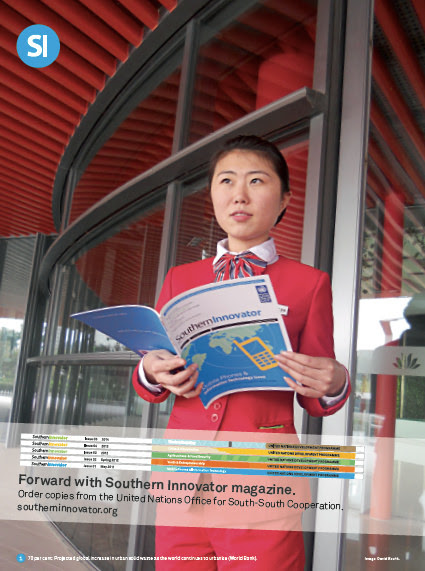
Archive Development Challenges, South-South Solutions Newsletters Southern Innovator magazine

Local Fashions Pay Off For Southern Designers

By David SouthDevelopment Challenges, South-South Solutions

SOUTH-SOUTH CASE STUDY

Fashion earns big money around the world: The global clothing industry is estimated to be worth US $900 billion a year. For many decades, strong American brands have been the desired commodity for those looking to be cool and contemporary. People were willing to pay high premium prices to get the cache of American cool that the brands conveyed.

But the decline in popularity suffered by American brands in recent years has become a boost for local brands. And this is creating a whole new opportunity for canny Southern entrepreneurs. It is being called ‘fashionalism’ or fashion nationalism – a pop culture trend blending patriotism with fashion.

One of fashionalism’s pioneers is Italian-educated Filipino designer Rhett Eala. He is credited with coming up with the snappy name fashionalism, after launching his My Pilipinas clothing line. Its signature logo is the Philippine archipelago on collared shirts and cotton polo shirts. An experienced designer who has worked in Hong Kong and for a major department store, Eala joined Collezione C2 as creative director two years ago.

He started with just three styles sporting the map. But now he has expanded the design to cover almost his entire range of clothing.

“It’s a fun way to show your pride in being Filipino, without a lot of words. Filipinos have today become global citizens,” said Eala.

Eala’s design talent stretches to pop art paintings as well, with an art exhibit called My Pilipinas Series, 18 Filipino pop art paintings that transcend flag-waving notions of nationalism.

But Eala is no parochialist: he is very much inspired by global artists and trends. His work is a blend of foreign concepts and patriotic ideals. Common Filipino iconography gets the high-design treatment, as Eala draws inspiration from Damien Hirst, David Hockney and Andy Warhol. He tries to challenge his customers, taking the complicated and oblique Rorschach Test patterns, and blending them with other designs.

The fashionalist logoed clothing not only sells well domestically, but also amongst the large diaspora of Filipino expatriates around the world.

“Fashionalism has a very positive impact on our business,” said Joey Qua, the Managing Director of Collezione C2. “We’ve always wanted to highlight the ingenuity of Philippine artistry and what it feels like to be proud to be a Filipino.”

“More importantly, we want to make Filipinos proud to wear our brand here and abroad, since the Filipinos of today are more global in nature, we have so many Filipinos who are more exposed globally.”

“We want to make nationalism hip and relevant to today’s generation,” said Eala.

Supporters of fashionalism say it is about restoring pride in the country’s development and achievements, not in stirring up negative xenophobia and other negative aspects of nationalism.

Another group of Manila fashion designers, Team Manila and Analog Soul, are marking the 25th anniversary of the death of Filipino nationalist hero, Ninoy Aquino – who was assassinated at the airport after returning to the Philippines from his self-imposed exile in the United States on August 21, 1983. Their t-shirts include sayings like: “I am Ninoy.”

The clever designers have turned Aquino’s signature old-school eye glass frames into an iconic logo.

“Ever since our humble beginnings as a Design Studio in 2001, we’ve made it a point to celebrate the Philippines and the Filipino people in our designs,” said Team Manila’s chief operating officer, Nico Bacani. “It was only natural that when we established our clothing and apparel line in 2005, the messages would remain the same – positive messages about the country, the culture and the people, be it explicitly or through subtle means in design.”

Underground t-shirt designers had been selling yellow Ninoy t-shirts to the young and trendy urbanites. But it is the professional design flair that has taken the trend to the next level and created an industry in its own right, with the fashionalism branding spreading beyond clothes to coffee mugs and other everyday items.

“We started as a design studio working from our Macs (Macintosh Computers) at home,” said Bacani. “and when we did start selling merchandise, this would be done literally in our garage and obscure spaces throughout the apartment we were renting. We then participated in bazaars, until such time as we raised enough capital and loyal clientele to expand into a stand-alone store.

“So the obstacles we faced were more towards asset capitalization and recruiting people well-versed in the retail industry. We were, however, luckier than most, as the media would frequently feature our products, which was a big boost.”

And Bacani hopes for a big payoff for the Phillippines as a whole.

“We really wouldn’t say there’s anything negative about it, but we would say that it would be quite disappointing if it ended up just being that – wearing the clothes and not living the message. We would be quite pleased if Fashionalism were a trigger, a catalyst for something bigger, such as a more active participation in the development of the country as a whole. And we see that people starting to think and feel proud of being Filipino and representing the Filipino well, whether it be at the workplace here or abroad, or in everyday living around the world.”

As for other fashion designers thinking of going down the fashionalism path, Eala said: “My advice is being honest with your design. Try to design from your heart and your mind. Be inspired with what’s around you. Design for your environment and if you have a chance, travel to places that you haven’t been to. ”

More on Andy Warhol at Artsy here: https://www.artsy.net/artist/andy-warhol

Published: October 2008

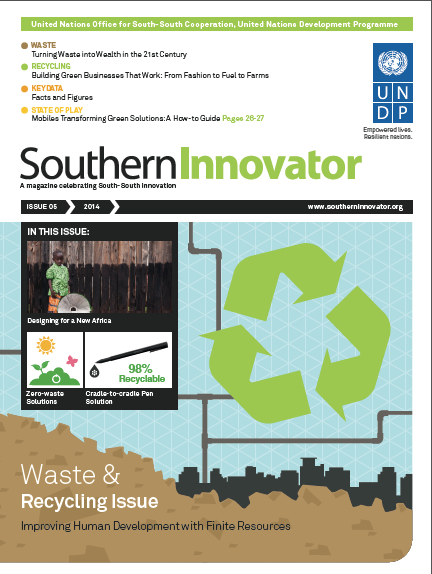
Development Challenges, South-South Solutions was launched as an e-newsletter in 2006 by UNDP’s South-South Cooperation Unit (now the United Nations Office for South-South Cooperation) based in New York, USA. It led on profiling the rise of the global South as an economic powerhouse and was one of the first regular publications to champion the global South’s innovators, entrepreneurs, and pioneers. It tracked the key trends that are now so profoundly reshaping how development is seen and done. This includes the rapid take-up of mobile phones and information technology in the global South (as profiled in the first issue of magazine Southern Innovator), the move to becoming a majority urban world, a growing global innovator culture, and the plethora of solutions being developed in the global South to tackle its problems and improve living conditions and boost human development. The success of the e-newsletter led to the launch of the magazine Southern Innovator.  

Follow @SouthSouth1

Slideshare: http://www.slideshare.net/DavidSouth1/development-challengessouthsouthsolutionsoctober2008issue 

Southern Innovator Issue 1: https://books.google.co.uk/books?id=Q1O54YSE2BgC&dq=southern+innovator&source=gbs_navlinks_s

Southern Innovator Issue 2: https://books.google.co.uk/books?id=Ty0N969dcssC&dq=southern+innovator&source=gbs_navlinks_s

Southern Innovator Issue 3: https://books.google.co.uk/books?id=AQNt4YmhZagC&dq=southern+innovator&source=gbs_navlinks_s

Southern Innovator Issue 4: https://books.google.co.uk/books?id=9T_n2tA7l4EC&dq=southern+innovator&source=gbs_navlinks_s

Southern Innovator Issue 5: https://books.google.co.uk/books?id=6ILdAgAAQBAJ&dq=southern+innovator&source=gbs_navlinks_s

Creative Commons License

This work is licensed under a
Creative Commons Attribution-Noncommercial-No Derivative Works 3.0 License.

ORCID iD: https://orcid.org/0000-0001-5311-1052.

© David South Consulting 2023

Categories
Archive Development Challenges, South-South Solutions Newsletters Southern Innovator magazine

Two-stroke Engine Pollution Solution

By David SouthDevelopment Challenges, South-South Solutions

SOUTH-SOUTH CASE STUDY

Cities across the South choke on the pollution made by the small two-stroke engines (http://www.howstuffworks.com/two-stroke.htm) powering motor scooters, motorcycles, auto rickshaws, tuk-tuks and other vehicles. People choose these vehicles to get around because they are cheap, powerful and easy to fix. But the environment – and human health – suffers as a result. And as cities balloon and populations grow, the number of journeys and two-stroke engines grows with it.

In large cities across Asia, 1 million three-wheeled auto-rickshaws form an important means of daily transportation, and a source of income for their drivers. And the Asian Development Bank estimates there are over 100 million vehicles using two-stroke engines in Southeast Asia. But these vehicles cause serious air pollution and emissions of carbon dioxide (CO2), which contributes to global warming.

Because two-stroke engines burn an oil-gasoline mixture, they also emit more smoke, carbon monoxide, hydrocarbons and particulate matter than the gas-only, four-stroke engines found in newer vehicles.

In the Philippines, auto rickshaw drivers are pioneering specially adapted two-stroke engines that reduce particulate emissions by 70 percent and carbon dioxide emissions by 76 percent.

Tim Bauer, the 31-year-old American mechanical engineer who developed the technology, said auto rickshaws “play an essential role in the social and economic fabric. But their impact on public health is disastrous.”

Motorized tricycles produce an astonishing amount of pollution: each one is equivalent to 50 cars. In Bangkok, Thailand, two-stroke engines contribute 47 percent of pollution particulates in the air.

The World Health Organization (www.who.org) ranks urban outdoor air pollution as the 13th greatest contributor to disease burden and death worldwide. It has been estimated that the air pollution leads to the deaths of more than half a million people a year. About two-thirds of the residents of Delhi and Calcutta suffer from respiratory symptoms such as common cold and dry and wet cough, much of this caused by two-stroke engine emissions.

Two-stroke engines are highly inefficient users of fuel: up to 40 percent of the fuel and oil goes out of the exhaust pipe unburned. This exhaust is packed with oxides of carbon, nitrogen, sulphur, hydrocarbons and fine dust – all toxic contributors to air pollution.

But the attraction of these engines remains strong. “They are powerful, simple, reliable and robust,” said Bauer, “and spare parts are easy to find. They also have a long lifetime.”

Bauer faced some strict constraints in developing the technology.

“It had to substantially reduce emissions without impairing the engine’s performance. It had to be installed without machining the engine crankcase, and with only a basic tool set. Of course, it also had to be affordable for Filipino drivers.”

Using off-the-shelf components, Bauer developed a kit that turns two-stroke engines into fuel-injection machines. This adjustment reduced particulate emissions by 70 percent and carbon dioxide emissions by 76 percent. He now sells the kits through Envirofit, a non-profit organization (http://www.envirofit.org/). It has been pilot tested at two Filipino holiday resorts, Vigan and Puerto Princesa.

Auto-rickshaw drivers tend to be poor and earn on average US $3 to US $4 a day. The cost of fitting vehicles with Bauer’s new technology is met by microcredit.

“Drivers earn money daily, so it’s easy for them to pay back their loan, and 90 percent of them do it in less than a year,” he said. Over 260 taxi drivers have already installed the new kit.

“These drivers are at the base of the economic pyramid and these tricycles are a testament to their ingenuity and work ethic. At the end of the day, we can improve their lives with a cylinder head, a few brackets and, of course, hard work.”

Bauer pioneered his solution while working on fuel injection in snowmobiles at the Engines and Energy Conservation Lab at Colorado State University. He started to market the solution in Asia in 2004. Bauer has won a Rolex Award for Enterprise to pay for the distribution of the kits throughout Asia.

There is, of course, another solution: an outright ban or measures to push the vehicles off the road. In the Philippines’ San Fernando City, economic incentives were what drove the transition from two-stroke to four-stroke (less polluting) tricycles. In 2001, three-quarters of the city’s 1,600 registered tricycles ran on two-stroke engines. But after a city council mandate to totally phase out the vehicles by 2004, and offers of interest-free loans for down-payments on four-stroke models, more than 400 four-stroke tricycles had replaced the older two-stroke models.

When Bangkok toughened up vehicle inspections and emissions standards in 2000, two-wheelers made up over 96 percent of the city’s traffic. But by March 2004, they made up only 40 percent, according to Supat Wangwongwatana, deputy director general of Thailand’s Pollution Control Department.

Published: December 2008

Resources

  • Tukshop is a website selling auto rickshaws and tuk-tuks.  Website:http://www.tukshop.biz/
  • A wide range of auto rickshaws for sale.  Website: http://www.auto-rickshaw.com/ 
  • The Hybrid Tuk Tuk Battle is a competition to come up with less polluting auto rickshaws, clean up the air in Asian cities, and improve the economic conditions for auto rickshaw drivers. 
    Website:http://hybridtuktuk.com/
  • The Clean Air Initiative for Asian Cities promotes and demonstrates innovative ways to improve the air quality of Asian cities through partnerships and sharing experiences. It is run by the Asian Development Bank together with the World Bank and the US Agency for International Development. 
    Website: http://www.cleanairnet.org/

https://davidsouthconsulting.org/2023/02/03/environmental-public-awareness-handbook-case-studies-and-lessons-learned-in-mongolia/

https://davidsouthconsulting.org/2021/01/02/a-undp-success-story-grassroots-environmental-campaign-mobilizes-thousands-in-mongolia-1998/

https://davidsouthconsulting.org/2022/10/26/tackling-chinas-air-pollution-crisis-an-innovative-solution/

Creative Commons License

This work is licensed under a
Creative Commons Attribution-Noncommercial-No Derivative Works 3.0 License.

A new book launched in April 2019 by journalist Beth Gardiner (@Gardiner_Beth), “Choked: The Age of Air Pollution and the Fight for a Cleaner Future” (Granta) (University of Chicago Press), explores today’s global air pollution crisis in the world’s cities. Gardiner is an environmental journalist who writes for The New York Times, The Guardian and other publications (bethgardiner.com).  

Called “One of the Guardian’s Best Books of 2019“. The UK cover for Choked: The Age of Air Pollution and the Fight for a Cleaner Future (Granta, 2019).
Creative Commons License

This work is licensed under a
Creative Commons Attribution-Noncommercial-No Derivative Works 3.0 License.

ORCID iD: https://orcid.org/0000-0001-5311-1052.

© David South Consulting 2022

Categories
Archive Blogroll Development Challenges, South-South Solutions Newsletters

Virtual Supermarket Shopping Takes off in China

By David SouthDevelopment Challenges, South-South Solutions

SOUTH-SOUTH CASE STUDY

An ingenious use of technological innovation and savvy trend-spottingis radically transforming the way people do their grocery shopping in China. Busy urban dwellers with time-poor lifestyles can now do their grocery shopping as they pass through Shanghai’s subway system and have their weekly shopping delivered to their home.

The country has experienced breakneck economic growth in the past 15 years, heading towards becoming the world’s largest economy. Much of this growth and new wealth has come from the transformation of China into the world’s manufacturing and exporting hub. But this also leaves an urban population of very busy people who need time-saving solutions to improve their quality of life.

China’s premier Wen Jiabao has now pledged to aid the world economy during the current economic crisis by boosting domestic Chinese consumption. And this new focus on consumption will open up opportunities for entrepreneurs.

“I believeChina’s economy can achieve longer-term, better-quality growth. This will be our new contribution to strong, sustainable global growth,” he told the Wall Street Journal.

And a big part of the boost in domestic consumption will come from modern retailers and supermarkets. Supermarkets were almost non-existent in China before the 1990s. The country sold food in a mix of small shops, open-air markets and through wholesale networks. It was a complex system overlaid with government bodies, marketing boards, brokers, wholesalers, distributors and government-licensed and government-run shops and vendors.

But this has radically changed as the country has moved to a modern retail system. Chinese cities now boast modern supermarkets, convenience stores, hypermarkets and warehouse clubs. There was just one modern supermarket in the country in 1990; by 2003, there were 60,000 (Chinese Chain Store and Franchise Association).

The supermarket model offers many benefits to anyone looking to sell products in the Chinese marketplace. Supermarkets are very competitive with each other and are always looking for new angles and new products to get the edge and win over new consumers. If they offer new tastes and variety, the chances are high they will attract more customers.

Supermarkets tend to offer a greater variety of food products than traditional markets. They are also cleaner, the quality control is better and more standardised, there is no need to haggle over prices and measurements and units for products are clearly labelled and controlled.

But supermarkets can also be criticized for monopolizing distribution networks, hurting small farmers by driving down prices and destroying independent retailers unable to compete with the economies of scale supermarkets can bring to bear.

In Shanghai- a city that has long been a retail pioneer in China- the Yihaodian online grocery company (http://www.yihaodian.com/product/index.do?merchant=1) is radically altering how people buy food by using “virtual supermarkets” in subway stations.

It is a convergence of several technological innovations to make something even better.

Shoppers download an app – or application – on to their mobile phones. This allows them to interact with large LED screens (http://en.wikipedia.org/wiki/LED_display) in subway stations which display images of products – from soap to noodle soup to nuts– just like in a catalogue. The shopper scrolls through the products and finds what they want to buy. Beside the images are barcodes. The shopper scans the product barcode with the phone and Yihaodian then delivers the products straight to their home within hours.

It is a very convenient service for busy workers trying to juggle the many demands of daily life.

The Yihaodian system is based on a similar technology pioneered inSouth Korea.

Yihaodian is riding a wave of growth for the company because of its innovative approach. It has seen sales rise by 28 percent each month and it hopes to make Euro 325 million (US $443 million) in 2011, four times its 2010 revenues. Proof of the value of investing in innovation.

Yihaodian is also showing how clever it is to offer a new way of doing things. It is pioneering a new business model while also recognising the reality of people’s busy lives in modern urban environments. Lily Yu, director of the company’s wireless application department, says it is about something bigger than just profits. “Changing people’s lifestyles is what we are striving for,” she told Monocle magazine.

Yu, founder of the Wireless Application Department at Yihaodian, joined the company in 2010 and leads the team to develop and introduce this technology and new way of buying products.

The only question remaining is this: how long before all retail will follow Yu’s lead?

Published: November 2011

Resources

1) Mobile Active: MobileActive.org connects people, organizations, and resources using mobile technology for social change. Website: http://mobileactive.org

2) How QR Codes Can Grow Your Business: A story on how to use these scannable codes. Website: http://www.socialmediaexaminer.com/how-qr-codes-can-grow-your-business/

3) Southern Innovator magazine: New global magazine’s first issue tackles the boom in mobile phone and information technologies across the global South. Website: www.scribd.com/doc/57980406/Southern-Innovator-Issue-1

https://davidsouthconsulting.org/2022/11/02/african-online-supermarket-set-to-boost-trade/

https://davidsouthconsulting.org/2022/10/26/african-trade-hub-in-china-brings-mutual-profits-2/

https://davidsouthconsulting.org/2021/12/20/better-by-design-in-china/

https://davidsouthconsulting.org/2022/10/20/china-consumer-market-asian-perspective-helps/

https://davidsouthconsulting.org/2020/12/10/china-sets-sights-on-dominating-global-smartphone-market/

https://davidsouthconsulting.org/2022/10/04/chinas-booming-wine-market-can-boost-south/

https://davidsouthconsulting.org/2021/01/25/creating-green-fashion-in-china/

https://davidsouthconsulting.org/2021/01/26/designed-in-china-to-rival-made-in-china/

https://davidsouthconsulting.org/2021/05/14/the-ethics-of-soup-grading-supermarket-shelves-for-profit/

https://davidsouthconsulting.org/2022/10/24/kenyan-products-a-global-success-story/

https://davidsouthconsulting.org/2020/12/12/mobile-phone-shopping-to-create-efficient-markets-across-borders/

https://davidsouthconsulting.org/2022/10/31/rainforest-gum-gets-global-market/

https://davidsouthconsulting.org/2022/11/17/sos-shops-keep-food-affordable-for-poor-unemployed/

https://davidsouthconsulting.org/2022/11/16/thai-organic-supermarkets-seek-to-improve-health/

Development Challenges, South-South Solutions was launched as an e-newsletter in 2006 by UNDP’s South-South Cooperation Unit (now the United Nations Office for South-South Cooperation) based in New York, USA. It led on profiling the rise of the global South as an economic powerhouse and was one of the first regular publications to champion the global South’s innovators, entrepreneurs, and pioneers. It tracked the key trends that are now so profoundly reshaping how development is seen and done. This includes the rapid take-up of mobile phones and information technology in the global South (as profiled in the first issue of magazine Southern Innovator), the move to becoming a majority urban world, a growing global innovator culture, and the plethora of solutions being developed in the global South to tackle its problems and improve living conditions and boost human development. The success of the e-newsletter led to the launch of the magazine Southern Innovator.

https://davidsouthconsulting.org/2021/03/05/southern-innovator-issue-2/

Creative Commons License

This work is licensed under a
Creative Commons Attribution-Noncommercial-No Derivative Works 3.0 License.

ORCID iD: https://orcid.org/0000-0001-5311-1052.

© David South Consulting 2023