Tag: digital

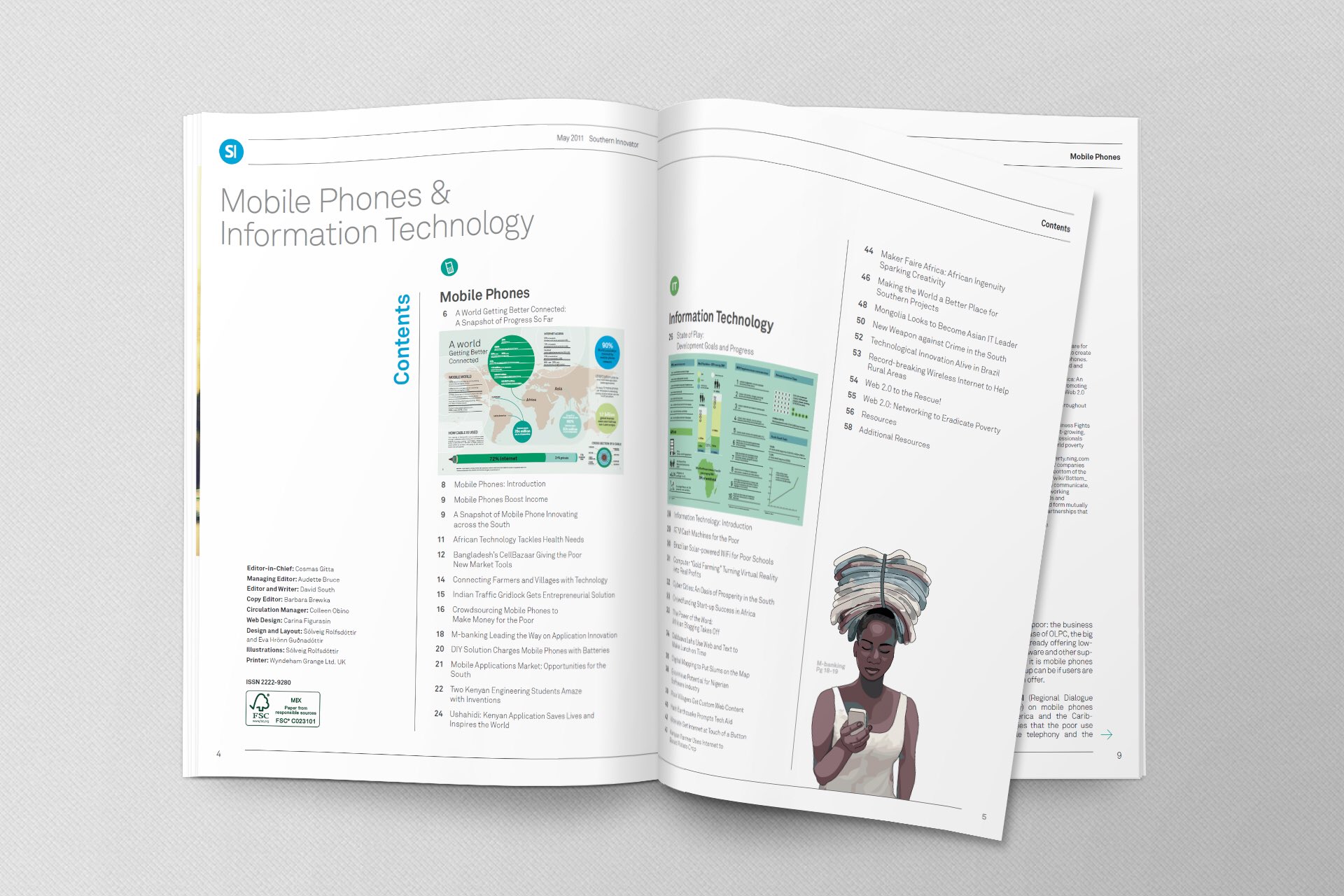
  • Mongolia Looks to Become Asian IT Leader

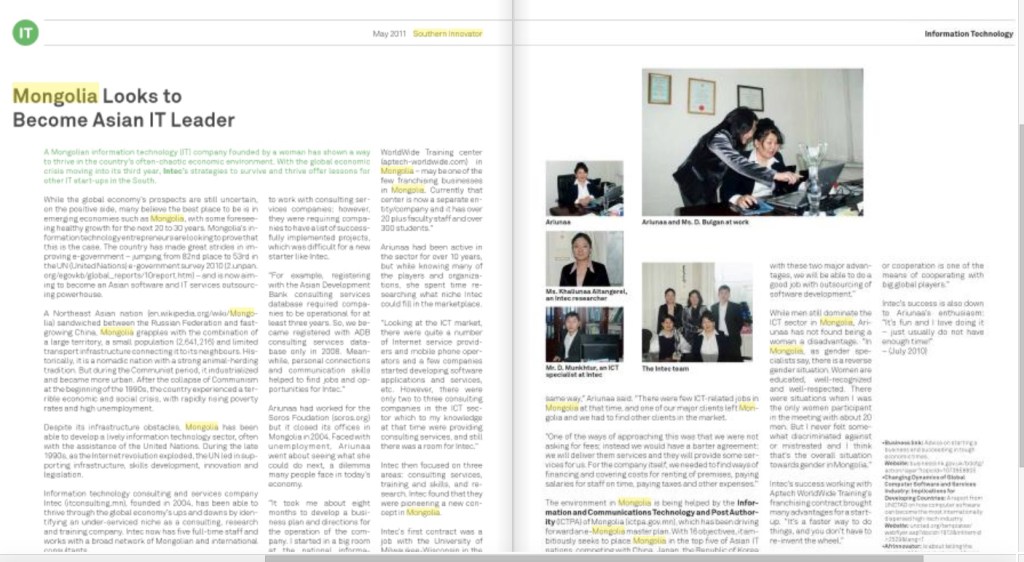
    Mongolia Looks to Become Asian IT Leader

    By David SouthDevelopment Challenges, South-South Solutions

    SOUTH-SOUTH CASE STUDY

    A Mongolian information technology company founded by a woman has shown a way to thrive in the country’s often-chaotic economic environment. With the global economic crisis moving into its third year, Intec’s strategies to survive and thrive offer lessons for other IT start-ups in the South.

    While the global economy’s prospects are still uncertain, on the positive side, many believe the best place to be is in emerging economies like Mongolia, with some foreseeing healthy growth for the next 20 to 30 years. Mongolia’s information technology entrepreneurs are looking to prove this is the case. The country has made great strides in improving e-government – jumping from 82nd place to 53rd in the UN e-government survey 2010 (http://www2.unpan.org/egovkb/global_reports/10report.htm) – and is now aiming to become an Asian software and IT services outsourcing powerhouse.

    A Northeast Asian nation (http://en.wikipedia.org/wiki/Mongolia) sandwiched between Russia and fast-growing China, Mongolia grapples with the combination of a large territory, a small population (2,641,216) and limited transport infrastructure connecting it to its neighbours. Historically, it is a nomadic nation with a strong animal herding tradition. But during the Communist period, it industrialized and became more urban. After the collapse of Communism at the beginning of the 1990s, the country experienced a terrible economic and social crisis, with rapidly rising poverty rates and high unemployment.

    Despite its infrastructure obstacles, Mongolia has been able to develop a lively information technology sector, often with the assistance of the United Nations. During the late 1990s, as the internet revolution exploded, the UN led on supporting infrastructure, skills development, innovation and legislation.

    Information technology consulting and services company Intec (www.itconsulting.mn) , founded in 2004, has been able to thrive through the global economy’s ups and downs by identifying an under-serviced niche as a consulting, research and training company. Intec now has five full-time staff and works with a broad network of Mongolian and international consultants.

    As is often the case with new businesses, Intec initially found that many doors were closed to start-up enterprises.

    “The major challenges which I faced were to make people understand about the consulting services,” said Intec’s founder, Lkhagvasuren Ariunaa. “The consulting services concept was new to Mongolia and Mongolians at that time and not many organizations were willing to work with consulting services. The international and donor organizations were keen to work with consulting services companies; however, they were requiring companies to have a list of successfully implemented projects, which was difficult for a new starter like Intec.

    “For example, registering with the Asian Development Bank consulting services database required companies to be operational for at least three years. So, we got registered with ADB consulting services database only in 2008. Meanwhile, personal connections and communication skills helped to find jobs and opportunities for Intec.”

    Ariunaa had worked for the Soros Foundation (http://www.soros.org/) but it closed its offices in Mongolia in 2004. Faced with unemployment, Ariunaa went about seeing what she could do next: a dilemma many people face in today’s economy.

    “It took me about eight months to develop a business plan and directions of operation of the company. I started in a big room at the national information technology park building with one table, chair and computer.

    “It has been quite challenging years for bringing a company to the market and finding niches for us. We have franchised the Indian Aptech WorldWide Training center (http://www.aptech-worldwide.com) in Mongolia – may be one of the few franchising businesses in Mongolia. Currently that center is now a separate entity/company and it has over 20 plus faculty staff and over 300 students.”

    Ariunaa had been active in the sector for over 10 years, but while knowing many of the players and organizations, she spent time researching what niche Intec could fill in the marketplace.

    “Looking at the ICT market, there were quite a number of internet service providers, mobile phone operators, a few companies started developing software applications, and services etc. However, there were only two to three consulting companies in the ICT sector which to my knowledge at that time were providing consulting services, and still there was a room for Intec.”

    Intec then focused on three areas: consulting services, training and skills, and research. Intec found they were pioneering a new concept in Mongolia.

    Intec’s first contract was a job with the University of Milwaukee-Wisconsin in the United States to organize a three week course for American students to learn about the digital divide in Mongolia. But the global economic crisis hit Mongolia hard in 2009.

    “It was challenging to survive and continue working the same way,” Ariunaa said. “There were few ICT-related jobs in Mongolia at that time, and one of our major clients left Mongolia and we had to find other clients in the market.

    “One of the ways of approaching this was that we were not asking for fees, instead we would have a barter agreement – we will deliver them services and they will provide some services for us. For the company itself, we needed to find ways of financing and covering costs for renting of premises, paying salaries for staff on time, paying taxes and other expenses.”

    The environment in Mongolia is being helped by the Information and Communications Technology and Post Authority (ICTPA) of Mongolia (http://www.ictpa.gov.mn) , which has been driving forward an e-Mongolia master plan. With 16 objectives, it ambitiously seeks to place Mongolia in the top five of Asian IT nations, competing with South Korea, Singapore, Japan and China.

    Ariunaa believes Mongolia has many competitive advantages. “Mongolia is known for a high-literacy rate and math-oriented training and education, and ICT specialists are targeting to become a software outsourcing country for other countries. Another advantage of Mongolians is that they can easily learn other languages: we are fluent in Russian, English, Japanese, Korean, German and we believe that with these two major advantages, we will be able to do a good job with outsourcing of software development.”

    While men still dominate the ICT sector in Mongolia, Ariunaa has not found being a woman a disadvantage. “In Mongolia, as gender specialists say, there is a reverse gender situation. Women are educated, well-recognized and well-respected. There were situations, when I was the only women participant in the meeting with about 20 men. But I never felt somewhat discriminated or mis-treated and I think that’s the overall situation towards gender in Mongolia.”

    Intec’s success working with Aptech WorldWide Training’s franchising contract brought many advantages for a start-up. “It’s a faster way to do things, and you don’t have to re-invent the wheel.”

    As a Mongolian company, Intec has found it best to play to its local strengths. “National companies have knowledge, expertise and experience of local situations, know players and understand about legal, regulatory matters. … partnership or cooperation are one of the means of cooperating with big global players.”

    Intec’s success is also down to Ariunaa’s enthusiasm: “It’s fun and I love doing it – just usually do not have enough time!”

    Published: July 2010

    Resources

    1)  Advice on starting a business and succeeding in tough economic times. Website:http://www.businesslink.gov.uk/bdotg/action/layer?topicId=1073858805

    2) Changing Dynamics of Global Computer Software and Services Industry: Implications for Developing Countries: A report from UNCTAD on how computer software can become the most internationally dispersed high-tech industry. Website:http://www.unctad.org/templates/webflyer.asp?docid=1913&intitemid=2529&lang=1

    3) Afrinnovator: Is about telling the stories of African start-ups, African innovation, African made technology, African tech entrepreneurship and entrepreneurs. Their mission is to ‘Put Africa on the Map’ by covering these kinds of stories from all over Africa. As their website says, “if we don’t tell our own story, who will tell it for us?” Website:http://afrinnovator.com

    4) TechMasai: Pan-African start-up news and reviews. Website: www.techmasai.com

    5) Ger Magazine Project: Mongolia’s first online magazine pioneered communicating on the web. Website: http://en.wikipedia.org/wiki/Ger_magazine

    Development Challenges, South-South Solutions was launched as an e-newsletter in 2006 by UNDP’s South-South Cooperation Unit (now the United Nations Office for South-South Cooperation) based in New York, USA. It led on profiling the rise of the global South as an economic powerhouse and was one of the first regular publications to champion the global South’s innovators, entrepreneurs, and pioneers. It tracked the key trends that are now so profoundly reshaping how development is seen and done. This includes the rapid take-up of mobile phones and information technology in the global South (as profiled in the first issue of magazine Southern Innovator), the move to becoming a majority urban world, a growing global innovator culture, and the plethora of solutions being developed in the global South to tackle its problems and improve living conditions and boost human development. The success of the e-newsletter led to the launch of the magazine Southern Innovator. 

    Creative Commons License

    This work is licensed under a
    Creative Commons Attribution-Noncommercial-No Derivative Works 3.0 License.

    Launched in 1997 in a major crisis, the UN Mongolia Development Portal (www.un-mongolia.mn) became the country’s largest online bilingual publisher and an award-winning pioneer of web content. It proved Mongolia had the potential to innovate in digital.
    Story featured in the UN E-Government Knowledgebase and E-Government Survey in Media.
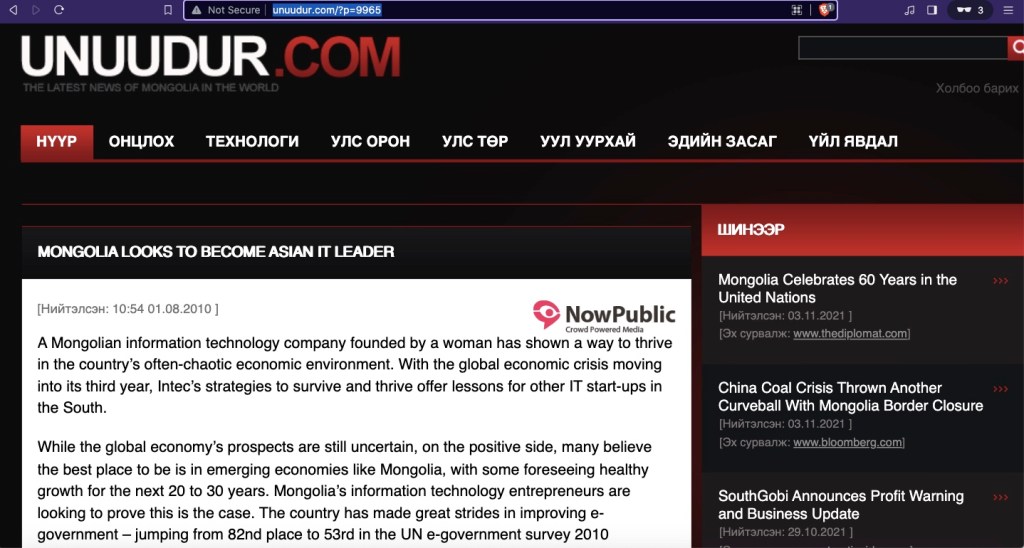
    Posted in 2010 on the Unuudur.com (“The latest news of Mongolia in the world”) website.
    Creative Commons License

    This work is licensed under a
    Creative Commons Attribution-Noncommercial-No Derivative Works 3.0 License.

    ORCID iD: https://orcid.org/0000-0001-5311-1052.

    © David South Consulting 2023

  • False Data Makes Border Screening Corruptible

    False Data Makes Border Screening Corruptible

    “Big Brother” system could violate rights of Canada’s visitors

    By David South

    Now Magazine (Toronto, Canada), May 21-27, 1992

    New technology that can spew out a person’s life history in less than six seconds is now available to Canada’s customs and immigration officials.

    And while Canada customs and immigration officers say this toy is a boon – replacing the need to memorize names of so-called undesirables – civil rights workers and refugee activists point out that the gizmo could have serious consequences, with little recourse.

    The technology is called PALS, or primary automated look out system, and is already in operation at airports in Toronto, Montreal, Calgary, Winnipeg, Ottawa and Vancouver.

    PALS’ operation is based on the use of computer-readable passports. Canada is one of several countries that have started including computer strips on passports and identity cards. Officers use PALS by either keying in a special number printed on the passport or identity card or using a scanning machine to read the strip.

    The system went into effect at Toronto’s Pearson airport on January 20, after a three-year pilot project in Vancouver, adding Canada to the 11 countries that have machine readers for passports. Under the old system, customs officers combined judgement, questioning and the most-wanted list to decide if a passenger required further interrogation and search.

    During a demonstration of the system, customs officials at Pearson airport boast about the system’s role in apprehending a drug smuggler in PALS’ first week of operation.

    Sinister sign

    But to civil libertarians with experience of such systems in other countries, PALS hasa sinister implication. Many say that PALS spews out what is fed into it. And depending on the country involved, what is fed into it may not necessarily be true.

    While customs emphasizes PALS’ role in apprehending popular targets like drug smugglers, terrorists and child kidnappers, its reach also includes people who have smuggled in too many cigarettes or bottles of alcohol, convicted criminals who have finished serving their time, immigrants, refugees and a range of petty offenders.

    All of these face a second interrogation and detention based on what their governments have decided to incorporate into the computer strip. And it is this that worries civil libertarians and refugee workers.

    Consider the case of a legally sponsored Portuguese immigrant who arrived at Pearson just after PALS had been introduced. He was detained based on information stored in PALS. His immigration lawyer Ali Mohideen recalls how the man was held because of a cheque that he bounced in his native Portugal about eight years ago.

    Ed Lam, director of research for the Canadian Ethnocultural Council, feels customs and immigration already have “too many powers.” He regularly receives complaints from visible minorities and immigrants who feel they are singled out for harassment at the airport.

    “This is big brother. Legal protection is not enough,” he argues. “It leads to costly court battles with the government. I would like to see an ombudsperson or complaints bureau set up. As for refugees turned back at the border, we will never hear from them.”

    False data

    Other critics, especially those in the US, where a PALS-type system has been in operation for more than a decade, worry that the system will simply accept information given by tyrannical governments.

    “It is hard to trace false information to a foreign government,” says Jeanne Woods, legislative counsel to the American Civil Liberties Union, which monitors abuse under the United States system.

    “People have been accused of being communists or terrorists who have denied it. The El Salvadoran government is one example of a regime which has called prominent human rights activists and lawyers terrorists.”

    She would like the Canadian Parliament to pass a law similar to one passed last November in the US requiring the state department to report to Congress when somebody is denied access because they have been called a terrorist, so that the origin of the information can be tracked.

    “People have been accused of being communists or terrorists who have denied it. The El Salvadoran government is one example of a regime which has called prominent human rights activists and lawyers terrorists.”

    The Canadian database draws its information from several sources, according to customs spokesperson Suzanne Bray. The sources include immigration records and the Police Information Retrieval System, which is a database shared between customs and the RCMP.

    Bray refuses to divulge any other sources, citing security, but both RCMP and customs operate their own intelligence services, sharing information with their counterparts all over the world, especially the US. Information is also drawn from the Canadian Security Intelligence Service (CSIS) and its sister organizations such as the CIA. However, CSIS spokesperson Ray Boisvert says they have adequate safeguards against false information provided by countries known to be human rights abusers.

    “CSIS does look at bias in intelligence reports,” he says.

    The US equivalent of PALS has been criticized after several cases of abuse were detected. Gara LaMarche, executive director of the Fund for Free Expression, a project of US-based Human Rights Watch, has documented abuse on political and ideological grounds.

    “The US public has a right to hear dissenting views under the first amendment of the Constitution,” he says. “I don’t think improving the technology of border control violates civil liberties, but keeping a massive database of information which includes people’s political associations is bad.”

    Similar concerns are expressed by John Tackaberry of Amnesty International in Ottawa, which is only now beginning its own analysis of PALS. “We have concerns over data input, who controls information and basic civil liberties.”

    Even as Canadian civil rights activists take stock of PALS, Canada customs is planning to use it to check cross-border shopping by expanding the system to all land entry points.

    As for those visitors who feel wronged by PALS, they may have a problem seeking redress from such organizations as the Canadian Human Rights Commission. A spokesperson says the CHRC can only help those who have been admitted to Canada. And visitors turned back at the border are not considered admitted.

    Sherry Gerstl, a customs superintendent responsible for the implementation of PALS at Pearson, says that people can also appeal to the Privacy Act to see information that is kept on them. But two fact sheets explaining how this can be done are located in a corner, pretty much out of public view.

    Bray acknowledges that “honest” passengers could face the prospect of a search with PALS, but given its positive attributes, she says, passengers involved in such delays should simply “grin and bear it.”

    Facial recognition AI software triangulates facial features to produce a recognition match.
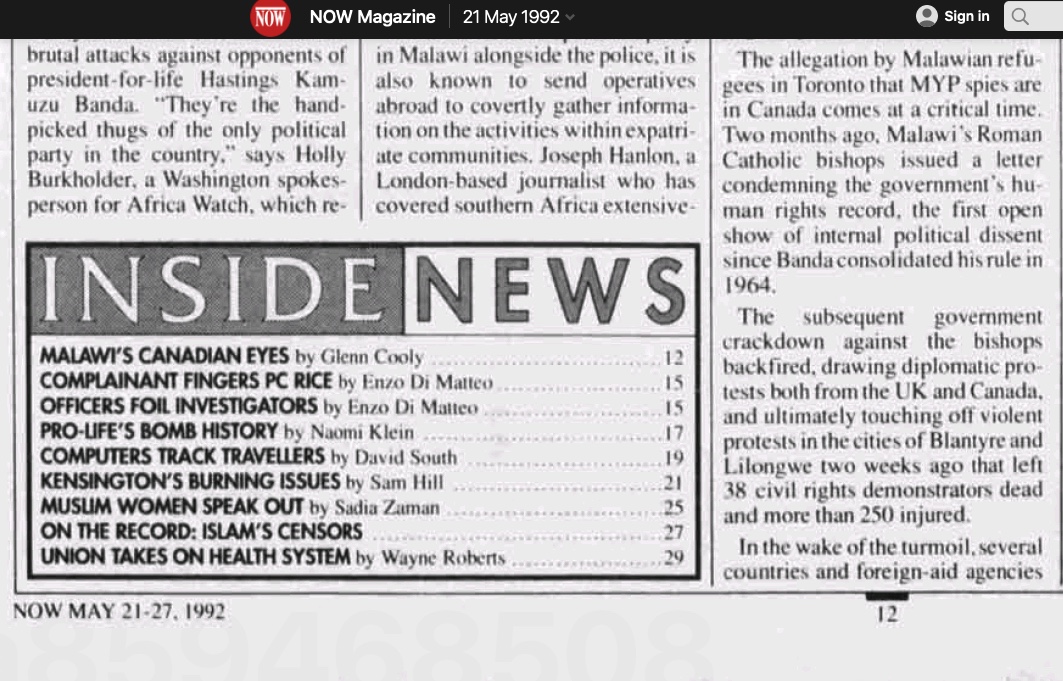
    “Computers Track Travellers” by David South. Now Magazine published investigative journalism from David South, Naomi Klein and others in the early 1990s.

    More on biometrics:

    https://davidsouthconsulting.org/2022/02/09/african-health-data-revolution/

    https://davidsouthconsulting.org/2020/12/04/big-data-can-transform-the-global-souths-growing-cities/

    https://davidsouthconsulting.org/2020/12/04/data-surge-across-global-south-promises-to-re-shape-the-internet/

    https://davidsouthconsulting.org/2021/03/04/indian-id-project-is-foundation-for-future-economic-progress/

    https://davidsouthconsulting.org/2021/03/31/new-weapon-against-crime-in-the-south/

    Creative Commons License

    This work is licensed under a
    Creative Commons Attribution-Noncommercial-No Derivative Works 3.0 License.

     ORCID iD: https://orcid.org/0000-0001-5311-1052.

    © David South Consulting 2023

  • Cyber Cities: An Oasis of Prosperity in the South

    Cyber Cities: An Oasis of Prosperity in the South

    By David SouthDevelopment Challenges, South-South Solutions

    SOUTH-SOUTH CASE STUDY

    The future is arriving in the South even faster than many think: so-called “cyber cities” are being created to become this century’s new Silicon Valleys. Well-known ‘cyber cities’ like India’s Hyderabad and Bangalore have been joined by many other cities across the global South. But two places are set to make big waves with their ambition and drive in 2008: Mauritius and China.

    Mauritius, an island in the Indian Ocean strategically close to Africa, better known for tourism and luxury hotels, wants to become the world’s “cyber island”. Armed with the first 3G network in Africa (the third generation of mobile phone technology – offering high-speed internet access and video telephony), Mauritius is moving fast to make good on this advantage. And it is even moving to the next level of mobile-phone speed, something called High-speed Download Packet Access (HSDPA) – allowing even greater quantities of information to be exchanged.

    Mauritius joins a select few countries, including Japan and South Korea, at the forefront of access to 3G. Wireless – or wi-fi – computer access is available in three-quarters of the island.

    Outside the capital of Port Louis, former sugar cane plantations are being turned into a “cyber city”. The centrepiece of the development is the 12-story Cyber Tower, home to young technology start-ups. The country is also investing heavily in education from primary school to university, to make sure the country’s 1.2 million people are cyber-ready.

    Computer novices in remote villages are being visited by a Cyber Caravan with a classroom teaching housewives, children, the unemployed and the disabled basic computing and world processing.

    Mauritius built its wealth on tourism, sugar plantations and textile manufacturing. But it is worried that trading arrangements that helped the sugar and textile industries to flourish, will be taken away. So it is focusing on the future: it sees itself as the world centre for disaster recovery computing services for the world’s companies in event of a disaster in their own country that destroys computer networks.

    In China, its largest Cyber Park is under construction in Wujin New and High-tech Development Zone of Changzhou. It will be a technology incubator, a research and development centre, and a place for small and medium-sized enterprises to innovate.

    What is truly making people stop and think is another far-reaching project: the Beijing Cyber Recreation District (CRD) – China’s most ambitious digital media industry development: a virtual worlds’ initiative with digital media academies and company incubators. It is spread over 100 square kilometres, creating the world’s largest virtual world development. It is already home to more than 200 game and multimedia content producers in western Beijing.

    The CRD says its goal is “to create a virtual economy providing infrastructure and platforms through which any business – not just those based in China – can come in and sell their real-world products and services. While a concerted effort will be placed on bringing Chinese businesses and consumers in, the effort is worldwide and open to businesses and consumers from any country.”

    The idea is to create a vast virtual economy for commerce where manufacturers can directly connect with billions of customers – bypassing middlemen.

    It claims it will be “the world’s one-stop shop for customers and producers.” It will host billions of avatars – or virtual people – surpassing the capability of the very popular Second Life virtual world game’s 40,000.

    Published: January 2008

    Resources

    • The Atlas of Ideas is an 18-month study of science and innovation in China, India and Republic of Korea Korea, with a special focus on new opportunities for collaboration with Europe. It is a comprehensive account of the rising tide of Asian innovation. Special reports on China, India and Korea, introducing innovation policy and trends in these countries can be downloaded for free.
    • The Cyber Cities Reader: the first book to bring together a
      vast range of debates and examples of ICT-based city changes.
    • Entrepreneurship Development Institute of India
    • Innovation China: A website linking all stories on the fast-breaking world of Chinese innovation.

    https://davidsouthconsulting.org/2022/02/09/african-health-data-revolution/

    https://davidsouthconsulting.org/2020/12/04/big-data-can-transform-the-global-souths-growing-cities/

    https://davidsouthconsulting.org/2020/04/25/china-looking-to-lead-on-robot-innovation/

    https://davidsouthconsulting.org/2020/12/10/china-sets-sights-on-dominating-global-smartphone-market/

    https://davidsouthconsulting.org/2021/03/20/computer-gold-farming-turning-virtual-reality-into-real-profits/

    https://davidsouthconsulting.org/2020/12/04/data-surge-across-global-south-promises-to-re-shape-the-internet/

    https://davidsouthconsulting.org/2021/01/26/designed-in-china-to-rival-made-in-china/

    https://davidsouthconsulting.org/2017/11/08/eco-cities-up-close-2013/

    https://davidsouthconsulting.org/2020/12/11/false-data-makes-border-screening-corruptible/

    https://davidsouthconsulting.org/2022/09/28/model-cities-across-the-south-challenge-old-ways/

    https://davidsouthconsulting.org/2022/10/04/popular-chinese-social-media-chase-new-markets/

    https://davidsouthconsulting.org/2017/11/08/smart-cities-up-close-2013/

    https://davidsouthconsulting.org/2021/02/18/what-is-the-un-doing-with-your-data/

    Check out award-winning cyber and digital work here: http://www.davidsouthconsulting.com/blog/2020/2/26/awards-1998-2003-february-2020.html

    More stories on cyber innovation from e-newsletter Development Challenges, South-South Solutions and magazine Southern Innovator

    China Sets Sights on Dominating Global Smartphone Market

    China Looking to Lead on Robot Innovation

    Crowdsourcing Mobile Phones To Make The Poor Money

    Mobile Phones: Engineering South’s Next Generation of Entrepreneurs

    Development Challenges, South-South Solutions was launched as an e-newsletter in 2006 by UNDP’s South-South Cooperation Unit (now the United Nations Office for South-South Cooperation) based in New York, USA. It led on profiling the rise of the global South as an economic powerhouse and was one of the first regular publications to champion the global South’s innovators, entrepreneurs, and pioneers. It tracked the key trends that are now so profoundly reshaping how development is seen and done. This includes the rapid take-up of mobile phones and information technology in the global South (as profiled in the first issue of magazine Southern Innovator), the move to becoming a majority urban world, a growing global innovator culture, and the plethora of solutions being developed in the global South to tackle its problems and improve living conditions and boost human development. The success of the e-newsletter led to the launch of the magazine Southern Innovator.  

    Follow @SouthSouth1

    Google Books: https://books.google.co.uk/books?id=dKaXBgAAQBAJ&dq=Development+Challenges+January+2008&source=gbs_navlinks_s

    Slideshare: http://www.slideshare.net/DavidSouth1/development-challengessouthsouthsolutionsjanuary2008issue

    Southern Innovator Issue 1: https://books.google.co.uk/books?id=Q1O54YSE2BgC&dq=southern+innovator&source=gbs_navlinks_s

    Southern Innovator Issue 2: https://books.google.co.uk/books?id=Ty0N969dcssC&dq=southern+innovator&source=gbs_navlinks_s

    Southern Innovator Issue 3: https://books.google.co.uk/books?id=AQNt4YmhZagC&dq=southern+innovator&source=gbs_navlinks_s

    Southern Innovator Issue 4: https://books.google.co.uk/books?id=9T_n2tA7l4EC&dq=southern+innovator&source=gbs_navlinks_s

    Southern Innovator Issue 5: https://books.google.co.uk/books?id=6ILdAgAAQBAJ&dq=southern+innovator&source=gbs_navlinks_s

    https://davidsouthconsulting.org/2021/03/05/southern-innovator-issue-1/

    https://davidsouthconsulting.org/2021/03/05/southern-innovator-issue-4/

    Creative Commons License
    This work is licensed under a
    Creative Commons Attribution-Noncommercial-No Derivative Works 3.0 License.

    ORCID iD: https://orcid.org/0000-0001-5311-1052.

    © David South Consulting 2023

  • Data Surge across Global South Promises to Re-shape the Internet

    Data Surge across Global South Promises to Re-shape the Internet

    By David SouthDevelopment Challenges, South-South Solutions

    SOUTH-SOUTH CASE STUDY

    The deluge of data gathered by the digital revolution underway in the global South continues to offer a significant economic opportunity. How this data is harvested will forge the successful Internet business models of the future.

    As the Internet spreads its way further across the global South, many are forecasting this new surge in web users and the data they generate will radically reshape the way people engage with and use the Internet. Unlike previous generations of web users, most of these new users will be accessing the Internet primarily with mobile phones and other devices, rather than computers. Many will not be native English speakers.

    Argentinian philosopher and digital publisher Octavio Kulesz says “the digital experiences undertaken in the South suggest that new technologies represent a great opportunity for developing countries … but on the condition that local entrepreneurs seek out original models adapted to the concrete needs of their communities.”

    In a report for the International Alliance of Independent Publishers, Kulesz said we “must ask ourselves how useful it would be to reproduce the prototypes from the North in the South.”

    According to the Cisco Visual Networking Index Forecast (2010-2015), by 2015, there will be 3 billion Internet users in the world: 40 percent of the global population. Internet Protocol (IP) traffic is growing fastest in Latin America, where it is forecast to grow by 50 percent from 2010 to 2015. Next are the Middle East and Africa.

    There are already as many networked devices – tablets, mobile phones, connected appliances and smart machines – on the planet as people. By 2015 – the year of the Millennium Development Goals (http://www.un.org/millenniumgoals) – they’ll outnumber people by two to one.

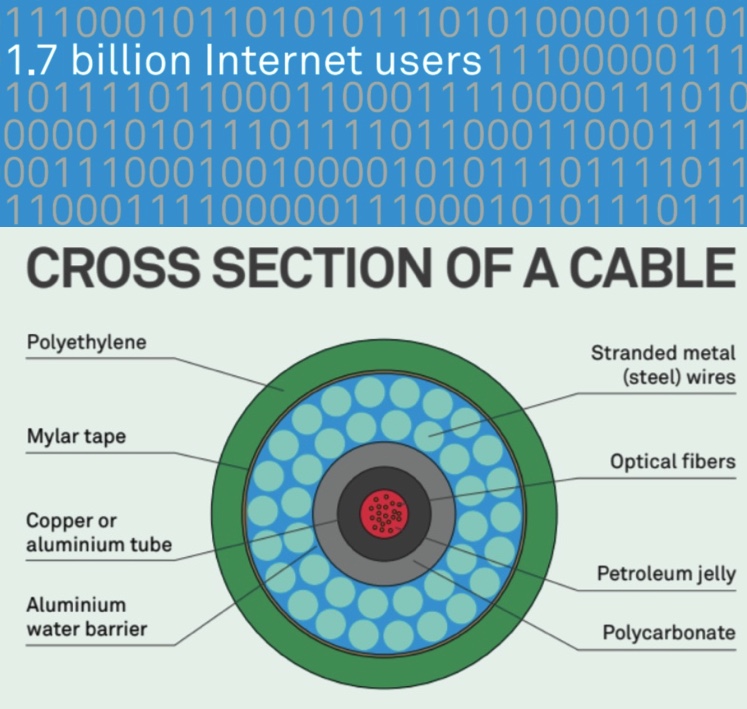
    The potential of the Internet revolution is especially compelling in Africa, a continent neglected for so long in the global communications revolution. The 10,000 kilometre-long East African Submarine Cable System (EASSy), connecting sub-Saharan Africa with Europe and Asia, has joined other cables from the continent. Gradually, the infrastructure is coming in to place to connect Africa properly to the world.

    The first batch of Internet users came from the United States, home of the Internet which grew out of the US military’s Arpanet system (http://en.wikipedia.org/wiki/ARPANET). This first wave of the Internet’s history was very much an American phenomenon. The priorities and content of the web were driven by the cultural and economic concerns of its American users. And the big brands of today’s web reflect this: Google, Facebook, eBay, Twitter, Yahoo, WordPress, to name a few.

    As the web expanded across wealthy, developed nations in Europe, users mostly mimicked the priorities of the American approach, using the web to express themselves, be entertained, share files, access government services and sell and market products and services.

    But the spread of the Internet across the global South is already showing itself to have a different character and set of priorities. One change is in the way people are accessing the web: through mobile phones and other devices, rather than through laptops and personal computers.

    In the future, the trend is towards a global mobile world, in which the communications medium will favour video and audio over text, according to Fast Company magazine (http://www.fastcompany.com). Information is being shared across boundaries on a vast scale for the first time. People around the world are gaining access to data and information never available before, and all of it is nearly instantaneous.

    Kulesz said countries of the South face a profound and difficult decision: follow the lead taken by the technology pioneers of the South, or try and replicate what was done in the North?

    “Sooner or later, these countries will have to ask themselves what kind of digital publishing highways they must build,” his report said, “and they will be faced with two very different options: a) financing the installation of platforms designed in the North; b) investing according to the concrete needs, expectations and potentialities of local authors, readers and entrepreneurs. Whatever the decision of each country may be, the long-term impact will be immense.”

    The costs of trying to replicate the technological infrastructure of the North makes little sense, when it is technologically possible to bypass this costly infrastructure with even newer work-arounds.

    “Of course, it would be extraordinary to obtain 80 percent Internet penetration in Africa or make huge investments in infrastructure throughout the developing regions,” continues Kulesz, “but that may never happen. And in the event that it does occur some day, by then the industrialized countries will no doubt have made another technological leap, meaning that the disparity in infrastructure would still persist. So the most effective option is to start working right now, with what is available.”

    New global magazine Southern Innovator (http://www.scribd.com/doc/57980406/Southern-Innovator-Issue-1), published by UNDP’s Special Unit for South-South Cooperation, captures how this process is happening, as the people of the global South re-shape the Internet to be their own and to meet their needs.

    Published: August 2011

    Resources

    1) Southern Innovator: New global magazine first issue gives a snapshot of the big changes across the global South in mobile phones and information technology. Website:http://www.scribd.com/doc/57980406/Southern-Innovator-Issue-1

    2) Cisco Visual Networking Index Forecast (2010-2015): The annual Cisco VNI Forecast was developed to estimate global Internet Protocol traffic growth and trends. Widely used by service providers, regulators, and industry influencers alike, the Cisco VNI Forecast is based on in-depth analysis and modelling of traffic, usage and device data from independent analyst forecasts. Website:http://newsroom.cisco.com/press-release-content?type=webcontent&articleId=324003

    3) Digital Publishing in Developing Countries: A report by the International Alliance of Independent Publishers. Website: http://alliance-lab.org/etude/archives/date/2010/01?lang=en

    https://davidsouthconsulting.org/2022/02/09/african-health-data-revolution/

    https://davidsouthconsulting.org/2020/12/04/big-data-can-transform-the-global-souths-growing-cities/

    https://davidsouthconsulting.org/2020/12/11/false-data-makes-border-screening-corruptible/

    https://davidsouthconsulting.org/2022/09/27/india-2-0-can-the-country-make-the-move-to-the-next-level/

    https://davidsouthconsulting.org/2022/10/31/mapping-beirut-brings-city-to-light/

    Development Challenges, South-South Solutions was launched as an e-newsletter in 2006 by UNDP’s South-South Cooperation Unit (now the United Nations Office for South-South Cooperation) based in New York, USA. It led on profiling the rise of the global South as an economic powerhouse and was one of the first regular publications to champion the global South’s innovators, entrepreneurs, and pioneers. It tracked the key trends that are now so profoundly reshaping how development is seen and done. This includes the rapid take-up of mobile phones and information technology in the global South (as profiled in the first issue of magazine Southern Innovator), the move to becoming a majority urban world, a growing global innovator culture, and the plethora of solutions being developed in the global South to tackle its problems and improve living conditions and boost human development. The success of the e-newsletter led to the launch of the magazine Southern Innovator.

    https://davidsouthconsulting.org/2021/03/05/southern-innovator-issue-1/

    Creative Commons License

    This work is licensed under a
    Creative Commons Attribution-Noncommercial-No Derivative Works 3.0 License.

    ORCID iD: https://orcid.org/0000-0001-5311-1052.

    © David South Consulting 2023