UNDP Mongolia Communications Coordinator (1997-1999):David South
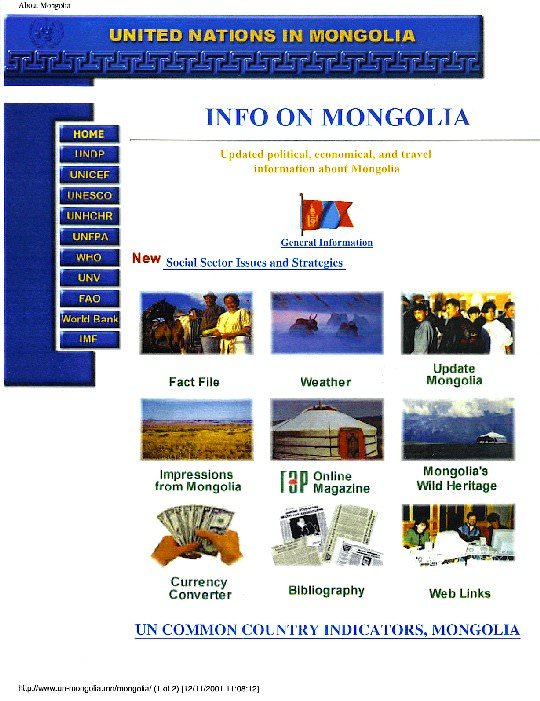
I launched this portal in 1997, in the middle of a major economic crisis in Mongolia. This award-winning (winner in 1998 of the People’s Choice WebSite 500 award and the CyberTeddy Top 500 Website award) and pioneering United Nations Mongolia development web portal was singled out by UN headquarters as an example of what a country office website should be like.
At this time, Mongolia was still recovering from the chaotic and turbulent transition from Communism to free markets and democracy begun at the start of the 1990s, called by some “one of the biggest peacetime economic collapses ever” (Mongolia’s Economic Reforms: Background, Content and Prospects, Richard Pomfret, University of Adelaide, 1994). There was a thirst for information: access to the Internet was still limited and access to mobile phones was just the preserve of the rich. As a legacy of the past, information, especially that about the outside world and the country’s true economic and social conditions, was restricted. During the years of Communism, even simple travel from one place to the next was strictly regulated.
While today we can take it for granted the world’s information arrives in seconds via the Internet on mobile and smart phones and devices, this just was not the case in the late 1990s in Mongolia.
The UN/UNDP Mongolia development web portal addressed the urgent need to communicate what was happening in the country during a major crisis, and to transparently show what the UN was doing to address the crisis. It made critical data on the country’s development easy to find, and informed the wider world about the country and its people and culture. While the Internet had only just arrived in Mongolia, from the start the UNDP Mongolia Communications Office was experimenting with this powerful new technology to reach a global audience. This included Mongolia’s first web magazine, Ger (launched in 1998).
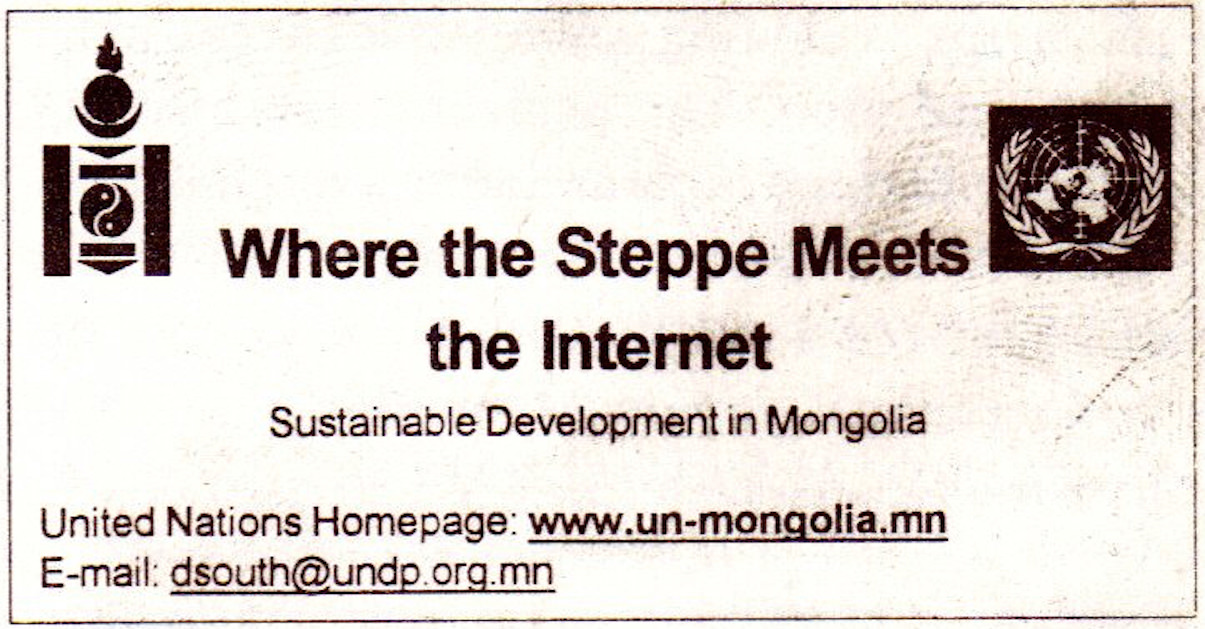
After the http://www.un-mongolia.mn website launched in 1997, a media campaign began to inform readers of its presence. This ad appeared regularly in magazines, newsletters and newspapers.
Ger Magazine was launched on September 9, 1998 (Ger is the Mongolian word for both the traditional tent dwelling and home). The theme of youth in the transition was explored by a combined team of Mongolian and foreign journalists. The Ger Magazine project had basically three goals: first, raise the quality of journalism in the country, secondly, introduce the country to a wider global audience and, thirdly, by being the country’s first online magazine, prove the Internet was an effective way to communicate.
Issue 1 of the magazine investigated what life was like for youth during the transition years (post-1989). Stories tackled the struggle to find work in the free market, the booming pop music scene and how it is leading the way in business entrepreneurship, reproductive health, the basics on Mongolian culture, and vox pop views from Mongolian youth.Issue 2 of the magazine investigated modern life in Mongolia during transition. The team of journalists were hitting their stride by this issue. Stories probed the proliferation of bars and the problem of alcoholism, corrupt banking practices and the loss of savings, how the young were the country’s leading entrepreneurs, Mongolia’s meat and milk diet, “girl power” and the strong role played by women, the burgeoning new media, the rise and rise of Buddhism, and Mongolia’s dynamic fashion designers (this article inspired foreign fashion designers to embrace the Mongolian ‘look’ in the next season’s designs).
The UN/UNDP Mongolia homepage quickly became the top resource for development news on Mongolia in the late 1990s.“A UN System site. A very nice, complete, professional site. Lots of information, easily accessible and well laid out. The information is comprehensive and up-to-date. This is a model of what a UNDP CO web site should be.”
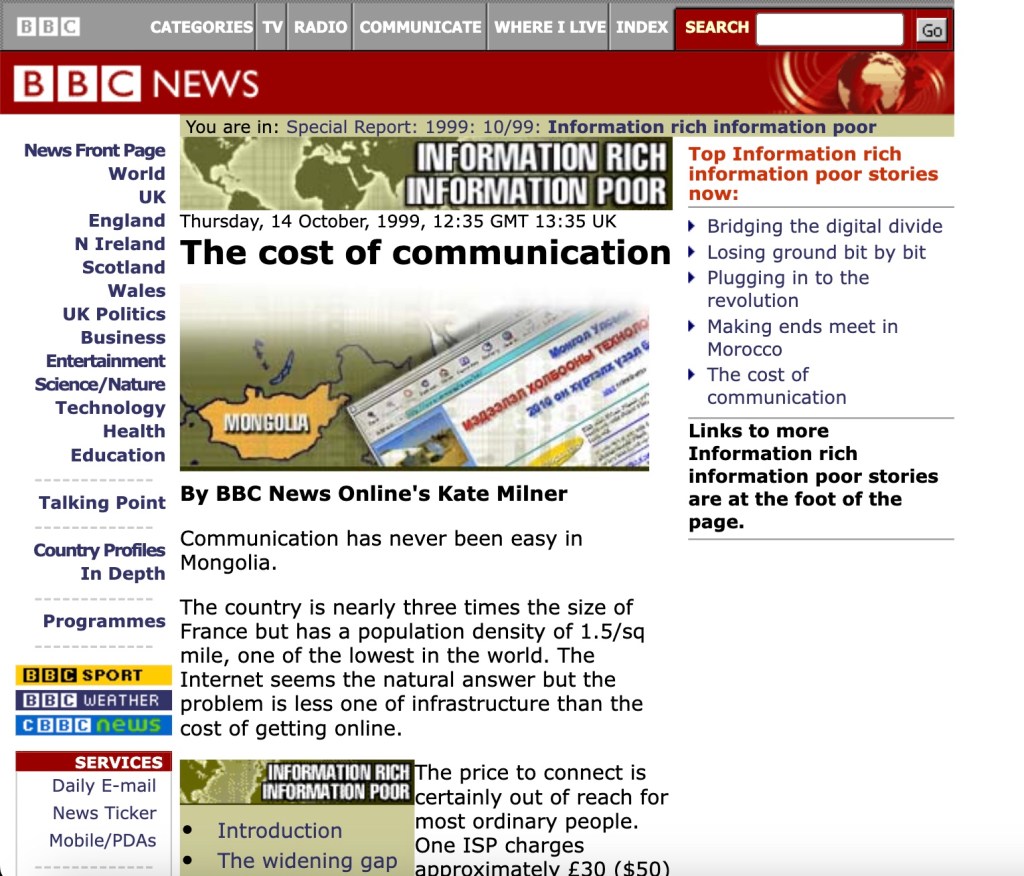
“Information Rich Information Poor: The cost of communication”, BBC News Online, Thursday, 14 October 1999.
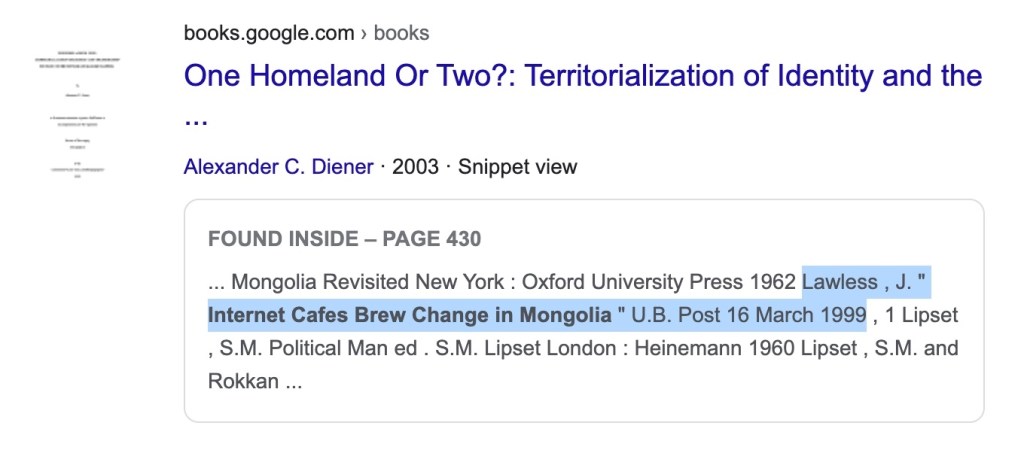
“Internet Cafes Brew Change in Mongolia”, UB Post 16 March 1999 by Jill Lawless, cited in One Homeland or Two?: Territorialization of Identity and the Migration Decision of the Mongolian-Kazakh Diaspora by Alexander C. Diener, 2003.
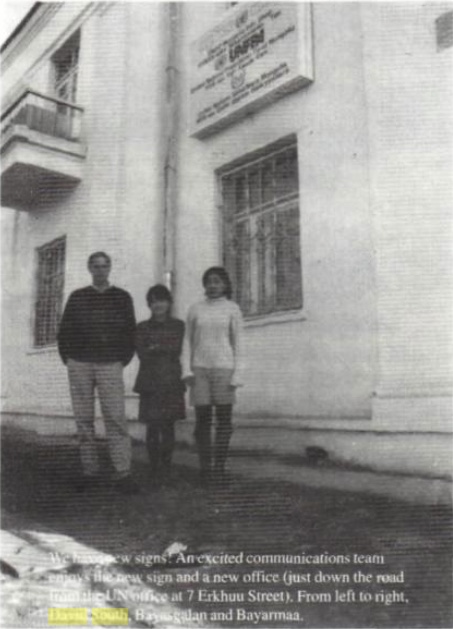
United Nations Cyber Center Ulaanbaatar, Mongolia: UNDP Mongolia established the first public internet cafe in its former headquarters as part of the UNDP Mongolia Communications Office hub in the late 1990s.
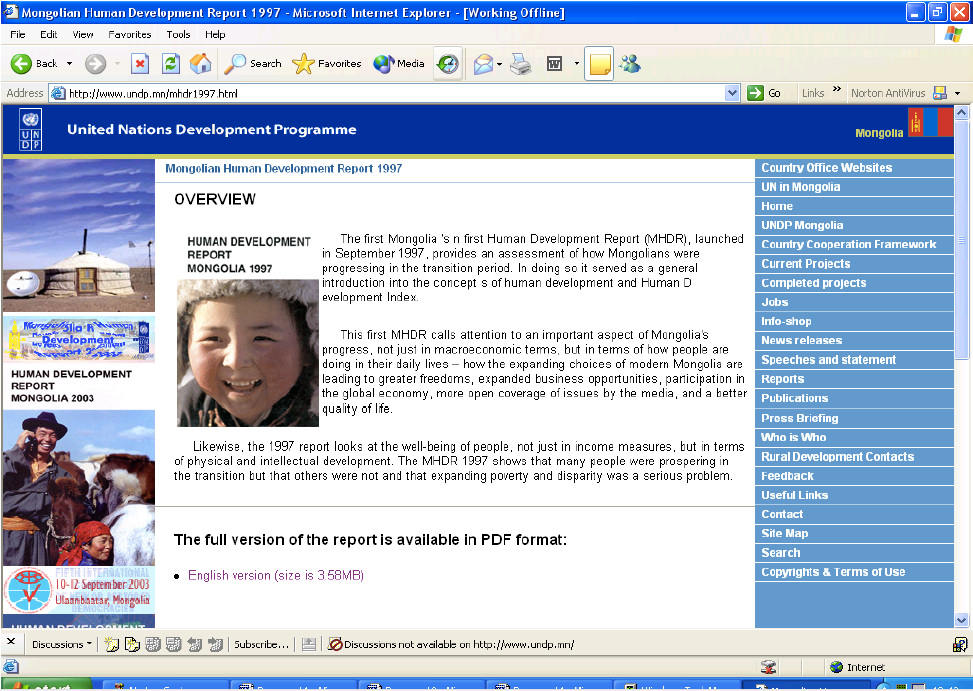
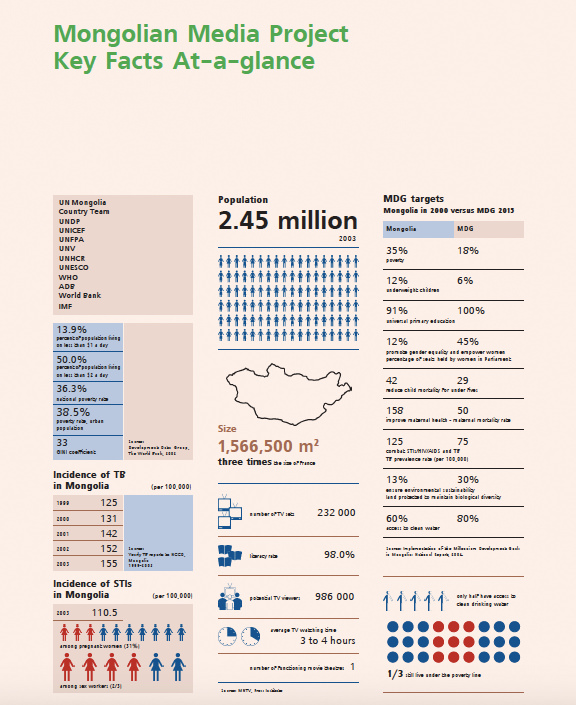
In 2000, the Kiev-based UN Ukraine team had to improve the design and capability of the mission website to handle new content and online services. There was a strong demand for information on country conditions and how to support the UN’s work (for example, on HIV/AIDS). It was a dangerous time to be involved in any online communications and the media and online communicators were routinely threatened with violence and even death.Whilst with a UK-based international development consultancy, I worked on the drafting and online launch in 2000 of the World Bank’s Task Force on Higher Education and Society report, Higher Education in Developing Countries: Peril and Promise. At the time, it was still rare to see reports made user friendly for the world’s web audience. As a survey in 2014 discovered, a shocking third of the Bank’s publications are never downloaded, 40 per cent were downloaded just 100 times, and only 13 per cent were downloaded more than 250 times in their lifetime (The Washington Post).As the Millennium Development Goals (MDGs) were being communicated, the link between the powerful new digital and mobile/information technologies and development goals became explicit in information materials. The cleaner and more modern design introduced with Mongolia’s first human development report in 1997, continued in future publications and online, as can be seen in this screen grab from 2003 and that year’s human development report. The first use of infographics was also introduced in a report on the MDGs for UNDP Mongolia in 2005. Importantly, a country that had been isolated from the non-Communist world for decades, was now routinely using the Internet to tell its stories and post development data.
Human Development Infographics: Infographics have proven a useful visual aid for communicating human development concepts. This example was created for a UNDP Mongolia report during missions undertaken in 2005.
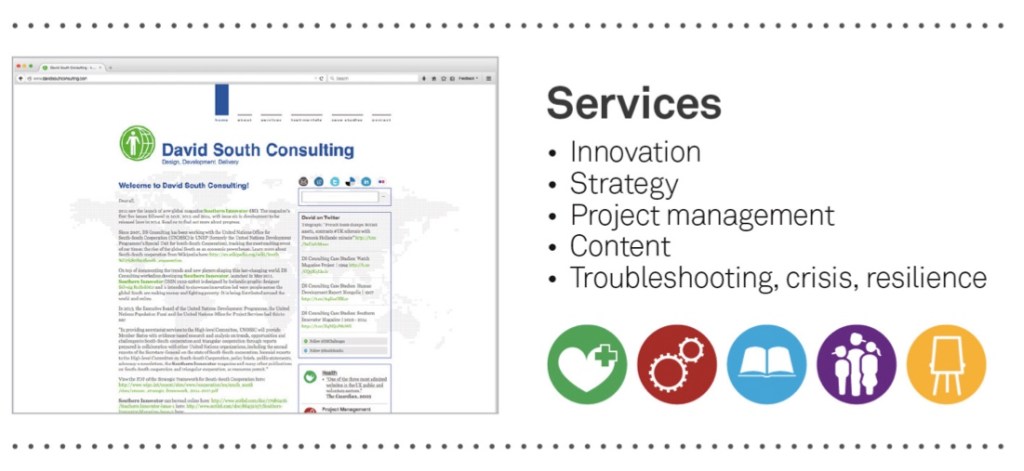
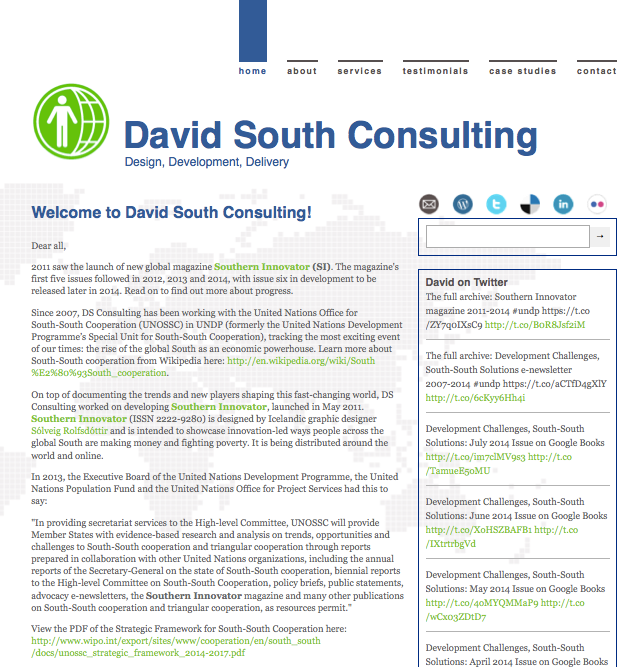
Five years prior to the MDGs deadline in 2015, the David South Consulting website went live (2010). Featuring a new branding and design, it signaled a new design phase more comfortable with developments in social media and online and mobile content sharing. Designed by Solveig Rolfsdottir, one of Iceland’s top graphic designers and illustrators, the website’s design was intentially made compatible with the new global magazine, Southern Innovator (also designed by Solveig Rolfsdottir).The online story archive for Southern Innovator was launched by the United Nations Office for South-South Cooperation (UNOSSC) in 2011. Organized by theme, the stories were cited in blogs, books and reports around the world.
The new template for the United Nations e-newsletter Development Challenges, South-South Solutions was launched in 2011 and designed by Solveig Rolfsdottir. It included a QR code for mobile and smartphone users to connect to the Southern Innovator website.
In 2016 the mobile-friendly version of the David South Consulting website was launched.
“What a tremendous magazine your team has produced! It’s a terrific tour de force of what is interesting, cutting edge and relevant in the global mobile/ICT space… Really looking forward to what you produce in issues #2 and #3. This is great, engaging, relevant and topical stuff.”
Rose Shuman, Founder & CEO, Open Mind and Question Box
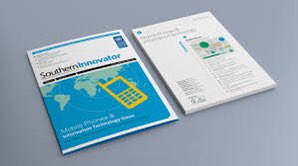
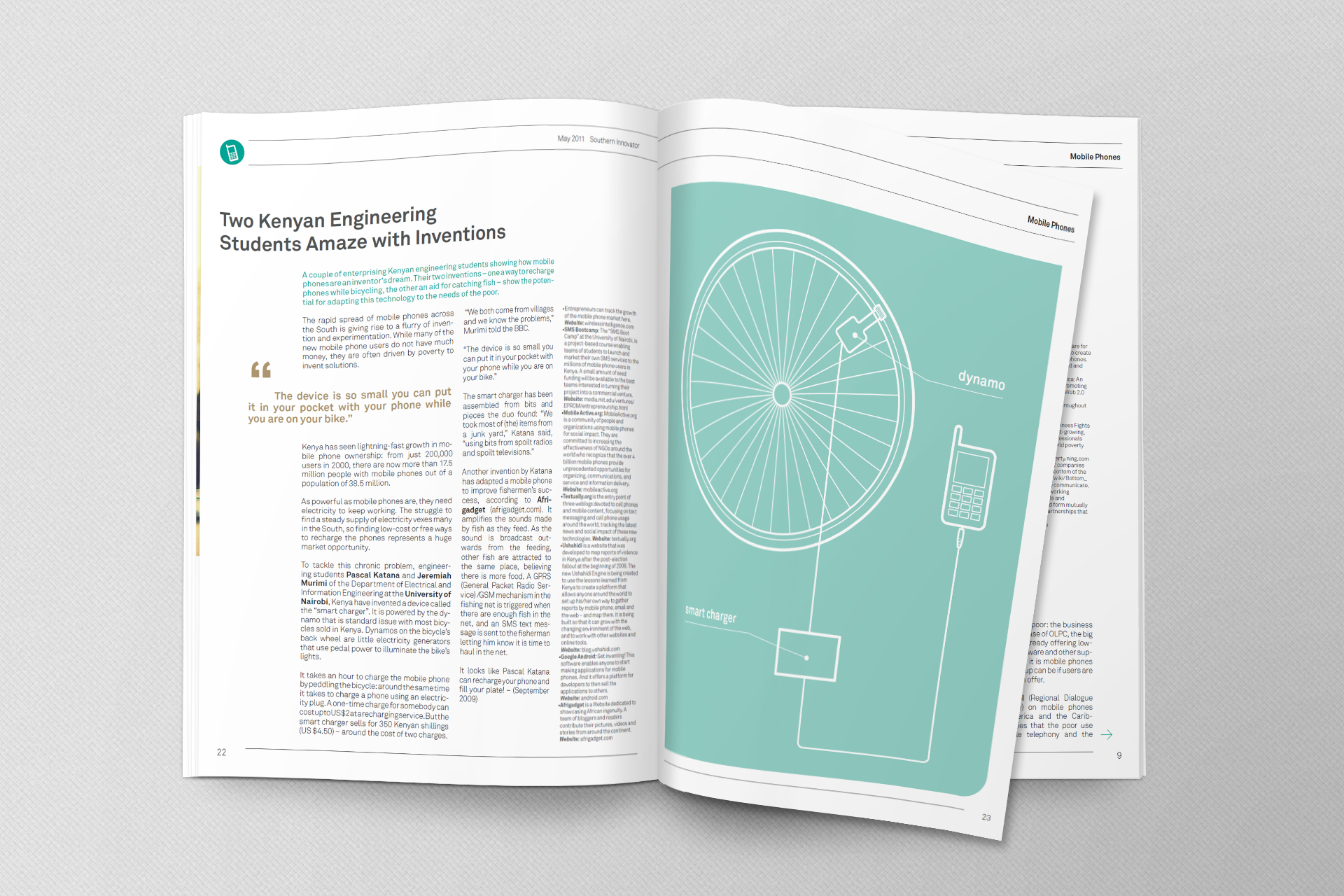
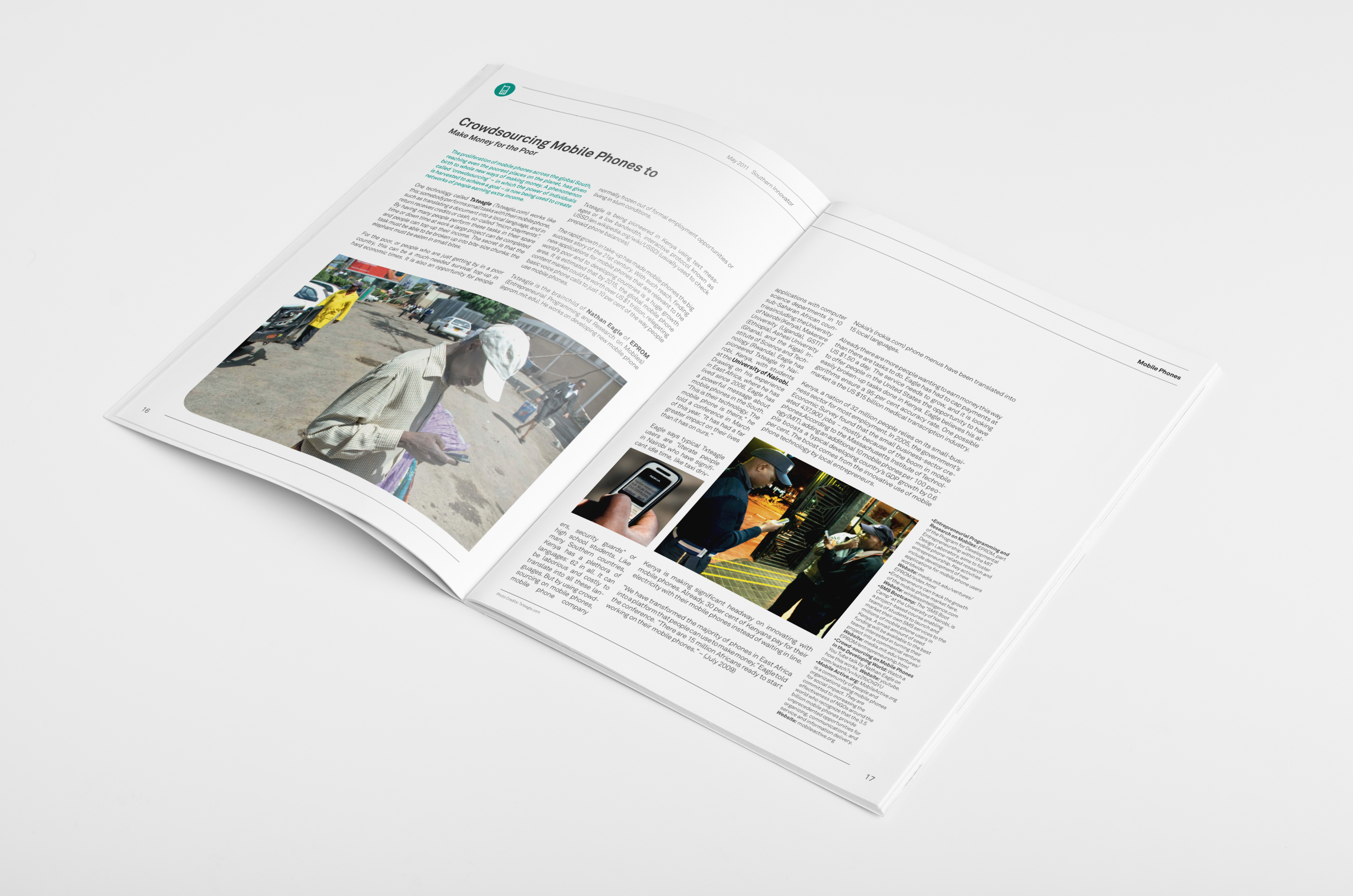
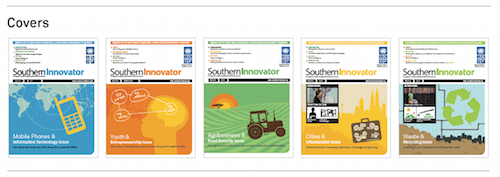
I had the pleasure of visiting the printing plant to witness the presses rolling with the first issue of new global magazine, Southern Innovator. The magazine has been in careful development and saw its name evolve from Creative Sparks to Southern Innovator. As Shakespeare noted in his play Romeo and Juliet, “What’s in a name? That which we call a rose, by any other name would smell as sweet.” And it is what Southern Innovator is that counts the most.
This first issue is just the beginning of a process, a back-and-forth dialogue with our readers as we refine and improve the magazine to boost its impact. The first issue’s theme – mobile phones and information technology – was chosen because of the sheer dynamism of this area and some jaw-dropping achievements: the growth of mobile phone usage in Africa represents an unprecedented take-up of a new technology, often in some of the poorest places on the planet. That impresses and it seemed right to share information about the amazing people behind this phenomenon and the lessons they learned along the way. It has also become clear in the research behind the monthly e-newsletter Development Challenges, South-South Solutions (published since 2006), that significant future development gains will not happen without the aid of mobile phones and information technology, and, important to note, will need these tools to raise living standards for all the world’s people in an environment of increasing competition and pressure for resources.
Used right, mobile phones and information technology allow the efficient use of resources. But, as anyone who has worked with technology knows, this isn’t a given. Vast sums of money and time can be squandered if technology is not used intelligently, or lessons not learned from past failures. It is hoped Southern Innovator‘s first issue can contribute to a better use of resources, and by taking a broad look at what is happening out there, enlighten readers to new ideas, people and concepts.
Southern Innovator is designed in Iceland by Graphic Designer and Illustrator Solveig Rolfsdottir.
“Question Box was featured in Southern Innovator, a new publication of UNDP that profiles some of the most innovative ideas coming out of the global South. We were pleased to see many friends in the sector profiled as well, such as Ushahidi, Medic Mobile, and TxtEagle. Take a look at the magazine, as it is a great primer on ICT and mobile innovation from around the globe.”
With the so-called Arab Spring still unfolding across much of the Arabic-speaking world, it is easy to miss a rising new economic opportunity: The introduction of an Arabic domain name system for the Internet.
The explosion in mobile phones in the Arab world has dramatically increased the number of people who can now access the Internet. One Arabic financial website put the number of people who can now access the Internet in one way or another in the Arab world as 75 million (www.nuqudy.com). As highlighted in the 2003 Arab Human Development Report (AHDR), Arabic-speaking countries have been at a knowledge disadvantage for some time: more than 270 million citizens have access to fewer books than other languages, slower growth economies, and greater illiteracy than the faster-growing emerging economies. At the time, the AHDR found there were just 18 computers per 1,000 people compared to a global average of 78. And just 1.6 percent of Arabs had Internet access, one of the lowest ratios in the world (AHDR 2003).
Since the dawn of the Internet, Latin script has been used exclusively for top-level web domain names, the addresses that end .com, .org and so on. That has been a big obstacle for users of non-Latin script languages like Arabic. It is estimated just 10 percent of people in the Arab world speak English. Many of the resources on the Internet and its utility have been lost to these people. But by using Arabic domain names, there will be a consistency and no more guesswork.
A typical problem in Latin transliterations of Arabic is the conundrum as to either using El or Al as the prefix to a word. This problem is eliminated when Arabic is used.
The Arab world is also very mixed, including the resource-rich, cash-rich Gulf States – Kuwait, Qatar, United Arab Emirates, Saudi Arabia, Oman and Bahrain – and states with high rates of poverty such as Egypt, Djibouti and Yemen.
The protests and uprisings this year in Tunisia, Egypt and elsewhere – with their Facebook pages and Twitter streams – have shown that a growing group of highly Internet-savvy young people is emerging in the Arab world. But for many without the education or the resources, access to knowledge still remains weak. But armed with Internet-capable mobile phones and Arabic language domain names, rapid change is now possible.
The number of books published in Arabic is notoriously relatively low, and print runs are small. Arabic language books make up just 1.1 percent of world production.
The AHDR reports have called this knowledge deficit a direct obstacle to human development in Arab countries.
But things are changing and the rise of Arabic domain names offers the potential for an explosion in Arabic language Internet content.
In May 2010 ICANN, the world’s Internet domain authority, decided to allow top-level domains in non-Latin script. For Arabic speakers, it started this program in Egypt, Saudi Arabia and the United Arab Emirates.
As a sign of the importance of Arabic participation in future growth of the Internet, this year’s World Summit for the Information Society (WSIS) held in Geneva, Switzerland in May 2011 was sponsored by the United Arab Emirates (UAE).
A catchy domain name has many advantages. For Arabic speakers, this means they can type in Arabic domain names for websites and even do it right to left, as they do in print.
In 2009, the first Arabic domain name was grabbed by Egypt. As the Internet naming authority, the Internet Corporation for Assigned Names and Numbers (ICANN) (www.icann.org), started to allow the registering of non-Latin script names. The domain was for the Arabic word for Egypt or “.masr”.
As an early adopter, Egypt sees it as an important part of bringing more Arabic speakers online. George Victor, from the Egyptian National Telecom Regulatory Authority, told the BBC: “We believe that this is a great step that will open new horizons for many e-services in Egypt, and it will have its direct impact, enlarging the number of online users.”
Victor believes using Arabic builds trust.
“Having a domain name in your own language is a point of having a local identity,” he said.
“When talking about Arabic domain names, we are talking about having users which are not online now. People with languages disabilities – people who are having language as a barrier to connect online.”
From now on Internet address names will be able to end with almost any word in any language, offering organizations around the world the opportunity to market their brand, products, community or cause in new and innovative ways.
The advantages of registering an Arabic domain name are numerous. They include clear improvements to business and trade: an ability to protect a trademark, better communication with Arabic customers, better Arabic-language advertising opportunities, better memorability for Arabic domain names because they will be in the Arabic language, and greater access to Arabic customers.
But there are also significant improvements to how the Internet functions in the Arabic world. Search results on Arabic search engines will be more precise with Arabic domain names; catchy, memorable domain names will be a spur to the advertising and marketing industries; and a more Arab-friendly Internet will draw in more Arabic-speaking Internet users, helping them to enjoy the fruits of this great technological advance just as speakers of other languages have.
In March 2011, the Gulf state of Qatar enthusiastically started to offer Arabic domain names.
“The launch of Qatar’s Arabic top-level domain names is a major milestone as we work to build a more digitally inclusive society,” said Dr. Hessa Al Jaber, Secretary General of the Supreme Council of Information and Communication Technology, which will manage Qatar’s Internet domain names through the Qatar Domains Registry.
“As more organizations and individuals begin adopting Arabic domain names, the Internet will literally be opened up to broad new audiences. The Arab world represents a region with enormous potential for growth both in terms of usage and the creation of new digital content, especially Arabic content.”
ICANN’s President and Chief Executive, Rod Beckstrom, sees this as a new phase for the Internet: “ICANN has opened the Internet’s naming system to unleash the global human imagination. Today’s decision respects the rights of groups to create new Top Level Domains in any language or script. We hope this allows the domain system to better serve all of mankind.”
Published: July 2011
Resources
1) Watch the ICANN educational video “Get Ready for the Next Big Thing”, explaining how domain names work and what the changes mean. Website:http://www.icann.org
Development Challenges, South-South Solutions was launched as an e-newsletter in 2006 by UNDP’s South-South Cooperation Unit (now the United Nations Office for South-South Cooperation) based in New York, USA. It led on profiling the rise of the global South as an economic powerhouse and was one of the first regular publications to champion the global South’s innovators, entrepreneurs, and pioneers. It tracked the key trends that are now so profoundly reshaping how development is seen and done. This includes the rapid take-up of mobile phones and information technology in the global South (as profiled in the first issue of magazine Southern Innovator), the move to becoming a majority urban world, a growing global innovator culture, and the plethora of solutions being developed in the global South to tackle its problems and improve living conditions and boost human development. The success of the e-newsletter led to the launch of the magazine Southern Innovator.
The global fair trade market – in which goods and services are traded under the Fairtrade logo, guaranteeing a minimum fair price to producers experienced unprecedented growth in 2006. In the UK alone, 2006 sales totalled £290 million – a jump of 46 percent from 2005. The Fairtrade Foundation predicts sales will reach UK £300 million in 2007.
In 2005 Fairtrade sales were € 1.1 billion in the brand’s main markets of Switzerland, the UK, New Zealand, Australia and the US. At present fair trade works with 5 million farmers in the global South, and it represents an ever-increasing opportunity for Southern entrepreneurs.
A tipping point has been reached in Western awareness of and demand for the Fairtrade brand and concept, and it is now being adopted by major supermarkets. In the UK, 62 percent of consumers know the logo and understand what it means.
The concept of fair trade began in the Netherlands in 1988, when the Max Havelaar Foundation launched the Fairtrade consumer label with coffee from Mexico. Unlike conventional businesses, where the price paid to a producer is what the market dictates, fair trade guarantees the producer a minimum price for their product. This amount is set at a level that ensures the producer can live a life with dignity and meet all the essentials. A portion of the profits is also kept in a communal fund which the producers democratically elect to spend as they wish (many choose to spend it on community projects).
Fair trade has been criticized for a number of reasons. It has been seen as too small and marginal to really make inroads on poverty, and has been accused of privileging a small number of producers while ignoring the rest. It has also been criticized for not focusing enough on innovation and increasing production to really eradicate poverty in the developing world.
For all its faults and shortcomings, it is a fact that the Fairtrade brand is a runaway success and offers a wide range of opportunities for entrepreneurs.
In the UK, fair trade now includes 2,500 products, ranging from footballs, to tea, cotton and honey – up from just 150 in 2003, an astonishing rate of growth. Where fair-trade products were once confined to co-operative and charity shops, they are now widely sold in major supermarkets.
The success of fair trade is not confined to Europe and the US. It is growing in Japan, where, says fair trade retailer Sonoko Iwasa, “the concept of using trade to equalize the world by buying goods from developing countries from Asia and Africa was a notion that had no connection with everyday lives.”
Iwasa’s Rumaba Goods store just outside Tokyo sells organic chocolates from Africa, woollen gloves and hats from Nepal, and elegant clothes from Thailand. Iwasa found that the key in the highly competitive Japanese consumer market was to focus on quality, not fairness. This, she says, has made these products fashionable.
At present, the fair trade market is worth only about US $6 to $7 million a year in Japan and includes 1,500 products. But according to Michiko Ono of Japan’s best-known fair trade label, People Tree, the trend is catching on among the country’s socially aware youth.
To start a fair trade business, entrepreneurs or producers need first to contact the international body that certifies fair trade products and ensure that production meets the ethical standards required.
The Authentic Business Network promotes doing business with a charitable purpose as well as profit. The website contains all the resources a budding entrepreneur requires to get started.
DATA: Founded by lead singer Bono of the rock group U2, DATA tries to partner businesses to increase trade opportunities with Africa.
The world’s largest online fair trade store is : Fairtrade UK
Oxfam: The UK-based charity has been a pioneer in fair trade and has extensive resources on how to get involved in fair trade and a shop vending fair trade products.
Ten Thousand Villages: An online fair trade shop selling handicrafts from around the world.
Agbanga Karite: A Togo-based African-owned online retailer selling products made from unrefined shea butter, including soaps, creams and oils.
Ananse Village: A fair trade online shop vending a wide range of crafts and products from Africa’s villages.
Development Challenges, South-South Solutions was launched as an e-newsletter in 2006 by UNDP’s South-South Cooperation Unit (now the United Nations Office for South-South Cooperation) based in New York, USA. It led on profiling the rise of the global South as an economic powerhouse and was one of the first regular publications to champion the global South’s innovators, entrepreneurs, and pioneers. It tracked the key trends that are now so profoundly reshaping how development is seen and done. This includes the rapid take-up of mobile phones and information technology in the global South (as profiled in the first issue of magazine Southern Innovator), the move to becoming a majority urban world, a growing global innovator culture, and the plethora of solutions being developed in the global South to tackle its problems and improve living conditions and boost human development. The success of the e-newsletter led to the launch of the magazine Southern Innovator.












 Southern Innovator is designed in Iceland by Graphic Designer and Illustrator Solveig Rolfsdottir.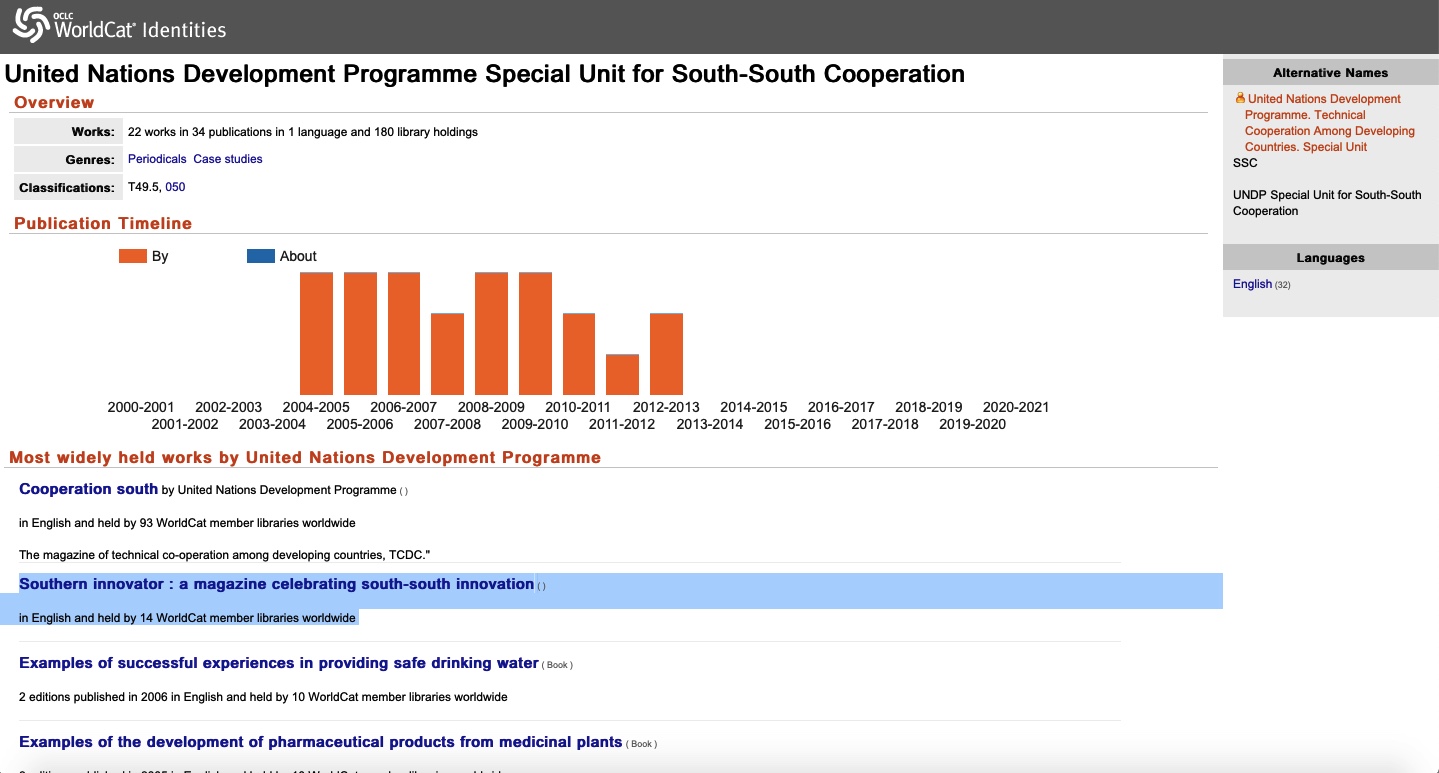








 David South Consulting
You must be logged in to post a comment.