Categories
Archive Development Challenges, South-South Solutions Newsletters Southern Innovator magazine

Wireless Internet Culture Helping Zimbabwe Economy Recover

By David SouthDevelopment Challenges, South-South Solutions

SOUTH-SOUTH CASE STUDY

Zimbabwe’s turbulent descent into hyperinflation at the beginning of the 2000s – and the food crisis it caused as prices soared and purchasing power shrank – captured the world’s attention. From refugees fleeing the country to widespread hunger and poverty, the impact of hyperinflation was stark and distressing. Since the country’s economy stabilized in 2009, various signals are showing that Zimbabwe is slowly making its way back to growth and stability.

The scale of the hyperinflation is summed up by Zimbabwe’s eye-popping inflation rate. By December 2008, inflation was estimated at 6.5 quindecillion novemdecillion percent (or 65 followed by 107 zeros — 65 million googol) (Forbes Asia).

One recovery strategy is emerging in Zimbabwe’s booming eating and drinking establishments. It seems the urge to socialize and network has become the source of economic vitality where so much else has been damaged.

The proliferation of coffee shops with wi-fi (wireless internet access) (http://en.wikipedia.org/wiki/Wi-Fi) has spawned a new, connected business culture that is flexible and entrepreneurial.

Zimbabwe’s unity government was formed in September 2008. By the beginning of 2009, the government relented on the crippling hyperinflation and allowed business to be conducted in the US dollar. This made it possible to save again and do business with greater predictability. At this time, the country had the world’s highest inflation rate and the central bank printed a 100 trillion Zimbabwe dollar note.

The economic result of greater stability has been new shopping malls opening and a boom in new eating and drinking establishments.

During the hyperinflation, eating out was the last thing on most people’s minds. Just surviving was the paramount daily task.

In the capital, Harare (http://en.wikipedia.org/wiki/Harare), the shopping mall Sam Levy’s Village (http://samlevysvillage.com), in the prosperous Borrowdale area of the northern suburbs, is full of thriving coffee shops, restaurants and pubs.

Outside of the wealthy enclaves, coffee shops have sprung up in the city’s art gallery, in sports clubs and a local supermarket chain.

While the coffees are still expensive relative to local wages, the Zimbabwe Online Hotspots (ZOL) (http://www.zol.co.zw) in the coffee shops have proved a big attraction. Most people in Zimbabwe have unreliable or non-existent electricity or, if lucky, poor-quality phone and internet dial-up in their homes.

ZOL Hotspots typically offer the first half hour of internet use for free. To surf longer, users must buy a voucher.

The damage done to the economy from hyperinflation and the political crisis means the country is still on the mend. But people have now resorted to what they call “networking,” according to Bryony Rheam in the Daily Telegraph newspaper. The functioning economy is all about making deals. And coffee shops with wi-fi are the perfect place to meet with a potential business partner.

But while the coffee shops are buzzing with people doing business, the proprietors still need to work out how to make better profits. Sales are still poor as people are mostly fixated on the wi-fi. One owner told the Telegraph: “We need to start charging people who sit here all day surfing the net.”

It is the restaurants who seem to be enjoying the boost in incomes and better spirits after the economic troubles. Zimbabwe’s black middle class are enjoying big occasions and celebrating with friends and family in restaurants.

“We went without for so long, that a lot of people almost see it as their right to spend money on eating out,” one patron told the Telegraph.

More good news has come from outside investors as well: Amstel Securities NV (http://www.amstelsec.com), based in Amsterdam, Netherlands calls Zimbabwe’s economy “the final frontier market in Africa”. It believes the country has the potential to grow its GDP (gross domestic product) to US $12 billion by 2015. The International Monetary Fund says the economy jumped from US $4.4 billion in 2009 to US $9 billion now.

In Amstel Securities’ report, it pegs the dollarization of the economy as the reason for stability: “These improvements have made Zimbabwe a much more vibrant economy with good further recovery potential.”

And these good vibes are contagious: it has been reported that the American hamburger chain McDonald’s is revisiting the idea of setting up in Zimbabwe. McDonald’s is currently present in a handful of African countries: South Africa has 132 restaurants.

Published: September 2010

Resources

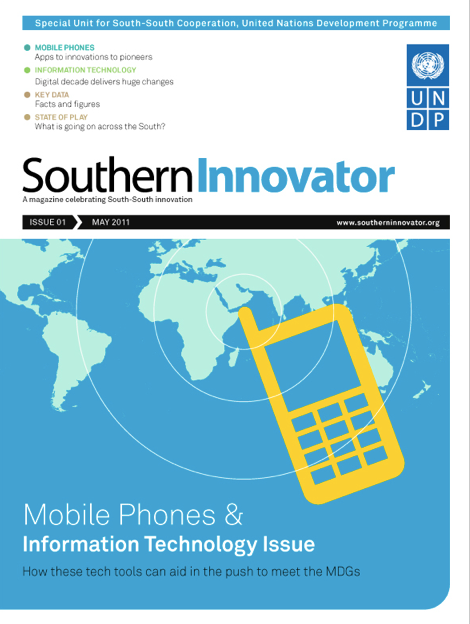
Development Challenges, South-South Solutions was launched as an e-newsletter in 2006 by UNDP’s South-South Cooperation Unit (now the United Nations Office for South-South Cooperation) based in New York, USA. It led on profiling the rise of the global South as an economic powerhouse and was one of the first regular publications to champion the global South’s innovators, entrepreneurs, and pioneers. It tracked the key trends that are now so profoundly reshaping how development is seen and done. This includes the rapid take-up of mobile phones and information technology in the global South (as profiled in the first issue of magazine Southern Innovator), the move to becoming a majority urban world, a growing global innovator culture, and the plethora of solutions being developed in the global South to tackle its problems and improve living conditions and boost human development. The success of the e-newsletter led to the launch of the magazine Southern Innovator. 

Creative Commons License

This work is licensed under a
Creative Commons Attribution-Noncommercial-No Derivative Works 3.0 License.

ORCID iD: https://orcid.org/0000-0001-5311-1052.

© David South Consulting 2023

Categories
Archive Development Challenges, South-South Solutions Newsletters

African Innovation Helps Make Banking Transactions Safer

By David SouthDevelopment Challenges, South-South Solutions

SOUTH-SOUTH CASE STUDY

As economies grow in Africa, more and more people are conducting their financial transactions electronically. This can be either through mobile phones and digital devices, or through the hole-in-the-wall of the automatic teller machine, or ATM.

These short cuts mean many people no longer have to endure long line-ups at banks to conduct day-to-day financial transactions. This convenience is revolutionizing banking for many millions of people, but there is a risk: fraud and theft. Both are rising, and are costing customers and banks, both in cash and in damage to the reputation of electronic banking.

Criminal gangs and lone individuals alike are behind this crime. Most notorious are the “carding” and “skimming” gangs, who plant devices on ATMs to read plastic bank cards and steal victims’ money. Mobile devices can also be “hacked” by sophisticated criminal gangs and the data stolen and used to plunder bank accounts. Lone thieves also take people hostage and force them to use their card to withdraw money. A crime victim is usually forced to give over his or her Personal Identification Number (PIN), which the thief then uses to withdraw cash from the ATM.

But just as thieves have become cleverer about the new opportunities created by digital financial transactions, enterprising start-ups are developing innovations to improve financial security.

One Kenyan start-up is hoping to be a pioneer in innovative financial safety software for mobile devices and ATMs.
Usalama Innovative Systems, LTD. (http://usalama.biz/), co-owned by graduate student and lead programmer Denis Karema (deniskarema.com), has already been singled out for a CIO magazine’s CIO100 Award in Enterprise Innovation in 2011 (http://www.cio.com/cio-awards/cio100).

Karema has been working in information technology since 2008 and has a background in computer science. He has built his experience while working on various information technology projects in East Africa.

The ambitious company says it wants to be “the leading provider of innovative solutions to financial entities in Africa by 2015.”
Usalama has developed various systems pending patents and copyrights and has built up experience in deploying enterprise information technology.

Usalama is seeking additional funding from investors for multiple innovations to protect customer financial transactions. One of them is an ATM solution, which the company claims can reduce theft by over 90 per cent. Speaking with the Business Daily Africa website, Karema explained the anti-fraud application, dubbed Safety Pin.

“When someone approaches you or when you are involved in a carjacking, or one of those unfortunate incidences, you give them your card or PIN as they ask for it, but when they get to the machine it does not treat them the same way as it does you,” Karema said.

The thief is presented with what looks like the victim’s bank account but actually only has 10 per cent of their cash on display. The thief will then withdraw this cash and think they have cleaned out the victim’s bank account.

It is a clever solution which doesn’t entirely block the thief from receiving money from the ATM, but just gives them a small portion of the amount in the account. The idea is to fulfil the psychological need of the thief to get some cash in the robbery attempt, so they will then release the hostage and go away.

“We are working on reducing the amounts that can be lost by up to 90 per cent, so it means if I have 100,000 shillings in my account, only 10,000 shillings can be lost through fraud,” Karema said.

The amount that is stolen can be covered by bank insurance policies so that the customer does not suffer a serious financial loss.

“(The) good thing about this application, first of all, is this hasn’t been done before,” Karema said. “People have come close to creating ATM anti-fraud measures, like asking you to put your PIN in reverse. But they don’t seem to work. For each of them, you are ending up having your money stolen and then following up with the fraudster. So our application prevents the money from being stolen in the first place. So our preventative measure is better than a curative one when money is involved. And also the application is applicable globally.

“We intend to have this implemented in each and every commercial bank, not only in Africa, but the rest of the world.

“A bank can recoup investment in our application within the first year [by avoiding the loss of clients and funds from fraud]. Aside from that, the bank is also able to receive complete and detailed reports each and every time a fraud occurs and so it makes it easier for the bank to monitor trends and also to know which of their outlets are having more and more fraud-related cases.”

Other innovations Usalama has been developing include Usalama Pin, which helps commercial banks monitor fraud in real time; Usalama Spy, which gives more detailed fraud reports and analyzes the information; Home Bank, a way to offer 24/7 banking to customers so they can deposit the money directly into savings accounts without delay; and Usalama Mobile, a mobile banking and money service solution.

Usalama believes the suite of solutions will help banks to retain current customers and make their financial transactions safer, attracting so-called “high net worth” clients. Usalama believes this will help banks in Africa grow their number of customers and cash reserves.

“We are always thinking about innovation because we feel that innovation is the key thing to developing sustainable enterprises,” Karema believes.

Published: March 2013

Resources

1) Sinapis: Sinapis’ mission is to empower aspiring entrepreneurs in the developing world with innovative, scalable business ideas by providing them with a rigorous business education, world-class consulting and mentoring services and access to seed capital. Website:http://www.sinapisgroup.org/entrepreneurs.php

2) DarkMarket: How Hackers Became the New Mafia: We live our lives online – banking, shopping, working, dating – but have we become complacent? Website:http://www.randomhouse.co.uk/editions/darkmarket-how-hackers-became-the-new-mafia/9780099546559

3) Usalama is seeking investors via the Venture Capital for Africa platform. Website:http://vc4africa.biz/members/254innovative/

4) University Student Launches Startup Kenya, A Crowdmap Of All Startups In Kenya. Website:http://techmoran.com/2013/01/22/university-student-launches-startup-kenya-a-crowdmap-of-all-startups-in-kenya/

5) Southern Innovator Magazine Issue 1: Mobile Phones and Information Technology. Website:http://www.scribd.com/doc/95410448/Southern-Innovator-Magazine-Issue-1-Mobile-Phones-and-Information-Technology

Southern Innovator logo

London Edit

31 July 2013

Creative Commons License

This work is licensed under a
Creative Commons Attribution-Noncommercial-No Derivative Works 3.0 License.

ORCID iD: https://orcid.org/0000-0001-5311-1052.

© David South Consulting 2023