Issue 6 of Southern Innovator will tackle the theme of science, technology and innovation. Looking ahead, we are also seeking long-term funding for the magazine to take us to 2016 and also to enable us to scale to a level of reach we feel is necessary to have significant impact across the global South. To date, Southern Innovator has been ‘lean and mean’, run on a small budget with a tiny team. The editorial team is based in London, UK, the design team in Reykjavik, Iceland and the UN team in New York. This has worked well because it has forced us to be prudent with resources and to be very creative. But we have reached the physical limitations of this approach, and, to be frank, feel we are not living up to the potential of the magazine because we do not have the people and team to reach scale. As an example, we can only afford to publish in the English language, which means we miss out on billions of non-English speakers. We would like to have regional issues and bureaus, to be able to leverage the SI brand to offer a range of resources and products that are truly transformational for innovators, to stage events that bring together like-minded individuals, and to come out more frequently and regularly.
If our potential sponsors and advertisers could see what I see when the magazine reaches readers, I do not think they would hesitate to get on board and support the magazine. Often innovators feel like they are plowing a lonely furrow, unsupported, isolated. Or are enjoying significant local success but can see how what they have learned can help others but lack the time or means to share their wisdom and experience.
That “a ha” moment when we meet somebody who tells us the magazine “gets them” is especially rewarding. Most recently, this happened over and over again at the Global South-South Development Expo held in Nairobi, Kenya towards the end of 2013.
Hollywood has given the world the highly entertaining Iron Man series of films. The fictional Tony Stark dazzles us with his inventions and his awesome innovator’s ocean-side lair. If you liked that film, then you will love what we see happening all around the global South and feature in the magazine. Most of our innovators lack the flashy resources and wealth of a Tony Stark but they are no less innovative and creative, often working in the harshest conditions on the planet. They are our ‘Iron Men’ and ‘Iron Women’.
Help us to further share the innovator’s spirit of Southern Innovator and transform the world, one good idea at a time!
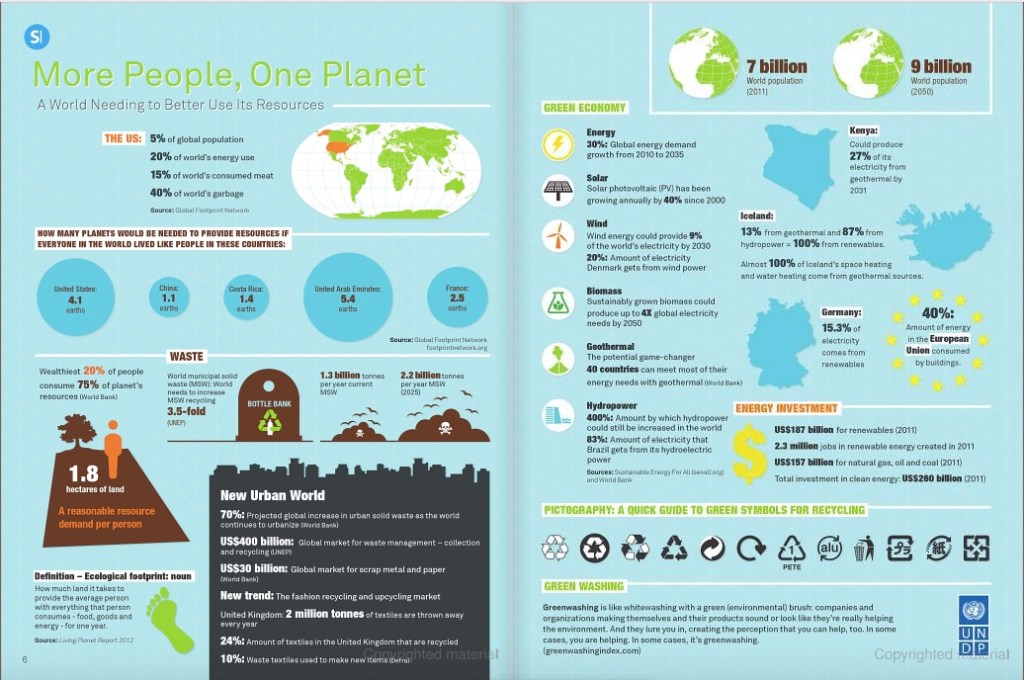
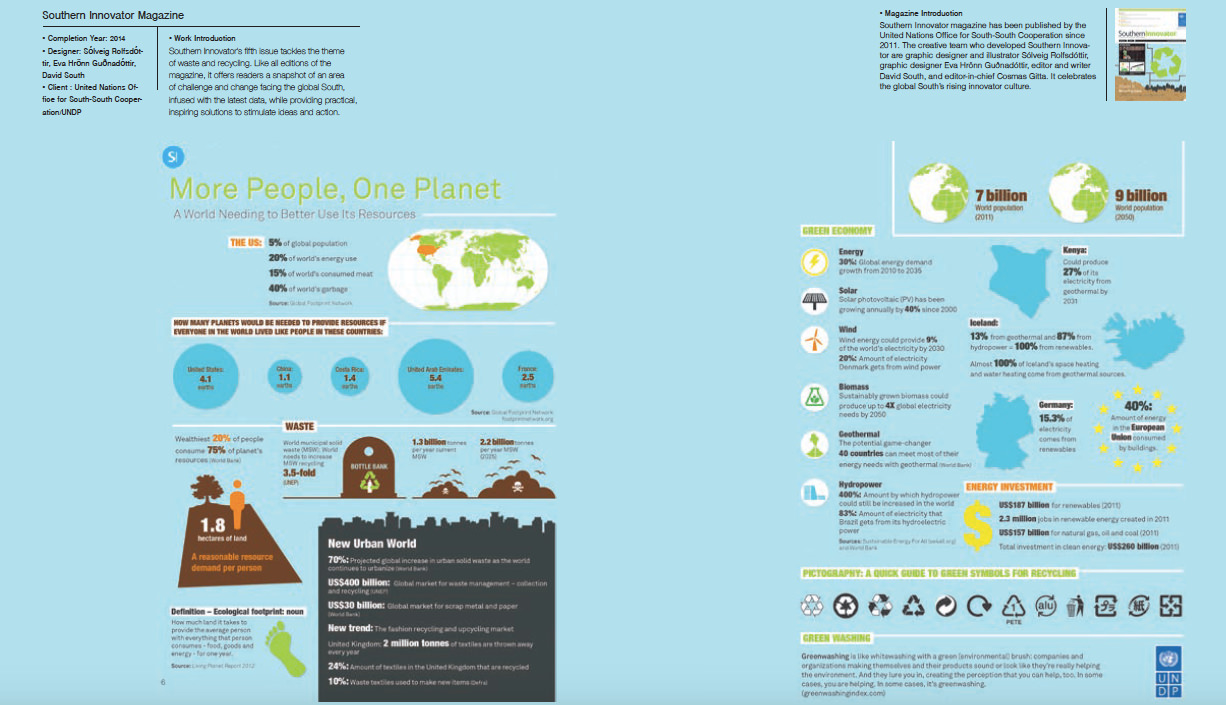
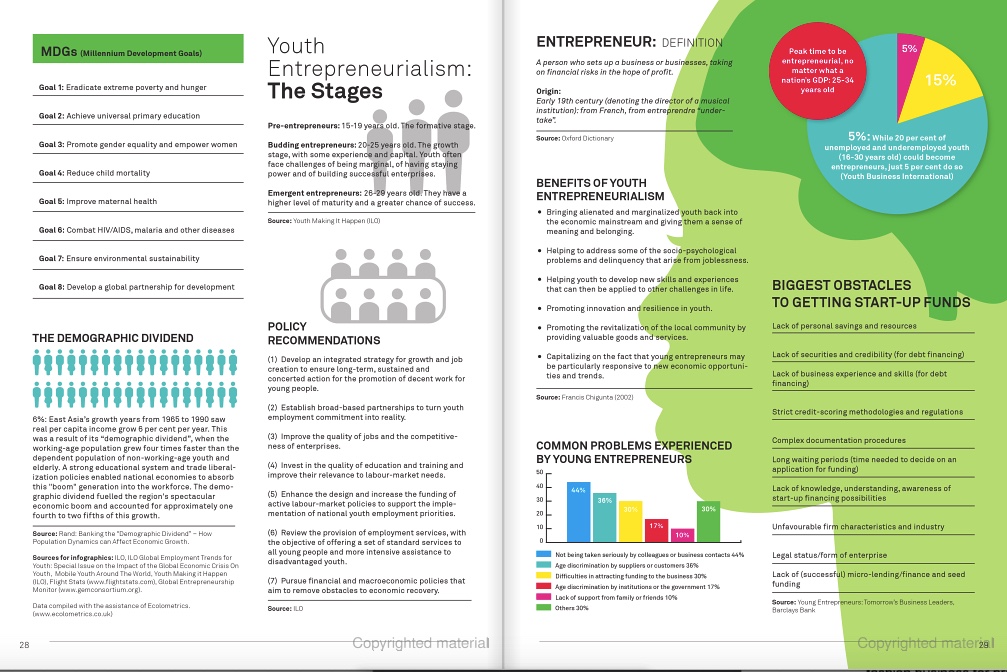
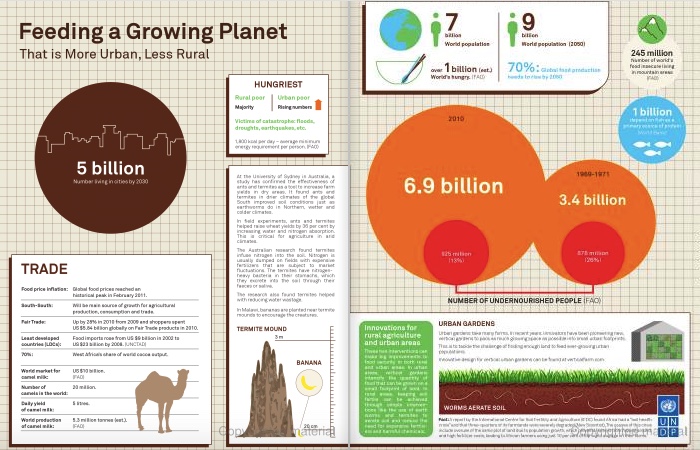
Visual Storytelling: Infographic Design in News published by Images Publishing.The proof flats for inclusion in Visual Storytelling: Infographic Design in News.
“Close, but no cigar” some might say, but we were genuinely flattered to be shortlisted in 2014 for inclusion in the book Visual Storytelling: Infographic Design in News published by Images Publishing in Shanghai, China. It is a lovely book to look at and the quality of infographics chosen for the book is high so it must have been a tough call. It was further proof Southern Innovator was getting known around the world and gaining respect for its content and design. The excellent work done by our graphic designer and illustrator Solveig Rolfsdottir speaks for itself.
Graphic Designer and Illustrator: Sólveig Rolfsdóttir.
The proof flats for inclusion in Visual Storytelling: Infographic Design in News.Visual Storytelling: Infographic Design in News published by Images Publishing.
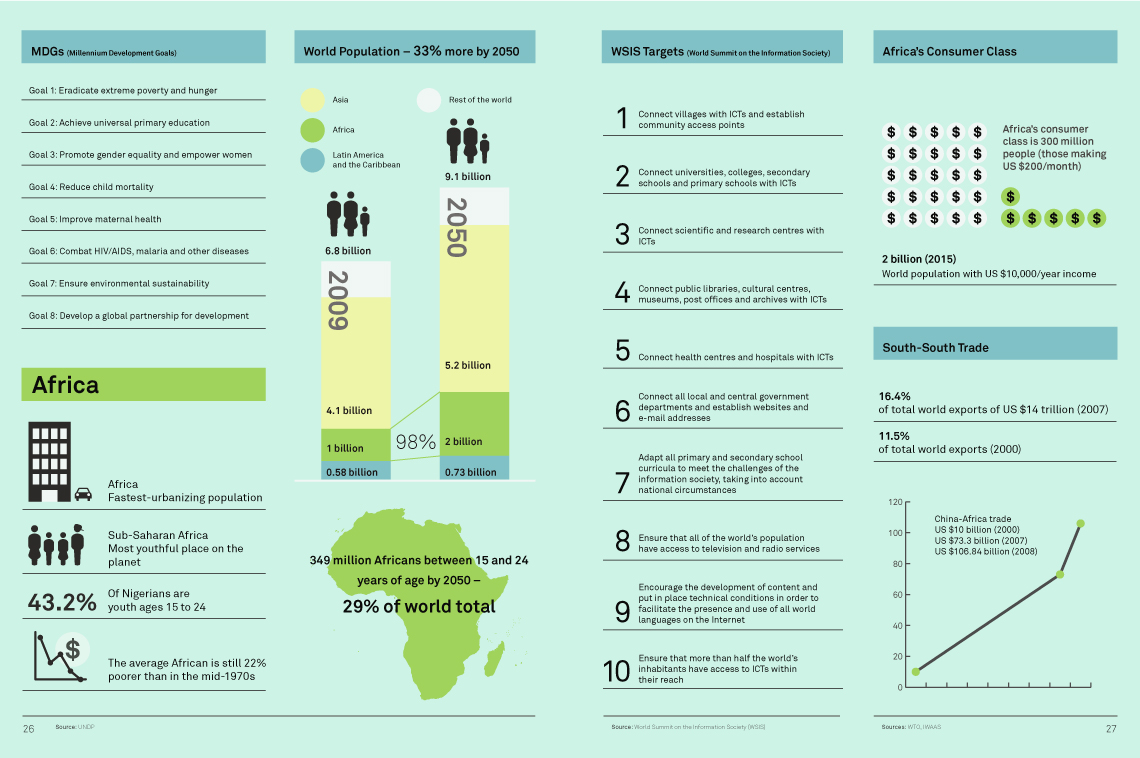
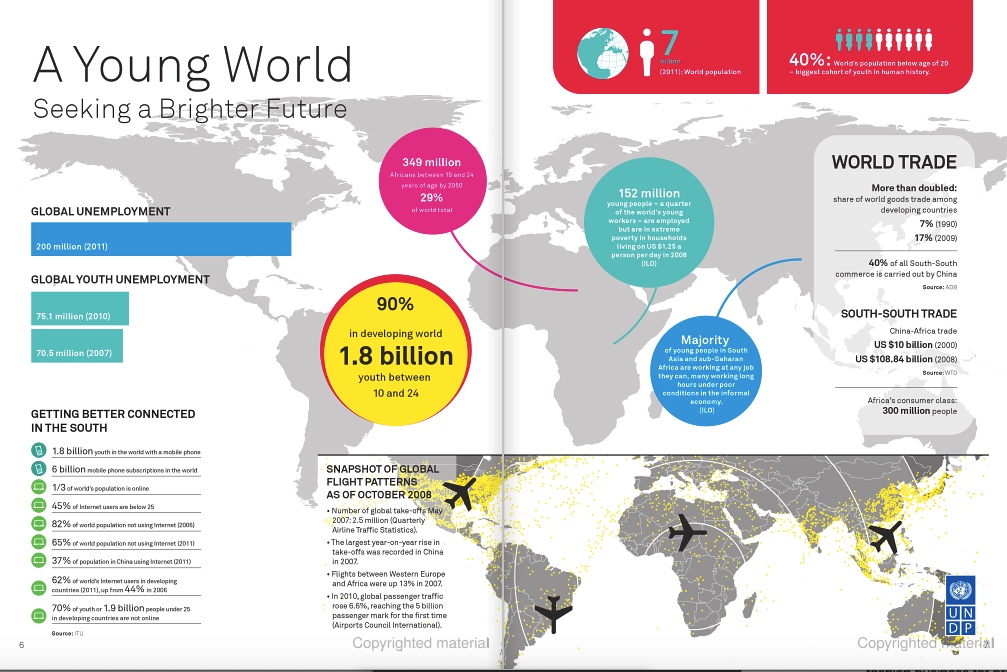
It was announced in January 2014 that China has surpassed the United States to become the world’s number one trading nation, as measured by the total value of exports and imports. This new economic behemoth also continued to grow its trade relationships with Africa.
US exports and imports of goods totaled US $3.82 trillion in 2013, according to the U.S. Commerce Department. China’s annual trade in goods passed US $4 trillion for the first time in 2013 (Guardian).
Zheng Yuesheng, a spokesman for China’s customs administration, told The Guardian that becoming the world’s number one trading nation was “a landmark milestone for our nation’s foreign trade development.”
Significantly for Africa, 2012 was also a record year for China-Africa trade, which reached 5 per cent of China’s total foreign trade and made up 16 per cent of all of Africa’s international trade, according to a new report from South Africa.
Consultancy Africa Intelligence (consultancyafrica.com), a South African-based organization with more than 200 consultants focused on “expert research and analysis on Africa” highlights the achievements of this strong trade relationship – and also some of its threats and weaknesses – in its report.
Trade between China and Africa has surged during the decade since China joined the World Trade Organization (WTO) (wto.org) in 2001, rising from around US $10 billion in 2000 to US $198.49 billion in 2012, according to China’s Ministry of Commerce. Ambitiously, it could reach US $300 billion by 2015, announced Cheng Zhigang, secretary-general of the China-Africa Industrial Cooperation and Development Forum (www.zfhz.org) (China Daily).
China’s trade and poverty reduction.
The World Bank reported South-South trade now surpasses South-North trade, meaning exports from developing countries to other developing countries exceed exports to wealthy developed countries. South-South trade experienced rapid growth in the 2000s, accounting for 32 per cent of world trade by 2011 (World Bank).
South-South trade and investment between Africa and lower-income and middle-income developing countries rose from 5 per cent in the 1990s to almost 25 per cent in 2010 (Consultancy Africa Intelligence). Before the 1990s, over 90 per cent of trade for Africa was with high-income or developed countries.
China is attractive as a trade partner for many reasons. One of them is the strong admiration for its success in lifting millions out of poverty through an aggressive growth strategy and rapid urbanization with big investments in education, science, technology, infrastructure – modern airports, ports, roads and rail – and research and development.
Since 1978, it is believed China has lifted 500 million people out of poverty, out of a population of 1.3 billion people (World Bank). Incomes have doubled every 10 years with average GDP growth of 10 per cent a year, meaning the country has almost reached all the Millennium Development Goals.
Building a trade relationship with China has led to Zambia’s copper mines running again, Gabon’s oil fields being re-explored, and Sudan becoming a major oil exporter to China. Angola, Democratic Republic of Congo (DRC), Equatorial Guinea, Republic of Congo and South Africa are all benefiting from exporting commodities to China.
The relationship has not been entirely beneficial, according to the Consultancy Africa Intelligence report. Some African industries, such as textiles, have suffered from competition with cheaper Chinese imports, leading to factory closures and job loses.
Non-commodity exports from Africa to China amounted to just 10 per cent of the trade total. Many of the contracts signed for projects also go to Chinese companies, the report found.
Renewed concern has also emerged over rising debt levels in Africa.
In summary, the report finds a growing trade relationship with China has brought to Africa commodity booms, growing GDP (gross domestic product), and lots of foreign investment. On the negative side of the ledger, there have been job loses due to cheaper imports, rising personal and government debt levels and an over-dependence on minerals for economic growth.
Across Africa, new infrastructure has emerged where it probably would not have come about under the continuing debt burdens from the 1970s and 1980s. The continent has received a shot of energy, but it remains to be seen whether governments can sustain this economic jolt and make the wise choices that create African jobs and build liveable cities for the 21st century.
Published: March 2014
Resources
1) Global South-South Development Expo: The Global South-South Development Expo (GSSD Expo) is the only Expo solely from the South and for the South. It showcases successful Southern-grown development solutions (SDSs) addressing the need to meet the Millennium Development Goals (MDGs). Website: southsouthexpo.org
2) World Trade Organization (WTO): There are a number of ways of looking at the World Trade Organization. It is an organization for trade opening. It is a forum for governments to negotiate trade agreements. It is a place for them to settle trade disputes. It operates a system of trade rules. Essentially, the WTO is a place where member governments try to sort out the trade problems they face with each other. Website: http://www.wto.org
3) Djibouti Free Zone: Djibouti Free Zone was created with one primary goal in mind – to bring about a sea-change in the way Africa thinks and does business. No red tape, ruthless efficiency and genuinely exhaustive services – in essence, it offers the ideal conditions for trade and commerce to flourish. Website: djiboutifz.com/
4) Forum on China-Africa Cooperation: Keep up with the busy diplomatic and trade contacts between China and African countries. Website: http://www.focac.org/eng/
5) China-Africa Cooperation Net: China-Africa Industrial Forum (CAIF) is the collective dialogue and cooperation mechanism that was set up by both China and friendly African countries in the year 2000. Website: http://www.zfhz.org/html/en_gywm.html
China has been a member of the WTO (World Trade Organization) since 11 December 2001. The World Trade Organization deals with the global rules of trade between nations. Its main function is to ensure that trade flows as smoothly, predictably and freely as possible.








 David South Consulting

You must be logged in to post a comment.