Tag: Development Challenges

  • Boosting Tourism in India with Surfing Culture

    Boosting Tourism in India with Surfing Culture

    By David SouthDevelopment Challenges, South-South Solutions

    SOUTH-SOUTH CASE STUDY

    Tourism has experienced decades of growth and diversification and is now considered one of the fastest-growing economic sectors in the world. According to the UNWTO – the United Nations World Tourism Organization – modern tourism is “a key driver for socio-economic progress.”

    The scale of global tourism means it rivals other sectors, such as oil exports, food products and automobiles in terms of economic clout. With such an important role to play in global commerce, it has become a top income source for developing countries in the global South.

    International tourist arrivals grew by 4 per cent in 2012, reaching a record 1.035 billion worldwide (UNWTO). Emerging economies led the growth in tourism, with Asia and the Pacific showing the strongest gains. Tourism outpaced growth in the wider world economy in 2012, contributing US $2.1 trillion to global GDP and supporting 101 million jobs (WTTC).

    “2012 saw continued economic volatility around the globe, particularly in the Eurozone. Yet international tourism managed to stay on course” said UNWTO Secretary-General Taleb Rifai. “The sector has shown its capacity to adjust to the changing market conditions and, although at a slightly more modest rate, is expected to continue expanding in 2013. Tourism is thus one of the pillars that should be supported by governments around the world as part of the solution to stimulating economic growth.”

    One country that has found tourism becoming a key contributor to its national income is India. The country’s travel and tourism industry is now three times larger than its automotive manufacturing industry, and generates more jobs than chemical manufacturing, communications and the mining sector combined (World Travel and Tourism Council).

    Indian Tourism Minister Subodh Kant Sahai called for the sector to create 25 million new jobs over the next five years and it is hoping to grow the market by 12 per cent by 2016 (The Economic Times).

    Travel and tourism now contributes 6.7 billion rupees (US $124 million) – or 6.4 per cent – of the country’s total GDP (gross domestic product). The sector supports 39 million jobs directly and indirectly.

    But competition for global tourist dollars is fierce. As more flight routes open up – Africa for example, is seeing new airlines and routes emerge every year – a person looking for somewhere to holiday has an ever-growing range of options to choose from. Will it be Africa this year, or shall we go to Asia?
    One way to attract tourists and gain an extra edge in the global travel marketplace is to show imagination and innovation. Being different and novel can be the clincher for a tourist, especially one who is widely travelled and is searching for new experiences.

    In Southern India, the state of Kerala is well known for its ayurvedic medicine (http://en.wikipedia.org/wiki/Ayurveda) and food tradition going back centuries, combined with its laid-back beach culture. It is a heady combination that successfully attracts many people, who come to relax and boost their health.
    Now, Kerala is offering a new dimension to this experience: surfing. Surfing is a water sport involving a person riding ocean waves (https://en.wikipedia.org/wiki/Surfing), usually on a long board. India has enormous and mostly untapped potential as a surfing destination, with its hot weather and 7,000 kilometres of coastline.

    Soul and Surf (http://soulandsurf.com) in Golden Beach, Varkala is within walking distance of the Varkala Cliff tourist area and an hour away from the closest major airport, Trivandrum International Airport.

    The founders of Soul and Surf, Ed and Sofie Templeton, were captivated by “surfing warm, empty waves, eating wonderful fresh, cheap seafood, practicing yoga and receiving ayurvedic treatments”, according to their website.

    “Enchanted by India’s magical, spiritual atmosphere, the warmth of the local people and the raw natural beauty of the area,” they set up a combined surfing and yoga retreat in 2010.

    They have become part of a growing surfing scene in Kerala, and an increasing awareness in the country that its long ocean coastline is perfect for water sports.

    As surfing grows in India, the owners wanted to create a business that supported the local area, particularly coastal fishing communities surrounding Varkala.

    They have also expanded to run a luxury surf and yoga retreat in Sri Lanka and guided trips to the Andaman Islands.

    Soul and Surf was inspired by the Surfing India Surf Ashram (surfingindia.net), a 12-hour trip up the coast from Surf and Soul in Karnataka.

    Their so-called “Surfing Swamis” have discovered the best places to surf in India and are spirited champions of the whole surfing lifestyle. A swami (http://en.wikipedia.org/wiki/Swami) is a Hindu male religious teacher.
    Surfing India promotes adventure sport in India and was started in 2004. At the time, surfing in India had a very low profile. Surfing India offers a sophisticated experience to travellers, including Wi-Fi Internet access, vegetarian food and all the equipment required.

    All the staff are volunteers and work for room and board. Profits are plowed back into keeping the surf ashram going and helping its activities, which include adventure tours, a surf camp, surf school, yoga retreat, bodyboarding, snorkelling and wakeboarding.

    The Surfing Swamis Foundation is a non-profit organization whose goal is to “teach surfing and environmental awareness to children, orphans, and handicapped persons of any age or gender.”

    It also sponsors the All India Surf Team for boys and girls across India.

    Published: April 2013

    Resources

    1) India Surf Festival: Taking place at the beginning of the year. Website: http://www.surfingindia.net/random-stuff/india-surf-festival-2013

    2) A guide to the best places to surf in India. Website:http://www.surfingindia.net/india-surf-spots

    3) Surfing Federation of India. Website:http://www.surfingfederationofindia.org/

    4) United Nations World Tourism Organization: The World Tourism Organization (UNWTO) is the United Nations agency responsible for the promotion of responsible, sustainable and universally accessible tourism. Website: unwto.org

    Southern Innovator logo

    London Edit

    31 July 2013

    https://davidsouthconsulting.org/2022/10/20/african-tourism-leads-the-world-and-brings-new-opportunities/

    https://davidsouthconsulting.org/2022/10/20/africas-tourism-sector-can-learn-from-asian-experience/

    https://davidsouthconsulting.org/2022/09/27/caribbean-island-st-kitts-goes-green-for-tourism/

    https://davidsouthconsulting.org/2022/11/20/ecotourism-to-heal-the-scars-of-the-past/

    https://davidsouthconsulting.org/2022/11/23/kenyan-safari-begins-minutes-from-airport/

    https://davidsouthconsulting.org/2022/10/10/a-solution-to-stop-garbage-destroying-tourism/

    Creative Commons License

    This work is licensed under a
    Creative Commons Attribution-Noncommercial-No Derivative Works 3.0 License.

    ORCID iD: https://orcid.org/0000-0001-5311-1052.

    © David South Consulting 2023
  • Mongolian Enterprises Target Healthy Urban Lifestyles

    Mongolian Enterprises Target Healthy Urban Lifestyles

    By David SouthDevelopment Challenges, South-South Solutions

    SOUTH-SOUTH CASE STUDY

    In the Northeast Asian nation of Mongolia – landlocked between Russia and China – the traditional diet is based on the nomadic ways of its herders. Rich in meat and milk products, it is a diet that has evolved from the need to survive in a harsh climate doing hard physical labour – winter temperatures can drop below minus 50 degrees Celsius.

    Social changes brought about by Mongolia’s economic journey since embracing free markets and democracy in the early 1990s have led to a growing urban population. The capital, Ulaanbaatar, has seen its population balloon for a variety of reasons – from collapsing rural economies to environmental disasters to the need to find work and opportunities – and is estimated to be over a million, out of a national population of just 2.6 million (World Bank).

    Mongolia is experiencing serious food security problems due to factors including economic inflation and weather-related disasters, and is also confronting problems common to many countries in the age of globalization. According to the World Diabetes Foundation, 10 percent of the population is at risk of the disease, which it calls a lurking catastrophe.

    As the paper “Lessons from a small country about the global obesity crisis” by Kelly D. Brownell and Derek Yach notes: “Globalization changes many features of modern life, including diets. As trade changes, diets can become more secure (hunger becomes less of a problem), but the cheapening of calories, the reliance on imported food, and the influence of food marketing drive up consumption and drive down nutrient density. Obesity, diabetes, and other chronic diseases are not far behind.”

    In response to these problems, increasing awareness of healthy lifestyles has led to some new business ventures in Ulaanbaatar. This past summer, saw the opening of an organic vegetarian restaurant and shop: the Organic Café Shop, reports Green Traveler Guides.

    Started by business partner-sisters  Bayarmaa Jarantai and Enkhmaa Jarantai with nephew Lkhagvasuren, the modest four-table restaurant and shop is a mini-revolution for a country as meat-loving as Mongolia. It serves up organic vegetarian meals and sells certified organic products. The spark of inspiration came when Bayarmaa read three books on the macrobiotic diet translated into Mongolian. The macrobiotic diet (http://en.wikipedia.org/wiki/Macrobiotic_diet) avoids highly processed foods and uses grains, beans and vegetables as its staples.

    The cafe’s menu includes: vegetable salads (shredded cabbage, bell peppers, carrots and seasoning), stir-fried vegetables with tofu and asparagus soup, 10-grain soup, eggplant, and Mongolian vegetarian fried vegetables. Prices range between 2,500 Mongolian tugrug and 4,500 tugrug (US $1.75 and US $3.00).

    The vegetables are sourced locally from Mongolian farmers and gardeners and are chemical-free. While not officially certified as organic, they are effectively that.

    The shop sells certified organic products from China. The products include rice, grains, sugars and jams. (Made-in-Mongolia organic produce is a business opportunity waiting to happen: so far there are no certified organic packaged-product producers in the country).

    The sisters import the products from Lohao City (http://www.lohaocity.com/eshow.asp) organic food market in Beijing, China.

    But despite the Organic Café Shop’s good intentions, it is not immune to the country’s food security issues: Bayarmaa admits to being puzzled about how she will be able to continue to source the fresh vegetables she needs during the harsh winter months. Ulaanbaatar is the coldest national capital in the world and fresh produce has to be imported at considerable expense.

    Another enterprise promoting healthy living in Ulaanbaatar is the Ananda Café and Meditation Centre (http://www.anandacenter.org/), a vegetarian restaurant and yoga (http://en.wikipedia.org/wiki/Yoga) centre. Yoga is the traditional physical and mental discipline from ancient India used to keep physically fit. It is a form of exercise that appeals to a wide age range and can be done pretty well anywhere.

    The Ananda Centre offers courses in yoga and meditation, vegetarian cooking classes and nature retreats.

    Published: November 2010

    Resources

    Creative Commons License

    This work is licensed under a
    Creative Commons Attribution-Noncommercial-No Derivative Works 3.0 License.

    ORCID iD: https://orcid.org/0000-0001-5311-1052.

    © David South Consulting 2023
  • Press Release 2 | Southern Innovator

    Press Release 2 | Southern Innovator

    Press Release for General Distribution

    Fourth Issue of UNDP Magazine Southern Innovator Launches at Expo

    United Nations, Nairobi, Kenya, 31 October 2013

    • Fourth issue of Southern Innovator launched at Global South-South Development Expo 2013 in Nairobi, Kenya
    • 60-page color magazine gives snapshot of fast-changing world

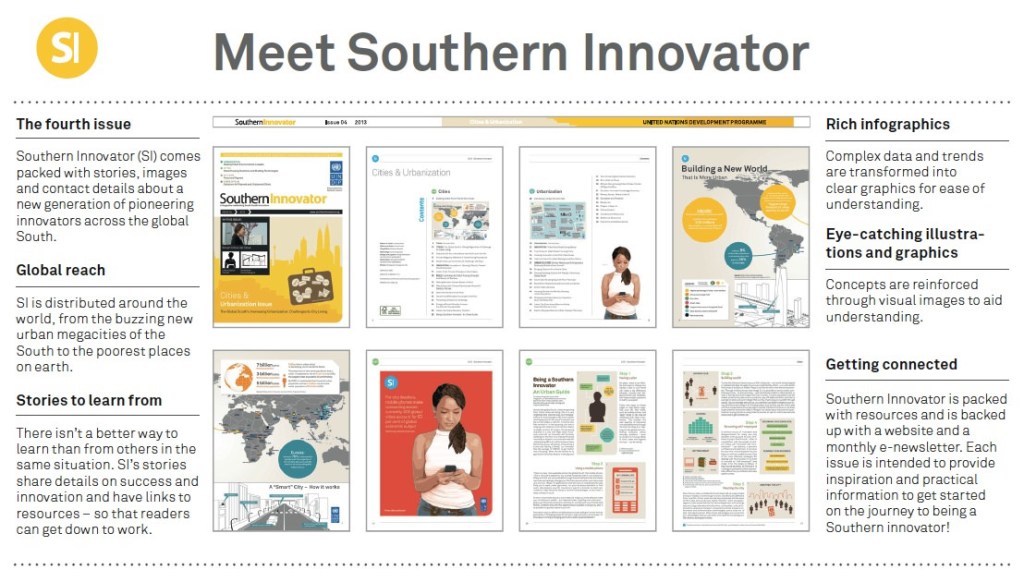
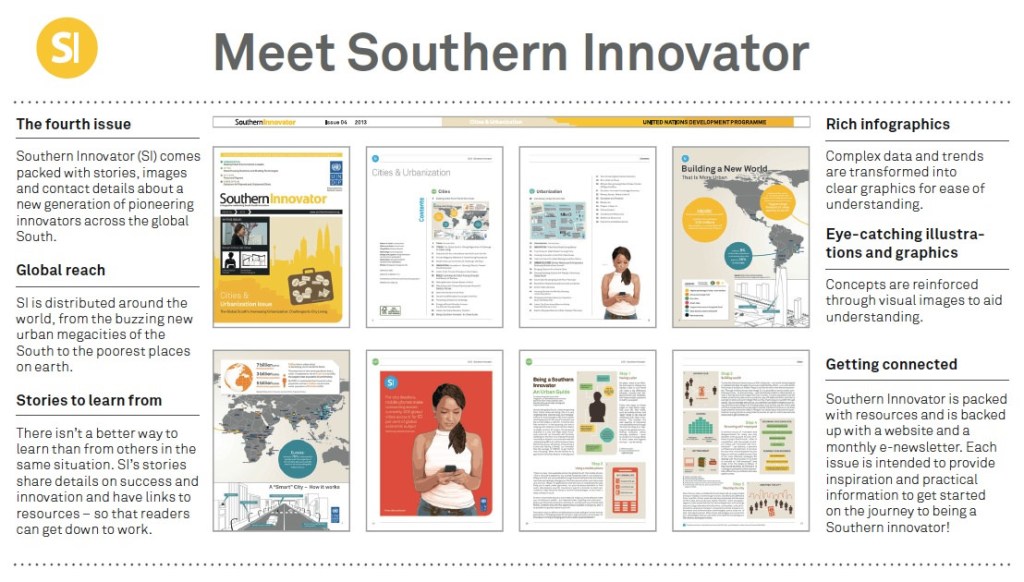
    The fourth issue of Southern Innovator magazine has launched at the Global South-South Development Expo 2013 in Nairobi, Kenya. Southern Innovator Issue 4 visits the new cities being built to tackle the challenges of a rapidly urbanizing 21st-century world. The magazine also highlights some of the solutions being devised to the challenges people face as the world becomes a majority urban place.

    Some innovators are building new cities from scratch, applying the latest thinking and hard-wiring in cutting-edge information technologies and innovative environmental measures to create ‘smart’ cities and eco-cities. Architects are designing and refining homes that are beautiful and functional, easy to build, affordable and conserve energy. Social entrepreneurs are innovating ways to create liveable and socially inclusive urban areas, often in places where planning has been scant and where incomes are very low. All those featured in the magazine were chosen for their focus on improving human development and their ingenuity and fresh thinking.

    Southern Innovator champions a 21st-century global innovator culture. The magazine profiles and celebrates the innovators across the global South finding new ways to tackle poverty, create wealth and improve human development and achieve the Millennium Development Goals (MDGs). In its first issue in September 2011, Southern Innovator featured the people who are re-shaping new information technologies – from mobile phone apps to Internet technologies. Many of the innovators profiled in that first issue came from Kenya.

    SI (southerninnovator.org) is based on intensive research and produced by the United Nations Office for South-South Cooperation in UNDP (UNOSSC) (formerly the Special Unit for South-South Cooperation in UNDP). UNOSSC organizes an annual Global South-South Development Expo (southsouthexpo.org), a roaming celebration and gathering of Southern innovators previously held in New York, Washington, D.C., Geneva, Rome and Vienna. This year’s Expo is being held in Nairobi, Kenya (28 October to 1 November 2013) and is hosted by the UN Environment Programme (unep.org).

    SI is being distributed through the United Nations’ network and partners and reaches some of the world’s poorest and remotest places, as well as the vibrant but stressed growing global megacities. It is hoped the magazine will inspire budding innovators with its mix of stories, essential information, facts and figures, images and graphics.

    We hope you enjoy the magazine and find its content interesting and illuminating: a snapshot of a fast-changing world awash, as we found out, with
    innovators, creators and do-ers making their world a better place. It is possible to sponsor issues of the magazine, either through helping to fund its print run, or through sponsored inserts covering that issue’s theme with relevant content for our readers.

    For more information on Southern Innovator, contact Cosmas Gitta at
    cosmas.gitta@undp.org.

    Press Release 1

    Press Release 3

    Online archives: southerninnovator.orghttp://www.scribd.com/SouthernInnovator. Follow @SouthSouth1

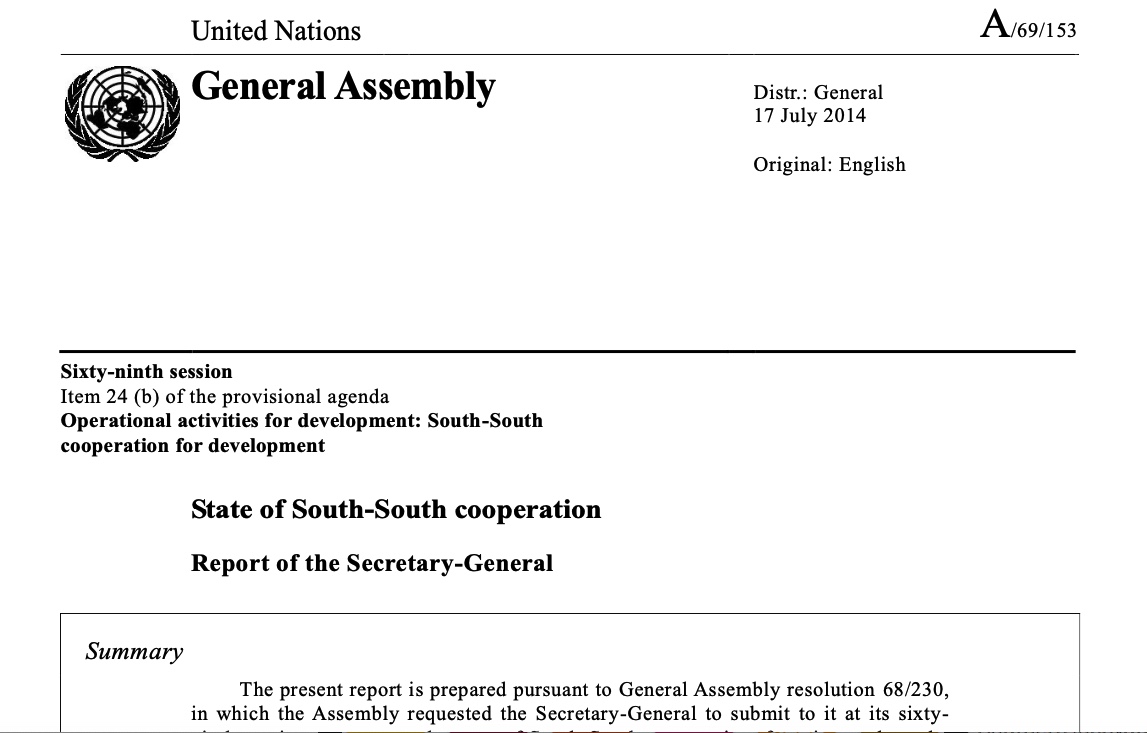
    United Nations General Assembly: Sixty-ninth session, Item 24 (b) of the provisional agenda, Operational activities for development: South-South cooperation for development, 17 July 2014.
    The research informing Southern Innovator Magazine played a part in the formulation of the UN’s post-2015 development agenda, including the Sustainable Development Goals (SDGs).

    https://davidsouthconsulting.org/southern-innovator-scale-up-fundraiser/

    ORCID iD: https://orcid.org/0000-0001-5311-1052.

    © David South Consulting 2022

  • Better by Design in China

    Better by Design in China

    By David SouthDevelopment Challenges, South-South Solutions

    SOUTH-SOUTH CASE STUDY

    In recent decades, China has been known more for its inexpensive manufactured goods than as a producer of high quality products. But this is changing as the country seeks to move up the economic chain.

    China’s long-established design traditions were largely overlooked as the country made its breakneck push to become the world’s manufacturing powerhouse. But now Chinese manufacturers want to be known for high-quality designs and products rather than just for cheap-and-cheerful merchandise.

    China is a critical lesson for the rest of the global South, and offers much inspiration to any country trying to develop, modernize and eradicate poverty.

    The country is the main reason for the dramatic reductions in global extreme poverty rates, and it can be proud of using its average yearly economic growth rate of 10 per cent to lift 440 million Chinese out of poverty – the biggest reduction of poverty in history (The Economist). The strategy of exporting manufactured goods into Western markets at competitive prices has dominated the past 20 years.

    But China faces a dilemma as other nations in the global South are moving into this niche. It needs to quickly become a high-value nation, with unique products and designs generated in the country.

    Luckily, a renaissance in Chinese design in the last five years has been gradually grabbing the attention of the world’s creative community.

    Innovative Chinese designers are creating home furnishings and interiors that are being snapped up by European companies.

    The Italian kitchen utensil design company Alessi turned to eight Chinese architects – including Ma Yansong and Yung Ho Chang – to design a range of trays called (Un) Forbidden City. The architects’ designs were manufactured in Italy – a reversal of the pattern that has dominated for the past 20 years.

    The architects drew on Chinese traditions and 21st century technologies to design the trays. One was made using a 3D scanner which captured images used to make a mould.

    The drive to change and transform China’s global economic role was promoted in 2011’s Beijing International Design Week (http://www.bjdw.org/en/), with its theme of transforming “Made in China to Designed in China.”

    “When you have so much of a manufacturing base in one place, it’s natural that people start thinking about how to climb the value chain,” Philip Tinari, director of Beijing’s Ullens Centre for Contemporary Art (UCCA) (http://ucca.org.cn/) – a champion of new artists and designers – told howtospendit.com.

    “Chinese design has become something to rally around and, unlike art, enjoys great official support because it’s a way of improving China’s long-term economic position, as opposed to expressing thoughts about what’s been going on.”

    Other Chinese designers grabbing attention include Chen Xuan, who makes tables; chair-maker Gui Yang; Li Bowen, a maker of wicker chairs; and Ge Wei, a maker of jewellery boxes.

    Designer Huo Yijin makes contemporary tea trays, using heat-reactive lacquer coating to create dazzling effects.

    “Users can see the wonderful effect of water and temperature reacting on the tea trays when they drink Kungfu tea in the traditional way,” Huo explained.

    Jingdezhen, Jiangxi province – a city that has been making ceramics since the Ming Dynasty (1368–1644) – is now attracting craftspeople from around the world looking to tap into its expertise and skill. One attraction is Mr Yu’s Big Ware Factory. Its unparalleled ability to create giant-size pottery is a design niche with much potential.

    Many foreign creatives are being drawn to China for its can-do attitude and the ability to break with conventions stifling creativity in the West. The next five years could see the world’s design centre of gravity shift eastwards again.

    Published: November 2012

    Resources

    1) Ullens Centre for Contemporary Art (UCCA): The Ullens Center for Contemporary Art (UCCA) is a comprehensive, not-for-profit art center serving a global Beijing public. Website: http://ucca.org.cn/

    2) ChinaShijitanContemporaryArtCenter: A mixed-use art venue with experimental theatre, exhibition space, art gallery and production spaces. Website: http://www.ar-chiasmus.cn/project_6.html

    3) Pearl Lam Galleries: Pearl Lam Galleries lead a stable of International and Chinese artists who are multidisciplinary, refuting the hierarchy of art forms. The galleries do not follow the model of Western galleries; rather, they have evolved from the philosophy of Chinese Literati, which does not segregate between the different art disciplines. Website: http://pearllamgalleries.blogspot.co.uk/p/about.html

    4) School of Design of the China Central Academy of Fine Arts (CAFA): The Central Academy of Fine Arts, located in Beijing, the capital of China, is an academy where culture, history and art are flourishing, which enjoys the best art resources of the world. Website: http://www.cafa.edu.cn/aboutcafa/lan/?c=1101

    5) Beijing’s legendary 798 art district: “798” is located in the Dashanzi area, to the northeast of central Beijing. It is the site of state-owned factories including Factory 798, which originally produced electronics. Beginning in 2002, artists and cultural organizations began to divide, rent out, and re-make the factory spaces, gradually developing them into galleries, art centers, artists’ studios, design companies, restaurants, and bars. Website: http://www.798space.com/subpage_en.asp?classid=17

    https://davidsouthconsulting.org/2021/03/20/accessing-global-markets-via-design-solutions/

    https://davidsouthconsulting.org/2021/03/12/afro-coffee-blending-good-design-and-coffee/

    https://davidsouthconsulting.org/2021/02/20/baker-cookstoves-designing-for-the-african-customer/

    https://davidsouthconsulting.org/2021/08/29/brazilian-design-for-new-urban-middle-class-world/

    https://davidsouthconsulting.org/2022/10/04/the-brck-kenyan-developed-solution-to-boost-internet-access/

    https://davidsouthconsulting.org/2020/12/10/china-sets-sights-on-dominating-global-smartphone-market/

    https://davidsouthconsulting.org/2021/01/26/designed-in-china-to-rival-made-in-china/

    https://davidsouthconsulting.org/2021/06/11/indonesian-wooden-radio-succeeds-with-good-design/

    https://davidsouthconsulting.org/2022/10/04/popular-chinese-social-media-chase-new-markets/

    https://davidsouthconsulting.org/2021/10/04/putting-quality-and-design-at-the-centre-of-chinese-fashion/

    Creative Commons License

    This work is licensed under a
    Creative Commons Attribution-Noncommercial-No Derivative Works 3.0 License.

    ORCID iD: https://orcid.org/0000-0001-5311-1052.

    © David South Consulting 2023