Tag: Development Challenges

  • Mobile Phone Microscopes to Revolutionize Health Diagnostics

    Mobile Phone Microscopes to Revolutionize Health Diagnostics

    By David SouthDevelopment Challenges, South-South Solutions

    SOUTH-SOUTH CASE STUDY

    Mobile phone usage has increased hugely across the global South in the past five years. In Africa, the number of mobile phone subscribers reached 545 million in 2013, while there are 3.5 billion mobile phone users in Asia and the Pacific (ITU). Some 93 million people in Africa and 895 million in Asia and the Pacific have mobile phone Internet access (ITU).

    “Every day we are moving closer to having almost as many mobile-cellular subscriptions as people on earth,” Brahima Sanou, Director of the ITU Telecommunication Development Bureau, wrote in its latest report on their growth.

    The number of mobile phone subscriptions in the developing world has surpassed 5 billion and the number in the world as a whole reached 6.8 billion in 2013 (ITU), out of a world population of more than 7.1 billion. This compares to considerably lower numbers of people with access to the Internet: 2.7 billion in the world (ITU).

    While many people in poorer countries have basic versions of mobile phones, the next generation of smartphones has been growing in number as prices come down (http://en.wikipedia.org/wiki/Smartphone). Examples of these smart phones include the BlackBerry, Apple’s iPhone, the Samsung Galaxy, and the Nokia Lumia. Smartphones tend to have enormous computing power and an ability to run complex ‘apps’ or applications – including public transport options, maps, restaurant and store locators, banking services and market information and resources. They can also access the Internet through Wi-Fi, and have camera and video capability.

    What people can do with these feature-packed phones is limited by little other than human imagination. With the ability to store large amounts of data and images, using apps that perform a limitless range of services and tasks, smartphones can be deployed as powerful tools to tackle problems.

    Science fiction sagas have long fantasized about people being able to walk around with small electronic devices that can do immensely powerful tasks, including being a medical diagnostic tool. But this science fiction dream is rapidly becoming reality in the global South.

    Various initiatives and innovators are using mobile phones and smartphones to conduct medical diagnosis and gather data for medical studies in real time.

    Some innovations are even turning smartphones into mobile microscopes.

    Developed by the University of California, Berkeley in the lab of Professor Daniel Fletcher (http://cellscope.berkeley.edu/), the CellScope (cellscope.com) is capable of turning the camera on a cell (mobile) phone into a diagnostic microscope with a magnification of 5x to 60x. Fletcher’s lab has also pioneered work on needle-free injection technology.

    The CellScope can be used for ocular imaging (technologies for visualizing and assessing a range of diseases of the eye) and for detecting tuberculosis, blood-borne diseases and parasitic worms.

    Fletcher is a bioengineer and was impressed with how much mobile phone technology has proliferated across the global South.

    “You don’t have to put in these copper wires (for phone lines) anymore; you have the (cell) towers. It’s big business,” Fletcher told The Scientist Magazine.

    “It’s leaping over the need for infrastructure.”

    Fletcher and his colleagues experimented by attaching extra lenses to smartphones. They then used the phone to image cells that had been stained with fluorescent dyes to make them easier to see. The quality of the image was so good, they were able to diagnose malaria from blood samples and tuberculosis from sputum (spit) samples.

    With the addition of image analyzing software, the phone was able to automatically count the number of Mycobacterium tuberculosis bacilli. They were trying to prove you did not need conventional microscopes to do this sort of diagnostic work.

    Fletcher and his colleagues are currently trialling the technology in Vietnam, India, Cameroon and Thailand.

    “Technology alone doesn’t create effective health care,” Fletcher emphasizes. “It’s got to be part of a context in which the information is captured and validated and is analyzed in the right way, and treatments are then available in response to information.”

    Another group from Toronto General Hospital in Canada (http://www.uhn.ca/corporate/AboutUHN/OurHospitals/Pages/TGH.aspx) has ‘hacked’ an iPhone smartphone by placing a 1 millimeter ball lens on the phone’s camera. Isaac Bogoch, an infectious disease specialist, had been investigating parasitic worm infections in children on Pemba Island off the coast of Tanzania. Along with Jason Andrews of Massachusetts General Hospital, they had been inspired by a report about how a team of researchers from the University of California, Davis had created a simple microscope out of an iPhone with a 1 millimeter lens. This makeshift microscope was used to take pictures of blood smears at a 350 times magnification and giving a 1.5 micron resolution.

    “We thought that was a great idea,” Bogoch told The Scientist Magazine. Bogoch regularly works as part of an international team around the world, often in remote locations.

    “We thought … we could take it to the field and see if it accurately works in a more real-world setting.”

    Inspired, Bogoch got together with his colleagues and created a similar microscope with a 3 millimeter ball lens and then got to work using it to identify soil-transmitted helminth eggs in stool samples in Tanzania. When examining the stool samples of 199 children in a clinical trial using the makeshift microscope, they were able to accurately identify helminth infections in 70 per cent of the cases. They also found the iPhone microscope did very well at spotting eggs of particular parasites, such as 80 per cent of Ascaris lumbricoides infections (http://en.wikipedia.org/wiki/Ascaris_lumbricoides). The success rate dropped significantly, however, when trying to detect whipworm parasites (just over half) and hookworm infections (14 per cent).

    But this is early days and an experiment: “Obviously the results aren’t perfect and there’s definitely room for improvement,” Bogoch admits.

    What stands out is the potential to completely revolutionize health care by continuing to develop the capability of smartphones. With their portability and low cost, they also have the advantage of not needing a trained physician to operate them, according to David Walker, president of the American Society of Tropical Medicine and Hygiene, in The Scientist Magazine.

    One of the many advantages of combining a microscope with a digital smartphone is the ability to take a picture and send it straight away to someone to make a diagnosis.

    Even more exciting, Sebastian Wachsmann-Hogiu at the University of California, Davis (http://cbst.ucdavis.edu/people/sebastian/) is adapting mobile phones to undertake spectroscopy (http://en.wikipedia.org/wiki/Spectroscopy), using diagnostic test software to analyze samples on the spot. This, when successful, would be akin to the capabilities first mooted in the science fiction television and film series Star Trek (startrek.com). In Star Trek, the doctor is able to use a small handheld digital device to quickly diagnose what ails somebody.

    The potential for this technology in the global South is significant. Aydogan Ozcan at the University of California, Los Angeles, who is also working on mobile phone microscopes, believes this is as significant as the dawn of the personal computer: “If you look at the early computers, they were bulky, they were extremely expensive,” he says.

    But now computers “are portable … and almost anyone can afford them. The same thing is going on today (with microscopy). We are miniaturizing our micro- and nano-analysis tools. We’re making them more affordable; we’re making them more powerful.”

    It looks like this science fiction dream will soon become today’s reality.

    Published: July 2013

    Resources

    1) World Telecommunication/ICT Indicators Database. Website: http://www.itu.int/en/ITU-D/Statistics/Pages/stat/default.aspx

    2) HealthMap: HealthMap was founded in 2006 by a team of researchers, epidemiologists and software developers at Boston Children’s Hospital. It is an established global leader in utilizing online informal sources for disease outbreak monitoring and real-time surveillance of emerging public health threats. Website: http://www.healthmap.org/en/

    3) A home-made portable microscope: A design developed in the 1970s by Chinese students who fashioned a microscope from a plastic bottle. Website: http://www.microscopy-uk.org.uk/mag/indexmag.html?http://www.microscopy-uk.org.uk/mag/artjul00/awscope.html

    4) Ways to make simple homemade microscope lenses. Website: http://www.microscopy-uk.org.uk/mag/indexmag.html?http://www.microscopy-uk.org.uk/mag/artoct07/jd-lens.html
    Creative Commons License

    This work is licensed under a
    Creative Commons Attribution-Noncommercial-No Derivative Works 3.0 License.

    ORCID iD: https://orcid.org/0000-0001-5311-1052.

    © David South Consulting 2023

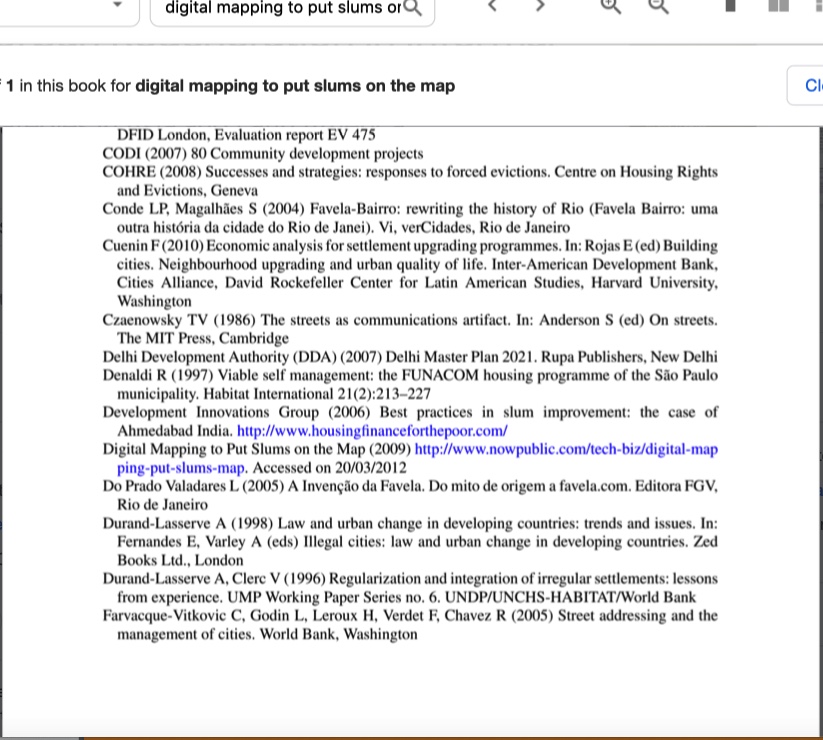
  • Digital Mapping to put Slums on the Map

    Digital Mapping to put Slums on the Map

    By David SouthDevelopment Challenges, South-South Solutions

    SOUTH-SOUTH CASE STUDY

    Mobile phones are more and more part of daily life in the South’s slums – even for the poorest people. One result is that it has now become possible to undertake digital mapping initiatives to truly find out who is where and what is actually going on.

    About one-third of the world’s urban dwellers live in slums, and the United Nations estimates that the number of people living in such conditions will double by 2030 as a result of rapid urbanization in developing countries. How to improve their living conditions and raise their standard of living is the big challenge of the 21st century.

    With just over five years until the 2015 deadline to meet the Millennium Development Goals (http://www.undp.org/mdg/), and the current economic downturn reversing some gains, any tool that can make development decisions more precise has to be a benefit.

    People are now turning to the growing penetration of digital technologies into slums and poor areas to find solutions. With mobile phones available across much of the global South, and plans underway to expand access to broadband internet even in poorly served Africa, it is becoming possible to develop a digital picture of a slum area and map its needs and population.

    Put to the right use, this powerful development tool can fast-track the delivery of aid and also better connect people to markets and government services.

    In November, an NGO called Map Kibera (www.mapkibera.org) began work on an ambitious project to digitally map Africa’s largest slum, Kibera in Nairobi, Kenya .

    The partners behind Map Kibera are Humanitarian OpenStreetMap, JumpStart International, WhereCampAfrica, the Social Development Network, Pamoja Trust, Hands on Kenya and others.

    Estimates place the number of residents in Kibera at one million, but nobody really knows how many live there (UN-HABITAT). The slum is typical of such deprived areas, lacking in health and water resources and plagued by chaotic traffic and housing. Few fully grasp where everything is in the sprawl.

    While data does exist on the slum, it is not shared or collated into one source. The Map Kibera project uses an open-source software programme, OpenStreetMap (http://www.openstreetmap.org/), to allow users to edit and add information as it is gathered. This information is then free to use by anybody wanting to grasp what is actually happening in Kibera: residents, NGOs, private companies and government officials.

    This will literally put Kibera on Kenya’s map.

    The mapping team started with 12 young people recruited in Kibera to start the work in November of this year. They will be trained and also receive support from the growing Nairobi technology community.

    “The project will provide open-source data that will help illustrate the living conditions in Kibera,” said Map Kibera’s Mikel Maron. “Without basic knowledge of the geography of Kibera it is impossible to have an informed discussion on how to improve the lives of residents of Kibera.”

    Workshops will communicate with local residents and show them the findings available from the map. Paper maps will be distributed to residents and then updated as new information comes in. It is critical local people are kept informed to build trust and avoid conflict. As can be seen from the Google Street Views (http://www.google.co.uk/help/maps/streetview/) controversy, nobody likes to be mapped without their permission or consent.

    Like Kenya, Brazil has a long history of sprawling slums sprouting around its cities. Called favelas, they are complex places, with both rudimentary dwellings and elaborate mansions. Walking into a favela can be a journey through the dreams and aspirations of generations of people, often reflected in their dwellings. Favelas have many services, including hospitals, and there are restaurants and coffee shops. In short, while they are not in the official development plans, the favelas are vibrant economic entities and home to hundreds of thousands of people.

    But since they are chaotic and undocumented by official maps, the economic and social development of the favelas is hindered as even basic services like mail delivery are difficult to provide.

    An NGO called Rede Jovem (http://www.redejovem.org.br/) is deploying youths armed with GPS (global positioning system)-equipped (http://en.wikipedia.org/wiki/Global_Positioning_System) mobile phones to map the favelas of Rio de Janerio. To start with, they are mapping five favelas: Complexo do Alemão, Cidade de Deus, Morro do Pavão-Pavãozinho, Morro Santa Marta and Complexo da Maré.

    “The main goal was to mark public interest spots on a map and show places like schools and institutions and hospitals and restaurants,” Natalia Santos, the executive coordinator for Rede Jovem, told MobileActive (www.mobileactive.org) . “We wanted to spread the news about what slums do have, so all the people can get to know that the slum is not just a place for violence and marginality and robbery.”

    The mapping process works like this: the mappers physically travel around the favela and upload information on each, individual landmark (restaurants, roads etc.) as they go. They use Nokia N95s mobile phones that are connected to Google Maps (www.maps.google.com).

    According to Santos, reporters enter the information on the map displayed on the phone, and they can video or photograph to add more detail. They are using Wikimapa (www.wikimapa.org.br), and Twitter (www.twitter.com) to log the information.

    As Rede Jovem recruited young mappers, they discovered an interesting fact: the male reporters (aged between 17 and 25) were frightened to enter a favela with a mobile phone for fear of either being mugged or being stopped by the police. Because of this fact, all the mappers are young women.

    They are ambitious for the future despite their funds running out in December. “We want everyone who has a cell phone with GPS to be a wikireporter,” said Santos .

    How important it is to the favela residents to be recognised like this can’t be overstated. “I think they are very happy because they’re seeing that they exist,” said Santos. “And the mailman says that now he can deliver the mail.”

    Published: December 2009

    Resources

    • Mobile Active.org: MobileActive.org is a community of people and organizations using mobile phones for social impact. They are committed to increasing the effectiveness of NGOs around the world who recognize that the over 4 billion mobile phones provide unprecedented opportunities for organizing, communications, and service and information delivery. Website: http://www.mobileactive.org
    • Google Android: Get inventing! This software enables anyone to start making applications for mobile phones. And it offers a platform for developers to then sell the applications to others. Website: http://www.android.com/
    • Ushahidi: is a website that was developed to map reports of violence in Kenya after the post-election fallout at the beginning of 2008. The new Ushahidi Engine is being created to use the lessons learned from Kenya to create a platform that allows anyone around the world to set up their own way to gather reports by mobile phone, email and the web – and map them. It is being built so that it can grow with the changing environment of the web, and to work with other websites and online tools. Website: http://blog.ushahidi.com/
    • Textually.org: is the entry point of three weblogs devoted to cell phones and mobile content, focusing on text messaging and cell phone usage around the world, tracking the latest news and social impact of these new technologies. Website: http://www.textually.org/
    • Betavine Social Exchange has launched. It’s a matching site for NGOs looking for mobile solutions, and developers who can help build them, all brought to you by Vodafone. Website: http://www.betavine.net

    Citations

    Resilient Urban Regeneration in Informal Settlements in the Tropics: Upgrading Strategies in Asia and Latin America, Publisher: Springer Singapore (2020)

    The story first appeared in the UN e-newsletter Development Challenges, South-South Solutions in 2009. It was simultaneously published on the Vancouver, Canada-based crowd-powered news website, NowPublic. It was then published in the UN magazine Southern Innovator.

    Streets as Tools for Urban Transformation in Slums: A Street-led Approach to Citywide Slum Upgrading, Publisher: United Nations Human Settlements Programme (UN-Habitat) (2012)

    Other Stories on Mapping

    https://davidsouthconsulting.org/2021/08/28/african-entrepreneur-wants-to-bring-order-to-urban-chaos/

    https://davidsouthconsulting.org/2020/12/04/big-data-can-transform-the-global-souths-growing-cities/

    https://davidsouthconsulting.org/2021/03/04/indian-id-project-is-foundation-for-future-economic-progress/

    https://davidsouthconsulting.org/2022/10/31/mapping-beirut-brings-city-to-light/

    https://davidsouthconsulting.org/2022/10/17/mapping-to-protect-kenyas-environment-the-emazingira-solution/

    https://davidsouthconsulting.org/2021/03/31/new-weapon-against-crime-in-the-south/

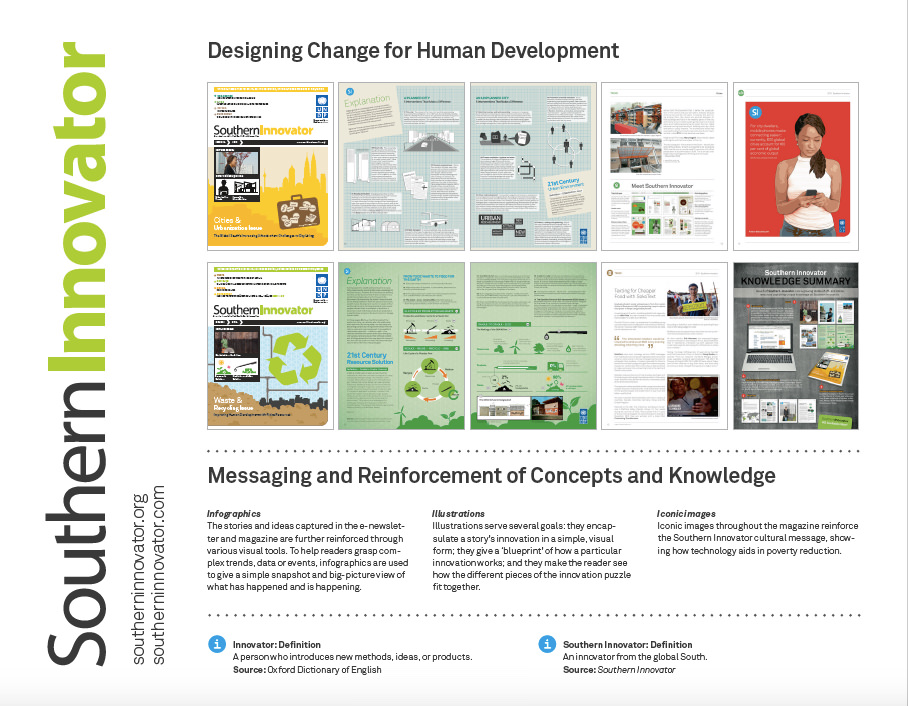
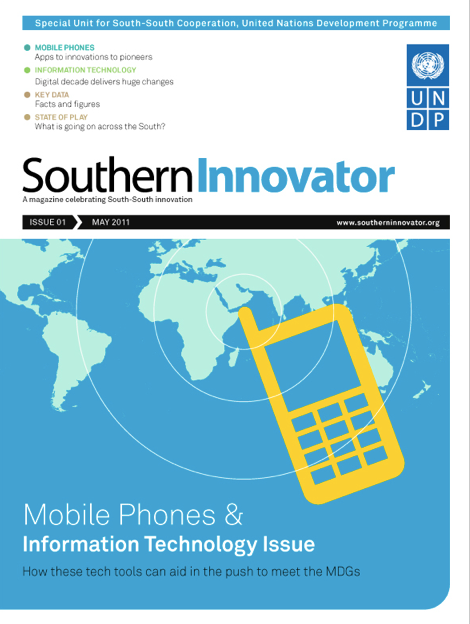
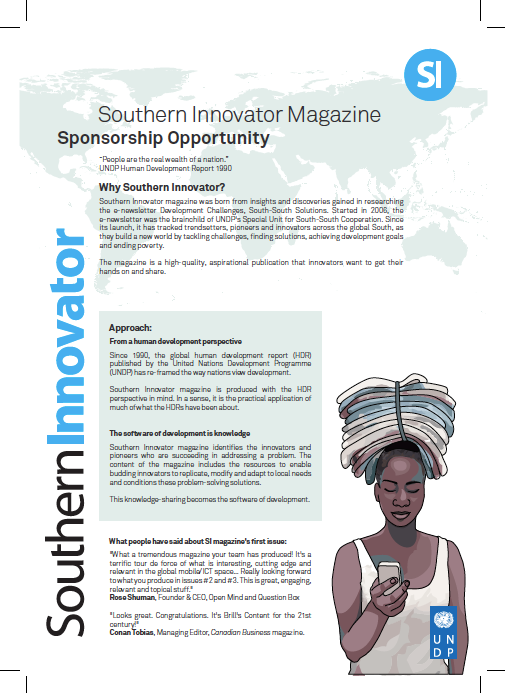
    By 2014, Southern Innovator had published five issues and become a recognised global innovation brand.

    https://davidsouthconsulting.org/2021/03/05/southern-innovator-issue-4/

    Follow @SouthSouth1

    Slideshare: http://www.slideshare.net/DavidSouth1/development-challengessouthsouthsolutionsnovember2010issue

    Southern Innovator Issue 1: https://books.google.co.uk/books?id=Q1O54YSE2BgC&dq=southern+innovator&source=gbs_navlinks_s

    Southern Innovator Issue 2: https://books.google.co.uk/books?id=Ty0N969dcssC&dq=southern+innovator&source=gbs_navlinks_s

    Southern Innovator Issue 3: https://books.google.co.uk/books?id=AQNt4YmhZagC&dq=southern+innovator&source=gbs_navlinks_s

    Southern Innovator Issue 4: https://books.google.co.uk/books?id=9T_n2tA7l4EC&dq=southern+innovator&source=gbs_navlinks_s

    Southern Innovator Issue 5: https://books.google.co.uk/books?id=6ILdAgAAQBAJ&dq=southern+innovator&source=gbs_navlinks_s

    Creative Commons License

    This work is licensed under a
    Creative Commons Attribution-Noncommercial-No Derivative Works 3.0 License.

    ORCID iD: https://orcid.org/0000-0001-5311-1052.

    © David South Consulting 2022

  • African Digital Laser Breakthrough Promises Future Innovation

    African Digital Laser Breakthrough Promises Future Innovation

    By David SouthDevelopment Challenges, South-South Solutions

    SOUTH-SOUTH CASE STUDY

    For decades many African countries have experienced low investment in research and development (R&D) and scientific innovation. One of the few nations to benefit from a sophisticated university network and research and development sector was South Africa. It still ranks top on the continent for funding R&D and its high number of scientific journals.

    And it seems this support has paid off in a recent innovation. The world’s first digital laser designed and built in Africa has been developed by a team of physicists at the University of KwaZulu–Natal in South Africa (http://www.ukzn.ac.za/), as reported in the MIT Technology Review (http://www.technologyreview.com/).

    This innovation joins a positive trend in Africa, where support to science, technology and R&D is rising – albeit from a very low base. In 2010 UNESCO – the United Nations Educational, Scientific and Cultural Organization – found Africa was reversing decades of neglect in research and development. African countries were increasing investment in science and technology after realizing it will accelerate their connection with the global economy and help create better-quality jobs to tackle poverty. The UNESCO Science Report found Burkina Faso, Kenya, Nigeria and South Africa had adopted laws to support biotechnology research, for example.

    Since 2005, six new science academies have been established in Mauritius, Morocco, Mozambique, Sudan, Tanzania and Zimbabwe. This compares to nine established between 1902 and 2004.

    The proportion of GDP (gross domestic product) devoted to R&D averages 0.3 per cent in Africa, according to UNESCO.

    South Africa continues to lead in R&D spending, raising its investment from 0.73 per cent of GDP in 2001 to 0.94 per cent in 2006. The country is home to 46 per cent of Africa’s scientific publications compared to 11.4 per cent in Nigeria and 6.6 per cent in Kenya (UNESCO).

    Experts say the digital laser developed in South Africa is a breakthrough that will open up ever-further innovations and business opportunities.

    So, what is a digital laser and what is the innovation? A laser is short form for Light Amplification by Stimulated Emission of Radiation. It is a device that produces a concentrated light source. Unlike conventional light sources that emit a diffused, multispectral light, lasers allow for a monochromatic light beam to be concentrated on a small area. This can be used to cut an object precisely, or beamed over long distances without losing its strength.

    Lasers can create immense light, heat and power at close range and are regularly used in surgery and medical diagnosis.

    Conventional lasers require external devices to alter and bend the laser light beam. The digital laser allows the shape of the beam to be digitally altered internally at the touch of a computer keyboard and gives greater immediate control. This means a plethora of new shapes can be formed with the laser beam, and this can have many practical applications.

    The digital laser augers in a new age of creativity with lasers and more spontaneity in how they are used. Rather than having to place a lens or mirror at the front of the casing to shape the laser beam, this innovation makes it possible to create any shape desired digitally by a computer. The research team has been able to create various complex shapes for the laser beams in experiments. One mooted use is to apply laser beams to manipulate microscopic objects – similar to the tractor beams seen in science fiction films such as “Star Trek”.

    Few of us spend much time thinking about lasers, yet they are ubiquitous in the modern world and are found in many electronic products (https://en.wikipedia.org/wiki/List_of_laser_applications). They play a critical part in the modern world’s economy. Some common applications for lasers include laser light shows at music concerts, bar code readers at the grocery store, or laser pointers used during public presentations. Dentists also use them to speed the hardening of fillings.

    Not to exploit lasers as a technology in the modern world is equivalent to bypassing the silicon micro-chip that sits inside personal computers, electronic devices and mobile phones.

    Published: May 2013

    Resources

    1) Digital laser: The research paper submitted by the team explaining the innovation. Website: http://arxiv.org/abs/1301.4760

    2) 3D Laser Hologram Kit: Now you can make your own holograms at home with the help of this innovative kit. Website: http://www.scientificsonline.com/hologram-kit.html

    3) Hands-On Science Kits and Demos. Website: http://ice.chem.wisc.edu/Catalog/SciKits.html

    4) Home kit for making a Laser Theatre. Website: http://www.scientificsonline.com/laser-theater.html

    5) Little Bits: littleBits is an open source library of electronic modules that snap together with magnets for prototyping, learning and fun. Website: http://littlebits.cc/

    6) Consolidated Plan of Action for Africa’s Science and Technology adopted by African Minsters of Science and Technology in 2005. Website: http://www.nepad.org/humancapitaldevelopment/news/1581/advancing-science-and-technology-africa

    Southern Innovator logo

    London Edit

    31 July 2013

    Like science and technology stories from the global South? Here are some more from the archive:

    China Sets Sights on Dominating Global Smartphone Market

    China Pushing Frontiers of Medical Research

    China Looking to Lead on Robot Innovation

    Follow @SouthSouth1

    Slideshare: http://www.slideshare.net/DavidSouth1/development-challengessouthsouthsolutionsnovember2010issue

    Southern Innovator Issue 1: https://books.google.co.uk/books?id=Q1O54YSE2BgC&dq=southern+innovator&source=gbs_navlinks_s

    Southern Innovator Issue 2: https://books.google.co.uk/books?id=Ty0N969dcssC&dq=southern+innovator&source=gbs_navlinks_s

    Southern Innovator Issue 3: https://books.google.co.uk/books?id=AQNt4YmhZagC&dq=southern+innovator&source=gbs_navlinks_s

    Southern Innovator Issue 4: https://books.google.co.uk/books?id=9T_n2tA7l4EC&dq=southern+innovator&source=gbs_navlinks_s

    Southern Innovator Issue 5: https://books.google.co.uk/books?id=6ILdAgAAQBAJ&dq=southern+innovator&source=gbs_navlinks_s

    Creative Commons License

    This work is licensed under a
    Creative Commons Attribution-Noncommercial-No Derivative Works 3.0 License.

    ORCID iD: https://orcid.org/0000-0001-5311-1052.

    © David South Consulting 2023

  • Cleaner Stoves To Reduce Global Warming

    Cleaner Stoves To Reduce Global Warming

    By David SouthDevelopment Challenges, South-South Solutions

    SOUTH-SOUTH CASE STUDY

    The use of polluting fuel-burning stoves by half the world’s population – including 80 percent of rural households – is a documented contributor to a host of health problems. Poor households not only have to contend with the ill health effects of dirty water and poor sanitation, the fumes from burning dung, wood, coal or crop leftovers lead to the deaths of more than 1.6 million people a year from breathing toxic indoor air (WHO).

    The polluting stoves have also been identified as major contributors to climate change. The soot from the fires produces black carbon, now considered a significant contributor to global warming. While carbon dioxide is the number one contributor to rising global temperatures, black carbon is second, causing 18 percent of warming.

    Getting black carbon levels down is being seen as a relatively inexpensive way to reduce global warming while gaining another good: cleaner air for poor households. The soot only hangs around in the atmosphere for a few weeks while carbon dioxide lingers for years, so the impact can be seen quickly.

    A flurry of initiatives across the South are now designing, developing and testing clean-burning stoves to tackle this problem. The number of initiatives is impressive (see list of clean-burning stove initiatives by country: http://www.bioenergylists.org/en/country), but the test will be who can develop stoves that poor households will actually use and find the right model to distribute them to half the world’s population.

    In India, the Surya cookstove project is test marketing six prototypes of clean burning stoves with poor households. Developed by the Energy and Resources Institute (TERI) in New Delhi, the six stoves are still undergoing field testing. Initial criticisms from users have focused on the stoves’ durability and overly clinical appearance.

    Cost will be critical to success no matter what the stove’s final design: “I’m sure they’d look nice, but I’d have to see them, to try them,” Chetram Jatrav in Kohlua, central India, told the New York Times. As her three children coughed, she continued that she would like a stove that “made less smoke and used less fuel” but she cannot afford one.

    Envirofit India – founded in 2007 as a branch of the US-based Envirofit International – is at a more advanced stage, already selling clean-burning stoves across India and the Philippines. It claims to have already sold over 10,000 stoves to poor households.

    They have developed high-quality stoves in four models: the B-110 Value Single Pot (a simple stove for one pot), S-2100 Deluxe Single Pot (a sturdier design), S-4150 Deluxe Double Pot (two burning surfaces), S-4150 Deluxe Double Pot with Chimney. They have been designed to be visually appealing for households – in tasteful colours like blue and green – and using high quality engineering for durability.

    They have been tested by engineers at the Colorado State University’s Engines and Energy Conversion Laboratory and are certified for design and environmental standards.

    The stoves are on sale in 1,000 villages in Karnataka, Tamil Nadu, Kerala, and Andhra Pradesh. The stoves have already successfully undergone pilot testing in Chitradurga and Dharmapuri. The manufacturer uses a network of dealers, distributors, village entrepreneurs and not-for-profit organizations to make the stoves commercially available for purchase. They hope to have 1,500 dealer outlets by the end of 2009.

    “Envirofit clean cookstoves have received an overwhelming reception in India,” said Ron Bills, chairman and chief executive officer at Envirofit. “Our cookstoves are not only meticulously engineered to reduce toxic emissions and fuel use; they are also aesthetically designed and durable. Envirofit takes great pride in offering high-quality, affordable products to typically underserved global markets.”

    But once again price comes up as a major issue: Envirofit’s stoves are designed to last five years, and thus they cost more than other stoves for sale in India. An Envirofit stove costs between 500 rupees (US $10) to 2,000 rupees (US $40): existing stoves sell for between 250 rupees (US $5) and 1,000 rupees (US $20), and last a year at most.

    As one blogger complained: “The envirofit stoves … are way beyond the capacity of the low income households who form 65% of the Indian population. Only the 10% of the middle to higher income segment can go for them… perhaps the price can be brought down by reducing the showy part of the stove to help the poorest.”

    Envirofit is part of the Shell Foundation’s Breathing Space program, established to tackle indoor air pollution from cooking fires in homes and hopes to sell and place 10 million clean-burning stoves in five countries over the next five years.

    Published: May 2009

    Resources

    A video shows the installation of clean-burning stoves in Peru, South America. It also has links to many other videos of clean-burning stoves and how to build and install them.
    Website: http://www.youtube.com/watch?v=neZZvvnL8Lg

    Designing a clean-burning dung fuel stove.
    Website: www.bioenergylists.org

    Follow @SouthSouth1

    Slideshare: http://www.slideshare.net/DavidSouth1/development-challengessouthsouthsolutionsnovember2010issue

    Southern Innovator Issue 1: https://books.google.co.uk/books?id=Q1O54YSE2BgC&dq=southern+innovator&source=gbs_navlinks_s

    Southern Innovator Issue 2: https://books.google.co.uk/books?id=Ty0N969dcssC&dq=southern+innovator&source=gbs_navlinks_s

    Southern Innovator Issue 3: https://books.google.co.uk/books?id=AQNt4YmhZagC&dq=southern+innovator&source=gbs_navlinks_s

    Southern Innovator Issue 4: https://books.google.co.uk/books?id=9T_n2tA7l4EC&dq=southern+innovator&source=gbs_navlinks_s

    Southern Innovator Issue 5: https://books.google.co.uk/books?id=6ILdAgAAQBAJ&dq=southern+innovator&source=gbs_navlinks_s

    Creative Commons License

    This work is licensed under a
    Creative Commons Attribution-Noncommercial-No Derivative Works 3.0 License.

    ORCID iD: https://orcid.org/0000-0001-5311-1052.

    © David South Consulting 2023