Tag: Development Challenges

  • Kenyan Safari Begins Minutes from Airport

    Kenyan Safari Begins Minutes from Airport

    By David SouthDevelopment Challenges, South-South Solutions

    SOUTH-SOUTH CASE STUDY

    Many people find the prospect of staying in airport hotels dreary at best. They tend to be located in industrial parts of cities or far from city centres. They can be surrounded by roads and highways and are built to move lots of people, not to look nice. The surrounding areas can be very common to all nations – warehouses, office parks, nondescript restaurants and hotels – and give few clues to where you are apart from the weather and the languages on the sign boards.

    In short, they are the last place you would choose to stay to get a flavour of a country or culture. But in Nairobi, Kenya, this experience has been turned on its head. While many people travel to Africa to take in the breathtaking beauty of the continent and absorb the fascinating cultures and people, they usually wait to do this once they are far from the airport. But not in Nairobi, where it is possible to begin an African adventure right at the airport.

    The Nairobi Tented Camp (www.nairobitentedcamp.com) opened in December 2010. It allows tourists to sleep in the open savannah (http://en.wikipedia.org/wiki/Savanna). The experience is properly wild, with game animals roaming near the camp. Started by Kenyan Guy Lawrence and drawing on his years of experience running safaris and adventure travel, he partnered with Will Knocker, Marian Mason and Ibrahim Ali Abayo, an elder from the Boran tribe who works as assistant camp manager.

    The business makes effective use of its website, interlinking good design, photographs and a blog with other social media to make the camp appealing to tourists using the web.

    Tourists can expect to see rhino, zebra, giraffe, wildebeest, leopard, antelope and possibly lions while listening to the yelps of hyenas at night.

    Located just minutes from Nairobi’s Jomo Kenyatta Airport (www.kenyaairports.co.ke/kaa/airports/jkia/), Wilson Airport and Nairobi City itself, the camp is nestled in a forest in Nairobi National Park (http://www.kws.org/parks/parks_reserves/NANP.html). It is the first accommodation to be allowed in this part of the park.

    In total, it takes 30 minutes from landing at the airport to be settled in the camp. The last 20 minutes of the drive to the camp takes place in the park, and gets the wild game adventure started early.

    In real estate people talk about “location, location location”: find the right place, and you reap the benefits. And you cannot find a better location than Kenya’s oldest national park – 12,000 hectares in size – located beside East Africa’s dynamic regional hub of Nairobi, Kenya. The business is a good example of how a twist on the traditional safari camp and resort can attract attention.

    The camp is surrounded by savannah plains on one side, and the city of Nairobi on the other.

    The tented camp pitches itself at travellers looking for a better option than just staying in a nondescript airport hotel, or who are looking for a great way to begin a longer journey into Kenya.

    “Safaris in Kenya used to start after a long five-hour drive down to the Maasai Mara,” camp owner Gary Lawrence told Monocle magazine. “But now your safari can start 10 minutes after leaving the airport.”

    Kenya has been in recovery mode since its tourism industry was hit hard by a combination of events in 2008. Kenya experienced violent rioting during the 2007 and 2008 elections and a body blow from the 2008 global economic crisis. Both events caused a severe drop in tourism.

    In 2007, the country received more than 2 million foreign tourists and close to US $1 billion in revenue, but numbers fell the following year. However, tourism grew 15 percent from 2009 to 2010 in Kenya, putting the country on course to meet its 2012 goal of returning to 2 million tourists a year.

    Tourism is a critical foreign currency earner for Kenya and saw growth in revenues of 18 percent in 2010 from 2009 (Kenya Tourist Board).

    Kenya’s strategy has included aggressive marketing campaigns in new markets to attract tourists. The country is billing itself as a “high value for high spending tourists” and it has seen increasing numbers of visitors from the booming emerging economies of India, Russia, China and the Middle East. Most of Kenya’s tourists come from the United Kingdom, the United States, Italy and Germany.

    Published: July 2011

    Resources

    1) Maasai Wilderness Conservation Trust: The Trust runs the Campi Ya Kanzi Maasai-run ecotourist resort in Kenya. Website: http://www.maasaitrust.org and http://www.maasai.com

    2) Ecotourism Kenya: Ecotourism Kenya promotes responsible tourism practices within the tourism industry. This entails encouraging the adoption of best practices in the use of tourism resources, working with local communities and managing wastes and emissions. Website: http://www.ecotourismkenya.org

    3) Magical Kenya: The official Kenya Destination website designed to help tourists plan a trip. Website: http://www.magicalkenya.com

    4) Ministry of Tourism Kenya: A website packed with information on accommodation, parks and reserves and business opportunities. Website: www.tourism.go.ke

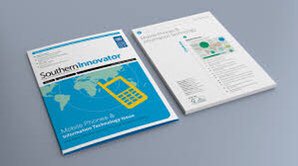
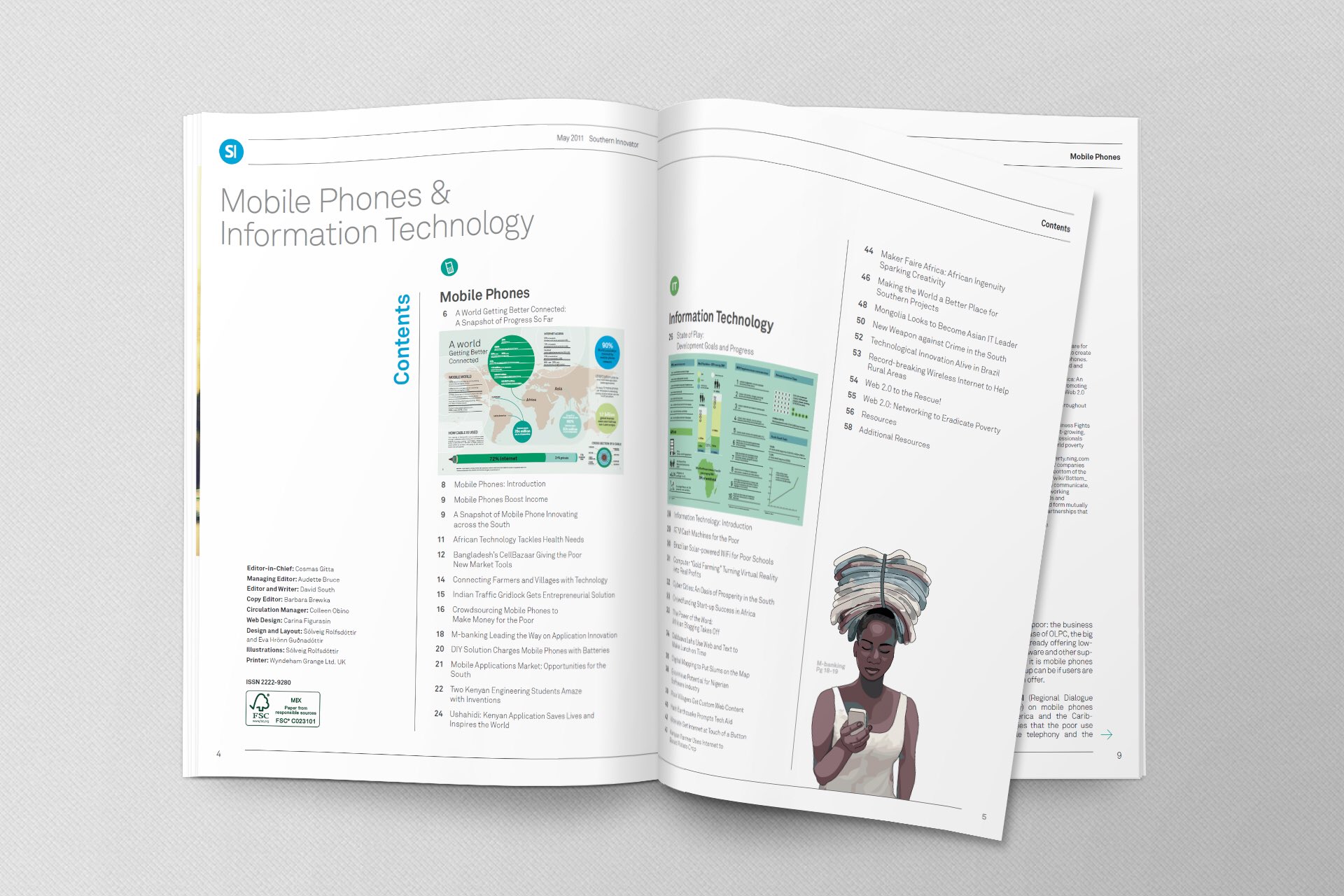
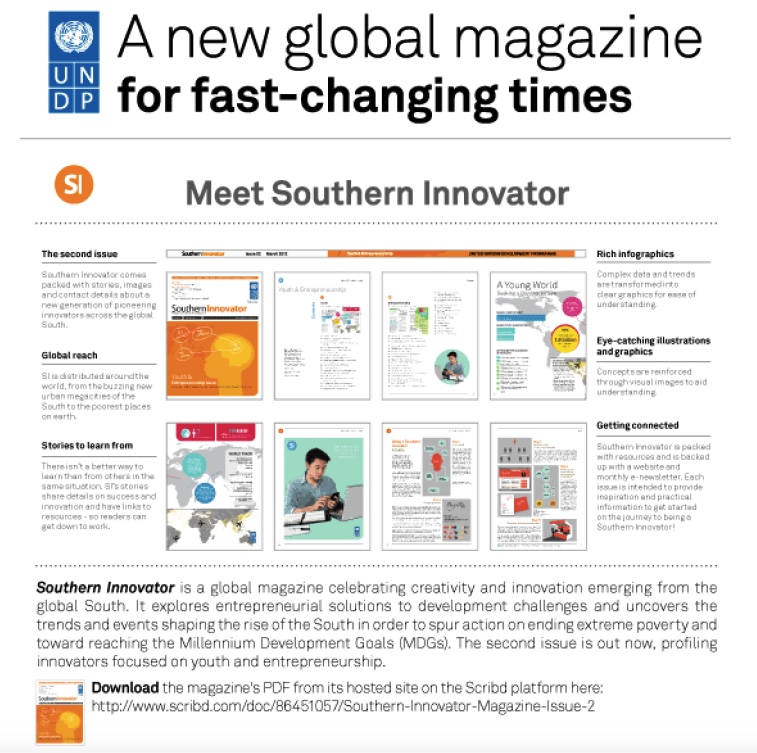
    Development Challenges, South-South Solutions was launched as an e-newsletter in 2006 by UNDP’s South-South Cooperation Unit (now the United Nations Office for South-South Cooperation) based in New York, USA. It led on profiling the rise of the global South as an economic powerhouse and was one of the first regular publications to champion the global South’s innovators, entrepreneurs, and pioneers. It tracked the key trends that are now so profoundly reshaping how development is seen and done. This includes the rapid take-up of mobile phones and information technology in the global South (as profiled in the first issue of magazine Southern Innovator), the move to becoming a majority urban world, a growing global innovator culture, and the plethora of solutions being developed in the global South to tackle its problems and improve living conditions and boost human development. The success of the e-newsletter led to the launch of the magazine Southern Innovator.
    Creative Commons License

    This work is licensed under a
    Creative Commons Attribution-Noncommercial-No Derivative Works 3.0 License.

    ORCID iD: https://orcid.org/0000-0001-5311-1052.

    © David South Consulting 2022

  • Southern Art Hubs Grab Attention for Creative Economy

    Southern Art Hubs Grab Attention for Creative Economy

    By David SouthDevelopment Challenges, South-South Solutions

    SOUTH-SOUTH CASE STUDY

    Regeneration – of poor neighbourhoods, districts, even whole countries after a conflict – is both a challenge and a key to transforming lives. One approach that has a track record is turning to artists and creative people to re-imagine a neighbourhood or country’s culture, and restore pride and vitality to places beaten down by life’s hardships.

    The tool to do this is the creative economy. The “interface between creativity, culture, economics and technology in a contemporary world dominated by images, sounds, texts and symbols” (UNCTAD) is seen as away for emerging economies to leapfrog into high-growth areas in the world economy.

    Two approaches offer inspiring examples: a Brazilian art gallery owner is single-handedly remaking the Brazilian market for contemporary art. And in Cambodia, a new wave of young artists are creating a stir in the global art scene.

    Galeria Leme (http://www.galerialeme.com/home.php?lang=ing) is located in a graffiti-strewn, down-at-heel neighbourhood in Sao Paulo, Brazil.

    Brazil has seen impressive economic growth in the past decade. The country is Latin America’s biggest economy and had reached growth of 5.1 percent in 2008 before being hit by the global recession.

    The gallery pursues several goals at once: its mission is to draw attention to socially and politically engaging contemporary Brazilian art, but it also aims to increase awareness of the art market in Brazil and help in the revitalization of the gallery’s neighbourhood.

    The gallery is a concrete box designed by Paulo Mendes da Rocha (http://en.wikipedia.org/wiki/Paulo_Mendes_da_Rocha), an award-winning Brazilian architect. Founded in 2004 by former banker Eduardo Leme, the gallery has fashioned itself into being the leading authority on contemporary art in Brazil. Leme used to work in the financial sector before moving into running a gallery, and has applied his understanding of markets and how to create demand.

    This in turn has grabbed international attention, and had the global art world beating a path to this neighbourhood. In short, it creates a buzz that soon feeds on itself and draws in more people to the scene.

    It’s a formula that has worked well in many other places, where a successful gallery fosters a scene and draws in audiences, buyers and new businesses. Soon, a creative economy comes alive and that means serious money. Both New York and London have shown how this can work. In New York City, the creative economy employs over 278,000 people (2002).

    Sao Paulo is the commercial hub of Brazil’s contemporary art market. But previously, buyers had to search all over the city to find the works they wanted to buy.

    “I think it is a really good moment for Brazilian art,” Leme said.”Brazilian art is fantastic. Due to our miscellaneous (sic) of culture and people and all these kind of things. Brazil is almost a continent. You have art made of wood, made of metal, made of plastic films, all the materials. More and more, I am seeing Brazilians moving onto the international markets, the prices are moving up. The number of fellows from museums that are coming down here to see what’s going on, it’s fantastic.

    “To run this business you not just to have good stuff: you need to understand to whom you should sell also,” Leme told the magazine Monocle. “I mean also not just Sao Paulo is a rich and big city that you have a lot of collectors. There is a lot of social stuff you have to understand to be in this specific business.

    “My challenge is to increase the Brazilian market. I have this kind of ambition. More partners, more people talking about art, if more people talking about art I am going to receive more feedback and I am going to grow the terms. Not just as a business but also as a man I will have more things on my mind, more information. And the financial market, the more money you make the richest you are. Here, it is not just that: my point of view is that the more challenge is the thing, the more goals I make I am going to be richer in this business.”

    Another scene has taken off in formerly war-ravaged Cambodia in Southeast Asia. The country was notorious for the horrors of the Killing Fields in the 1970s (http://en.wikipedia.org/wiki/The_Killing_Fields), where the extremist Khmer Rouge government executed people and Cambodian artists suffered greatly. As a result, the art community was devastated for many years.

    Thirty years on, a new generation of artists has emerged from the recent years of peace. This new wave is getting attention across Asia for its innovation.

    Artist Pich Sopheap is one of the pioneers. By founding the Cambodian contemporary art association saklapel.org with Linda Saphan, he has focused the Cambodian art scene through group exhibitions and promotion. Another tool he uses to build the scene up has been the Visual Art Open(VAO), an annual event since 2005 featuring work by Cambodian artists.

    This has had the effect of building a strong community of artists within the country who can support each other. It also makes it easier for outside art buyers to discover who is working in the country’s art scene.

    Sopheap works in a variety of media including oil painting, photography and sculpture. He manipulates bamboo and rattan to shape his sculptures.

    “I think for me sculpture with this material is just because it is cheap. It’s easy to use, it is very relevant. The subject matter is in the work already. For me it is discovering new forms that resonant with the atmosphere, with the conditions of this country,” Sopheap told the BBC.

    Sopheap’s family fled from the Khmer Rouge in the 1970s. He spent his early life in the United States, where he trained in art. When he returned to Cambodia a few years ago, he found the art scene very small and weak.

    “Cambodia is a young country when it comes to modern art. It takes a while for new blood to come back and actually make something that concerns the present time,” believes Sopheap. “And we are very young, in our early 30s. Before that there was almost none that was known. We are making our own way – it is all up to us. We show in different cafes, we show in bars, we show in gift shops. And when we do those kind of exhibitions it is kind of exciting, it is not really a gallery, a cold place, people go by and it exposes to a lot of foreigners.”

    A Cambodian-trained artist, Leang Seckon (http://saklapel.org/vao/artists/leang_seckon/), takes these approaches further, using sewing, painting, metalwork and collage in ways that reference Cambodian traditions, from apsara ballet (http://en.wikipedia.org/wiki/Apsara_Dance) to fortune-telling, while subtly commenting on modern culture, society and politics. Seckon now has shows in Britain, Japan and Norway, and has become one of the country’s most successful artistic exports.

    “To begin with I was not a professional artist and I didn’t realize I could jump from low to high level so fast. Things have changed so quickly for me. If I do one style of art it makes me feel so bored. But if I mix it up with other techniques like sewing and collage, it makes it more interesting for me. I don’t know if you can call that real Cambodian art but I didn’t copy or learn it from anyone: I created it myself.”

    “This is a very important point for me: I can show all my work to the international community. In the countries I go to, I tell them the same thing. Cambodia has new, young artists – we haven’t disappeared: the young ones have been growing up.”

    His approach is to stay away from cliched Cambodian art.

    “I just think we work really hard,” says Sopheap on the group’s success to date. “I just think we work really hard and get together and organize exhibitions ourselves for the most part. It is just artists working hard and they are hungry and they are fearless and when that energy is happening, people from the outside start to actually pronounce our name correctly and afterward they come to town and just by accident they find this little scene, and they are very interested in it because it is raw.”

    Published: December 2009

    Resources

    • Global Creative Economy Convergence Summit 2009: The summit is about the successful and emerging creative technologies and initiatives that are driving economic growth locally, nationally and internationally. Website: http://www.gcecs2009.com/
    • Creative Economy Report 2008. An economic and statistical assessment of creative industries world-wide as well as an overview of how developing countries can benefit from trade in creative products and services produced by UNCTAD and the Special Unit for South-South Cooperation in UNDP. Website: http://www.unctad.org/en/docs/ditc20082cer_en.pdf
    • An article about artists in the Caribbean and how they are using online networks to connect and earn income. Website: http://globalvoicesonline.org/2009/07/23/trinidad-and-tobago-online-art-networks/

    Development Challenges, South-South Solutions was launched as an e-newsletter in 2006 by UNDP’s South-South Cooperation Unit (now the United Nations Office for South-South Cooperation) based in New York, USA. It led on profiling the rise of the global South as an economic powerhouse and was one of the first regular publications to champion the global South’s innovators, entrepreneurs, and pioneers. It tracked the key trends that are now so profoundly reshaping how development is seen and done. This includes the rapid take-up of mobile phones and information technology in the global South (as profiled in the first issue of magazine Southern Innovator), the move to becoming a majority urban world, a growing global innovator culture, and the plethora of solutions being developed in the global South to tackle its problems and improve living conditions and boost human development. The success of the e-newsletter led to the launch of the magazine Southern Innovator.

    Creative Commons License

    This work is licensed under a
    Creative Commons Attribution-Noncommercial-No Derivative Works 3.0 License.

    ORCID iD: https://orcid.org/0000-0001-5311-1052.

    © David South Consulting 2022

  • Kenyan Farmer Uses Internet to Boost Potato Farm

    Kenyan Farmer Uses Internet to Boost Potato Farm

    By David SouthDevelopment Challenges, South-South Solutions

    SOUTH-SOUTH CASE STUDY

    The rise of social networking websites (http://en.wikipedia.org/wiki/List_of_social_networking_websites) during the past few years has swept across the internet. The popular Facebook (www.facebook.com) site alone has over 350 million users worldwide. In Africa, there are more than 67 million people with access to the internet – just over 6 percent of the population (http://www.internetworldstats.com/stats1.htm). And this phenomenon has even begun to penetrate and influence life in poor places with weak internet infrastructure. A farmer in Kenya, Zack Matere, has boosted his potato crop by turning to Facebook for help.

    On his farm in Seregeya near Eldoret, Kenya, Matere used the internet to find a cure for his ailing potato crop.

    “I cycled 10 kilometres to the local cyber café, Googled (www.google.com) ‘potato disease,’ he told the BBC, “and discovered that ants were eating the potato stems.

    “I checked again and found that one of the solutions was to sprinkle wood ash on the crop.”

    Matere also used the internet to find a buyer for his rescued crop, and has been able to triple the price he gets for tree seedlings he sells.

    Zack believes he is a bit of pioneer: “I think I am the only farmer in the area who uses the internet.”

    He uses his mobile phone to access the internet and it costs him about US 0.66 cents a day to do it.

    This is a lot of money for small-scale farmers so Zack has a plan to tackle the cost. He will share the information he uncovers on the internet with other farmers in the community by posting it on local community notice boards.

    He has noticed some important realities about how people he knows interact with the mobile web. He has found most people do much more with the Net than surfing the mobile web alone at home.

    “The internet is quite an individual pursuit. But a notice board is more of a group thing.

    “So if I post an item on a notice board on potato disease, for example, the community can read it, talk together and come to a decision.”

    One example of the kind of intelligence Matere is able to glean from the internet is reports of cartels deceiving farmers by buying potatoes in over-large 130 kg bags instead of 110 kg bags. Matere takes this information and translates it into Swahili and posts it on community notice boards.

    Matere also has to fend off other people looking to use his community’s water supply, which he has done by photographing interlopers with his mobile phone and then posting the photographs on Facebook.

    “When they came before, I took photos of what they were doing, posted them on my Facebook page and was able to get assistance,” he said.

    “I got in touch with Forest Action Network (http://www.fankenya.org/) and they came back to me quickly saying they would help me protect the catchment area.”

    He has also discovered there are more profitable ways to make money for farmers.

    “There is a lot of money in tree seedlings or bee hives. So if we can get these young people to use the land in an environmentally (friendly) way, they can get even more money than through farming.”

    “I have 400 Facebook friends and I think some of them can buy the honey.”

    Matere is philosophical about the future: “I am now seeing the practicality of the internet here in rural Kenya. The problem is I am the only one. That is why the notice board is important. All we need is a bit of relevant information to help us.”

    “Once it is made simpler and is more in the local language with more local content, people are going to access the internet here,” he predicts.

    Published: April 2010

    Resources

    1) A blog with news and tips on how to use the social networking tools for business opportunities. Website:http://www.socialnetworking-weblog.com/

    2) Four stories on how social networking radically improved business prospects for some people. Website:http://www.bnet.com/2403-13070_23-219914.html

    3) A Business Week article on the good and bad of social networking for business. Website:http://www.businessweek.com/smallbiz/content/aug2008/sb2008086_346094.htm

    4) Txteagle: A service in Kenya that is paying people to do tasks and translations with their mobile phones. Website:http://txteagle.com/index.html

    https://davidsouthconsulting.org/2022/10/26/africa-to-get-own-internet-domain/

    https://davidsouthconsulting.org/2022/10/04/the-brck-kenyan-developed-solution-to-boost-internet-access/

    https://davidsouthconsulting.org/2020/12/04/data-surge-across-global-south-promises-to-re-shape-the-internet/

    https://davidsouthconsulting.org/2022/05/16/high-impact-communications-in-a-major-crisis-undp-mongolia-1997-1999-18-february-2016/

    https://davidsouthconsulting.org/2022/06/10/illiterate-get-internet-at-touch-of-a-button/

    https://davidsouthconsulting.org/2021/01/24/record-breaking-wireless-internet-to-help-rural-areas/

    https://davidsouthconsulting.org/2021/05/14/un-ukraine-web-development-experience-2000/

    https://davidsouthconsulting.org/2022/11/18/web-2-0-networking-to-eradicate-poverty/

    https://davidsouthconsulting.org/2022/06/16/web-2-0-to-the-rescue-using-web-and-text-to-beat-shortages-in-africa/

    https://davidsouthconsulting.org/2022/10/10/wireless-internet-culture-helping-zimbabwe-economy-recover/

    Development Challenges, South-South Solutions was launched as an e-newsletter in 2006 by UNDP’s South-South Cooperation Unit (now the United Nations Office for South-South Cooperation) based in New York, USA. It led on profiling the rise of the global South as an economic powerhouse and was one of the first regular publications to champion the global South’s innovators, entrepreneurs, and pioneers. It tracked the key trends that are now so profoundly reshaping how development is seen and done. This includes the rapid take-up of mobile phones and information technology in the global South (as profiled in the first issue of magazine Southern Innovator), the move to becoming a majority urban world, a growing global innovator culture, and the plethora of solutions being developed in the global South to tackle its problems and improve living conditions and boost human development. The success of the e-newsletter led to the launch of the magazine Southern Innovator.

    https://davidsouthconsulting.org/2021/03/05/southern-innovator-issue-1/

    Creative Commons License

    This work is licensed under a
    Creative Commons Attribution-Noncommercial-No Derivative Works 3.0 License.

    ORCID iD: https://orcid.org/0000-0001-5311-1052.

    © David South Consulting 2023

  • Popular Characters Re-invent Traditional Carving

    Popular Characters Re-invent Traditional Carving

    By David SouthDevelopment Challenges, South-South Solutions

    SOUTH-SOUTH CASE STUDY

    The popular cartoon characters from the long-running series The Simpsons are breathing new life into traditional African stone carvings.

    A traditional craft in many cultures, carving adds value to local resources and provides an excellent source of income for local artisans and entrepreneurs. While wood or stone carvings are a popular tourist souvenir throughout Africa, Asia and Latin America, most carvers stick to traditional subjects.

    However, a group of villagers in western Kenya have transformed their economy by swapping carvings of elephants and Cleopatra for Homer, Marge and Sideshow Bob.

    According to the book Carving out a Future by the Centre for International Forestry Research (CIFOR), carving exports from the island of Bali in Indonesia total US $100 million per year. India’s industry is worth US $65 million. In Oaxaca, Mexico, carvings earn US $2,500 per household, increasing access to education and health. In Kenya, carving involves more than 60,000 people and provides household income for more than 300,000. In some communities in South Africa, households can earn between US $500 and US $2,000 per year from carvings – 80 per cent of a household income.

    Research into carving has identified several factors that are critical to maximising profits: quality is critical, and the best woods and stone must be used. Diversity is an important element: too much of the same thing being made available damages the market. And sustainability: the wood and stone resources must not be used up.

    It is this novelty and diversity that The Simpsons carvings address. By tapping into the global market for official licensed merchandise, the Tabaka carvers of the Abagusi tribe – well-known carvers in western Kenya – have significantly increased their income. And they are cashing in on the global popularity of the first Simpsons movie released this year.

    Tabaka is a village three hours by bus from Kenya’s capital, Nairobi. In Nairobi, the carvers would sell their soap stone carvings to middlemen, often for a pittance compared to what they would in turn charge tourists. Negotiations with these vendors could take days and waste the precious income of the carvers as they waited around for the deal to come through.

    Craft Village UK has organised the carvers to produce Simpsons statuettes for the worldwide market. The carvers were able to win the official merchandise license from The Simpsons’ owners, Twentieth Century Fox, after its vice-president saw a video of the carvers. They were initially awarded the license to craft 12 of the show’s characters for the US and UK markets, but last month they gained the worldwide license.

    Craft Village’s founder, UK-based Paul Young, had the idea three years ago when his sister returned from living in Uganda with soap stone carvings. Impressed by the quality of the workmanship, he thought they would sell better in a western market if they reproduced popular images from films and TV. In 2005, he made contact with the carvers through a crafts company in Nairobi. He sent initial plastic figurine models and photos to help the carvers get the statues right. He flew to Kenya in 2005 to meet the carvers for the first time and video the carving process.

    Initial prototypes were too heavy and some would break. And it took 12 months of trial and error to get the quality high enough to approach Twentieth Century Fox.

    “Familiarizing the carvers with The Simpsons was difficult,” said Young. “Making the carvers understand the importance of quality control and the need for benchmark standards and uniform carvings was – and still is – a challenge.”

    “I don’t know who they are,” said Pauline Kemunto, who helps her husband with the carvings. “But I like them because I earn from them.”

    In a community known for growing bananas, David Atang’a, master carver and former soldier, supports five children. “If this Simpsons project succeeds, I hope to educate my children in university,” he said.

    Two groups of 15 members each are divided between Tabaka Master Carvers and Tabaka Classic Carvers. Women take over and wash, polish and shine the pieces. Each piece is numbered and signed (Craft Village UK products).

    The carvers now make 450 Kenyan shillings per statue (UK £3) – between four and six times what they would have got for a traditional carving. Where work before was sporadic, it is now regular and employs 80 people. The extra income means the carvers can now send their children to secondary school.

    Enosh Onsombi grew up with no electricity and no television. But since the community started carving the Simpsons characters, “Life has changed so much,” he told The Independent newspaper. “The Simpsons has changed everything.”

    Published: October 2007

    Resources

    Development Challenges, South-South Solutions was launched as an e-newsletter in 2006 by UNDP’s South-South Cooperation Unit (now the United Nations Office for South-South Cooperation) based in New York, USA. It led on profiling the rise of the global South as an economic powerhouse and was one of the first regular publications to champion the global South’s innovators, entrepreneurs, and pioneers. It tracked the key trends that are now so profoundly reshaping how development is seen and done. This includes the rapid take-up of mobile phones and information technology in the global South (as profiled in the first issue of magazine Southern Innovator), the move to becoming a majority urban world, a growing global innovator culture, and the plethora of solutions being developed in the global South to tackle its problems and improve living conditions and boost human development. The success of the e-newsletter led to the launch of the magazine Southern Innovator.

    Creative Commons License

    This work is licensed under a
    Creative Commons Attribution-Noncommercial-No Derivative Works 3.0 License.

    ORCID iD: https://orcid.org/0000-0001-5311-1052.

    © David South Consulting 2022