Tag: Development Challenges

  • Staple Foods Are Becoming More Secure in the South

    Staple Foods Are Becoming More Secure in the South

    By David SouthDevelopment Challenges, South-South Solutions

    SOUTH-SOUTH CASE STUDY

    Finding ways to ensure food security in countries experiencing profound economic and social change and stress is critical to achievement of development goals.

    Food security is crucial to ensuring economic development is sustainable, and it is vital to long-term human health. Just one bout of famine can damage a generation of youth, stunting brain development and leaving bodies smaller and weaker than they should be.

    Thankfully, many innovators are working on this problem and are making significant progress. A report from the Asian Development Bank, The Quiet Revolution in Staple Food Value Chains (http://www.adb.org/publications/quiet-revolution-staple-food-value-chains), found improvements to security of rice and potatoes – common staple foods in many countries. It said the so-called value chains – the various activities a company does to deliver a product or service to the marketplace (http://en.wikipedia.org/wiki/Value_chain) – for potatoes and rice have seen significant improvements in Bangladesh, China and India.

    This is important because improvements in access to staple foods will mean better food security and less threat of extreme hunger events. This matters because it just takes one extreme hunger event and a generation is scarred for life.

    The human brain is a heavy user of energy: it uses between 20 and 30 per cent of a person’s energy intake. Failure to consume enough calories means brain functioning begins to  be altered (brain-guide.org).

    Hunger and starvation slow a person’s mental responsiveness. Low energy intake from minimal diets leads to apathy, sadness and depression. Fetuses and infants are especially sensitive to brain damage caused by malnutrition. A malnourished child can suffer life-long low intelligence and cognitive defects.

    More than 70 per cent of the world’s 146 million underweight children aged five and under live in just 10 countries, with more than 50 per cent located in South Asia alone (UNICEF). A quarter of all children – roughly 146 million – in developing countries are underweight, and it is estimated that 684,000 child deaths worldwide could be prevented by increasing access to vitamin A and zinc (WFP).

    Undernutrition contributes to 53 per cent of the 9.7 million deaths of children under five each year in developing countries (UNICEF).

    Food insecurity also shows on the faces of people who experience it. This extreme stress scars people and harms their prospects in the labour market and their ability to improve their incomes.

    Why is access to staple foods improving? It seems, according to the report, to result from innovations such as rapid modernization, with the increasing roll out of supermarkets, the use of cold storage facilities and large rice mills. It also cites the impact of small farmers taking on modern technologies, such as mechanized farming, and making the most of soil by using fertilizers and efficient techniques.

    Supermarkets by their nature encourage highly sophisticated supply lines to ensure a steady stream of fresh produce coming in from farms to urban areas. Because of the variety and vast range of produce on offer, they require finely-tuned organizing models and information technologies. In short, they radically alter the way people buy their food, and what people will expect from food providers.

    By negotiating deals with farmers, supermarkets create stability, as well as low and competitive prices. They allow for better traceability for food and give consumers more confidence in what they are purchasing. They use cold storage, which means food lasts longer and there is less waste than if food is left to spoil in a marketplace without refrigeration – a revolutionary change in hot countries.

    The downside with supermarkets, as has been the case in some countries, is they can quickly dominate the marketplace and push out all other competitors with their economies of scale. When this happens, farmers can also find themselves with little bargaining power again and be hostage to the price the supermarket tells them to sell their product at.

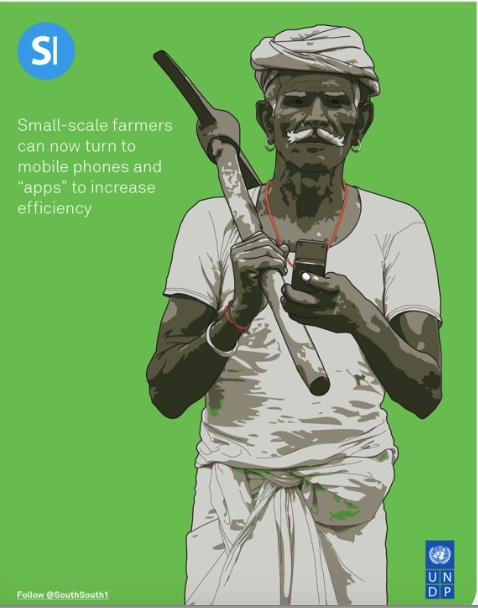
    Another critical improvement is the rapid spread of mobile phones. Armed with a mobile phone, small-scale farmers are able to access critical knowledge and information. This means they can make better decisions and quickly adjust what they are doing when mistakes are made.

    The survey found that India is a country where the food-supply game has changed dramatically. In the past, traders would advance cash to farmers in the form of loans. But since the use of mobile phones has increased, the balance of power has shifted: farmers now have many other options to finance their operations than turning to middlemen and traders. This means they are no longer as easily manipulated by the traders and can negotiate better prices. Also, better roads, combined with greater competition to provide services to farmers, are improving farming of staple foods in general.

    Among potato farmers in rural areas, 73 to 97 per cent have mobile phones and use them to organize deals with traders or receive market information. The take-up of mobile phones was also a recent development for the farmers: most had acquired a mobile phone in the last four years.

    It is clear this quiet revolution in food security for staples is a result of greater use of innovative technology and taking on of new techniques.

    Published: July 2013

    Resources

    1) How to start a supermarket in Lagos, Nigeria: A supermarket is one of the most lucrative businesses that can thrive anywhere in the world. Website: http://www.ackcity.net/supermarket-startup-in-lagos

    2) Write a supermarket business plan: Templates for writing professional business plans. Website: http://planmagic.com/business_plan/supermarket_business_plan.html

    3) How to get your product into a supermarket: Use this mindmap to remind you what you should be doing at every stage of the process. Website: http://www.smarta.com/advice/suppliers-and-trade/logistics-management/mindmap-how-to-get-your-product-into-a-supermarket/

    4) The hidden tricks behind making a successful supermarket: Website: http://www.independent.co.uk/news/business/news/the-secrets-of-our-supermarkets-8228864.html

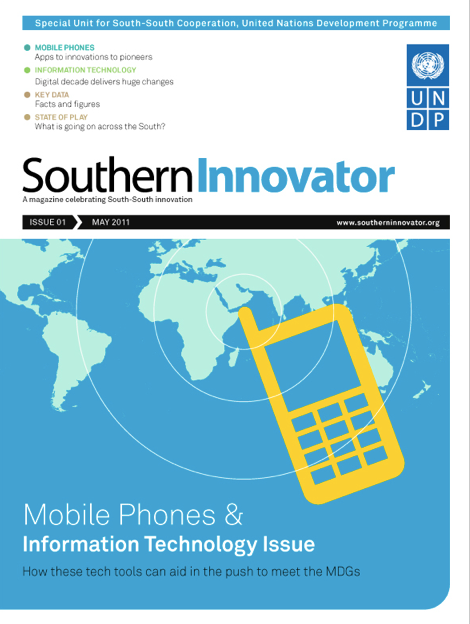
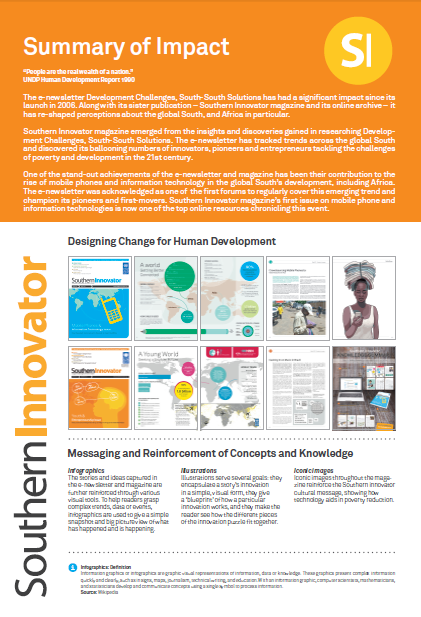
    Development Challenges, South-South Solutions was launched as an e-newsletter in 2006 by UNDP’s South-South Cooperation Unit (now the United Nations Office for South-South Cooperation) based in New York, USA. It led on profiling the rise of the global South as an economic powerhouse and was one of the first regular publications to champion the global South’s innovators, entrepreneurs, and pioneers. It tracked the key trends that are now so profoundly reshaping how development is seen and done. This includes the rapid take-up of mobile phones and information technology in the global South (as profiled in the first issue of magazine Southern Innovator), the move to becoming a majority urban world, a growing global innovator culture, and the plethora of solutions being developed in the global South to tackle its problems and improve living conditions and boost human development. The success of the e-newsletter led to the launch of the magazine Southern Innovator. 

    Creative Commons License

    This work is licensed under a
    Creative Commons Attribution-Noncommercial-No Derivative Works 3.0 License.

    ORCID iD: https://orcid.org/0000-0001-5311-1052.

    © David South Consulting 2023

  • Anti-bribery Website in India Inspires Others

    Anti-bribery Website in India Inspires Others

    By David SouthDevelopment Challenges, South-South Solutions

    SOUTH-SOUTH CASE STUDY

    An Indian website tackling corruption has been so successful it has inspired a wave of followers in China.

    The I Paid a Bribe website – motto: “Uncover the Market Price of Corruption” – was set up by the Janaagraha Centre for Citizenship and Democracy (http://www.janaagraha.org), a non-profit organisation based in Bangalore, India.

    Janaagraha is dedicated to working with government and citizens to “improve the quality of life in Indian cities and towns,” according to its website.

    Janaagraha’s initiatives strive “to make government departments transparent and accountable,” and the ipaidabribe programme (http://www.ipaidabribe.com) fits in with that goal. It seeks to harness the collective voices of the citizens to report and quantify incidents of corruption. The website will help to paint a picture of the level of corruption in cities and help the NGO in its fight to improve government oversight systems and procedures and to improve law enforcement and adherence to regulations.

    The website tackles the “pernicious effect of corruption on destroying city life and disempowering citizens,” according to Raghunandan Thoniparambil, the site’s programme coordinator. “The original idea was that the website could become a simple means of tracking the market price of corruption – a kind of price prediction mechanism.”

    He said the original idea was tongue in cheek and propelled by cynicism – but the site’s creators soon realized that “such an effort was indeed a very powerful one.”

    The website displays reports and analytics on bribe patterns by city and by transaction amounts, frequency and averages.

    The long-term goal is to reduce corruption faced by Indians when they use government services. The website asks users to log both recent and past incidences of bribery. It says: “Please tell us if you resisted a demand for a bribe, or did not have to pay a bribe, because of a new procedure or an honest official who helped you. We do not ask for your name or phone details, so feel free to report on the formats provided.”

    Neither accusers nor accused are identified by name – only the incidents are logged. The website is funded by a grant of US $3 million and the NGO is planning to launch a mobile phone application as well.

    The website doesn’t pursue individuals because it has found this approach is a distraction to getting systemic improvements by government.

    “By not allowing names to be published, we have eliminated any incentive for any individual to make a false or malicious complaint,” said Thoniparambil. “Since nobody will gain anything by reporting a false complaint on our site because we do not act on complaints, we expect that the stories on the site are true.”

    The site has been so popular it has spawned imitators in China and elsewhere. Thoniparambil said Janaagraha has been approached by civil society organisations in 13 countries about collaborating.

    After a story was published in the Beijing News about I Paid a Bribe, a flurry of ‘tips’ and accusations flooded the Internet in China, and people set up similar websites to gather information on bribery and corruption in their country. One web developer called “Peater Q” set up a Chinese version of I Paid a Bribe, calling it wohuilule.com. Another two websites that popped up included “I Bribe…” (http://www.wxhwz.com) and http://www.tmzg.org. Some of the dozens of websites have been taken down, but others have received official support and encouragement.

    “Peater Q” says he is a young Communist Party member and has received government permission for his site. He says the name of his site, wohuilule.com, is a Chinese translation of “I paid a bribe.”

    These are still early days as these websites work out how to balance the need to ferret out corruption and bribery and the need to avoid gossip, rumour and slander. It is clear the damage done to a country when corruption and bribery get out of control is significant.

    The United Nations’ Global Compact on anti-corruption calls it “one of the world’s greatest challenges.”

    A report by the Carnegie Endowment for International Peace on Chinese corruption (http://carnegieendowment.org/2007/10/09/corruption-threatens-china-s-future/g4) found it threatens the country’s future by increasing socioeconomic inequality and social unrest. The report found 10 percent of government spending, contracts, and transactions goes to kickbacks and bribes, or is simply stolen. It also found the indirect costs of corruption to include efficiency losses, waste and damage to the environment, public health, education, credibility and morale.

    “Corruption both undermines social stability (sparking tens of thousands of protests each year), and contributes to China’s environmental degradation, deterioration of social services, and the rising cost of health care, housing, and education,” the report said.

    I Paid a Bribe is being used to build up an intelligent picture of corruption and bribery in India so that real change can be made.

    “Citizens’ reports on the nature, number, pattern, types, locations and frequency of actual corrupt acts and values of bribes will add up to a valuable knowledge bank that will contribute to a reduction in bribe payments,” Thoniparambil said.

    Not only does the website raise awareness about the problem and its dynamics, it maps out the path corruption takes through a public service. This, the website hopes, will enable better “more consistent standards of law enforcement and better vigilance and regulation.”

    “We believe that every citizen who reports a story on our website about paying a bribe is angry enough to begin to resist it,” explains Thoniparambil.

    “Except for using the data that we receive for further analysis, we will not take the complaints and stories forward. We do not intend to invoke the courts.”

    But these websites need to be run with caution and care and they do have their critics.

    “If you wanted to tarnish the reputation of the government or a department within it, or settle a vendetta, you could just get all of your friends to post claims against them,” Raymond Fisman, a professor at Columbia Business School who has studied corruption, told the BBC.

    “There is no way of credibly aggregating the information to assess the magnitude of the problem,” he added.

    Thoniparambil, however, remains positive that corruption and bribery are problems that can be tackled.

    “I believe that corruption has grown this big only because as citizens, we have tolerated it,” he explains. “If we actively oppose it and there are enough of us, the government has to buckle down and tackle the problem effectively.

    “Corruption may be rampant in India, but it is not endemic,” believes Thoniparambil. “Blaming it on our value systems is a poor alibi with no substance in it. I do not believe that Indians are inherently corrupt; our value systems are as good or as bad as anybody else’s. Corruption is not a social trend that arises out of an erosion of value systems; it is born out of systems failure. Corruption flourishes because we have poorly designed governance systems in the country.”

    Thoniparambil sites a number of Indian successes to back up his optimism: competition in telephone service providers has reduced corruption; booking of railway tickets online has taken the power away from corrupt ticket sellers; and government departments have been forced to state how long services will take to complete.

    Thoniparambil believes it is about changing the relationship between citizens and the public services they receive.

    “We would like citizens to begin to realize that public services are our entitlements,” he says. “These are not favours dispensed from above. They ought not to be pessimistic about corruption. Countries have cleaned up very dramatically and the processes by which it has been done have been documented.

    “Reduction of bribery in India will improve access to government services, particularly for the poor, reduce the cost of delivery of such services, speed up business and recourse to legal remedies. It will improve the quality of infrastructure and will be deeply empowering for Indian citizens.”

    “It is only the collective energy of people that can turn the tables on the corrupt.”

    Published: August 2011

    Resources

    1) United Nations Global Compact: A website packed with resources on how to tackle corruption and how to network globally with others to tackle corruption. Website:http://www.unglobalcompact.org/Issues/transparency_anticorruption/

    2) India Against Corruption: India Against Corruption movement is an expression of collective anger of people of India against corruption. This is their campaign website. Website:http://www.indiaagainstcorruption.org/

    Read more about the perils of bribery here: The Strange Saga of “South-South News”

    Development Challenges, South-South Solutions was launched as an e-newsletter in 2006 by UNDP’s South-South Cooperation Unit (now the United Nations Office for South-South Cooperation) based in New York, USA. It led on profiling the rise of the global South as an economic powerhouse and was one of the first regular publications to champion the global South’s innovators, entrepreneurs, and pioneers. It tracked the key trends that are now so profoundly reshaping how development is seen and done. This includes the rapid take-up of mobile phones and information technology in the global South (as profiled in the first issue of magazine Southern Innovator), the move to becoming a majority urban world, a growing global innovator culture, and the plethora of solutions being developed in the global South to tackle its problems and improve living conditions and boost human development. The success of the e-newsletter led to the launch of the magazine Southern Innovator. 

    https://davidsouthconsulting.org/2022/10/18/indians-fighting-inflation-with-technology/

    https://davidsouthconsulting.org/2020/04/23/the-strange-saga-of-south-south-news-may-2018/

    https://davidsouthconsulting.org/2022/02/09/ugandan-project-pioneers-transparent-development/

    https://davidsouthconsulting.org/2022/11/18/web-2-0-networking-to-eradicate-poverty/

    https://davidsouthconsulting.org/2022/06/16/web-2-0-to-the-rescue-using-web-and-text-to-beat-shortages-in-africa/

    Creative Commons License

    This work is licensed under a
    Creative Commons Attribution-Noncommercial-No Derivative Works 3.0 License.

    ORCID iD: https://orcid.org/0000-0001-5311-1052.

    © David South Consulting 2022

  • Rwandan Coffee Brand Boost

    Rwandan Coffee Brand Boost

    By David SouthDevelopment Challenges, South-South Solutions

    SOUTH-SOUTH CASE STUDY

    A successful Rwandan company is using coffee shops to promote the nation’s high-quality coffee brands at home and abroad. Started by two Rwandan entrepreneurs three years ago, Bourbon Coffee (http://www.bourboncoffeeusa.com) now has three shops in the country’s capital, Kigali, and a savvily positioned shop in Washington DC.

    While Rwandan coffee has built a good international reputation, the country’s more than 500,000 coffee farmers (mostly small-scale) previously depended on the product’s reputation alone. But Bourbon Coffee joins several other initiatives changing this situation and starting to significantly raise the profile of Rwandan coffee and build the Rwanda brand.

    The East African nation experienced the horrific genocide of almost 1 million people in 1994. Ever since, the country has been on a journey to reconcile with the damage done during this time and move on to a more prosperous future for all its citizens. A key part of the country’s future success will be its economic prosperity. And historically, coffee has played a critical role in Rwanda’s economy.

    The Bourbon Coffee chain of shops (taking its name from the high quality Bourbon coffee varietal (http://en.wikipedia.org/wiki/List_of_coffee_varieties) which accounts for the majority of Rwandan coffee), started with its first shop in Kigali in 2007. Started by Emmanuel Murekezi and Arthur Karuletwa, two Rwandans living in the United States, it is modelled on the popular American brand Starbucks (http://www.starbucks.com). The entrepreneurs admired the coffee culture experience found at Starbucks. Just as Starbucks heavily markets its complete quality control over the coffee experience, their philosophy is to produce great coffee from “crop to cup.”

    “There are over 500,000 farmers that own 100 to 200 trees in the back of their yards, so the only way they can come up with a product is to come together in a cooperative sense,” Karuletwa told the Washington Post. It is a learning experience for the Rwandan coffee farmers: they learn to work together, trust each other and be accountable to each other. “Neighbours that once killed each other and communities that once floated in the same bloodbath are now hand in hand producing one of the most amazing products.”

    “If done right, it could be the platform to re-brand the country,” continued Karuletwa, a former chief executive and now a shareholder in the company. Coffee can “create awareness that there’s recovery, there’s trade, there’s investment opportunities, there’s tourism. There’s life after death.”

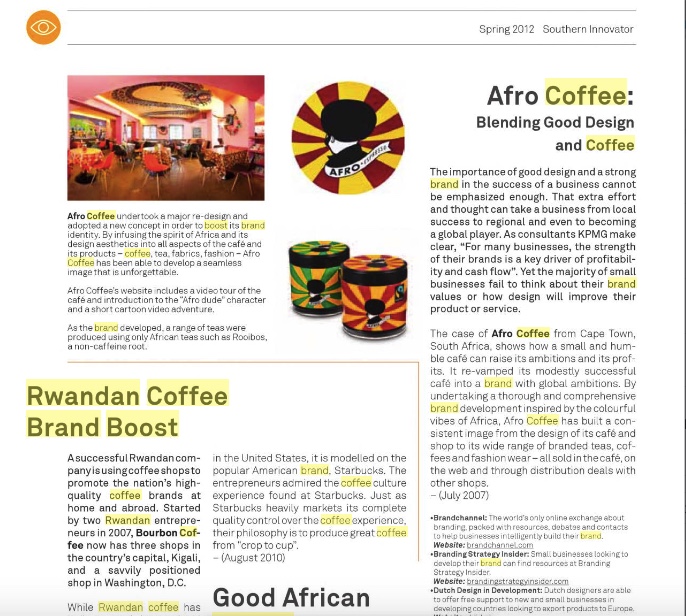
    The importance of good design and a strong brand in the success of a business cannot be emphasised enough. That extra effort and thought can take a business from local success to regional and even global success. As consultants KPMG make clear, “For many businesses, the strength of their brands is a key driver of profitability and cash flow.” Yet the majority of small businesses fail to think about their brand values or how design will improve their product or service.

    The shops have a very tasteful modern, African design and feel. African sculpture and furniture are surrounded by African artwork. The shop’s logo is an eye-catching orange and there is an overall recognizable brand identity for the entire Bourbon Coffee concept.

    The founders see it as an opportunity to educate people about the health benefits of coffee culture and the joys of the lifestyle. They proudly serve only Rwandan coffee and promote the national brands they serve, including Akagera, Kivu Lake, Kizi Rift, Muhazi and Virunga.

    Bourbon Coffee, in a clever move, opened the Washington branch in 2009 in a former Starbucks in a neighbourhood packed with aid organizations and NGOs, many of which work with Rwanda on projects.

    Karuletwa says Bourbon Coffee’s ambitious vision “is to stand as a symbol of a new era in African economic development, one in which African nations rise to participate directly in the global marketplace.”

    “Coffee is a very intimate, emotional product,” he said. “The preparation, the processes and the profiling of coffee is similar to wine.”

    The Rwandan branches can be found at the Union Trade Centre (UTC) in Kigali’s city centre, the MTN centre in Nyarutarama and Kigali airport.

    The business is funded by Rwandan investors Tristar (http://www.tri-starinvestments.com/index.html).

    Another initiative is the Rwandan Farmers Brand (http://www.rwandanfarmers.com). It also hopes to raise the profile of Rwandan coffee and drive more of the profits made into the hands of farmers. It is a joint venture between the foundations of former U.S. President Clinton and philanthropist Sir Tom Hunter. They fund all the brand’s creation and operation in partnership with 8,700 farmers. They have started selling Rwanda Medium Roast Ground in the United Kingdom’s Sainsbury’s supermarkets. Sixteen percent of sales are clear profit and returned to the farmers via their own Trust Fund.

    Karuletwa says he doesn’t want Rwandan coffee to be “a pity-driven mission”. It is all about the quality: “The value initiative here is because this coffee tastes great,” he says.

    And Bourbon Coffee is looking further afield to grow the brand: “We hope to expand even further,” Murekezi told Monocle magazine. “Congo, Burundi, Tanzania, but also Europe. We think the concept can work there too.”

    Published: August 2010

    Resources

    • East African Fine Coffees Association: All the latest news on events and initiatives for East Africa’s coffee producers. Website: http://www.eafca.org/
    • Brandchannel: The world’s only online exchange about branding, packed with resources, debates and contacts to help businesses intelligently build their brand. Website: www.brandchannel.com
    • Small businesses looking to develop their brand can find plenty of free advice and resources here. Website: www.brandingstrategyinsider.com
    • The red dot logo stands for belonging to the best in design and business. The red dot is an internationally recognized quality label for excellent design that is aimed at all those who would like to improve their business activities with the help of design. Website: http://www.red-dot.de
    • Dutch Design in Development: The Dutch NGO works with producers to develop skills and adapt producers’ products to present and future demands in Europe. By following this approach, Southern producers can reduce the risk of making products nobody wants, or that lack originality in the marketplace and thus won’t sell. Website: http://www.ddid.nl/english/index.html

    https://davidsouthconsulting.org/2021/03/12/afro-coffee-blending-good-design-and-coffee/

    https://davidsouthconsulting.org/2022/09/29/the-battle-for-indias-coffee-drinkers-in-buzzing-economy/

    https://davidsouthconsulting.org/2021/10/03/civet-cat-coffee-brews-filipino-opportunity/

    https://davidsouthconsulting.org/2021/01/08/haitian-coffee-becoming-a-hit-with-american-connoisseurs/

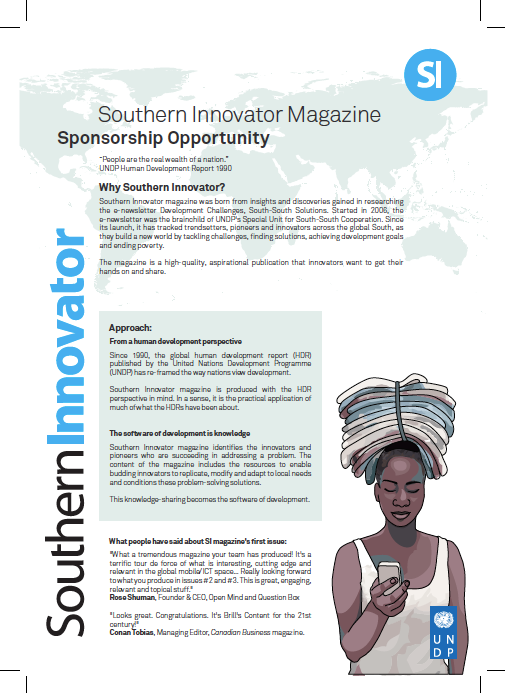
    Development Challenges, South-South Solutions was launched as an e-newsletter in 2006 by UNDP’s South-South Cooperation Unit (now the United Nations Office for South-South Cooperation) based in New York, USA. It led on profiling the rise of the global South as an economic powerhouse and was one of the first regular publications to champion the global South’s innovators, entrepreneurs, and pioneers. It tracked the key trends that are now so profoundly reshaping how development is seen and done. This includes the rapid take-up of mobile phones and information technology in the global South (as profiled in the first issue of magazine Southern Innovator), the move to becoming a majority urban world, a growing global innovator culture, and the plethora of solutions being developed in the global South to tackle its problems and improve living conditions and boost human development. The success of the e-newsletter led to the launch of the magazine Southern Innovator. 
    https://davidsouthconsulting.org/2021/03/05/southern-innovator-issue-2/

    Creative Commons License

    This work is licensed under a
    Creative Commons Attribution-Noncommercial-No Derivative Works 3.0 License.

    ORCID iD: https://orcid.org/0000-0001-5311-1052.

    © David South Consulting 2022

  • South African Wine Industry Uncorks Opportunities

    South African Wine Industry Uncorks Opportunities

    By David SouthDevelopment Challenges, South-South Solutions

    SOUTH-SOUTH CASE STUDY

    Wine-making is one of South Africa’s oldest industries and plays a key part in the country’s economy. And now both wine making and production are being transformed and creating new economic opportunities. Once seen only as the preserve of the country’s white minority population, wine is slowly becoming a black thing too.

    With exports growing from less than 50 million litres in 1994 to more than 400 million litres in 2008 – year-on-year growth of 17 percent – it is an industry that would be remiss if it didn’t share the profits of this success with the 80 percent of the country’s population who are black.

    Since the end of the racist Apartheid regime (http://en.wikipedia.org/wiki/South_Africa_under_apartheid) in the mid-1990s, various government and industry initiatives have begun to reverse the iniquities of the country’s wine-making industry – and in turn, introduce more black South Africans to the pleasures of drinking this fine local product.

    One product of this shift in sentiment is Zimbabwean Tariro Masayiti. A vintner for the prestigious South African winery Nederburg, he made history by being commissioned to create two of the three selected official wines for the World Cup of football held in South Africa this year. His Sauvignon Blanc and Dry Rose were drunk while fans watched the competition.

    He says his introduction to the world of wine-making came about by chance.

    “It was by accident really,” he said. “My brother used to work at a farm close to the Mukuyu wineries in Marondera (Zimbabwe). During my days at the university he recommended I do general work at the winery as I needed pocket money and something to help my family with.

    “It was here that I got interested in winemaking. I used to see visitors from all over the world and some of them encouraged me to take up winemaking as a career. I applied and was accepted for a place at the University of Stellenbosch where I studied Viticulture and Oenology (winery),’ Masayiti told SW Radio Africa news.

    “I was headhunted by Nederburg before I even finished my studies.”

    Masayiti’s job involves testing the grapes that go into the winery’s product.

    “I smell them and at the same time look for specific characters and flavours,” he said. “You improve on the job with training – you just need to taste a lot of wine. You need to love wine and having a science background is useful, so you understand the technical processes. But one thing that serves me well is I am dedicated and passionate about winemaking.”

    Another symbol of these changes is Vernon Henn, general manager of Thandi wines (http://www.thandi.com). He worked his way up to this prestigious role in the white-dominated South African wine industry from being an office cleaner. Thandi is the first wine brand in the world entirely owned and run by a black collective.

    Thandi (which means “nurturing love” in the Xhosa language) was started in 1995 and became the world’s first Fair Trade-certified wine in 2003. It sells cabernet sauvignon, merlot, pinot noir, sauvignon blanc, semillon, chardonnay and chenin.

    “The whole of the industry has been changing slowly,” Henn told the Guardian newspaper. “We can now up the pace of transformation. There’s still a misconception that anything from black-owned manufacturing has to be inferior. We have always focused on quality and tried to redress misconceptions about black-owned labels.”

    Other black-owned labels include M’hudi (http://www.mhudi.com); Ses’fikile (http://www.winedirectory.co.za/index.php/138/sesfikile), led by three former township schoolteachers; and Seven Sisters (http://www.sevensisters.co.za/wmenu.php) – cultivated by seven sisters.

    “We are a tiny minority but we are here to stay,” said Vivian Kleynhans of the African Vintners Alliance, comprising eight companies led by black women. “So they will just have to accept us.”

    Another success is the Indaba brand (http://twitter.com/IndabaWines) first launched in the US in 1996, just after South Africa became a democratic republic. “Indaba” is the Zulu word for “a meeting of the minds,” or a traditional gathering of tribal leaders for sharing ideas.

    The brand was created as a celebration of the democratization process in South Africa, and from its inception the wines have conveyed the spirit of South Africa to the world’s wine drinkers.

    The Indaba range of wines consists of the Indaba Sauvignon Blanc, Indaba Chenin Blanc, Indaba Chardonnay, Indaba Merlot and Indaba Shiraz.

    There is also the 6th annual Soweto Wine Festival (http://www.sowetowinefestival.co.za/About.htm) held in the Soweto township of Johannesburg. Soweto was home to the resistance against the Apartheid regime, and still has a very poor slum area in its midst. But it is also home to the new and rising black middle class. Many parts of Soweto could now pass for affluent suburbs in any wealthy country. Hatched as an idea in 2004, the wine festival is about “introducing South Africa’s quality wines to the remaining 80 percent of our population,” says Mnikelo Mangciphu, co-founder of the Soweto Wine Festival“Wine is not for white South Africans only to enjoy. It should be a way of life for all South Africans.”

    Mangciphu is also the owner and manager of the only wine shop in Soweto – Morara Wine & Spirit Emporium, which he launched after the first Soweto Wine Festival in 2005.

    The idea behind the festival is to shift attitudes in South Africa about wine drinking. Soweto has been the home to many trends in the country, from politics to fashion to pop music. And so it seemed the right place to start shifting attitudes towards wine. The number of participants has grown from 3,000 people to 5,520. Five years after it began, the festival showcases wines from 103 wineries.

    Mangciphu had spotted a shift in drinking habits away from just beer and so he opened his wine boutique in Soweto to cater to these new tastes. The shop is an elegant place with wooden shelves displaying the bottles of wine.

    South Africa’s wine industry now employs around 257,000 people directly and indirectly, including farm labourers and those involved in packaging, retailing and wine tourism.

    Wine tourism alone employs over 59 000 people. The Western Cape region, home to much of the wine industry, has seen its economy grow on the back of wine tourism.

    By volume, South Africa ranks ninth in the world for wine production.

    There is a scholarship fund also available to encourage young people to enter the South African wine industry as a career. Mzokhona Mvemve was one of the first awarded the Indaba Scholarship and became South Africa’s first black wine maker in 2001, working for Cape Classics.

    Published: October 2010

    Resources

    Development Challenges, South-South Solutions was launched as an e-newsletter in 2006 by UNDP’s South-South Cooperation Unit (now the United Nations Office for South-South Cooperation) based in New York, USA. It led on profiling the rise of the global South as an economic powerhouse and was one of the first regular publications to champion the global South’s innovators, entrepreneurs, and pioneers. It tracked the key trends that are now so profoundly reshaping how development is seen and done. This includes the rapid take-up of mobile phones and information technology in the global South (as profiled in the first issue of magazine Southern Innovator), the move to becoming a majority urban world, a growing global innovator culture, and the plethora of solutions being developed in the global South to tackle its problems and improve living conditions and boost human development. The success of the e-newsletter led to the launch of the magazine Southern Innovator. 

    Creative Commons License

    This work is licensed under a
    Creative Commons Attribution-Noncommercial-No Derivative Works 3.0 License.

    ORCID iD: https://orcid.org/0000-0001-5311-1052.

    © David South Consulting 2023