Tag: Development Challenges

  • Bangladesh Coffin-Maker Offers an Ethical Ending

    Bangladesh Coffin-Maker Offers an Ethical Ending

    By David SouthDevelopment Challenges, South-South Solutions

    SOUTH-SOUTH CASE STUDY

    Few people want to think about death, and many are ill-prepared when it happens to a loved one or friend. But it will happen to us all – and growing ethical and environmental concerns are reshaping the way many deal with the inevitable event. More and more people are seeking a lower-cost option for being disposed of that also does not harm the environment.

    There are many ideas out there, but one that is getting attention is using sustainably sourced and fairly traded coffins as a way of reducing carbon emissions resulting from a person’s death.

    Bangladeshi pioneers Oasis Coffins (oasiscoffins.com) are crafting ecologically sound, Fair Trade coffins and generating jobs and income for an impoverished region of the country. The coffins are made from locally grown bamboo, seagrass and willow and are a clever piece of design.

    Bamboo is as strong as steel and yet flexible, and the coffins made from it look like typical burial boxes – but can be folded back into their footprint to be stored flat. This is a great space-saving innovation and makes it easier to store the coffins and also to ship them to overseas markets. This clever design is reducing the amount of energy used.

    Oasis has a manufacturing workshop employing 70 people in the Nilphamari district of Bangladesh (http://en.wikipedia.org/wiki/Nilphamari_District), about 400 kilometres north from the capital, Dhaka. The region is poor, but large quantities of bamboo grow in the area.

    It is a region where employment is seasonal and erratic, making family life chaotic as parents constantly search for stable work.
    Oasis Coffins is located in the Uttara Export Processing Zone (http://www.epzbangladesh.org.bd/bepza.php?id=EPZ-U), run under the authority of the Bangladesh Export Processing Zones Authority (BEPZA), a government agency that aims to “promote, attract and facilitate foreign investment in the Export Processing Zones.”  Its sales office is based in Birmingham in the United Kingdom.

    The company began in 2006 with the idea of creating high-quality products using local materials while creating good quality jobs to achieve a double impact: changed lives and a protected environment. The hope is to create a business model that can be replicated elsewhere.

    The company is structured to include both its product development and manufacturing in rural Bangladesh. It took its time conducting market research and product development to make sure it had a product people were willing to buy.

    “We make beautiful, high quality products in an environment that gives people reliable employment and good working conditions,” said managing director David How on the company’s website. “Our products are in demand from people who are becoming increasingly conscious of their impact on the environment and others.

    “It is encouraging to know that in bereavement, we can give life into people and a community in Bangladesh. We want people to know where their products are coming from, and to know that what they buy can benefit people elsewhere.”

    According to its website, Oasis Coffins abides by the standards prescribed by the World Fair Trade Organization (wfto.com) and the European Fair Trade Association (http://www.european-fair-trade-association.org/) and is also a member of ECOTA (ecotaftf.org). The ECOTA Fair Trade Forum started in 1990 and is a networking and coordinating body for small and medium sized Fair Trade Enterprises of Bangladesh.

    Employees are divided equally between women and men, and many have never been to school. They are paid 30 per cent more than the recommended rate for garment workers in Bangladesh.

    Oasis Coffins know by name the farmers who provide the bamboo and all of it is harvested within 20 kilometres of the manufacturing workshop. Oasis Coffins also takes pride in the construction of the workshop, which features plenty of natural light, good ventilation and easy access in and out. A comfortable workshop is important for the health and happiness of manufacturing workers.

    Employees receive a pension scheme, paid holidays, sick leave and a lump-sum payment if they leave. There is also a doctor available during working hours for free medical advice.

    To help upgrade the skills of the workers, there are lunchtime literacy classes, and employees are also taught how to manufacture products to a high global standard.

    The Oasis coffins are benefiting from the growing marketplace for green funerals in Europe and North America.

    In Britain, ecological funerals are on the rise as people seek an affordable and environmentally sound way to be dispatched.
    The UK’s Co-operative Funeral Care, part of the Co-operative Group, is selling the Bangladeshi coffins at more than 900 of its funeral homes in the United Kingdom as part of its ethical strategy.

    Providing funeral services can be an effective income generator. In Ghana, craftsmen have developed a global reputation for their quirky coffin designs celebrating the lives of the deceased. Ghana is also pioneering the selling of funeral insurance through mobile phones. Bereavement services are among the many basic needs of all communities, no matter where they are located. Just as people will always be born and get sick, they will also eventually die. Providing services that offer dignity to the families and the deceased can be a boost to local economies.

    Published: March 2013

    Resources

    1) Ghana coffin pioneer: Paa Joe’s sculpted coffins blur the line between art and craft. Each work is carefully constructed to reflect the ambition or the trade of the person for whom it was made. Website:http://www.jackbellgallery.com/artists/35-Paa-Joe/overview/

    2) African funeral insurance providers: “Stanbic Bank launches FuneralPlan insurance product”. Website:http://www.modernghana.com/news/427917/1/stanbic-bank-launches-funeralplan-insurance-produc.html

    3) Southern Innovator Magazine Issue 2: Youth and Entrepreneurship. Website:http://www.scribd.com/doc/106055335/Southern-Innovator-Magazine-Issue-2-Youth-and-Entrepreneurship

    Ghanaian Coffins Prove Design and Craftsmanship Boost Incomes

    Southern Innovator logo

    London Edit

    31 July 2013

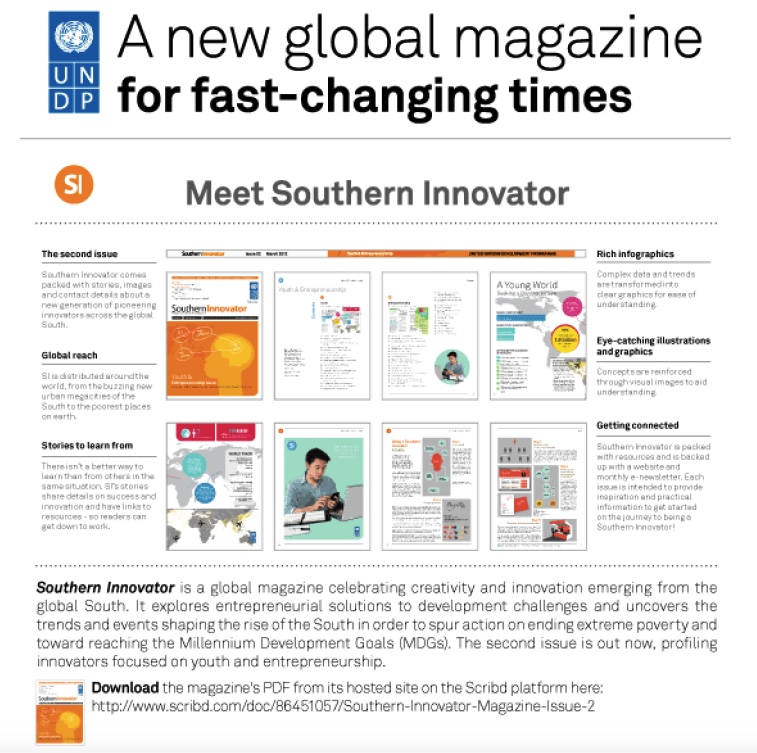
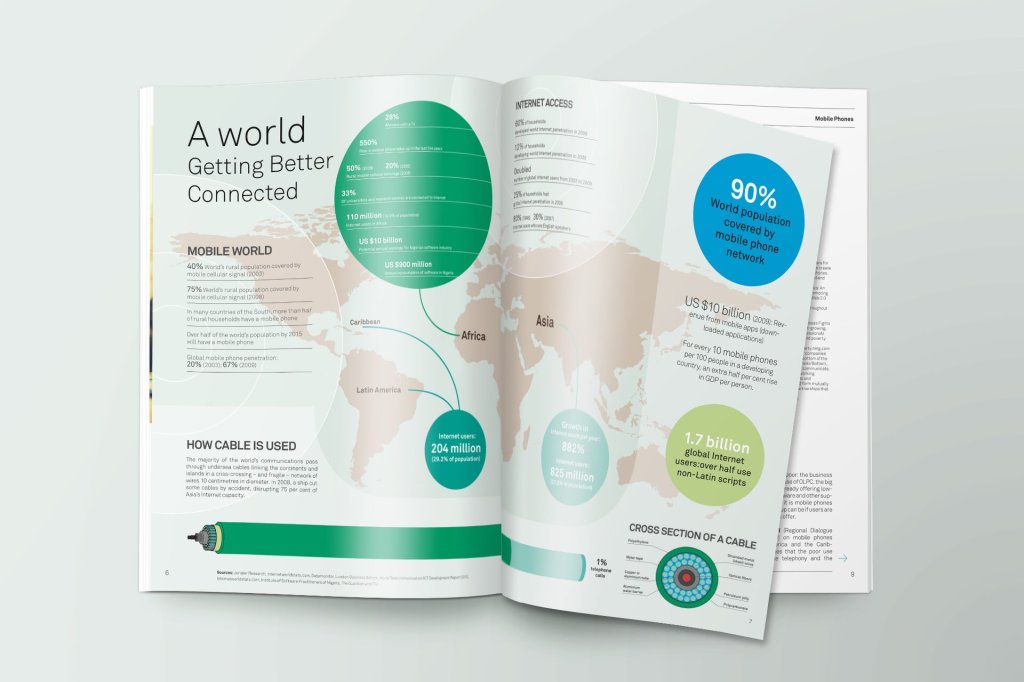
    Development Challenges, South-South Solutions was launched as an e-newsletter in 2006 by UNDP’s South-South Cooperation Unit (now the United Nations Office for South-South Cooperation) based in New York, USA. It led on profiling the rise of the global South as an economic powerhouse and was one of the first regular publications to champion the global South’s innovators, entrepreneurs, and pioneers. It tracked the key trends that are now so profoundly reshaping how development is seen and done. This includes the rapid take-up of mobile phones and information technology in the global South (as profiled in the first issue of magazine Southern Innovator), the move to becoming a majority urban world, a growing global innovator culture, and the plethora of solutions being developed in the global South to tackle its problems and improve living conditions and boost human development. The success of the e-newsletter led to the launch of the magazine Southern Innovator. 
    Creative Commons License

    This work is licensed under a
    Creative Commons Attribution-Noncommercial-No Derivative Works 3.0 License.

    ORCID iD: https://orcid.org/0000-0001-5311-1052.

    © David South Consulting 2023

  • The e-Reader Battle Reaches India

    The e-Reader Battle Reaches India

    By David SouthDevelopment Challenges, South-South Solutions

    SOUTH-SOUTH CASE STUDY

    The rise and rise of e-books and electronic publishing has prompted the development of e-readers: handy, portable devices that try to mimic the reading experience of paper books while offering the storage and navigation capability of computers.

    A good example is the very popular e-reader from Amazon, the Kindle (http://en.wikipedia.org/wiki/Amazon_Kindle). The latest version boasts the ability to store up to 3,500 books.

    The utility of these e-readers for people in the global South is clear: they can enable people to bypass the lack of local library facilities to store vast, personal archives of books. This is a powerful educational tool: imagine a village doctor with easy access to thousands of medical texts and papers, or a child preparing for university exams no longer having to worry they can find study texts. It also is a cost-effective way to publish in many local languages and break the stranglehold English-language publishing has had on delivering e-books.

    Over the past decade, India has developed a reputation for its fast-growing information technology industries, making software and providing IT-related services.

    Now India has produced a rival to the Kindle. The Wink (https://www.thewinkstore.com/ereader/index) is designed to accommodate 15 common Indian languages. (The 2001 census in India found 29 languages with at least a million native speakers). It comes in an eye-catching design and is complemented by a sleek website stuffed with e-books ready for download. The entire package is very well-thought-out and marketed.

    The Wink was developed and built by EC Media International and retails, according to its website, for Rs 8,999 (US $200). It looks similar to the Kindle, but where the Kindle is grey the Wink is white. This Indian rival has some impressive capabilities: it can not only support 15 Indian languages, it can also access an online library of more than 200,000 book titles. They range from arts and entertainment to biography, newspapers and science topics. There is also a large archive of free books for download.

    But it has come in for criticism for its price, which some say is far too high for the Indian market.

    The Tech 2 website also criticized the Wink for its “frustrating performance, which actually detracts from the pleasure of reading.” Overall it found the reader “a decent first attempt, but there are many issues that need to be ironed out.”

    It can be a rocky road to information technology hardware innovation. And maybe this first attempt at a made-in-India e-reader still has a way to go to get it right. There have been a number of high-profile, over-hyped disappointments in the last few years. One was the pledge to make a US $35 tablet computer. The project was launched in 2010 with much fanfare, but by January 2011 the Indian government had dropped manufacturers HCL Technologies for failing to honour its 600 million rupee (US $13 million) contract.

    It joins the disappointing attempt at rivalling the One Laptop Per Child (www.onelaptop.org) computer from MIT (Massachusetts Institute for Technology) with an Indian version for US $10. What was offered instead in 2009 was a device with no screen or keyboard, requiring an additional laptop and paper to access its stored files. It was also made in Taiwan, rather than India.

    What these first steps show is the complexity of hardware development and how challenging it is to get the user experience right for customers while keeping the price affordable.

    But from these tries comes experience, and in time better products will be developed as lessons are learned.

    Published: June 2011

    Resources

    1) How to build your own personal computer: This guide helps to demystify computing hardware and shows how to build a computer at home. Website:http://www.buildeasypc.com/

    2) Hardware design and architecture: An archive of free e-books on all aspects of computer hardware and architecture design. An outstanding resource to get anyone started in computer engineering. Website: http://www.e-booksdirectory.com/listing.php?category=38

    3) Jonathan Ive is the man behind the highly successful and user-friendly modern design that has turned the Apple computer brand into such a global success story. He provides tips on how to design usable computer hardware and shares the secrets of his success. Website:http://www.wired.com/culture/design/news/2003/06/59381

    Development Challenges, South-South Solutions was launched as an e-newsletter in 2006 by UNDP’s South-South Cooperation Unit (now the United Nations Office for South-South Cooperation) based in New York, USA. It led on profiling the rise of the global South as an economic powerhouse and was one of the first regular publications to champion the global South’s innovators, entrepreneurs, and pioneers. It tracked the key trends that are now so profoundly reshaping how development is seen and done. This includes the rapid take-up of mobile phones and information technology in the global South (as profiled in the first issue of magazine Southern Innovator), the move to becoming a majority urban world, a growing global innovator culture, and the plethora of solutions being developed in the global South to tackle its problems and improve living conditions and boost human development. The success of the e-newsletter led to the launch of the magazine Southern Innovator. 

    Creative Commons License

    This work is licensed under a
    Creative Commons Attribution-Noncommercial-No Derivative Works 3.0 License.

    ORCID iD: https://orcid.org/0000-0001-5311-1052.

    © David South Consulting 2023
  • South Africa Innovates Healthcare with Prepay Phone Vouchers

    South Africa Innovates Healthcare with Prepay Phone Vouchers

    By David SouthDevelopment Challenges, South-South Solutions

    SOUTH-SOUTH CASE STUDY

    Pioneers in Africa are experimenting with new ways to fund the delivery of healthcare that is affordable and sustainable and not dependent on foreign aid and donations. A South African company is prototyping the selling of pre-payment healthcare services through mobile phones with a range of vouchers that can be bought and downloaded at the tap of a keypad. They are priced at between US $12 and US $49 and cover medical and dental check-ups, tests, treatments, chronic care and medicines. They are flexible and can also be sent to friends and family who need help.

    In South Africa, poverty is still widespread. The majority black population has a median income of US $2,000 a year (New Internationalist) and many still live in crowded townships and poor rural communities. Poverty has also increased for many white Afrikaner South Africans (http://en.wikipedia.org/wiki/Afrikaner). A study by the Standard Bank of South Africa found the number of whites earning less than US $80 a month grew from 2000 to 2004 by more than 50 per cent. In the government capital of Pretoria, 50 Afrikaner squatter camps have emerged in recent years. For many, affordable healthcare is a critical issue.

    The story of healthcare in Africa is not a linear one of constant progress. The continent as whole achieved its lowest child mortality rates in the 1970s. But after that, the quality of healthcare declined as a result of various factors including economic crises and the HIV/AIDS crisis – both of which overwhelmed public systems. In sub-Saharan Africa, health systems reached rock bottom in the late 1990s.

    “Few people could afford annual check-ups, medicines or user fees at hospitals,” wrote Dr. Ebrahim Malick Samba in the paper “African health care systems: what went wrong?” for News Medical (www.news-medical.net). “One result was the resurgence of infectious diseases such as malaria, tuberculosis and cholera.

    “Prior to the 1980s, the district hospitals, community health centres and other outreach health posts provided medical services and essential drugs free of charge. With reforms, user fees and cost recovery were introduced, and the sale of drugs was liberalized.

    “Many governments discontinued budget support to the health sector which paralysed the public health system. There was no money for medical equipment and maintenance; salaries and working conditions declined.”

    Things have been steadily improving from this low base through the 2000s, the result of increased aid funding for public health systems and greater national investments in staff, facilities and equipment. There is still a long way to go, but Africa is becoming a world leader in developing and deploying mobile phone applications for health and healthcare.

    Despite dramatic improvements to the quality of hospitals and the number of qualified doctors, the continent’s healthcare services are still a patchwork, with rural and slum dwellers poorly served and the stresses of treating patients with contagious diseases like HIV/AIDS and malaria pushing resources to the limit.

    Research has shown it is better and fairer to develop pre-payment mechanisms for healthcare than to just hit patients with fees when they are ill. With pre-payment, a person can buy care services when they are financially able to and bank up care for when they become ill and not able to work and save.

    This is a crucial issue for people with low incomes who can quickly be devastated by their illness or that of loved one or family member.

    The World Health Organization (WHO) has taken a firm stand against so-called out-of-pocket payments and encourages the growth in pre-payment methods. The World Health Report 2000 found that “Fairness of financial risk protection requires the highest possible degree of separation between contributions and utilization.”

    South Africa’s Yarona Care (www.yaronacare.co.za/prepaid.html) – a health insurance provider network – is rolling out prepaid mobile phone vouchers, allowing patients to see doctors or dentists and even traditional healers for treatment. When a patient visits, the healthcare worker redeems the mobile phone voucher to get paid. One product, Impilo Go, allows people to pay for one visit to a doctor and seven days of medicine for R230 (US $34). For people on a tighter budget, there is Impilo Care for R80 (US$12). A patient can visit a nurse practitioner for a medical check-up and receive tests.

    Impilo One offers medicines alone for R100, while Impilo Plus for R195 (US $29) is aimed at people with chronic conditions. They can get a prescription from the doctor and then go to a pharmacy participating in the scheme to receive medicines.

    Dental work is also covered by the vouchers.

    An online demonstration shows how the mobile phone process works (www.yaronacare.co.za/cellphonedemo.html).

    The service is marketed at a mix of customers, from individuals to corporate clients looking to cover large numbers of people to government and NGOs. They can purchase services by voucher, payroll schemes or mobile phones.

    Prepaid by mobile phone as a concept is already well established across Africa. It is a simple way to make payments and sell services. In the case of Yarona’s offering, the customer or patient uses their mobile phone to dial a code to pay for a service. When at the doctor or dentist’s office, he or she spends the voucher for the service by giving a unique code to the healthcare professional. Once this is done, Yarona Care pays the healthcare provider for the service.

    The voucher approach allows customers to buy health services for family members for a defined period of time. Vouchers can also be sent to family members for emergencies.

    Published: April 2011

    Resources

    1) South Africa’s Afridoctor mobile phone application claims to be Africa’s first personal mobile health clinic. It lets patients use its “SnapDiagnosis” system to submit photos of their ailments and in turn receive advice from a panel of medical professionals, or use the mapping feature to find doctors, clinics and health industry-related services nearby. Website: http://twitter.com/afridoctor

    2) Ghana’s mPedigree uses cell phones to build networks to tackle and identify counterfeit drugs. Website: http://mpedigree.net

    Development Challenges, South-South Solutions was launched as an e-newsletter in 2006 by UNDP’s South-South Cooperation Unit (now the United Nations Office for South-South Cooperation) based in New York, USA. It led on profiling the rise of the global South as an economic powerhouse and was one of the first regular publications to champion the global South’s innovators, entrepreneurs, and pioneers. It tracked the key trends that are now so profoundly reshaping how development is seen and done. This includes the rapid take-up of mobile phones and information technology in the global South (as profiled in the first issue of magazine Southern Innovator), the move to becoming a majority urban world, a growing global innovator culture, and the plethora of solutions being developed in the global South to tackle its problems and improve living conditions and boost human development. The success of the e-newsletter led to the launch of the magazine Southern Innovator. 

    Creative Commons License

    This work is licensed under a
    Creative Commons Attribution-Noncommercial-No Derivative Works 3.0 License.

    ORCID iD: https://orcid.org/0000-0001-5311-1052.

    © David South Consulting 2023

  • Safe Healthcare is Good Business and Good Health

    Safe Healthcare is Good Business and Good Health

    By David SouthDevelopment Challenges, South-South Solutions

    SOUTH-SOUTH CASE STUDY

    Many people have been shocked by recent stories about the proliferation of counterfeit drugs and the rate at which they are killing and harming people in Nigeria. The International Narcotics Control Board found that up to 50 percent of medicines in developing countries are counterfeit. This has driven home the point that without the presence of legitimate players in the African drug market, the illegal sharks will step in to make large profits – and a literal killing.

    To counter this negative trend, what is most needed is support for reliable Africa-based companies: businesses that are long-term, sustainable and not living from one grant to the next. But as experience has shown around the world, nurturing businesses requires certain fundamentals: they must work to be profitable, they must find a market and exploit it, and they need cash infusions that are timed to the company’s growth, not to the cycle of international donors. This role, often served in developed countries by venture capitalists, who want a fast return of 35 percent – is too onerous a burden for most African businesses. What African companies need is a more conservative, long-term approach; one that expects returns of between five and 10 percent.

    Kenyan company Advanced Bio-Extracts (ABE) is one good example. Only 18 months old and based in Nairobi, the company produces one of a new generation of low-cost anti-malarials known as artemisinin-based combination therapies (ACTs). The drug is produced from the green leafy plant Artemisia, or sweet wormwood. The company is the first in Africa to make this drug, and employs 7,000 local farmers in Kenya, Tanzania and Uganda, as well as scientists.

    ABE has received two infusions of cash from non-profit social venture capitalists Acumen, as well as investment from Swiss drug giant Novartis. Acumen has so far invested US $9.6 million in 11 active investments focused on a diverse set of health challenges, including basic healthcare access in rural areas and treatment for malaria and HIV/AIDS.

    “We are commercializing a product that had never been commercialized,” said ABE’s owner, Doug Henfrey, to the New York Times. “Those little windows of support make these things happen. We could not have done it otherwise.”

    Acumen’s Kenya country director, Nthenya Mule, said “there are positive things happening in Africa, but they are not happening overnight, and some are happening quietly. ABE is exemplary. You will not see it as front-page news, but in 18 months they set up a factory with 160 people interfacing with 7,000 farmers and supplying one of the major pharma companies in the world.”

    Stimulating private sector solutions to African healthcare problems is receiving an additional boost from a new fund established by the World Bank’s private sector arm, the International Finance Corporation. To be launched later in 2007, it will offer cash and loans totaling US $500 million to commercial healthcare projects in Africa. According to its own statistics, 60 percent of health expenditure in sub-Saharan Africa is privately funded, and the market, excluding South Africa, is worth US $19 billion.

    Published: May 2007

    Resources

    • Roll Back Malaria Partnership: Launched in 1998 by the World Health Organization. UNICEF, UNDP and the World Bank to coordinate the global campaign, to fight malaria.
    • Malaria Atlas Project (MAP): An online map showing up-to-date information on high-risk areas for malaria.
    • A paper on the global threat of counterfeit drugs: Click here

    Development Challenges, South-South Solutions was launched as an e-newsletter in 2006 by UNDP’s South-South Cooperation Unit (now the United Nations Office for South-South Cooperation) based in New York, USA. It led on profiling the rise of the global South as an economic powerhouse and was one of the first regular publications to champion the global South’s innovators, entrepreneurs, and pioneers. It tracked the key trends that are now so profoundly reshaping how development is seen and done. This includes the rapid take-up of mobile phones and information technology in the global South (as profiled in the first issue of magazine Southern Innovator), the move to becoming a majority urban world, a growing global innovator culture, and the plethora of solutions being developed in the global South to tackle its problems and improve living conditions and boost human development. The success of the e-newsletter led to the launch of the magazine Southern Innovator. 

    Creative Commons License

    This work is licensed under a
    Creative Commons Attribution-Noncommercial-No Derivative Works 3.0 License.

    ORCID iD: https://orcid.org/0000-0001-5311-1052.

    © David South Consulting 2023