Tag: Development Challenges

  • Palestinian Olive Oil’s Peaceful Prosperity

    Palestinian Olive Oil’s Peaceful Prosperity

    By David SouthDevelopment Challenges, South-South Solutions

    SOUTH-SOUTH CASE STUDY

    The economic devastation of the conflict between Israel and the Palestinians (http://en.wikipedia.org/wiki/Palestine) has brought much hardship to the Palestinian people. The United Nations under the UNRWA mission has been working to lesson the hardship for over 60 years (http://www.unrwa.org). But there is only so much it can do.

    However, several business initiatives are creating strong Palestinian food brands to improve the reputation and awareness of Palestine around the world. In particular, Palestinian olive oil has led the way and enjoyed strong sales in countries like the United Kingdom.

    Since 2004, the Palestine Fair Trade Association (PFTA) (http://www.palestinefairtrade.org) has been leading the movement of fair trade producers in Palestine, linking small Palestinian farms in fair trade collectives and cooperatives across the country.

    Zatoun (http://www.zatoun.com) – or Zaytoun (http://www.zaytoun.org) as its known in the UK – are olive oil and soap brands using the Arabic word for olive. Olive oil (http://en.wikipedia.org/wiki/Olive_oil) is a popular cooking and seasoning oil and is sought after for its health benefits. Most of it is cultivated in the Mediterranean region, with Spain the largest single producer. Like wine, the quality of the olive oil varies greatly and the bouquet and viscosity of the oil play a big role in how consumers select a brand. The trend in the past 10 years has been for consumers to be more selective about the olive oil they buy and to be more informed about the choices available. This increasingly sophisticated consumer choice is what is helping the Palestinian oil succeed.

    Another factor is the growing global popularity of the traditional Mediterranean diet. Research has linked it to the prevention of cancers, obesity and cardiovascular diseases, and an aid to food digestion. Olive oil and olives make up one of the six key groups of foods that are part of the Mediterranean Diet. The other elements are grains, fruits and vegetables, legumes and nuts, dairy products and fish.

    The Zatoun brand of olive oil uses its profits to help olive tree farmers and their families in Palestine.

    The brand is also hoping to alter public perceptions of Palestine. As its website states, “Zatoun helps to create a context based in ordinary everyday life to view and discuss the situation in Palestine-Israel. No longer is it an abstract geopolitical issue involving power elites and undefined national interest.”

    The Zatoun brand is led in Canada by Robert Massoud, winner of the 2004 YMCA Peace Medallion. Zatoun is sold in Canada through peace groups and social justice and faith groups and is “intended as a tool to help promote their work and bring home the message that the struggle of Palestinians is ultimately one of human rights and social justice.”

    The olive oil is certified fair trade under the Institute for Marketecology (IMO) (http://www.imo.ch/index.php?seite=imo_index_en) in Switzerland. The brand is operated as a not-for-profit with volunteer labour and the entire cost of the product goes to the farmers, customs and shipping costs, and promotion and administration. Each 750mL bottle sells from between CAD $15 (US $14) and CAD $17.50 (US $17.22) and each bar of soap is CAD $5.00 (US $4.90).

    In the U.K., the Zaytoun brand was started by British women Heather Masoud and Cathi Pawson, also in 2004. The Palestinian olive oil has benefited from sales promotion during the United Kingdom’s annual Fair Trade Fortnight: a highly publicized promotion over two weeks that has consistently raised the profile of all Fair Trade products. Palestinian products were profiled during the 2009 event.

    The Zaytoun brand is certified with the World Fair Trade Organization (www.wfto.com) and has been able to break through to sales in British supermarkets as a result. Having this certification is key to being accepted for display on the supermarket shelves. By being certified, the farmers are able to get guaranteed above market prices for their olives. This makes it easier to plan and invest in the farm and the community and avoid the wild fluctuations of market prices. It is common around the world for farmers to be bankrupted and impoverished when market prices crash and fall below the cost of growing and harvesting the product.

    “We have been working for the Fair Trade certificate for four years,” Nasser Abufarha, chairman of the Palestinian Fair Trade Association told the Guardian newspaper. “Fair Trade will increase our sales, and bring us new markets and widen our reach.

    “We have given farmers hope,” he said. “An economic exchange that recognises Palestinian farmers’ rights and respects the value of their connection to their land, after marginalization under Israeli occupation, is a major accomplishment.”

    Olives are Palestine’s biggest crop, and critical to the local economy. The industry employs more than 100,000 people and its economic health affects many more. But the ongoing conflict has harmed the olive industry in many ways, from the bulldozing of orchards to make way for the Israeli security fence – over 1,100 hectares olive orchards were cut off by the fence in the West Bank village of Anin alone – to clearing fields for the building of new settlements.

    For some of the farms, fair trade has meant access to outside markets they haven’t had for 40 years.

    The Palestinian olive oil is in a market with fierce competition. In the UK, the oil can retail for £14.49 (US $23) a litre, while some Italian olive oils can be had for just US $9. But the Palestinian olive oil has a number of advantages in the marketplace: consumers have shown a willingness to pay the premium to support the farmers and Palestine, and most importantly in the competitive world of food sales, food connoisseurs rave about it. Food and wine writer Malcom Gluck called Zaytoun olive oil “one of the aggressive yet pungently attractive olive oils I have tasted”. He believes it easily ranks alongside the best Sicilian, Cretan and northern Spanish oils.

    Another Palestinian company having success with the olive products is the Anabtawi Group (http://www.anabtawigroup.com/index.php?a=1&lid=3&lid1=24). Based in Nablus in the West Bank, it started in 2008 the Al-Ard Palestinian Agri-Products Company and sells Al-Ard extra virgin olive oil, virgin olive oil and an olive oil soap. Operating on a large scale, the group has the largest olive oil storage facility in Palestine and provides training and support to the farmers. It also undertakes marketing of the products in new markets including Latin America.

    Ziad Anabtawi, the company’s president and CEO, told the Brazil-Arab News Agency “Palestinian olive oil is known worldwide for its high quality and its very striking aroma. It is ‘premium’ and organic by nature. Farmers grow the product the traditional way. They do not irrigate the olive trees, [irrigation] comes from rainwater and we do not use any chemicals.”

    The Palestinian experience shows it is possible to create new economic opportunities for farmers under even the most arduous political and security conditions.

    Published: October 2010

    Resources

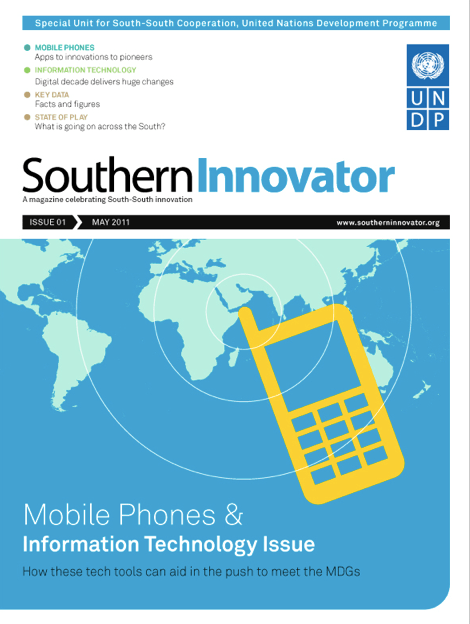
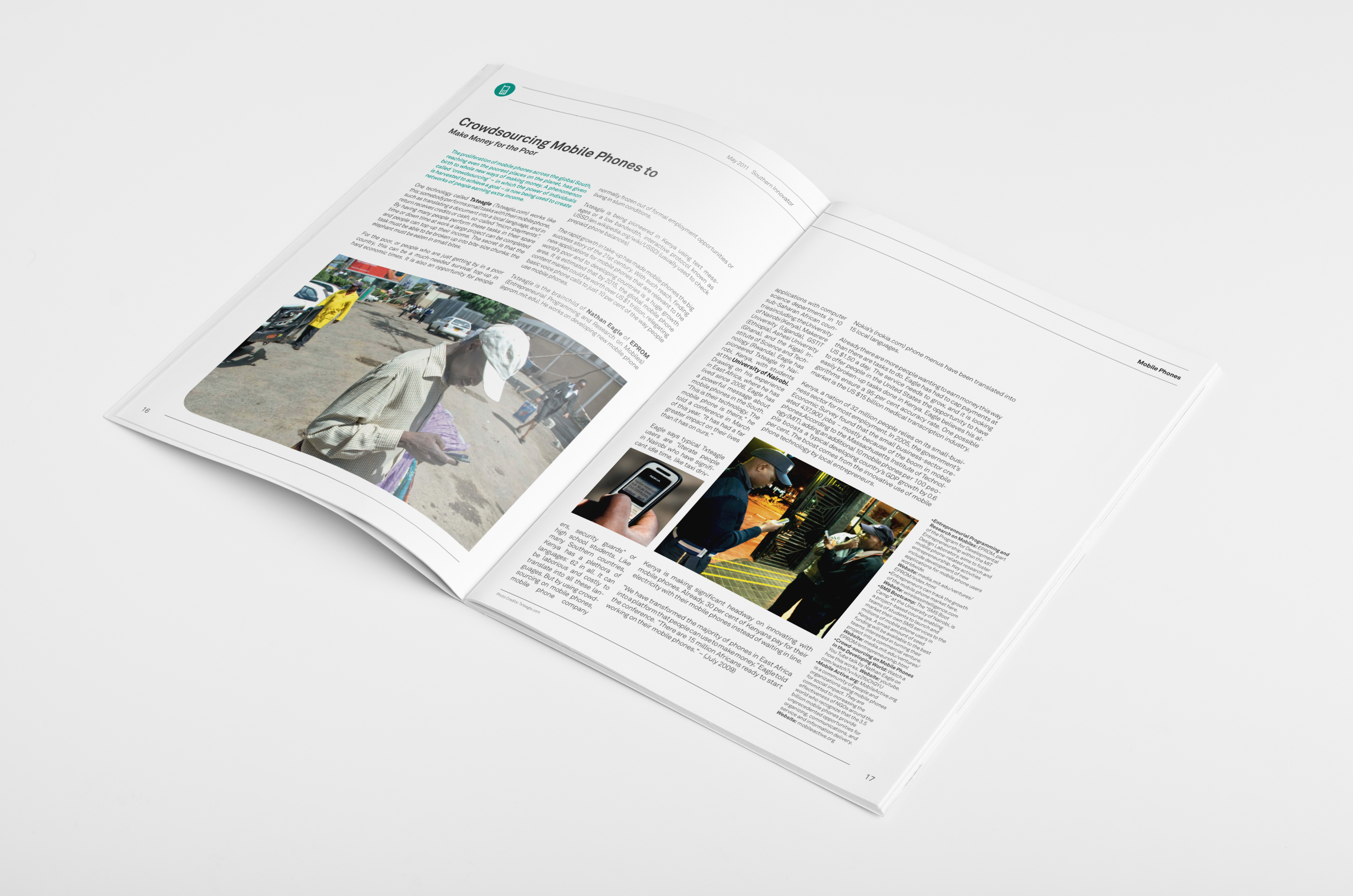
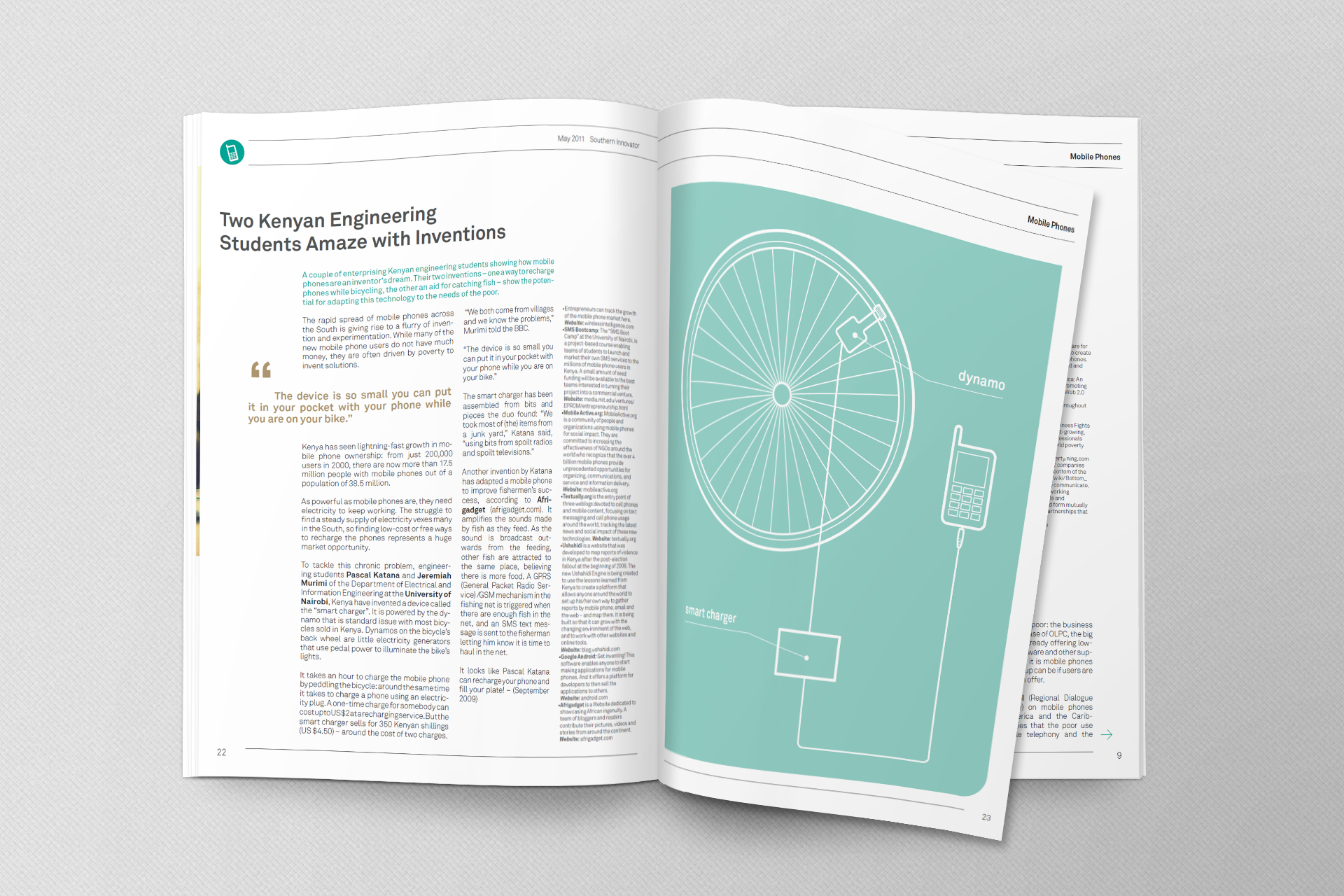
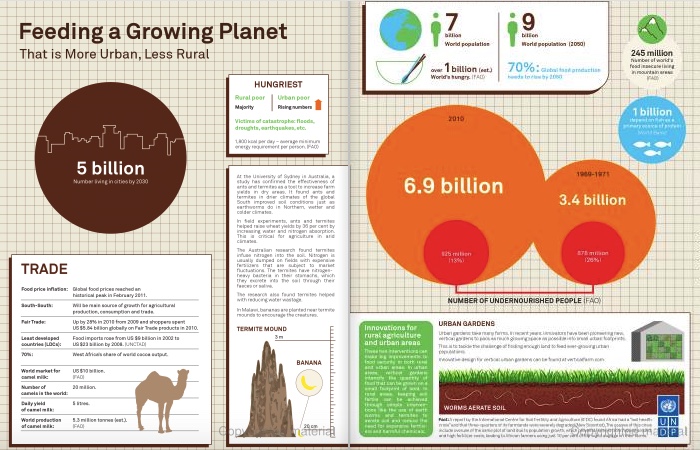
    Development Challenges, South-South Solutions was launched as an e-newsletter in 2006 by UNDP’s South-South Cooperation Unit (now the United Nations Office for South-South Cooperation) based in New York, USA. It led on profiling the rise of the global South as an economic powerhouse and was one of the first regular publications to champion the global South’s innovators, entrepreneurs, and pioneers. It tracked the key trends that are now so profoundly reshaping how development is seen and done. This includes the rapid take-up of mobile phones and information technology in the global South (as profiled in the first issue of magazine Southern Innovator), the move to becoming a majority urban world, a growing global innovator culture, and the plethora of solutions being developed in the global South to tackle its problems and improve living conditions and boost human development. The success of the e-newsletter led to the launch of the magazine Southern Innovator. 

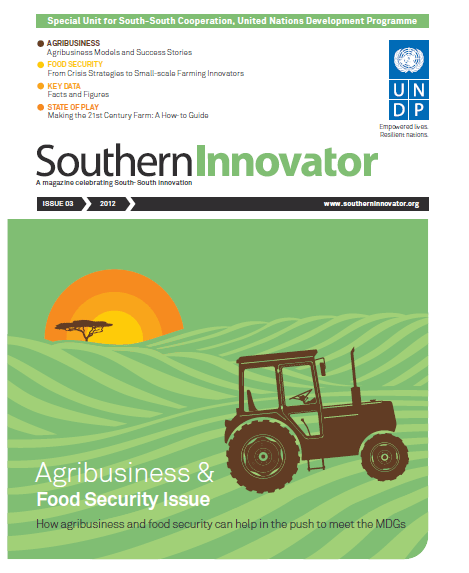
    https://davidsouthconsulting.org/2021/03/05/southern-innovator-issue-3/

    Creative Commons License

    This work is licensed under a
    Creative Commons Attribution-Noncommercial-No Derivative Works 3.0 License.

    ORCID iD: https://orcid.org/0000-0001-5311-1052.

    © David South Consulting 2022

  • Thai Organic Supermarkets Seek to Improve Health

    Thai Organic Supermarkets Seek to Improve Health

    By David SouthDevelopment Challenges, South-South Solutions

    SOUTH-SOUTH CASE STUDY

    A Thai business is working hard to expand access to organic food in the country. It sees this as part of a wider campaign to improve health in the country – and its success has caught the attention of the government, which wants to turn Thailand into a global health destination.

    The Lemon Farm chain run by Suwanna Langnamsank (http://www.lemonfarm.com/lmf/) was started 13 years ago and has grown to nine organic supermarkets in the capital, Bangkok. Lemon Farm works with 200 organic farms in Thailand and employs 160 people.

    Organic food (http://en.wikipedia.org/wiki/Organic_food) – grown without chemicals and artificial fertilizers and not irradiated or subjected to other tampering – is believed by many to be healthier because it avoids the harmful effects of accumulating chemicals. It is also thought to be richer in vitamins and minerals because of the use of non-chemical fertilizers on the soil.

    Lemon Farm sells made-in-Thailand organic vegetables and fruit, natural gift sets, soap and tea. There are also macrobiotic cafes in the supermarkets called Be Organic.  A macrobiotic diet avoids foods containing toxins (http://www.cancerresearchuk.org/cancer-help/about-cancer/treatment/complementary-alternative/therapies/macrobiotic-diet).

    The supermarkets use eye-pleasing modern design to set themselves apart from more conventional supermarkets.

    According to Lemon Farm’s website, it is a social enterprise and practices fair trade. It is using market-driven solutions to increase the availability of healthy food in the country. It seeks to support small-scale farmers and champion change in farming methods, encouraging a move away from dependence on harmful chemicals that damage human health and the environment and promoting “agricultural and economic self-sufficiency”.

    The macrobiotic restaurant operates to six values, among them using fresh vegetables and only using produce from associated farms. The restaurants do not use added sugar, they cook using a pressure cooker, and use natural ingredients such as sea salt, ginger, fermented soy sauce and natural miso. They do not use any artificial preservatives or flavour enhancers such as monosodium glutamate (MSG), a common practice in Asian cooking.

    Lemon Farm’s success as an organic food pioneer has caught the attention of the Thai government. The Ministry of Commerce (http://www2.moc.go.th/main.php?filename=index_design4_en) has contracted Lemon Farm to join its campaign to offer organic food in schools and hospitals.

    By promoting organic food, the government is hoping to boost farmers’ incomes while improving health in the country and bolstering the country’s thriving medical services industry serving foreign patients.

    “We need to promote healthy food and a healthy environment,” Piramol Charoenpao, deputy permanent secretary at the Ministry of Commerce, told Monocle magazine. “Thailand is a medical hub. The idea is to have retreat-style hospitals serving organic food. We’re increasing organic food production and educating people about it.”

    Thailand has already built a good reputation with its medical and health services. More than 1.6 million non-Thais are treated in Thai hospitals annually, with an estimated 500,000 travelling specifically for medical treatment (The Guardian).

    Former Thai Prime Minister Thaksin Shinawatra mooted the idea of making the country an international leader in medical tourism in 2003. It is expected providing medical services to overseas patients will make the country US $3.3 billion by 2015 (The Guardian).
 
It is hoped that offering organic food in hospitals and health facilities will boost the attractiveness and effectiveness of using health services in Thailand.

    Medical tourism is considered one of the fastest-growing sectors in the world. Estimates place it as a market worth US $100 billion. Three countries that compete in this market by offering medical services in the English language include India, Singapore and Thailand. They compete by offering services comparable to wealthier countries but at considerably less cost.

    Lemon Farm says it is on a mission to develop the marketplace for organic food in Thailand by educating consumers and producing “innovative natural food”.  It looks like it has already made a big impact.

    Published: February 2013

    Resources

    1) Whole Foods Market: The world’s leader in natural and organic foods, with more than 340 stores in North America and the United Kingdom. Website: wholefoodsmarket.com

    2) Conscious Capitalism: A book by Co-CEO of Whole Foods Market, John Mackey. Website:http://consciouscapitalism.org/resources/538

    3) Live Plan: A step-by-step online resource for creating a business plan for an organic supermarket. Website:http://www.bplans.com/organic_food_store_business_plan/company_summary_fc.php

    4) Start your own: Health food store: Advice and business tips on starting a health food store. Website:http://www.startups.co.uk/health-food-store.html

    Southern Innovator logo

    London Edit

    31 July 2013

    Google Books: https://books.google.co.uk/books?id=hvRcAwAAQBAJ&dq=development+challenges+february+2013&source=gbs_navlinks_s

    Slideshare: http://www.slideshare.net/DavidSouth1/development-challenges-february-2013-issue

    Southern Innovator Issue 1: https://books.google.co.uk/books?id=Q1O54YSE2BgC&dq=southern+innovator&source=gbs_navlinks_s

    Southern Innovator Issue 2:https://books.google.co.uk/books?id=Ty0N969dcssC&dq=southern+innovator&source=gbs_navlinks_s

    Southern Innovator Issue 3:https://books.google.co.uk/books?id=AQNt4YmhZagC&dq=southern+innovator&source=gbs_navlinks_s

    Southern Innovator Issue 4: https://books.google.co.uk/books?id=9T_n2tA7l4EC&dq=southern+innovator&source=gbs_navlinks_s

    Southern Innovator Issue 5:https://books.google.co.uk/books?id=6ILdAgAAQBAJ&dq=southern+innovator&source=gbs_navlinks_s

    Development Challenges, South-South Solutions was launched as an e-newsletter in 2006 by UNDP’s South-South Cooperation Unit (now the United Nations Office for South-South Cooperation) based in New York, USA. It led on profiling the rise of the global South as an economic powerhouse and was one of the first regular publications to champion the global South’s innovators, entrepreneurs, and pioneers. It tracked the key trends that are now so profoundly reshaping how development is seen and done. This includes the rapid take-up of mobile phones and information technology in the global South (as profiled in the first issue of magazine Southern Innovator), the move to becoming a majority urban world, a growing global innovator culture, and the plethora of solutions being developed in the global South to tackle its problems and improve living conditions and boost human development. The success of the e-newsletter led to the launch of the magazine Southern Innovator. 
    Creative Commons License

    This work is licensed under a
    Creative Commons Attribution-Noncommercial-No Derivative Works 3.0 License.

    ORCID iD: https://orcid.org/0000-0001-5311-1052.

    © David South Consulting 2022

  • Maker Faire and the R & D Rise in the South

    Maker Faire and the R & D Rise in the South

    By David SouthDevelopment Challenges, South-South Solutions

    SOUTH-SOUTH CASE STUDY

    The majority of the world’s research and development (R & D) in science and technology is now shifting to the global South. Powerhouses like China boast vast numbers of published papers in peer-reviewed journals and hefty cash inputs into research and development.

    China increased its R & D spending in 2009 to US $25.7 billion, a 25.6 percent increase over 2008, according to Du Zhanyuan, vice minister of the Ministry of Science and Technology. China is rapidly closing the science funding gap with Japan: in 2009 it allotted US $37.1 billion for R & D.

    The times have never been better for those with new ideas in the global South.

    And it’s not just big companies that are involved. There is R & D going on at ground level as well. African inventors, innovators and creatives met in Nairobi, Kenya in August as part of the Maker Faire Africa 2010 (http://makerfaireafrica.com). This is research and development on a shoestring, and done in a very practical, problem-solving way. While Africa’s inventors and innovators lack the big budgets of other economies, they are not short on ideas and drive.

    The Maker Faire Africa is a family-friendly gathering where the inventors can showcase their work and connect with others. It is a mix of workshops, tips on business skills, awards and a party.

    The global economy thrives on innovation and so-called ‘creative destruction’ – as economist Joseph Schumpeter called it (http://en.wikipedia.org/wiki/Creative_destruction) – that takes place as out-of-date technologies and ways of doing are surpassed by better ideas and more efficient methods. The power to innovate is the deciding factor for sustained economic growth.

    The philosophy behind Maker Faire Africa 2010 – the brainchild of ‘venture catalyst’ and entrepreneur Emeka Okafor (http://timbuktuchronicles.blogspot.com) – is to prove that innovation doesn’t just happen with computers.

    As its website says, “The aim of a Maker Faire-like event is to create a space on the continent where Afrigadget-type innovations (http://www.afrigadget.com), inventions and initiatives can be sought, identified, brought to life, supported, amplified, propagated, etc.”

    Maker Faire Africa is working with research organizations like Ghana’s Ashesi University (http://www.ashesi.edu.gh/index.html) and Kwame Nkrumah University of Science and Technology (http://www.knust.edu.gh/pages) “to sharpen focus on locally-generated, bottom-up prototypes of technologies that solve immediate challenges to development.”

    In the end, the goal of engaging all this creative and inventive energy is to spur Africans towards building “a manufacturing base that supplies innovative products in response to market needs.”

    This initiative stands out in several ways: it is truly inspiring, it gets to the core of how wealth is created, and helps build communities of innovators and inventors to tackle the problems facing Africa – and humanity.

    “We have a broader variety of makers this time around,” says Emeka Okafor of the 2010 Maker Faire. He notes makers are bringing more complex systems to the Faire, rather than just single devices. And that they “have more makers who are actually from the region.”

    “Maker Faire Africa is essentially a platform whereby innovators, inventers, creative types, across all disciplines, share ideas, showcase their products, interact with attendees and other makers,” he continues. They “begin the process of building what we think is an essential community of what I like to term the productive class. That is essentially where we see ourselves playing a key role. A productive class whose foundation is laid upon building problem-solving systems.”

    Okafor believes Africa just doesn’t “have enough wealth creation as we should.”

    “We have things backwards. … One of the essential steps is that you had productive systems that allowed those countries (Asia and Europe) to create wealth. And they had to draw those resources from within.

    “We see Maker Fair Africa celebrating resources that we already have, with knowledge from within and outside.

    “In many ways the Makers as we see them, epitomise the very sense of problem-solving that as a society acquires more of it, it begins to deal with its challenges very differently. And not look elsewhere in terms of dealing with its challenges. We want to make our Makers sexy, we want to make inventors sexy, innovators celebrities.”

    Some of the inspiring inventors from this year’s Faire include Norbert Okec from Uganda. His prototype for a solar powered street lighting system comes straight from his frustration with the traffic lights of Kampala, Uganda. Many don’t work and so he has developed a prototype solar-powered traffic light using a mix of recycled local parts and some LEDs (http://en.wikipedia.org/wiki/Light-emitting_diode) brought by a friend from China.

    He hopes to produce an e-book on his invention to share with other inventors. He was joined by fellow inventors working on a dashboard for managing wireless networks, how to recycle plastic parts, solar-power torches, water and sanitation products, junk art, community cookers, sculptures, eye glasses, bicycles, and an automatic lighting system for homes.

    Okafor is a passionate advocate of the Maker philosophy and how it changes the game: “…building is equivalent to making and making is a joyful thing, it is an interesting thing. It is a very satisfactory thing. It is not work. Most of the individuals around here have the biggest smiles on their faces. They don’t see what they are doing as work.

    “The fact they are sitting next to other people like them if anything is one of the biggest take-aways for them. Because for some of them they were toiling away on their own. Now they see others like them. And they realise they aren’t crazy.

    “When you build a community and the community begins to get stronger and sustain itself, all the other things come naturally: businesses get formed, partnerships happen: and then everything else people look for first…actually begins to happen.”

    And Africa’s future prosperity is what is at stake at the Faire: “There is a market for the products. And we believe as more individuals – Africans and otherwise – come into contact with what is on display, they will come to see their own societies differently. ”

    Published: September 2010

    Resources

    • Flickr photo gallery: A clickable archive of the Maker Faire inventors and their inventions. Website: http://www.flickr.com/groups/makerfaireafrica/pool/
    • Afrigadget: ‘Solving everyday problems with African ingenuity’: This blog never ceases to amaze and fascinate. Website: http://www.afrigadget.com/
    • Afrobotics: A competition for African engineering students to develop robots. Website: http://www.afrobotics.com/
    • International Development Design Summit: The Summit is an intense, hands-on design experience that brings together people from all over the world and all walks of life to create technologies and enterprises that improve the lives of people living in poverty. Website: http://iddsummit.org/
    • Butterflyworks: A social design studio using design to make social change. They use media, social branding and experiential learning to share knowledge, trigger creativity and build sustainable businesses. Website: http://www.butterflyworks.org
    • AshokaTECH: AshokaTECH is a blog about technology and invention within the realm of social entrepreneurship. It aims to find, support, and celebrate social innovators whose technologies offer fresh, effective approaches to advancing social change. Website: http://tech.ashoka.org/

    Development Challenges, South-South Solutions was launched as an e-newsletter in 2006 by UNDP’s South-South Cooperation Unit (now the United Nations Office for South-South Cooperation) based in New York, USA. It led on profiling the rise of the global South as an economic powerhouse and was one of the first regular publications to champion the global South’s innovators, entrepreneurs, and pioneers. It tracked the key trends that are now so profoundly reshaping how development is seen and done. This includes the rapid take-up of mobile phones and information technology in the global South (as profiled in the first issue of magazine Southern Innovator), the move to becoming a majority urban world, a growing global innovator culture, and the plethora of solutions being developed in the global South to tackle its problems and improve living conditions and boost human development. The success of the e-newsletter led to the launch of the magazine Southern Innovator. 

    Creative Commons License

    This work is licensed under a
    Creative Commons Attribution-Noncommercial-No Derivative Works 3.0 License.

    ORCID iD: https://orcid.org/0000-0001-5311-1052.

    © David South Consulting 2022