Tag: Development Challenges

  • Successful Fuel-Efficient Cookers Show the Way

    Successful Fuel-Efficient Cookers Show the Way

    By David SouthDevelopment Challenges, South-South Solutions

    SOUTH-SOUTH CASE STUDY

    A Kenyan entrepreneur has cooked up a fuel-efficient stove and oven that uses less of a precious national resource: wood from trees.

    Most African households using fuel-burning stoves either cannot afford clean-burning fuels like natural gas or electric stoves, or do not have access to them. They are stuck having to burn wood or other materials like animal dung – collectively called biomass – on open fires.

    As well as using up wood and contributing to deforestation, there is another downside to these stoves. The use of polluting fuel-burning stoves by half the world’s population – including 80 percent of rural households – is a documented contributor to a host of health problems. Poor households not only have to contend with the ill health effects of dirty water and poor sanitation, the fumes from burning dung, wood, coal or crop leftovers lead to the global deaths of more than 1.6 million people a year from breathing toxic indoor air (WHO).

    Two solutions in Kenya are helping people to cook more efficiently (meaning less time wasted on gathering material to burn, and less fuel used) and reducing cooking time by using heat more effectively.

    Invented by Dr Maxwell Kinyanjui, the Kinyanjui Jiko is a fuel-efficient charcoal oven that comes in small, medium and large industrial sizes. Made entirely in Kenya, the ovens are custom designed for a variety of environments, from domestic household use and on-the-go safari models to high-capacity models for micro-enterprises and large institutions. Cooks can use the ovens to bake, toast, steam or boil. And they are 40 percent cheaper than cooking with electricity and between 15 and 20 percent cheaper than gas.

    Kinyanjui’s Musaki Enterprises Ltd. (www.reskqu.blogspot.com/2009/01/arboretum-project.html) has developed a reputation for pioneering work in developing fuel-efficient stoves and ovens. Its most popular success to date has been the Kenya Ceramic Jiko (jiko is Swahili for cooker), or KCJ, a cheap, simple and effective stove. The company was set up in 1992, but has been involved in international aid-funded research and development efforts since the 1980s.

    “My dad was on a very good team of highly motivated individuals in the early 80s who developed the stove through pragmatism, logic and good old-fashioned ingenuity,” said his son, Teddy Kinyanjui. “He then set up the independent Musaki Enterprises.”

    The KCJ uses a ceramic liner placed inside a metal container. The metal is usually recycled, often taken from 55 gallon steel drums. The ceramic liner stops the heat energy from simply escaping into the environment and helps to focus the heat on cooking. Simply adding the ceramic liner reduces the stove’s fuel consumption by between 25 and 40 percent. The charcoal or wood sits in the ceramic basin and the burnt ash falls through holes in the bottom of the liner.

    The stove design was a result of international and Kenyan cooperation, and has become popular in many African countries, including Uganda, Rwanda, Ethiopia, Malawi, Niger, Senegal and Sudan. It is used in 50 percent of urban homes in Kenya and 16 percent of rural homes.

    Musaki Enterprises say the KCJ stoves on average save between 1 and 1.5 tons of CO2 per stove per year compared to other models. In supermarkets, the KCJs retail for around US $5 and the Kinyanjui Jiko ovens start at around US $100.

    The deployment of the KCJ stoves has helped in slowing the deforestation of the country, but has not been able to bring it to a halt because of population growth and poor re-forestation efforts, says Teddy Kinyanjui.

    “The lack of forward planning in tree planting is making firewood and charcoal harder and harder to obtain,” he said. “Fossil fuels are unavailable or unaffordable. Tree planting must begin now on a huge scale for people to continue cooking.”

    Teddy won’t reveal how profitable the KCJ stoves have been, but says, “I wouldn’t have gone to school if they didn’t sell well.”

    “Well, more and more people keep buying the damn things as fast as we can make them, so I think our customers like them,” he said. “They really all seem to like that the stoves cook really well for really cheap and are very high quality.”

    Published: June 2009

    Resources

    https://davidsouthconsulting.org/2021/02/20/baker-cookstoves-designing-for-the-african-customer/

    https://davidsouthconsulting.org/2022/02/14/cleaner-stoves-to-reduce-global-warming/

    https://davidsouthconsulting.org/2022/02/11/cooking-bag-helps-poor-households-save-time-money/

    https://davidsouthconsulting.org/2022/02/15/innovative-stoves-to-help-the-poor/

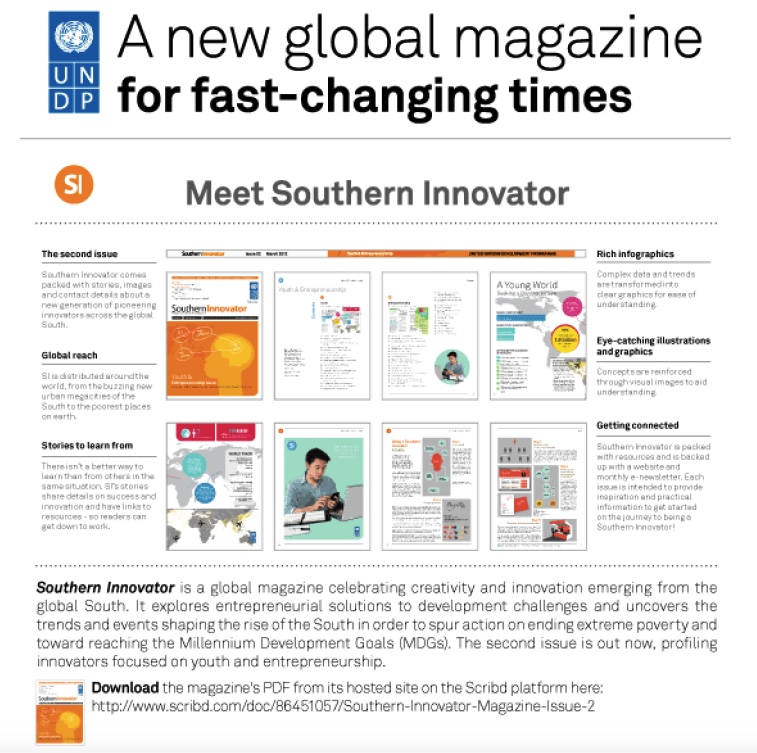
    Development Challenges, South-South Solutions was launched as an e-newsletter in 2006 by UNDP’s South-South Cooperation Unit (now the United Nations Office for South-South Cooperation) based in New York, USA. It led on profiling the rise of the global South as an economic powerhouse and was one of the first regular publications to champion the global South’s innovators, entrepreneurs, and pioneers. It tracked the key trends that are now so profoundly reshaping how development is seen and done. This includes the rapid take-up of mobile phones and information technology in the global South (as profiled in the first issue of magazine Southern Innovator), the move to becoming a majority urban world, a growing global innovator culture, and the plethora of solutions being developed in the global South to tackle its problems and improve living conditions and boost human development. The success of the e-newsletter led to the launch of the magazine Southern Innovator. 

    https://davidsouthconsulting.org/2021/03/05/southern-innovator-issue-5/

    Creative Commons License

    This work is licensed under a
    Creative Commons Attribution-Noncommercial-No Derivative Works 3.0 License.

    ORCID iD: https://orcid.org/0000-0001-5311-1052.

    © David South Consulting 2022

  • African Ingenuity Attracting Interest

    African Ingenuity Attracting Interest

    By David SouthDevelopment Challenges, South-South Solutions

    SOUTH-SOUTH CASE STUDY

    The tide of science and innovation from the South is grabbing the world’s attention. While the big giants of India, China and Brazil are well-established hubs of invention, it is the once-overlooked continent of Africa that is generating current excitement. The atmosphere can be equated to the flush of innovation in the late 19th and early 20th centuries, as inventors tackled the budding new technologies of the combustion engine, flight, electricity and radio waves. These days, it’s the challenges of development, rapid urbanization and finding ways to ‘hack’ (http://en.wikipedia.org/wiki/Hack_%28technology%29), like adapting existing  technology such as mobile phones or bicycles to new purposes.

    That previous period of invention had a spirit of pioneering and making-do, of dreams and adaptability triumphing over poverty, and it laid the path for many new companies to sprout up and create wealth and jobs for millions. At this August’s Maker Faire Africa gathering (http://makerfaireafrica.com/) in Accra, Ghana, African pioneers in grassroots innovation offered inspiring inventions.

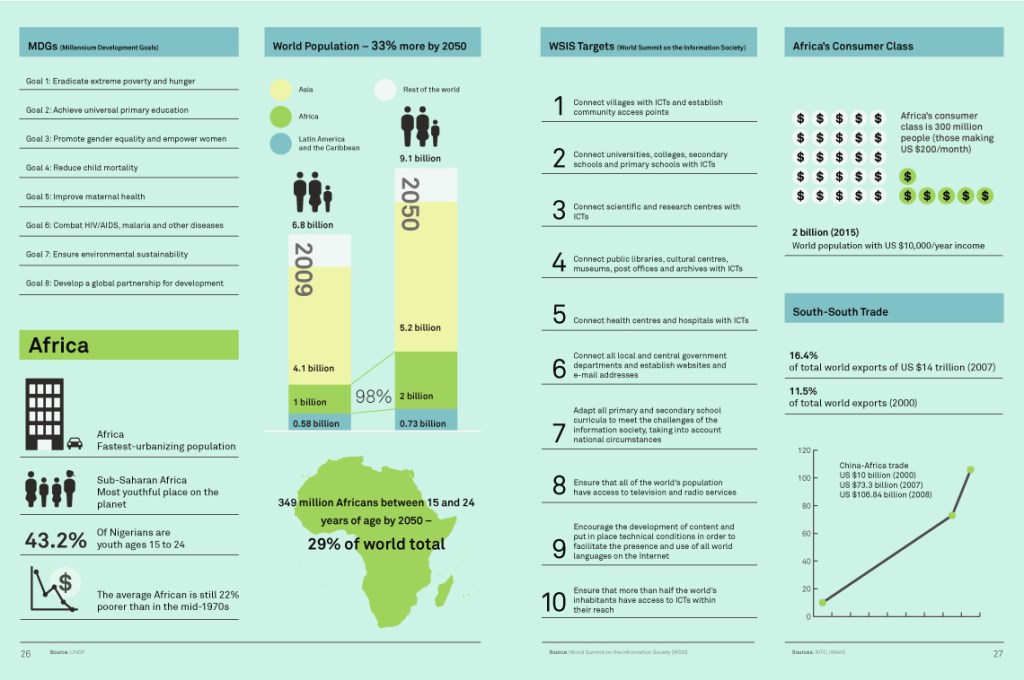
    The rapid changes happening in African countries – especially the tilt to having a larger urban population than a rural one – means there is an urgent need to boost incomes.

    Handled right, these grassroots inventors could grow to become part of the already expanding South-South trade, which grew by an average of 13 percent per year between 1995 and 2007, to make up 20 percent of world trade.

    Inspired by the US magazine Make (http://makezine.com/) – a do-it-yourself technology magazine written by makers of computers, electronics and robotics – the first Maker Faire gathering was held in 2006 in the San Francisco area of the United States.

    The African Maker Faire modelled itself on this approach and has tapped into Africa’s well-entrenched do-it-yourself development culture. It went looking for more inventors like those celebrated on the website AfriGadget (http://www.afrigadget.com/), with its projects that solve “everyday problems with African ingenuity.” The Faire works with the participants to share their ideas and to find ways to make money from their ideas.

    The Faire in Accra ran in parallel with the International Development Design Summit (http://2009.iddsummit.org/),which came to Ghana from its home at the Massachusetts Institute of Technology (http://web.mit.edu/) in the United States. Its aim was to bring technology closer to “potential end users of the projects.”

    “It is part of the revolution in design that aims to create equity in the distribution of research and development resources by focusing on the needs of the world’s poor,” organizers said.

    This spirit of African invention is about breaking the perception that invention is a purely Northern phenomenon that requires complex and expensive materials. African ingenuity is about taking whatever is available and tackling common problems. It is an empowering approach that celebrates local initiative and seeks to find ways to turn these inventions into sustainable incomes.

    “What’s different about African mechanics and gadgets is that it’s generally made with much fewer, and more basic, materials,” said Afrigadget founder Erik Hersman. “Where you might find a story on how to make hi-tech robots at home in Make, its counterpart in Africa might be how to create a bicycle out of wood. No less ingenuity needed, but far more useful for an African’s everyday life.”

    The African Maker Faire featured a wide range of solutions, from a low-power radio station to a bicycle-powered saw and a simple corn planter.

    Shamsudeen Napara, from northern Ghana, brought a US $10 corn planter that looks like a pill dispenser to help speed up crop planting. He also has invented a cheap shea nut (http://en.wikipedia.org/wiki/Shea_butter) roaster. These inventions are cooked up in his metal fabrication shop which builds tools for agricultural use. Shea nut processing is a lucrative task for women in Northern Ghana. Napara’s roaster costs US $40 and reduces the energy and time to process the nuts. He has also made a soap cutter using piano wires and guitar screws.

    Bernard Kiwia, a bicycle mechanic from Arusha, Tanzania, is a pioneer working with windmills, water pumps, mobile phone chargers and pedal-powered hacksaws – all made from old bike parts.

    Hayford Bempong, David Celestin and Michael Amankwanor from Accra Polytechnic (http://www.accrapolytechnic.edu.gh/), built a low-power radio station. Made from scrap electronic parts and an antenna from copper pipe, the radio was put straight to use to broadcast announcements at the event over a range of a few thousand metres.

    Suprio Das, Killian Deku, Laura Stupin and Bernard Kiwia brought a method to produce chlorine from salt water and other common materials. It can then be used to purify water. Their method can clean vast quantities of water using no moving parts (avoiding breakdowns). It does this by dripping chlorine into the water until a level has been reached, and then the purified water is released. By using a 5 litre bag of chlorine, and a US $3 valve, 100,000 litres of water can be purified.

    Electricity was also being made using low-cost batteries from aluminum cans and plastic water bottles. Applying salt water as an electrolyte (http://en.wikipedia.org/wiki/Electrolyte),electricity is created by the oxidation of the aluminum can – a cheaper approach and less toxic than commercial batteries.

    A group called Afrobotics (http://www.afrobotics.com) gave a presentation to encourage more African students to go into engineering, science and technology. Afrobotics is set up as a competition to “fuel engineering, science, innovation, and entrepreneurship on the African continent, utilizing robotics.” They have some excellent videos of African robots in action: http://www.afrobotics.com/videos.

    Published: October 2009

    Resources

    1) Fab Labs: Like the futuristic “replicator” in the TV show Star Trek, Fab Labs allow people to design and produce what they need there and then. The labs are mushrooming throughout the South as people get the innovation bug. The Fab Lab program is part of the MIT’s Center for Bits and Atoms (CBA) which broadly explores how the content of information relates to its physical representation. Website: http://fab.cba.mit.edu/

    2) id21 Insights: A series of articles by the UK ’s Institute of Development Studies on how to make technology and science relevant to the needs of the poor. Website: http://www.id21.org/insights/insights68/art00.html

    3) eMachineShop: This remarkable service allows budding inventors to download free design software, design their invention, and then have it made in any quantity they wish and shipped to them: Amazing! Website: http://www.emachineshop.com/

    4) The red dot logo stands for belonging to the best in design and business. The red dot is an internationally recognised quality label for excellent design that is aimed at all those who would like to improve their business activities with the help of design. Website: www.red-dot.de

    5) Institute for the Future: It identifies emerging trends that will transform global society and the global marketplace. It provides insight into business strategy, design process, innovation, and social dilemmas. Its website helps budding inventors to identify new areas of invention.Website: http://www.iftf.org/

    Development Challenges, South-South Solutions was launched as an e-newsletter in 2006 by UNDP’s South-South Cooperation Unit (now the United Nations Office for South-South Cooperation) based in New York, USA. It led on profiling the rise of the global South as an economic powerhouse and was one of the first regular publications to champion the global South’s innovators, entrepreneurs, and pioneers. It tracked the key trends that are now so profoundly reshaping how development is seen and done. This includes the rapid take-up of mobile phones and information technology in the global South (as profiled in the first issue of magazine Southern Innovator), the move to becoming a majority urban world, a growing global innovator culture, and the plethora of solutions being developed in the global South to tackle its problems and improve living conditions and boost human development. The success of the e-newsletter led to the launch of the magazine Southern Innovator. 

    Creative Commons License

    This work is licensed under a
    Creative Commons Attribution-Noncommercial-No Derivative Works 3.0 License.

    ORCID iD: https://orcid.org/0000-0001-5311-1052.

    © David South Consulting 2023

  • Pulque: Aztec Drink Ferments New Economy

    Pulque: Aztec Drink Ferments New Economy

    By David SouthDevelopment Challenges, South-South Solutions

    SOUTH-SOUTH CASE STUDY

    Reviving traditional foods and drinks can be an income-boosting source of new economic activity. Many cultures can benefit from looking again at their rich traditions to find new ways to increase enterprise. This can be difficult at first. Big global brands have many initial advantages: they are backed by wealthy and experienced international companies and can deploy aggressive marketing and distribution power to get products into the hands of consumers. The power of Coca Cola to reach all corners of the earth is legendary.

    But the case of Mexican drink pulque shows how marrying the power of an ancient taste with a younger demographic can rejuvenate businesses. This is important because many emerging countries across the South have young populations – and yet unemployment is also high among these youthful populations. Engaging the youth market will be critical to the future prosperity and development of these countries.

    Pulque is also playing a part in Mexico’s tourism strategy: the state government in Tlaxcala (http://www.tlaxcala.gob.mx)has created a ‘Pulque Route’ to draw in tourists.

    Having for decades lost ground to slickly marketed alternatives like beer and tequila, pulque drinking is being revived with the help of a new generation of Mexicans re-discovering a beverage that boasts origins reaching back to the Aztecs (http://en.wikipedia.org/wiki/Aztec).

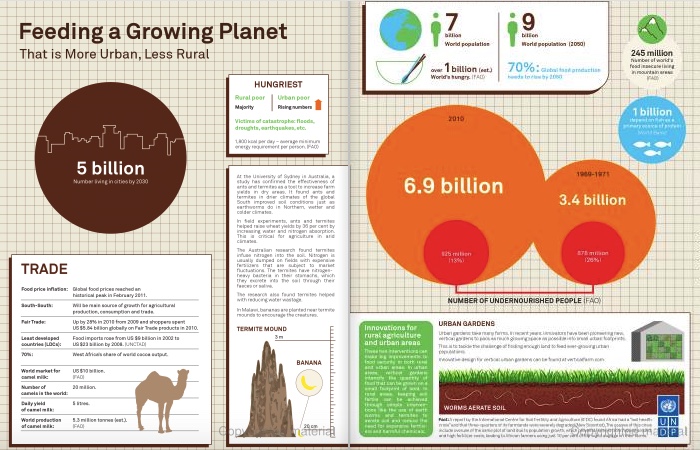
    There is also another benefit to reviving ancient food and drink: alarm has been raised over the diminishing range of food products consumed by people around the world. Throughout the history of farming, around 7,000 species of plants have been domesticated. Yet everyday diets only draw on 30 percent of these plants, and even this number has been going down as more people consume mass-market foods (FAO).

    Once-rich culinary traditions have wilted and left many people unsure what to do with formerly common vegetables and fruits, even if they can actually find them in markets.

    One consequence has been poor nutrition resulting from the reduction in consumption of high-vitamin foods, leading to stunted mental and physical development across the global South.

    Pulque (http://en.wikipedia.org/wiki/Pulque) is made from the juice of maguey or agave (http://en.wikipedia.org/wiki/Agave), a spiky green plant. It has between three and four percent alcohol content. Unlike the well-known Mexican drink tequila, which is fermented and distilled to make a strong, clear alcoholic drink, pulque is a foamy and milky beverage that is fermented, not distilled.

    Made from a sap harvested when the agave is mature, it appears in the Codex Borbonicus written by Aztec priests in the 1530s.

    Advocates for the drink say it is high in Thiamine, Riboflavin, Niacin, Pantothenic Acid and packed with beneficial microbes for human digestion. It also has vitamins C, B-complex, D, E, amino acids and minerals such as iron and phosphorus.

    Pulque had developed a bad reputation, with an image as a peasant drink lacking the class of tequila or beer. The stigma had built up over decades from its reputation as the favourite drink of alcoholic farmers, commonly depicted drinking pulque all day long.

    Once pulque was available only at makeshift pulquerias: a few tables and chairs with farm animals roaming about. Portions were large, using gourds or, by the 1970s, plastic buckets. Some still sell the drink in this rough-and-ready fashion from containers hitched to donkeys.

    Those behind the rebranding of the drink hope to move away from the former drinkers – largely poor, old and rural – to young urban drinkers. Pulque has taken on a “cool, retro” image tapping into a taste for connecting with Mexico’s Aztec roots.

    In Pulqueria Las Duelistas in Mexico City, the young crowd like the new taste. “It is cooler than beer and a lot cheaper than Tequila,” Jaime Torres, a 22-year-old design student and computer tech for an advertising agency told the Washington Post. “It’s old Mexico.”

    By 1886 a census found 817 pulquerias in Mexico City serving the residents of just 9,000 homes. By the 20th century, they had become so common that neighbourhoods would have a handful each. Now estimates place the number in Mexico City at between 60 and 100, with many closing when their owners die.

    Las Duelistas is trying to buck that trend.

    “This place has been in business for 92 years, and I have six as the owner, and I have totally changed the image of the pulqueria, a totally new concept, with different clientele,” said proprietor Arturo Garrido. “Most of my clients are young, and it is my way to continue giving life to the pulque.”

    So, how have the pulquerias made themselves appealing to a new generation of drinkers? Music and new interior design have made the establishments more attractive to youth.

    Pulque sells for 30 pesos, or about US $2.50, a litre. The most popular version is called curado (cured) and is infused with other flavours like strawberry, guava and celery to add greater appeal to a younger demographic.

    “My customers aren’t old anymore. Now they’re young people,” said Nabor Martinez, the owner of another pulqueria, La Risa.

    The drink is difficult to export because it keeps fermenting in the bottle or can. This makes it something special to Mexico, only enjoyed by a visit to the country.

    Some, however, like Everado Gonzalez, director of the 2003 documentary “Pulque Song,” about an old-school establishment, lament the loss of the old atmosphere.

    “A pulqueria is not a cantina. It’s not a bar,” Gonzalez said. “It is a refuge, or was, for the lowest classes of society. Your drink is cheap. You are not sitting at a table, with good manners. You don’t need a table. You sit on a bench, where you can do what you want, say what you want.

    “It was a beautiful island of freedom.”

    Published: September 2011

    Resources

    1) Teh Botol Sosro: It is a drink of cool, black, sweetened tea with a hint of jasmine. Invented by the Indonesian family of Sosrodjojos, Sosro was founded in central Java in the 1940s. Website: http://www.sosro.com

    2) Just Food is a web portal packed with the latest news on the global food industry and packed with events and special briefings to fill entrepreneurs in on the difficult issues and constantly shifting market demands. Website:http://www.just-food.com

    3) Small businesses looking to develop their brand can find plenty of free advice and resources here. Website:http://www.brandingstrategyinsider.com

    4) Brandchannel: The world’s only online exchange about branding, packed with resources, debates and contacts to help businesses intelligently build their brand. Website:http://www.brandchannel.com


    Mezcal or mescal, is a distilled alcoholic beverage made from any type of agave (Wikipedia). In the summer of 2022 Southern Innovator was introduced to the brand Marin&Marin (https://www.marinymarinmezcal.com). Their mezcal is hand made in a traditional Mexican way and is 100% organic and Fair Trade.  

    Development Challenges, South-South Solutions was launched as an e-newsletter in 2006 by UNDP’s South-South Cooperation Unit (now the United Nations Office for South-South Cooperation) based in New York, USA. It led on profiling the rise of the global South as an economic powerhouse and was one of the first regular publications to champion the global South’s innovators, entrepreneurs, and pioneers. It tracked the key trends that are now so profoundly reshaping how development is seen and done. This includes the rapid take-up of mobile phones and information technology in the global South (as profiled in the first issue of magazine Southern Innovator), the move to becoming a majority urban world, a growing global innovator culture, and the plethora of solutions being developed in the global South to tackle its problems and improve living conditions and boost human development. The success of the e-newsletter led to the launch of the magazine Southern Innovator. 

    Creative Commons License

    This work is licensed under a
    Creative Commons Attribution-Noncommercial-No Derivative Works 3.0 License.

    ORCID iD: https://orcid.org/0000-0001-5311-1052.

    © David South Consulting 2023

  • Diaspora Bonds to Help Build up Infrastructure

    Diaspora Bonds to Help Build up Infrastructure

    By David SouthDevelopment Challenges, South-South Solutions

    SOUTH-SOUTH CASE STUDY

    Many people are aware of the significant role played in global development by remittance payments from migrant workers working in the wealthy North to the global South. But they may not be aware of the significant sums migrant workers have saved in bank accounts in these wealthy countries. Across the global South, efforts are underway to lure these sums back to home countries to boost development efforts.

    As the hard-earned money migrant workers save sits in bank accounts in wealthy Western countries earning very low interest rates – a consequence of the current global economic crisis – so-called “Diaspora Bonds” seek to offer a way to earn good interest returns and help build up home countries at the same time.

    The money can help developing countries build facilities they need but cannot afford: roads, bridges, railways, water supplies, power, sewerage, street lighting. It is a way to bypass dependence on foreign aid and borrowing from aid agencies or the general marketplace.

    US $501 billion in remittance payments was sent in 2011, of which US $372 billion went to developing countries, involving some 192 million migrants or 3 per cent of the world’s population (World Bank). On top of this, migrants from developing countries have saved an estimated US $400 billion – and these funds are being targeted by those selling diaspora bonds (The Economist).

    The idea is being promoted by the World Bank and draws on the successful experiences with bonds for Israel and India. Both countries have long histories of turning to diaspora communities to raise funds through bonds.

    The bonds work by playing on patriotism and the genuine desire of migrants to want to see conditions improve back home. As the thinking goes, patriotic investors are more likely to be patient. This is critical because many countries cannot offer rapid profits and a quick pay off – something sought by short-term investors obsessed with the ups and downs of the stock market. They are also sterner investors, less likely to run away when the going gets tough. Their local knowledge means they will not panic and pull their investments when bad news hits the headlines. And probably best of all, they don’t mind if the local currency declines in value – that just means they can pick up a local house on the cheap or buy a business for even less money.

    One business working in this area is Homestrings (homestrings.com): Motto “Come make a difference.” An Internet platform offering diaspora bonds, it is run by founder and chief executive officer Eric-Vincent Guichard. An American born to a Guinean father and American mother, he spent 20 years growing up in rural Guinea and knows the country well. He also heads up GRAVITAS Capital Advisors, Inc. (gravitascapital.com), founded in 1996, which advises governments on how to manage their assets. A graduate of HarvardBusinessSchool and a former World Bank scholar, he is based in Washington, D.C.

    According to its website, Homestrings works like this: “It all starts with your ability to scan through a catalog of projects, funds and public-private partnership opportunities that focus on regions you come from or that you care deeply about. Each of these projects and/or funds is detailed in a Fact Sheet that is set up to help you do the due diligence needed to make an investment decision. Then, Homestrings directs your investment into the selected project or fund, with the help of our administrator.”

    Investments are monitored on a monthly or quarterly basis and are selected for their socio-economic impact and investment profitability.

    The website has a personal “Dashboard” that allows investors to use the site to vote for or against investments and make comments. And Homestrings will promote the investments that receive the most support and positive comments.

    To make an investment, a potential investor selects a fund or project that matches their interest. They read the Fact Sheet and choose. The funds are then passed on to the investment bond and an interest percentage or dividend is paid at regular intervals. Investors can keep track of the investment through the personal Dashboard on the website.

    Fact Sheets are organized by geographical region, industry focus, and development theme. Investments “cover infrastructure, health care, education, transportation, and small and medium sized enterprise finance – all critical areas of economic growth.”

    The Homestrings Catalog of investments includes the governments of Kenya, Senegal, Ghana, Nigeria and also AFREN PLC, which is looking to finance oil and gas exploration off the coast of Nigeria.

    Dramatic improvements in global communications in the past five years have also made it much easier for everyone involved to stay in touch and for bond promoters to identify and target potential customers.

    The World Bank is currently advising countries on how to run diaspora bond schemes. Kenya, Nigeria and the Philippines have schemes in the works, according to The Economist.

    Ethiopia has announced the “Renaissance Dam Bond” (http://grandmillenniumdam.net/). Proceeds will be used to fund the construction of the Grand Renaissance Dam, the largest hydroelectric power plant in Africa, able to generate 5,250 megawatts. Ethiopia tried a similar scheme before with the Millennium Corporate Bond to raise funds for the Ethiopian Electric Power Corporation (EEPCO). This did not entirely meet expectations and sales were slow. Reasons given for this included a perception that EEPCO could not meet payment expectations when the hydroelectric power plant was operating. There was also a lack of trust in the government and its financial stability and the overall political risks.

    The second attempt at a bond is believed to better thought through. It comes with an aggressive marketing and awareness-raising campaign aimed at the diaspora, and it starts at US $50, making it more affordable for more people.  It can be used as collateral in Ethiopia – an advantage for those wanting to do business back in the home country.

    For potential investors, it is worth remembering that bonds are debts that are rewarded with regular interest payments and paid back at the end of the bond term. They are not risk-free and the risk can lie either in the sovereign solvency of the country or in the investment.

    The secret to a successful bond issue is to keep up good relations with the diaspora; countries that are too oppressive could find themselves short of people willing to take up the offer.

    Published: October 2012

    Resources

    1) Remittance Payments Worldwide: A website by the World Bank tracking remittance prices worldwide. Website:http://remittanceprices.worldbank.org/About-Us

    2) The World Bank blog on diaspora bonds. Website:http://blogs.worldbank.org/category/tags/diaspora-bond

    3) A critical perspective on diaspora bonds at Africa Unchained. Website:http://africaunchained.blogspot.co.uk/2012/03/are-diaspora-bonds-worth-risk.html

    Development Challenges, South-South Solutions was launched as an e-newsletter in 2006 by UNDP’s South-South Cooperation Unit (now the United Nations Office for South-South Cooperation) based in New York, USA. It led on profiling the rise of the global South as an economic powerhouse and was one of the first regular publications to champion the global South’s innovators, entrepreneurs, and pioneers. It tracked the key trends that are now so profoundly reshaping how development is seen and done. This includes the rapid take-up of mobile phones and information technology in the global South (as profiled in the first issue of magazine Southern Innovator), the move to becoming a majority urban world, a growing global innovator culture, and the plethora of solutions being developed in the global South to tackle its problems and improve living conditions and boost human development. The success of the e-newsletter led to the launch of the magazine Southern Innovator. 

    Creative Commons License

    This work is licensed under a
    Creative Commons Attribution-Noncommercial-No Derivative Works 3.0 License.

    ORCID iD: https://orcid.org/0000-0001-5311-1052.

    © David South Consulting 2022