Tag: development challenges south-south solutions

  • A New House Kit for Slum Dwellers that is Safe and Easy to Build

    A New House Kit for Slum Dwellers that is Safe and Easy to Build

    By David SouthDevelopment Challenges, South-South Solutions

    SOUTH-SOUTH CASE STUDY

    By 2030, some 5 billion people around the world will live in cities. Next year, 2008, is predicted to be the tipping point, when urban dwellers (3.3 billion people) will outnumber rural residents for the first time. These are the conclusions of UNFPA’s State of the World Population 2007 Report. Even more strikingly, the cities of Africa and Asia are growing by a million people a week. And 72 percent of the population in sub-Saharan Africa live in slum conditions.

    But as populations grow — and most will be poor, unemployed and under 25 — it becomes critical that effective solutions are found to ensure people can live with dignity and comfort. And design is being used more and more to overcome this challenge.

    George Martine, author of the UNFPA report, is blunt: “We’re at a crossroads and can still make decisions which will make cities sustainable. If we don’t make the right decisions the result will be chaos,” he told the UK newspaper The Independent.

    Guatemala-born architect Teddy Cruz of Estudio Teddy Cruz in San Diego, California, joins a small but growing number of socially responsible architects. He applies a concept more associated with middle class shoppers at the furniture design emporium Ikea to the world’s estimated one billion urban slum dwellers (UN-Habitat). Without legal title to the land they live on, packed tightly into densely overcrowded shantytowns, most squatters and slum dwellers live in makeshift homes made from whatever they can get their hands on. This is estimated to include half the urban population of Africa, a third of Asia and a fourth of Latin America and the Caribbean (Click here for more information).

    The ad-hoc shelters and houses they build can be dangerously unstable, and vulnerable to natural disaster from flash floods to earthquakes. Cruz had noticed that while building supplies and materials were plentiful, nobody was selling safe and affordable housing frames for slum dwellers. According to the International Labor Organization, formal housing markets in developing countries rarely supply more than 20 percent of housing stock.

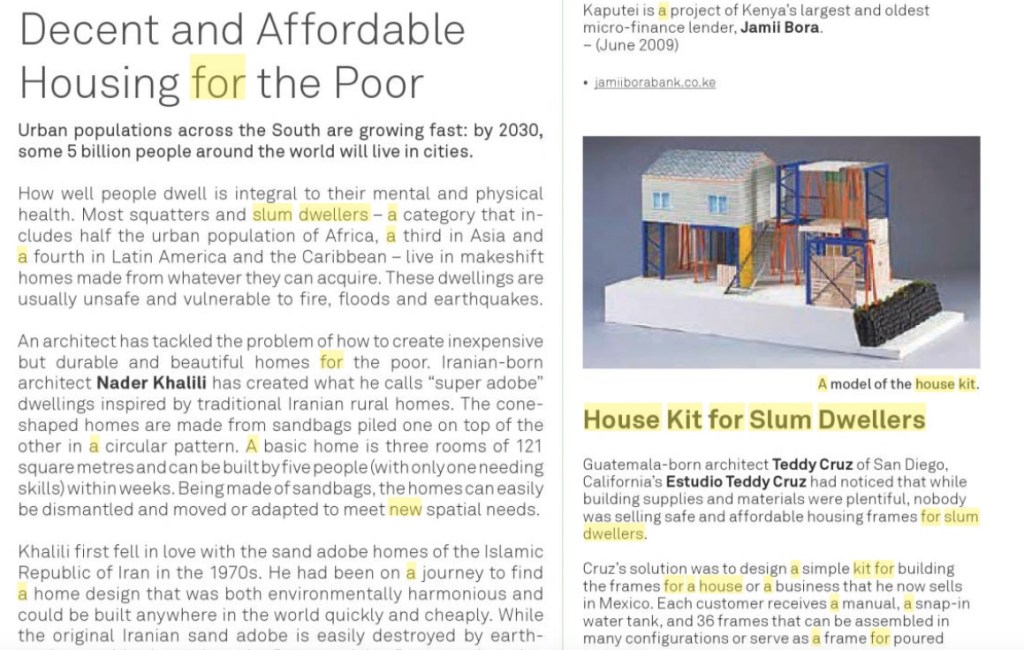
    Cruz’s solution was to design a simple kit for building the frames for a house or a business that he now sells in Mexico. Each customer receives a manual, a snap-in water tank, and 36 frames that can be assembled in many configurations, or serve as a frame for poured concrete. These sturdy frames can also be added to with locally found materials. Cruz said he was inspired by “the resourcefulness of poverty” and by the cheap and affordable pre-fabricated homes that once were sold by catalogue by the American retailer Sears.

    Cruz has been testing the structures in Tijuana, Mexico – a rapidly growing city on the border with the United States and a destination for Mexico’s poor. His work as an architect has centred on exploring how informal settlements grow faster than the cities they surround. These settlements, he says, break the rules and blur the boundaries between what is urban, suburban and rural. Cruz’s frame kits can be used to build a home, or combination of home and business, acknowledging the fact many people need to use their home as a business for a livelihood.

    “These start-up communities gradually evolve,” said Cruz., ”or violently explode out of conditions of social emergency, and are defined by the negotiation of territorial boundaries, the ingenious recycling of materials, and human resourcefulness.”

    Published: July 2007

    Resources

    There are many ways to play around with your dwelling and architecture ideas. Here are some products available online:

    1. Arckit: Arckit is a tangible and hands-on design tool for spontaneously bringing your architectural ideas to life right before your eyes. Website: https://www.arckit.com
    2. SmartLab Archi-TECH Electronic Smart House: Build your house and power it up! This creative STEAM toy allows aspiring architects and engineers to design and build modular structures – and then power them up with lights, sounds, sensors, and motorized parts! Website: https://www.mastermindtoys.com/products/smart-lab-archi-tech-electronic-smart-house

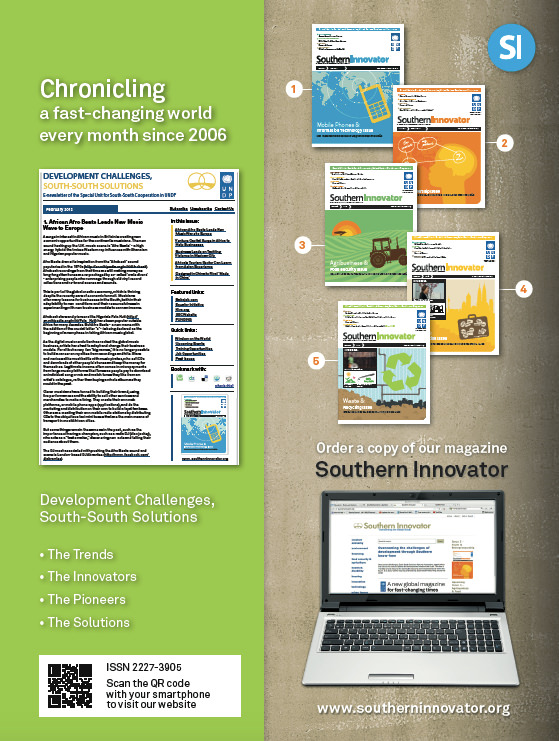
    Development Challenges, South-South Solutions was launched as an e-newsletter in 2006 by UNDP’s South-South Cooperation Unit (now the United Nations Office for South-South Cooperation) based in New York, USA. It led on profiling the rise of the global South as an economic powerhouse and was one of the first regular publications to champion the global South’s innovators, entrepreneurs, and pioneers. It tracked the key trends that are now so profoundly reshaping how development is seen and done. This includes the rapid take-up of mobile phones and information technology in the global South (as profiled in the first issue of magazine Southern Innovator), the move to becoming a majority urban world, a growing global innovator culture, and the plethora of solutions being developed in the global South to tackle its problems and improve living conditions and boost human development. The success of the e-newsletter led to the launch of the magazine Southern Innovator.  

    Follow @SouthSouth1

    Like this story? Here is a dirty secret: this website is packed with stories about global South innovators. We spent 7 years researching and documenting these stories around the world. We interviewed the innovators to learn from them and we visited them to see how they did it. Why not use the Search bar at the top and tap in a topic and see what stories come up? So, stick around and read some more!    

    Archive.org: https://archive.org/details/Httpwww.slideshare.netDavidSouth1development-challengessouthsouthsolutionsjuly2007issue

    Slideshare: http://www.slideshare.net/DavidSouth1/development-challengessouthsouthsolutionsjuly2007issue

    Southern Innovator Issue 1: https://books.google.co.uk/books?id=Q1O54YSE2BgC&dq=southern+innovator&source=gbs_navlinks_s

    Southern Innovator Issue 2: https://books.google.co.uk/books?id=Ty0N969dcssC&dq=southern+innovator&source=gbs_navlinks_s

    Southern Innovator Issue 3: https://books.google.co.uk/books?id=AQNt4YmhZagC&dq=southern+innovator&source=gbs_navlinks_s

    Southern Innovator Issue 4: https://books.google.co.uk/books?id=9T_n2tA7l4EC&dq=southern+innovator&source=gbs_navlinks_s

    Southern Innovator Issue 5: https://books.google.co.uk/books?id=6ILdAgAAQBAJ&dq=southern+innovator&source=gbs_navlinks_s

    Creative Commons License

    This work is licensed under a
    Creative Commons Attribution-Noncommercial-No Derivative Works 3.0 License.

    ORCID iD: https://orcid.org/0000-0001-5311-1052.

    © David South Consulting 2023
  • Turning Human Waste to Fertilizer: An African Solution

    Turning Human Waste to Fertilizer: An African Solution

    By David SouthDevelopment Challenges, South-South Solutions

    SOUTH-SOUTH CASE STUDY

    While South Africa has been free of the racist Apartheid regime since the mid-1990s, the expected boost to living standards for the majority black population has not been as widespread and as quick as many had expected.

    One important aspect of lifting living standards is making sure the entire population has access to adequate sanitation and hygiene services. Another is making sure they have access to adequate and healthy food sources. A bright idea based on intensive research is meeting both goals in an innovative way.

    According to the Council for Scientific and Industrial Research (http://www.csir.co.za/), some 11 million South Africans have received access to basic sanitation services since 1994 – but 13.3 million still lacked basic sanitation services by 2008.

    The Water Research Commission (WRC) (http://www.wrc.org.za/) believes there is a crisis with South Africa’s toilet pit latrines, which are quickly filling up past their original design capacity. WRC’s solution is to turn the human faeces or faecal sludge deposited in pit latrines into fertilizer for farming and agriculture. The Water Research Commission is advocating using the fertilizer either for fruit trees or for trees that will be turned to income sources like paper and fuel.

    The WRC’s project and series of experiments are called “What happens when pit latrines get full?”

    “Only one third of municipalities have a budget to maintain on-site sanitation,” WRC researcher and scientist David Still told Inter Press Service (IPS). “If pits fill up, all the hard work that was done to address the sanitation backlog will be wasted. Why not use faecal sludge to address the growing problem of food insecurity by planting fruit trees? Or use the sludge to cultivate trees for fuel or paper production?”

    Human faecal sludge contains a variety of nutrients, such as nitrogen, phosphates and potassium. The WRC estimates the average person excretes enough human faecal sludge per year to fertilize 300 to 400 square metres of crops.

    The big reason people are reluctant to use human waste as fertilizer is because of the pathogens it contains. Spreading this on edible crops is dangerous and it is also a risk to groundwater when it leaches in to the soil.

    The WRC conducted research on two sites: Umlazi and Karkloof, both in KwaZulu-Natal, South Africa. They used property owned by the South African Paper and Pulp Industry (SAPPI) and the local municipality.

    The first step in the experiments was to bury the sludge in pits and plant crops on top of it. The pathogens were contained using this method and in time died off.

    The test trenches were 0.75 metres in depth and filled with different quantities of sludge. Two control sites did not use faecal sludge. The scientists found the sites where the human waste was used saw plant growth and volume increase by “as much as 80 per cent.”

    They then tested for pathogens in the soil. This included looking for the eggs of the large roundworm (http://www.nhs.uk/conditions/Roundworm/Pages/Introduction.aspx), a parasite whose presence would be harmful to humans. The site was tested over a period of 30 months, but none could be found.

    Tests for microbes at the Umlazi site also found none. The plants were found to have healthy dark green leaves and the trees grew larger with the sludge present.

    Researchers also monitored the groundwater around the sites. They found in flat ground and sandy soil there was no impact. In the site with sloping and shallow soil, small increases in nitrate were observed in the groundwater after rainfall.

    They concluded the best place to apply this technique is in places that are flat and where the soil is deep.

    One local resident, Lindiwe Khoza, was selected to be part of the test. Citrus and peach trees were planted on top of the buried sludge.

    She told IPS: “The fruit grows much faster and it seems to be tastier and juicier than fruit bought at supermarkets. We now enjoy fruit from our own garden.”

    WRC’s clever solution to these twin problems could help make life much more pleasant in communities still grappling with poor hygiene services, while dramatically improving the health of crops and their yields.

    Published: July 2012

    Resources

    1) World Bank guide to pit latrines. Website:http://water.worldbank.org/shwresource-guide/infrastructure/menu-technical-options/pit-latrines

    2) A video on how to construct a ventilated pit latrine. Website: http://www.youtube.com/watch?v=n4yfAyhiV74

    3) A Practical Guide for Building a Simple Pit Latrine: How to Build Your Latrine and Use It Hygienically, for the Dignity, Health, and Well Being of Your Family. Website: http://www.crsprogramquality.org/publications/2011/9/13/a-practical-guide-forbuilding-a-simple-pit-latrine-how-to-b.html

    4) The Control of Pathogens from Human Waste and their Aquatic Vectors by L. E. Obeng. Website: http://www.jstor.org/discover/10.2307/4312882?uid=3738032&uid=2129&uid=2&uid=70&uid=4&sid=21100919752851

    Development Challenges, South-South Solutions was launched as an e-newsletter in 2006 by UNDP’s South-South Cooperation Unit (now the United Nations Office for South-South Cooperation) based in New York, USA. It led on profiling the rise of the global South as an economic powerhouse and was one of the first regular publications to champion the global South’s innovators, entrepreneurs, and pioneers. It tracked the key trends that are now so profoundly reshaping how development is seen and done. This includes the rapid take-up of mobile phones and information technology in the global South (as profiled in the first issue of magazine Southern Innovator), the move to becoming a majority urban world, a growing global innovator culture, and the plethora of solutions being developed in the global South to tackle its problems and improve living conditions and boost human development. The success of the e-newsletter led to the launch of the magazine Southern Innovator.  

    Follow @SouthSouth1

    Google Books: https://books.google.co.uk/books?id=9fRcAwAAQBAJ&dq=development+challenges+july+2012&source=gbs_navlinks_s

    Slideshare: http://www.slideshare.net/DavidSouth1/development-challenges-july-2012-issue

    Southern Innovator Issue 1: https://books.google.co.uk/books?id=Q1O54YSE2BgC&dq=southern+innovator&source=gbs_navlinks_s

    Southern Innovator Issue 2: https://books.google.co.uk/books?id=Ty0N969dcssC&dq=southern+innovator&source=gbs_navlinks_s

    Southern Innovator Issue 3: https://books.google.co.uk/books?id=AQNt4YmhZagC&dq=southern+innovator&source=gbs_navlinks_s

    Southern Innovator Issue 4: https://books.google.co.uk/books?id=9T_n2tA7l4EC&dq=southern+innovator&source=gbs_navlinks_s

    Southern Innovator Issue 5: https://books.google.co.uk/books?id=6ILdAgAAQBAJ&dq=southern+innovator&source=gbs_navlinks_s

    Creative Commons License

    This work is licensed under a
    Creative Commons Attribution-Noncommercial-No Derivative Works 3.0 License.

    ORCID iD: https://orcid.org/0000-0001-5311-1052.

    © David South Consulting 2023
  • CASE STUDY 6: International Consulting | 1999 – 2014

    CASE STUDY 6: International Consulting | 1999 – 2014

    Expertise: Project evaluation, strategy, project management, project delivery, UN system, MDGs, research papers, media strategies and digital media strategies.

    Locations: Ulaanbaatar, Mongolia, Kiev, Ukraine, Pretoria, South Africa, Ashgabat, Turkmenistan 2000 to 2006

    Consultant: David South

    Abstract

    From 1999, I worked as a consultant for United Nations (UN) missions in Africa, Asia, Central Asia and Eastern Europe, for USAID Mongolia and for a UK-based international development consultancy. 

    About

    Was the United Nations being effective and reflecting the potential for change in the mobile and information technology age? What needed to change? Who were the policy innovators?

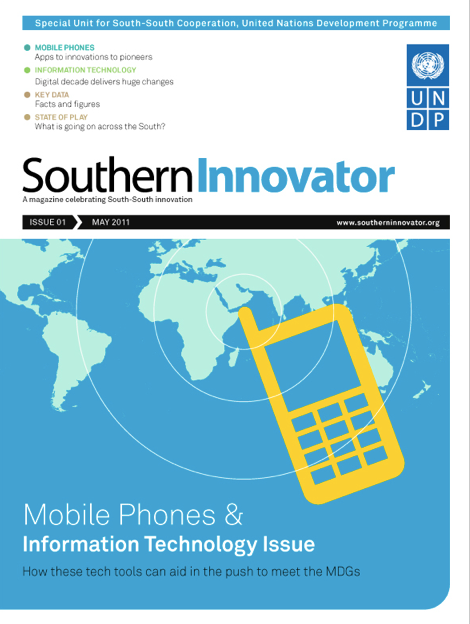
    This work included overseeing various digital media projects, including the strategic re-development of the UN Ukraine web portal, aiding in the rolling out of the media campaign for the Millennium Development Goals (MDGs) in Mongolia, including the first use of infographics in the Mongolia UN mission, advising on strategies for youth engagement in development goals in South Africa, and support to the UN mission in Turkmenistan as it finalised its United Nations Development Assistance Framework (UNDAF) with the government and also work with UNICEF there. What I learned during this period proved crucial to the insights and thinking reflected in two highly influential United Nations publications, e-newsletter Development Challenges, South-South Solutions, and Southern Innovator magazine (developed in 2010). 

    This period was particularly advantageous because I had a front-row seat to the unfolding digital and mobile information technology revolution sweeping across the emerging markets and the global South. I also had insight into what worked and didn’t in international development as well as the UN system. I also learned a great deal about development challenges first-hand in highly varied countries, how the Millennium Development Goals (MDGs) were actually being rolled out, and met amazing people who were challenging existing precepts on how to do development. All of this work proved very useful later on. 

    I have either travelled to, or worked and lived, in many countries, enhancing my global perspective and affording me a valuable trove of knowledge that has in turn informed my work in international development. I have always paid attention to the level of development in the country, how it has organized itself, the quality of its design, and how it interacts with other countries for trade and relations. The countries visited to date include: Antigua and Barbuda, Australia, Azerbaijan, Belgium, Canada, China, Cuba, Denmark, Domenica, Finland, France, Germany, Greece, Guadalupe, Haiti, Hong Kong, Iceland, Ireland, Israel, Italy, Japan, Kenya, Luxembourg, Malaysia, Mexico, Monaco, Mongolia, Montseratt, Morocco, the Netherlands, Norway, Philippines, Portugal, Russia, Singapore, South Africa, South Korea, Spain, Sweden, Switzerland, Thailand, Tunisia, Turkey, Turkmenistan, Ukraine, the United Kingdom, the United States of America, Vatican City. A fascinating mix of countries – some holders of top place on the UN’s Human Development Index – and others where human development is at its worst. Seeing with your own eyes what works and what does not is highly illuminating, while knowing first-hand how human development can be improved is critical for giving informed advice.  

    Timeline

    1999/2000: USAID Mongolia (design and publicity strategy for business development brochure, US Mongol (Mongolia) Construct and US tour, work with Riverpath Associates in the UK on communications strategies and the drafting of papers for the American Foundation for AIDS Research, the Global Fund to Fight AIDS, Tuberculosis and Malaria, UNCTAD, Harvard Institute for International Development, and the preparation of the report and launch strategy for the World Bank’s Task Force on Higher Education. 

    http://www.davidsouthconsulting.com/blog/2018/1/10/us-mongol-construct-2000-business-prospectus-building-a-new.html

    http://www.tfhe.net

    2000: UN Ukraine: strategic re-development of the UN Ukraine web portal and incorporation of the Millennium Development Goals (MDGs). 

    2004: UN Mongolia (media campaign for MDGs) and UN South Africa (evaluation of youth NGO associated with the University of Pretoria and its projects and providing a strategic marketing plan).  

    2005: UN Mongolia (media campaign for MDGs) and UN Turkmenistan (finalising its United Nations Development Assistance Framework – UNDAF).

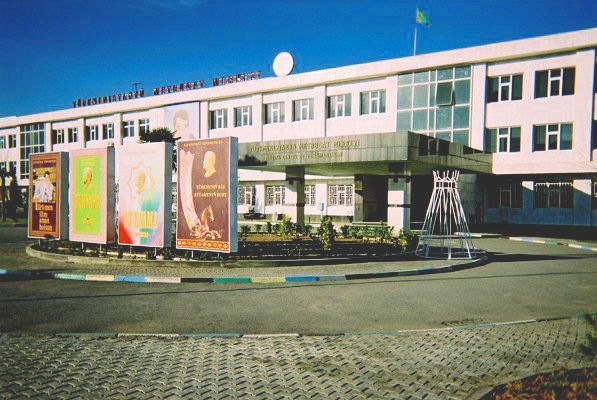
    Rukhnama publishers in Turkmenistan’s capital, Ashgabat (2005). Photo: David South
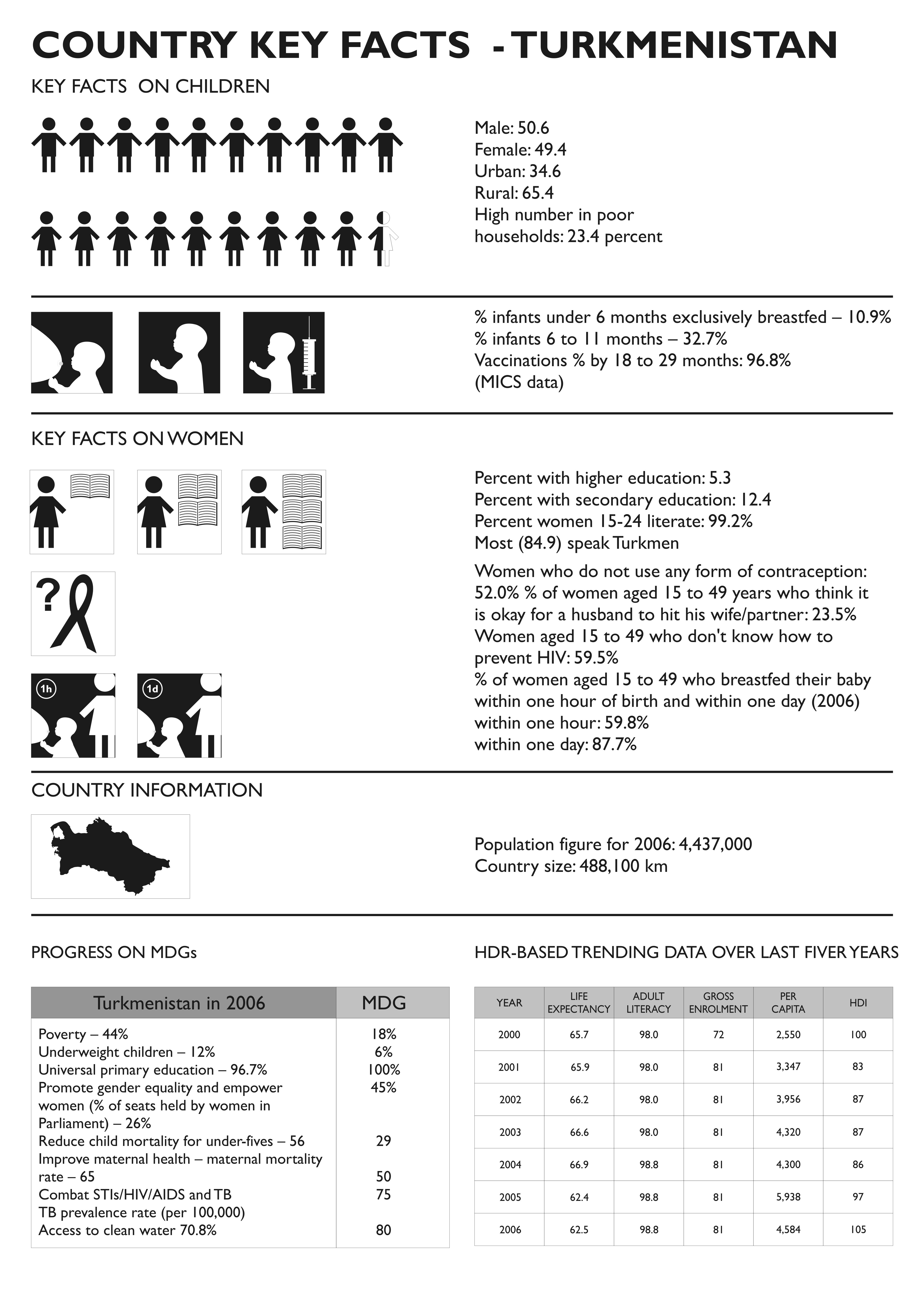
    An infographic commissioned for UN Turkmenistan MDGs report (2006).

    2006: UN Turkmenistan (work with UNICEF). 

    Testimonials 

    “I highly recommend Mr. David South as a communications consultant who gets results.” Brian DaRin, Representative/Director, USAID Investment & Business Development Project, Global Technology Network/ International Executive Service Corps-Mongolia, 23 September 1999

    Impact 

    Micro 

    • working as a communications consultant for UN missions – Ukraine, South Africa, Mongolia, Turkmenistan
    • redeveloping mission websites, preparing content, reports, advising on communications strategy
    • working with local designers on new ways to present development data through inforgraphics (2005/2006) 

    Macro 

    • in the course of travel and work, seeing the unfolding impact of the global communications revolution, in particular the rapid roll-out and take-up of mobile technologies, and the urgent need for the UN system to take this on board. Also witnessed firsthand the grassroots solutions revolution brought about by information and mobile technologies and the Internet, which needed to be fully embraced by the UN 

    Resources 

    A Marketing and e-Marketing Strategy – the New SASVO, Prepared from December 2004 to February 2005 for the Southern African Student Volunteers (University of Pretoria). 

    A Moment in Time: AIDS and Business, American Foundation for AIDS Research, 1999 

    Closing the Loop: Latin America, Globalization and Human Development, UNCTAD, 1999 

    David South Consulting Summary of Impact 1997 to 2014

    Development Challenges, South-South Solutions

    Innovations in Green Economy: Top Three Agenda

    Mongolian Media Project Infographic

    Peril and Promise: Higher Education in Developing Countries, World Bank/UNESCO Task Force on Higher Education, 2000

    South-South Cooperation for Cities in Asia

    Southern Innovator

    Southern Innovator and the Growing Global Innovation Culture

    Southern Innovator Summary of Impact 2011 to 2012

    Southern Innovator Summary of Impact 2012 to 2014

    This work is licensed under a Creative Commons Attribution 4.0 International License.

    ORCID iD: https://orcid.org/0000-0001-5311-1052.

    © David South Consulting 2025

  • Small Fish Farming Opportunity Can Wipe Out Malnutrition

    Small Fish Farming Opportunity Can Wipe Out Malnutrition

    By David SouthDevelopment Challenges, South-South Solutions

    SOUTH-SOUTH CASE STUDY

    Pioneering work to boost diets across the global South is turning to the smallest of fish. While small in size, tiny fish are packed with nutrition when eaten whole, as they are in many cultures. Often these fish come packed with vitamin A, iron, zinc, calcium, protein and essential fats – all necessary elements to eradicate malnutrition and hidden hunger, especially among women and children.

    It is estimated that 684,000 child deaths worldwide could be prevented by increasing access to vitamin A and zinc (WFP).

    Iron deficiency is the most prevalent form of malnutrition worldwide, affecting an estimated 2 billion people. Iron deficiency is impairing the mental development of 40 to 60 per cent of children in developing countries (UNICEF). The World Health Organization says that eradicating iron deficiency can improve national productivity levels by as much as 20 percent.

    Vitamin A deficiency affects approximately 25 per cent of the developing world’s pre-schoolers. It is associated with blindness, susceptibility to disease and higher mortality rates, and leads to the death of approximately 1 to 3 million children each year (UN).

    This devastating evidence shows the need to find effective food solutions to eradicate these nutrient deficiencies. Access to affordable nutrient-rich food is also key to social and political stability. Already, there is serious unrest in many countries around the world because of food-price inflation.

    Finding ways to boost nutritional health that are sustainable, low-cost and do not require substantial use of resources will have the best success in the poorest areas.

    A number of studies suggest one solution may be eating more small fish. In many countries, these species are eaten as part of the diet, but often not in large enough quantities to address hunger and malnutrition. Small fish species are a remarkable food source because they are usually eaten whole, bringing greater nutritional benefits.

    Small fish have a long history in human diets. Anchovies (http://en.wikipedia.org/wiki/Anchovy) are used  in many cuisines, for example.

    A study conducted between 2010 and 2013 in Bangladesh and Cambodia by Dr. Shakuntala Haraksingh Thilsted, Senior Nutrition Adviser to WorldFish (worldfishcenter.org), found that the eating of small fish in both countries gave a significant boost to daily diets and massively improved nutrition and health. The project, called Linking Fisheries and Nutrition: Promoting Innovative Fish Production Technologies in Ponds and Wetlands with Nutrient-dense Small Fish Species, was supported by the International Fund for Agricultural Development.

    People in both countries still currently suffer from undernutrition and micronutrient deficiencies.

    In rural areas of Bangladesh and Cambodia it found 50 to 80 per cent of total fish consumed were small fish. The quantities consumed during each meal were small but they occurred in diets frequently. Typically, they were eaten whole, with the head, viscera (internal organs) and bones consumed. This meant consuming small fish packed a punch, giving the eater a dose of calcium, vitamin A, iron and zinc.

    More specifically, the study found the iron-rich Mekong flying barb (Esomus longimanus) (http://www.iucnredlist.org/details/169546/0) – eaten as part of a meal of rice and sour soup with its head intact in Cambodia – could provide 45 per cent of the daily iron requirement for a woman.

    Malnutrition is also a serious problem in Bangladesh. Half the population lives below the poverty line and diets are poor in delivering necessary vitamins and minerals. This is damaging to peoples’ physical and mental health.

    The study found existing fish aquaculture methods in Bangladesh were inefficient. But new technologies provide an opportunity to increase the quantity of fish harvested and increase household incomes. By using highly efficient low-risk polyculture systems – basically combining small, nutrient-dense fish with high-value fish such as carp or freshwater prawn – it is possible to significantly increase the quantity of fish produced.

    Another one of the new techniques includes increasing pond depth, which conserves broodfish (http://en.wikipedia.org/wiki/Broodstock). Broodfish are the mature fish used for the production of eggs or sperm and are also called spawners.

    The study estimated a production of 10 kilograms per pond per year of fish spread across the 4 million small ponds in Bangladesh has the potential to meet the recommended dietary intake for 6 million children in the country.

    The work in Bangladesh to boost the production of small fish has inspired similar initiatives in Sunderbans, West Bengal, India and in Terai, Nepal. Initiatives in Cambodia and Kenya have also developed meals for young children by combining powdered rice or maize with small fish.

    And in Africa, some are calling for more use of aquaculture as an alternative to dwindling fish sources. For sub-Saharan Africans, fish can make up 22 per cent of the protein in their diet.

    As populations on the continent quickly rise, marine fisheries are beginning to be over-exploited. The Food and Agriculture Organization of the United Nations and WorldFish are calling for an aquaculture revolution on the continent to move away from the old approach of just using ponds located on farms. To make a real impact, both organizations argue, there needs to be a partnership between smallholder farmers and others to build a commercial fish farming sector.

    “Per capita fish supplies in Africa are dwindling,” Malcolm Beveridge, director for aquaculture at WorldFish, one of the 15 CGIAR research centers (Consultative Group on International Agricultural Research) (http://www.cgiar.org/cgiar-consortium/research-centers/), that generate and disseminate knowledge, technologies, and policies for agricultural development. “In Malawi, they fell from 10 kilograms to 6 kilograms per person between 1986 and 2006. Aquaculture has the potential to increase supplies of this affordable nutritious food for poor and vulnerable consumers,” he told The Guardian.

    Published: July 2013

    Resources

    1) Scaling Up Nutrition: Scaling Up Nutrition, or SUN, is a unique movement founded on the principle that all people have a right to food and good nutrition. It unites people – from governments, civil society, the United Nations, donors, businesses and researchers – in a collective effort to improve nutrition. Website: http://scalingupnutrition.org/

    2) The WorldFish Center: WorldFish, a member of the CGIAR Consortium, is an international, non-profit research organization dedicated to reducing poverty and hunger by improving fisheries and aquaculture. Website: http://www.worldfishcenter.org/

    3) Bangladesh Shrimp and Fish Foundation: Bangladesh Shrimp and Fish Foundation (BSFF) is a non-profit private research and advocacy organization created through a USAID project. Website: http://www.shrimpfoundation.org/

    4) Aquaculture for the Poor in Cambodia – Lessons Learned: The project was implemented by the WorldFish Center with financial support from the Ministry of Foreign Affairs (Government of Japan). Website: http://www.worldfishcenter.org/resource_centre/WF_2769.pdf

    5) Global Aquatics: The website design is a bit dated but it is packed with the basics on aquaculture. Website: http://growfish.com/

    6) Practical Action: Extensive resources are available on aquaculture and farming fish, including experience and techniques from the global South. Website: http://practicalaction.org/farming-fish-and-aquaculture

    7) Preserving fish safely: Tips on the top ways to preserve fish from the University of Minnesota. Website: http://www1.extension.umn.edu/food/food-safety/preserving/meat-fish/preserving-fish-safely/

    8) Preserving food techniques: Many inventive ways to preserve food, from wild game to fish to vegetables and fruits. Website: http://www.thenewsurvivalist.com/food_preservation_techniques.html

    9) Ugandan fish sausages enterprise: A pioneering business started by a young businesswoman. Website: http://katifarms.org/

    https://davidsouthconsulting.org/2022/11/21/agribusiness-food-security/

    https://davidsouthconsulting.org/2021/06/04/an-innovators-big-chicken-agenda-for-africa/

    https://davidsouthconsulting.org/2022/02/10/food-inflation-ways-to-fight-it/

    https://davidsouthconsulting.org/2021/03/05/southern-innovator-issue-3/

    https://davidsouthconsulting.org/2021/09/16/ugandan-fish-sausages-transform-female-fortunes/

    Development Challenges, South-South Solutions was launched as an e-newsletter in 2006 by UNDP’s South-South Cooperation Unit (now the United Nations Office for South-South Cooperation) based in New York, USA. It led on profiling the rise of the global South as an economic powerhouse and was one of the first regular publications to champion the global South’s innovators, entrepreneurs, and pioneers. It tracked the key trends that are now so profoundly reshaping how development is seen and done. This includes the rapid take-up of mobile phones and information technology in the global South (as profiled in the first issue of magazine Southern Innovator), the move to becoming a majority urban world, a growing global innovator culture, and the plethora of solutions being developed in the global South to tackle its problems and improve living conditions and boost human development. The success of the e-newsletter led to the launch of the magazine Southern Innovator.  

    Follow @SouthSouth1

    Google Books: https://books.google.co.uk/books?id=D_A1VeiJWycC&dq=development+challenges+november+2012&source=gbs_navlinks_s

    Slideshare: http://www.slideshare.net/DavidSouth1/development-challenges-november-2012-issue

    Southern Innovator Issue 1: https://books.google.co.uk/books?id=Q1O54YSE2BgC&dq=southern+innovator&source=gbs_navlinks_s

    Southern Innovator Issue 2: https://books.google.co.uk/books?id=Ty0N969dcssC&dq=southern+innovator&source=gbs_navlinks_s

    Southern Innovator Issue 3: https://books.google.co.uk/books?id=AQNt4YmhZagC&dq=southern+innovator&source=gbs_navlinks_s

    Southern Innovator Issue 4: https://books.google.co.uk/books?id=9T_n2tA7l4EC&dq=southern+innovator&source=gbs_navlinks_s

    Southern Innovator Issue 5: https://books.google.co.uk/books?id=6ILdAgAAQBAJ&dq=southern+innovator&source=gbs_navlinks_s

    This work is licensed under a Creative Commons Attribution 4.0 International License.

    ORCID iD: https://orcid.org/0000-0001-5311-1052.

    © David South Consulting 2023