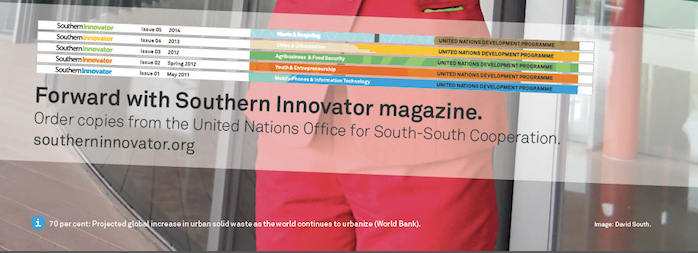
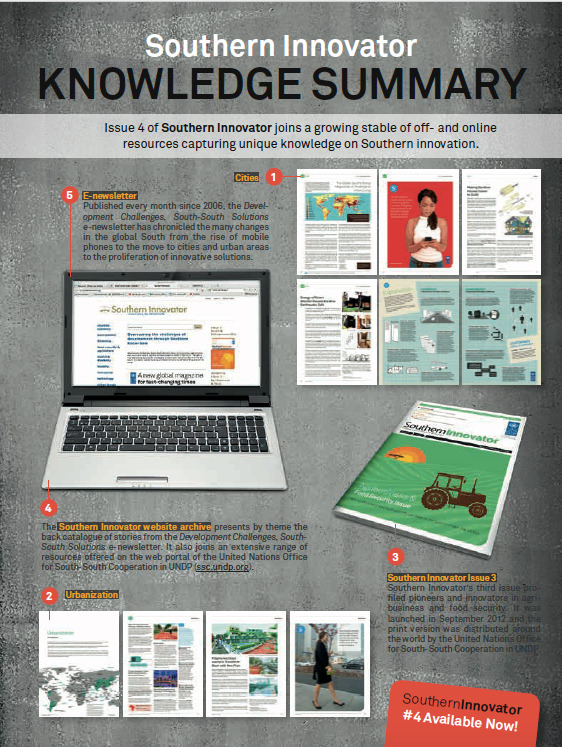
If you would like hard copies of the magazine for distribution, then please contact the United Nations Office for South-South Cooperation: Website:http://ssc.undp.org/content/ssc.html. If you would like to either sponsor an issue of Southern Innovator or place an advertisement in the magazine, then please contact southerninnovator@yahoo.co.uk. This is a great opportunity to reach millions around the world and to connect with the pioneers and innovators shaping this new world. With Issue 5 tackling the timely theme of Waste and Recycling, this is the moment to get on board and help support SI. With global urbanization levels continuing to rise, fresh thinking of the kind found in Southern Innovator‘s fifth issue is urgently required.
The ongoing economic crisis in Europe is forecast to harm the economies of the world’s poorest countries if it continues, according to a study by the United Kingdom’s Overseas Development Institute (ODI) (odi.org.uk).
As an example, Kenya’s shilling currency has weakened and increased the cost of imports, leading to a surge in inflation, while the number of European tourists has declined, according to Business Daily.
Raging since 2009 (http://www.bbc.co.uk/news/business-13856580), the eurozone crisis has seen several European countries struggling to pay debts built up during the boom years, and this has threatened the currency compact among countries that use the euro single currency (http://www.ecb.europa.eu/euro/html/index.en.html). Several countries have introduced harsh austerity measures to try and rein in the debts and stabilize economies while keeping countries within the eurozone.
This has had the consequence of dramatically raising unemployment levels, reducing consumption of goods and services and increasing poverty rates in many European countries. Some governments have responded by reducing the amount of legal labour migration allowed into their countries.
The study estimates that the euro crisis could amount to a loss of US $238 billion for poorer countries from 2012 to 2013 as aid, trade, investment and remittance payments sent home to relatives and friends are damaged by the crisis.
This would particularly harm export-dependent, emerging-market countries. The study found demand was weakening for products from low and low-to-middle income countries. This would in turn harm growth in these countries. Growth in the past decade has helped many countries lift millions of people out of poverty and enabled the growth of new middle classes, who in turn use their rising incomes to purchase consumer goods and invest.
The crisis will cause developing countries’ currencies to drop in value if they are pegged to the euro, and for countries to be economically harmed because of austerity policies in European countries, said the study’s author, Dr. Isabella Massa.
“The EU remains the largest single export market for poorer countries, although it is the emerging BRIC economies which are their main source of imports.”
The European Union (EU) (http://europa.eu/index_en.htm) is the biggest market in the world and the largest importer of goods from developing countries. The ODI report found a 1 per cent drop in global export demand has the knock-on affect of reducing growth in poor countries by 0.5 per cent. The countries most at risk from the crisis are Mozambique, Kenya, Niger, Cameroon, Cape Verde and Paraguay.
For example, 17 per cent of Ivory Coast’s exports go to the EU. Mozambique sends 14 per cent of its exports to the EU and Nigeria sends 10 per cent.
Tajikistan in Central Asia was the most highly dependent economy on remittance payments from its workers living outside the country to prop up its GDP (gross domestic product). Remittance payments from Tajik citizens outside the country made up 40 per cent of GDP.
Liberia and the Democratic Republic of Congo were both heavily dependent on foreign direct investment (FDI) from Europe in 2010.
Many countries have also grown used to strong demand for their resources in recent years as China has rapidly developed and urbanized, sucking in more and more resources from around the world, including sub-Saharan Africa.
“Poor countries are vulnerable to the euro crisis not only because of their exposure (due to dependence on trade flows, remittances, private capital flows and aid) but also because of their weaker resilience compared to 2007, before the onset of the global financial crisis,” said Massa.
“The ability of developing countries to respond to the shock waves emanating from the euro area crisis is likely to be constrained if international finance dries up and global conditions deteriorate sharply.
“The escalation of the euro crisis and the fact that growth rates in emerging BRIC economies, which have been the engine of the global recovery after the 2008-9 financial crisis, are now slowing down make the current situation really worrying for developing countries.”
Despite the gloom, there are many positive and powerful antidotes to this economic crisis, including rising South-South trade and innovation, which shows it is possible to reduce dependency on wealthy-developed countries alone for economic prosperity.
Published: September 2013
Resources
1) UNRISD: United Nations Research Institute for Social Development: The United Nations Research Institute for Social Development (UNRISD) is an autonomous research institute within the UN system that undertakes multidisciplinary research and policy analysis on the social dimensions of contemporary development issues. Website: unrisd.org/
2) The Global Urbanist: News and analysis of cities around the world: planning, governance, economy, communities, environment, international. Website: globalurbanist.com
3) OECD: The global economic crisis is entering a new phase amid signs of a return to positive growth in many countries. But unemployment is likely to remain high and much still needs to be done to underpin a durable recovery. This website will track the recovery. Website: http://www.oecd.org/general/tacklingthecrisisastrategicresponse.htm
4) African Union: This vision of a new, forward looking, dynamic and integrated Africa will be fully realized through relentless struggle on several fronts and as a long-term endeavor. The African Union has shifted focus from supporting liberation movements in the erstwhile African territories under colonialism and apartheid, as envisaged by the OAU since 1963 and the Constitutive Act, to an organization spear-heading Africa’s development and integration. Website: http://www.au.int/en/
5) Youth-Inclusive Financial Services (YFS-Link) Program website: The first space for financial services providers (FSPs) and youth-service organizations (YSOs) to gather, learn and share about youth-inclusive financial services. Website: http://www.makingcents.com/ourWork/yfsLink.php
6) Triple Crisis Blog: Global Perspectives on Finance, Development and Environment: Website: http://triplecrisis.com/
7) African Economic Outlook: A unique online tool that puts rigorous economic data, information and research on Africa at your fingertips. A few clicks gives access to comprehensive analyses of African economies, placed in their social and political contexts. This is the only place where African countries are examined through a common analytical framework, allowing you to compare economic prospects at the regional, sub-regional and country levels. Website: africaneconomicoutlook.org/en
Brazil is well known for its stylish swimwear, with styles usually targeted at young women and those with more conventional, media-friendly body shapes. But now a company is making visiting the beach more comfortable and empowering for plus-size women.
Prior to the arrival of plus-size swimwear, women turned to over-sized t-shirts and baggy shorts to hit the beach. Now, Brazilian companies are pioneering fashionable and sexy swimwear for women of all sizes.
Brazil has a well-known beach culture – a culture celebrated over the years in popular pop tunes like ‘The Girl From Ipanema’ (http://en.wikipedia.org/wiki/The_Girl_from_Ipanema). The country has successfully turned its alluring beach culture into lucrative businesses,including fashion enterprises that have become global brands. The global hit brand of beach flip flops Havaianas (havaianas.com) is a good example.
Lehona (lehona.com.br) makes ‘Moda Praia’ – plus-size – swimwear for women. The swimsuits are specially designed to flatter larger body shapes and give women the confidence to go back to the beach. It is seeking to end the discrimination inherent in beach culture that favours the “thin, the rich and the chic.”
Body shapes have been changing in Brazil – as they have been across the world and the global South. While one cause is the global obesity crisis -ballooning as diets change with rising prosperity – there is also another, more positive cause: greater access to nutrition and increasing consumption of milk and meat tends to lead to larger body shapes. This has happened across the world and in many countries irrespective of the racial and ethnic background of the people. Norwegians in Northern Europe were once some of the shortest people in Europe and suffered from poverty and malnutrition. But, as food security increased and nutrition improved, they have over time become the second tallest people in Europe behind the Netherlands (The Changing Body: Health, Nutrition,and Human Development in the Western World since 1700).
For Brazil, malnutrition was widespread until recently. Records show 10 per cent of the country’s rural northeast in the 1970s was considered underweight.
The Brazilian statistics institute has found the past decade’s economic boom has had another consequence as well as lifting many millions out of poverty. It has found 48 per cent of adult women and 50 per cent of adult men are now overweight. This compares with 1985, when 29 per cent of women and 18 per cent of men were overweight.
Diets have changed in the intervening years. Rice, beans and vegetables are now in competition with potato chips, processed meats and sugary soft drinks.
And apart from nutrition and diet changes because of increasing incomes,there is also a cultural change. While the wealthy are more used to lifestyles with plenty of exercise, newly prosperous people do not necessarily have the fitness habit. One study found just 10 per cent of Brazilian teens and adults exercise regularly.
The Lehona brand has become a quick hit and receives many telephone calls and emails from would-be customers, its owners claim.
The Brazilian cultural expectation for women’s beachwear is skimpy, showing more rather than less. This prejudices women who do not have slim body shapes or who are not under 30.
Started in 2010 by clothing designer Clarice Rebelatto and run by her son Luiz Rebelatto, Lehona was started out of personal need.
“Honestly, the problem went way beyond just bikinis. In Brazil, it used to be that if you were even a little chunky, finding any kind of clothes in the right size was a real problem,” said Clarice Rebelatto, a size 10, to The Associated Press.
“And I thought, ‘I’m actually not even that big compared to a lot of women out there, so if I have problems, what are they doing?’”
The approach to the swimsuits is counter to many other brands targeting plus-size women. They are bold and emphasize the shape rather than try to cover it up and hide it.
The brand sells itself through specialty stores for large and tall women in Brazil. A bikini sells for around 130 reais (US $66).
“Some brands, they don’t want their image to be associated with chunky women= Only the thin, the rich and the chic,” Luiz Rebelatto told The Associated Press.
“We’re working from the principle that bigger women are just like everyone else: They don’t want to look like old ladies, wearing these very modest, very covering swimsuits in just black.”
The plus-size market has even been taken up by conventional Brazilian swimwear manufacturer Acqua Rosa (http://www.acquarosanet.com.br/site/). It released its plus-size line in 2008 and claims sales now account for 70 per cent of their total sales.
One woman frequenting Copacabana beach copacabana.info) in Rio de Janeiro is Elisangela Inez Soares. She is happy and confident with the new swim suits.
“It used to be bikinis were only in tiny sizes that only skinny girls could fit into. But not everyone is built like a model,” concludes Soares.
Published: May 2012
Resources
1) Start a Fashion Business: A website packed with step-by-step advice on starting a fashion business. Website: startafashionbusiness.co.uk/
“I think you [David South] and the designer [Solveig Rolfsdottir] do great work and I enjoy Southern Innovator very much!” Ines Tofalo, Programme Specialist, United Nations Office for South-South Cooperation
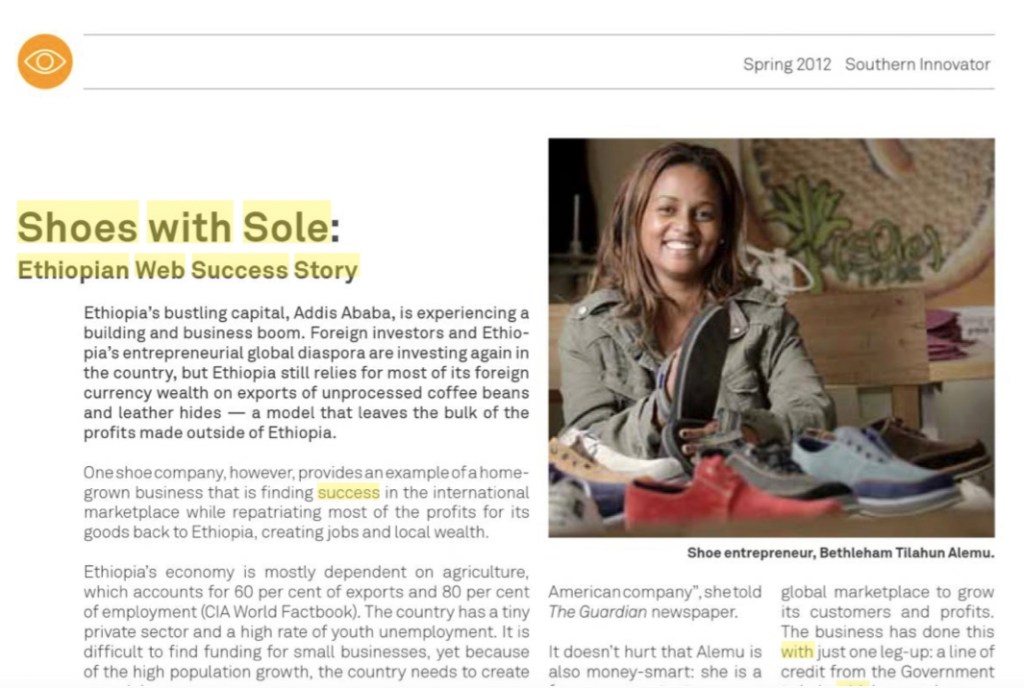
Ethiopia’s bustling capital, Addis Ababa, is experiencing a building and business boom. Foreign investors and Ethiopia’s entrepreneurial and widespread global diaspora are investing again in the country. But Ethiopia still relies for most of its foreign currency wealth on exports of unprocessed coffee beans and leather hides — a model that leaves the bulk of the profits made outside of Ethiopia.
But one shoe company provides an example of a home-grown business that is finding success in the international marketplace, while repatriating most of the profits for its goods back to Ethiopia, creating jobs and local wealth.
Ethiopia’s economy is mostly dependent on agriculture, which accounts for 60 percent of exports and 80 percent of employment (CIA World Factbook). The country has a tiny private sector and high youth unemployment. It is difficult to find funding for small businesses. Yet, because of the high population growth, the country needs to create more jobs.
The Economist magazine has forecast Ethiopia’s economy will grow by 7 percent in 2010, becoming the fifth fastest growing economy in the world, and on course to surpass Kenya to become East Africa’s biggest economy. While this sounds impressive, the country has to run hard to create enough jobs to meet its growing population and still faces significant food security problems.
One company, soleRebels, is combining a clever twist on a local tradition – recycling rubber from old truck tires into shoes, locally known as selate shoes – with sophisticated design concepts and high quality craftsmanship to make a global footwear hit.
Co-founder and managing director Bethleham Tilahun Alemu, a 30-year-old African web-vending entrepreneur, has turned this local craft into a global fashion design hit by adding colourful cotton and leather uppers to the tire shoes. The recycled rubber shoes come in many styles: from handmade flip-flops to boat shoes, loafers, and athletic trainers resembling the popular American sports shoe, Converse (http://www.converse.com/).
SoleRebels’ (http://solerebelsfootwear.weebly.com/index.html) shoe factory is on the outskirts of Addis Ababa in the historic village of Zenabework. Despite its location, it is reaching the international markets through online retailers like Amazon.com. Shipments take between three and five days to arrive in the United States.
And the secret to this small start-up’s success? Apart from great shoes and funky design, Alemu puts it down to this: “We are sitting in Addis Ababa but acting like an American company,” she told The Guardian newspaper.
It doesn’t hurt that Alemu is also money-smart: she is a former accountant.
Started five years ago, soleRebels now employs 45 full-time staff making 500 pairs of shoes a day. The shoes cost between US $33 and US $64. They are also being sold in Japan and the United Kingdom on Amazon’s shoe-selling website, http://www.javari.co.uk.
In 2010, Alemu hopes soleRebels will make US $481,000. But soleRebels has an even more ambitious goal: to become “the Timberland or Sketchers of Africa.”
Timberland (http://www.timberland.com/home/index.jsp), an American shoe and boot maker, has been a pioneer in high-quality leather footwear, breaking new ground in adopting green manufacturing processes and exploiting the power of the web by allowing customers to customise their footwear.
SoleRebels has cleverly exploited the advantages of the global marketplace to grow its customers and profits. The business has done this with just one leg-up: a line of credit from the government to help with large orders. With 6.2 million people out of a population of 80 million needing food aid, Ethiopia is still highly dependent on international aid. But Alemu is showing there is a way to build a sustainable successful business.
Inspiration for Alemu came about when she was thinking what Ethiopian product could be produced in a sustainable way. She remembered the sandals worn in the country.
“Recycling is a way of life here – you don’t throw things away that you can use again and again,” she said. “I wanted to build on that idea.”
Ethiopian shoe makers have had a difficult time in recent years, trying to compete with cheaper Chinese imports. But rather than just trying to come up with a shoe that was even cheaper than the Chinese ones, soleRebels decided to build a business selling shoes to the more lucrative export market.
Alemu reasoned that good design would attract a higher price. She did research on the internet to find out which designs worked well and what were the latest trends in footwear.
This research formed the basis of her range of shoes, which have catchy names like Class Act or Gruuv Thong. The sandals and flip-flops are either cotton-covered or leather covered. The Urban Runner shoe sells best and is inspired by the Converse All Star sneaker.
SoleRebels has a regular supplier of old truck tires and inner tubes and has women weave and dye the cotton, jute and hemp uppers for the shoes. Almost all materials are locally sourced. Old army uniforms are cannibalized for their camouflage pattern.
SoleRebels has also been canny in seeking Fair Trade certification (http://www.fairtrade.org.uk) to help with marketing and selling the shoes.
To increase the market for the shoes, Alemu bombarded American retailers with emails and shoe samples to pique their interest. Because of the U.S. African Growth and Opportunity Act (http://www.agoa.gov), soleRebels’ shoes can be imported into the United States duty-free: a big price advantage in the U.S. marketplace which has helped grab the interest of retailers like Whole Foods and Urban Outfitters.
This interest soon snowballed, and people were placing orders through the soleRebels website (http://solerebelsfootwear.weebly.com/index.html). Orders come by courier from Ethiopia in about a week to the United States.
With all this interest building, Amazon, the leviathan online retailer, decided to become a customer for the shoes. Online retailing has been a huge boost to the growth of soleRebels. According to Alemu, it has enabled the company “to understand the market needs and demands in real time” — a huge advantage to a start-up company far away from its markets.
There is another advantage to using the web to grow a business: it has enabled soleRebels to take greater control of the whole process. The company negotiates directly with retailers, handling orders and credit collection, and this makes sure most of the profits of the business return to Ethiopia.
Making soleRebels quickly profitable has been a benefit to its workers. Starters at the company make US $1.92 a day, while experienced shoe-makers earn US $11 a day (a good wage in Ethiopia).
“In Ethiopia we have become used to taking money from the West, to always getting help,” Alemu told the Guardian. “That does not make for a sustainable economy. We need to solve our own problems.” And what does success enable them to do? SoleRebels are now building a solar-powered factory to replace their current workshop. And there is a steely pride in the firm’s success: “People buy soleRebels because they are good, not just because they are green or from Ethiopia,” Alemu said. “Our product speaks for itself.”
Published: January 2010
Resources
1) The online service CafePress is a specially designed one-stop shop that lets entrepreneurs upload their designs, and then sell them via their online payment and worldwide shipping service. Website:http://www.cafepress.com/cp/info/sell/
2) Once inspired to get into the global fashion business, check out this business website for all the latest news, jobs and events. Website: http://us.fashionmag.com/news/index.php
4) The red dot logo stands for belonging to the best in design and business. The red dot is an internationally recognised quality label for excellent design that is aimed at all those who would like to improve their business activities with the help of design. Website:http://www.red-dot.de
5) Dutch Design in Development: As a matchmaker, DDiD puts together European clients, Dutch designers and small and medium-sized enterprises in developing countries. The designers share their knowledge of European consumer tastes, product development, design and quality standards. Website:http://www.ddid.nl
6) ShopAfrica53: Pledging in its motto to reach “every African nook and cranny,” ShopAfrica53is an online shopping portal similar to famous brands like Amazon or eBay, but focused entirely on giving African traders the ability to sell across the continent and to the world online. Website:http://www.shopafrica53.com/
7) Havianas: A Brazilian global fashion success with its rubber flip flops. Website: http://www.havaianas.com/




















 David South Consulting
You must be logged in to post a comment.