Tag: development challenges south-south solutions

  • West African Chocolate Success Story

    West African Chocolate Success Story

    By David SouthDevelopment Challenges, South-South Solutions

    SOUTH-SOUTH CASE STUDY

    A Ghanaian chocolate company has become a big success in the United Kingdom and shown how it is possible to develop and market a high-quality product grown in West Africa. While the chocolate bars are manufactured in the Netherlands, the cooperative that owns the company initiated the push into producing a mass-market chocolate brand – and shares in the profits.

    The Divine chocolate brand is available in shops and supermarkets across Britain and is the product of the Kuapa Kokoo (http://www.kuapakokoo.com/) cocoa farmers cooperative. The Divine brand was launched in the U.K. in 1998 as the first Fairtrade (http://www.fairtrade.org.uk) chocolate bar aimed at the mass market. Previously, most Fairtrade chocolate was made for high-end customers.

    Apart from the chocolate bars, the co-op also sells its cocoa butter to The Body Shop (http://www.thebodyshop.co.uk/_en/_gb/index.aspx), a chain of natural beauty retailers.

    In 1997, at the co-op’s annual general meeting, members decided to create a mass-market chocolate bar of their own. Ambitiously, they did not want to just be a small, niche-market chocolate bar. They wanted to take on the big brands. They set up The Day Chocolate Company in 1998 and received support from a collection of international charities, aid agencies and businesses.

    The Chocolate Company is structured to have two members of the co-op on its board of directors, with one out of four yearly board meetings held in Ghana. As shareholders, the farmers also receive a share of the profits of chocolate sales. Britain’s chocolate market is worth £4 billion a year (US $6 billion) and the country has hundreds of chocolate brands, making competition for customers fierce. The Divine range of chocolate has been designed to match U.K. market tastes.

    Ghana has an excellent reputation for the quality of its cocoa beans and has been growing cocoa since it was first brought to the country from Equatorial Guinea in 1878 by Tetteh Quarshie (http://www.ghanaweb.com/GhanaHomePage/people/pop-up.php?ID=128).

    Kuapa Kokoo’s success story has its origins in responding to the structural adjustment programmes (http://en.wikipedia.org/wiki/Structural_adjustment) which started liberalizing Ghana’s cocoa market in 1993.

    The lock the government had on selling cocoa to the Cocoa Marketing Company had been lifted. Now the opportunity was there for others to sell to the Marketing Company and some farmers decided to form a cooperative, Kuapa Kokoo – “the best of the best”. They wanted to get a better price for the cocoa and to improve working conditions and lives of the pickers.

    The cooperative does all the processing of the cocoa and delivers it to market. One of the great advantages for the farmers is the honest weighing of the beans – something previous buying agents would cheat doing. By creating a more efficient and fair process, greater savings are made on the price paid for the beans and this is passed on to the co-op’s members.

    The farmers are also trained to do tasks like weighing and bagging the cocoa, removing the need for outside help. Every year the farmers receive cash bonuses based on the co-op’s profits and any efficiencies made.

    With this success, Kuapa Kokoo grew and now has more than 40,000 members spread over 1,300 villages.

    The co-op offers various services to the farmers including a credit union to help with finances. There are also 33 Research and Development Officers employed by the co-op to oversee training and election.

    The number of women farmers has grown over the years, from 13 percent to 30 percent.

    Extra income-generating skills are encouraged for the women farmers as well. One project is to make soap from the potash produced from burnt cocoa husks. Women have also been given machines to crack palm kernels for cooking oil.

    Comfort Kumeah, a 62-year-old co-op farmer, lives in the village of Mim in the Ashanti region. A former teacher for 39 years, she inherited 20 acres of land from her husband’s family.

    “Each farmer has a passbook to record weight and payment. In the whole of Ghana, only Kuapa Kokoo … is certified Fairtrade,” she told the Sunday Times.

    “I was voted chair of the farmers’ trust and national secretary for the union; once a year I attend a conference to vote on how the Fairtrade premium is spent. Last year we bought a palm-nut crusher and we sell the red oil on the market.”

    “Before, I was always cheated. Purchasing clerks would come and weigh the beans and you never knew if their scales were correct, as no one checked them. Some embezzled the money instead of paying it to the farmers.”

    “Owning this company has given cocoa farmers a voice for the first time.”

    Kuapa Kokoo sells around 1,000 tonnes of cocoa every year to the European Fairtrade market (http://www.etfam.com/index2.php). This has many advantages for sellers if they meet certain conditions. These conditions include health and safety requirements and democratic decision making. If they are met, the producers receive a guaranteed price for their goods and long-term trading contracts. This means a stable price despite market fluctuations. With a stable price, it is easier to plan and save money.

    Ghanaian cocoa has a good international reputation and trades at a higher price because of this. Cocoa once made up 66 percent of Ghana’s foreign exchange, but is now down to 35-40 percent as the economy has diversified into areas like information technology.

    Cocoa is usually grown on small family farms in Ghana. Farmers also grow crops like plantain to provide food for the family. Around 1.6 million people are involved in growing cocoa and its business in Ghana. Cocoa trees grow to 15 metres in height and take three to four years to start producing a crop. An entire year’s worth of a tree’s crop can make three large chocolate bars.

    A tree can produce two crops a year. Each cocoa pod produces around 40 seeds.

    “A cocoa farmer’s life is hard,” admits Comfort. “In the lean season, we have no income. Also, cocoa is controlled by climate. Drought followed by too much rain causes fungus and rot, and then every farmer is poor.”

    “I have saved money for my children’s education but my own needs are few: clothes, soap and toothpaste. Generally, you know, women are strong. Last year more women than men were voted onto the Kuapa Kokoo national executive and now hold some of the most senior positions.”

    Learn more about cocoa trading and Africa’s role here (content provided by commodity.com): Cocoa’s Future as Commodity: What If Africa Can’t Keep Up the Supply? – Where’s Cocoa From and How Much Does It Contribute to the World’s Economy?

    Cocoa has many health benefits. From the British Journal of Clinical Pharmacology: The neuroprotective effects of cocoa flavanol and its influence on cognitive performance

    “In summary, the flavonoids contained in cocoa and chocolate appear able to improve various types of cognitive and visual tasks, possibly as the result of more efficient perfusion of blood to different neural tissues, clearly both forebrain and more posterior cortex and possibly also influence retinal blood flow and visual function.”

    Published: April 2010

    Resources

    1) Divine’s online shop. Website: www.divinechocolateshop.com

    2) An online shop with various Fairtrade chocolate brands for sale. Website: http://www.simplyfair.co.uk/acatalog/Chocolate.html?icid=J158-11634392-071H&gclid=CMOlycDN8KACFUkrDgodjXDsEg

    3) How to make chocolate bars from the bean to bar. Website: http://www.wikihow.com/Make-Chocolate

    4) Home Chocolate Factory: A website selling the moulds and other accessories for making chocolate products in small factories or at home. Website: http://www.homechocolatefactory.com/

    https://davidsouthconsulting.org/2022/10/17/connoisseur-chocolate-from-the-south-gets-a-higher-price/

    https://davidsouthconsulting.org/2022/11/01/indonesian-food-company-helps-itself-by-making-farmers-more-efficient/

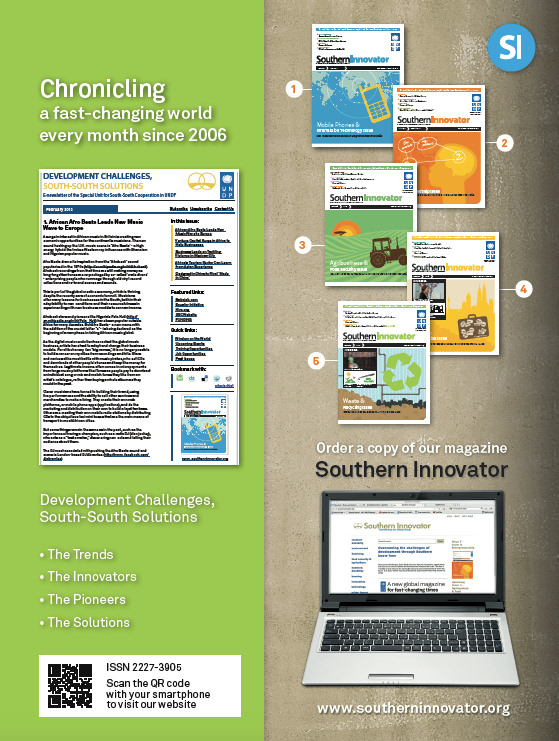
    Development Challenges, South-South Solutions was launched as an e-newsletter in 2006 by UNDP’s South-South Cooperation Unit (now the United Nations Office for South-South Cooperation) based in New York, USA. It led on profiling the rise of the global South as an economic powerhouse and was one of the first regular publications to champion the global South’s innovators, entrepreneurs, and pioneers. It tracked the key trends that are now so profoundly reshaping how development is seen and done. This includes the rapid take-up of mobile phones and information technology in the global South (as profiled in the first issue of magazine Southern Innovator), the move to becoming a majority urban world, a growing global innovator culture, and the plethora of solutions being developed in the global South to tackle its problems and improve living conditions and boost human development. The success of the e-newsletter led to the launch of the magazine Southern Innovator. 

    https://davidsouthconsulting.org/2021/03/05/southern-innovator-issue-3/

    Creative Commons License

    This work is licensed under a
    Creative Commons Attribution-Noncommercial-No Derivative Works 3.0 License.

    ORCID iD: https://orcid.org/0000-0001-5311-1052.

    © David South Consulting 2023

  • Connoisseur Chocolate from the South Gets a Higher Price

    Connoisseur Chocolate from the South Gets a Higher Price

    By David SouthDevelopment Challenges, South-South Solutions

    SOUTH-SOUTH CASE STUDY

    Like coffee beans, cocoa beans are grown around the world and are a major commodity, highly prized in wealthy countries. West Africa accounts for 70 percent of the world’s output, with the rest grown either in Indonesia and Brazil (20 percent), or on a smaller scale in countries across the South, from Belize to Madagascar.

    Global sales of cocoa beans have grown by an average of 3.7 percent a year since 2001, and the World Cocoa Foundation estimates 40-50 million people depend on cocoa for their livelihood.

    But harvesting cocoa comes at a price to the farmers and those who work on the farms. It is estimated that 284,000 children in West Africa work under abusive conditions to harvest the beans. Cocoa farmers usually only benefit from the price of cocoa in the harvest season between October and February. In Ghana, the second largest producer of beans, child slavery allegations have plagued the cocoa plantations, along with too-low prices paid to farmers. Fluctuating global market prices constantly put small-scale farmers at risk of losing everything they have worked for.

    But consumers are developing ever-more sophisticated tastes for chocolate, paying more attention to the quality and origin of the beans. Savvy cocoa producers are using this greater awareness to increase prices for farmers and improve conditions for those who work on the farms.

    Maturing consumers’ palates are now picking chocolate and other food products from the South in much the same way as connoisseurs pick wines. In the United Kingdom alone, sales of Fairtrade-branded goods (www.fairtrade.org.uk)- a scheme that offers guaranteed prices and better trading conditions to farmers – have reached £560 million (US$1.1 billion) a year. A survey of consumers in six countries found awareness of fairly traded chocolate was highest in the UK, with 43 percent of people having tried it (http://www.barry-callebaut.com).

    British consumers willing to pay more for ethical products are at the forefront of a global surge in fair trade. Hans Vriens, chief innovation officer with Belgian chocolate makers Barry Callebaut, told The Independent newspaper: “Nowadays, chocolate consumption is coming to resemble the way we enjoy wine: we sample and compare different tastes.”

    The world’s appetite for chocolate is voracious: For example by 2007, volume sales of chocolate confectionery increased from 1998 by 30 percent in Eastern Europe, and by 40 percent in the Asia Pacific region. Europeans devour 35 percent of the world’s cocoa.

    In order to be classed as Fair Trade, a producer must meet a strict set of criteria governing how people and the environment are treated. The Fair Trade scheme pays farmers a higher price for cocoa beans, calculated on the basis of world market prices, plus fair trade premiums. The Fair Trade premium for standard quality cocoa is US$150 per tonne. The minimum price for Fair Trade standard quality cocoa, including the premium, is US$1,750 per tonne. Fair Trade ensures a minimum price of 80 US cents a pound under long-term contracts, with access to credit, and prohibits abusive child labour and forced labour.

    At the Chuao Plantation in Venezuela, the local Chuao Empresa Campesina cooperative, representing 100 farmers, is reaping the benefits of developing an exclusive relationship with an Italian chocolate company. Chocolatier Alessio Tessieri was willing to pay a lot more for the beans if high standards were maintained. His sister Cecilia was struck by the aroma of the rare Criollo bean grown by the farmers: it is the least productive in terms of output, but prized for its flavour.

    “We found an aroma that was greatly reminiscent of ripe red fruit and plum preserves, with an extremely delicate aftertaste,” she said. “A highly complex and sophisticated aroma lacking any trace of acidity.”

    Located in Parque Nacional Henri Pittier, a road and sea trip from the capital Caracas, the town of Chuao, population 1,500, has ideal growing conditions because of its high humidity. In the village, the women take care of the drying process. Throughout the town the cocoa beans lay out in the open on verandas. In the warehouses the enormous “masorche” – the fruit of the cocoa trees, looking like big red melons – are split in half and the pulp is removed, revealing the super-sweet white-coated beans inside.

    Alessio struck a good deal with the farmers in recognition of the exclusivity of the beans. He pays US$4 per kilogram against the US$1.30 per kilo paid by the local merchants. He also took on the farmers’ debts with the merchants. But most importantly, he ensured that one of his agronomists would stay behind and supervise the plantation and increase its production, from the current level of 120-130 kilos per hectare to a projected 250-300 kilos.

    The Toledo Hills Cacao Cooperative in Belize, South America has developed a relationship with one of the UK’s pioneers in fair trade chocolate, Green & Blacks. The Mayan Indians who farm the cocoa live a traditional life more or less as they have done for centuries. They also live in one of the poorest areas of Belize. The profits made are ploughed back into buying machetes, or rubber boots to protect against snake bites. The cocoa harvest helps supplement their traditional way of life.

    Green & Blacks has been buying organic cocoa from the farmers’ co-operative since 1994 and paying a guaranteed price above the world cocoa price. In 2003, they extended their activities with the cocoa farmers and started the Belize Programme to provide even more support. With an investment of £225,000 (US$443,350) over three years, the investment was used to help improve management and farming practices, rehabilitate hurricane-damaged crops, plant more cocoa trees, and train farmers in better growing methods. Green & Blacks continues to provide technical advice and support to the farmers. The business relationship with Green & Blacks has been so successful that other farmers in Belize are now interested in cocoa farming.

    The pattern is being repeated elsewhere in Latin America. In San Martin, Peru, rice farmers have moved into cocoa to reap the rewards of the higher prices. Alvis Valles Sajami and Alberto Inou Amasifuen are both graduates of the Peru Farmer Field School. Sajami uses a plant nursery as an extra source of income by selling cocoa plants to other farmers. “I already have 4,000 plants, he said. “This (the nursery) will be so important to increase my cocoa area. I can sell planting material to other farmers in order to have a new source of income for my family.”

    Amasifuen has already increased his own cocoa production from two hectares to five, and has also established a nursery to produce cocoa and timber tree seedlings to sell to area farmers.

    “We have an increase in demand for cocoa plants in San Martín,” he said. “We expect to provide seedlings not only to our farm, but also to other farmers in expanding their production area.”

    Learn more about cocoa trading and Africa’s role here (content provided by commodity.com): Cocoa’s Future as Commodity: What If Africa Can’t Keep Up the Supply? – Where’s Cocoa From and How Much Does It Contribute to the World’s Economy?

    Published: June 2008

    Resources

    • International Cocoa Organization, a good source of current data on the trade.
      Website: http://www.icco.org/about/chocolate.aspx
    • The Fairtrade Labelling Organization sets the standards for fair-trade and is the place to go to receive official certification.
      Website: www.fairtrade.org.uk
    • The Max Havelaar Foundation offers a similar service and is popular in continental Europe.
      Website: http://www.maxhavelaar.nl/pages/default.asp?rID=4
    • The International Federation of Organic Agriculture Movements (IFOAM) represents the organic farmers’ movement.
      Website: www.ifoam.org
    • World Cocoa Federation was formed in 2000 to play a leading role in helping cocoa farming families by developing and managing effective, on-the-ground programs, raising funds and acting as a forum for broad discussion of the cocoa farming sector’s needs.
      Website: http://www.worldcocoafoundation.org/about/default.asp

    More on chocolate here: West African Chocolate Success Story

    https://davidsouthconsulting.org/2022/11/21/agribusiness-food-security/

    https://davidsouthconsulting.org/2021/10/03/civet-cat-coffee-brews-filipino-opportunity/

    https://davidsouthconsulting.org/2022/10/14/indias-modernizing-food-economy-unleashing-new-opportunities/

    https://davidsouthconsulting.org/2022/10/21/new-beer-helping-to-protect-elephants/

    https://davidsouthconsulting.org/2022/10/31/rainforest-gum-gets-global-market/

    https://davidsouthconsulting.org/2021/03/05/southern-innovator-issue-2/

    https://davidsouthconsulting.org/2021/03/05/southern-innovator-issue-3/

    https://davidsouthconsulting.org/2022/10/20/trade-to-benefit-the-poor-up-in-2006-and-to-grow-in-2007/

    https://davidsouthconsulting.org/2022/10/17/west-african-chocolate-success-story/

    https://davidsouthconsulting.org/2022/10/18/woman-wants-african-farming-to-be-cool/

    Development Challenges, South-South Solutions was launched as an e-newsletter in 2006 by UNDP’s South-South Cooperation Unit (now the United Nations Office for South-South Cooperation) based in New York, USA. It led on profiling the rise of the global South as an economic powerhouse and was one of the first regular publications to champion the global South’s innovators, entrepreneurs, and pioneers. It tracked the key trends that are now so profoundly reshaping how development is seen and done. This includes the rapid take-up of mobile phones and information technology in the global South (as profiled in the first issue of magazine Southern Innovator), the move to becoming a majority urban world, a growing global innovator culture, and the plethora of solutions being developed in the global South to tackle its problems and improve living conditions and boost human development. The success of the e-newsletter led to the launch of the magazine Southern Innovator. 

    Creative Commons License

    This work is licensed under a
    Creative Commons Attribution-Noncommercial-No Derivative Works 3.0 License.

    ORCID iD: https://orcid.org/0000-0001-5311-1052.

    © David South Consulting 2023

  • Small-scale Farmers Can Fight Malaria Battle

    Small-scale Farmers Can Fight Malaria Battle

    By David SouthDevelopment Challenges, South-South Solutions

    SOUTH-SOUTH CASE STUDY

    Malaria is one of Africa’s biggest killers. Each year globally 300 to 500 million people are infected, and around 1 million die from the disease (theglobalfund). Ninety percent of malaria deaths occur in sub-Saharan Africa – mostly to children under the age of five. The disease costs African countries US$12 billion a year in lost gross domestic product.

    Malaria is a parasitic disease – the parasite plasmodium – transmitted by mosquito bites. Symptoms include fever, headache and vomiting. Internal bleeding, kidney and liver failure may follow and can result in coma and death.

    The most common and effective treatment, recommended by the World Health Organization, is artemisinin-based combination therapies, known as ACTs. ACTs have low toxicity, few side effects and act rapidly against the parasite. Research shows that artemisinin remedies cure 90 percent of patients within three days.

    But there are far fewer doses available than people who need them. WHO has claimed the quantity made available by pharmaceutical companies falls far short of the more than 130 million doses required to combat malaria throughout the world.

    And ACTs are very expensive to deliver: in just one country, Tanzania, providing such therapy for three years would cost US $48.3 million. Every year, this would account for 9.5 percent of Tanzania’s health budget, and 28.7 percent of yearly spending on medical supplies: a six-fold increase in budget for malaria treatment (Malaria Journal 2008, 7:4).

    But a cheap alternative to the expensive pill form of the treatment is being piloted across Africa. It involves the drinking of a tea made from the bushes of the artemisia plant. Artemisia annua is an annual shrub and the active ingredient in the pills (artemisinin). It is native to China and Vietnam and has been used for 2,000 years to treat fevers.

    Bushes cultivated by farmers in Kenya, Malawi, Tanzania, Zambia, Zimbabwe and Mozambique under the supervision of the World Agroforestry Centre in Nairobi, Kenya, are helping to bring down malaria rates without the long wait for the pills to arrive.

    The leaves are boiled and made into a tea. Drinking the tea gives a high enough dose of artemisinin in the blood to cure malaria. Helen Meyer, a nurse operating nine mobile health clinics in rural Mozambique, is using the bitter tea made from the dried leaves. Even in treating drug resistant malaria, she has found the artemisia tea effective: “If you drink the tea, you feel better after the first day. Other medicines take a few days.”

    A special hybrid of artemisia, A-3, is used because it is adapted for warmer climates. The wild variety grows to only five centimetres in the tropics, but A-3 grows to three metres and packs 20 times more artemisinin. It is also highly economical: thousands of plants can come from a single stem.

    The daily adult dose of anti-malaria tea just needs five grams of dried A-3 leaves in one litre of water. The tea is drunk every six hours for seven days. Each plant produces 200 grams of dried leaves, and a thousand shrubs can cure 5,700 people. Since it is a cheap cure, money can be spent instead on other things. Farmers are also able to supplement their income by growing the bushes. And the dried leaves have long-lasting power: even after three years the leaves retain close to a 100 percent of their artemisinin.

    Access to authentic artemisinin is critical: it is estimated 16 percent of malaria medicines in Kenya are counterfeit. Elsewhere, the proliferation of counterfeit anti-malarials substantially raises the risk of the emergence of resistance to artemesinin combination therapy, the last truly effective treatment against malaria. Past misuse of other malaria drugs, such as chloroquine in the 1980s and sulphadoxine/pyrimethamine in the 1990s, resulted in the malaria parasite becoming resistant. Hundreds of thousands of people in malaria-prone areas may have died as a result.

    The World Agroforestry Centre, recognizing potential problems with artemesinin monotherapies, is working to combine it with indigenous herbal remedies made from other anti-malarial trees, producing a herbal combination therapy (HCT).

    “I used to grow fruits and beans here,” said Charles Kiruthi, a Kenyan farmer, to the IRIN news service. “but I will get a better return from this plant. No pests attack it, and until harvesting time it requires very little labour.”

    “I expect to get a good return, and I am also very happy to be helping fight malaria,” continued Kiruthi. “I recently lost two friends to the disease, and my child gets sick with malaria sometimes.”

    Published: July 2008

    Resources

    Development Challenges, South-South Solutions was launched as an e-newsletter in 2006 by UNDP’s South-South Cooperation Unit (now the United Nations Office for South-South Cooperation) based in New York, USA. It led on profiling the rise of the global South as an economic powerhouse and was one of the first regular publications to champion the global South’s innovators, entrepreneurs, and pioneers. It tracked the key trends that are now so profoundly reshaping how development is seen and done. This includes the rapid take-up of mobile phones and information technology in the global South (as profiled in the first issue of magazine Southern Innovator), the move to becoming a majority urban world, a growing global innovator culture, and the plethora of solutions being developed in the global South to tackle its problems and improve living conditions and boost human development. The success of the e-newsletter led to the launch of the magazine Southern Innovator. 

    Creative Commons License

    This work is licensed under a
    Creative Commons Attribution-Noncommercial-No Derivative Works 3.0 License.

    ORCID iD: https://orcid.org/0000-0001-5311-1052.

    © David South Consulting 2023

  • Vietnam Launches Low-cost, High-Quality Video Game

    Vietnam Launches Low-cost, High-Quality Video Game

    By David SouthDevelopment Challenges, South-South Solutions

    SOUTH-SOUTH CASE STUDY

    The creative economy offers huge opportunities to the countries of the global South. With the proliferation of new technologies – mobile phones, digital devices, personal computers with cheap or free software, the Internet – the tools to hand for creative people are immense. This begins to level the playing field and allows hardworking and talented people in poor countries to start to compete directly with those in wealthy countries.

    One case of this dynamic at work is the computer and video games industry. Once, they were only created by ‘first world’ nations like Japan, the United States and the United Kingdom. And then came South Korea, as its prosperity increased through the 1980s and 1990s. And then China got in on the game. And India.

    And now innovators in Vietnam are using the medium to make money, and tell a story from a distinctly Vietnamese perspective. And that story is the long-running Vietnam wars that engulfed the country, from the 1950s through the 1960s until 1975 when the last of the United States’ helicopters left Saigon, then the capital of South Vietnam.

    Emobi Games (http://emobigames.vn) from Hanoi, unified Vietnam’s current capital, uses the motto “Enjoy challenges.” Launched in 2011 by founder and director Nguyen Tuan Huy, it has created 7554, a game that places players in the shoes of a Vietnamese soldier during the independence war against the French. Cleverly, it also comes at a competitive price: US $12.

    The game’s name refers to May 7, 1954, the day the French army in Dien Bien Phu surrendered to the Vietnamese People’s Army. This led to the end of the European colonial power’s occupation of its Indochinese colonies. The high death toll and sacrifice from the wars with France and the United States still resonate in the country, and the game reflects this.

    A young team of 20 developers worked on the project for three years. It cost the company an estimated US $802,748 to complete. It was extensively researched to ensure historical accuracy.

    “Dien Bien Phu is a great victory that we are proud of. That day, 7th of May 1954, is a symbol of our strength,” Huy told Ars Technica (http://arstechnica.com).

    “I think it is similar to what Americans feel when they celebrate July 4th. Independence is very important and something worth fighting for. It is also something worth honouring.”

    The game is the end product of an intense struggle to prove critics and sceptics wrong. Many doubted the company could deliver a product that could compete with the more established players. The video game market for firstperson shooters – where the player uses a weapon to engage in first-person combat – has been transformed in the last decade. Many games are highly sophisticated products akin to major films. The Call of Duty (callofduty.com) franchise is a good example. These games have elaborate graphics and story concepts, often use professional actors and come with high-cost, high-publicity marketing campaigns to back up game launches.

    The money at stake is significant: the global video games market is estimated to be worth US $65 billion in 2011 (Reuters). Game makers Activision Blizzard, makers of Call of Duty, had an annual revenue of US $4.8 billion.

    On its website, Emobi proudly takes on the doubters: “We are a very young company in Vietnam, currently we focus on one task: Building a successful PC Video Game for the Vietnamese. Most Vietnamese don’t believe that Vietnam can produce (a) PC Video Game.

    “We, the young people, think about this as a challenge, and want to overcome that. Maybe we will fail, maybe we will succeed. But that’s not important. (It is) Important that it must be time for the Vietnamese Game.”

    Huy admits it was a struggle to make the game.

    “Video games, films or any kind of entertainment in our country must adhere to certain standards,” explains Huy. “Entertainment must not be too violent or too sexy. Our government policy is stricter than other countries, especially when compared to Western countries.”

    Vietnam regulates gaming in various ways including limiting how long people can play online and the opening hours for Internet cafes.

    Out of a population of over 86 million people (World Bank) it is believed Vietnam has 12 million video gamers: a substantial market in the country alone. They play games from around the world and increasingly are willing to pay for legal licenses. This is a key development, since getting gamers to pay represents a revenue stream. With revenue, players in the global South can contribute to the building of their home-grown businesses to become big players.

    “The video game industry is just in its infancy,” said Huy. “We only have four studios that develop major games. Most work on online games. There are not many people who work in game development. Those that do are self-taught. There are no universities that provide education in games development. We learn by doing, failing and doing it again until we get it right.”

    Viewing warfare through non-Western eyes is part of the game’s unique selling point, Huy says.

    “American gamers have not been exposed to many war games where they play as a soldier who is not of American or British background. I think some may find this perspective refreshing.”

    Huy said that “7554 may give some gamers a new perspective. But what is most important is that we create a game that is fun to play.

    “We think we have created a game that FPS (first person shooter) shooter fans will enjoy. The price point is low so that will hopefully allow more people to play the game. I think gamers understand that a good game can come from anywhere in the world. I think gamers are willing to experience different cultures through games, so long as the experience is enjoyable.”

    The 7554 game is scheduled to be launched in the United States and France in February 2012 for personal computers.

    In the future, the company hopes to raid history for more battle scenarios to create new games.

    “Unfortunately there have been many battles fought, so we have a full history to pull from in order to create games,” Huy said.

    Published: January 2012

    Resources

    1) Animation Xpress Asia Pacific: A website packed with interviews and resources for the animation community.Website: http://www.axapac.com

    2) How to make video games: An online website with step-by-step resources to get started. Website:http://www.make-video-games.com

    3) Changing Dynamics of Global Computer Software and Services Industry: Implications for Developing Countries:A report from UNCTAD on how computer software can become the most internationally dispersed high-tech industry. Website:http://www.unctad.org/templates/webflyer.asp?docid=1913&intitemid=2529&lang=1

    4) Southern Innovator: A new magazine launched by UNDP’s Special Unit for South-South Cooperation. The first issue’s theme is mobile phones and information technology. Website: http://www.southerninnovator.org

    Development Challenges, South-South Solutions was launched as an e-newsletter in 2006 by UNDP’s South-South Cooperation Unit (now the United Nations Office for South-South Cooperation) based in New York, USA. It led on profiling the rise of the global South as an economic powerhouse and was one of the first regular publications to champion the global South’s innovators, entrepreneurs, and pioneers. It tracked the key trends that are now so profoundly reshaping how development is seen and done. This includes the rapid take-up of mobile phones and information technology in the global South (as profiled in the first issue of magazine Southern Innovator), the move to becoming a majority urban world, a growing global innovator culture, and the plethora of solutions being developed in the global South to tackle its problems and improve living conditions and boost human development. The success of the e-newsletter led to the launch of the magazine Southern Innovator. 
    Creative Commons License

    This work is licensed under a
    Creative Commons Attribution-Noncommercial-No Derivative Works 3.0 License.

    ORCID iD: https://orcid.org/0000-0001-5311-1052.

    © David South Consulting 2023