Categories
Archive Development Challenges, South-South Solutions Newsletters

The Disabled in the South can Make Money, Restore Dignity

By David SouthDevelopment Challenges, South-South Solutions

SOUTH-SOUTH CASE STUDY

The South’s disabled are a large population and often suffer more than even the poorest residents. It is estimated that there are 500 million disabled people in the world, with either mental, physical or sensory impairment. As many as 80 percent of all disabled people live in isolated rural areas in developing countries, and in some countries more than 20 percent of the population is classed as disabled (UN).

Obstacles are everywhere for the disabled and just being able to economically survive, let alone thrive, can be a superhuman struggle. There are many physical and social barriers in most countries which thwart full participation, and millions of children and adults live lives of segregation and degradation.

But two radically different approaches show something can be done, and perceptions re-shaped.

In the Republic of Congo in central Africa, blind entrepreneur Jean-Pierre Louya is mentoring other blind people in the business of making soap. There are an estimated 11,709.95 blind people, or 0.3% of the population of 3,903,318 (http://www.uniteforsight.org/eye_stats.php). Most are blind because their eye infections have gone untreated, or they have diseases like diabetes.

Life is very hard for many in Congo. Brazzaville, the capital, was heavily damaged in a civil war in 1997 and many thousands were killed.

Jean-Pierre, who is also the head of the country’s association for the blind (http://www/afub-uafa.org/pages/pages3.asp), picked up his soap-making skills from a soap cooperative. Once a truck driver, he went blind as a result of an eye disease 25 years ago. With the training from the soap cooperative, he has been successfully running his soap-making business, where he turns palm oil into high-lather soap, and used the profits to raise his seven children and buy some land.

But rather than just keeping his business secrets to himself, Jean-Pierre mentors other blind people in this delicate art. There are many stages in the process of making soap that are risky, but he mixes 20 litres of water with three kilograms of caustic soda – the most dangerous part of making soap – by using his memory. He knows what temperature it is by touch, how to get the mixture right by smell, and what amounts to use by sound.

Pouring in the hot palm oil, he told Reuters: “The barrel was already hot, so the first bit of oil I poured made noise: that’s how I l knew I had poured the liquid inside the barrel.”

“It was very hard for me to accept this condition,” he said. “it was two years before I could go out in public because I was embarrassed that my friends see me this way.”

“A blind person is teaching a trade to another blind person,” said Samuel Koubouana, a blind apprentice soapmaker Jean-Pierre is teaching. “It really means a lot to me. JP is improving my life.”

Jean-Pierre relies a great deal on the goodwill of local people to get around. As local Lenvo Lydie told Reuters: “Blind people really suffer in this country. The blind should be driven from one point to another rather than being left alone to fend for themselves in the streets.”

But in Congo there are few government programmes for disabled people and none for the blind. As president of the Association of the Blind in Congo, Jean-Pierre is helping other blind people take control of their lives.

In Angola, the Miss Landmine contest has taken a highly controversial approach to restoring dignity to the disabled. The brainchild of Norwegian theatre director Morten Traavik, the beauty contest featuring landmine amputees took place for the first time in April in Angola’s capital, Luanda. Angola has one of the highest rates of landmine amputees in the world, after a brutal 27-year civil war. Estimates place the number injured at 80,000.

The 18 contestants represented each province of the country, and the contest is about restoring self-esteem in women who have been isolated and marginalised. Traavik was shocked by the large number of amputees, but he also saw that Angolans really liked beauty contests. The contest’s motto is “Everyone has the right to be beautiful”.

It is funded by the Angolan government’s de-mining commission and Norway’s Arts Council. Participants receive US $196 a day and get to keep their dresses and jewellery. The winner, 31-year-old Augusta Hurica from Luanda, becomes an ambassador for international landmine survivors.

While the contest has had many critics, it has been so successful it will be replicated in Cambodia next year. And a worldwide contest is in the works for 2015.

Emilia Luzia, a contestant, told Marie Claire magazine: “I am happy to be representing my region and all disabled people, but it is also good to feel special and glamorous. This is the first time I’ve worn such nice clothes.”

Another contestant took on the critics. Twenty-six-year-old Sandra Tichika, said: “Most of the ladies here are from small villages: we struggle, we are isolated, yet here we are being noticed and accepted – how bad can that be?”

Published: June 2008

Resources

Development Challenges, South-South Solutions was launched as an e-newsletter in 2006 by UNDP’s South-South Cooperation Unit (now the United Nations Office for South-South Cooperation) based in New York, USA. It led on profiling the rise of the global South as an economic powerhouse and was one of the first regular publications to champion the global South’s innovators, entrepreneurs, and pioneers. It tracked the key trends that are now so profoundly reshaping how development is seen and done. This includes the rapid take-up of mobile phones and information technology in the global South (as profiled in the first issue of magazine Southern Innovator), the move to becoming a majority urban world, a growing global innovator culture, and the plethora of solutions being developed in the global South to tackle its problems and improve living conditions and boost human development. The success of the e-newsletter led to the launch of the magazine Southern Innovator.

Creative Commons License

This work is licensed under a
Creative Commons Attribution-Noncommercial-No Derivative Works 3.0 License.

ORCID iD: https://orcid.org/0000-0001-5311-1052.

© David South Consulting 2022

Categories
Archive Development Challenges, South-South Solutions Newsletters

Disabled Congolese Musicians Become World Hit

By David SouthDevelopment Challenges, South-South Solutions

SOUTH-SOUTH CASE STUDY

A group of Congolese musicians is using music to overcome obstacles – both economic and social – that come with being disabled in a poor country. Called Staff Benda Bilili, they are on course to be a global sensation and are looking forward to their first European tour. A remarkable achievement for anyone from a war-torn country, let alone for musicians who live as paraplegics in the slums of the Democratic Republic of Congo’s capital, Kinshasa (http://en.wikipedia.org/wiki/Kinshasa).

The South’s disabled are a large population and often suffer more than even the poorest residents. It is estimated that there are 500 million disabled people in the world, with mental, physical or sensory impairment. As many as 80 percent of all disabled people live in isolated rural areas in developing countries, and in some countries more than 20 percent of the population is classed as disabled (UN).

Obstacles are everywhere for the disabled and just being able to economically survive, let alone thrive, can be a superhuman struggle. There are many physical and social barriers in most countries which thwart full participation, and millions of children and adults live lives of segregation and degradation.

The four songwriters and musicians of Staff Benda Bilili use homemade wheelchairs to get around Kinshasa. The ‘wheelchairs’ resemble bicycles, tricycles and motorbikes, and are a testament to the resourcefulness of the band’s members. They sing about contemporary problems, like the importance of polio vaccinations – several of the band members are confined to wheelchairs because of polio (http://www.polioeradication.org/).

When performing, they are joined by a young group of acoustic rhythm musicians to complete their act.

One of the musicians, Roger Landu, just 17, plays a one-string lute called the satonge. He built it from old milk powder tin cans, a discarded fish basket and a single electrical wire. He builds the instruments for sale as well, charging US $20 for each one.

Benda Bilili means “look beyond appearances” in Lingala, a Bantu language spoken in Kinshasa.

Lounging after a recent performance on his hand-built moped wheelchair, Coco Ngambali, the group’s primary songwriter, told The Independent: “We see ourselves as journalists. We’re the real journalists because we’re not afraid of anyone. We communicate messages to mothers, to those who sleep on the streets on cardboard boxes, to the shégués (the disabled homeless).”

The band has a scrappy, street-wise persona. Being disabled, the members have had to fiercely protect their own security and economic position in society. Life on the streets for the band members, who were homeless – living near the city’s zoo – when they started, involved violent attacks and frequent attempts by thieves to rob them of the few possessions they have.

Polio victims were often abandoned by their parents and left on the streets to survive in Congo. It is a double pain: the disabled are seen as possessing demonic powers and are feared by able-bodied people. With this outsider status, the disabled have developed highly creative ways to survive, working as traders on the streets.

Staunchly self-reliant, the band members built up their musical careers with no help from others and have only just recently garnered attention from European world music fans. Prior to their recent success, they would have to busk on the street near the zoo – or even across the street from the United Nations office in Kinshasa – to make money for food.

None of the band members have formal musical training and they have learned what they know by training their ears to the sound of musical notes. Their songs can be decorated with the sounds of animals commonly heard, such as chirping frogs, or just the street noise around the zoo (http://www.youtube.com/watch?v=JtVZhaZp6Ng).

The powerful web video service You Tube has driven awareness of the band, as hundreds of thousands of people have viewed their videos online. Their debut album is called Très Très Fort (Very, Very Strong) and is available from  Crammed Discs (http://www.crammed.be/news/index.htm). A feature film about Staff Benda Bilili is about to be completed by film producers Renaud Barrett and Florent de la Tullaye.

Another band with disabled members that is garnering success is Liyana (http://www.youtube.com/watch?v=GLayxPj8OpI) from Zimbabwe. Despite the obstacles of hyperinflation, cholera, hunger and poverty in the country, the band recently completed a US tour. Their song ‘Never Give Up’ says it all: after being rejected from the African Idol television talent contest because of their wheelchairs, they didn’t let it stop them from going on to do a US tour.

Published: April 2009

Resources

https://davidsouthconsulting.org/2022/10/02/african-afro-beats-leads-new-music-wave-to-europe/

https://davidsouthconsulting.org/2022/11/17/cashing-in-on-music-in-brazil/

https://davidsouthconsulting.org/2021/11/09/mauritanian-music-shop-shares-songs-and-friendship/

https://davidsouthconsulting.org/2020/12/17/mongolias-musical-entrepreneurs-led-way-out-of-crisis-2018/

https://davidsouthconsulting.org/2023/02/07/mongolian-rock-and-pop-book-mongolia-sings-its-own-song/

https://davidsouthconsulting.org/2021/11/09/ring-tones-and-mobile-phone-downloads-are-generating-income-for-local-musicians-in-africa/

https://davidsouthconsulting.org/2021/11/09/taxis-promote-african-music-beats/

Development Challenges, South-South Solutions was launched as an e-newsletter in 2006 by UNDP’s South-South Cooperation Unit (now the United Nations Office for South-South Cooperation) based in New York, USA. It led on profiling the rise of the global South as an economic powerhouse and was one of the first regular publications to champion the global South’s innovators, entrepreneurs, and pioneers. It tracked the key trends that are now so profoundly reshaping how development is seen and done. This includes the rapid take-up of mobile phones and information technology in the global South (as profiled in the first issue of magazine Southern Innovator), the move to becoming a majority urban world, a growing global innovator culture, and the plethora of solutions being developed in the global South to tackle its problems and improve living conditions and boost human development. The success of the e-newsletter led to the launch of the magazine Southern Innovator.

https://davidsouthconsulting.org/2022/11/01/southern-innovator-magazine-2010-2014/

Creative Commons License

This work is licensed under a
Creative Commons Attribution-Noncommercial-No Derivative Works 3.0 License.

ORCID iD: https://orcid.org/0000-0001-5311-1052.

© David South Consulting 2022

Categories
Archive Southern Innovator magazine

Southern Innovator Magazine Is Printed And Readied For Distribution | 31 May 2011

“What a tremendous magazine your team has produced! It’s a terrific tour de force of what is interesting, cutting edge and relevant in the global mobile/ICT space… Really looking forward to what you produce in issues #2 and #3. This is great, engaging, relevant and topical stuff.” 

Rose Shuman, Founder & CEO, Open Mind and Question Box

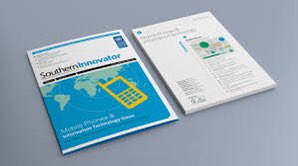
I had the pleasure of visiting the printing plant to witness the presses rolling with the first issue of new global magazine, Southern Innovator. The magazine has been in careful development and saw its name evolve from Creative Sparks to Southern Innovator. As Shakespeare noted in his play Romeo and Juliet, “What’s in a name? That which we call a rose, by any other name would smell as sweet.” And it is what Southern Innovator is that counts the most.

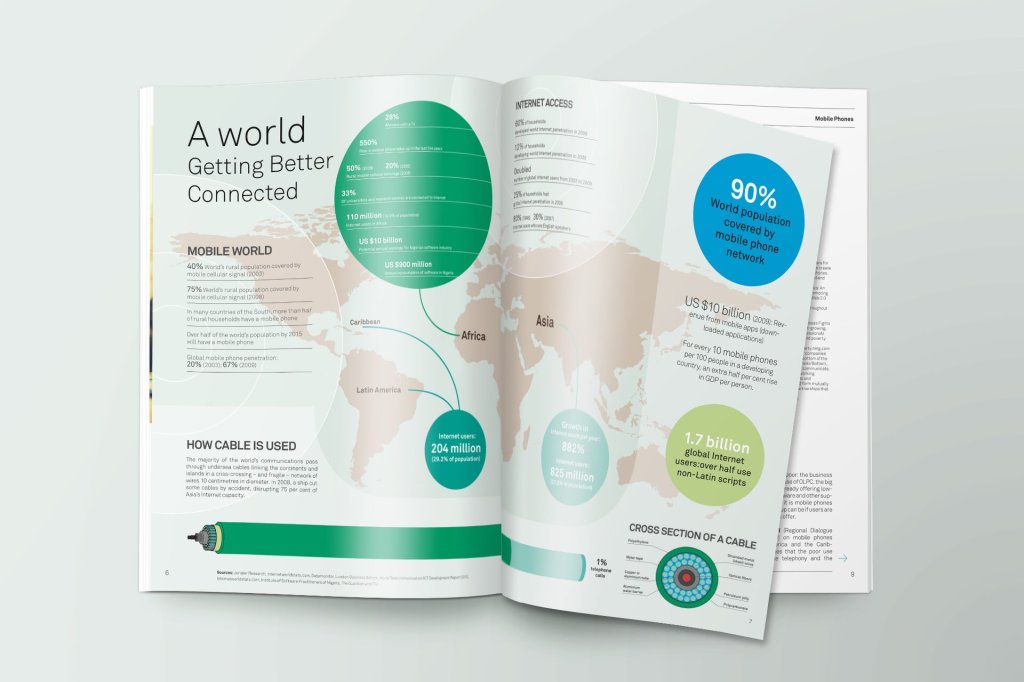
This first issue is just the beginning of a process, a back-and-forth dialogue with our readers as we refine and improve the magazine to boost its impact. The first issue’s theme – mobile phones and information technology – was chosen because of the sheer dynamism of this area and some jaw-dropping achievements: the growth of mobile phone usage in Africa represents an unprecedented take-up of a new technology, often in some of the poorest places on the planet. That impresses and it seemed right to share information about the amazing people behind this phenomenon and the lessons they learned along the way. It has also become clear in the research behind the monthly e-newsletter Development Challenges, South-South Solutions (published since 2006), that significant future development gains will not happen without the aid of mobile phones and information technology, and, important to note, will need these tools to raise living standards for all the world’s people in an environment of increasing competition and pressure for resources.

Used right, mobile phones and information technology allow the efficient use of resources. But, as anyone who has worked with technology knows, this isn’t a given. Vast sums of money and time can be squandered if technology is not used intelligently, or lessons not learned from past failures. It is hoped Southern Innovator‘s first issue can contribute to a better use of resources, and by taking a broad look at what is happening out there, enlighten readers to new ideas, people and concepts.

Southern Innovator is designed in Iceland by Graphic Designer and Illustrator Solveig Rolfsdottir. 
“Question Box was featured in Southern Innovator, a new publication of UNDP that profiles some of the most innovative ideas coming out of the global South. We were pleased to see many friends in the sector profiled as well, such as UshahidiMedic Mobile, and TxtEagle. Take a look at the magazine, as it is a great primer on ICT and mobile innovation from around the globe.”

Question Box News
Southern Innovator Magazine can be found in libraries around the world.

“Beautiful, inspiring magazine from UNDP on South-South innovation. Heart is pumping adrenaline and admiration just reading it”

Peggy Lee on Pinterest
Creative Commons License

This work is licensed under a
Creative Commons Attribution-Noncommercial-No Derivative Works 3.0 License.

ORCID iD: https://orcid.org/0000-0001-5311-1052.

© David South Consulting 2024

Categories
Archive Southern Innovator magazine

Off To The Printers With A New Name: Southern Innovator | 14 May 2010

The new global magazine Creative Sparks now has a new name: Southern Innovator. It is off to the printer and shall be released very soon. Keep an eye here for more details as the magazine launches and rolls out across the globe. It is a complex endeavour to pull together a global magazine to a tight budget and this is only the beginning. A small but talented and experienced team have been working on the project and have received cooperation and assistance from many people spanning many countries. It is hoped the magazine will play a helpful role in the push to achieve the Millennium Development Goals as 2015 approaches.

Creative Commons License

This work is licensed under a
Creative Commons Attribution-Noncommercial-No Derivative Works 3.0 License.

ORCID iD: https://orcid.org/0000-0001-5311-1052.

© David South Consulting 2010