Tag: development challenges south-south solutions

  • Rainforest Rubbers Save Lives

    Rainforest Rubbers Save Lives

    By David SouthDevelopment Challenges, South-South Solutions

    SOUTH-SOUTH CASE STUDY

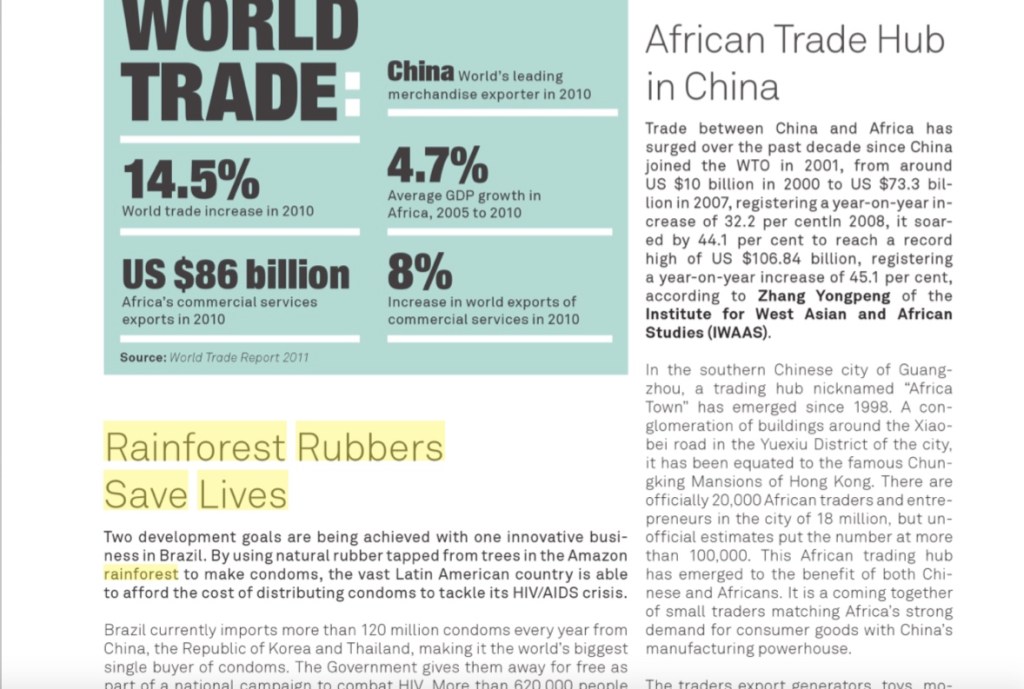
    Two development goals are being achieved with one innovative business in Brazil. By using natural rubber tapped from trees in the Amazon rainforest to make condoms, Brazil is able to afford the cost of distributing condoms to tackle its HIV/AIDS crisis. Brazil currently imports more than 120 million condoms every year from China, Republic of Korea and Thailand, making it the world’s biggest single buyer of condoms. The government gives them away for free as part of a national campaign to combat HIV. More than 620,000 people in Brazil are living with HIV out of a population of more than 186 million (UNAIDS, 2005).

    The Natex company, co-owned by the public health ministry and the north-western state government of Acre, has established a factory to turn rubber from the world’s biggest rainforest into condoms. The business has created 500 jobs at the factory and 150 jobs for the local indigenous population – the Xapuri – who are traditional rubber tappers.

    The factory hopes to produce 100 million condoms a year from local rubber – just 20 million shy of all the condoms the country currently has to import – and could even reach 270 million at full capacity.

    “This product will allow people to make love with security and to better plan their futures,” said Raimundo Barros, vice president of the local agricultural association.

    The 15,000 Xapuri people who live on the Chico Mendes reserve – named after a conservationist and rubber tapper murdered by ranchers in 1988 – tap seringai trees, which produce rubber that is said to be a more effective barrier to the transmission of sexually transmitted diseases (STDs), than synthetic rubber condoms.

    The factory’s 500 employees will earn a total of Reais $2.2 million (US $1.3 million) while the tappers will see their income increase by 250 per cent as demand goes up for the rubber, according to Natex.

    “Because of this I’ve managed to buy a few cows and give my family a better life,” rubber tapper Hugo Paz de Souza, 43, told local newspaper Pagina 20. Paz de Souza said the factory will double his income to US $394 a month.

    The fact the trees will be saved because of their value as sources of rubber is a great boon to the world’s environment. The trees in the Amazon rainforest – the “world’s lungs” as some call it – face the threat of being chopped down to make way for Brazil’s booming agricultural economy. Official figures released in January 2008 showed that between August and December 2007, about 2,700 square miles were chopped down illegally in the Amazon rainforest. It was the first increase in deforestation after three years of declines and coincided with a rise in global food prices.

    Marina Silva, Brazil’s environment minister, told the Guardian newspaper the Natex condom would help create “a new pattern of production and a new process of inclusion that would value the forest being left standing”.

    Published: May 2008

    Resources

    https://davidsouthconsulting.org/2020/12/17/lamas-against-aids/

    https://davidsouthconsulting.org/2020/12/17/philippine-conference-tackles-asias-aids-crisis/

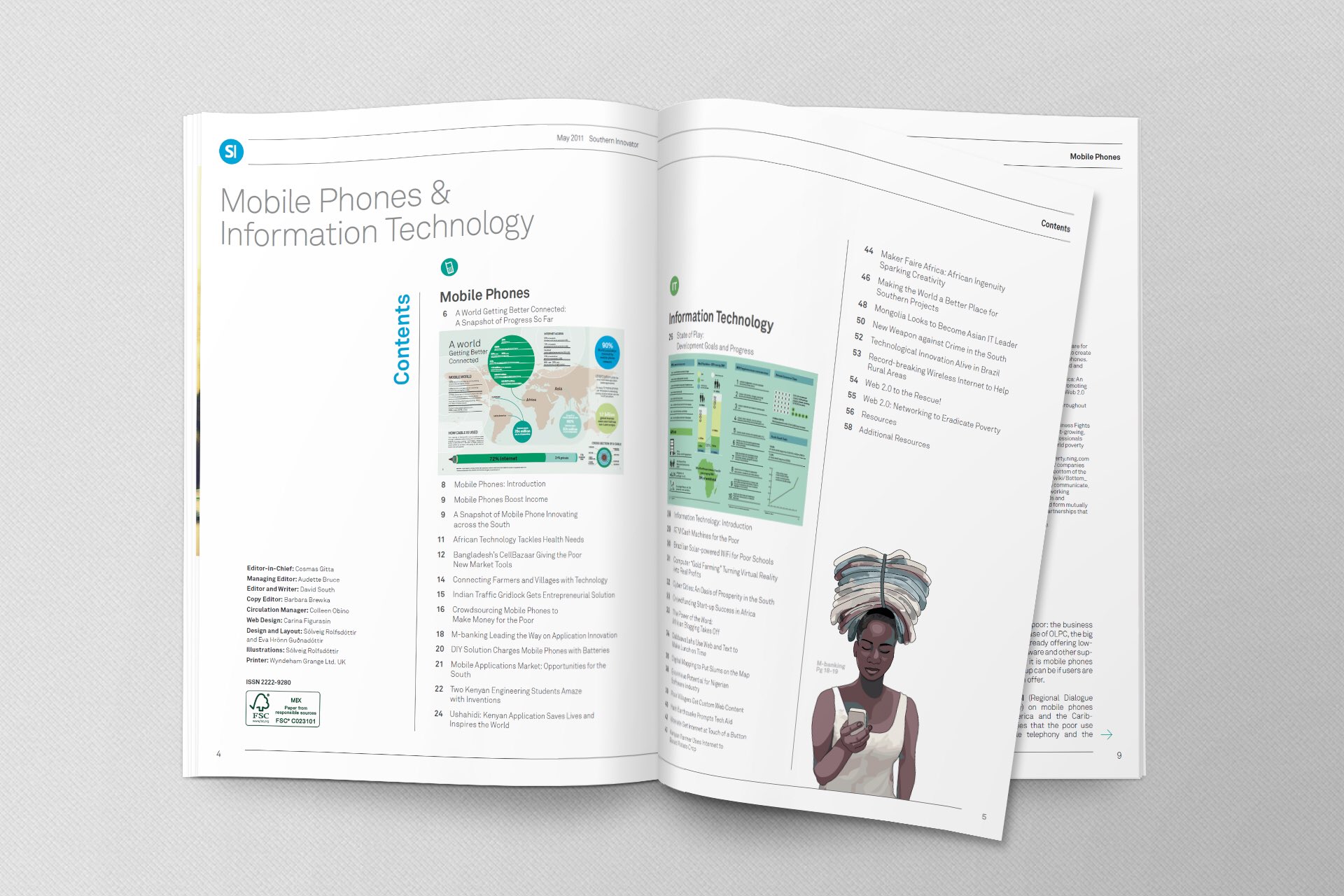
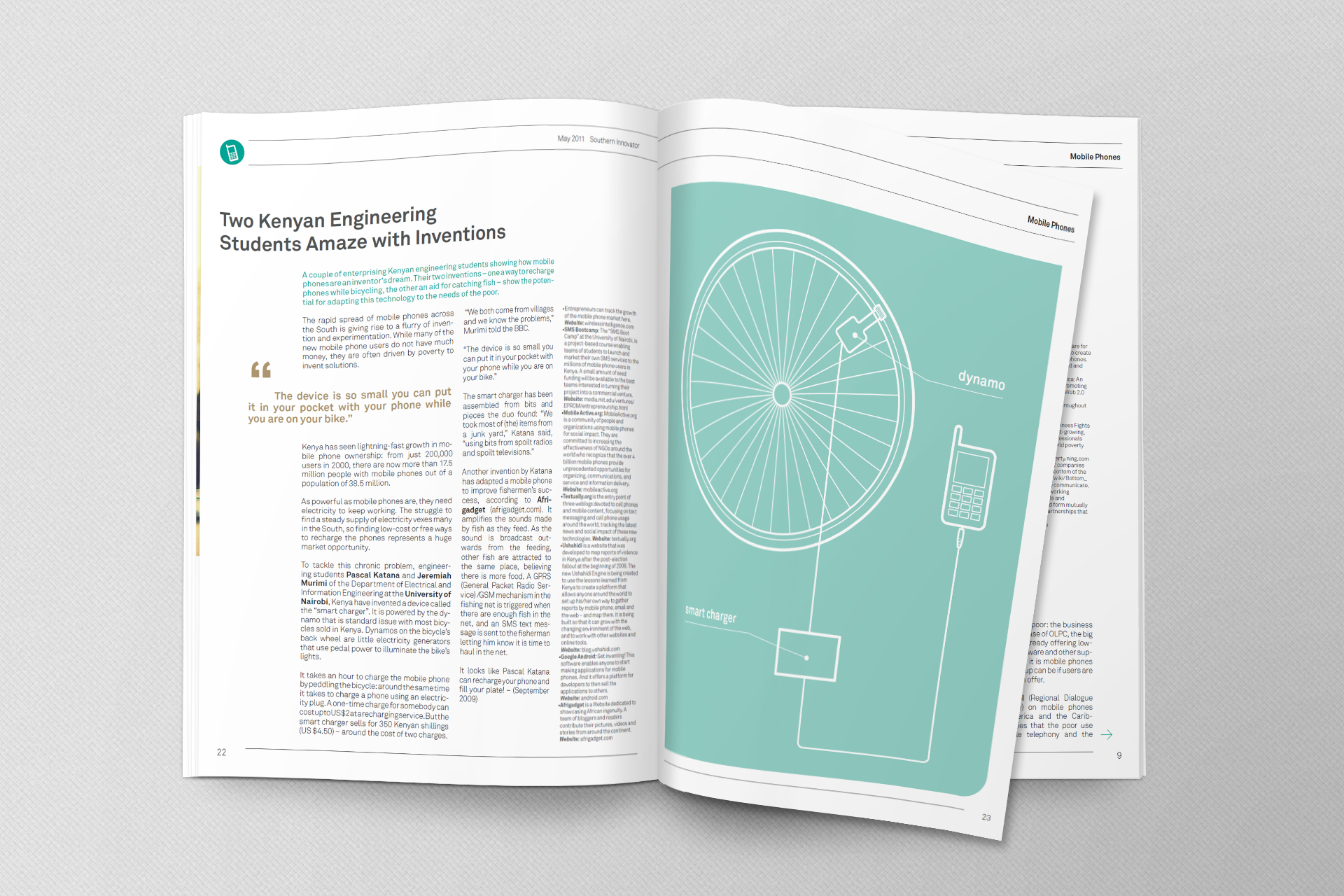
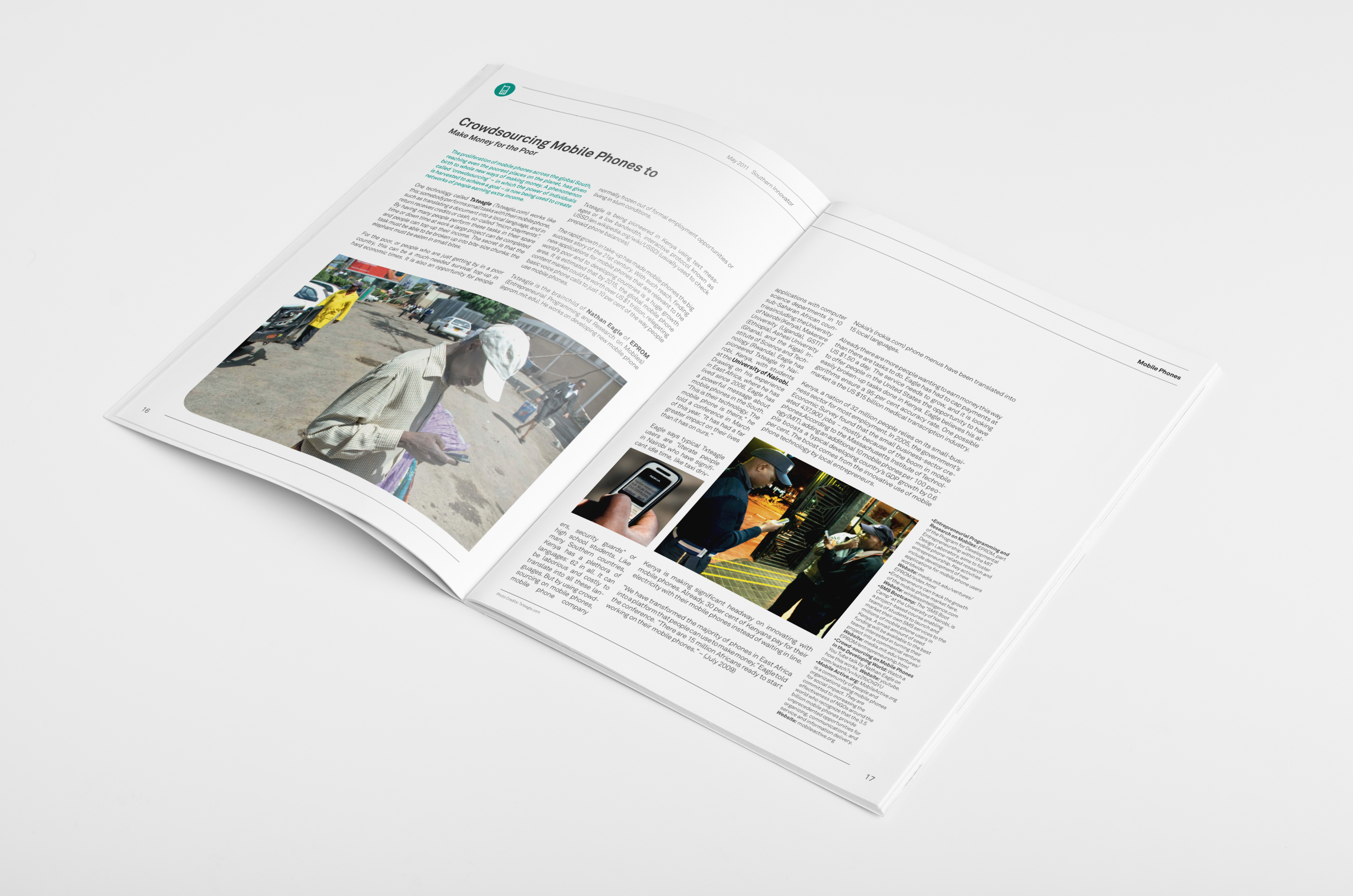
    Development Challenges, South-South Solutions was launched as an e-newsletter in 2006 by UNDP’s South-South Cooperation Unit (now the United Nations Office for South-South Cooperation) based in New York, USA. It led on profiling the rise of the global South as an economic powerhouse and was one of the first regular publications to champion the global South’s innovators, entrepreneurs, and pioneers. It tracked the key trends that are now so profoundly reshaping how development is seen and done. This includes the rapid take-up of mobile phones and information technology in the global South (as profiled in the first issue of magazine Southern Innovator), the move to becoming a majority urban world, a growing global innovator culture, and the plethora of solutions being developed in the global South to tackle its problems and improve living conditions and boost human development. The success of the e-newsletter led to the launch of the magazine Southern Innovator. 
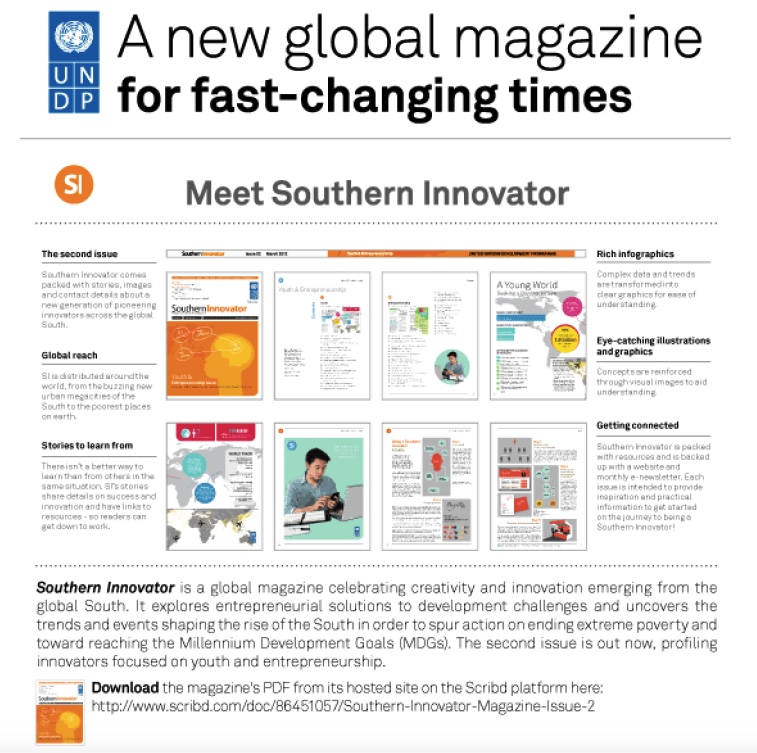
    https://davidsouthconsulting.org/2021/03/05/southern-innovator-issue-2/

    Creative Commons License

    This work is licensed under a
    Creative Commons Attribution-Noncommercial-No Derivative Works 3.0 License.

    ORCID iD: https://orcid.org/0000-0001-5311-1052.

    © David South Consulting 2022
  • Rainforest Gum Gets Global Market

    Rainforest Gum Gets Global Market

    By David SouthDevelopment Challenges, South-South Solutions

    SOUTH-SOUTH CASE STUDY

    Mexico is home to the second largest rainforest in the Americas after the Amazon jungle. But the country’s forests face serious threats from logging, cattle ranching and agriculture. As much as 80 percent of Mexico’s original forests have already been lost.

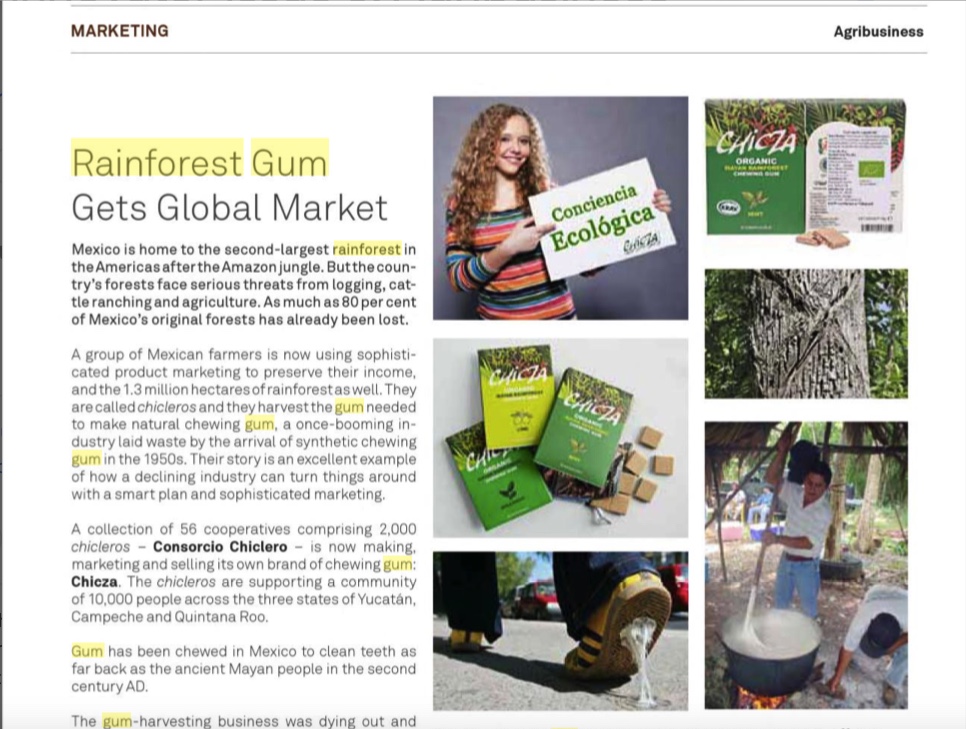
    A group of Mexican farmers is now using sophisticated product marketing to preserve their income, and the 1.3 million hectares of rainforest as well. They are called chicleros and they harvest the gum needed to make natural chewing gum, a once-booming industry laid waste by the arrival of synthetic chewing gum in the 1950s. Their story is an excellent example of how a declining industry can turn things around with a smart plan and sophisticated marketing.

    A collection of 56 cooperatives comprising 2,000 chicleros – called Consorcio Chiclero – is now making, marketing and selling its own brand of chewing gum: Chicza (http://www.chicza.com/index.php). The chicleros are supporting a community of 10,000 people across the three states of Yucatán, Campeche and Quintana Roo.

    Gum has been chewed in Mexico to clean teeth as far back as the ancient Mayan people in the second century AD.

    The gum harvesting business was dying out and young people, put off by the low pay, were leaving for jobs elsewhere. The adminstrators of the chiclero co-operative created Chicza Rainforest Gum brand to save the industry. They made a deal with Britain’s Waitrose supermarket chain, which specializes in fair trade products, and the gum is being launched in 100 stores.

    The brightly coloured packages of chewing gum are now being sold as organic and a way to preserve the forest. Frustrated by the decades of decline and attendant poverty and community decay, the chicleros decided to take matters into their own hands. Five years ago they decided to avoid the middlemen who would buy their raw gum products, and instead manufacture and market the chewing gum themselves. And it is paying off: by adding value to the raw product, each farmer’s income has grown six times higher than he would earn as a mere provider of raw material.

    The gum comes in three flavours: wild mint, heirloom lime and spearmint. Future flavours will blend tropical fruits, herbs and spices.

    The Consorcio Chiclero coordinates the production, the logistics, the trade and the finances for the manufacture of gum from the chicozapote tree (Manilkara zapota).

    Certified organic, the Chicza gum is completely natural and free of synthetic ingredients and also biodegrades when it is discarded – a boon to city governments who hate the mess and cost of traditional gum left on sidewalks.

    The farmers work in the rainforest at the southern end of Mexico’s Yucatan peninsula (http://en.wikipedia.org/wiki/Yucat%C3%A1n_Peninsula), bordering Guatemala and Belize. It is a place with one of the most bio diverse ecosystems in the world, and an environment the farmers are in harmony with. The chicle gum (http://en.wikipedia.org/wiki/Chicle) is harvested from chicozapote trees – some living for more than 300 years – by hacking z-shaped cuts into the bark of the 100 foot trees. The harmless cuts zig zag down the tree and a bucket is placed at the bottom to collect the dripping sap.

    Once collected, the sap is boiled, dried and made into a sticky paste, which is then kneaded and shaped into bricks called marquetas. Each marqueta is carefully marked by its maker. Since the sustainable management of their rainforests is certified by FSC (Forest Stewardship Council) (http://www.fsc.org/), these marks contain relevant information that tells the name of the chiclero who harvested it, and the exact location of the harvested tree in the rainforest. Few products offer such perfect traceability.

    “I started following my dad around the rainforest when I was 10 and working when I was 12,” farmer Porfirio Banos told The Guardian newspaper. “I am a chiclero to my core.”

    Working in a remote area of rainforest jungle with just spider monkeys for company, the chicleros are paid by the amount of chicle harvested

    “We don’t kill the trees like farmers do when they clear land to grow corn or graze cattle,” says Roberto Aguilar, 60. “We leave a wound, it’s true, but eight years after it is healed and producing chicle again.”

    The chicleros face two main risks while doing the job: falling from the trees if their rope gives out; and being bitten by poisonous snakes.

    Chicle was once the basis of all commercial chewing gum. Beginning in New York 141 years ago, it was the only source for chewing gum until the 1950s, when synthetic substitutes destroyed the industry.

    It was the economic desperation of a Mexican general, Antonio Lopez de Santa Anna, living in exile in the United States in 1869, that gave birth to gum-chewing as a global practice. Working with a local inventor, Thomas Adams, he tried to use the chicle to make a rubber substitute. But when this failed, Adams added sugar and flavouring, making chewing gum.

    Apart from being a great chew, the natural gum’s unique selling point is saving money: local governments tight for cash are looking for other ways to deal with the menace of chewing gum on pavements. A small fortune is spent every year trying to keep streets clean of gum. The British alone spend over UK £150 million every year trying to clean their streets of chewing gum.

    And despite the global recession, the chicleros are optimistic they can do well: during the Great Depression of the 1930s, chewing gum was an affordable treat and sold well.

    Published: April 2009

    Resources

    https://davidsouthconsulting.org/2022/11/10/acai-berry-brazils-boon/

    https://davidsouthconsulting.org/2022/11/10/brazilian-restaurant-serves-amazonian-treats/

    https://davidsouthconsulting.org/2022/10/17/connoisseur-chocolate-from-the-south-gets-a-higher-price/

    https://davidsouthconsulting.org/2022/11/01/indonesian-food-company-helps-itself-by-making-farmers-more-efficient/

    https://davidsouthconsulting.org/2022/10/24/latin-american-food-renaissance-excites-diners/

    https://davidsouthconsulting.org/2022/10/31/rainforest-rubbers-save-lives/

    https://davidsouthconsulting.org/2022/11/10/saving-the-amazon-forest-while-making-a-living/

    https://davidsouthconsulting.org/2022/10/17/west-african-chocolate-success-story/

    Development Challenges, South-South Solutions was launched as an e-newsletter in 2006 by UNDP’s South-South Cooperation Unit (now the United Nations Office for South-South Cooperation) based in New York, USA. It led on profiling the rise of the global South as an economic powerhouse and was one of the first regular publications to champion the global South’s innovators, entrepreneurs, and pioneers. It tracked the key trends that are now so profoundly reshaping how development is seen and done. This includes the rapid take-up of mobile phones and information technology in the global South (as profiled in the first issue of magazine Southern Innovator), the move to becoming a majority urban world, a growing global innovator culture, and the plethora of solutions being developed in the global South to tackle its problems and improve living conditions and boost human development. The success of the e-newsletter led to the launch of the magazine Southern Innovator. 

    https://davidsouthconsulting.org/2021/03/05/southern-innovator-issue-3/

    Creative Commons License

    This work is licensed under a
    Creative Commons Attribution-Noncommercial-No Derivative Works 3.0 License.

    ORCID iD: https://orcid.org/0000-0001-5311-1052.

    © David South Consulting 2022

  • Kenyan Bank Helps the Poor and Gets Rich

    Kenyan Bank Helps the Poor and Gets Rich

    By David SouthDevelopment Challenges, South-South Solutions

    SOUTH-SOUTH CASE STUDY

    Good quality banking services are a basic building block to rising incomes. Yet the poor across the South are often overlooked and denied access to savings accounts and loans. Many low-income people are openly discriminated against as ‘bad risks’ by banks, and denied the sort of banking services middle and higher income people take for granted. Yet it is a myth that the poor do not have money or do not wish to save and invest for their future or for business.

    The so-called Bottom of the Pyramid (BOP) – the 4 billion people around the world who live on less than US $2 a day – are being targeted by a wide range of businesses. Indian business consultant and professor CK Prahalad (http://en.wikipedia.org/wiki/C.K._Prahalad) , the man who coined the term BOP, has gone so far as to claim this is a market potentially worth US $13 trillion, while the World Resources Institute puts it at US $5 trillion in its report, “The Next 4 Billion” (http://www.nextbillion.net/thenext4billion).

    A Kenyan commercial bank has proven it is possible to target the BOP and become successful doing it; so successful that they have seen off foreign rivals and were voted Kenya’s third most respected company.

    By offering Kenya’s poor people savings accounts and microloans, Equity Bank (http://www.equitybank.co.ke/) has captured 50 percent of the Kenyan bank market. It now has more than 3 million customers and 2.8 million account holders and opens 4,000 new accounts a day.

    Its chief executive officer, James Mwangi, said Equity Bank built its success by doing the opposite of what other banks have done – it doesn’t target the middle and upper classes, but the “the watchmen, tomato sellers and small-scale farmers”.

    The Kenyan banking sector in the past was dominated by foreign banks. But by investing in the 46 percent of the population who still live below the food poverty line, Equity has become the third most profitable bank in the country. Its approach was once considered odd. Most of the bank’s borrowers work in the informal sector and have few assets to use as collateral for the loans. So Equity uses what it calls ‘social collateral’. This includes a mix of measures: in some cases, account holders join together to guarantee a person’s debt. Even more unusually, women offer their matrimonial beds as security – it would be shameful for a woman to admit her bed has been taken to pay for the debt.

    “For us it’s psychological security. Nobody wants to be excommunicated and lose their inheritance,” said Mwangi.

    “By focusing on the previously excluded, Equity has revolutionized the banking sector,” James Shikwati, a director of Kenyan think tank the Inter Region Economic Network (http://www.irenkenya.com/), told The Guardian newspaper. “It has forced the multinational banks to change their business strategies.”

    Started in 1984, the bank was still insolvent by 1994, when Mwangi joined as an accountant. Things were looking grim as Kenya’s economy was in a slump and foreign banks like Barclays were closing branches outside big centres.

    Mwangi and other Equity Bank managers realized there were millions of low-paid poor in Kenya – all BOP – but who wanted to save and borrow but had nowhere to go.

    “Banking was the only industry in Kenya led by supply rather than demand,” said Mwangi. “There was no ‘bottom of the pyramid bank’.”

    While absolute poverty in Kenya has declined in recent years, inequality remains high. The population of 37 million people make on average a per capita income of US $580.

    By 2003, as the economy picked up, Equity Bank gained 256,000 account holders. It now has 100 branches across the country and 500 automatic teller machines (ATMs). It uses armoured trucks to go into rural areas so that the people can receive banking services. While traditional banks require pay slips and utility bills as proof of a person’s address before letting them open an account, and charge high monthly fees, Equity only requires an identity card.

    Within just one year, the bank saw the number of account holders jump to 600,000. Mwangi likes to say that the bank’s competition is the bed mattress, since most people have never had a bank account before. Most savers have around US $148 in their savings account.

    The bank’s micro credit operation makes loans of less than US $7 and gives borrowers a few months to repay them.

    The bank claims loan defaults are less than 3 percent on 600,000 outstanding loans – the banking industry average is 15 percent.

    It keeps its transaction costs down by using the latest in information technology. These efficiencies enabled the bank to earn pre-tax profits of more than US $40 million in 2007.

    Equity does face competition, as its success attracts mainstream banks into the BOP market.

    In Africa these days, banking is hot: a South African research and analysis company BMI-TechKnowledge (http://www.bmi-t.co.za/) in a report identifies a boom in banking services across Africa. In particular, South Africa, Botswana, Namibia, Angola, Mauritius, Tanzania, Kenya, Ghana, Nigeria, Egypt and Morocco – all have seen surges in profit and services as a result of improving banking regulations and political conditions.

    Mwangi isn’t worried, however, since the number of people still without bank accounts is huge. Equity Bank is expanding its operations into Uganda, Rwanda and Sudan.

    Elsewhere, mobile phone banking in Kenya is proving highly successful. Equity has a service, but so does Safaricom with M-PESA (http://www.safaricom.co.ke/index.php?id=745). Customers can deposit, transfer and withdraw money using their phones. Over 4 million are now using the service.

    Published: January 2009

    Resources

    1) NextBillion.net: Hosted by the World Resources Institute, it identifies sustainable business models that address the needs of the world’s poorest citizens.
    Websites: http://www.nextbillion.net/ and World Resources Institute

    Development Challenges, South-South Solutions was launched as an e-newsletter in 2006 by UNDP’s South-South Cooperation Unit (now the United Nations Office for South-South Cooperation) based in New York, USA. It led on profiling the rise of the global South as an economic powerhouse and was one of the first regular publications to champion the global South’s innovators, entrepreneurs, and pioneers. It tracked the key trends that are now so profoundly reshaping how development is seen and done. This includes the rapid take-up of mobile phones and information technology in the global South (as profiled in the first issue of magazine Southern Innovator), the move to becoming a majority urban world, a growing global innovator culture, and the plethora of solutions being developed in the global South to tackle its problems and improve living conditions and boost human development. The success of the e-newsletter led to the launch of the magazine Southern Innovator. 

    Creative Commons License

    This work is licensed under a
    Creative Commons Attribution-Noncommercial-No Derivative Works 3.0 License.

    ORCID iD: https://orcid.org/0000-0001-5311-1052.

    © David South Consulting 2023

  • New Kenyan Services to Innovate Mobile Health and Farming

    New Kenyan Services to Innovate Mobile Health and Farming

    By David SouthDevelopment Challenges, South-South Solutions

    SOUTH-SOUTH CASE STUDY

    Kenya is home to a vibrant innovation culture centred around mobile phones. While not all the services launched will be successful, the flurry of start-ups shows the country has the right combination of technical skills, bright ideas and cash to make a go of new services.

    With the number of mobile phone users leaping 28 per cent in 2011, to reach 25 million subscribers out of a population of 39 million (Reuters), the country has a large market for mobile phone-based services. Kenya also has 10 million people with access to the Internet, up from 4 million in 2009.

    Two issues critical to the well-being of Kenyans – health services and farming – are being tackled by new mobile phone services. One is a service being run and marketed by a major player in the market, and the other, by a small start-up.

    Statistics indicate that in Kenya, one doctor attends to over 10,000 patients. The World Health Organization recommends a ratio of 1:600. There are just over 7,500 licensed medical facilities in the country.

    Safaricom, Kenya’s largest telecoms operator, is trying to take the pressure off overstretched medical and health systems with a new mobile health service. Its 24-hour health advice and referral service is called ‘Daktari 1525’ and lets people call and speak with a doctor or an expert to get advice on any health issue. The number 1525 refers to the dialling code which links users directly to the Safaricom call centre. Daktari 1525 is available to the 18 million Safaricom subscribers.

    Safaricom has partnered with ‘Call-a-Doc’ to launch the tool. The new service hopes to relieve outpatient departments in government hospitals and health facilities with its advice and referrals. The Daktari 1525 service does not prescribe a treatment to the callers, avoiding the legal risks of remote diagnosis.

    It also offers home remedies and health tips on healthy lifestyles. In an emergency, users can also dial Daktari 1525 if there is Safaricom network coverage.

    The partnership is divided between Safaricom and Call-a-Doc. Safaricom handles all the mobile phone network infrastructure, the call centre facility and the marketing of the service. Call-a-Doc takes care of recruiting doctors.

    But how does the service use the doctors’ time well? The shifts are designed to surge the number of doctors to 15 during peak times, falling to as few as four doctors during off-peak times. The doctors work on a part-time basis and there are currently 50 employed by the service.

    Not everyone is convinced the service will work.

    “It is a good attempt to venture into the field; however we would like to caution the practitioners involved that they must remain ethical and must at all times uphold professional confidentiality,” Medical Practitioners and Dentist Board Chief Executive Officer Daniel Yumbya told Capital News.

    Another new service based in the capital, Nairobi, is trying to shake up the world of farming. Its new mobile phone service, “MFarm: connecting farmers” (http://mfarm.co.ke/) calls itself “a transparency tool for Kenyan farmers”.

    It bills itself as a “factory of ideas” looking to find “creative agribusiness solutions.” The service is a paid-for web platform that helps farmers keep track of prices in the capital, Nairobi, and claims to have signed up 3,000 farmers in the first year of operations.

    The service offers crop prices by sending a text to the numbers 3535 if the user gives the crop location required. As an example, the user texts “price crop location” “price maize Nairobi”. Users can also sell their crops, or buy farm supplies.

    It also allows farmers to group sell their crops by getting together with other small-scale farmers. This is a crucial service because it allows the smaller farmer to sell into the wholesale markets where prices are better. Farmers can also group buy, benefiting from lower prices by buying bulk from suppliers. It cleverly offers several ‘plans’ to suit budgets. There is an ‘Eco Plan’ at the low end, a mid-range ‘Pro Plan’, and a bells-and-whistles option, ‘Biz Plan’.

    The service also benefits from its connections with iHub Nairobi (http://ihub.co.ke/pages/home.php), the buzzing “open space for technologists, investors, tech companies and hackers in Nairobi.” It provides a strong support network to turn to when problems arise.

    It seems as if it would be a mistake to enter the African market with any new tech solution without first checking out the scene in Nairobi.

    Published: January 2012

    Resources

    1) iHub Nairobi: Nairobi’s Innovation Hub for the technology community is an open space for the technologists, investors, tech companies and hackers in the area. The space has a focus on young entrepreneurs, web and mobile phone programmers, designers and researchers. Website: http://ihub.co.ke/pages/home.php

    2) EPROM: Entrepreneurial Programming and Research on Mobiles aims to foster mobile phone-related research and entrepreneurship. Website: http://www.media.mit.edu/ventures/EPROM

    Development Challenges, South-South Solutions was launched as an e-newsletter in 2006 by UNDP’s South-South Cooperation Unit (now the United Nations Office for South-South Cooperation) based in New York, USA. It led on profiling the rise of the global South as an economic powerhouse and was one of the first regular publications to champion the global South’s innovators, entrepreneurs, and pioneers. It tracked the key trends that are now so profoundly reshaping how development is seen and done. This includes the rapid take-up of mobile phones and information technology in the global South (as profiled in the first issue of magazine Southern Innovator), the move to becoming a majority urban world, a growing global innovator culture, and the plethora of solutions being developed in the global South to tackle its problems and improve living conditions and boost human development. The success of the e-newsletter led to the launch of the magazine Southern Innovator. 

    Creative Commons License

    This work is licensed under a
    Creative Commons Attribution-Noncommercial-No Derivative Works 3.0 License.

    ORCID iD: https://orcid.org/0000-0001-5311-1052.

    © David South Consulting 2023