Tag: development challenges south-south solutions

  • New Journal Celebrates Vibrancy of Modern Africa

    New Journal Celebrates Vibrancy of Modern Africa

    By David SouthDevelopment Challenges, South-South Solutions

    SOUTH-SOUTH CASE STUDY

    Africa has seen huge changes to its communications and media in the past five years. The rise and rise of mobile phones, the expansion of the Internet and the explosion in African blogging and social media, on top of flourishing print and broadcast media, all bring an increasing range of options for telling African stories and increasing dialogue.

    With all this new media creating new communications channels – and all the turmoil and change affecting millions as economies and countries change – people need the ability to make sense of it all. One magazine is trying to play that role.

    An entrepreneur and multimedia innovator has created a unique publication that is capturing the spirit, ideas and stories of modern Africa. It is a high-quality product, has gathered together talented writers and photographers and is gaining a growing global audience. Chimurenga Magazine (http://www.chimurenga.co.za/) based in Cape Town, South Africa, calls itself a “pan African publication of writing, art and politics.” Named for the Zimbabwean Shona word for “revolutionary struggle,” it is published three times a year. Editor Ntone Edjabe is from Cameroon and came to Cape Town in the 1990s after the end of South Africa’s racist Apartheid regime.

    With more than 100 contributors, the magazine offers insight into contemporary Africa, what occupies people’s thoughts and how their lives are actually lived.

    It is involved in a wide range of other activities, including co-curating a Global South Dialogue Series. And its readership is truly diverse.

    “We have readers who are long-term prisoners at Pretoria Central Prison, who have subscriptions that they get to us in coins, and readers who are successful businessmen,” Edjabe said to The Financial Times Magazine.

    Chimurenga is out to challenge perceptions of Africa. Practicing the art of long-form journalism more associated with established high-end publications like The New Yorker (newyorker.com), the magazine sets out to challenge perceptions about Africa.

    “Discourse on Africa is geared towards simplicity,” Edjabe told CNN. “Everything must be simple – ‘he’s a poor black man, he’s a victim’ – like there has to be a simple story, in a way this is what signifies Africa and global consciousness.

    “The moment you bring a degree of complexity to it, it kind of throws people off, they just don’t know where to look anymore. It’s like, ‘what’s going on?’ So Chimurenga in a way does not try to maintain the superficiality of this narrative – we engage with life, we try to present life as complex as it really is.”

    Stories in the journal include Billy Kahora writing on the decay of a neighbourhood in Nairobi, Kenya, Michael Abrahams writing about his time in the Cape Town mental hospital after a suicide attempt, and Sean O’Toole following a Zimbabwean immigrant on his journey into South Africa.

    The magazine’s website carries back issues of the journal, along with a shop selling magazines, books and t-shirts and the “Chimurenga Library,” an archive of pan-African, independent periodicals. There’s also live online streaming of music – “from ancient techno to future roots” – through the Pan African Space Station radio station, there is a biennial publication of urban life it calls “Africa-style,” and the writings of 14 African writers who visited 14 African cities to check-up on life in urban areas.

    As an example of the creativity of Chimurenga’s talent, a special issue of the magazine tried to better understand the impact of violence in South Africa in May 2008 that led to the deaths of 62 people. It did this by creating a fictitious newspaper called The Chimurenga Chronic (http://www.chimurenga.co.za/chimurenga-magazine/current-issue) set during the violence.

    The writers are a mix of Anglophones and Francophones, all based in Africa. Common subjects focus on the world of lower-middle class Africa. Examples of past issues show the variety of its content: Conversations With Poets Who Refuse To Speak, Futbol, Politricks & Ostentatious Cripples, Conversations in Luanda and Other Graphic Stories, *We’re all Nigerian!

    Well-travelled editor Edjabe has studied and lived in Lagos, Nigeria and Johannesburg, South Africa. He has worked as a disc jockey, music writer and basketball coach. He launched Chimurenga in 2002. He told The Financial Times Magazine “I printed 1,000 copies, which I carried around in my bag. I sold it mainly to friends.”

    It was supposed to be a one-off publication but became a journal, initially written mostly by his friends.

    “I found out later that this is how most journals actually begin,” he said. “At the time I thought it was unique.”

    He aspired to get Africans writing about the Africa they saw and lived in. The challenge was changing the dynamic he found of writers only considering something worth writing about if it had been featured in non-African media.

    Edjabe had already made his mark with an innovative initiative to show the diversity of what Africa has to offer. Three years after arriving in South Africa he started the Pan African Market (PAM) in Cape Town. An African cultural centre, it began as a craft market with various traders able to run their individual businesses and leasing stall space from the market. PAM became very successful because it brought together Africans from across the continent and offered a vibrant mix of artists, small businesses and food. It now has 33 stores and stalls from 14 countries of Africa. Shoppers can find arts and crafts, hair dressing, tailoring, holistic healing and catering.

    Hard copies of Chimurenga are distributed around Africa and sent to Europe, the United States and India.

    “There’s a feeling about writing something, sharing something that is beautiful and truthful from one’s perspective,” Edjabe told CNN.

    Published: June 2012

    Resources

    1) How to Start a Magazine: Simple online advice on starting and running a magazine. Website: http://www.ehow.com/how_16579_start-magazine.html

    2) Venture Capital for Africa: VC4Africa is the largest online community of investors, angels and entrepreneurs working to build businesses on the continent. Website: http://vc4africa.biz/landing/?redir_to=%2F

    https://davidsouthconsulting.org/2022/10/21/african-media-changing-to-reach-growing-middle-class/

    https://davidsouthconsulting.org/2021/01/05/development-challenges-south-south-solutions-newsletter/

    https://davidsouthconsulting.org/2021/07/14/freedom-of-expression-introducing-investigative-journalism-to-local-media-in-mongolia-1999-25-january-2016/

    https://davidsouthconsulting.org/2021/05/25/ger-mongolias-first-web-magazine-and-a-pioneering-web-project-for-the-united-nations-12-january-2016/

    https://davidsouthconsulting.org/2022/11/01/indian-newspapers-thrive-with-economy/

    https://davidsouthconsulting.org/2022/10/04/popular-chinese-social-media-chase-new-markets/

    https://davidsouthconsulting.org/2022/11/01/southern-innovator-magazine-2010-2014/
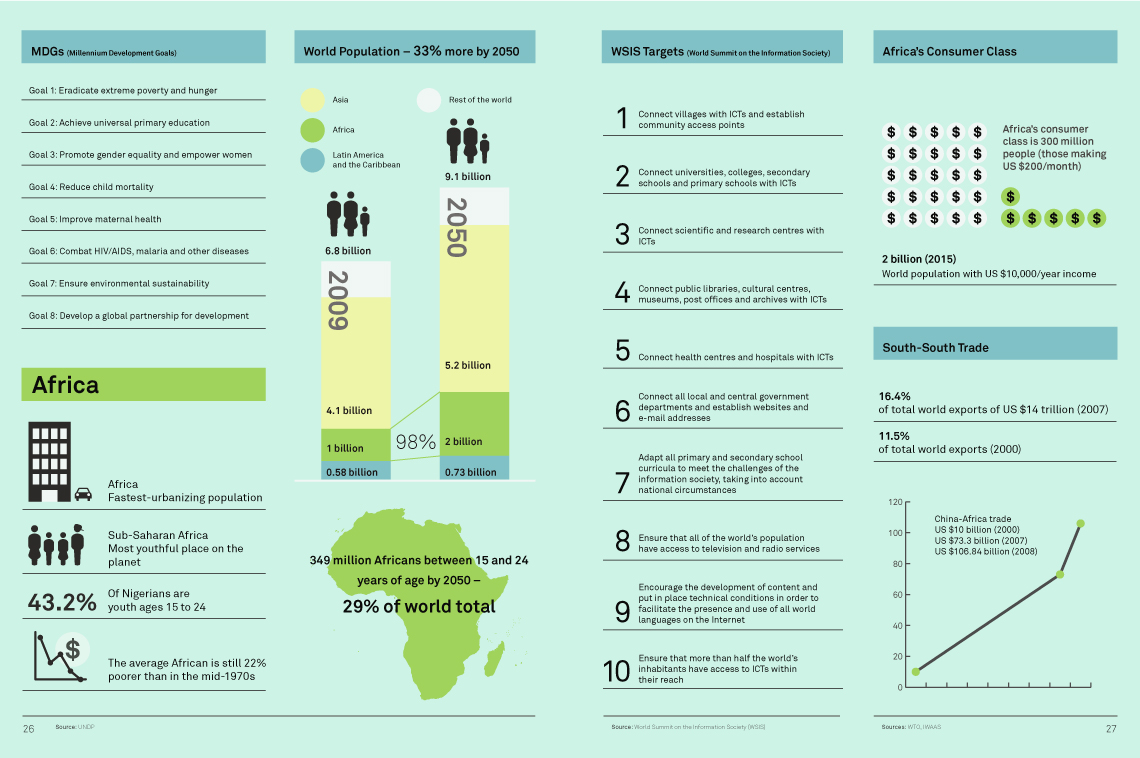
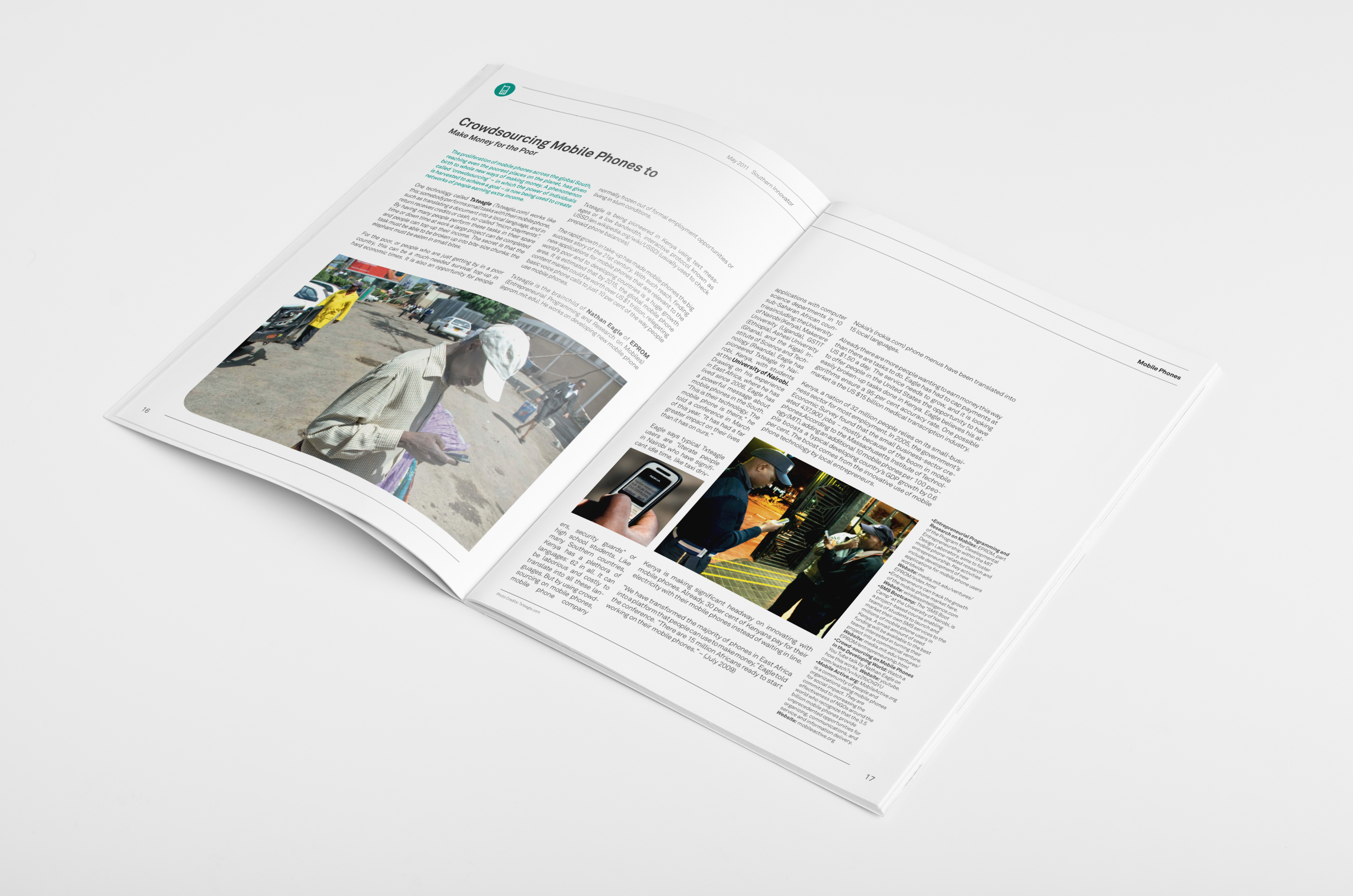
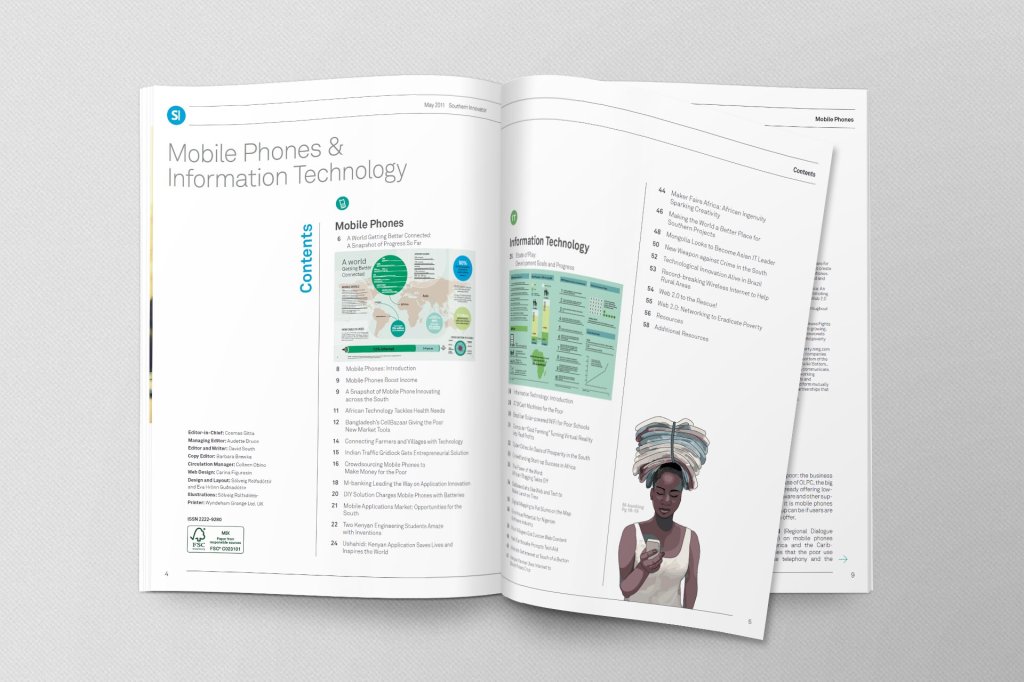
    Development Challenges, South-South Solutions was launched as an e-newsletter in 2006 by UNDP’s South-South Cooperation Unit (now the United Nations Office for South-South Cooperation) based in New York, USA. It led on profiling the rise of the global South as an economic powerhouse and was one of the first regular publications to champion the global South’s innovators, entrepreneurs, and pioneers. It tracked the key trends that are now so profoundly reshaping how development is seen and done. This includes the rapid take-up of mobile phones and information technology in the global South (as profiled in the first issue of magazine Southern Innovator), the move to becoming a majority urban world, a growing global innovator culture, and the plethora of solutions being developed in the global South to tackle its problems and improve living conditions and boost human development. The success of the e-newsletter led to the launch of the magazine Southern Innovator. 

    https://davidsouthconsulting.org/2021/03/05/southern-innovator-issue-1/

    Creative Commons License

    This work is licensed under a
    Creative Commons Attribution-Noncommercial-No Derivative Works 3.0 License.

    ORCID iD: https://orcid.org/0000-0001-5311-1052.

    © David South Consulting 2022

  • Indian Newspapers Thrive with Economy

    Indian Newspapers Thrive with Economy

    By David SouthDevelopment Challenges, South-South Solutions

    SOUTH-SOUTH CASE STUDY

    The onslaught of digital media in the developed countries of the world regularly brings pronouncements of the death of the traditional newspaper. But this assumption of digital triumph misses out on the reality in countries across the global South.

    As incomes rise and literacy levels go up, so does the desire to consume news and information. And while many are jumping straight to online and mobile phone sources, just as many are enjoying more traditional print media offerings like magazines and newspapers.

    India boasts both a fast-growing economy and the largest number of paid-for newspapers in the world. The print media industry in India has seen phenomenal growth since 2005, with the number newspaper titles increasing by 40 percent to 2,700 (World Association of Newspapers). The two factors driving this growth in newspapers are rising literacy and a booming economy

    The World Association of Newspapers found China leads the world for newspaper subscribers, with 93.5 million readers a day. India is second. It is estimated the Indian newspaper industry will generate US $3.8 billion in revenues in 2010, a 13 percent growth rate over the last five years.

    Estimates place growth in the newspaper industry in the next four years at 9 percent a year, to US $5.9 billion (KPMG).

    Part of the reason India is defying the decline in newspaper numbers and readership seen in developed countries is poor internet penetration across the country. Because of this, only 7 percent of the population uses the web for information. And the country’s high number of illiterates (just 65 percent of the population can read) means even if many could afford a newspaper, they couldn’t use it.

    According to Amar Ambani, head of research at India Infoline Group, “Unlike the West where the internet publishing and advertising has significantly hit the print media, the Internet threat to print media is still in its nascent stage in India, given the low penetration of computers and adequate bandwidth across the country.”

    Newspapers are also growing in a highly competitive market exploding with new television channels on cable and satellite and other media distractions like mobile phone applications.

    The newspapers (http://www.world-newspapers.com/india.html) are a strong reflection of how much the economy has changed in the past decade. They contain advertisements for property, mobile phones, cars and dating services.

    Cost is also a critical element in their success: at only four rupees each (US $0.09 cents), many Indians buy several newspapers at a time for their home. The publications are able to charge so little because of the health of the advertising revenue coming in. Newspaper advertising in India increased by 30 percent between January and Match 2010 alone, the quickest jump in ads for the Asia-Pacific region (Nielsen India).

    There is a hierarchy in the newspaper industry: English-language newspapers attract wealthier readers and can charge the most for advertising. But rising literacy rates combined with increasing personal wealth is fuelling growth in regional papers written in local languages. India has 22 official languages and English as an associate language. The country as a whole has about 33 different languages and over 2,000 local dialects. Hindi newspaper circulation rose from 8 million in the early 1990s to over 25 million in 2009.

    The Times of India (http://timesofindia.indiatimes.com) is now the world’s largest circulation English-language newspaper, with 4 million readers. It uses this success to charge 10 times what regional papers can for advertising. At present, the regional newspapers’ bread-and-butter is mostly government-paid advertising.

    But if trends continue as they are, then the tables will turn on big beasts like the Times of India. Regional papers will grow as people look for an opportunity to read in their own local language.

    Flush with cash and confidence, Indian newspapers are also innovating new ways to advertise untried in other countries. Talking ads attached to the actual newspaper’s back pages caused a great stir when they were trialled in India recently (http://www.guardian.co.uk/media/greenslade/2010/sep/28/newspapers-advertising). The talking ads for a car company delivered a sales pitch but also alarmed and annoyed many people because the talking ad wouldn’t stop talking.

    Ambani puts the success of the Indian newspaper industry down to five factors: the economic boom in semi-urban and rural India; growing local content; more opportunity to grow the number of readers; rising advertising spending; and rising literacy as a result of rising secondary school enrolment. He believes students aged between 10 and 15 are getting the newspaper habit and they represent huge future growth in newspaper readers.

    Published: October 2010

    Resources

    https://davidsouthconsulting.org/2022/11/17/book-boom-rides-growing-economies-and-cities/

    https://davidsouthconsulting.org/2022/09/29/cheap-indian-tablet-seeks-to-bridge-digital-divide/

    https://davidsouthconsulting.org/2022/10/20/the-e-reader-battle-reaches-india/

    https://davidsouthconsulting.org/2022/10/12/free-magazine-boosts-income-for-rickshaw-drivers/

    https://davidsouthconsulting.org/2022/05/26/kenyan-book-company-brings-online-sales-to-east-africa/

    https://davidsouthconsulting.org/2022/10/12/rickshaw-drivers-prosper-with-new-services/

    Development Challenges, South-South Solutions was launched as an e-newsletter in 2006 by UNDP’s South-South Cooperation Unit (now the United Nations Office for South-South Cooperation) based in New York, USA. It led on profiling the rise of the global South as an economic powerhouse and was one of the first regular publications to champion the global South’s innovators, entrepreneurs, and pioneers. It tracked the key trends that are now so profoundly reshaping how development is seen and done. This includes the rapid take-up of mobile phones and information technology in the global South (as profiled in the first issue of magazine Southern Innovator), the move to becoming a majority urban world, a growing global innovator culture, and the plethora of solutions being developed in the global South to tackle its problems and improve living conditions and boost human development. The success of the e-newsletter led to the launch of the magazine Southern Innovator. 
    https://davidsouthconsulting.org/2021/03/05/southern-innovator-issue-1/

    Creative Commons License

    This work is licensed under a
    Creative Commons Attribution-Noncommercial-No Derivative Works 3.0 License.

    ORCID iD: https://orcid.org/0000-0001-5311-1052.

    © David South Consulting 2024

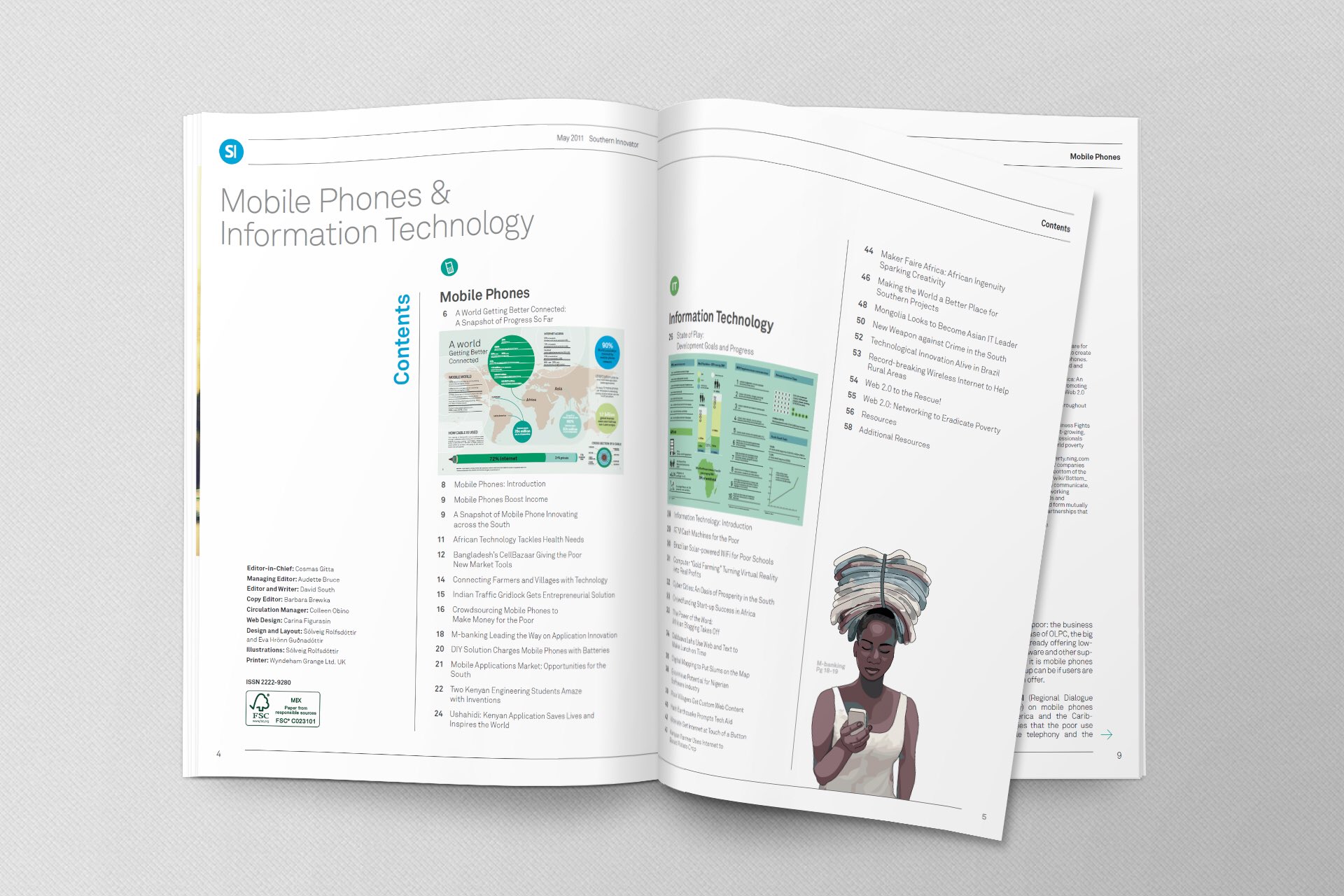
  • Southern Innovator Magazine | 2010 – 2014 

    Southern Innovator Magazine | 2010 – 2014 

    By David South

    “I think you [David South] and the designer [Solveig Rolfsdottir] do great work and I enjoy Southern Innovator very much!” 

    Ines Tofalo, Programme Specialist, United Nations Office for South-South Cooperation
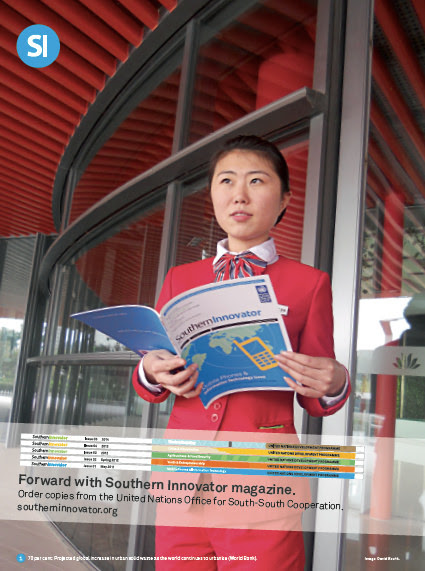
    Southern Innovator in Tianjin, China.
    Issue 5 of Southern Innovator at the Global South-South Development Expo (GSSD Expo) 2014 held in Washington, D.C.
    Volunteers in Nairobi, Kenya pose with Southern Innovator Issue 4 at the Global South-South Development Expo (GSSD Expo) in 2013.
    Southern Innovator Editor and Writer David South in Australia.
    Southern Innovator Graphic Designer and Illustrator Sólveig Rolfsdóttir in Iceland.

    Some comments that have come in so far about SI’s first issue:

    “What a tremendous magazine your team has produced! It’s a terrific tour de force of what is interesting, cutting edge and relevant in the global mobile/ICT space… Really looking forward to what you produce in issues #2 and #3. This is great, engaging, relevant and topical stuff.”, to “Looks great. Congratulations. It’s Brill’s Content for the 21st century!”

    What they are saying about SI on Twitter: From @CapacityPlus Nice job RT @ActevisCGroup: RT @UNDP: Great looking informative @SouthSouth1 mag on South-South Innovation; @UNDP Great looking informative @SouthSouth1 mag on South-South Innovation; @JeannineLemaireGraphically beautiful & informative @UNDP Southern Innovator mag on South-South Innov. 

    And on Pinterest:

    Peggy Lee • 1 year ago 

    “Beautiful, inspiring magazine from UNDP on South-South innovation. Heart is pumping adrenaline and admiration just reading it”

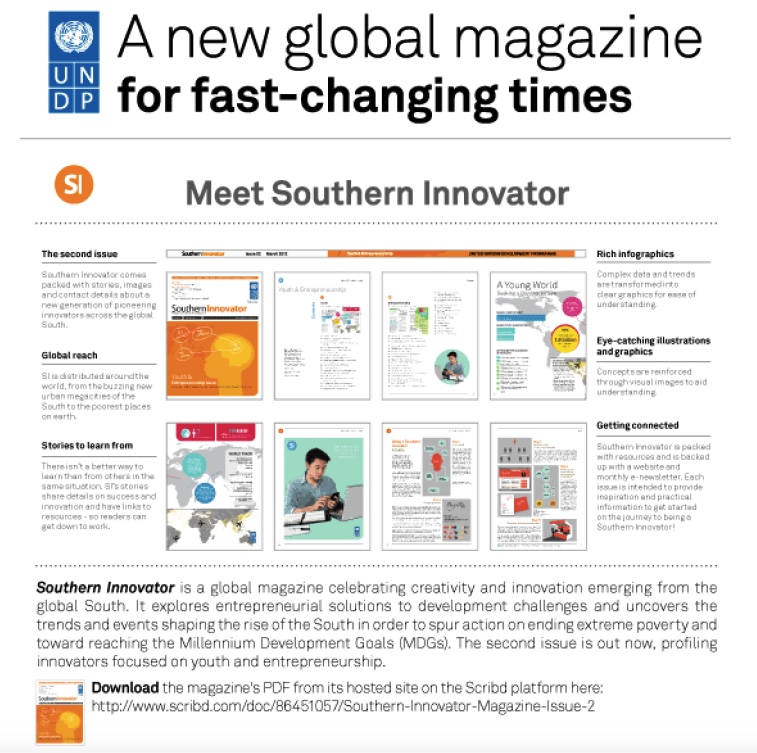
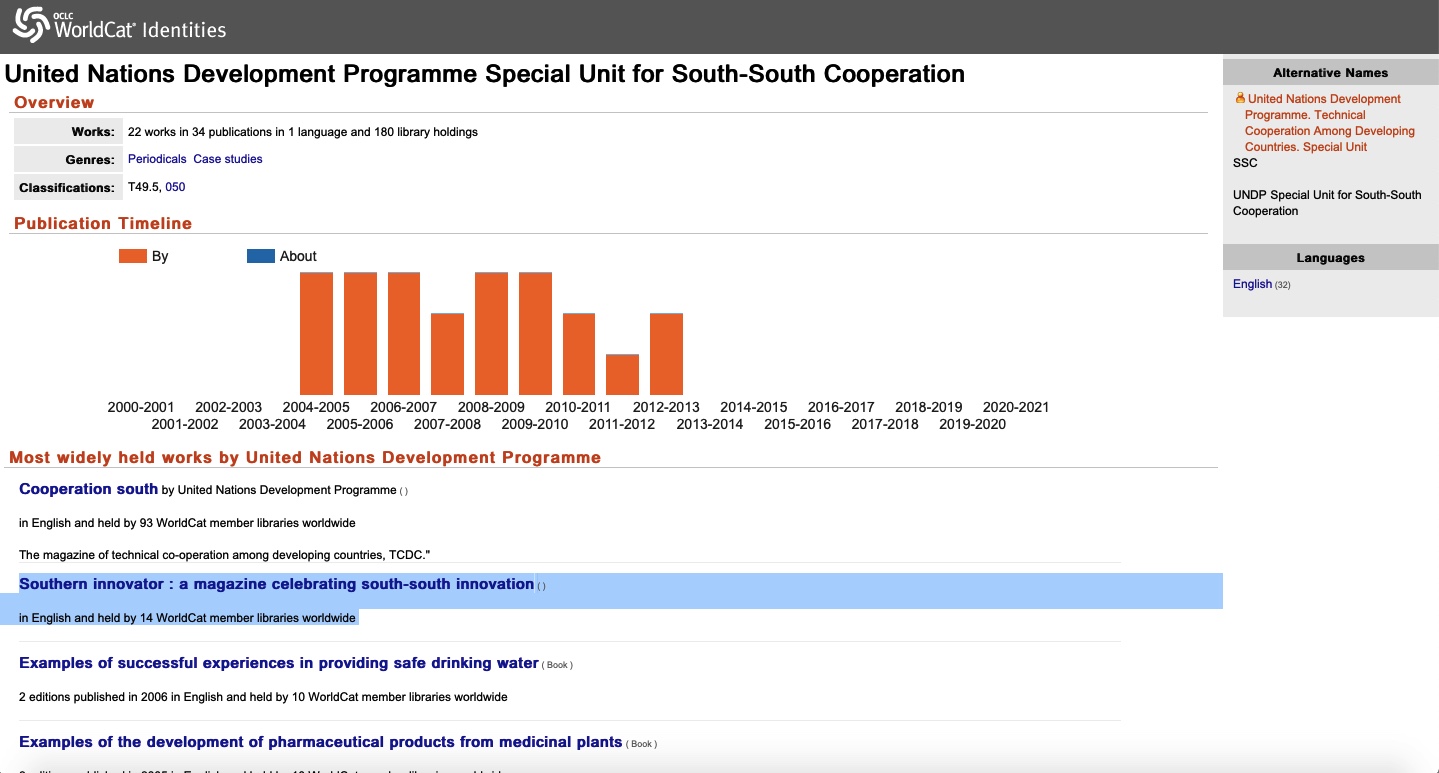
    Southern Innovator Magazine can be found in libraries around the world.

    Development Challenges, South-South Solutions was launched as an e-newsletter in 2006 by UNDP’s South-South Cooperation Unit (now the United Nations Office for South-South Cooperation) based in New York, USA. It led on profiling the rise of the global South as an economic powerhouse and was one of the first regular publications to champion the global South’s innovators, entrepreneurs, and pioneers. It tracked the key trends that are now so profoundly reshaping how development is seen and done. This includes the rapid take-up of mobile phones and information technology in the global South (as profiled in the first issue of magazine Southern Innovator), the move to becoming a majority urban world, a growing global innovator culture, and the plethora of solutions being developed in the global South to tackle its problems and improve living conditions and boost human development. The success of the e-newsletter led to the launch of the magazine Southern Innovator. 
    https://davidsouthconsulting.org/southern-innovator-scale-up-fundraiser/

    Creative Commons License

    This work is licensed under a
    Creative Commons Attribution-Noncommercial-No Derivative Works 3.0 License.

    ORCID iD: https://orcid.org/0000-0001-5311-1052.

    © David South Consulting 2022

  • Innovative Mobile Phone Applications Storm South

    Innovative Mobile Phone Applications Storm South

    By David SouthDevelopment Challenges, South-South Solutions

    SOUTH-SOUTH CASE STUDY

    The pace of change in information technology in the South is impressive, and nowhere has it been more rapid than in the take-up of mobile phones. In the past three years China has become the world’s largest exporter of information and communications technology (ICT), and home to the same number of mobile-phone users (500 million) as the whole of Europe. According to India’s telecoms regulator, half of all urban dwellers now have mobile- or fixed-telephone subscriptions and the number is growing by eight million a month. In Tanzania, mobile phone use grew by 1,600 percent between 2002 and 2008. In Nigeria it grew by almost 7,000 percent over six years, from 5 percent of the population 140 million in 2002, to a predicted 34.3 percent by the first quarter of this year.

    But it is the Philippines that has become a global leader in mobile phone commerce. A whole panoply of banking tasks can now be done by mobile phone: transferring funds from one person to another, making small purchases, or paying fees.

    “The most significant lesson learned so far,” said Shawn Mendes, lead author on a report titled The Innovative Use of Mobile Applications in the Philippines Lessons for Africa. “Is that m-Banking, rather than more altruistic applications such as m-Health and m-Education, has delivered the greatest benefits to people in developing countries.”

    Access to basic banking services is vital for the world’s poor: The Consultative Group to Assist the Poor (CGAP) found that over 3 billion poor people lack access to even the most minimal banking services to manage their lives.

    But mobile phones have come to the rescue as the fastest growing consumer product in history. Portio Research estimates that between 2007 and 2012 the number of mobile subscribers will grow by another 1.8 billion, mostly in emerging economies like India and China.

    The Philippines is not alone in introducing so-called m-Banking (mobile phone banking) Africa’s leaders include the Democratic Republic of the Congo (CelPay), Kenya (M-PESA), South Africa (MTN MobileBanking and WIZZIT) and Zambia (CelPay).

    “Safari-Com’s M-Pesa in Kenya has grown rapidly from start-up in early 2007 to well over 1 million accounts today,” said Mendes, the report author. “In May of this year Vodacom launched M-Pesa in Tanzania for their 4 million subscribers in that country. I expect very rapid growth of this service in Tanzania where less than 10 per cent of the adult population have conventional bank accounts. There are numerous other examples such as CelPay in Zambia and the Congo but I have been watching the success of M-Pesa in East Africa most closely.”

    But the Philippines has taken m-Banking the furthest, with two great models for other countries: G-Cash and Smart Money. And the country has shown that it is possible to make these services attractive to the poor, not just the wealthy.

    A combination of a good regulatory environment and an atmosphere of innovation brought mobile phone costs down, and made this possible. The mobile phone innovations were also successful because they mimicked existing consumer habits of the poor, piggy-backing on the extensive retail network of small village shops or “sari sari” stores. Poor Filipinos usually buy “tingi” or “sachets” of products like shampoo, fish sauce or soap. And it is in these shops that credit top-up centres were set up and prepaid phone cards sold.

    Cleverly, mobile phone operators in the Philippines at first offered free SMS (short message service) text messaging. This was key to how m-Banking took off. As Smart Money’s Napoleon Nazareno said: “there must be an existing SMS habit.”

    This should bode well for Africa, where an SMS habit has taken hold because it is so much cheaper than voice calls. Another important habit was prepayment. People learned how to use prepay cards, call numbers and how to enter codes into phones to purchase credits. They learned how to check their credit balance and to electronically load credit on to their phone. This habit made m-Commerce much easier and fuelled its growth.

    In South Africa, m-Banking services are revolutionizing daily life. Hair salon owner Andile Mbatha in Soweto used to have to travel for two hours by minibus to a bank to send money to his relatives. But by setting up a bank account with a service called Wizzit, he no longer needs to keep stacks of cash in his salon (and risk robbery), can send money to his sister in Cape Town by phone, and receive payment for hair cuts by phone from his customers. “This has taken out a lot of stress,” said Mr Mbatha.

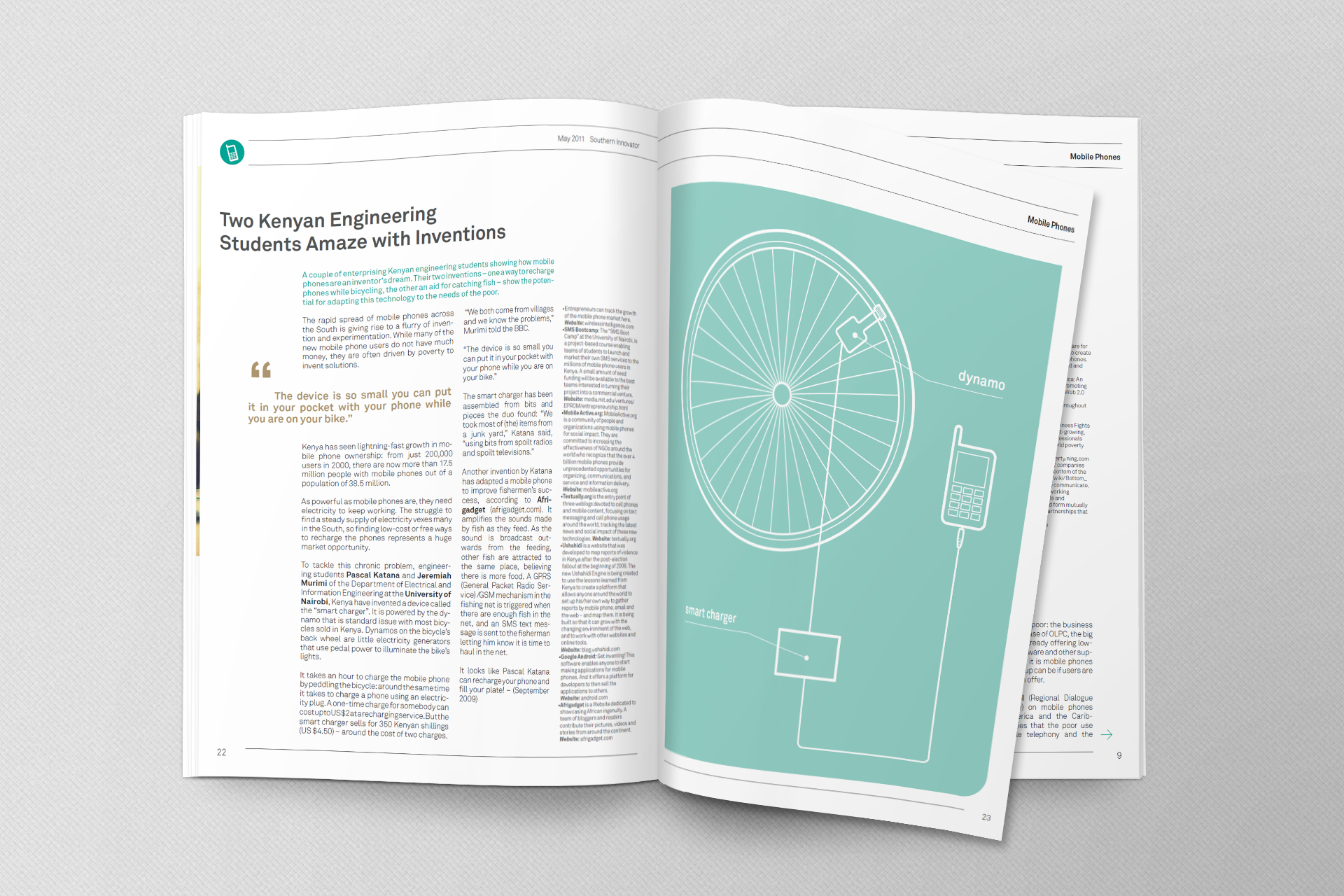
    For Southern entrepreneurs looking to get the most from mobile phones, another recent development will help. Mobile phone companies are following developments with computers and turning away from using only proprietary software, to allowing open source software. Over the next six months, this will mean small-scale entrepreneurs can get in on making applications for mobile phones on a massive scale. Two software companies are now involved: Symbian, which provides the operating system for most of the new generation mobile phones with web access, and Google’s Android open source operating system for mobiles. In Sub-Saharan Africa and East Africa, these applications will help to bypass the lack of internet bandwidth.

    In India, poor rural farmers are using mobile phone text messaging to get an advantage over the commodity markets. With so-called “agflation” and “rising prices for food ” it is crucial farmers keep on top of fluctuating commodity prices. Over 250 million Indians rely on farming for survival. But the pressure on farmers is severe and suicide rates are high.

    Banana farmer Kapil Jachak is using a text messaging service to get the latest on the weather and daily market prices. The service, Reuters Market Light, costs a dollar a month. It’s a for-profit business venture by the global business news service, but helps farmers make money too. It already has 15,000 customers signed up.

    This market knowledge gives the farmers a huge advantage when they compete with the traders in the wholesale markets of the city of Pune. “By getting the weather reports we can see exactly how much water our banana plants need,” said Kapil to the BBC. “I keep my cost down, and get the best crop I can.”

    “This has increased my profit. I don’t have to make some headache, and go to any market, any shopkeepers, and wholesalers. I can do my marketing easily and get more and more money.” The service has already armed him with the knowledge to fight off banana stem weevils when they were attacking crops. The text recommended a pesticide.

    Published: July 2008

    Resources

    Development Challenges, South-South Solutions was launched as an e-newsletter in 2006 by UNDP’s South-South Cooperation Unit (now the United Nations Office for South-South Cooperation) based in New York, USA. It led on profiling the rise of the global South as an economic powerhouse and was one of the first regular publications to champion the global South’s innovators, entrepreneurs, and pioneers. It tracked the key trends that are now so profoundly reshaping how development is seen and done. This includes the rapid take-up of mobile phones and information technology in the global South (as profiled in the first issue of magazine Southern Innovator), the move to becoming a majority urban world, a growing global innovator culture, and the plethora of solutions being developed in the global South to tackle its problems and improve living conditions and boost human development. The success of the e-newsletter led to the launch of the magazine Southern Innovator. 
    Creative Commons License

    This work is licensed under a
    Creative Commons Attribution-Noncommercial-No Derivative Works 3.0 License.

    ORCID iD: https://orcid.org/0000-0001-5311-1052.

    © David South Consulting 2022