Tag: design

  • African Bus to Tackle African Roads

    African Bus to Tackle African Roads

    By David SouthDevelopment Challenges, South-South Solutions

    SOUTH-SOUTH CASE STUDY

    Roads in many parts of Africa are rough at best, and hostile to vehicles designed with smooth, flat highways in mind. Even in countries like South Africa, where modern highways are common, a quick turn off the smooth highway to visit many communities will mean tackling makeshift dirt roads. In these conditions, buses imported from Western Europe are at a disadvantage when they hit the bone-jarring reality of potholed roads.

    In the West African country of Ivory Coast, a manufacturer has decided to tackle the problem head on by designing and manufacturing a long-distance passenger bus just for African conditions.

    The engineering arm of the national transport company, Sotra (http://www.sotra.ci/sotraindustries.php) (http://www.sotra.ci/index.php?rub=act), decided it could save money and create a bus better suited to African conditions.

    “We want the transfer of technology in Africa,” Mamadou Coulibaly, Sotra Industries director, told the BBC. “And we want to build our own buses with our specification.

    “In Europe the technology is very sophisticated with lots of electronic devices. In Africa we don’t need this.

    “We just need robust buses because our roads are not very well done like in Europe. This is an African design for Africa.”

    The African bus has fewer seats than European ones, and it can pack 100 people inside. It is a successful formula that has now attracted orders from other African countries.

    Three buses are already in operation and more are in the works on a production line. They are designed and made in the largest city, Abidjan, building on an existing chassis and engine base made by European truck company Iveco. Sotra plans to build 300 buses a year in three models: coach, urban and tourist.

    “I think it’s a good thing,” Isaac Gueu, an Abidjan accountant, told the BBC. “It’ll help students to move about in more comfort.”

    Not only is the accomplishment impressive as an example of made-in-Africa manufacturing, but it was also completed while the country was going through a civil war and political crisis.

    Sotra is an experienced manufacturer, and built its reputation with reliable boat-buses (http://tinyurl.com/bot6fv) that ply the country’s lagoons.

    Africa’s roads lag behind the rest of the world: In 1997, Africa (excluding South Africa) had 171,000 kilometres of paved roads — about 18 percent less than Poland, a country roughly the size of Zimbabwe. As efforts to complete the trans-African highways continue (http://en.wikipedia.org/wiki/Trans-African_Highway_network), the quality of existing roads is deteriorating. In 1992 about 17 percent of sub-Saharan Africa’s primary roads were paved, but by 1998 the figure had fallen to 12 percent (World Bank). More than 80 percent of unpaved roads are only in fair condition and 85 per cent of rural feeder roads are in poor condition and cannot be used during the wet season. In Ethiopia, 70 percent of the population has no access to all-weather roads.

    Africa also has an appalling road accident rate, mainly attributed to the use of minibuses and other makeshift buses. Each year the number of road deaths and disabilities due to road accidents rises. It is estimated if things carry on as they are, the number of yearly traffic deaths across the continent will reach 144,000 by 2020, a 144 percent increase on today’s deaths.

    A properly designed bus is a safer option than trying to pack passengers into a tippy minibus.

    On top of making road passenger travel safer and more comfortable, Sofra is creating jobs in Africa and reducing dependence on imports. Beholden to importing sophisticated goods from outside the continent, Africa’s wealth is spent to the benefit of others, and at the expense of high-value jobs at home.

    Coulibaly is confident Sotra will reach its goal.

    “We have been to school in Europe and we think that we are able today to build our own buses; there are no special difficulties,” he said.

    In Nigeria, Innoson Vehicle Manufacturing Company Limited (INNOVEMCO) (http://innosongroup.com/ ) is, in collaboration with Chinese manufacturers, building a huge auto plant in Nnewi (http://en.wikipedia.org/wiki/Nnewi) where a wide range of commercial and utility vehicles will be produced for the Nigerian market and some countries in West Africa.

    Published: February 2009

    Resources

    • Africar: A South African company making four-wheel drive vehicles. Websites: http://www.africarautomobiles.co.za/africar-home.htm
    • AfriGadget is a website dedicated to showcasing African ingenuity. A team of bloggers and readers contribute their pictures, videos and stories from around the continent. The stories of innovation are inspiring. It is a testament to Africans bending the little they have to their will, using creativity to overcome life’s challenges. Website: http://www.afrigadget.com/

    Development Challenges, South-South Solutions was launched as an e-newsletter in 2006 by UNDP’s South-South Cooperation Unit (now the United Nations Office for South-South Cooperation) based in New York, USA. It led on profiling the rise of the global South as an economic powerhouse and was one of the first regular publications to champion the global South’s innovators, entrepreneurs, and pioneers. It tracked the key trends that are now so profoundly reshaping how development is seen and done. This includes the rapid take-up of mobile phones and information technology in the global South (as profiled in the first issue of magazine Southern Innovator), the move to becoming a majority urban world, a growing global innovator culture, and the plethora of solutions being developed in the global South to tackle its problems and improve living conditions and boost human development. The success of the e-newsletter led to the launch of the magazine Southern Innovator.

    Creative Commons License

    This work is licensed under a
    Creative Commons Attribution-Noncommercial-No Derivative Works 3.0 License.

    ORCID iD: https://orcid.org/0000-0001-5311-1052.

    © David South Consulting 2022
  • Past Clients + Publications | 1991 – 2016

    Past Clients + Publications | 1991 – 2016

    DS Consulting logo copy
    First business card David South Consulting
    The first business card for David South Consulting. Inspired by the Dutch post office’s (PTT Post) corporate identity developed by Studio Dumbar, the card was designed by Brian Cartwright of Toronto’s Rocket Design. Work at this time included investigative journalism for Canada’s top magazines and newspapers, magazine and newsletter editing, and communications for a prestigious medical history funder. From the very beginning, we were inspired by Dutch design for the public sector and the importance placed on this in The Netherlands. The work of Hein van Haaren, former head of the PTT’s Aesthetics Department, and graphic design pioneers Wim Crouwel and Gert Dumbar, still remain key influences to this day.
    Financial Times business card 1995
    As a reporter for two Financial Times newsletters, New Media Markets and Screen Finance, I covered the rapidly growing UK (and Scandinavian) television and new media markets and the expanding film-financing sector in Europe.
    Features Editor Id Magazine 1996-1997
    This Canadian alternative bi-weekly magazine broke new ground with its investigative journalism and online journalism. It gathered together highly talented, young contributors, many of whom are leading figures in journalism, the arts and technology today.
    UNDP Mongolia business card 1997
    As the UN’s head of communications in Mongolia (1997-1999), I founded the UNDP Mongolia Communications Office and oversaw a two-year communications programme to respond to the biggest post-WWII peacetime economic collapse. Award-winning and influential, the Office pioneered the use of the Internet in international development crisis response and was called a “role model” for the rest of the United Nations.
    UNDP Ukraine business card 2000
    Following on from the success of the UNDP Mongolia Communications Office, I worked with the head of the UN Ukraine mission to strategically relaunch the mission web portal, incorporating the newly launched UN Millennium Development Goals (MDGs).
    Ukraine biz card Ukrainian_mini
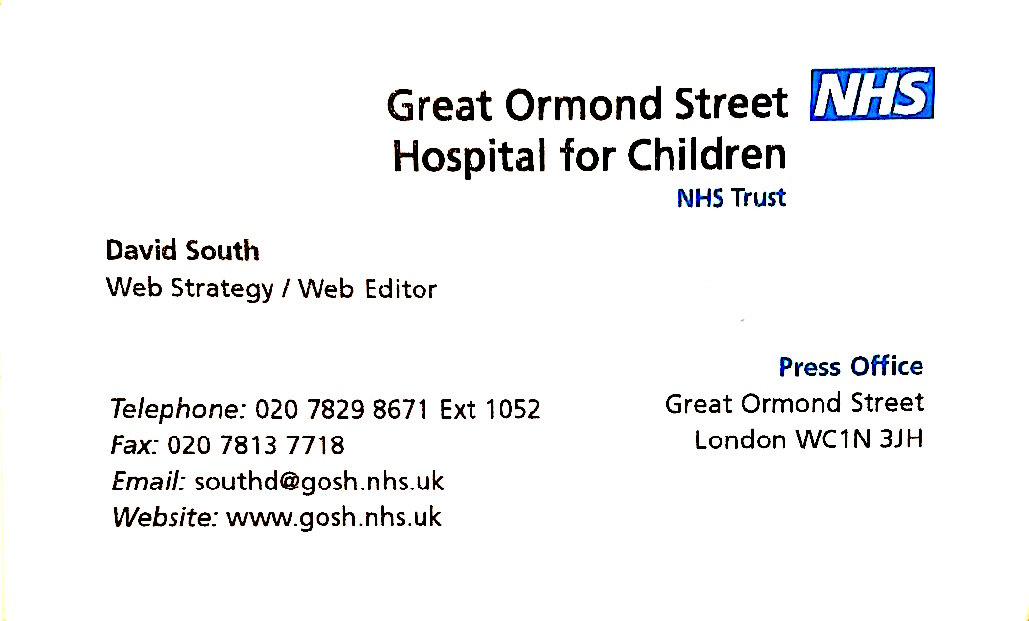
    GOSH business card 2001-2003
    Drawing on my extensive experience strategically using the Internet to achieve communications goals, I was hired to head a two-year project to launch the GOSH Child Health Web Portal. Award-winning, it was called a “role model” for the wider National Health Service (NHS) and one of the most admired websites in the UK public and charity sectors. The website was cited as contributing to the hospital’s high rating and attracted additional funding for its research.
    Mong MDG biz card_mini
    UN MDGs Education Media Project
    As part of an assessment of Mongolia’s media capabilities to communicate the Millennium Development Goals (MDGs), infographics were introduced for the first time to the mission.
    Southern Innovator business card
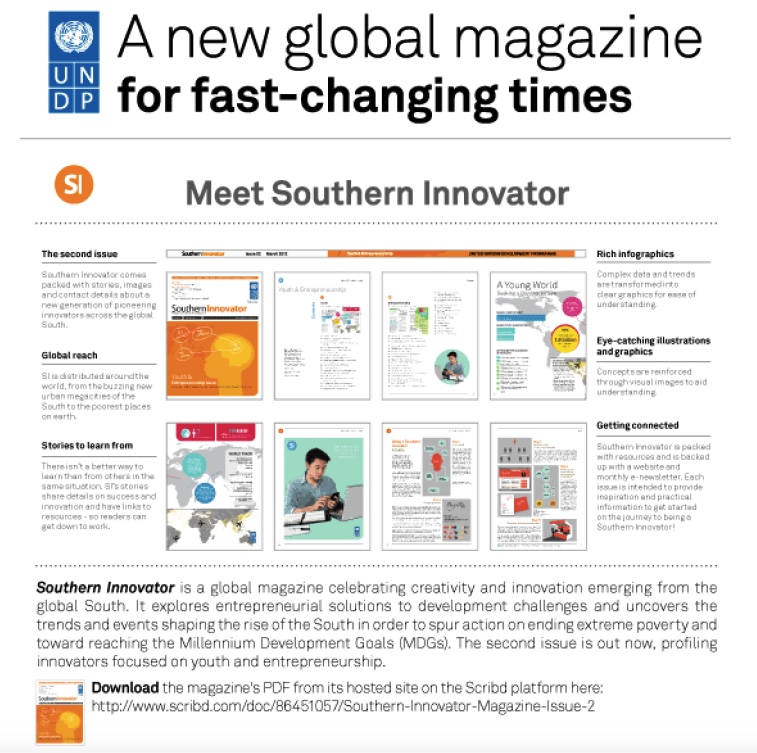
    With the Global Financial Crisis erupting, I was retained by the United Nations Office for South-South Cooperation (UNOSSC) to research and write a monthly e-newsletter and develop a new magazine to offer solutions and raise the profile of South-South cooperation as a development response to the crisis. Both publications proved highly influential, leading to the wider adoption of South-South cooperation and to national governments picking up the innovation agenda being brought about by the rapid take-up of mobile phones and information technology. The magazine Southern Innovator was called “a terrific tour de force of what is interesting, cutting edge and relevant in the global mobile/ICT space…”.
    David South Consulting business card
    In 2010, David South Consulting was relaunched with a new logo and branding for the 21st century. It represented a new phase, as work became global and very high-profile and influential. The foundations have been laid for future growth and expansion.

    Watch Magazine

    Watch Magazine masthead 1994
    Watch Magazine was launched in 1994 and quickly became the authentic 1990s voice of Toronto’s youth. As one of Toronto’s first youth start-ups, Youth Culture became a successful youth communications brand and expanded to national distribution by the late 1990s. Launched during the economic austerity years in Canada, it was one of the contributors to Toronto’s economic resurgence and renewed business vitality.

    New Media Markets

    New Media Markets masthead 1995
    As a reporter for two Financial Times newsletters, New Media Markets and Screen Finance, I covered the rapidly growing UK (and Scandinavian) television and new media markets and the expanding film-financing sector in Europe.

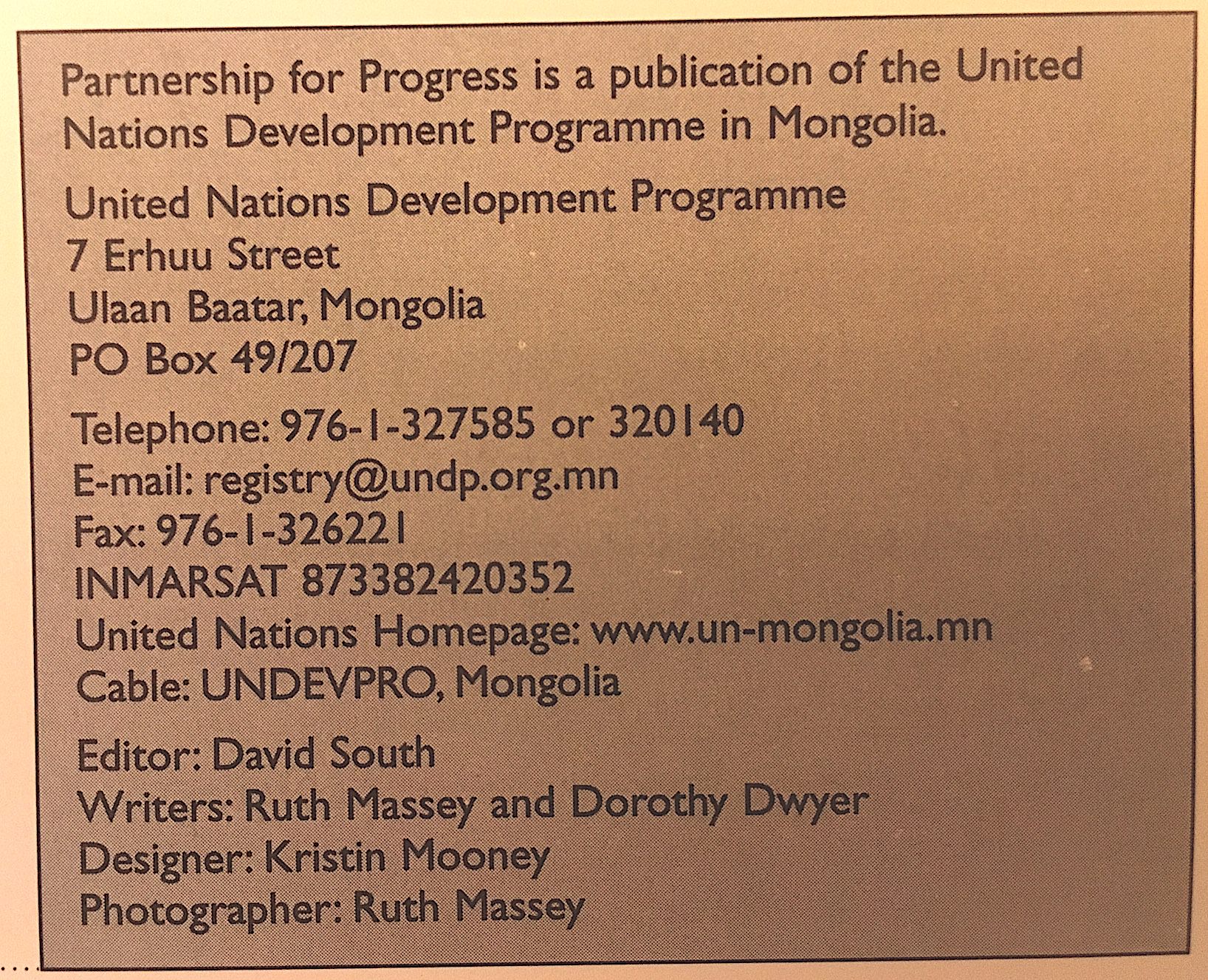
    A Partnership for Progress: The United Nations Development Programme in Mongolia

    P4P masthead 1997
    The Partnership for Progress brochure raised the curtain on the UN’s response to Mongolia’s economic and social crisis in the late 1990s. It celebrated Mongolia’s independence and its flourishing media scene and free expression after the long years of Communism and state repression.

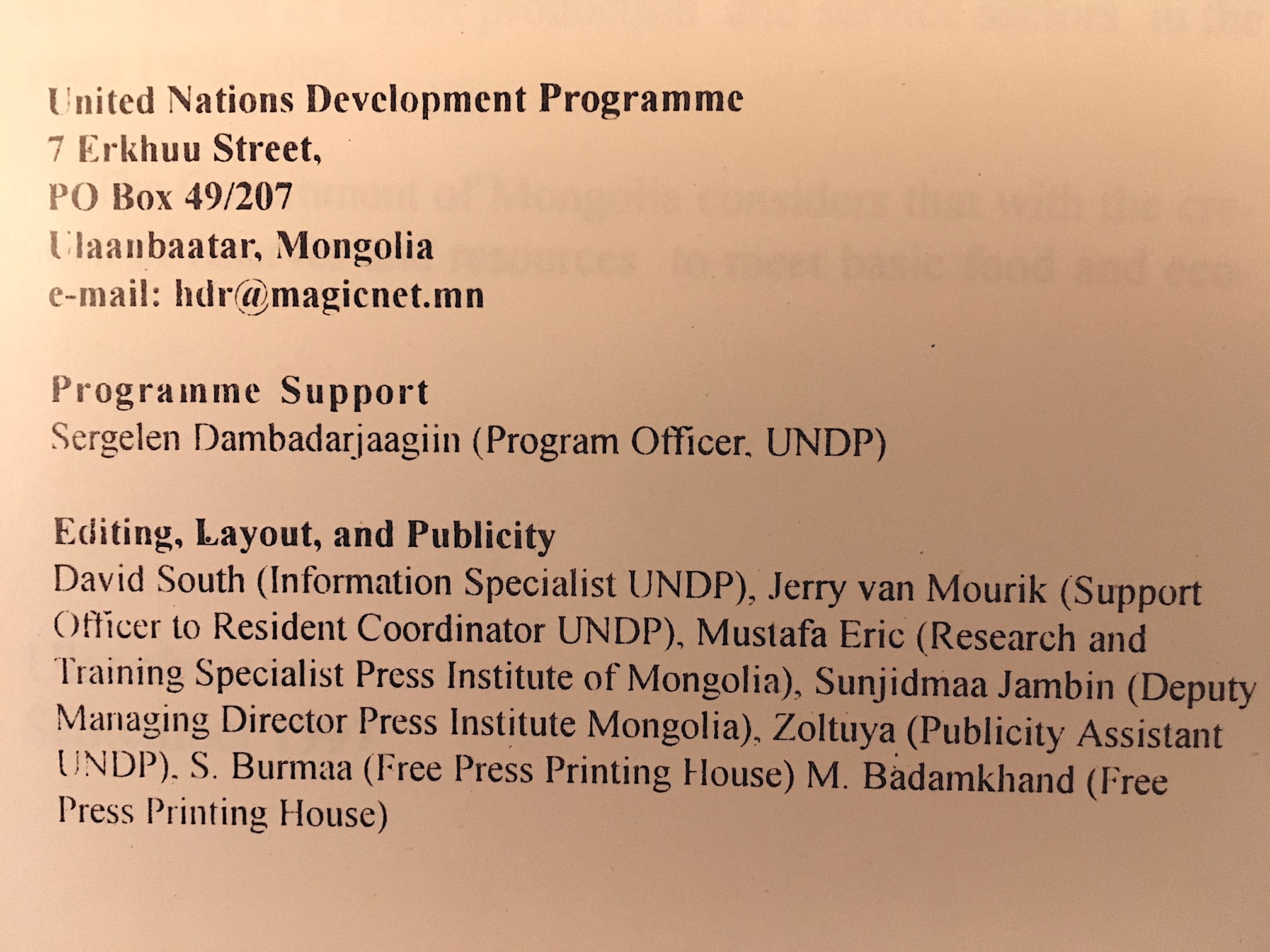
    Human Development Report Mongolia 1997

    Human Development Report Mongolia 1997
    The first human development report for Mongolia captured in data and stories the damage done by the harsh transition from Communism and the imposition of austerity during the 1990s. It found high levels of poverty in the country and a heavy toll taken on people’s health, communities and families. The report was received with great enthusiasm and had two print runs.

    Blue Sky Bulletin

    Blue Sky Bulletin
    The Blue Sky Bulletin newsletter broke with the usual approach taken by UN newsletters of offering up ‘grip n’ grin’ pictures of men in suits and instead offered actual stories and data on how Mongolia’s transition crisis was faring. It was distributed within Mongolia and by post and email outside the country to help raise awareness of the country and its development challenges.

    Mongolian Rock-Pop Book

    Mongolian Rock-Pop Book
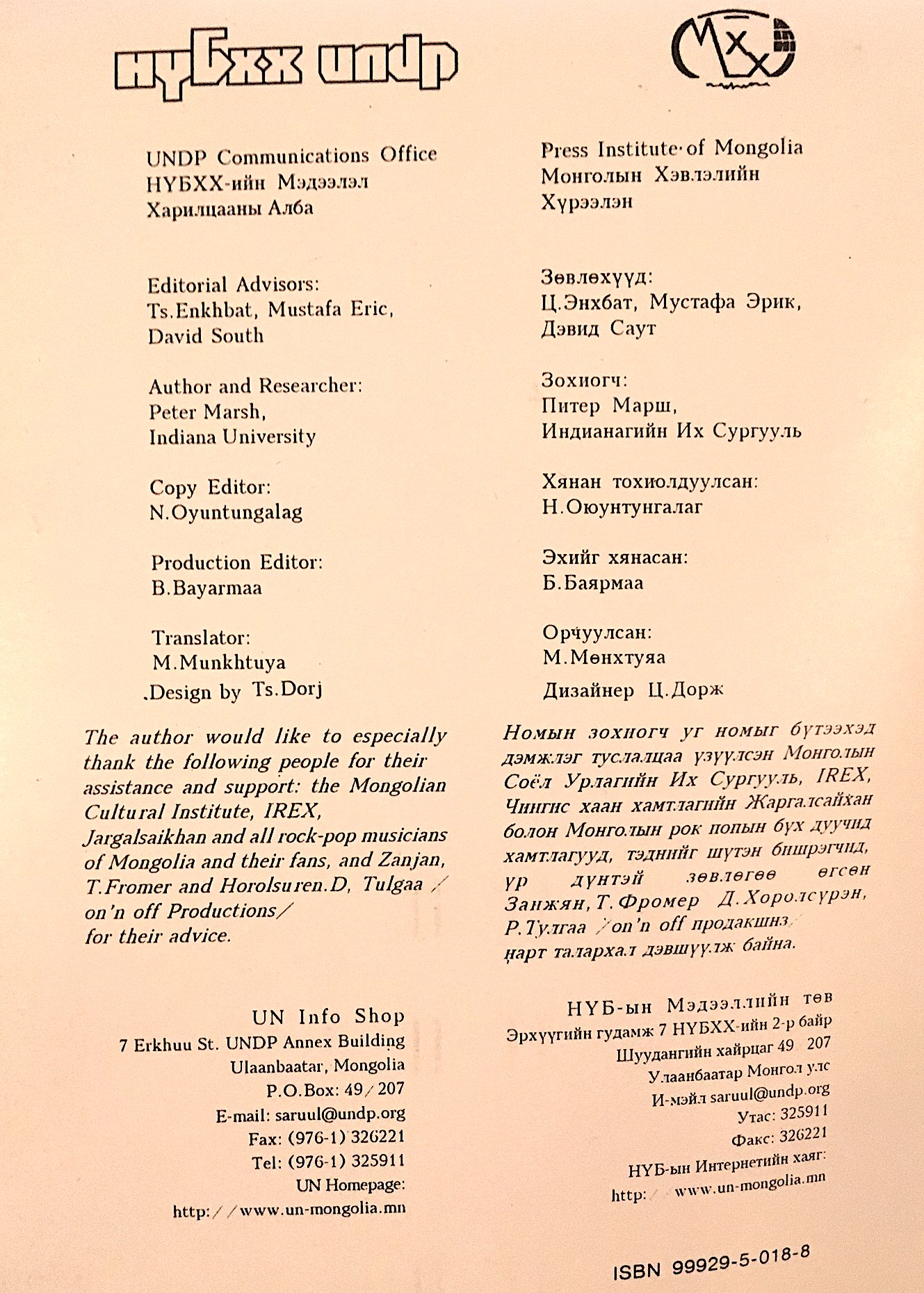
    Researched and written by ethnomusicologist Dr. Peter Marsh, this book on the impact of Mongolian rock and pop on the country’s business and entrepreneurship culture, shone a spotlight on a lively modern music scene.

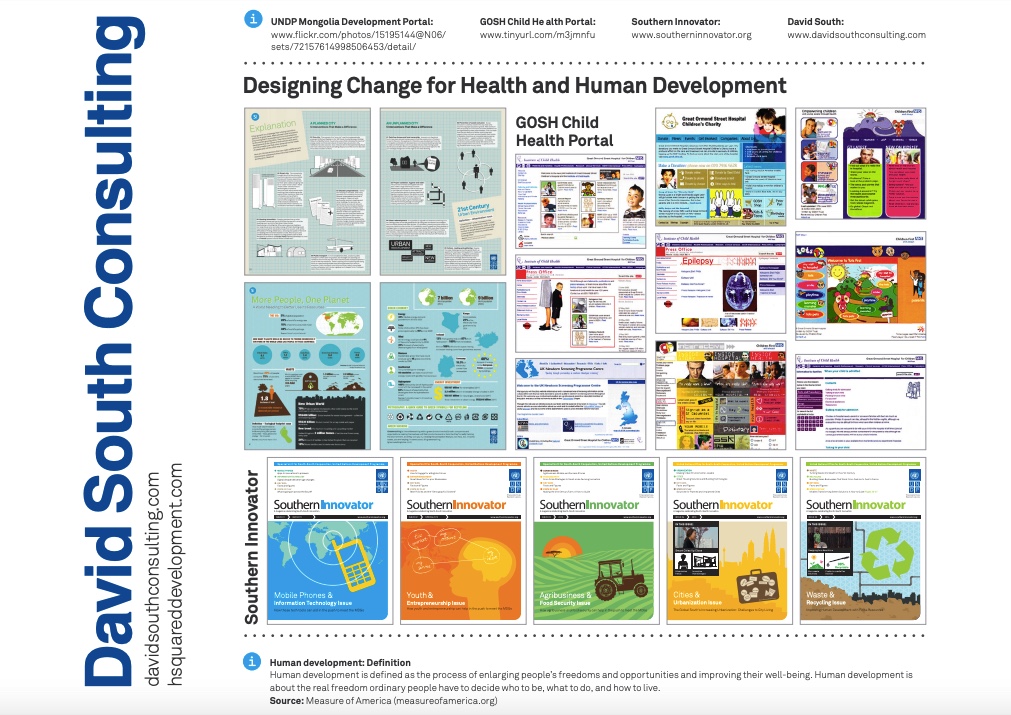
    Southern Innovator Magazine Issue 1: Mobile Phones and Information Technology

    SI Issue 1
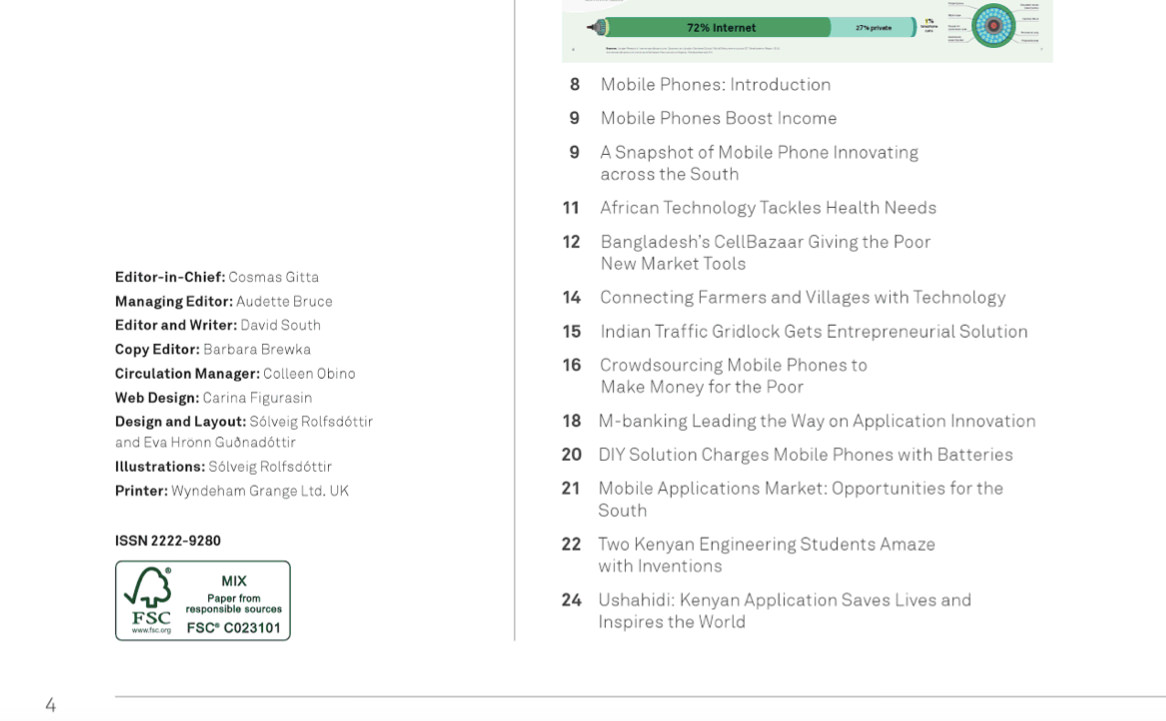
    The first issue of Southern Innovator was called “a terrific tour de force of what is interesting, cutting edge and relevant in the global mobile/ICT space… ” and a “Beautiful, inspiring magazine from UNDP on South-South innovation.”

    Southern Innovator Magazine Issue 2: Youth and Entrepreneurship

    SI Issue 2
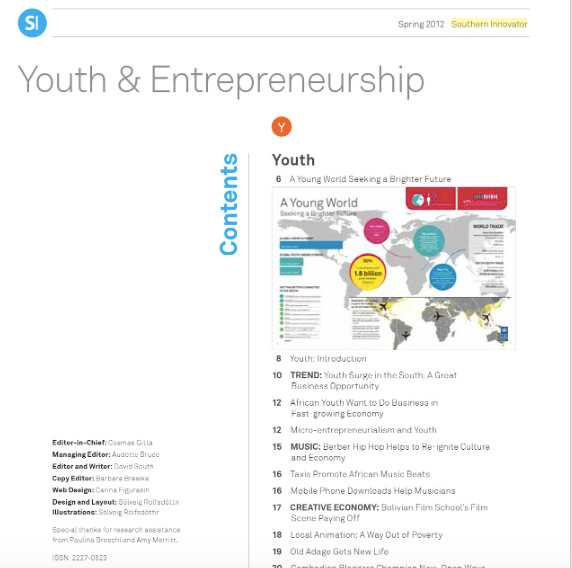
    Issue 2 of Southern Innovator drew praise for painting a positive picture of how the world’s development challenges could be taken on: “Thank you David – Your insight into the issues facing us a[s] [a] ‘global Village’ is made real in the detail of your article – 10 out of 10 from the moladi team.”

    Southern Innovator Magazine Issue 3: Agribusiness and Food Security

    SI Issue 3
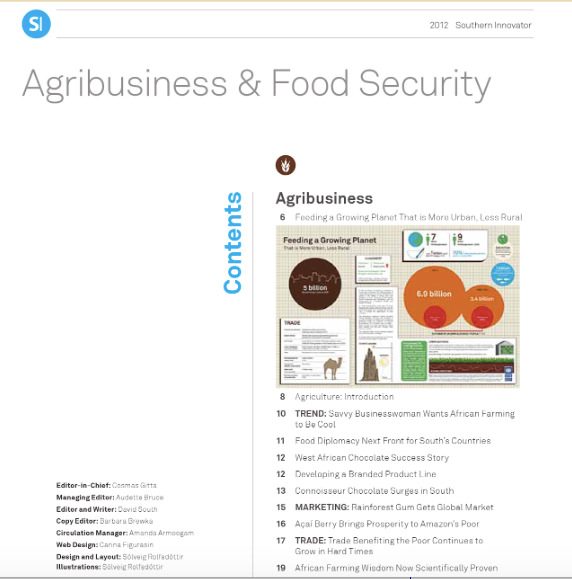
    Issue 3 was on the theme of agribusiness and food security.

    Southern Innovator Magazine Issue 4: Cities and Urbanization

    SI Issue 4
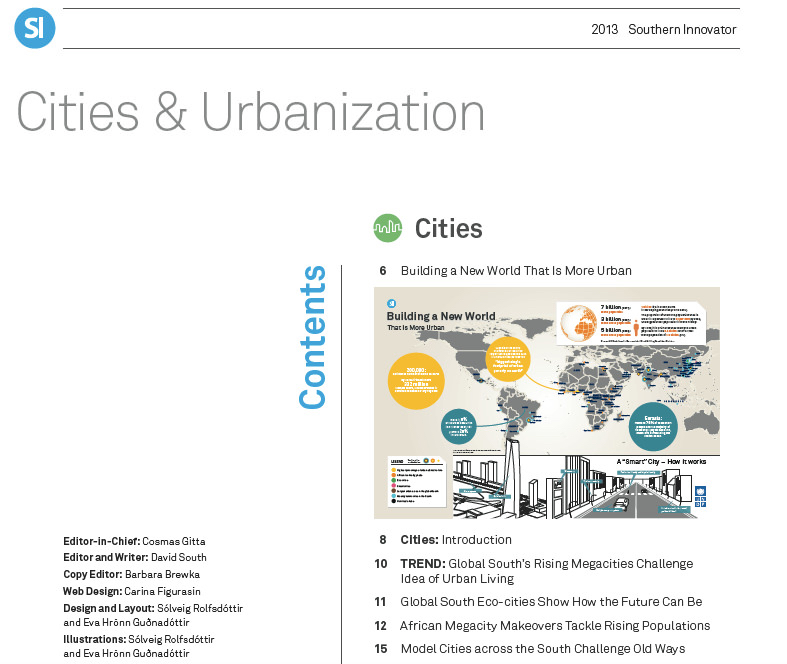
    Issue 4 on cities and urbanization saw Southern Innovator visit innovative new cities across Asia. Readers said “The magazine looks fantastic, great content and a beautiful design!” It is designed by Icelandic graphic designer and illustrator Solveig Rolfsdottir.

    Southern Innovator Magazine Issue 5: Waste and Recycling

    SI Issue 5
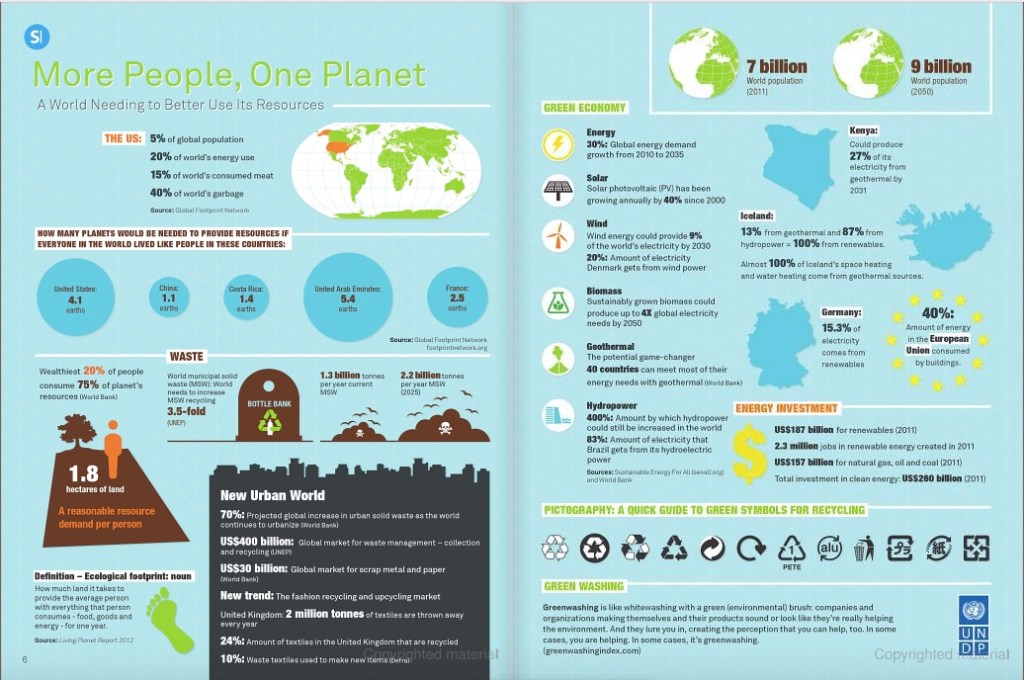
    By this point, the Southern Innovator brand was drawing praise for being “one of the best sources out there for news and info on #solutions to #SouthSouth challenges.” Readers also said they “really enjoyed reading them [Southern Innovator], impressive work & a great resource. Looking forward to Issue 6. My best wishes to you & your team at SI.”
    DSC web address in green_mini (1)

    ORCID iD: https://orcid.org/0000-0001-5311-1052.

    © David South Consulting 2021

  • Toilet Malls Make Going Better

    Toilet Malls Make Going Better

    By David SouthDevelopment Challenges, South-South Solutions

    SOUTH-SOUTH CASE STUDY

    Across the global South, clever entrepreneurs are transforming services that were bare-bones, grim and out-of-date into modern facilities packed with features that help to pay for their operation. In Kenya, an entrepreneur has used this approach to transform the poor quality of public toilets.

    Public sanitation is essential for good health and a high quality of life. Around the world, more than 2.6 billion people, or 41 percent of the world’s population, are without access to basic sanitation. As a result, most have to make do and defecate or urinate wherever they can. In crowded urban areas, the result is an unpleasant source of disease and filth that fouls living spaces and sickens or kills many people.

    Nairobi’s slums are notorious for so-called ‘flying toilets’ or ‘scud missiles’: plastic bags filled with excrement that act as the only toilet available for many. Half the population also has no access to clean water. It has been estimated these appalling conditions contribute to up to 50 percent of health problems for slum dwellers.

    The Iko Toilet started by David Kuria first came to life in Nairobi’s central business district.

    “What we saw in the last 10 years, the few public toilets that existed were in very poor shape,” he told CNN. “In fact they had been taken over by the street boys, and they were a point for mugging and drug trafficking. With that background we needed some sort of social transformation. For people to gain the confidence that you could have a public toilet which is clean which is safe and you can go in and come out the same way.”

    The solution was “toilet malls,” complete with a range of on-site micro businesses to make going to the public toilet attractive. Apart from music and radio to listen to, there is a shoe shining service, snack bars selling fruit and water, and even banking services. The idea is that the micro businesses pay for the upkeep and cleaning of the toilet. And their presence also keeps the toilets safe because there is always somebody around.

    While the concept was pioneered in the business district, it is now moving out into Nairobi’s slums. So far, Kuria has completed 12 toilets in Nairobi and has another 18 under development. He is also rolling out the toilets to other parts of the country. He receives the plots of land from local municipalities and his company, Ecotact, builds the toilets.

    It costs five Kenyan shillings (US .07 cents) to use the toilets.

    Kuria had become frustrated with the city council’s inability to provide clean and safe public toilets.

    “I thought for some time before coming up with the idea,” he told The Nation. “People had nowhere to go and thugs were holding them to ransom in the few facilities then run by the council.”

    Kuria said people are leaving good comments about the toilets and say it makes them proud to be Kenyan.

    The cost to build a toilet is Sh 2 million (US $26,000) and the toilet is managed by Kuria for five years. At the end of the contract, he will hand them over to the local council.

    “We are getting support from UNDP and other partners like East African Breweries, the Global Water International and the Rotary International,” he said.

    An architect by training, Kuria is hoping to employ more than 1,000 people by the end of this year. So far 120 people work for the Iko Toilets. Like so many others, he is also affected by chronic water shortages.

    “We are worried because when there is scarcity of water, we are forced to buy it at an additional cost,” he said.

    Private vendors currently provide the water for the toilet malls.

    Iko Toilets are so successful they have made it into the ‘Hall of Fame’ at the World Toilet Organization (http://www.worldtoilet.org/). Kuria was also winner of the World Economic Forum’s Africa Entrepreneur of the Year award earlier this year.

    And his ambitions extend beyond Kenya.

    “We also want to go to other countries. Uganda, Rwanda and South Africa have already approached me for Iko Toilets,” he said.

    Published: August 2009

    Resources

    1) World Toilet Organization: The global non-profit organization committed to improving toilet and sanitation conditions. Website: http://www.worldtoilet.org

    2) World Toilet College: Established in 2005, the World Toilet College (WTC) started as a social enterprise, with the belief that there is a need for an independent world body to ensure the best practices and standards in toilet design, cleanliness, and sanitation technologies are adopted and disseminated through training. Website: http://www.worldtoilet.org/ourwork3.asp

    3) Official website for the 2008 International Year of Sanitation. Website: http://esa.un.org/iys/

    4) Waste has expert knowledge on domestic solid and liquid waste management and sanitation issues. Its website offers a comparison of designs and methods for toilets. Website: http://www.ecosan.nl/page/353

    5) A set of photos on Flickr of the Iko toilets. Website: http://www.flickr.com/photos/wateradvocates/3306962447/

    Development Challenges, South-South Solutions was launched as an e-newsletter in 2006 by UNDP’s South-South Cooperation Unit (now the United Nations Office for South-South Cooperation) based in New York, USA. It led on profiling the rise of the global South as an economic powerhouse and was one of the first regular publications to champion the global South’s innovators, entrepreneurs, and pioneers. It tracked the key trends that are now so profoundly reshaping how development is seen and done. This includes the rapid take-up of mobile phones and information technology in the global South (as profiled in the first issue of magazine Southern Innovator), the move to becoming a majority urban world, a growing global innovator culture, and the plethora of solutions being developed in the global South to tackle its problems and improve living conditions and boost human development. The success of the e-newsletter led to the launch of the magazine Southern Innovator. 

    Creative Commons License

    This work is licensed under a
    Creative Commons Attribution-Noncommercial-No Derivative Works 3.0 License.

    ORCID iD: https://orcid.org/0000-0001-5311-1052.

    © David South Consulting 2023

  • Successful Fuel-Efficient Cookers Show the Way

    Successful Fuel-Efficient Cookers Show the Way

    By David SouthDevelopment Challenges, South-South Solutions

    SOUTH-SOUTH CASE STUDY

    A Kenyan entrepreneur has cooked up a fuel-efficient stove and oven that uses less of a precious national resource: wood from trees.

    Most African households using fuel-burning stoves either cannot afford clean-burning fuels like natural gas or electric stoves, or do not have access to them. They are stuck having to burn wood or other materials like animal dung – collectively called biomass – on open fires.

    As well as using up wood and contributing to deforestation, there is another downside to these stoves. The use of polluting fuel-burning stoves by half the world’s population – including 80 percent of rural households – is a documented contributor to a host of health problems. Poor households not only have to contend with the ill health effects of dirty water and poor sanitation, the fumes from burning dung, wood, coal or crop leftovers lead to the global deaths of more than 1.6 million people a year from breathing toxic indoor air (WHO).

    Two solutions in Kenya are helping people to cook more efficiently (meaning less time wasted on gathering material to burn, and less fuel used) and reducing cooking time by using heat more effectively.

    Invented by Dr Maxwell Kinyanjui, the Kinyanjui Jiko is a fuel-efficient charcoal oven that comes in small, medium and large industrial sizes. Made entirely in Kenya, the ovens are custom designed for a variety of environments, from domestic household use and on-the-go safari models to high-capacity models for micro-enterprises and large institutions. Cooks can use the ovens to bake, toast, steam or boil. And they are 40 percent cheaper than cooking with electricity and between 15 and 20 percent cheaper than gas.

    Kinyanjui’s Musaki Enterprises Ltd. (www.reskqu.blogspot.com/2009/01/arboretum-project.html) has developed a reputation for pioneering work in developing fuel-efficient stoves and ovens. Its most popular success to date has been the Kenya Ceramic Jiko (jiko is Swahili for cooker), or KCJ, a cheap, simple and effective stove. The company was set up in 1992, but has been involved in international aid-funded research and development efforts since the 1980s.

    “My dad was on a very good team of highly motivated individuals in the early 80s who developed the stove through pragmatism, logic and good old-fashioned ingenuity,” said his son, Teddy Kinyanjui. “He then set up the independent Musaki Enterprises.”

    The KCJ uses a ceramic liner placed inside a metal container. The metal is usually recycled, often taken from 55 gallon steel drums. The ceramic liner stops the heat energy from simply escaping into the environment and helps to focus the heat on cooking. Simply adding the ceramic liner reduces the stove’s fuel consumption by between 25 and 40 percent. The charcoal or wood sits in the ceramic basin and the burnt ash falls through holes in the bottom of the liner.

    The stove design was a result of international and Kenyan cooperation, and has become popular in many African countries, including Uganda, Rwanda, Ethiopia, Malawi, Niger, Senegal and Sudan. It is used in 50 percent of urban homes in Kenya and 16 percent of rural homes.

    Musaki Enterprises say the KCJ stoves on average save between 1 and 1.5 tons of CO2 per stove per year compared to other models. In supermarkets, the KCJs retail for around US $5 and the Kinyanjui Jiko ovens start at around US $100.

    The deployment of the KCJ stoves has helped in slowing the deforestation of the country, but has not been able to bring it to a halt because of population growth and poor re-forestation efforts, says Teddy Kinyanjui.

    “The lack of forward planning in tree planting is making firewood and charcoal harder and harder to obtain,” he said. “Fossil fuels are unavailable or unaffordable. Tree planting must begin now on a huge scale for people to continue cooking.”

    Teddy won’t reveal how profitable the KCJ stoves have been, but says, “I wouldn’t have gone to school if they didn’t sell well.”

    “Well, more and more people keep buying the damn things as fast as we can make them, so I think our customers like them,” he said. “They really all seem to like that the stoves cook really well for really cheap and are very high quality.”

    Published: June 2009

    Resources

    https://davidsouthconsulting.org/2021/02/20/baker-cookstoves-designing-for-the-african-customer/

    https://davidsouthconsulting.org/2022/02/14/cleaner-stoves-to-reduce-global-warming/

    https://davidsouthconsulting.org/2022/02/11/cooking-bag-helps-poor-households-save-time-money/

    https://davidsouthconsulting.org/2022/02/15/innovative-stoves-to-help-the-poor/

    Development Challenges, South-South Solutions was launched as an e-newsletter in 2006 by UNDP’s South-South Cooperation Unit (now the United Nations Office for South-South Cooperation) based in New York, USA. It led on profiling the rise of the global South as an economic powerhouse and was one of the first regular publications to champion the global South’s innovators, entrepreneurs, and pioneers. It tracked the key trends that are now so profoundly reshaping how development is seen and done. This includes the rapid take-up of mobile phones and information technology in the global South (as profiled in the first issue of magazine Southern Innovator), the move to becoming a majority urban world, a growing global innovator culture, and the plethora of solutions being developed in the global South to tackle its problems and improve living conditions and boost human development. The success of the e-newsletter led to the launch of the magazine Southern Innovator. 

    https://davidsouthconsulting.org/2021/03/05/southern-innovator-issue-5/

    Creative Commons License

    This work is licensed under a
    Creative Commons Attribution-Noncommercial-No Derivative Works 3.0 License.

    ORCID iD: https://orcid.org/0000-0001-5311-1052.

    © David South Consulting 2022