Categories
Archive Development Challenges, South-South Solutions Newsletters Southern Innovator magazine

Biogas Digester-in-a-Bag Brings Portability

By David SouthDevelopment Challenges, South-South Solutions

SOUTH-SOUTH CASE STUDY

Securing energy sources that are cheap (or free) and renewable can significantly reduce the cost of living for the world’s poor. The cost of fuel for essentials such as cooking and lighting can quickly eat up household incomes.

Gaining access to an inexpensive gas source that is also renewable can help people divert their income into other things, such as education and health care, improving individuals’ well-being and helping boost wealth.

Biogas (http://en.wikipedia.org/wiki/Biogas) is fuel made from biodegradable organic material such as kitchen, animal or human waste. It can be converted into gas either by being heated or using anaerobic bacteria to break down the material and turn it into combustible methane gas (http://en.wikipedia.org/wiki/Methane).

Most biogas systems are complex and large, involving an enormous domed biodigester.

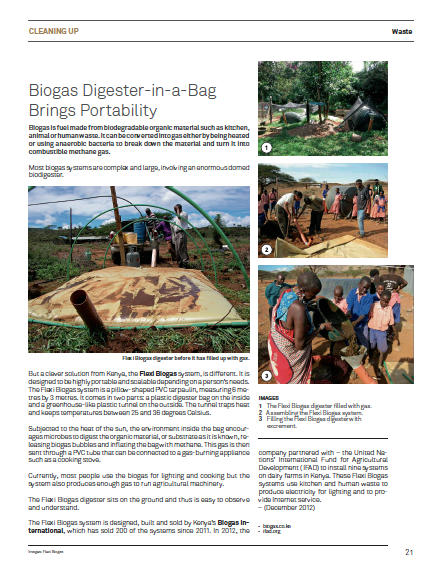
But a clever solution from Kenya, the Flexi Biogas system (biogas.co.ke), is different. It is designed to be highly portable and scalable depending on a person’s needs. The Flexi Biogas system is a pillow-shaped PVC tarpaulin, measuring 6 metres by 3 metres. It comes in two parts: a plastic digester bag on the inside and a greenhouse-like plastic tunnel on the outside. The tunnel traps heat and keeps temperatures between 25 and 36 degrees Celsius.

Subjected to the heat of the sun, the environment inside the bag encourages microbes to digest the organic material – or substrate (http://en.wikipedia.org/wiki/Enzyme_substrate_%28biology%29) as it is known, releasing biogas bubbles and inflating the bag with methane. This gas is then sent through a PVC tube that can be connected to a gas-burning appliance such as a cooking stove.

Currently, most people use the biogas for lighting and cooking but it also produces enough gas to run agricultural machinery.

The Flexi Biogas digester sits on the ground and so is easy to observe and understand.

The Flexi Biogas system is designed, built and sold by Kenya’s Biogas International, which has sold 200 of the systems since 2011. In 2012, the company partnered with IFAD – the United Nations’ International Fund for Agricultural Development (ifad.org) – to install nine systems on dairy farms in Kenya. These Flexi Biogas systems use kitchen and human waste to produce electricity for lighting and to provide Internet service.

Cows produce 15 to 30 kilograms of dung a day (IFAD). By placing 20 kilograms of fresh cow dung into a Flexi Biogas digester it is possible to produce 1,000 litres of cooking gas – enough gas for a family of five to seven people. This amount of cow dung could also produce enough gas to run a 5 horsepower engine for one hour. The engine could also be connected to a car alternator to generate electricity to run lights, a computer or a television set.

A Flexi Biogas system costs US $410, including installation by technicians and all the extras including inlet and outlet pipes and a 15 metre gas pipe.

The cost of the system increased from the first prototypes. Initially, inexpensive plastic was used for the bags and the total cost for the system was US $180. But the makers encountered a problem with durability – the systems were prone to tearing and needed to be replaced after two years. Since then, they have moved to a more expensive PVC tarpaulin bag designed to last 10 years.

The makers point out that access to high-quality plastic and rubber in Kenya is difficult and the system’s costs could be brought down if they were manufactured in China or India.

The makers argue there are several reasons why the Flexi Biogas solution is suited to Africa. One is the difficulty of securing land tenure, necessary for the building of a permanent structure like a biodigester dome. It can also be a challenge to find skilled labour and get access to complex parts such as gas pressure regulators.

In a comparison between the conventional dome biogas digester and the Flexi Biogas system, IFAD found the average cost in Kenya for a dome system was US $1,000, compared to US $410 for the Flexi Biogas system. A fixed dome takes 21 days on average to set up while a Flexi Biogas system can be set up in a day. The Flexi Biogas system also turns the substrate into biogas faster and can operate at higher temperatures. IFAD found various advantages and disadvantages to the Flexi Biogas solution: it is relatively inexpensive, lightweight (10 kilograms), very portable, quick and simple to set up, and easy to operate. The disadvantages include being costly to make, easy to steal, and a relatively short lifespan.

Weighing it all up, IFAD still concluded that “the Flexi Biogas system is an affordable solution that provides household energy while making use of waste products that would otherwise add to emissions.”

Published: December 2012

LINKS:

1) The official portal on anaerobic digestion. Website: http://www.biogas-info.co.uk/

2) REA Biogas: REA Biogas has been championing the cause of anaerobic digestion (AD) and has been the unifying force which has helped to bring the industry forward. Website: http://www.biogas.org.uk/

3) Practical Action: Various renewable energy solutions including biogas. Website: http://practicalaction.org/biogas_expertise

4) Future Biogas: Future Biogas specialise in the construction and operation of biogas plants for the UK. Website: http://www.futurebiogas.com/

https://davidsouthconsulting.org/2022/11/21/africa/

https://davidsouthconsulting.org/2022/08/02/african-fuel-pioneer-uses-crisis-to-innovate/

https://davidsouthconsulting.org/2022/11/19/agricultural-waste-generating-electricity/

https://davidsouthconsulting.org/2022/11/22/bio-ethanol-from-sturdy-and-once-unwanted-indian-plant/

https://davidsouthconsulting.org/2022/02/11/egyptian-youth-turns-plastic-waste-into-fuel/

https://davidsouthconsulting.org/2022/10/25/indian-toilet-pioneer-champions-good-ideas/

https://davidsouthconsulting.org/2023/03/27/pay-for-pee-keeps-indian-town-clean/

https://davidsouthconsulting.org/2022/06/23/recycling-waste-to-boost-incomes-and-opportunities/

https://davidsouthconsulting.org/2022/11/19/saving-water-to-make-money/

https://davidsouthconsulting.org/2022/11/18/successful-fuel-efficient-cookers-show-the-way/

https://davidsouthconsulting.org/2022/11/18/toilet-malls-make-going-better/

https://davidsouthconsulting.org/2022/08/13/turning-animal-waste-into-paper/

https://davidsouthconsulting.org/2021/09/30/turning-human-waste-to-fertilizer-an-african-solution/

https://davidsouthconsulting.org/2022/02/10/urban-farmers-gain-from-waste-water/

Follow @SouthSouth1

Slideshare: http://www.slideshare.net/DavidSouth1/development-challengessouthsouthsolutionsnovember2010issue

Southern Innovator Issue 1: https://books.google.co.uk/books?id=Q1O54YSE2BgC&dq=southern+innovator&source=gbs_navlinks_s

Southern Innovator Issue 2: https://books.google.co.uk/books?id=Ty0N969dcssC&dq=southern+innovator&source=gbs_navlinks_s

Southern Innovator Issue 3: https://books.google.co.uk/books?id=AQNt4YmhZagC&dq=southern+innovator&source=gbs_navlinks_s

Southern Innovator Issue 4: https://books.google.co.uk/books?id=9T_n2tA7l4EC&dq=southern+innovator&source=gbs_navlinks_s

Southern Innovator Issue 5: https://books.google.co.uk/books?id=6ILdAgAAQBAJ&dq=southern+innovator&source=gbs_navlinks_s

Creative Commons License

This work is licensed under a
Creative Commons Attribution-Noncommercial-No Derivative Works 3.0 License.

ORCID iD: https://orcid.org/0000-0001-5311-1052.

© David South Consulting 2023

Categories
Archive Development Challenges, South-South Solutions Newsletters Southern Innovator magazine

New Cities Offering Solutions for Growing Urban Populations

By David SouthDevelopment Challenges, South-South Solutions

SOUTH-SOUTH CASE STUDY

Across the global South, new cities are being dreamed up by architects, city planners and governments, or are already under construction. Two new urban areas being built offer lessons for others in the global South. They both deploy intelligent solutions to the combined demands of urbanization, growing populations and rising expectations.

An eco city in China and a smart city in the Republic of Korea are tackling today’s – and tomorrow’s – challenges.

A joint initiative between China and Singapore, the Sino-Singapore Tianjin Eco-City project (tianjinecocity.gov.sg) – located on reclaimed land some 45 kilometres from the booming Chinese city of Tianjin and 150 kilometres from Beijing – is an attempt to create a replicable model for other cities in China and the global South. Already well underway, with the first phase of construction nearly complete, the Eco-City’s hallmarks include encouraging walking, reducing reliance on private vehicles and aiming to generate 20 per cent of the city’s energy from renewable sources. It is run from the Chinese end by Tianjin TEDA Investment Holding Co., Ltd and in Singapore by the Keppel Group.

It is located 10 kilometres from the Tianjin Economic Technological Development Area (TEDA), a fast-growing high-tech business hub in its own right.

Called an “integrated work, live, play and learn environment,” it is a mix of public and private housing based on the highly successful model developed in Singapore.

The concept of an “eco city” was first raised by Richard Register in his 1987 book Ecocity Berkeley: Building Cities for a Healthy Future. It was to be a place that minimizes inputs of energy, water, and food and outputs of waste heat, air pollution, carbon dioxide, methane and water pollution. Like smart cities, eco cities are taking shape in various forms around the world. Some are applying the concept and principles of an eco city to an existing place, while others are being built from scratch.

The Tianjin Eco-City is a mix of elements designed to make it sustainable in the long-term. It includes an “EcoValley” running through the development as its centrepiece green space to encourage walking and cycling between the major centres of the city. It has the usual urban services – from schools to shops and restaurants – but also, critically, a growing range of business parks to support employment.

Unlike green initiatives in wealthy, developed countries, it is hoped the Tianjin Eco-City will prove a more relevant model for the global South. It has factored in the need to make an eco city pay its way and generate new business and innovations. It is trying to address the pressing urgency of China’s growing population and rapid urbanization, while balancing people’s expectations of rising living standards. As in other countries in the global South, people aspire to a higher standard of living and this needs to be taken into consideration when planning eco cities.

Ho Tong Yen, Chief Executive Officer of Sino-Singapore Tianjin Eco-City, says its aim is “sustainable development packaged in a way that is uniquely Asian.”

He says the project is intended to be “practical, replicable and scalable.”

“Practical at its core is building something that the market can support, something that is affordable given the economic development of the region,” he said. “The idea is that this model must be one that is replicable and scalable in other parts of China. Now, strictly speaking, there is no reason it needs to be just for China – it really might be replicable in other developing countries as well. Our starting point, however, is to find a model that might work for China.

“I think it is still a work in progress – a bold experiment – and it is a long-term experiment. The idea is to create an eco city that can support a population of 350,000 over a 10 to 15 year horizon.

“In some ways it is a city that does not look all that much different from other Chinese cities. But if you look at the subtleties – the building orientation, the renewable energy, the transit oriented developments, the walkability concepts – these are all the elements we built into this project.

“An eco city is not necessarily a science-fiction-like concept; it is something that is very real, very do-able. It looks a lot like a normal city – it is not a special city in a glass dome.”

The explosion in information technologies in the past decade has re-shaped the way cities can be planned, run and developed. The connectivity brought about by now-ubiquitous electronic devices such as mobile phones and the ever-expanding information networks connected by fibre optic cables is giving rise to so-called “smart cities.” These urban areas draw on information technologies to use resources more efficiently and reduce waste, while – it is hoped – better serving the needs of residents. Real-time information can be gleaned to monitor energy use, or traffic congestion, or crime, while constant online connectivity enables the efficient delivery of a multitude of services to residents.

Smart cities vary in their scope and ambition. Some are existing urban areas given a modern upgrade, while others, such as the Songdo International Business District (IBD) (songdoibd.com) smart city in the Republic of Korea, are planned and built from scratch.

Built on 1,500 acres (607 hectares) of reclaimed land from the Yellow Sea in Incheon, Songdo International Business District is being built by Gale International and POSCO E&C of Korea. It is considered one of the largest public/private real estate ventures in the world. Due to be completed in 2017, it will be home to 65,000 people (22,000 currently live there), while 300,000 people will commute in daily to work. Fifteen years in the making and costing over US $35 billion, it is called a “synergistic city” because it contains all the elements necessary for people to live a high-quality life.

Currently 50 percent complete, Songdo IBD is considered one of Asia’s largest green developments and a world leader in meeting LEED (Leadership in Energy and Environmental Design) (https://new.usgbc.org/leed) standards for green buildings. For example, it has the first LEED-certified hotel in Korea, the Sheraton Incheon. These high green standards have led to the United Nations Green Climate Fund Secretariat establishing its headquarters in Songdo, with a slated opening in 2013.

Songdo is “smart” because information technology connects all its systems – residences, buildings, offices, schools, hospitals, hospitality and retail outlets. This includes more than 10,000 Cisco TelePresence units (http://www.cisco.com/en/US/products/ps7060/index.html)– menu-driven video screens – being installed in the residences to connect them to all the services available in Songdo.

It also benefits from proximity to Incheon International Airport – consistently voted one of the best in the world – giving residents quick access to other Asian cities such as Shanghai, Tokyo and Hong Kong. This connection between urban development and a highly connected airport is being called an “aerotropolis.”

Songdo smart city is just one part of a massive regional development plan, using reclaimed land from the sea and marshlands. The residential and business developments are all being linked to IncheonInternationalAirport, which is being positioned as a transport hub and gateway to Northeast Asia – it boasts of being a three-and-a-half hour flight to one-third of the world’s population. The idea is to create a thriving international business hub that is a short flight away from Asia’s booming and fast-growing economic centres.

“The beauty is you are doing everything from scratch – you are using newer building technology, newer systems,” said Scott Summers, Vice President of Foreign Investment for developers Gale International Korea LLC.

“You are not going into a city and ripping up old things and then put in new systems. You have a greater opportunity to install this technology, the backbone (information technology from Cisco), to allow these services and connectivity to work properly because you are laying wires in buildings from the get-go rather than going in afterwards.”

Summers believes it is the high-tech component of Songdo that will set it apart from other cities in the future. Songdo is being built with a combination of innovative sustainable development technologies and the latest in information technologies provided by Cisco.

“That is one of the reasons we are pushing this technology, because it is how a city operates that is important,” Summers said.

“The operation of a city, to do it well, is going to improve the success of it. (To) embed into the development of the city some of the technologies of sustainable development – to put in the pneumatic waste system, grey water system, the co-generation – all of those things are much easier to do on raw land.”

Sojeong Sylvia Sohn, owner of Songdo’s Kyu, a Korean fusion cuisine restaurant, was attracted to Songdo and is banking on its future growth.

Sohn said Seoul’s “existing commercial area was just saturated.”

“Songdo International City in Incheon is the future for the region and early business tenants are coming here for investment purposes. It has uncluttered streets and modern buildings, being an international city – this makes it attractive.”

Published: December 2012

Resources

1) Eco Cities World Summit: The International Ecocity Conference Series brings together the key innovators, decision makers, technologists, businesses and organizations shaping the conversation around ecological and sustainable city, town and village design, planning and development. Website: http://www.ecocityworldsummit.org/

2) Richard Florida: The Creative Class Group is a boutique advisory services firm composed of leading next-generation researchers, academics, and strategists. Website:http://www.creativeclass.com/richard_florida

3) Global Urbanist: The Global Urbanist is an online magazine reviewing urban affairs and urban development issues in cities throughout the developed and developing world. Website: http://globalurbanist.com/

4) UN-Habitat: The United Nations Human Settlements Programme, UN-HABITAT, is the United Nations agency for human settlements. It is mandated by the UN General Assembly to promote socially and environmentally sustainable towns and cities with the goal of providing adequate shelter for all. Website: http://www.unhabitat.org

5) Eco-Cities: A Planning Guide by Zhifeng Yang. Website: http://tinyurl.com/d26rxdx

https://davidsouthconsulting.org/2022/10/06/africas-fast-growing-cities-a-new-frontier-of-opportunities/

https://davidsouthconsulting.org/2020/12/04/big-data-can-transform-the-global-souths-growing-cities/

https://davidsouthconsulting.org/2022/11/17/book-boom-rides-growing-economies-and-cities/

https://davidsouthconsulting.org/2022/10/19/chinese-building-solution-for-rapidly-urbanizing-global-south/

https://davidsouthconsulting.org/2021/10/21/cities-for-all-shows-how-the-worlds-poor-are-building-ties-across-the-global-south/

https://davidsouthconsulting.org/2020/12/11/cyber-cities-an-oasis-of-prosperity-in-the-south/

https://davidsouthconsulting.org/2017/11/08/eco-cities-up-close-2013/

https://davidsouthconsulting.org/2022/03/20/global-south-eco-cities-show-how-the-future-can-be/

https://davidsouthconsulting.org/2021/11/12/global-souths-rising-megacities-challenge-idea-of-urban-living/

https://davidsouthconsulting.org/2022/11/16/housing-innovation-in-souths-urban-areas/

https://davidsouthconsulting.org/2020/12/14/innovation-in-growing-cities-to-prevent-social-exclusion/

https://davidsouthconsulting.org/2022/09/28/model-cities-across-the-south-challenge-old-ways/

https://davidsouthconsulting.org/2022/03/29/model-city-to-test-the-new-urbanism-concept-in-india/

https://davidsouthconsulting.org/2022/10/10/more-futuristic-african-cities-in-the-works/

https://davidsouthconsulting.org/2017/11/08/smart-cities-up-close-2013/

https://davidsouthconsulting.org/2021/10/22/south-south-cooperation-for-cities-in-asia/

https://davidsouthconsulting.org/2021/03/05/southern-innovator-issue-4/

Creative Commons License

This work is licensed under a
Creative Commons Attribution-Noncommercial-No Derivative Works 3.0 License.

ORCID iD: https://orcid.org/0000-0001-5311-1052.

© David South Consulting 2023

Categories
Archive Blogroll Development Challenges, South-South Solutions Newsletters Southern Innovator magazine

Creating Green Fashion in China

By David SouthDevelopment Challenges, South-South Solutions

SOUTH-SOUTH CASE STUDY

China is the world’s largest manufacturer (Euromonitor) and the largest clothing maker, producing a quarter of all textiles and clothing. It is a global fashion production hub, and many major global clothing brands have their products made there – whether they admit it or not.

Although most people probably do not give it a second thought, the fashion and clothing industries can be highly polluting and exploitive. The use of toxic fertilizers to boost cotton yields leaves behind a legacy of contaminated soil and water tables. Dyes used to colour clothing also can be toxic and pollute water. For people working in this industry – many of whom are women – conditions can vary widely and include low pay and high stress.

According to the Ethical Fashion Forum, “it is difficult for companies sourcing from China to be sure of fair working practices. There have been many reports of low wages, long hours, and unfair working conditions in factories in China.”

But one innovative fashion brand is out to transform the way the garment business works in China and to develop a template that could be used in other places such as Africa.

The design duo of Hans Martin Galliker and Amihan Zemp has set up their clothing brand’s studio in one of Beijing’s historic hutong (alley) neighbourhoods – narrow streets of low-rise buildings that were the traditional urban dwelling environments for generations of Chinese people. The NEEMIC (neemic.com) brand, founded in 2011, makes sustainable fashions and champions green production methods in China.

The business’s belief is that the world has enough fabric already to meet the clothing needs of the population. In response, NEEMIC makes its clothing from a mix of recycled natural materials and new organic materials. According to its website, NEEMIC collaborates “with young designers from London to Tokyo to create a particular metropolitan aesthetic.”

“We use the finest natural fabrics for a perfectly comfortable feel,” Galliker said. “We pick the finest natural materials from leftovers of the industry, recycle used clothes, and strive to order new fabrics only from certified organic producers.”

Hans Martin Galliker began as a farming apprentice in his native Switzerland, and brings a practical bent to his approach to fashion. He draws on his knowledge of farming and agriculture to create a unique eco-conscious fashion product in China.

Galliker got his start in fashion working for a brand in Shenzhen, southern China. He worked with the organic farms there, and this inspired him to explore sustainability in fashion design and ways of introducing the principles of fair trade to the fashion and textile industries in China.

Galliker is passionate about taking a different attitude to fashion: “There are many fashion brands and many of them are … meaningless,” he told the China Daily newspaper. “They do fashion which looks more or less … the same, which has no creativity and does a lot of harm to the environment.

“Growing cotton is highly chemicals and labour-intensive, which degrades the soil and pays people very low salaries. And the dyeing and colouring processes pollute rivers and people receive low salaries but have to work long hours. The whole textile industry is really bad for the environment.”

NEEMIC has completed three collections of clothing since it was founded in 2011.

“We started selling some of our designs at a boutique in Beijing that focuses on upcycling fashion. People like it and want to buy more,” said Galliker.

Upcycling is the process of converting waste material into new products (http://en.wikipedia.org/wiki/Upcycling).

And to counter any negative perceptions that organic cotton clothing can only ever be unfashionable, Galliker is out to prove it is possible to create stylish organic clothing.

On top of building the brand, Galliker also works to educate the industry and change ways. He is also setting up a branch in China of the Hong Kong Organic Textile Association (http://neemic.asia/organic), which encourages fashion designers to jointly buy organic materials. He also publishes a website on sustainable agricultural practices in China, with details on current policies on organic farming.

“It is very normal for Chinese farmers to use many fertilizers, but the environment is going bad and consumers do not like this kind of farming,” Galliker points out. “For farmers, it’s not meaningful to produce only to make money to live a decent life. It should be more than that.”

The NEEMIC operation is lean: the Beijing studio does all the designing of the clothes, programming of the multilingual websites and runs the online shopping and payment sites.

For now, the goal is to not only increase the use of organically grown materials but also to introduce the fair trade concept into China.

“In two years we want to do fair trade production,” Galliker said.

And he has Africa in his sights with his green fashion template.

“In the long term we will have many successful projects here or non-profit companies … a lot of creative force and investment so that we can help rural regions in Africa to do sustainable agriculture projects.”

Published: December 2012

Resources

1) Ethical Fashion Forum: The Ethical Fashion Forum is the industry body dedicated to a sustainable future for fashion. A not for profit organisation, EFF aims to make it easy for fashion professionals to integrate sustainability at the heart of what they do. Website: http://www.ethicalfashionforum.com/

2) Hong Kong Organic Textile Association: Its mission is to promote organic textiles in Hong Kong Website: http://www.facebook.com/HKOrganicTextileAssociation

3) Tips on how to upcycle. Website: http://www.independent.co.uk/property/interiors/the-insider–how-to-upcycle-without-much-effort-2343100.html

4) How to create a Lookbook for a fashion brand. Website: http://noisetteacademy.com/2011/05/creating-a-lookbook/

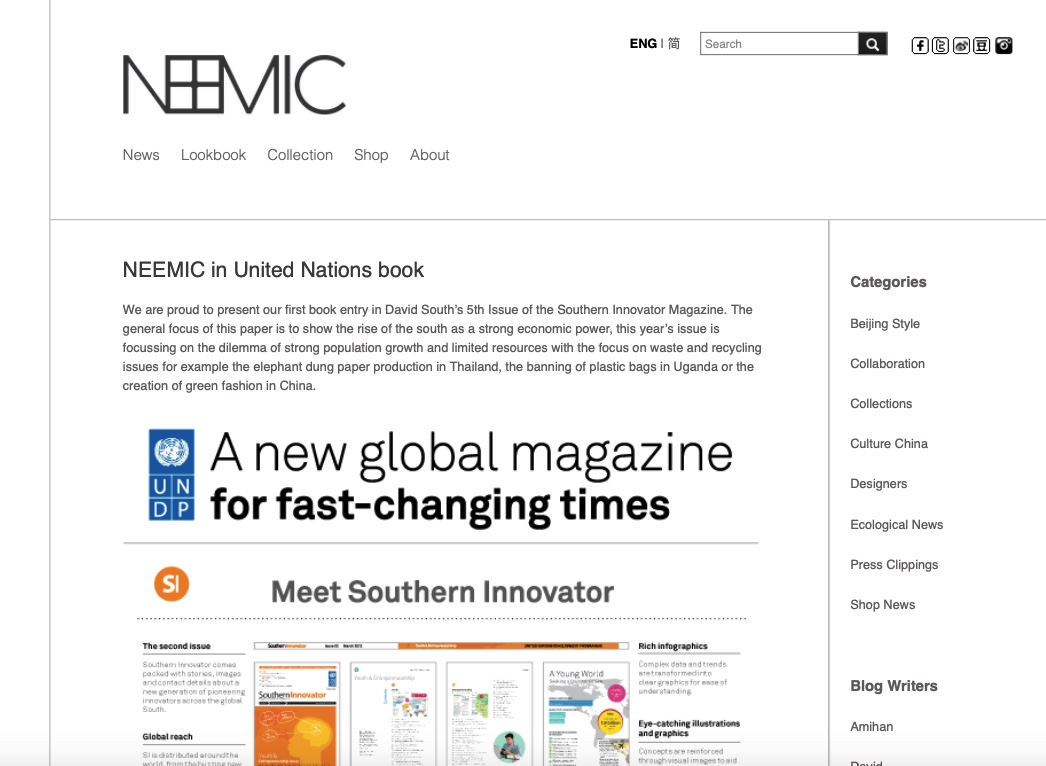
“We are proud to present our first book entry in David South’s 5th Issue of the Southern Innovator Magazine. The general focus of this paper is to show the rise of the south as a strong economic power, this year’s issue is focussing on the dilemma of strong population growth and limited resources with the focus on waste and recycling issues for example the elephant dung paper production in Thailand, the banning of plastic bags in Uganda or the creation of green fashion in China.” https://neemic.asia/ecological-news/neemic-southern-innovator-book

https://davidsouthconsulting.org/2021/02/09/african-fashions-growing-global-marketplace-profile/

https://davidsouthconsulting.org/2021/01/05/afropolitan-african-fashion-scene-bursting-with-energy/

https://davidsouthconsulting.org/2022/10/09/fashion-closes-gap-between-catwalk-and-crafts/

https://davidsouthconsulting.org/2022/11/17/fashion-recycling-how-southern-designers-are-re-using-and-making-money/

https://davidsouthconsulting.org/2022/11/16/favela-fashion-brings-women-work/

https://davidsouthconsulting.org/2020/04/30/local-fashions-pay-off-for-southern-designers/

https://davidsouthconsulting.org/2022/10/24/made-in-africa-fashion-brand-pioneers-aim-for-global-success/

https://davidsouthconsulting.org/2021/10/04/putting-quality-and-design-at-the-centre-of-chinese-fashion/

https://davidsouthconsulting.org/2021/03/05/southern-innovator-issue-5/

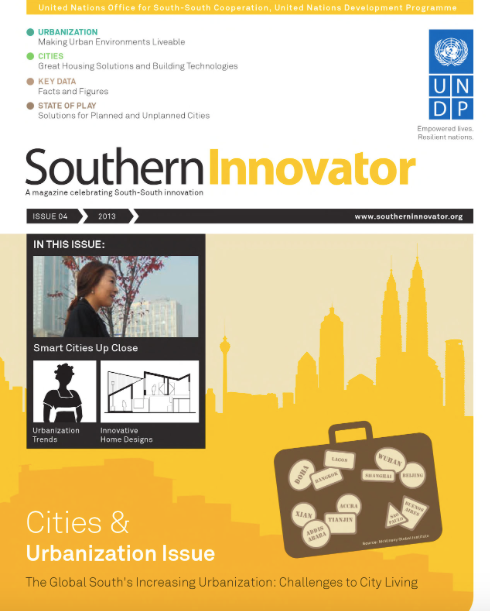
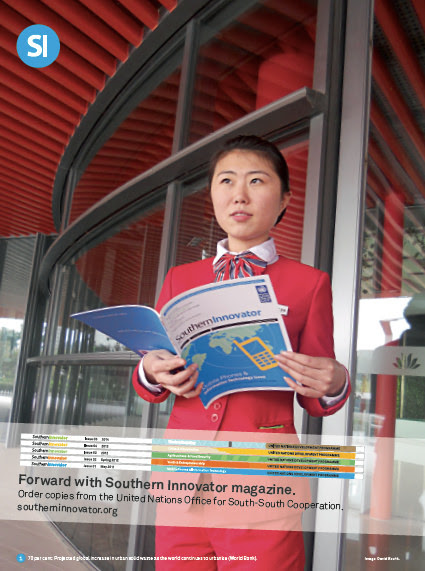
Development Challenges, South-South Solutions was launched as an e-newsletter in 2006 by UNDP’s South-South Cooperation Unit (now the United Nations Office for South-South Cooperation) based in New York, USA. It led on profiling the rise of the global South as an economic powerhouse and was one of the first regular publications to champion the global South’s innovators, entrepreneurs, and pioneers. It tracked the key trends that are now so profoundly reshaping how development is seen and done. This includes the rapid take-up of mobile phones and information technology in the global South (as profiled in the first issue of magazine Southern Innovator), the move to becoming a majority urban world, a growing global innovator culture, and the plethora of solutions being developed in the global South to tackle its problems and improve living conditions and boost human development. The success of the e-newsletter led to the launch of the magazine Southern Innovator.  

Follow @SouthSouth1

Google Books: https://books.google.co.uk/books?id=q1KeBgAAQBAJ&dq=development+challenges+december+2012&source=gbs_navlinks_s

Slideshare: http://www.slideshare.net/DavidSouth1/development-challengessouthsouthsolutionsdecember2012issue

Southern Innovator Issue 1: https://books.google.co.uk/books?id=Q1O54YSE2BgC&dq=southern+innovator&source=gbs_navlinks_s

Southern Innovator Issue 2: https://books.google.co.uk/books?id=Ty0N969dcssC&dq=southern+innovator&source=gbs_navlinks_s

Southern Innovator Issue 3: https://books.google.co.uk/books?id=AQNt4YmhZagC&dq=southern+innovator&source=gbs_navlinks_s

Southern Innovator Issue 4: https://books.google.co.uk/books?id=9T_n2tA7l4EC&dq=southern+innovator&source=gbs_navlinks_s

Southern Innovator Issue 5: https://books.google.co.uk/books?id=6ILdAgAAQBAJ&dq=southern+innovator&source=gbs_navlinks_s

Creative Commons License

This work is licensed under a
Creative Commons Attribution-Noncommercial-No Derivative Works 3.0 License.

ORCID iD: https://orcid.org/0000-0001-5311-1052.

© David South Consulting 2023